Skip to main content Skip to footer

Every week, our team handles shipments crossing multiple borders, and one question comes up constantly from US buyers: "Can you just quote me DDP?" It is a fair question — one price, one less thing to manage.
Yes, you can ask your supplier to quote DDP, and most Chinese CNC suppliers will agree. But DDP is the riskiest Incoterm for a US importer in the current tariff environment. Before you sign a DDP purchase order, you need to understand exactly what you are accepting — and what you cannot see.
So let us walk through the full picture: when DDP makes sense, where it hides serious legal exposure, and what you should do instead.
When Is DDP Convenient for My Procurement Process?
Dealing with dozens of shipments a year is exhausting, and when we sit down with buyers to talk logistics, we hear the same thing: "I just want it to show up."
DDP is most convenient when shipment frequency is low, order values are small, and the buyer has limited customs experience. Under a true DDP arrangement, the supplier handles all export charges, freight, US duties, broker fees, and last-mile delivery. You receive one all-inclusive price and focus only on receiving goods.
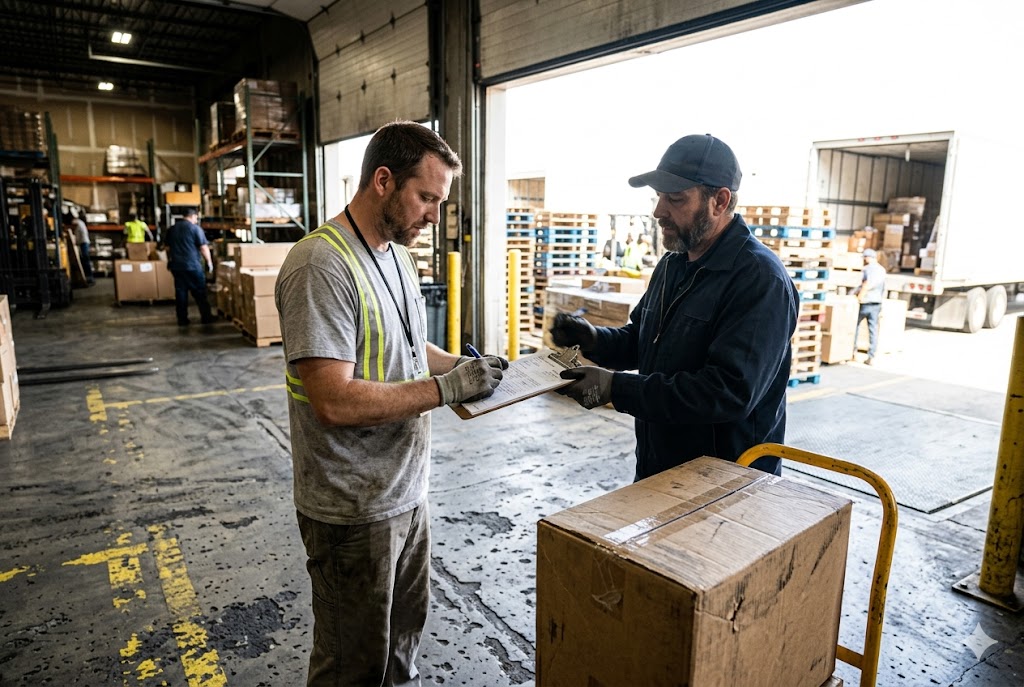
What DDP Actually Covers
Under the official Incoterms 2020 definition 1, DDP (Delivered Duty Paid) places maximum responsibility on the seller. The supplier must:
- Handle all export documentation and charges in China
- Book and pay for international freight
- Appoint a licensed US customs broker
- Pay all US customs duties, Section 301 tariffs, and any applicable taxes
- Arrange last-mile delivery to your named address
You, the buyer, do nothing except receive the goods and inspect them.
Situations Where DDP Is Genuinely Useful
| Situation | Why DDP Helps |
|---|---|
| First-time import, small order | Low risk exposure, simpler onboarding |
| Infrequent purchases (1–2/year) | Not worth setting up your own broker relationship |
| Low customs value parts (under $800) | May qualify for de minimis entry 2, duties are minor |
| Buyer has no in-house logistics team | Reduces internal coordination burden |
The Operational Appeal Is Real
There is nothing wrong with wanting simplicity. When order volume is low and the parts are low-value, DDP can save you from managing a broker relationship, handling customs paperwork, and coordinating freight milestones. The all-in price also makes budgeting straightforward — no surprise duty bills after the fact.
The problem is not the concept. The problem is what happens inside the process when you cannot see it.
For a US importer purchasing custom CNC parts — which carry significant tariff exposure under current trade policy — the operational convenience of DDP comes with a compliance blind spot that can turn into a legal problem.
Why the Convenience Math Breaks Down
Here is the key issue: under DDP, the supplier's freight forwarder files the customs entry on your behalf. That entry includes the declared value of the goods, the HTS classification code, and the stated country of origin. You have no automatic right to review any of this before the shipment clears. And if any of it is wrong — intentionally or not — the liability does not stay neatly with the supplier.
At order volumes above three to four shipments per year, the added cost of managing your own customs entry is almost always lower than the risk you absorb by handing that control to someone else.
What Risks Should I Watch for in Supplier-Arranged DDP Shipments?
When our sourcing team reviews supplier DDP quotes, the first thing we check is not the freight cost — it is the math. A quote that does not add up is not a bargain. It is a warning.
The most serious risk in supplier-arranged DDP shipments from China in 2025–2026 is customs fraud. With stacked tariffs on CNC metal parts now reaching 45–70% of customs value, some suppliers reduce their DDP price by undervaluing goods, misclassifying HTS codes, or misrepresenting origin — all of which are federal customs violations that expose you as the buyer to legal liability.
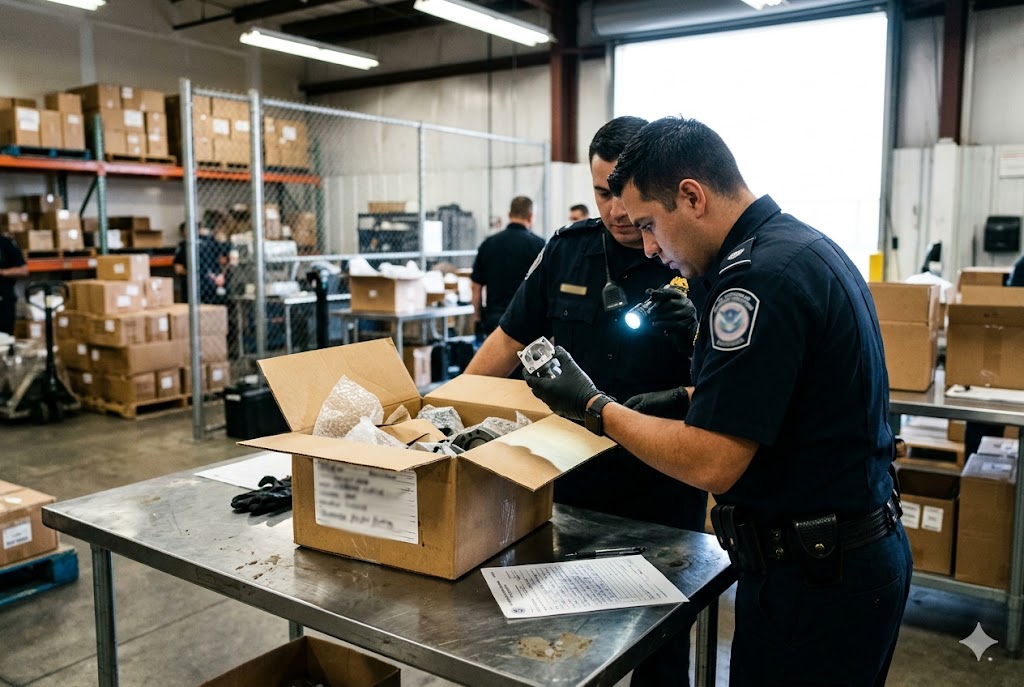
How Customs Fraud Happens in DDP Transactions
The Section 301 tariff 3 environment on Chinese-origin CNC parts is severe. A buyer importing precision-machined aluminum components might face a combined duty rate of 50–70% of the customs value. For a $100,000 FOB shipment, that is $50,000–$70,000 in duties.
A supplier quoting DDP at a price that absorbs those duties without a significant premium has one of three explanations:
- They have genuinely negotiated better freight rates (possible but limited impact)
- They are accepting a loss to win the order (rare and unsustainable)
- They are reducing their reported cost exposure through customs fraud
Option three is the most common explanation when DDP prices look too clean.
The Three Fraud Methods CBP Watches For
| Fraud Method | How It Works | Your Legal Exposure |
|---|---|---|
| Invoice undervaluation | Goods declared at 40% of real value to reduce duty base | High — CBP can assess penalties on full duty owed |
| HTS misclassification | Parts filed under a lower-duty code | High — penalties scale with duty underpaid |
| False country of origin | Chinese parts transshipped through Vietnam or Malaysia, declared as non-Chinese origin | Severe — potential criminal referral, import ban |
The Legal Reality for US Buyers
This is the part that most buyers do not expect. CBP does not limit customs fraud liability to whoever filed the entry. US courts ruled — most notably in the Trek Leather case (2014) 4 — that any party who substantially assisted in or benefited from a fraudulent import transaction can be held liable.
If your DDP supplier used a fraudulent customs entry to deliver goods to your warehouse, and you accepted those goods knowing or having reason to know the price was implausibly low, you are not legally protected by the fact that you did not file the paperwork.
CBP and the DOJ have publicly flagged DDP transactions from China as a high-scrutiny category precisely because the math is simple to check. Investigators start with the known FOB value, add reasonable freight and the published tariff rate, and compare the result to your DDP invoice price. A large gap is an audit trigger.
How to Spot a Suspicious DDP Quote
Run this quick calculation before accepting any DDP price:
Expected minimum DDP price = FOB price + international freight estimate + (FOB price × applicable tariff rate) + broker fee estimate
If the DDP quote from your supplier is materially below this floor — say, 20% or more below — that gap needs an explanation. Ask for it in writing. If the supplier cannot provide a clear cost breakdown, treat the quote as non-compliant.
How Can I Verify What Is Actually Included in a DDP Quote?
Our project managers ask for cost breakdowns on every DDP proposal we review — not to be difficult, but because a supplier who cannot itemize a DDP quote is a supplier who cannot defend it to CBP either.
To verify a DDP quote, request a written breakdown of the FOB price, freight cost, customs broker fee, and declared duty amount before the shipment moves. Then cross-reference the declared HTS code and customs value against your own independent research to confirm the entry is being filed correctly.

The Four Documents You Should Request
Before any DDP shipment leaves China, ask your supplier for the following in writing:
- Commercial invoice — confirms the declared value of goods
- 10-digit HTS code — confirms how goods will be classified at the US border
- Importer of Record identity — confirms who holds the customs bond and who will be listed on the CBP entry
- Post-clearance entry summary — confirms the entry was filed and duties were actually paid
Most legitimate DDP suppliers will provide items one and two without pushback. Items three and four are where problems surface.
How to Independently Check the HTS Code
Understanding the US customs valuation methods 5 is essential before you go to the HTS search tool. Go to the US International Trade Commission's HTS search tool (hts.usitc.gov) and look up the 10-digit code your supplier intends to use. Confirm:
- The description matches your parts
- The general duty rate is what you expect
- The applicable Section 301 tariff rate is correctly included
If the code your supplier plans to use has a combined duty rate of 5% and you know your parts should carry a 50%+ rate under the correct classification, that is a misclassification — whether accidental or intentional.
Who Is Legally Allowed to Be the Importer of Record?
This is the question most buyers never ask — and it matters enormously.
| IOR Type | Legally Permitted in the US? | Notes |
|---|---|---|
| US-based buyer | Yes | Most compliant, buyer retains full visibility |
| US subsidiary of Chinese supplier | Yes | Must hold a customs bond |
| Licensed third-party logistics provider | Yes | Must have proper customs bond and compliance program |
| Chinese factory directly | No | Foreign entities cannot serve as IOR in the US system |
If your supplier says they will handle DDP but cannot name a specific US-licensed IOR and produce a customs bond number, the arrangement is not compliant. A non-compliant DDP shipment exposes you to entry rejection, seized goods, and CBP penalties.
After the Shipment Clears
Request the CBP entry number from your supplier or their broker. With this number, you or your own licensed customs broker 6 can pull the public entry record from ACE (Automated Commercial Environment) and verify the declared value, HTS code, and duty paid. This step takes fifteen minutes and closes the compliance blind spot entirely.
When Is It Better for Me to Use My Own Forwarder Instead of DDP?
After years of managing cross-border supply chains, our team's honest answer is this: for most established US importers buying custom CNC parts from China, FOB with your own licensed broker is the better structure.
Using your own forwarder under FOB terms is better than DDP when your order frequency exceeds three to four shipments per year, your parts carry significant tariff exposure, or you want full control over HTS classification, duty optimization, and customs compliance. The added coordination cost is almost always lower than the risk you absorb under supplier-managed DDP.

What You Gain by Managing Your Own Customs Entry
When you appoint your own licensed US customs broker under FOB terms, you gain control over several variables that directly affect your landed cost and legal exposure:
HTS Classification Optimization
Your broker's only client in this transaction is you. They have an obligation to find the most accurate and favorable classification for your parts. A supplier's broker has no such obligation — and in some cases has an incentive to use a code that minimizes the declared duty, which protects the supplier's margin but creates legal risk for you.
Section 301 Exclusion Monitoring
The USTR periodically grants exclusions from Section 301 tariffs 7 on specific HTS codes. Your own broker can monitor these and file for retroactive refunds if your parts qualify. A supplier's broker will not do this for you.
First Sale Valuation
In a multi-tier supply chain, US customs law allows duty to be assessed on the factory price (first sale) rather than the trading company's selling price (last sale). Applying first sale valuation 8 can reduce your duty base by 10–25%. Only your own broker can apply this on your behalf.
DAP as a Middle Ground
If you want the operational simplicity of a delivered price without the DDP compliance blind spot, consider negotiating DAP (Delivered at Place) instead. The tariff stacking reality for CNC parts from China 9 makes this distinction especially important in 2025–2026.
Under DAP:
- The supplier handles export, international freight, and delivery to your door
- You retain responsibility for the customs entry
- You appoint your own broker and remain visible in the process
- You get a predictable landed price without surrendering customs control
DAP gives you the best of both structures for most CNC part import situations.
Cost-Benefit Comparison
| Structure | Customs Control | Duty Optimization | Compliance Risk | Admin Burden |
|---|---|---|---|---|
| DDP (supplier-arranged) | None | None | High | Low |
| DAP (your broker) | Full | Full | Low | Medium |
| FOB (your broker) | Full | Full | Low | Medium-High |
For buyers importing custom machined parts three or more times per year, the duty savings from proper classification and exclusion monitoring typically recover the cost of a broker relationship within the first one or two shipments.
The Practical Transition
If you are currently using DDP and want to move to a more controlled structure, the transition is straightforward:
- Ask your current supplier for their standard FOB or DAP price
- Contact a licensed US customs broker 10 (CBP maintains a public directory)
- Provide your broker with the HTS code you expect to use and the customs value
- Compare the total landed cost under FOB + your broker fees vs. your current DDP price
In most cases, buyers find that the all-in cost under FOB is similar to or lower than a compliant DDP price — because a compliant DDP price must include the full duty amount, which means there is no hidden savings, only hidden risk.
Conclusion
DDP is convenient, but convenience has a cost. For high-tariff CNC parts from China, that cost is compliance risk you cannot see. Know what you are accepting before you sign.
Footnotes
1. ICC Academy explains the full seller obligations and risk transfer rules under DDP vs. DAP for international trade. ↩︎
2. PartZpro outlines the current HTS code landscape and the elimination of de minimis treatment for China-origin CNC parts. ↩︎
3. US Tariff Rates provides a complete timeline and current rates for Section 301 tariffs on Chinese goods, including exclusion history. ↩︎
4. Justia's case record for United States v. Trek Leather, Inc., the Federal Circuit ruling that expanded personal liability for customs fraud beyond the importer of record. ↩︎
5. Camtom explains the six CBP customs valuation methods and how HTS classification directly affects dutiable value and penalty exposure. ↩︎
6. CBP's official page on customs broker licensing, requirements, and regulatory authority under 19 U.S.C. 1641. ↩︎
7. Great Lakes Customs Law tracks the full history of Section 301 exclusion rounds, current extensions, and how to monitor new opportunities. ↩︎
8. ClearIt USA explains the First Sale Rule, CBP documentation requirements, and typical duty savings of 10–25% for qualifying importers. ↩︎
9. China Machining Solutions details the stacked duty structure (Section 301, 232, IEEPA) on CNC parts from China and the DAP recommendation for US buyers. ↩︎
10. Trade.gov describes how licensed customs brokers assist importers with federal compliance and where to find CBP-licensed professionals. ↩︎