Skip to main content Skip to footer
We handle tooling transfers every year, and the calls that worry me most are the ones that start with "we never put it in the contract." Most buyers assume ownership is enough. It isn't.
Yes, you can transfer your tooling when changing die cast suppliers in China — but only if you own it in writing, and the process is far harder than most buyers expect. A well-drafted contract, a physical inspection, machine compatibility checks, and a requalification trial at the new factory are all required. Plan for one to three months, minimum.
There are several layers to this process. Each one can stall your programme if you skip it. Let's go through them one by one.
What Tooling Transfer Terms Should I Negotiate Before Production Starts?
We've seen buyers lose access to molds they fully paid for — not because of fraud, but because the contract said nothing about release conditions. That gap costs real money.
The most important terms to lock in before production starts are: written confirmation that you own the tooling, a clear release timeline after written request, zero additional payment required for return, and a penalty clause for supplier non-compliance. Without these four terms in a Chinese-language contract, you have very little leverage.
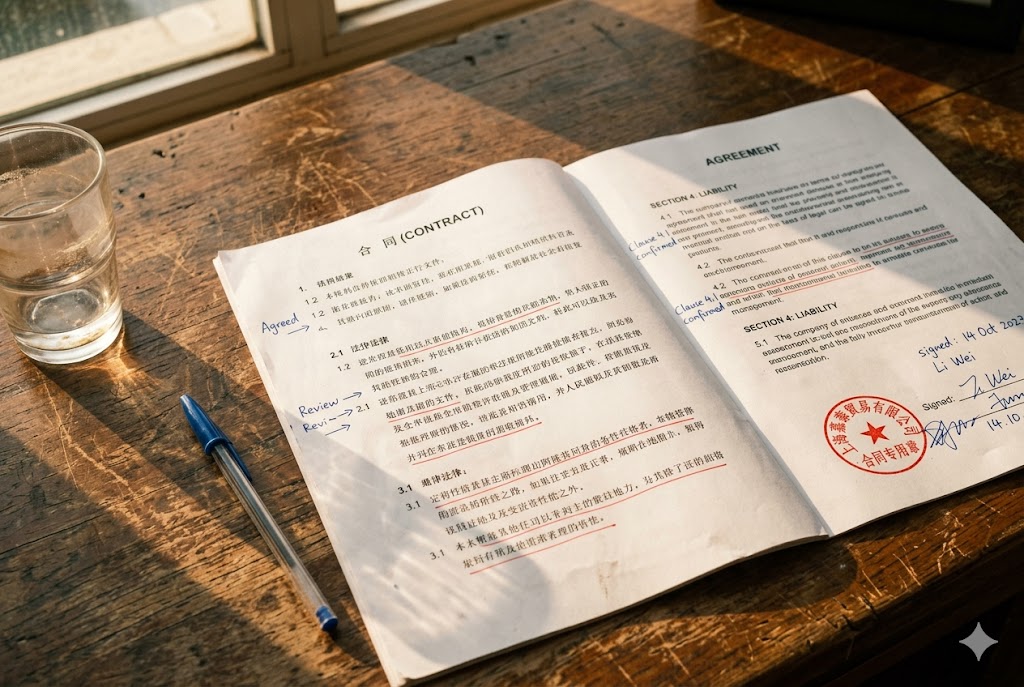
Why the Contract Language Matters More Than the Payment Receipt
Paying for a mold does not automatically mean you can take it back. In Chinese commercial practice, tooling stays at the factory where it was built unless the contract explicitly says otherwise. A payment receipt proves you paid. It does not prove you have the right to demand return within 30 days, or that no extra fees apply.
Your contract should include the following terms, written in Chinese, signed by a legal representative with company stamp. China's Contract Law of the People's Republic of China 1 recognises buyer ownership when documentation is clear and complete:
| Contract Term | What to Include | Why It Matters |
|---|---|---|
| Ownership clause | "The buyer owns all tooling upon full payment" | Establishes legal title without ambiguity |
| Release condition | "Supplier must release tooling within 30 days of written request" | Prevents indefinite delay tactics |
| No release fee | "No additional payment required for tooling return" | Blocks surprise invoices at transfer time |
| Penalty clause | Liquidated damages of X% per week of non-compliance | Gives you financial leverage during disputes |
| Documentation delivery | "All CAD files and drawings delivered with tooling" | Ensures you get the full design package |
What Happens Without These Terms
Buyers without a clear contract arrive at transfer time in a weak position. The existing supplier knows they lose your business the moment the tool leaves. So they create delays: they claim the tool needs maintenance, raise storage fee invoices, say they're mid-production run, or simply stop responding.
Without liquidated damages 2 clauses to point to, your only options are to pay a release fee — typically 15–30% of the original tooling cost — or pursue a legal dispute that takes longer than just paying. Neither is a good outcome when your production schedule is already under pressure.
The Documentation Package Is Part of the Deal
The physical mold is only half the asset. The process knowledge embedded in the tool — cavity dimensions, steel grade, heat treatment records, shot history — is equally valuable. Negotiate delivery of the full documentation package as a condition of each production payment, not as a one-time handover at the end.
If you wait until the relationship is adversarial to ask for CAD files, you will almost certainly not get them. Suppliers routinely withhold design files as leverage, knowing that your new supplier cannot requalify the tool without them.
How Can I Reduce the Risk of Losing Access to My Mold Later?
I've watched buyers assume a good relationship with their supplier was enough protection. Then the relationship ended, and the mold stayed behind. Relationships are not contracts.
You reduce the risk of losing mold access by combining four measures: a clear ownership contract signed before production starts, progressive documentation collection at each payment milestone, a written transfer demand process with penalty enforcement, and the habit of using a third-party representative in China for any physical retrieval.
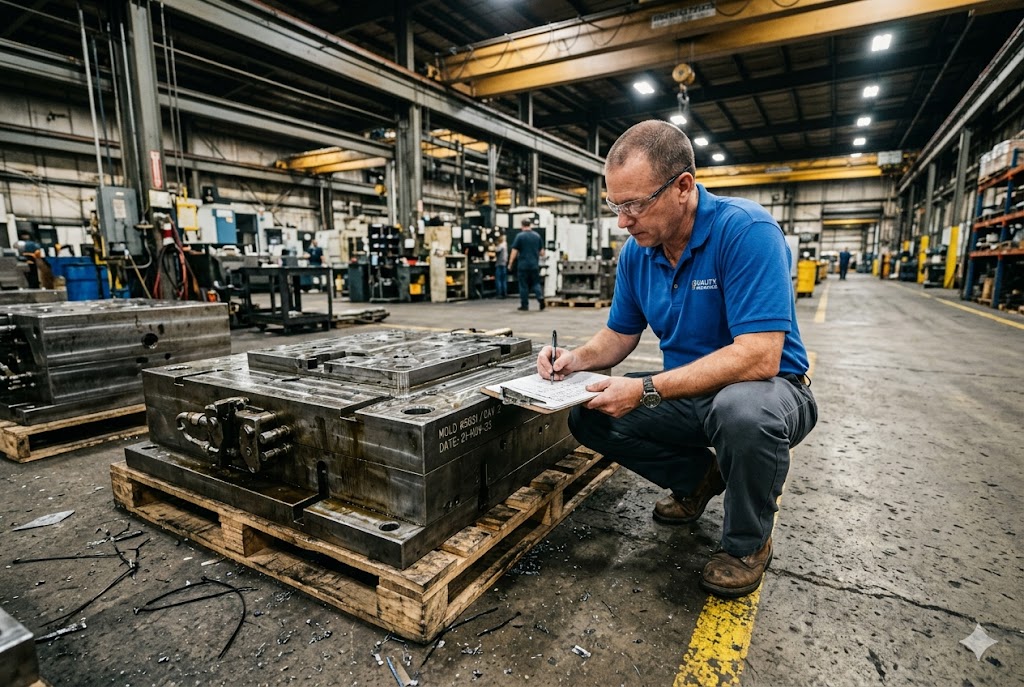
Build Your Leverage Before You Need It
The time to establish your position is at contract signature, not when you decide to switch suppliers. Buyers who treat the contract as a formality and focus only on price and lead time are the ones who call us later asking for help recovering a mold.
Three practical habits reduce your risk significantly:
Collect Documentation at Every Payment Milestone
Do not wait for the end of a project to ask for drawings. Attach documentation delivery to each payment release. After tooling deposit payment, receive the mold design drawings. After T1 trial, receive the cavity steel material certificate and shot counter baseline. After production approval, receive the full CAD 3 package and approved process parameter sheet.
This distributes the documentation transfer across the relationship and removes the supplier's ability to withhold it as leverage at exit.
Use a Third Party for Physical Retrieval
When you send a transfer demand letter, also arrange for a China-based third-party quality inspection firm 4 to be present at collection. This can be a quality inspection firm, your sourcing agent, or a lawyer's field representative.
Their presence serves three purposes: it creates a contemporaneous witness to the tool's physical condition before it leaves the factory; it prevents the supplier from later claiming damage occurred during your transport; and it signals that you are organised and serious, which discourages delay tactics.
| Risk Factor | Mitigation |
|---|---|
| Supplier withholds tooling | Penalty clause in contract; formal written demand letter in Chinese |
| Documentation not delivered | Tie CAD/drawing delivery to each payment milestone |
| Damage claimed after collection | Independent inspection before packing; photo and written report |
| Supplier delays with excuses | Formal demand letter with compliance deadline and liquidated damages |
| No leverage without contract | Draft correct contract terms before any tooling deposit is paid |
Keep Safety Stock During Any Transition Period
Even with perfect documentation and legal leverage, a transfer takes time. One to three months is a realistic window from sending the demand letter to producing conformant parts at the new supplier. Build safety stock 5 inventory buffer to cover that gap before you initiate the transfer, not after.
Running safety stock feels like an overhead cost. Running out of parts mid-programme because your transfer took longer than expected is a far larger cost.
What Practical Problems Can Happen When I Move Tooling to a New Factory?
Even when transfers are legally smooth, the operational problems catch buyers off guard. We coordinate these moves regularly, and the same issues come up every time.
The most common practical problems when transferring die cast tooling to a new supplier are machine incompatibility, missing process knowledge, cavity damage discovered on arrival, and a longer-than-expected requalification period. Each problem can delay production by weeks. Planning for all of them in advance is the only way to avoid programme disruption.
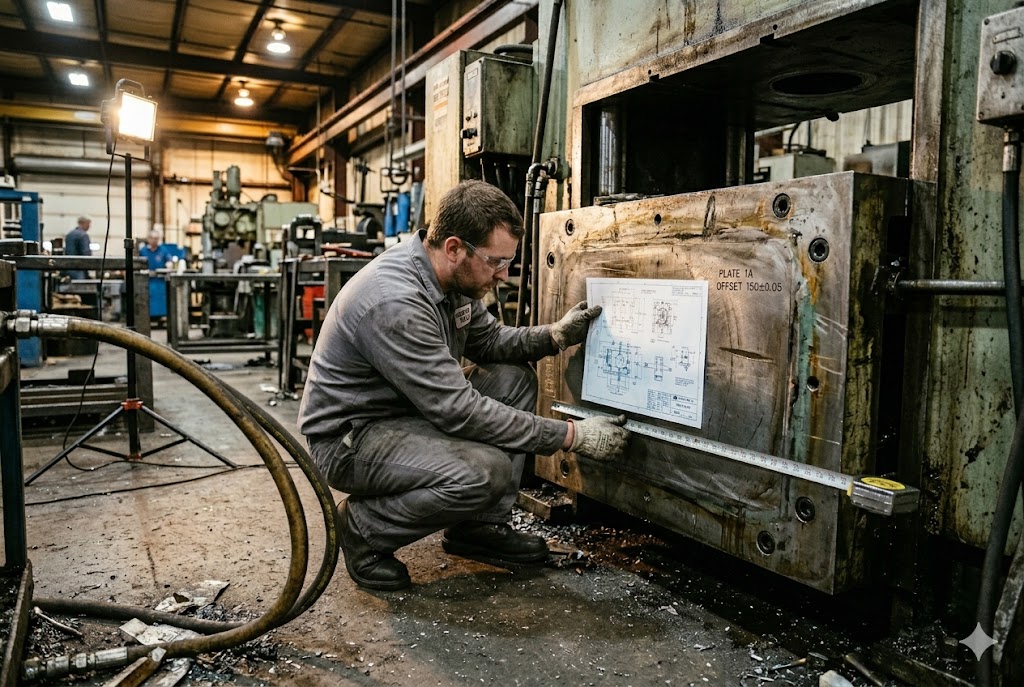
Machine Compatibility Is Not Automatic
Die casting machines 6 from different manufacturers — UBE, Bühler, Yizumi, Haitian, LK — have different platen dimensions, tie bar spacing, ejector patterns, and shot sleeve positions. A tool built for a 400-tonne Bühler at your original supplier may not physically mount on a 400-tonne Yizumi at your new one, even though the nominal tonnage matches.
Before authorising any transfer, send the new supplier your complete tooling drawing — including mold base dimensions, overall height, tie bar clearance requirements, and ejector bolt pattern — alongside the make and model of the machine the tool currently runs on. Ask them to confirm compatibility with a specific machine in writing, and request the machine's platen drawing if there is any uncertainty.
Process Knowledge Does Not Travel With the Steel
This is the problem buyers most consistently underestimate. The physical mold is only one part of what makes conformant parts. The process window — injection pressure, first-phase speed, second-phase velocity, switchover point, hold pressure, die temperature, spray volume — that produces good parts at your existing supplier is embedded in their engineers' knowledge and machine programs.
None of that transfers with the tooling. Your new supplier must develop their own process window 7 from scratch, using your approved golden samples as the acceptance benchmark. This is functionally a T2 trial and typically takes two to six weeks depending on part complexity.
| Practical Problem | Root Cause | How to Address It |
|---|---|---|
| Tool doesn't fit new machine | Different platen/ejector layout at new supplier | Verify compatibility with tool drawings before transfer |
| Parts fail first trial | Process window not transferred with tool | Budget 2–6 weeks for requalification; use golden samples as reference |
| Cavity damage found on arrival | Poor handling during transport or undisclosed prior damage | Inspect and document at origin before packing |
| Documentation missing | Supplier withheld CAD files as leverage | Collect documentation progressively during production relationship |
| Transfer takes longer than expected | Delay tactics, customs, requalification time | Build 1–3 month buffer; maintain safety stock |
Do Not Release the Original Supplier Until the New One Is Confirmed
One of the costliest mistakes is ending the relationship with the original supplier before the new supplier has confirmed they can produce conformant parts. If the first qualification trial at the new supplier fails — due to machine incompatibility, unexpected tool damage, or process development challenges — you have no production capability at either factory.
Run the transfer trial, measure the output against your drawing and golden samples, and only issue a formal production release to the new supplier once conformant parts are in your hands. Keep the original supplier on standby until that confirmation is complete.
Should I Inspect My Tooling Before I Approve a Transfer?
Yes — and this is not optional. A pre-transfer inspection is the only point in the process where you have clear evidence of the tool's condition before it leaves the original supplier's facility.
You should always inspect your die cast tooling at the original supplier's factory before approving any transfer. The inspection must document cavity surface condition, ejector pin wear, cooling circuit integrity, cumulative shot count, and dimensional conformance of recent production parts — all confirmed in a signed report with photographs before the tool is packed for shipment.
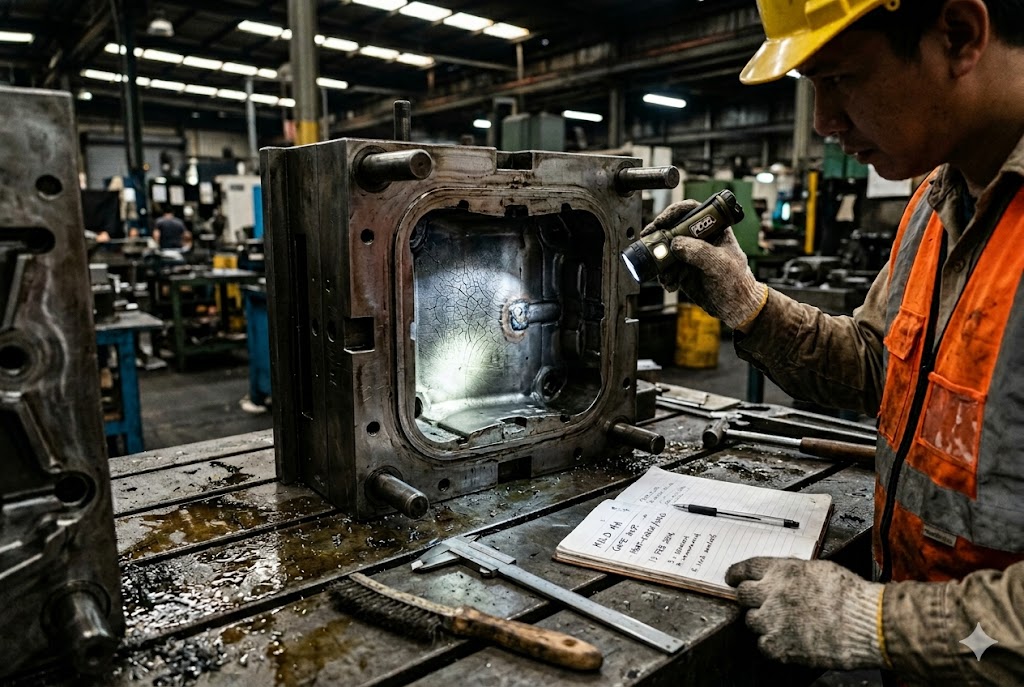
Why the Inspection Must Happen Before Packing
Once a mold leaves one factory and arrives at another, any damage claim becomes an unresolvable dispute about where and when the damage occurred. The original supplier will say it was fine when it left. The new supplier will say it arrived damaged. You have no way to prove either party wrong without a pre-departure inspection record.
Commission the inspection through a third-party inspection firm 8 experienced with die casting tooling — not through the original supplier and not through the new supplier. Independence is what makes the report credible to all parties.
What the Inspection Must Cover
A thorough pre-transfer inspection covers the following:
Cavity surface condition — check for heat checking 9 (fine surface cracks from thermal cycling), soldering (aluminium adhering to the cavity), erosion at gate and runner areas, and any weld repair zones that indicate prior cavity damage.
Ejector system — check ejector pins for wear, bending, or seizure; verify ejector plate travel is smooth and full.
Slide and wedge condition — check wear on slide faces and wedge locking surfaces; excessive wear here causes flash and dimensional deviation.
Cooling circuits — conduct a pressure test on all cooling channels to confirm no blockage or leakage; blocked cooling causes thermal imbalance and dimensional variation.
Shot count — record the cumulative shot count from the machine counter or maintenance log; this tells you how much of the tool's design life has been consumed.
Dimensional verification — measure three to five representative parts from the most recent production run against your drawing; confirm critical dimensions are within tolerance.
| Inspection Item | What to Check | Why It Matters |
|---|---|---|
| Cavity surface | Heat checking, soldering, erosion, weld repairs | Reveals true wear state and prior damage history |
| Ejector pins | Wear, bending, seizure | Pin failure causes cosmetic and ejection defects |
| Cooling circuits | Pressure test for blockage or leakage | Blocked circuits cause dimensional and cosmetic failures |
| Slide and wedge | Contact face wear | Worn slides cause flash and out-of-tolerance dimensions |
| Shot count | Machine counter or log record | Indicates remaining tool life |
| Recent parts | Dimensional check against drawing | Confirms tool was producing conformant parts before transfer |
When Rebuilding Is Better Than Transferring
For tools that have consumed most of their shot life, show visible cavity wear, or require significant machine adaptation at the new supplier, rebuilding the tool at the new factory may be more economical than transferring the worn original.
Compare the total transfer cost — collection, inspection, freight, requalification trials, inventory buffer — plus the expected remaining life of the transferred tool, against the cost of a new tool built to the new supplier's machine specification with a full design life 10 ahead of it. For a tool that has consumed 80% of its shot life and required multiple cavity weld repairs, a new tool often wins on total cost despite the higher upfront number.
Conclusion
Transferring die cast tooling is manageable with the right preparation. Get ownership in writing before production starts, collect documentation progressively, inspect before you collect, verify machine compatibility, and plan for a requalification period. Skip any of these steps, and the transfer will cost you more time and money than it needed to.
Footnotes
1. Overview of China's Contract Law governing commercial agreements and buyer property rights. ↩︎
2. Explains how liquidated damages clauses work and enforce financial penalties for non-compliance. ↩︎
3. Introduction to computer-aided design and why CAD files are essential manufacturing assets. ↩︎
4. How independent third-party representatives provide neutral oversight during commercial handovers. ↩︎
5. Explains safety stock strategy and how buffer inventory protects against supply chain disruptions. ↩︎
6. Technical overview of die casting machines, tonnage classes, and platen configurations. ↩︎
7. How process window development and design of experiments guide new supplier qualification trials. ↩︎
8. Role of independent third-party inspection in verifying physical condition and preventing disputes. ↩︎
9. Explains thermal fatigue and heat checking in metal tooling subjected to repeated temperature cycling. ↩︎
10. Defines design life and how it factors into total cost decisions for tooling replacement vs. transfer. ↩︎