Skip to main content Skip to footer

Every week, we receive RFQs that are missing half the information we need to quote accurately. That forces us to send follow-up emails, which delays your quote by days — sometimes a week or more.
An effective RFQ for CNC parts from China must include a STEP file, a 2D PDF engineering drawing with tolerances and GD&T callouts, full material specifications, quantity tiers, quality and certification requirements, packaging instructions, Incoterms, and a request for itemized pricing. Missing any of these leads to inaccurate quotes or preventable delays.
The sections below break each requirement down. Read them in order — each one builds on the last.
What Files and Specifications Are Essential for Accurate Quoting?
When our team receives an RFQ, the first thing we check is whether the technical package is complete. An incomplete file set is the single biggest cause of quoting delays we see across all incoming inquiries.
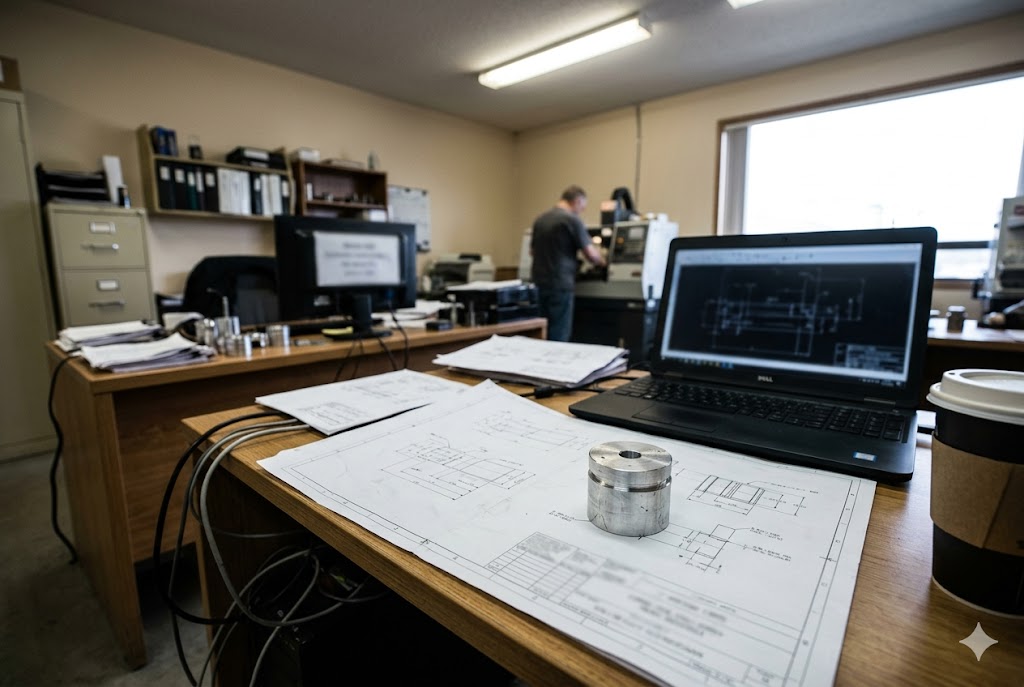
For accurate CNC quoting, you must provide a STEP file as your primary 3D CAD model and a 2D PDF engineering drawing. The STEP format works with all CAM systems, while the PDF drawing captures tolerances, surface finishes, material callouts, and critical features that the 3D model alone cannot communicate.
Why the STEP File Is the Right Choice
Native CAD formats — SolidWorks, Inventor, CATIA — cause version compatibility problems. A supplier running an older version of the same software may not open your file correctly. The STEP format 1 (.stp or .step) is a neutral, universal format based on the ISO 10303 standard. Every CAM system on our production floor reads it without issues.
Send the STEP file as your geometry reference. It lets the machinist load the part directly into their CAM software and begin toolpath planning.
Why You Still Need the 2D PDF Drawing
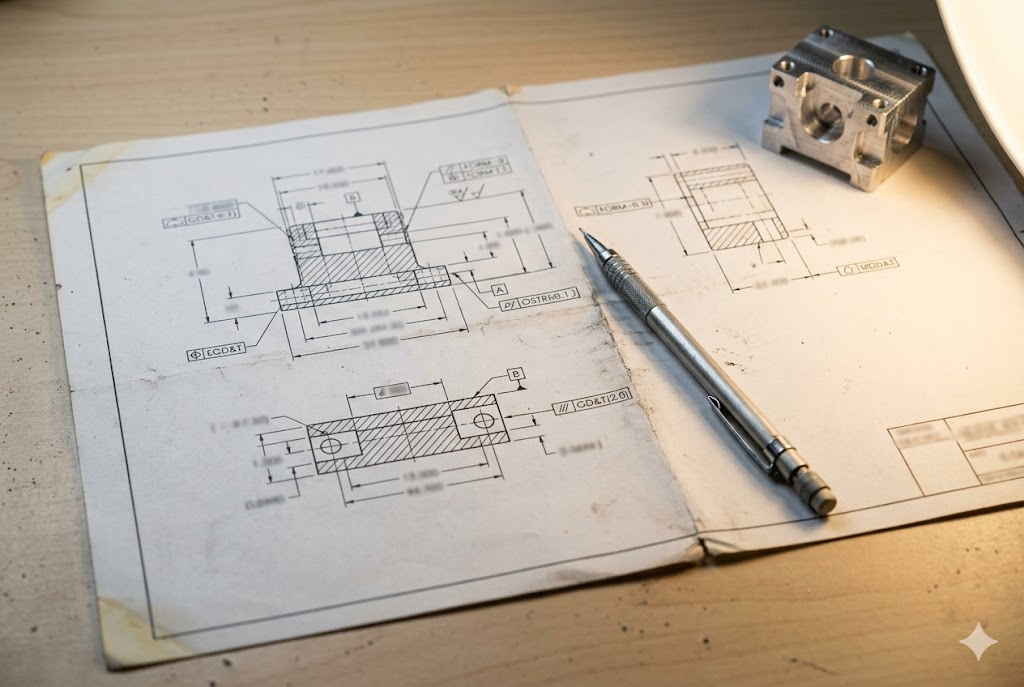
A 3D model shows shape. It does not show intent. Your 2D PDF drawing is where you communicate:
- Dimensional tolerances (±0.01 mm, ±0.005 in, etc.)
- Geometric Dimensioning and Tolerancing (GD&T) callouts
- Surface roughness values (Ra in µm or µin)
- Thread specifications and depths
- Critical-to-function features
- Material and finish callouts
- Revision number and part number
Without this drawing, the supplier must guess — and guessing leads to scrap.
File Format Summary
| File Type | Format | Purpose |
|---|---|---|
| 3D CAD Model | STEP (.stp / .step) | Geometry for CAM programming |
| 2D Engineering Drawing | Tolerances, GD&T, material, finish | |
| Native CAD (optional) | .sldprt, .ipt, etc. | Reference only — not required |
| Reference Images | JPG / PNG | Clarify surface or assembly context |
Common File Mistakes That Delay Quotes
Suppliers receive drawings with missing revision numbers, tolerance callouts that contradict the 3D model, or surface finish symbols without Ra values. Each one requires a clarification email. Each email costs you one to three business days.
Check your drawing before you send it. Confirm that every critical dimension has a tolerance. Confirm that your GD&T symbols 2 are complete and correct. A clean package produces a clean quote.
Should I Include Tolerances and Surface Finishes?
A part number and a STEP file are a starting point. But the moment a machinist asks "how tight does this need to be?" — that answer must come from your drawing, not from a follow-up email three days later.
Yes, you must include tolerances and surface finish requirements in every CNC RFQ. Specify dimensional tolerances using GD&T, state surface roughness as Ra values in µm or µin, and call out any critical-to-function features explicitly. Omitting these forces suppliers to apply default assumptions that may not match your actual part requirements.
How Tolerances Affect Your Price
Tight tolerances require slower feeds, more passes, and inspection time. Every step costs money. Suppliers build this into the unit price — but only if you tell them what tolerances you need upfront.
If you omit tolerances, most suppliers default to ±0.1 mm or ±0.005 in. If your part requires ±0.01 mm in certain areas, you will receive a quote that does not reflect the actual machining cost. The real price surfaces later — often after your first delivery, when you reject parts that fail inspection.
Tolerance Specification Guide
| Feature Type | Recommended Specification Method | Example |
|---|---|---|
| Linear dimensions | Direct tolerance | 25.00 ±0.02 mm |
| Hole position | GD&T true position | ⌖ ⌀0.05 M A B |
| Flatness | GD&T flatness callout | ⏥ 0.03 |
| Cylindricity | GD&T cylindricity | ⌀0.01 |
| Surface texture | Ra value | Ra 1.6 µm |
| Threads | Standard callout | M8×1.25 – 6H |
Surface Finish Requirements
Surface roughness 3 is measured as Ra — the arithmetic average deviation of the surface profile. Common values in CNC machining:
- Ra 3.2 µm — standard machined finish, no secondary operations
- Ra 1.6 µm — fine machining, most functional surfaces
- Ra 0.8 µm — requires additional passes or grinding
- Ra 0.4 µm and below — typically requires lapping or polishing
State your Ra requirement for each surface zone if they differ across the part. Do not use vague terms like "smooth" or "fine finish." These mean different things to different machinists.
Critical-to-Function Features
Mark any features that directly affect assembly or performance. Use balloons or callout boxes on your drawing. Flag bore diameters that mate with bearings, sealing surfaces that must meet leak-down specs, and datum features used for downstream assembly.
This tells the supplier where to focus inspection resources. It also signals that you are an experienced buyer who understands what you are ordering.
How Detailed Should My RFQ Be?
Some buyers send a part number and a file and expect a complete quote. Others send ten pages of requirements but forget to include the material grade. Neither approach works well. Effective RFQs are complete without being disorganized.
Your RFQ should be detailed enough to allow a supplier to quote without sending a single follow-up question. That means including material specifications to alloy and temper level, quantity tiers across prototype and production volumes, quality and certification requirements, packaging instructions, target Incoterms, and a request for itemized pricing.

Material Specification: Go Beyond "Aluminum"
"Aluminum" is not a material specification. There are dozens of aluminum alloys with different machinability, strength, and corrosion resistance profiles. Write the full specification: alloy, temper, applicable standard, and product form.
Example: 6061-T6, ASTM B209, bar stock 4
This removes any guesswork from the supplier's material purchasing process and prevents substitution errors.
Quantity Tiers Signal Real Buying Intent
State quantities across three levels:
| Quantity Tier | Purpose |
|---|---|
| Prototype (1–10 pcs) | Validates design before production investment |
| Pilot run (50–200 pcs) | Confirms process capability at low volume |
| Annual production volume | Allows supplier to amortize setup costs correctly |
Providing all three tiers lets the supplier split fixed costs from variable costs. It also reveals volume discount thresholds you can use in negotiation.
Quality and Certification Requirements
List every document and certification you require before shipment:
- ISO 9001 5 or IATF 16949 supplier certification
- Material certificates (EN 10204 Type 3.1 6 preferred)
- Dimensional inspection report
- CMM data for critical features
- First Article Inspection (FAI) report
- Surface treatment certificate (if applicable)
Do not wait until after order placement to introduce these requirements. Suppliers who cannot provide them will tell you upfront if you ask during the quoting stage.
Itemized Pricing Request
Ask for a price breakdown, not a single unit price. Request line items for:
- Raw material cost
- Setup and tooling charges
- Machining operations
- Surface finishing
- Inspection and certification
This lets you identify the biggest cost drivers in your part. It also makes negotiation more targeted and productive.
Incoterms and Logistics
State your preferred Incoterms 7 in the RFQ. FOB, DDP, and EXW produce very different landed costs. Without a specified Incoterm, quotes from different suppliers are not cost-comparable on a like-for-like basis.
If you require door-to-door delivery with customs clearance included, request DDP. If you have your own freight forwarder, FOB or EXW may be more appropriate.
What Mistakes Should I Avoid in RFQ Preparation?
The same errors appear in RFQs from buyers across all industries and experience levels. Knowing what to avoid saves time on both sides of the negotiation.
The most costly RFQ mistakes include sending generic material callouts, omitting tolerance data, failing to disclose IP protection requirements before sharing drawings, mixing prototype and production requirements without separating them, and sending RFQs without quantity tiers — each of these either delays your quote or produces pricing that does not reflect your actual requirements.

Mistake 1: Vague Material Callouts
Writing "steel" or "aluminum" forces the supplier to ask a follow-up question. That question costs you one to three days. Write the full specification every time.
Mistake 2: No IP Protection Discussion
Before you send drawings of novel or proprietary geometries, ask the supplier what IP protection measures they have in place. Request a Non-Disclosure Agreement (NDA) or a China-specific NNN agreement 8 (Non-Disclosure, Non-Use, Non-Circumvention) before sharing sensitive files.
Suppliers who refuse to sign basic agreements, or who cannot explain their internal access controls for proprietary drawings, are a risk. This conversation is easier before you share files than after.
Mistake 3: Mixing Prototype and Production Without Separation
Prototype and production quotes require different cost structures. Setup costs dominate at low volumes. At high volumes, unit cost and material efficiency matter more. If you mix requirements in one line item, the quote will be inaccurate for both scenarios.
Mistake 4: Skipping DFM Feedback Request
If you are at the prototype stage, explicitly ask the supplier for Design for Manufacturability (DFM) 9 feedback. Ask them to flag any features that will increase cost unnecessarily — deep pockets, thin walls, tight tolerances on non-critical features, or geometries that require special tooling.
Suppliers who provide thorough, unsolicited DFM input demonstrate stronger engineering competency than those who quote without comment. This matters when you are evaluating supplier capability, not just price.
RFQ Mistake Quick Reference
| Mistake | Consequence | Fix |
|---|---|---|
| Generic material callout ("aluminum") | Delayed quote, substitution risk | Specify alloy, temper, standard, form |
| No tolerances stated | Inaccurate pricing, inspection failures | Include GD&T and Ra values on drawing |
| No Incoterms | Incomparable quotes | State FOB, DDP, or EXW upfront |
| No quantity tiers | Mispriced setup costs | Provide prototype, pilot, and annual volumes |
| No IP discussion before sharing files | Proprietary geometry exposure | Request NDA/NNN before sending drawings |
| Single lump-sum price request | No negotiation leverage | Request itemized cost breakdown |
| No certification requirements stated | Missing documents at shipment | List all required certs in the RFQ |
Mistake 5: Overlooking First Article Inspection
For initial production orders, require a First Article Inspection (FAI) report 10 before approving full production runs. An FAI verifies that the supplier's process is capable of meeting your dimensional and surface requirements before you commit to the full volume. Skipping this step for the sake of speed is one of the most common causes of costly, large-batch rejections.
Conclusion
A complete RFQ includes STEP files, a 2D drawing with tolerances, full material specs, quantity tiers, certifications, packaging, Incoterms, and itemized pricing. Send a clean package and you get a clean quote.
Footnotes
1. Technical guide explaining the STEP file format, its ISO 10303 standard basis, and why it ensures geometry compatibility across all CAM platforms. ↩︎
2. Overview of the ASME Y14.5 GD&T standard, covering symbols, rules, and how to apply tolerancing correctly on engineering drawings. ↩︎
3. Practical guide to CNC machining surface roughness, including Ra and Rz parameters, typical values by application, and how finish affects cost. ↩︎
4. ASTM B209 testing standard for aluminum and aluminum-alloy sheet and plate, covering composition, mechanical properties, and compliance criteria. ↩︎
5. Official ISO page for ISO 9001:2015 quality management systems standard, explaining requirements and how certification is obtained. ↩︎
6. Explains the difference between EN 10204 Type 3.1 and 3.2 inspection certificates and when each level of material traceability is required. ↩︎
7. Comprehensive plain-language guide to Incoterms 2020, covering FOB, DDP, EXW, and how each term allocates shipping costs and risk. ↩︎
8. Expert legal guide to China NNN agreements, explaining why standard NDAs are insufficient and how NNN contracts are enforced under Chinese law. ↩︎
9. Fictiv's authoritative guide to Design for Manufacturability, covering how DFM principles reduce part cost and prevent late-stage design changes. ↩︎
10. ASQ resource on ISO 9001 and quality management systems, including First Article Inspection requirements and supplier qualification documentation. ↩︎