Skip to main content Skip to footer

Every year, our team processes hundreds of custom CNC machining orders for buyers in the US and Canada. One question comes up more than almost any other: can a buyer actually lock the price before shipment — and make it stick?
Yes, you can lock pricing when importing custom CNC machining parts from China. The most reliable method is a signed manufacturing agreement that states the unit price, currency, drawing revision level, Incoterms, and applicable quantity. A blanket purchase order covering annual volume also works well at the operational level. Without a formal contract, a quoted price carries very weak legal protection.
Price locking is achievable, but the structure matters. Below, we walk through the key questions buyers ask — and give you clear, practical answers.
How Long Can a Supplier Usually Hold a Quoted Price?
When our team sends a quotation for a custom CNC part, we always include a validity window. Most buyers assume that window is just a formality. It is not.
A supplier can typically hold a quoted price for 30 to 60 days for standard materials like aluminium 6061 or mild steel. For volatile metals such as copper, stainless steel, or titanium, the validity window is often 15 to 30 days. Beyond these periods, material cost movements make an open-ended quote commercially unsustainable for most factories.

Why Quotation Validity Windows Exist
A CNC machining quote is not a fixed-price promise. It is a snapshot of costs at the moment the supplier calculates it. The unit price includes raw material, machining labour, setup, tooling amortisation, surface treatment, inspection, overhead, and margin. Of these, raw material is the component most exposed to commodity market movement 1.
When aluminium 6061 or mild steel 2 prices shift by 5–10% within a month — which they do regularly — a supplier holding an open-ended quotation absorbs that difference if they honour it without adjustment. Most small and mid-sized Chinese factories operate on thin margins, so the incentive to revise a quote after a large material cost increase is real.
Material Volatility and Validity Windows
| Material | Typical Quote Validity | Reason |
|---|---|---|
| Aluminium 6061 / 7075 | 30–60 days | Moderate LME volatility |
| Mild steel (A36, Q235) | 30–60 days | Moderate volatility |
| Stainless steel 304 / 316 3 | 15–30 days | Higher nickel-driven volatility |
| Copper / brass 4 | 15–30 days | High LME copper volatility |
| Titanium alloys | 15–30 days | Specialty market, limited liquidity |
What Happens After the Validity Window Expires
If you place an order after the quotation has expired, the supplier is entitled to revise the price. In practice, many suppliers will honour the original price if the revision is small and the buyer relationship is valued. But they are not obligated to do so.
The practical takeaway: if you intend to lock a price, act before the validity window closes. If your purchasing cycle is slower than the quotation window, negotiate a longer validity period upfront — sometimes by offering a deposit or a binding letter of intent.
Validity vs. Contract Price: A Critical Distinction
A quotation validity window and a contractually locked price are different things. A quotation is an offer. Once you sign a manufacturing agreement that references the quoted price, the price becomes a contractual term. At that point, the supplier cannot unilaterally revise it during the contract period — regardless of material cost changes — unless the contract includes an explicit price adjustment clause.
This distinction is why the structure you use to commit to a price matters more than the price itself.
What Conditions Should I Meet to Secure Fixed Pricing?
We have helped clients structure dozens of supply agreements with Chinese CNC factories. The ones that hold up share a common pattern. The ones that fall apart share a different, equally consistent pattern.
To secure fixed pricing, you need a signed manufacturing agreement with a clearly stated unit price, drawing revision reference, currency, Incoterms, and minimum volume commitment. A price stated only in an email or accepted quotation carries significantly weaker legal protection under Chinese law.

The Four Conditions That Make Fixed Pricing Stick
Getting a supplier to agree to a number is easy. Getting that agreement to hold under commercial pressure requires four things to be in place at the same time.
Condition 1: Specificity of the price
The price must be stated with enough specificity that neither party can argue about what it covers. This means: unit price, currency (USD is standard), the drawing revision level the price applies to, the Incoterms (FOB, CIF, DAP) 5, and the quantity tier the price is based on.
A price stated as "$4.80 per piece" with no further detail is ambiguous. A price stated as "$4.80 per piece, USD, for Part No. LM-2241, Rev B drawing, FOB Shenzhen, for orders of 500 pieces or above" is specific enough to be contractually enforceable.
Condition 2: A signed manufacturing agreement
Under the PRC Civil Code 6, a clearly stated price in a signed contract cannot be unilaterally revised by the supplier during the contract period. An email exchange or an accepted online quotation carries much weaker protection. The agreement should be governed by Chinese law and name a Chinese arbitration forum — CIETAC 7 is the standard — because enforcement in China requires a China-enforceable instrument.
Condition 3: A volume commitment
Suppliers accept fixed pricing because forward production visibility reduces their own procurement and scheduling costs. A buyer who commits to a defined annual volume — say, 2,000 pieces per quarter — gives the supplier the planning certainty they need to purchase materials at stable prices and schedule machine time efficiently. Without a volume commitment, the supplier bears commodity risk with no guaranteed recovery, which makes fixed pricing commercially unsustainable for them.
Condition 4: Realistic price level
A locked price that leaves the supplier at breakeven with no margin headroom will not hold in practice. A supplier locked into an uneconomic price will recover margin through other means: substituting a lower alloy grade, reducing inspection rigour, or deprioritising your orders in favour of higher-margin work. The locked price must include enough margin for the supplier to absorb normal cost variation without being incentivised to cut corners.
Conditions Summary Table
| Condition | Why It Matters | What Happens Without It |
|---|---|---|
| Price specificity (unit, currency, rev, Incoterms, qty) | Removes ambiguity; defines contractual scope | Supplier can argue the quoted price applied to different conditions |
| Signed manufacturing agreement | Legally binding under PRC Civil Code | Email/quotation acceptance carries weak legal standing |
| Volume commitment | Gives supplier planning certainty; justifies fixed pricing | Supplier has no commercial incentive to absorb commodity risk |
| Realistic price level | Preserves supplier margin; prevents quality fade | Margin pressure leads to material substitution and quality drift |
Should I Lock Price by PO, Contract, or Blanket Order?
Our clients use all three mechanisms. Each one works — but each one works in a different situation, and choosing the wrong structure creates problems that are hard to fix mid-relationship.
For most buyers importing custom CNC machining parts from China, a blanket purchase order 8 covering projected annual volume is the most practical price-locking tool. A formal manufacturing agreement provides the strongest legal protection. A single PO locks price only for that specific order. The best structure depends on your volume, relationship maturity, and how long you need the price to hold.

Single Purchase Order
A single PO locks the price for one specific order. The supplier confirms it, produces the parts, and ships. The price is fixed for that production run.
The limitation is that you have to renegotiate every time you place a new order. In a rising material cost environment, each new PO becomes a new negotiation. This creates pricing instability across your procurement cycle and makes annual cost planning difficult.
Single POs work well for prototype runs, qualification orders, or low-frequency purchases where your demand is unpredictable.
Blanket Purchase Order
A blanket PO covers your projected annual or semi-annual volume under a single document, with defined unit prices, delivery schedule windows, and specification revision references. You release individual shipments against the blanket as you need them.
This structure gives the supplier forward production visibility — which reduces their material procurement cost and machine scheduling cost. In exchange, they accept a fixed unit price for the duration of the blanket.
Blanket POs are the standard mechanism for buyers who have predictable demand and want to eliminate per-order price renegotiation. Most Chinese CNC factories are comfortable with this structure and will honour it if the volume commitment is genuine.
Formal Manufacturing Agreement
A manufacturing agreement is a formal legal document — typically 5 to 15 pages — that defines the entire commercial relationship: pricing, specifications, quality standards, delivery terms, tooling ownership, IP protection, payment terms, and dispute resolution.
This structure provides the strongest legal protection. It is the appropriate instrument when:
- The price lock needs to extend beyond 12 months
- The supplier holds custom tooling or fixtures
- The part has complex quality requirements that need formal compliance obligations
- The commercial relationship involves significant investment on both sides
Comparison Table
| Mechanism | Price Lock Duration | Legal Strength | Best For |
|---|---|---|---|
| Single PO | One production run | Moderate | Prototypes, low-volume, unpredictable demand |
| Blanket PO | 6–12 months typical | Moderate to strong | Predictable demand, standard parts, stable relationships |
| Manufacturing Agreement | 12+ months | Strongest | Complex parts, tooling investment, long-term supply |
Combining Instruments
In practice, the strongest structure combines a formal manufacturing agreement — which defines the pricing formula, volume commitment, and legal terms — with blanket POs issued against it for each period. The agreement provides the legal framework; the blanket POs provide the operational release mechanism. This is the structure we recommend for buyers with annual volumes above $100,000 USD with a single CNC supplier.
What Risks Should I Watch for in a Price-Lock Agreement?
The biggest mistakes we see buyers make are not in negotiating the price. They are in neglecting the provisions that determine whether the locked price actually holds — and whether the parts that arrive match the drawings they approved.
The main risks in a price-lock agreement are quality fade from supplier margin pressure, drawing revision disputes used as a pretext for price changes, tooling leverage if the supplier holds your custom fixtures, and commodity volatility beyond the lock window. Each risk has a specific contractual or operational countermeasure.
Risk 1: Quality Fade
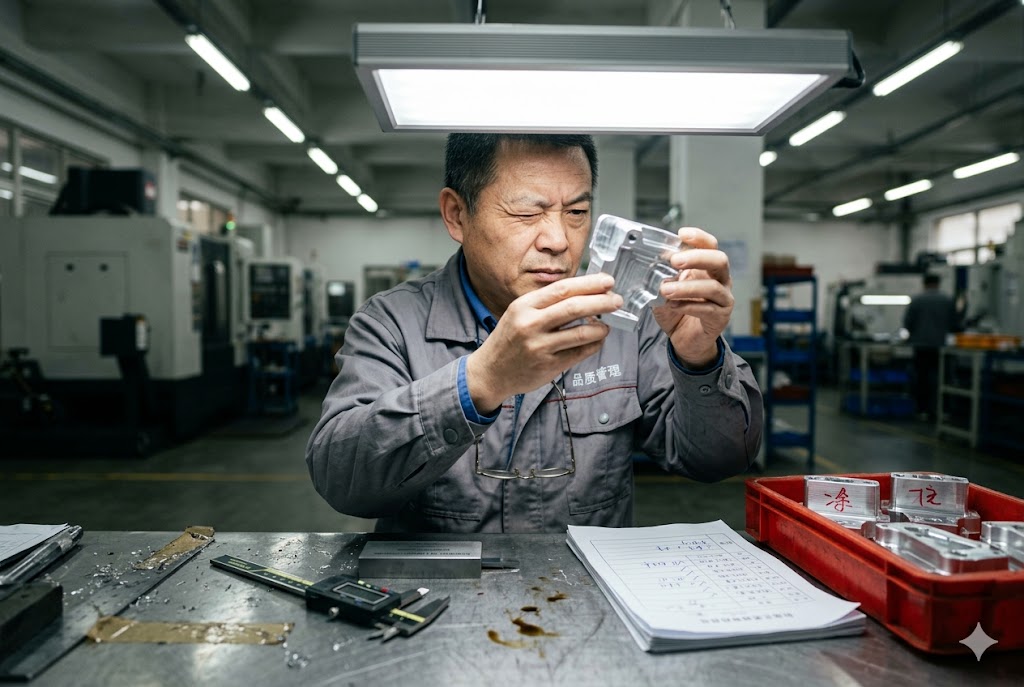
A supplier locked into a price that erodes their margin will often recover cost through means that do not appear as a line item: substituting a lower alloy grade, reducing inspection sampling frequency, thinning anodising or plating coatings, or using cheaper cutting tools that produce marginally worse dimensional accuracy.
Quality fade is harder to detect than a price increase and more expensive to remediate — because it often only becomes apparent after parts reach your customer's production line.
Countermeasure: The supply agreement must name the required material grade explicitly (e.g., "Aluminium 6061-T6, ASTM B209" 9) and require a material traceability certificate per batch. It should also define a minimum inspection sampling plan and a dimensional tolerance compliance rate, with financial penalties for non-conformance.
Risk 2: Drawing Revision Disputes
Every engineering change you make during the contract term is a legitimate basis for the supplier to request a price revision — because it changes the manufacturing scope the locked price was based on. Some suppliers use minor drawing updates as an opportunity to renegotiate pricing that they were already uncomfortable with.
Countermeasure: Include a formal change order procedure in the agreement. Any drawing revision triggers a written amendment, agreed by both parties, before it affects pricing. The amendment must use a defined calculation methodology to determine the cost impact of the change. This ensures price revisions occur only when the specification genuinely changes.
Risk 3: Tooling Leverage
A supplier who holds your custom fixtures, qualified CAM programmes, and inspection gauges has physical leverage that can override contractual price protections. If the relationship deteriorates, switching to a new supplier requires rebuilding all of that infrastructure at significant cost and lead time — which gives the current supplier negotiating power that a contract alone cannot neutralise.
Countermeasure: The manufacturing agreement should explicitly state that the buyer owns specified tooling (identified by serial number), that the factory holds it on a custodial basis, and that the buyer has the right to inspect and retrieve it on contractual notice.
Risk 4: Commodity Volatility Beyond the Lock Window
A fully fixed price over 12 months or longer requires the supplier to accept commodity risk on your behalf. For standard materials, this is commercially reasonable for 6–12 months. For volatile metals, the practical ceiling is shorter. Beyond these windows, suppliers who accept a fully fixed price are either building a large contingency into the initial price or will face enough margin pressure to create problems.
Countermeasure: Use a hybrid pricing model. Lock the base price — covering machining labour, setup, tooling amortisation, overhead, and margin. Add a transparent material cost adjustment formula tied to a named public benchmark (such as the LME index 10). The fixed base gives you cost certainty on most of the unit price; the indexed material component adjusts symmetrically with commodity markets.
Risk 5: No Qualified Backup Supplier
The most credible enforcement mechanism for a locked-price agreement is not the contract itself — it is the existence of a qualified backup supplier. A supplier who knows you can activate an alternative within one production cycle has a far stronger incentive to honour a locked price than one who knows a contractual dispute would leave you supply-starved for months.
Countermeasure: Qualify a backup supplier before you need one. This investment is not only a resilience measure — it is the primary mechanism that makes price lock commitments commercially credible.
Conclusion
Locking pricing on custom CNC machining parts from China is possible and practical. Use the right instrument — blanket PO, manufacturing agreement, or both. Protect your margin through quality obligations, not just price terms. And always qualify a backup supplier.
Footnotes
1. How the LME determines global benchmark prices for base metals used in manufacturing contracts. ↩︎
2. LME aluminium contract specifications and current pricing used as the global industry reference. ↩︎
3. How nickel price volatility directly drives stainless steel 304/316 cost fluctuations for procurement teams. ↩︎
4. LME copper contract details and global benchmark pricing that underpin copper and brass quotations. ↩︎
5. US International Trade Administration guide explaining Incoterms 2020 responsibilities for buyers and sellers. ↩︎
6. CMS Law expert guide on how the PRC Civil Code governs unilateral price changes in B2B supply contracts. ↩︎
7. Official CIETAC website detailing arbitration rules and procedures for China-related commercial disputes. ↩︎
8. SCMDOJO comprehensive guide to blanket purchase orders, including how they lock pricing and streamline procurement. ↩︎
9. ASTM B209 standard specification for aluminium and aluminium-alloy sheet and plate, the industry material reference. ↩︎
10. LME market data reports providing the commodity index benchmarks used in transparent material cost adjustment formulas. ↩︎