Skip to main content Skip to footer

Every week, our team processes supplier contracts for clients sourcing custom mechanical parts across China and Vietnam. We see the same pattern repeat: a buyer signs a supplier-drafted contract, something goes wrong mid-production, and the contract offers almost no real protection. The financial and operational damage is almost always avoidable.
Yes, you need legal review for your contract when importing custom CNC machining parts from China — especially if your order involves proprietary designs, custom tooling, or repeat supply. A China-qualified lawyer can identify hidden clauses, confirm enforceability under PRC law, and structure your contract to give you real recourse if things go wrong.
Most sourcing problems are not caused by bad suppliers. They are caused by contracts that look fine in English but fail completely when tested. Here is what you need to know before you sign anything.
When Is Legal Review Especially Important for CNC Sourcing Contracts?
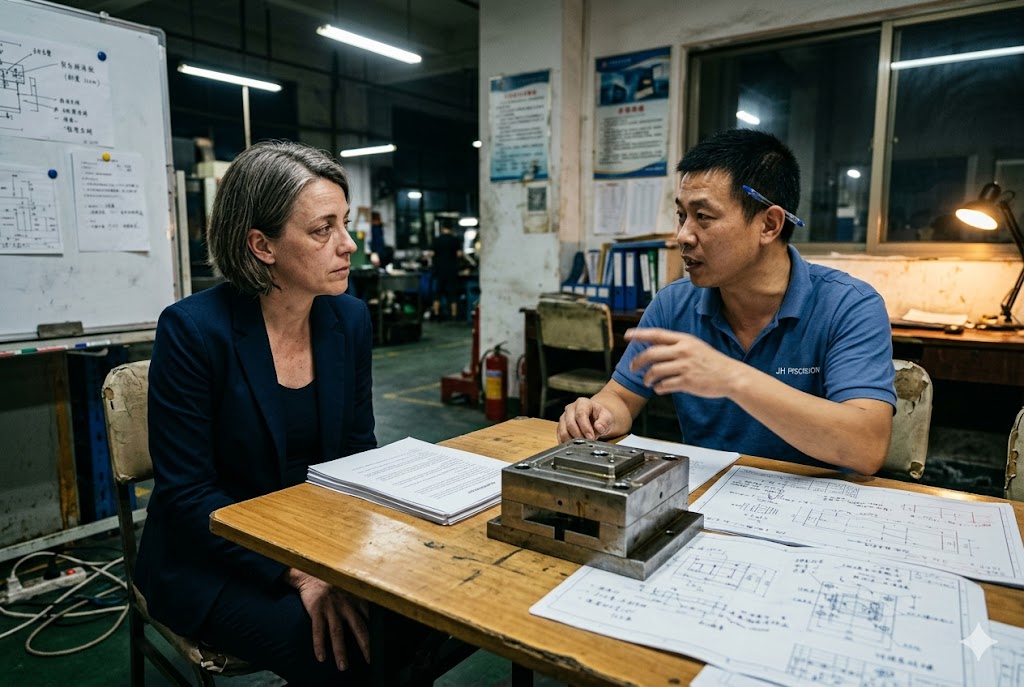
Our team handles supplier coordination across dozens of factories each year. When we sit in on contract negotiations, one thing stands out consistently: buyers underestimate how different Chinese contract law is from what they know at home. That gap is where most disputes are born.
Legal review is especially important when your CNC sourcing contract involves proprietary CAD files, custom tooling investment, meaningful order values, or an ongoing supply relationship. In these cases, the cost of professional review is almost always far less than the cost of a single disputed shipment or an IP theft incident.
What Makes CNC Sourcing Contracts Different From Standard Purchase Orders
A standard purchase order covers price, quantity, and delivery. A CNC sourcing contract for custom parts is different. It may involve mold ownership, proprietary tolerances, surface finish specifications, and repeat delivery schedules. Each of these elements creates legal exposure if left unaddressed.
Here are the most common situations where legal review is not optional:
| Situation | Why Legal Review Matters |
|---|---|
| Custom tooling investment | Mold ownership must be clearly stated in Chinese law terms |
| Proprietary CAD or drawings | IP transfer risk if not protected by a separate NNN agreement |
| Orders above a meaningful value | Financial exposure justifies the cost of review |
| Repeat or long-term supply | One master agreement reviewed once covers all future orders |
| Supplier is a trading company | Identifying the actual legal entity with attachable assets is critical |
The Trading Company Problem
This point deserves direct attention. Many buyers contract with a Hong Kong, Singapore, or Taiwan-registered trading intermediary — not the factory itself. If a dispute arises, that intermediary may hold no attachable assets in China. Your legal recourse then cannot reach the factory that holds your tooling and designs.
A China-qualified lawyer can identify this structure before you sign, verify whether parent guarantees or factory co-signatures are legally binding, and advise on whether your recourse would be effective in practice.
Low-Value, One-Time Orders: A Different Calculus
Not every contract needs a lawyer. For low-value, one-time orders with no proprietary IP involved, platform-based purchase protection — such as Alibaba Trade Assurance 1 — can serve as a practical substitute. It covers payment disputes and basic quality failures.
However, this protection does not extend to IP, tooling ownership, or enforcement outside the platform. The moment your order involves anything proprietary or repeatable, platform protection is not enough.
Which Contract Risks Are Easy to Miss Without Legal Help?
When clients share supplier-drafted contracts with us before signing, we flag issues in almost every one. Not because the suppliers are dishonest — though that happens too — but because these contracts are written to protect the supplier, not the buyer. Without legal help, these risks are nearly invisible.
The most commonly missed contract risks in CNC sourcing include English-only drafting that fails in Chinese proceedings, supplier-drafted clauses that limit your remedies, missing or incorrect company seals, and template contracts that do not meet PRC Civil Code requirements — all of which can make your key protections legally unenforceable when you need them most.

The English-Only Contract Problem
A contract drafted only in English is operationally weak in Chinese legal proceedings. Chinese courts require all submitted evidence to be in Mandarin. Court-appointed translators are not guaranteed to be accurate. Judges place heavy interpretive weight on the Chinese text — even when an English-prevails clause exists.
This means a professionally drafted bilingual contract, with the Chinese version reviewed by a China-qualified lawyer, is not an optional formality. It is a practical necessity.
Supplier-Drafted Contracts: What They Really Say
Contracts drafted by supplier sales teams — including those from trading companies, Alibaba vendors, or factory representatives — are routinely written to appear balanced in English. In practice, the Chinese-language provisions often:
- Limit your remedies to replacement or credit only
- Restrict your ability to pursue disputes in accessible forums
- Vest jurisdiction in courts convenient to the supplier
Independent legal review is the only reliable way to detect this.
Missing Enforceability Requirements
Template contracts downloaded from generic sources — or drafted by lawyers without specific China manufacturing experience — regularly miss requirements that are critical under the PRC Civil Code 2:
| Missing Element | Consequence |
|---|---|
| Correct company chop (official seal) | Contract may be legally invalid |
| Chinese legal entity name in Mandarin characters | Entity identification fails in proceedings |
| PRC Civil Code compliance | Key clauses rendered legally inert |
| Proper witness or notarization steps | Evidentiary weight reduced |
The Hidden Remedies Limitation
One of the most damaging clauses to miss is the remedies limitation. Supplier contracts often restrict your claims to the value of the defective goods only. They exclude consequential damages, production downtime, customer compensation costs, and expedited freight.
If a late delivery shuts down your downstream customer's production line, your actual loss may be ten times the invoice value. A remedies-limited contract leaves you absorbing that loss alone.
Should I Review Jurisdiction and Dispute Clauses Carefully?
Our sourcing team has seen contracts where the jurisdiction clause alone determined whether a buyer had any practical recourse at all. It is one of the most consequential clauses in any cross-border supply agreement — and one of the least-read.
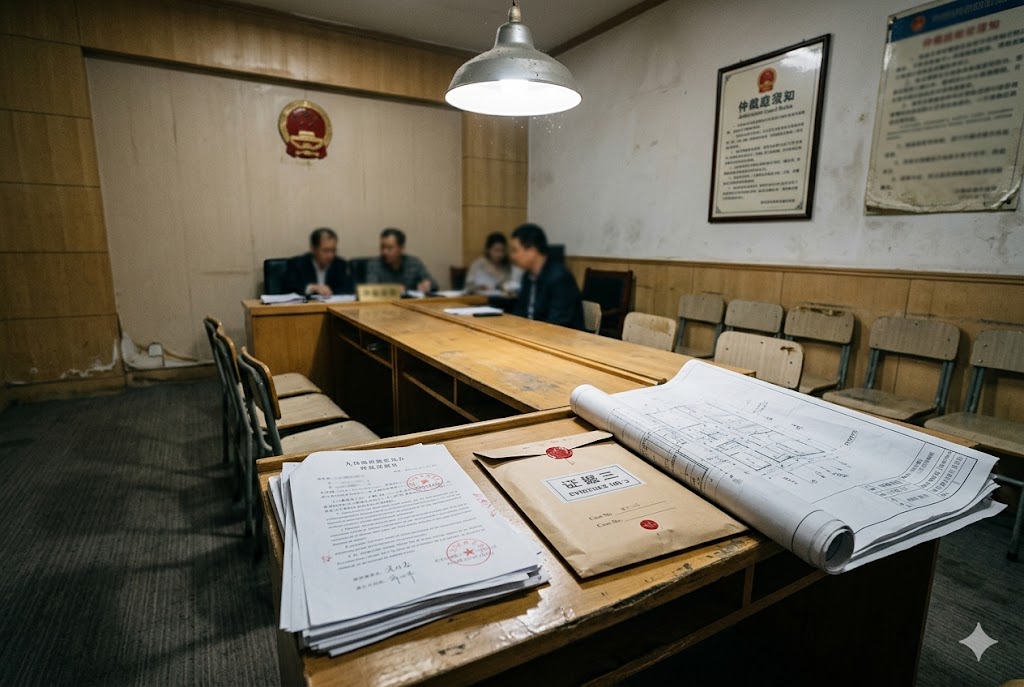
Yes, you should review jurisdiction and dispute clauses with a China-qualified lawyer. Contracts that assign jurisdiction to foreign courts are often unenforceable in China, while contracts governed by Chinese law and naming a recognized Chinese arbitration body 3 give you a practical path to enforce judgments and freeze assets before a ruling is even secured.
Why Foreign Court Jurisdiction Usually Fails
Chinese courts are not obligated to recognize foreign judgments. A contract that assigns disputes to US federal courts, for example, gives you a judgment that cannot be enforced against Chinese factory assets. You win the case and still cannot collect.
This is not a hypothetical problem. It happens regularly in cross-border manufacturing disputes.
Chinese Arbitration: The Practical Path
Contracts governed by Chinese law and naming a Chinese arbitration body — such as CIETAC (China International Economic and Trade Arbitration Commission) — offer a more realistic enforcement path:
| Feature | Foreign Court Jurisdiction | Chinese Arbitration (CIETAC) |
|---|---|---|
| Enforceability in China | Weak or none | Strong |
| Asset freezing before judgment | Not available | Available |
| Language of proceedings | Requires translation | Mandarin primary |
| Time to resolution | Years, if enforceable at all | Faster, more predictable |
| Recognition of award | Chinese courts may refuse | Directly enforceable |
What a China-Qualified Lawyer Checks in This Clause
A lawyer with specific China manufacturing experience will verify:
- Whether the named arbitration body is recognized and operational
- Whether the clause is drafted correctly to avoid being voided
- Whether asset-freezing injunctions are available under the chosen forum
- Whether the governing law clause is consistent with the dispute resolution clause
These details matter because a poorly drafted arbitration clause can be challenged and voided, leaving you in an ambiguous enforcement position.
The IP Dispute Consideration
For contracts involving proprietary designs or custom tooling, jurisdiction and dispute clauses carry additional weight. IP disputes in China are handled by specialized IP courts 4. A lawyer can advise on whether your contract is structured to access those courts and whether your NNN agreement — covered in the next section — is properly connected to your supply contract.
How Can Legal Review Reduce Risk Before Problems Happen?
The best time to involve a lawyer is before you sign — not after a dispute has already started. By the time a shipment is held, a mold is withheld, or a design has leaked, the contract is evidence, not a tool. What it says is fixed. Legal review before signing is where the real risk reduction happens.
Legal review reduces risk before problems happen by structuring payment leverage, securing IP protections through a separate NNN agreement, confirming the correct legal entity and seal, and connecting the contract to a commercially sound risk strategy — including inspection rights, payment holdbacks, and cargo insurance.
The NNN Agreement: Not Optional for IP-Sensitive Orders
Any contract that involves transferring proprietary CAD files, custom tooling investment, or unique process specifications to a Chinese manufacturer requires a separate Non-Disclosure and Non-Compete (NNN) agreement 5. A standard Western NDA is frequently unenforceable under PRC law.
A China IP lawyer will draft an NNN agreement that addresses the specific IP leakage vectors common in Chinese contract manufacturing — including disclosure to related factories, use of your designs for third-party orders, and retention of tooling after the relationship ends.
Payment Structure as Risk Management
A well-structured contract pairs legal terms with commercial leverage. This typically means:
- A deposit at order placement
- A progress payment at mid-production
- A final payment retained until pre-shipment inspection 6 is passed
This structure gives you real leverage at the critical moment — when goods are ready to ship but final payment has not been released. Legal review ensures the payment terms in the contract are enforceable and that your right to withhold final payment is not undermined by other clauses.
Pre-Shipment Inspection Rights
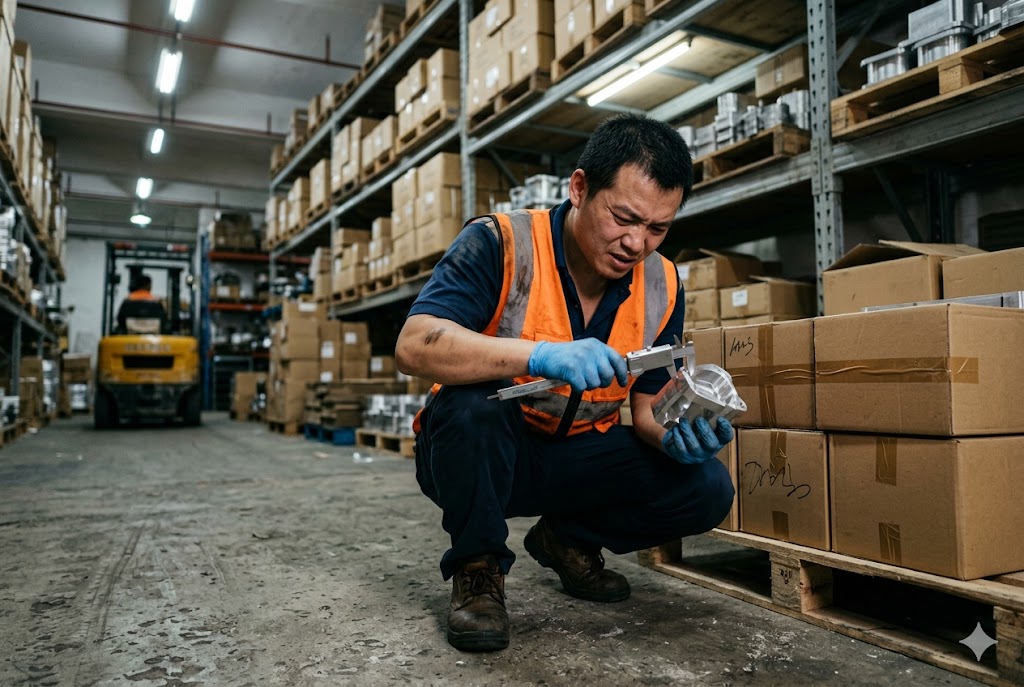
A China-qualified lawyer will confirm that your contract explicitly grants you the right to conduct — or commission — a pre-shipment inspection before the final payment is released. Without this clause, a supplier can argue that payment is due upon completion of production, regardless of quality.
The Master Agreement Approach
For ongoing supply relationships above a commercially meaningful annual volume, a one-time investment in a properly drafted master supply agreement covers all subsequent purchase orders. You do not need to re-draft or re-review for every order. The per-order legal cost becomes negligible, and every transaction is covered by enforceable terms.
What Legal Review Cannot Guarantee
It is important to be clear about limits. Even a well-drafted contract reviewed by a China-qualified lawyer does not guarantee enforcement of consequential damages, lost profits, or downstream liability claims in Chinese proceedings.
Legal review should therefore be paired with a commercial risk strategy:
| Risk Tool | What It Covers |
|---|---|
| Payment structure (holdback) | Leverage at point of shipment |
| Pre-shipment inspection rights | Quality verification before release |
| Cargo insurance 7 | Transit loss and damage |
| NNN agreement | IP and design protection |
| Master supply agreement | Consistent terms across all orders |
| China-qualified legal review | Enforceability and clause accuracy |
Contract quality and enforcement reality are not the same thing. Both matter. Legal review is one layer of protection — a critical one — but it works best as part of a broader supply chain risk strategy. The PRC Civil Code 8, which took effect in January 2021, consolidated all contract, property, and tort law into a single framework — and buyers importing from China should understand how its requirements shape what a valid, enforceable contract actually looks like.
For contracts involving proprietary designs or processes, the China National Intellectual Property Administration 9 provides guidance on how IP rights are registered and enforced within China's specialized court system. Registering your IP in China — separate from any contract terms — is an important parallel step.
Finally, buyers working on ongoing supply programs should be aware that supply chain risk management 10 extends beyond the factory gate. Cargo insurance, payment holdbacks, and inspection rights form the commercial layer that supports your legal protections from order placement to final delivery.
Conclusion
Legal review for CNC sourcing contracts is not a formality. It is a risk management decision. The cost is small. The protection it provides is real. Get it done before you sign, not after something goes wrong.
Footnotes
1. Alibaba Trade Assurance explained: coverage, limits, and how buyer protection works. ↩︎
2. IBA analysis of PRC Civil Code contract validity rules for cross-border commercial agreements. ↩︎
3. CIETAC official site: China's leading international trade arbitration institution since 1956. ↩︎
4. How foreign firms successfully win IP disputes in China's specialized IP courts. ↩︎
5. Harris Sliwoski's expert guide to China NNN agreements and how they differ from standard NDAs. ↩︎
6. Pro QC's overview of pre-shipment inspection services and process in China. ↩︎
7. iContainers guide to cargo insurance: what it covers and why importers need it. ↩︎
8. WIPO Lex full text of the PRC Civil Code, effective January 2021. ↩︎
9. China CNIPA report on IP court enforcement and punitive damages for foreign rights holders. ↩︎
10. FreightAmigo's guide to international cargo insurance as part of supply chain risk management. ↩︎