Skip to main content Skip to footer
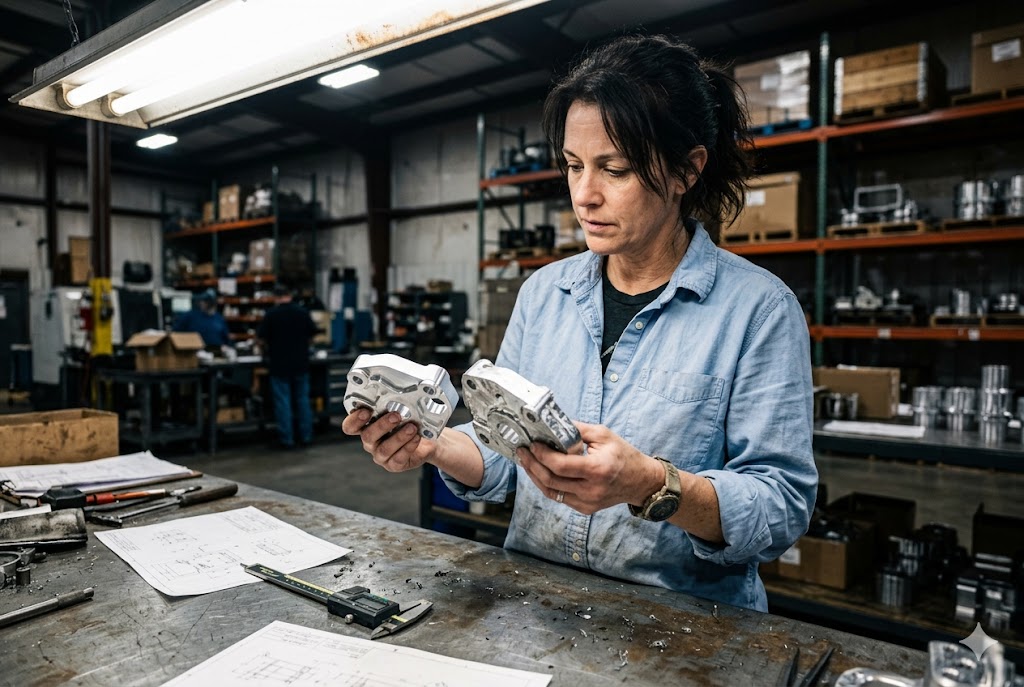
We have seen this problem more times than we can count. A buyer receives a beautiful sample, approves it, places a large order, and then opens the shipment to find parts that barely resemble what was approved. It is a painful and expensive lesson.
The root cause of a good sample but poor mass production is almost always a process gap: the supplier used special methods, a skilled operator, or cherry-picked material for the sample that were never transferred to the production floor. To prevent this, buyers must lock down the exact process at sample approval and verify that the same process runs during mass production, not just the same drawing.
The sections below walk through the specific controls you need, the data you should demand, and the warning signs that tell you a supplier cannot hold sample-level quality at volume.
What Controls Should I Require After Sample Approval?
After we approve a sample on behalf of a client, the first thing we do is freeze the process in writing. Most buyers skip this step, and it is exactly where quality problems begin.
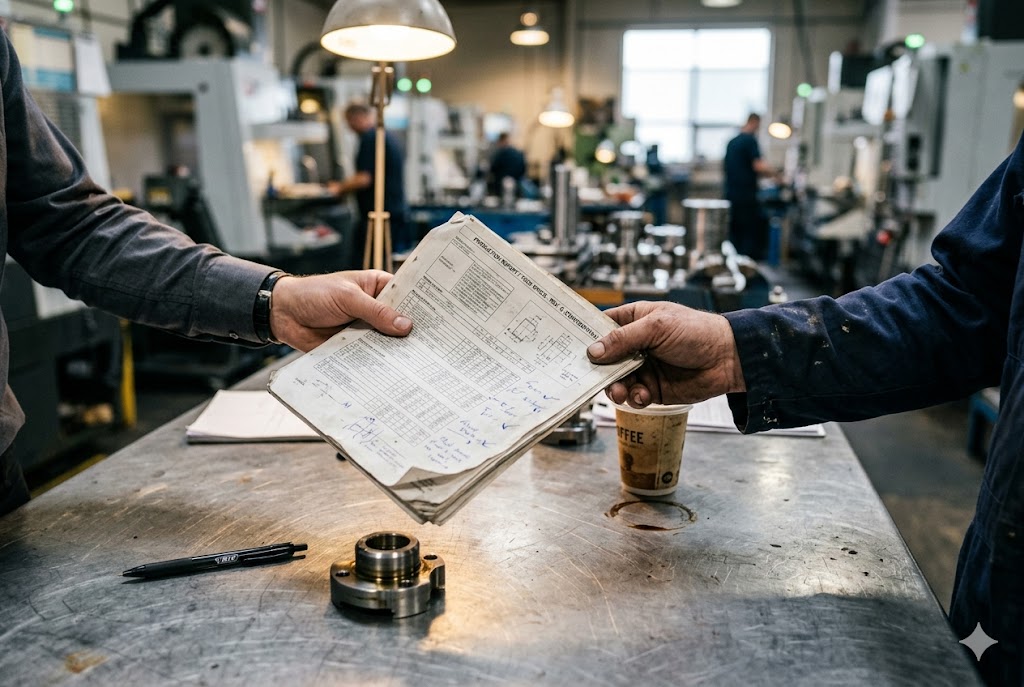
After sample approval, require the supplier to provide a signed process freeze document that records the CNC program revision, fixture drawing number, cutting tool specification, machine serial number, and all speeds and feeds used to produce the approved sample. Any change to these parameters must require your written approval before production starts.
Why a Process Freeze Document Matters
A sample proves that one part was made correctly. It does not prove that the process is repeatable. A process freeze document creates a contractual baseline. If the supplier changes anything without telling you, they are in breach of contract, and you have documented evidence to support a claim.
Here is what the process freeze document should cover:
| Parameter | What to Record | Why It Matters |
|---|---|---|
| CNC Program | Revision number and file name | Prevents undocumented edits between sample and production |
| Fixture | Drawing number and photo | Ensures the same datum setup is used at volume |
| Cutting Tools | Brand, grade, geometry, and tool life policy | Controls surface finish and dimensional output |
| Machine | Serial number or asset ID | Prevents rerouting to a less capable machine |
| Speeds & Feeds | Full cutting parameters for each operation | Locks thermal load and chip load that affect tolerances |
| Material Heat | Mill certificate heat number | Confirms alloy identity matches the approved sample |
PPAP: The Standard Designed for This Exact Problem
PPAP 1 stands for Production Part Approval Process. It was developed by the automotive industry to solve exactly this problem: proving that the production process, not just the sample part, is capable of producing conforming output at volume.
A basic PPAP submission 2 includes a dimensional report on a statistically meaningful sample of parts, a process flow diagram, a control plan, and a measurement system analysis. Not every supplier in China is familiar with PPAP, but a capable CNC factory will understand the concept even if they call it something different.
If a supplier refuses to provide PPAP documentation or has never heard of a control plan, that is a red flag. It means they have no formal system for proving process capability.
Contractual Change Control
Beyond the process freeze document, add a change control clause to your purchase order or supply agreement. This clause states that any change to material, process, tooling, subcontractor, or machine requires your written approval before implementation. Penalties for undocumented changes should be defined. This sounds formal, but it is standard practice in any professional supply chain and a reputable supplier will not object to it.
How Can I Verify That Production Uses the Same Process as the Sample?
Verification is the step most buyers skip because they trust the supplier after a good sample. That trust is exactly what gets exploited.
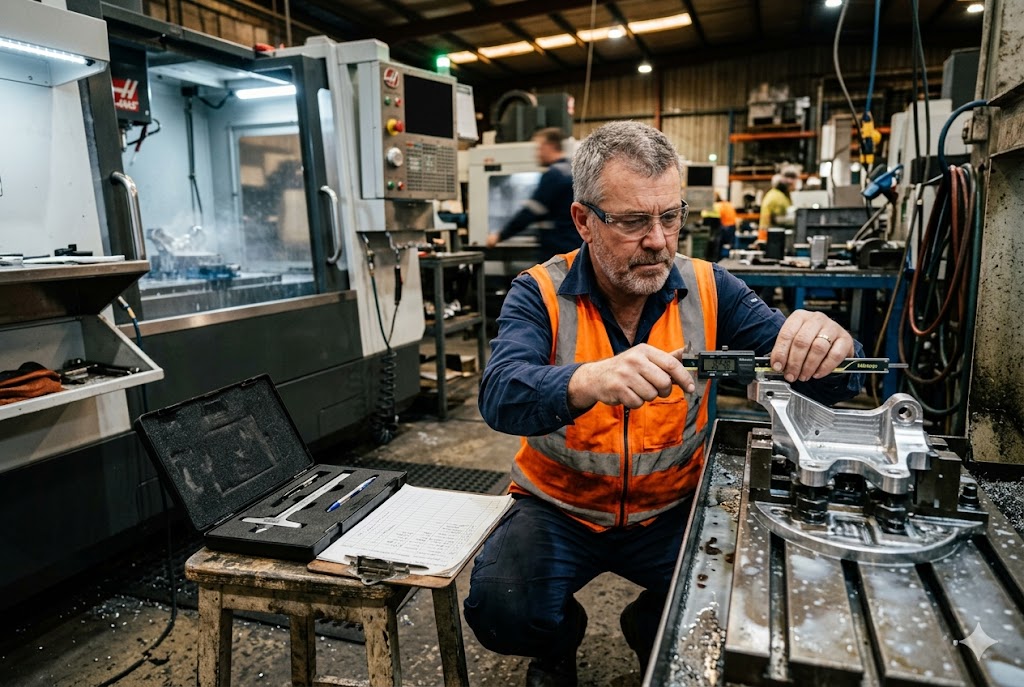
To verify that production uses the same process as the approved sample, require tool offset logs, machine utilization records, and a mid-production third-party inspection where an independent inspector pulls parts directly from the production line and measures critical dimensions against your approved baseline.
Mid-Production Inspection: The Most Underused Control
A pre-shipment inspection catches problems after all parts are made. At that point, the damage is done. A mid-production inspection, conducted when approximately 30 to 40 percent of the batch is complete, catches drift while there is still time to correct it.
The inspector should:
- Pull parts from the active production line, not from a display rack
- Measure all critical dimensions specified in the drawing
- Compare results to the approved sample measurement report
- Check material certificates against the batch in production
- Photograph the actual machine, fixture, and tooling in use
If the fixture looks different from the one in the process freeze document, stop the order immediately and demand an explanation.
Tool Offset and Change Logs
Tool wear 3 is the most predictable source of dimensional drift in a CNC run, and it is almost never visible in a single approved sample. As a tool wears, it changes the effective cutting diameter, which pushes dimensions outside tolerance in a gradual and invisible way.
Ask the supplier for:
| Document | What It Shows |
|---|---|
| Tool offset adjustment log | Confirms the operator was monitoring dimensional output and compensating for wear |
| Tool change records | Shows when worn tools were replaced and at what interval |
| In-process inspection sheet | Confirms parts were measured during the run, not just at the end |
A supplier who cannot provide these documents is not actively managing dimensional stability. They are hoping the parts come out right and checking at the end.
Factory Identity Verification
One of the most serious risks in Chinese CNC sourcing is the trading company problem. A broker gets your RFQ, sends your sample to a high-capability factory for qualification, and then subcontracts mass production to a cheaper shop with different equipment and no knowledge of your approved process.
Verify factory identity before placing the production order:
- Request the business license and confirm the registered company name matches who you are paying
- Conduct a video call tour of the actual machining floor and ask to see the specific machine that will run your parts
- Use a third-party factory audit if the order value justifies it
- Ask for a photo of the machine serial number alongside your production order traveler
This is not about distrust. It is about confirming that the entity running your production is the same entity that produced your sample.
Should I Ask for Pilot-Run Data Before Full Production?
Yes, always. A single approved sample is the best-case scenario under controlled conditions. A pilot run exposes what happens under real production conditions.
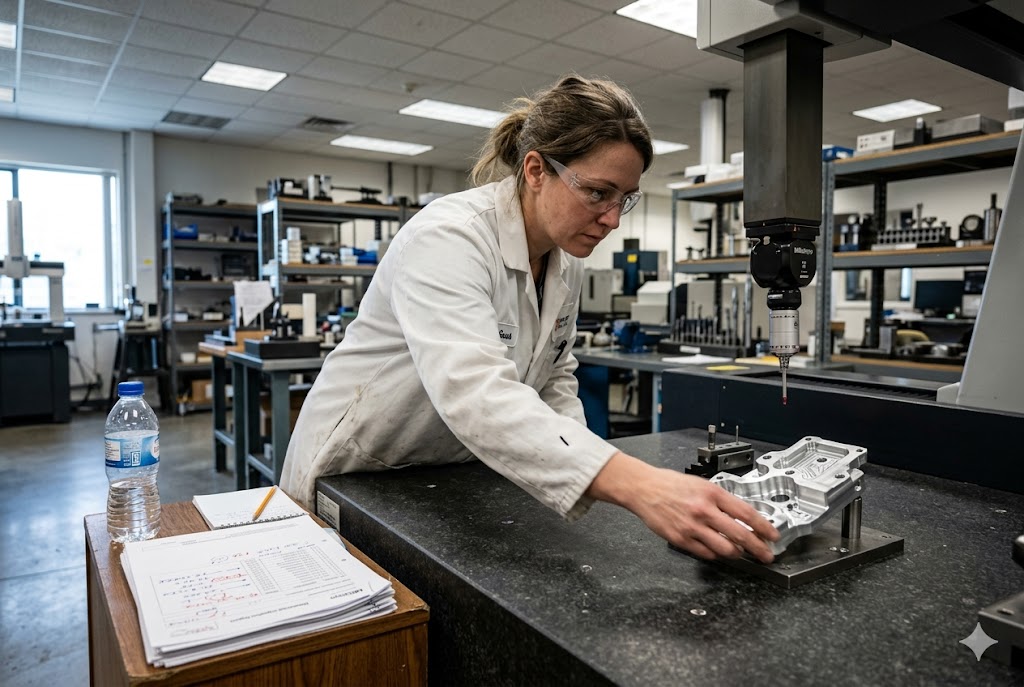
Request a pilot run of 30 to 100 pieces before committing to the full batch. Require full CMM dimensional reporting 4 on a statistically representative sample pulled from across the run, not just from the beginning. This data reveals tool wear drift, fixture repeatability, and thermal effects that a single approved sample cannot show.
What a Pilot Run Reveals That a Sample Cannot
A single sample is produced at the start of the process, with fresh tools, a warm machine, and an operator who knows it will be inspected. It represents the best the factory can do under the best conditions.
A pilot run of 50 to 100 pieces represents real production. It answers questions that a sample cannot:
| Question | Why a Sample Cannot Answer It | What the Pilot Run Shows |
|---|---|---|
| Does tool wear push dimensions out of tolerance? | Sample uses a fresh tool | Dimensional trend across the run reveals wear rate |
| Is the fixture repeatable across many load cycles? | Sample is one load cycle | Variation in datum-sensitive dimensions shows fixture stability |
| Does machine thermal growth affect tight tolerances? | Sample is often cut on a warm machine | Early-run vs mid-run dimensions reveal thermal effects |
| Can the operator maintain process without close supervision? | Samples are often supervised closely | Pilot run reflects normal operator behavior |
Cpk: The Number That Tells You the Process Is Capable
Process capability index 5, or Cpk, is a number that tells you how well a process fits within its tolerance limits. A Cpk of 1.33 6 means the process is capable. Below 1.0 means you will get defects at volume even if your sample was perfect.
Ask the supplier to calculate Cpk for your critical dimensions from the pilot run data. If they do not know what Cpk means, that tells you something important about their quality system maturity.
A capable supplier will provide:
- A dimensional report showing each measured feature against the tolerance
- The mean and standard deviation for each critical dimension
- A calculated Cpk for features with the tightest tolerances
- A note on any dimension that trended toward the limit during the run
When to Skip the Pilot Run
The pilot run is most valuable for new part numbers, complex geometries, tight tolerances, or large batch sizes. For simple, loose-tolerance parts from a supplier you have worked with for years, the risk-benefit calculation may not justify the lead time. Use judgment, but default to requiring a pilot run for any new supplier or new part family.
What Warning Signs Suggest the Supplier Cannot Keep Sample-Level Quality?
We assess suppliers before every new engagement. Some warning signs are obvious. Others only appear after you ask the right questions.
Key warning signs that a supplier cannot maintain sample-level quality at volume include: inability to provide a process freeze document, no in-process inspection records, refusal to share tool change logs, unfamiliarity with Cpk or control plans, and resistance to mid-production third-party inspection. Each of these signals a quality system that relies on luck rather than process control.
Red Flags in Supplier Communication
How a supplier responds to your quality questions tells you a great deal before any parts are made.
Watch for these patterns:
- They cannot explain what process they used to make the sample
- They say "no problem" to every quality request without providing specifics
- They cannot name the machine or fixture used for the sample
- They offer a lower price if you skip the pilot run
- They become defensive or evasive when you ask about subcontracting
A professional supplier welcomes process questions. They have documentation ready. If you have to pull basic process information out of them, the documentation probably does not exist.
Quality Fade: The Slow Version of This Problem
Quality fade 7 is a documented pattern in manufacturing supply chains. It works like this: the supplier wins your business with an excellent sample, fulfills the first two or three orders well, and then gradually substitutes cheaper materials, relaxes tolerances, or switches to lower-grade tooling as they become confident that your incoming inspection will not catch it.
Quality fade 8 tends to begin after the third or fourth repeat order, once the buyer has reduced their incoming inspection intensity based on past performance. Counter it by:
- Conducting unannounced third-party inspections on a random order each year
- Varying your incoming inspection sample size so the supplier cannot predict it
- Requiring the supplier to retain your golden sample at their facility and re-measure it in every batch report
Material Substitution: The Hidden Risk
Material substitution is separate from dimensional quality and is often missed entirely. A sample machined from genuine 7075-T6 aluminum passes every dimensional and visual check. A production batch machined from lower-grade or misidentified stock looks identical on the surface but will exhibit different surface finish behavior, different tool chatter, and long-term performance failure under load.
Require a mill certificate 9 traceable to the specific heat number for every production batch. For high-stakes applications, budget for incoming XRF spot-testing 10, which uses X-ray fluorescence to confirm alloy identity independently of the supplier's paperwork. It costs very little and eliminates one of the most consequential risks in CNC sourcing.
Conclusion
Lock the process at sample approval, demand pilot-run data with Cpk, inspect mid-production, verify factory identity, and watch for quality fade on repeat orders. These steps are not complex. They are simply what professional supply chain management looks like in practice.
Footnotes
1. Overview of PPAP, the automotive standard for proving supplier process capability at volume. ↩︎
2. AIAG's official PPAP 4th Edition manual defining submission requirements and control plan formats. ↩︎
3. How tool wear causes dimensional drift, surface defects, and quality failures in CNC machining. ↩︎
4. How CMMs deliver highly accurate, traceable dimensional measurements in modern manufacturing. ↩︎
5. ASQ's guide to process capability estimates including Cp and Cpk for production quality control. ↩︎
6. iSixSigma's definition of Cpk and how to interpret its value against tolerance limits. ↩︎
7. Wharton analysis of quality fade as a systemic challenge in Chinese manufacturing supply chains. ↩︎
8. Supply Chain Management Review's explanation of quality fade and how it erodes product standards over time. ↩︎
9. What a mill test report certifies and why it is essential for material traceability in metal procurement. ↩︎
10. How handheld XRF analyzers confirm alloy grade and composition without damaging the part. ↩︎