Skip to main content Skip to footer
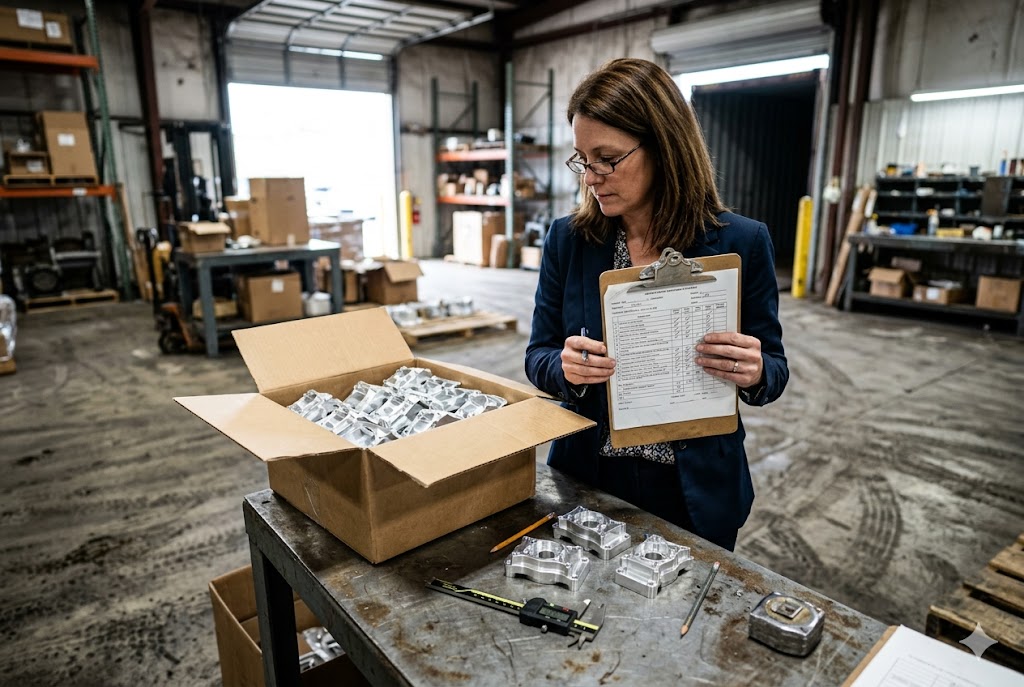
Last year, one of our clients received a shipment of 2,000 CNC-machined 1 housings — and 30% of them failed dimensional inspection 2 on arrival. The downstream production line stopped. The phone calls were not pleasant.
When you discover a batch quality issue importing custom CNC parts from China, act within 48 hours: document defects with photos and measured values, classify parts into conforming, reworkable, and scrap, withhold final payment, and require a written root-cause report from the supplier before approving any remake or releasing funds.
This guide walks through exactly what to do — step by step — so you protect your business, recover faster, and stop the same problem from coming back.
What Should I Do First When I Discover a Batch Defect?
Nothing moves faster than a production stoppage. When a defective batch lands at your dock, the first hours determine how much leverage you keep.
The first step when you discover a batch defect is to send the supplier a formal written defect report by email within 48 hours. Include timestamped photos, measured values versus specified tolerances, and a precise count of affected parts. This record becomes your legal foundation for any refund, remake, or dispute.
Document Everything Before You Touch Anything
Do not sort parts. Do not start rework. Do not call the supplier informally. Open your email, attach your evidence, and write the report first.
Here is what the defect report must include:
| Item | What to Record |
|---|---|
| Timestamped photos | Shot date/time visible; show defective feature clearly |
| Measured values | Actual measured dimension vs. drawing tolerance |
| Affected part count | Exact quantity inspected and quantity rejected |
| Defect description | Plain language: wrong bore diameter, surface crack, wrong material, etc. |
| Purchase order reference | PO number, part number, shipment date |
Send this by email — not WeChat, not a phone call. Email creates a timestamped paper trail that WeChat messages do not.
Why 48 Hours Matters
Chinese commercial norms recognize defect claims made promptly. If you wait two weeks to report, the supplier's first counter-argument will be that the damage happened after delivery, or that you caused it during storage. A report sent within 48 hours of confirmed receipt cuts off that defense.
Preserve the Evidence
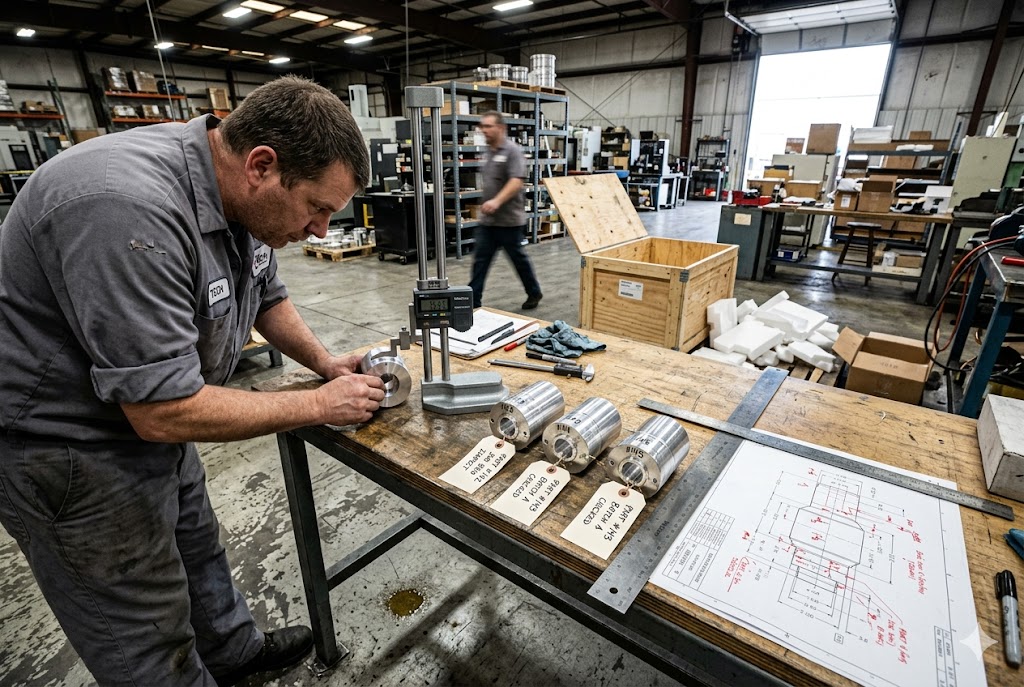
Set the defective parts aside. Photograph them next to a ruler or calibrated gauge. If you have a CMM or height gauge, record the measurements on paper with a signature. Third-party inspection labs can also document this for you at low cost — and their reports carry more weight in any formal dispute.
Inform Your Internal Team
Your production scheduler and your manager need to know immediately. If you have downstream customers depending on these parts, they need early warning too. Managing a delivery delay is far easier when you communicate it before it becomes a crisis.
What Not to Do
- Do not accept verbal apologies as a resolution.
- Do not return parts before getting written authorization from the supplier.
- Do not release final payment while the issue is unresolved.
- Do not discard defective parts — you may need them as physical evidence.
How Can I Separate Containment, Sorting, and Root-Cause Actions?
Most buyers treat a defective batch as one problem. It is actually three. Mixing them together slows resolution and weakens your negotiating position.
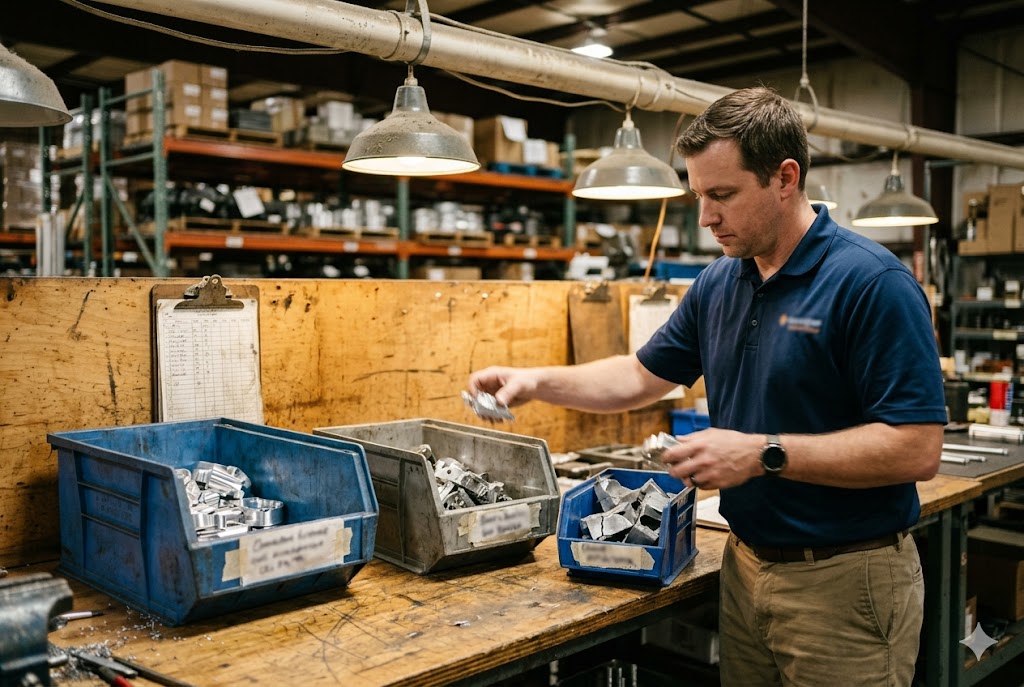
To handle a defective CNC batch effectively, separate your response into three distinct actions: containment (stop the damage), sorting (classify parts by condition), and root-cause investigation (find out why it happened). Each step requires different decisions and different people.
Step 1: Containment
Containment means stopping the defective parts from going further into your supply chain or your customer's hands.
Immediate containment actions:
- Place a physical hold tag on all suspect inventory.
- Notify your warehouse team not to pick or ship from this batch.
- If any parts already reached your customer, issue a field alert immediately.
Containment is about speed. You are not solving the problem yet — you are stopping it from getting bigger.
Step 2: Sorting
Once parts are contained, sort them into three buckets. This is critical for negotiation.
| Bucket | Description | Resolution Path |
|---|---|---|
| Conforming | Passes all drawing requirements | Use as planned |
| Reworkable | Minor burrs, surface finish, slightly oversized features | Negotiate rework at supplier's cost; re-inspect after |
| Scrap | Undersized bores, wrong alloy, cracks, structural defects | Require full replacement; cannot be recovered |
Why does sorting matter for negotiation? Because if you present all parts as "defective," the supplier will argue about every piece. If you hand them a sorted list with documented evidence per bucket, the conversation moves to resolution faster.
Step 3: Root-Cause Investigation
A structured root-cause analysis 3 is the supplier's job — but you must require it formally. Do not accept "we'll be more careful next time." That is not root cause. Root cause explains what process broke down and why.
Separating These Three Actions Protects You
Each action has a different owner, a different timeline, and a different output:
- Containment — you own this, it happens today.
- Sorting — you or a third-party inspector, it happens within 3–5 days.
- Root-cause report — the supplier owns this, with your deadline of 7–10 business days.
If you collapse all three into one conversation, suppliers use confusion as a delay tactic. Keep them separate. Keep them written. Keep each one on its own deadline.
What Corrective Actions Should I Require from the Supplier?
An apology and a remake are not corrective actions. Without a structured response from the supplier, the replacement batch will have the same problems.
Require the supplier to submit a written 8D (Eight Disciplines) report 4 or Corrective Action Report before you approve any remake or release final payment. This report must identify the root cause, describe the immediate containment taken, and detail the permanent fix. Suppliers who cannot produce this document will repeat the defect.

What Is an 8D Report?
An 8D (Eight Disciplines) report is a structured problem-solving document used widely in manufacturing. It does not need to be complex. What matters is that the supplier answers the key questions in writing.
| 8D Section | What the Supplier Must Answer |
|---|---|
| D1 – Team | Who is responsible for this investigation? |
| D2 – Problem description | What exactly was wrong, and how many parts? |
| D3 – Containment | What did you do to stop defective parts leaving the factory? |
| D4 – Root cause | What process or material failure caused this defect? |
| D5 – Corrective action | What permanent change will prevent recurrence? |
| D6 – Verification | How will you confirm the fix worked? |
| D7 – Prevention | How will this be applied to other similar parts? |
| D8 – Closure | Who signs off and when? |
You do not need to use the exact "8D" label. A simple Corrective Action Report (CAR) 5 covering the same points is equally effective. The format matters less than the content.
Why Root Cause Must Come Before Approval
If you approve a remake before root cause is confirmed, you are ordering a second production run on a broken process. Our team has seen this happen: a client approved a fast remake under production pressure, the supplier ran the same machines with the same operator and the same tooling setup — and 25% of the second batch failed the same feature.
Do not rush this step. One extra week spent confirming root cause saves you six weeks of dispute handling on the second batch.
Payment as Your Primary Lever
Withhold your final payment installment until the CAR is approved. This is your most practical tool. Once payment clears, your leverage under Chinese commercial norms drops sharply. Most export factories respond quickly to a clear, professional statement:
"We will review and approve your corrective action report, then release the remaining balance upon receipt of the replacement batch and passing re-inspection."
Keep that language in your emails. Keep it professional and factual — not emotional.
Rework Re-Inspection Is Not Optional
If the supplier proposes rework on recoverable parts, require a third-party re-inspection at the supplier's cost before those parts ship again. Rework on CNC parts — especially re-machining, deburring, or re-finishing — frequently introduces new damage: surface scratches, altered dimensions from improper fixturing, or heat distortion from secondary operations. Treat reworked parts as an untested batch until proven otherwise.
How Can I Prevent the Same Batch Issue from Happening Again?
Reactive dispute handling costs money every time. The real goal is a system that catches problems before they reach your dock.
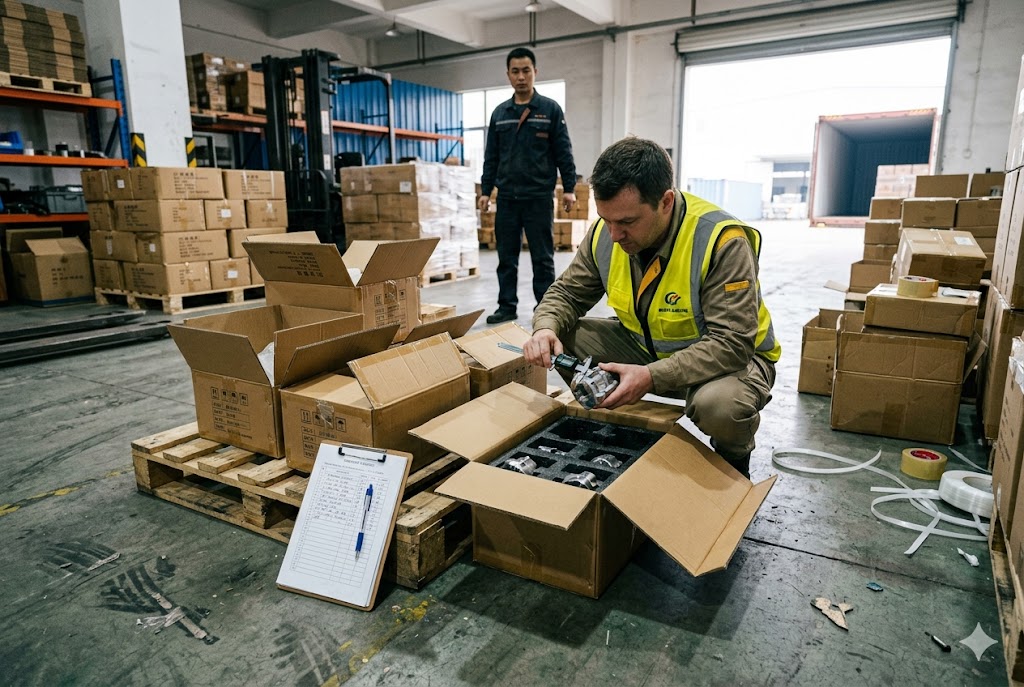
To prevent recurring batch defects from your CNC supplier in China, implement three things: a formal supplier scorecard reviewed quarterly, a pre-shipment inspection protocol for every order, and a written quality agreement signed before production begins. These measures shift quality control upstream, where it is cheaper and faster to fix.
Build a Supplier Scorecard
A supplier scorecard 6 creates documented performance pressure. Share it with the supplier quarterly. Chinese manufacturing partners tend to respond more consistently to systematic, data-based accountability than to ad-hoc complaints after each incident.
Track these metrics per order:
| Metric | How to Measure |
|---|---|
| Defect rate | Rejected parts ÷ total parts shipped |
| On-time delivery | Actual ship date vs. agreed ship date |
| CAR response time | Days from defect report to written root-cause submission |
| Re-inspection pass rate | % of reworked or replacement parts passing re-inspection |
| FAI completion | First Article Inspection submitted on time before mass production |
A supplier who scores poorly on multiple orders in a row is a risk. Start qualifying a backup supplier before you need one.
Require a First Article Inspection (FAI)
For every new part or revised drawing, require the supplier to submit a First Article Inspection 7 report before mass production begins. The FAI measures the first completed part against every dimension on the drawing. If the first article passes, mass production proceeds. If it fails, you catch the problem before 2,000 defective parts exist.
This is one of the most cost-effective quality tools available. Our engineers use it on every new order.
In-Process Quality Control
Ask for the supplier's in-process inspection (IPQC) 8 records from the production run. These are shift-change logs, machine offset records, and sampling data taken during production. A supplier who cannot produce IPQC records has no functioning quality system. That is not a minor issue — it means every future batch outcome is unpredictable.
Pre-Shipment Inspection
Before the goods leave the factory, conduct a pre-shipment inspection 9. This can be done by a third-party inspection company or by your own team. Inspect against the drawing: critical dimensions, surface finish, material certification, packaging, and count. Catching a defect before shipment costs a fraction of what it costs to resolve after the goods have crossed an ocean.
Arbitration as a Last Resort
For recurring defects across multiple orders with the same supplier, reference your purchase agreement's arbitration clause. The China International Economic and Trade Arbitration Commission (CIETAC) 10 is a recognized and enforceable channel that most legitimate Chinese export factories take seriously. Formal arbitration threats — especially when backed by documented evidence — are far more effective than informal complaints.
Conclusion
Batch defects are painful. But they are manageable when you act fast, document thoroughly, classify parts accurately, demand root-cause accountability, and build prevention systems that work before goods ever leave the factory.
Footnotes
1. Overview of CNC (numerical control) machining technology and how it works. ↩︎
2. How coordinate-measuring machines are used for dimensional inspection of precision parts. ↩︎
3. Explains root cause analysis methods used to identify the source of manufacturing defects. ↩︎
4. The Eight Disciplines (8D) structured problem-solving framework used in manufacturing quality disputes. ↩︎
5. Overview of corrective and preventive action (CAPA) processes in quality management systems. ↩︎
6. How balanced scorecards are adapted to track and measure supplier performance over time. ↩︎
7. Explains the First Article Inspection (FAI) process and its role in pre-production quality validation. ↩︎
8. Introduction to quality control methods including in-process inspection practices on the production floor. ↩︎
9. What pre-shipment inspection covers and why it is critical for import quality assurance. ↩︎
10. Background on CIETAC, China's primary arbitration body for international trade and commercial disputes. ↩︎