Skip to main content Skip to footer
Every year, our team at Luckym walks new clients through the same hard conversation: they found a "factory" online, sent a deposit, and never received a single part. We have seen this pattern repeat itself across industries, order sizes, and buyer experience levels.
Avoiding scams when importing custom CNC machining parts from China requires verifying the supplier's legal registration on China's SAMR database, commissioning a third-party factory audit, confirming bank account ownership before payment, structuring payments in milestones tied to inspection sign-offs, and retaining golden samples to guard against bait-and-switch quality fraud.
This guide breaks down each risk in plain terms so you can act before money leaves your account.
What Red Flags Should I Watch for Before I Place Any Payment?
We review hundreds of supplier profiles every year, and the warning signs before payment are almost always the same. They are easy to miss when you are under deadline pressure, but catching them early costs nothing.
Before placing any payment, watch for suppliers who refuse to share their Chinese company name and unified social credit code, whose bank account name does not match their registered business name, who are registered less than twelve months ago, or who cannot answer basic technical questions about CNC machining processes.

Verify Legal Registration First
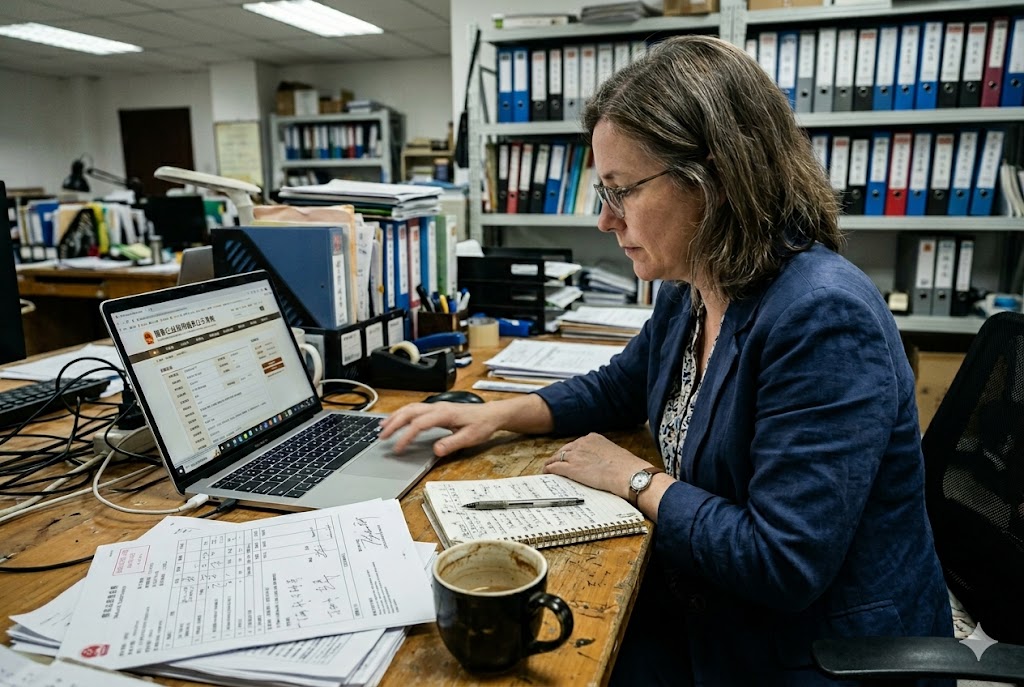
Every legitimate Chinese manufacturer has a registered legal entity. You can look it up for free on China's State Administration for Market Regulation database 1 at gsxt.gov.cn. Ask the supplier for their exact Chinese company name and their unified social credit code 2 (统一社会信用代码). A real factory gives you this without hesitation.
If they delay, give you a vague answer, or provide details that do not match the SAMR record, stop. Do not proceed.
| What to Check | Where to Check | Red Flag |
|---|---|---|
| Unified Social Credit Code | gsxt.gov.cn | Missing, refused, or mismatched |
| Registration date | gsxt.gov.cn | Less than 12 months old |
| Registered business name | SAMR record vs. bank account | Names do not match |
| Business scope | SAMR record | Does not include manufacturing |
Check the Bank Account Name
This is where Business Email Compromise (BEC) fraud enters the picture. Fraudsters intercept email threads between you and a legitimate supplier. They wait until payment is about to be sent. Then they substitute their own bank details into the conversation.
In 2023, BEC fraud caused USD 2.9 billion in losses 3 to US businesses. China-sourcing payment flows are a primary target.
Before any wire transfer, call the supplier on a phone number you looked up independently — not a number they gave you in an email. Confirm that the receiving bank account name exactly matches the legal entity name on the SAMR record. If the account is held in Hong Kong, Singapore, or in a personal name rather than a mainland Chinese corporate name, treat this as a serious red flag.
Ask Technical Questions Early
Any genuine CNC machinist can answer specific process questions without hesitation. Ask about their machine makes and models, their spindle speed range, how they fixture parts with your geometry, or their typical achievable surface roughness. A real factory answers immediately and specifically. A trading company posing as a manufacturer gives vague, copy-pasted, or evasive replies.
Also reverse-image-search every factory photo they send you. Fraudulent operators routinely use photos stolen from legitimate factories to build a convincing profile.
How Can I Verify Whether a Supplier Is Real Before Sharing Drawings?
Sharing drawings before you have confirmed a supplier's legitimacy is one of the costliest mistakes a buyer can make. Your drawings contain proprietary geometry, tolerances, and material specifications. Once shared, they cannot be un-shared.
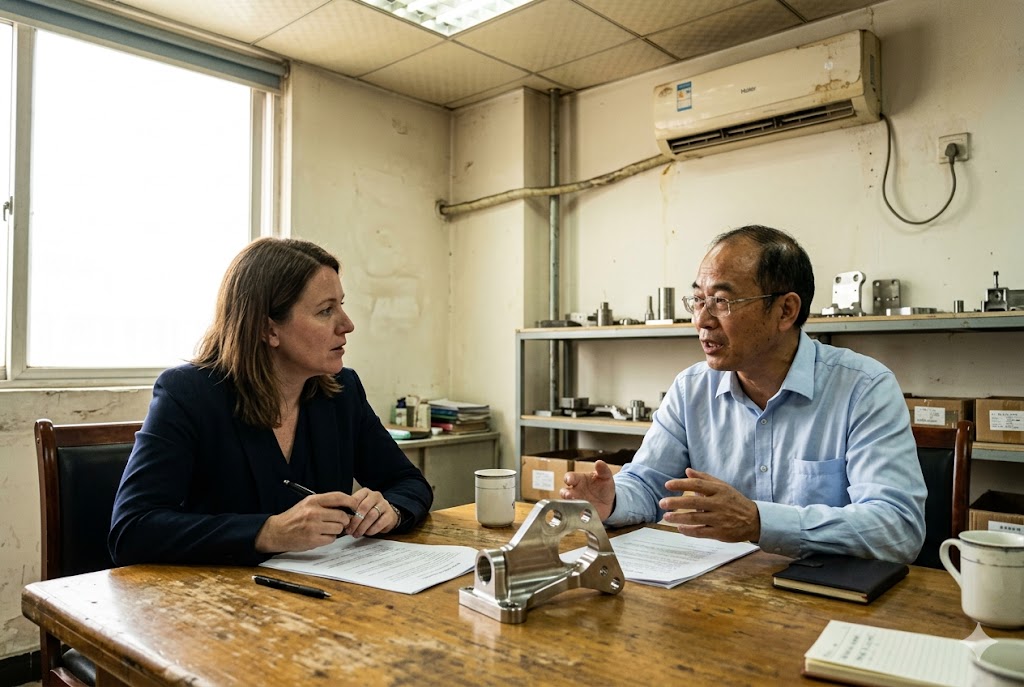
To verify a supplier is real before sharing drawings, confirm their SAMR registration, conduct a third-party physical factory audit to verify they own the equipment they claim, and use a non-disclosure agreement governed by Chinese law signed before any technical documents are transferred.
Commission a Third-Party Factory Audit
A factory audit conducted by an independent inspection firm 4 is the single most reliable verification tool available to a remote buyer. The auditor visits the physical facility, walks the production floor, photographs equipment serial numbers, counts machines, and checks certifications against the originals.
The audit should confirm:
- The facility physically exists at the registered address
- They own CNC equipment of the type and quantity they claim
- Workforce size and skill level matches their stated capacity
- Quality certifications (ISO 9001 5, IATF 16949 6, etc.) are current and not expired or fabricated
- Floor space and production capacity can realistically fulfill your order volume
Trading companies posing as manufacturers and virtual offices with no production capability are among the most common causes of first-order failure. An audit defeats both.
| Audit Item | Why It Matters |
|---|---|
| Equipment serial numbers | Confirms machines are owned, not rented for the visit |
| Workforce headcount | Validates claimed production capacity |
| ISO certificate originals | Rules out fake or expired certificates |
| Registered address match | Confirms factory and legal entity are the same |
| QC lab and instruments | Verifies inspection capability for your tolerances |
NDA Before Drawing Transfer
Always sign a non-disclosure agreement before sharing technical drawings. The NDA should be governed by Chinese law and include the supplier's full legal entity name as registered with SAMR. An NDA governed by US law is difficult to enforce in China 7. An NDA naming a trading company rather than the actual factory provides limited protection.
For first orders from a new supplier, consider sharing a partial drawing — sufficient for quoting — while withholding final tolerances and proprietary features until the audit is complete and the production contract is signed.
AI-Enabled Fraud Is a Real Threat Now
Since 2024, fraudsters have used AI-generated deepfake video calls 8 to impersonate factory managers, staged fake virtual factory tours in real time, and produced photorealistic images of CNC equipment that does not exist. Remote verification — video calls, photographs, certificates — cannot reliably distinguish real from fabricated at current AI capability levels.
The only countermeasure that remains reliable is a physical audit conducted in person or by a trusted third party on the ground in China.
What Sourcing Steps Reduce Fraud Risk on a First Order?
The first order with any new supplier carries the highest fraud exposure. This is when you have the least data and the supplier has the most leverage. A structured approach removes most of that leverage before you commit funds.
To reduce fraud risk on a first order, structure payment in milestones tied to verified production events — typically 30% deposit, 40% on first-article or mid-production inspection approval, and 30% after pre-shipment inspection sign-off — and tie bulk order acceptance to a retained golden sample.
Use a Milestone Payment Structure
A supplier who has received 100% of your payment before you have confirmed quality has no remaining financial incentive to fix defects, replace rejected parts, or respond to your messages. Milestone payments change this dynamic. Each payment release is tied to a verified production event.
| Payment Stage | Trigger | Percentage |
|---|---|---|
| Deposit | Contract signed, production initiated | 30% |
| Mid-production payment | First-article approval or mid-production inspection pass | 40% |
| Final payment | Pre-shipment inspection sign-off | 30% |
Never pay more than 30–40% upfront to a first-time supplier, regardless of the pressure applied. Any supplier who demands 70% or 100% upfront before production evidence should be treated with caution.
The Bait-and-Switch Risk
Nearly a third of reported quality disputes involve a pattern called bait-and-switch. The supplier produces a perfect sample using premium materials and tight tolerances. You approve it. The bulk order is then fulfilled through a cheaper workshop using inferior materials or wider tolerances.
Defend against this with three steps:
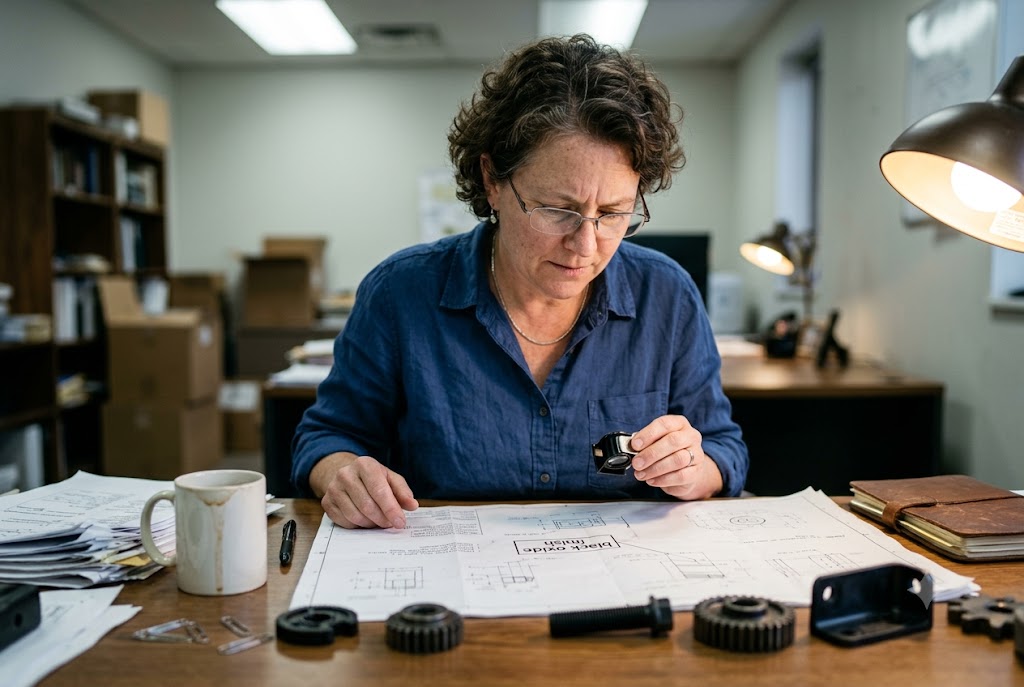
- Retain a physical golden sample signed by both parties. This is the contractual acceptance standard for the bulk order.
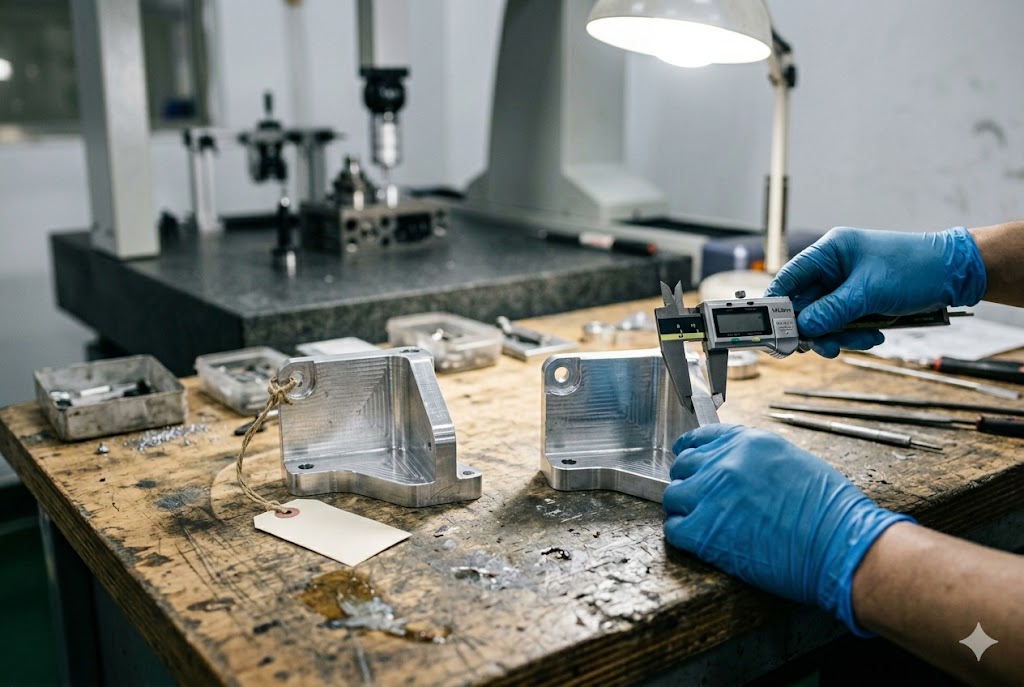
- Require CMM-verified dimensional reports on initial production units before they are released from the factory.
- Use pre-shipment inspection on every first order. An independent inspector checks conformance against the golden sample before the goods load onto the truck.
Include Material Traceability Requirements
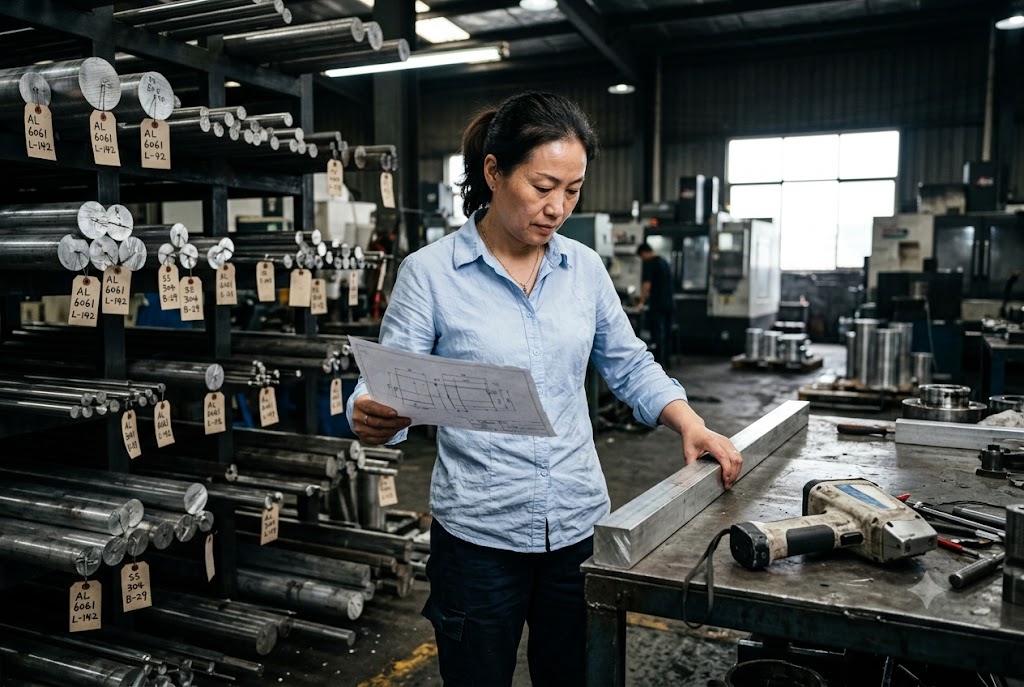
For machined parts where material grade matters — aerospace aluminum, medical-grade stainless, specific alloy steels — include a material traceability requirement in your contract. Require mill test certificates 9 per batch, with the material heat number traceable to the certificate. This makes substituting cheaper materials significantly harder and easier to detect.
Document Everything From Day One
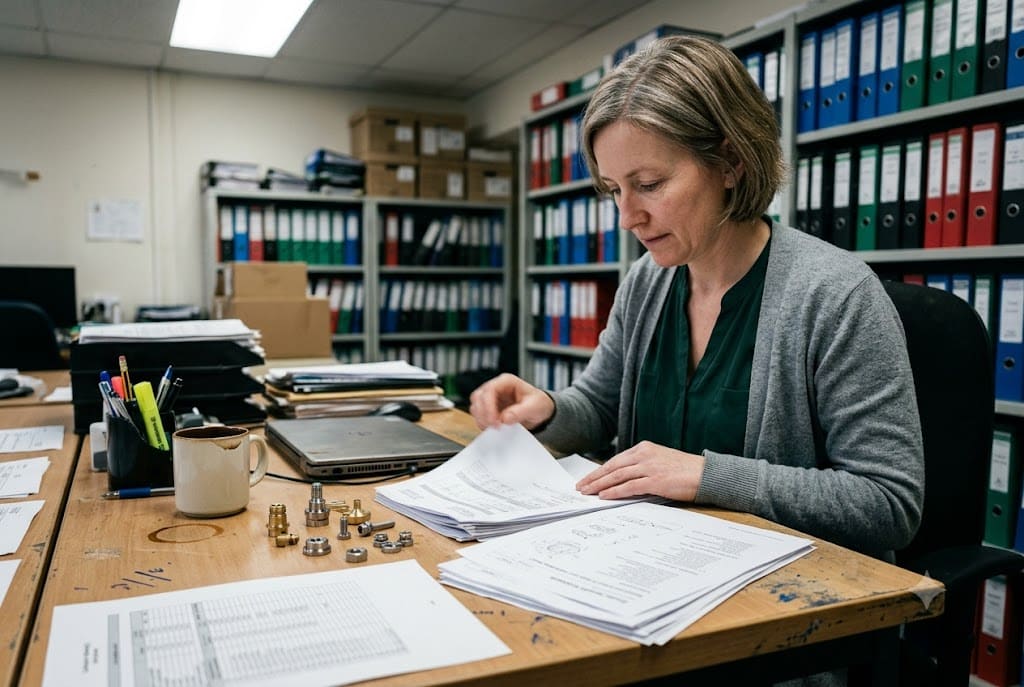
Maintain a complete evidence file from first contact. Save every email, WeChat message, payment receipt, certificate, product listing screenshot, and inspection report. If fraud occurs, international wire transfers can sometimes be recalled within hours if the receiving bank has not yet released funds. Platform dispute resolution on Alibaba or Made-in-China operates on a first-documented-evidence basis. Buyers who reconstruct evidence after the fact almost always recover less than those who documented in real time.
When Should I Stop Moving Forward With a Supplier?
Knowing when to walk away is as important as knowing how to vet a supplier. Some red flags appear early. Others emerge mid-order. Both types are worth knowing.
Stop moving forward with a supplier if they refuse to provide SAMR registration details, their bank account name does not match their legal entity name, they demand full payment upfront, they cannot pass a third-party factory audit, or quality degrades order by order after an initial strong performance.

Hard Stop Signals Before Order Placement
Walk away immediately if any of these appear before you place an order:
- Supplier refuses or is unable to provide their unified social credit code
- SAMR registration is less than 12 months old
- Bank account is in Hong Kong, Singapore, or a personal name rather than a mainland Chinese corporate account
- Factory audit fails — facility does not exist, capacity is misrepresented, or certificates are fake
- They demand 70% or 100% upfront payment with no milestone structure
- They cannot answer specific CNC process questions about your part geometry
Signals That Appear Mid-Order
Some problems only surface after production begins. Stop and escalate if:
- The supplier becomes unreachable or communication slows significantly after deposit payment
- They resist or refuse to allow mid-production inspection
- First-article dimensions do not match drawing tolerances and they push back on the finding
- They request the final payment before pre-shipment inspection is completed
Quality Fade Across Repeat Orders
This is one of the least-detected forms of supplier fraud. A supplier performs well on the first two or three orders. Then, as margins tighten, they gradually degrade material grade, surface finish, or dimensional compliance. Each individual order seems acceptable. The change is only visible when you compare across batches.
Defend against quality fade by:
- Retaining golden samples from every approved batch
- Conducting AQL-based statistical inspection 10 on every third or fourth repeat order, not just first orders
- Requiring mill test certificates per batch and checking heat numbers against certificates
- Watching for any upward creep in dimensional non-conformances across successive inspection reports
| Warning Signal | Stage | Recommended Action |
|---|---|---|
| Refuses SAMR code | Pre-order | Walk away immediately |
| Bank account mismatch | Pre-payment | Verify by phone, do not transfer |
| Fails factory audit | Pre-order | Disqualify supplier |
| Blocks mid-production inspection | During production | Escalate, withhold next payment |
| Pushes back on first-article defects | During production | Require corrective action report |
| Requests final payment before inspection | Pre-shipment | Refuse until inspection is complete |
| Gradual quality degradation | Repeat orders | Conduct unannounced AQL inspection |
Conclusion
Fraud risk in China CNC sourcing is real but manageable. Verify registration, audit the factory, structure payments to milestones, retain golden samples, and document everything from day one. These steps protect your money before a problem starts.
Footnotes
1. China's official SAMR database for verifying manufacturer legal registration and business scope. ↩︎
2. Explains what China's 18-digit Unified Social Credit Code is and how to use it for due diligence. ↩︎
3. FBI IC3 2023 Internet Crime Report detailing BEC losses exceeding $2.9 billion. ↩︎
4. Comprehensive guide to conducting factory audits in China and what auditors verify on-site. ↩︎
5. ISO's official explanation of the ISO 9001 quality management system standard and certification process. ↩︎
6. Overview of IATF 16949 automotive quality management certification requirements and scope. ↩︎
7. Why US-style NDAs fail in China and how NNN agreements provide stronger IP protection. ↩︎
8. How deepfake video and voice fraud targets businesses and why physical verification remains essential. ↩︎
9. What mill test certificates contain, how heat numbers enable material traceability, and certificate types. ↩︎
10. How AQL-based statistical sampling determines acceptable defect rates and sample sizes for batch inspection. ↩︎