Skip to main content Skip to footer

We manage sourcing for hundreds of custom CNC machined parts 1 every year across factories in China and Vietnam. One thing we see constantly: buyers who focus only on price lose suppliers quietly, while buyers who invest in the relationship get better parts, faster delivery, and far fewer headaches.
Building a long-term CNC supplier relationship in China requires consistent payment, regular communication, annual factory visits, and sharing production forecasts. Buyers who treat suppliers as partners — not just vendors — receive better scheduling priority, more transparent problem-solving, and improved payment terms over time.
If you want to stop restarting supplier qualification cycles every two years, keep reading. The strategies below are practical, proven, and applicable starting from your next purchase order.
What Makes a CNC Supplier Treat Me as a Priority Customer?
When our team places orders with factories, the customers who get called first when capacity tightens are never the ones who paid the lowest price. They are the ones the factory trusts.
A CNC supplier prioritizes customers who pay reliably, communicate clearly, place consistent volume, and treat the factory team with respect. Suppliers are businesses under pressure — your predictability and professionalism directly determine where your order lands in the production queue.
Why Reliability Matters More Than Price
Chinese factory owners are explicit about this when you ask them directly. Payment reliability is the number one factor. A buyer who pays on time, every time, without renegotiating completed orders, earns trust faster than any other action. Factories operate on thin margins and tight cash flow. When your invoice clears without drama, you become low-risk, and low-risk customers get protected.
The Role of Guanxi in Manufacturing
Guanxi — the Chinese concept of relationship capital 2 — is not abstract. It is practical. It determines who gets the quality engineer assigned first. It determines who gets a phone call when a material shortage is about to delay a shipment. It determines who gets flexibility on lead time when the factory is at 95% capacity.
Guanxi is built through repeated positive interactions over time. It cannot be fast-tracked by a single large order or a fancy dinner. It is earned through consistency.
| Buyer Behavior | Supplier Response |
|---|---|
| Pays on time, every invoice | Treated as low-risk, scheduled with priority |
| Haggles after order is placed | Loses goodwill, deprioritized in future capacity crunches |
| Visits factory annually | Seen as a serious, committed customer |
| Only contacts supplier when problems arise | Viewed as transactional, given minimum effort |
| Sends consistent volume forecasts | Factory plans material and labor proactively for you |
What Mianzi Means for Your Account
Mianzi means face — social and professional reputation in Chinese business culture 3. When you recognize a supplier's quality improvement or on-time delivery performance in writing, or better yet, in person during a factory visit, you give them face. Suppliers who receive recognition compete to maintain it. Suppliers who only hear complaints disengage.
A brief email acknowledging a well-executed order costs you nothing. The return, in terms of discretionary effort on your next order, is significant.
Practical Steps to Become a Priority Customer
- Pay invoices on the agreed date. Do not renegotiate after shipment.
- Keep one consistent point of contact on your team who builds a working relationship with a named counterpart at the factory.
- Respond to supplier questions and samples within 24–48 hours. Slow buyers create scheduling uncertainty.
- Acknowledge good performance explicitly, not just when something goes wrong.
- Place orders with enough lead time. Rushing orders signals disorganization and forces costly overtime.
How Can I Balance Negotiation Pressure With Partnership Building?
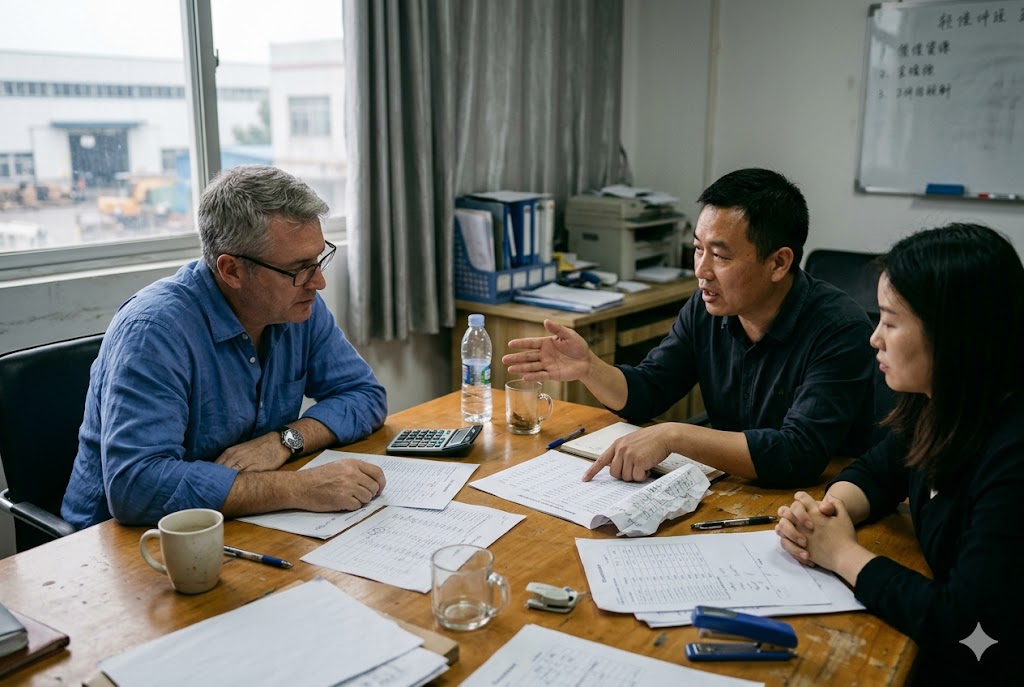
Early in our sourcing work, we watched buyers push hard on price and win the negotiation — then lose the supplier within 18 months. Factories simply moved their best capacity elsewhere.
Balancing negotiation and partnership means separating price discussions from relationship interactions, negotiating transparently before placing an order rather than after, and leaving enough margin in the deal for the factory to operate at quality. Squeezing suppliers to minimum margin destroys the goodwill that drives above-contract performance.
The Cost of Winning Every Negotiation
There is a version of supplier negotiation that wins every single time. The buyer extracts the lowest possible unit price, the shortest lead time, and the maximum payment terms. The factory accepts because it needs the order volume.
Then quality slips. Lead times stretch. Communication gets slower. The factory is cutting corners to make the economics work, or simply spending its best resources on customers who are easier to serve.
The total cost of poor quality 4 — rework, re-inspection, customer complaints, production stoppages — almost always exceeds the savings from aggressive price negotiation.
How to Negotiate Without Damaging the Relationship
| Approach | Impact on Relationship | Long-Term Outcome |
|---|---|---|
| Negotiate price before order placement | Neutral to positive | Clean deal, no resentment |
| Renegotiate after goods are made | Highly damaging | Supplier loses trust, performance degrades |
| Share target cost openly | Builds transparency | Supplier offers genuine alternatives |
| Use competing quotes as leverage repeatedly | Creates transactional dynamic | Supplier deprioritizes your account |
| Accept occasional small price increases | Signals fairness | Supplier protects your account in tight markets |
Setting Fair Expectations on Payment Terms
Payment terms are part of negotiation, and they directly affect the relationship. Asking for 60 or 90-day terms from a small factory is asking them to finance your supply chain. For long-term partnerships, a structure like 30% deposit and 70% on bill of lading is workable and fair. As trust builds over multiple orders, some factories will extend Net 30 or Net 45 terms 5 to reliable buyers — but this is earned, not demanded.
When to Accept a Higher Price
When a supplier you trust comes back with a price increase due to material costs or labor market pressure, consider accepting it — especially if the increase is modest and the relationship has been performing well. Holding a supplier to an unworkable price forces them to find savings somewhere, and that usually means quality.
A supplier who knows you will treat them fairly on pricing is a supplier who calls you with problems early, before they become shipment failures.
We encourage every client we work with to share at least a rough 6-month volume forecast with their top two or three suppliers. Most are hesitant at first. Almost all of them see lead time improvements within two to three order cycles.
Yes. Sharing rolling 6 to 12-month volume forecasts with key CNC suppliers — even as non-binding estimates — allows the factory to pre-order materials, plan machine scheduling, and allocate skilled labor in advance. This directly reduces your lead times, lowers material substitution risk, and signals that you are a strategic partner, not a spot buyer.
Why Forecasts Reduce Your Lead Time
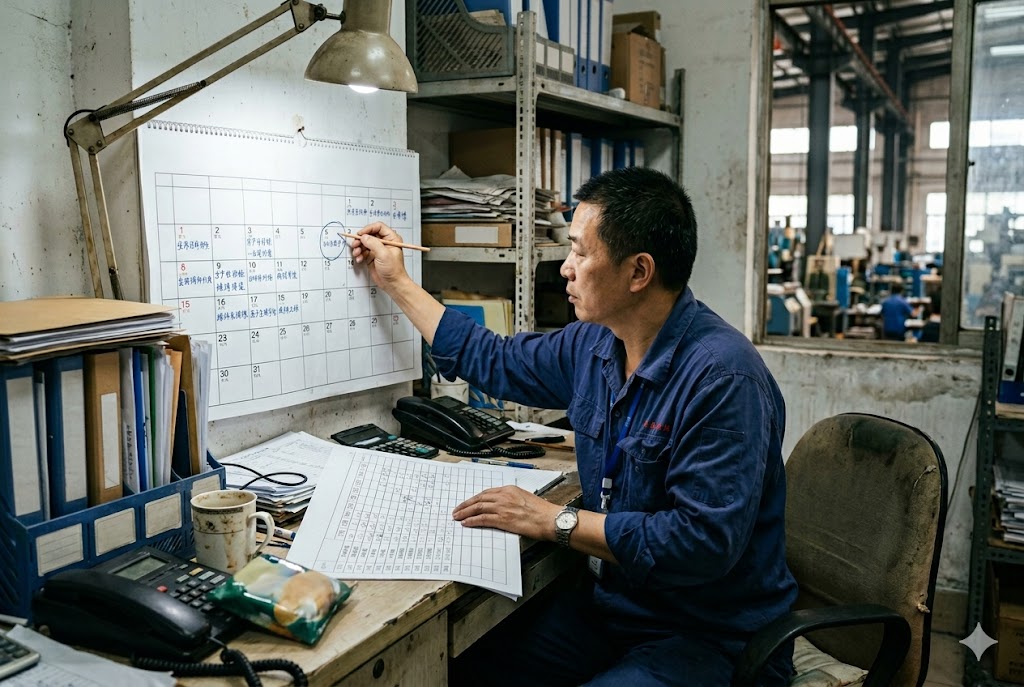
Most custom CNC parts require raw material that must be ordered and delivered before machining can begin. In China, standard lead times for some alloys or specialty bar stock can run two to four weeks. If your supplier only knows about your order when you send the purchase order, they cannot pre-position material. If you have given them a forecast showing you will likely need a batch of aluminum 6061 6 flanges in month three, they can carry the material ready.
The same logic applies to machine scheduling. Factories run production schedules across many customers. A buyer who is expected is scheduled in advance. A buyer who appears without notice gets slotted into whatever gap exists — which may mean a longer wait.
Design for Manufacturability: Involving Suppliers in New Parts
Sharing improvement plans and new part designs early — a practice called Design for Manufacturability (DFM) collaboration 7 — has an effect beyond efficiency. When a factory's engineering input is solicited and acknowledged during the design phase, the team develops co-ownership over the product.
A machinist who helped flag a tolerance issue in the drawing before the first part was cut has a personal stake in making that part right. A machinist who received only a finished drawing to execute does not.
| Collaboration Type | What You Share | Benefit to You |
|---|---|---|
| Volume forecast | 6–12 month rolling quantity estimates | Lower lead times, better material availability |
| DFM review | CAD files or drawings before finalizing | Cost reduction suggestions, tolerance feasibility flags |
| Improvement roadmap | Quality targets, tolerance tightening plans | Supplier prepares process investment in advance |
| Packaging feedback | Inspection failures or damage reports | Supplier improves without requiring a formal dispute |
How to Share Forecasts Without Creating Legal Exposure
Forecasts do not need to be contractually binding to be useful. A simple monthly or quarterly email stating "We anticipate approximately X pieces of part number Y in the next two quarters" is enough. Include a disclaimer that the forecast is non-binding and subject to change. Most experienced factory managers understand the caveat and use the information as planning guidance, not a firm commitment.
If you have a master supply agreement in place, you can formalize the forecast sharing as a preferred communication protocol rather than a contractual obligation.
How Do Long-Term Relationships Improve Quality, Lead Time, and Payment Terms?
After several years of managing the same supplier relationships on behalf of clients, the performance improvements compound in ways that are hard to fully quantify — but very easy to notice when you compare the first-year experience with year three or four.
Long-term CNC supplier relationships improve quality because the factory knows your standards deeply; they reduce lead times because you are forecasted and trusted; and they improve payment terms because the supplier has evidence of your reliability. The relationship itself becomes a sourcing asset that lowers your total cost of ownership.

Quality Improvements Over Time
In the first order cycle with any new supplier, you spend significant time communicating requirements that are already in your drawings and specifications. Surface finish expectations. Packaging standards. Inspection criteria. Acceptable dimensional variation near the tolerance boundary.
By year two or three with the same supplier, most of this knowledge is institutional. The quality engineer knows that your aerospace customer holds the bore diameter to the tight end of the tolerance. The packing team knows you require foam inserts for chrome-plated parts. These details are no longer communicated — they are simply done.
This institutional knowledge is not transferable to a new supplier. Every time you switch, you restart from zero — triggering a full supplier qualification cycle 8 with significant time and cost implications.
Lead Time Improvements Over Time
| Relationship Stage | Typical Lead Time Driver | Result |
|---|---|---|
| New supplier, year 1 | No forecast, no material pre-positioning | Full material + production lead time |
| Established supplier, year 2 | Basic forecast shared, some material stocked | 10–20% lead time reduction |
| Strategic supplier, year 3+ | Full forecast, dedicated capacity block | Up to 30–40% lead time reduction |
A supplier who has worked with you for three years knows your order rhythm. They often begin preparing material before you send the purchase order, based on pattern alone. This kind of proactive behavior cannot be contracted — it is a product of the relationship. Understanding how supplier relationship management 9 matures over time helps buyers set realistic expectations for each stage.
Payment Term Improvements Over Time
New buyers almost always pay in advance or on short terms because the supplier carries all the risk of a new, unproven relationship. As the relationship matures and the supplier has evidence of your payment history, they are willing to extend better terms.
A buyer with two years of clean, on-time payment history can reasonably request Net 30 or Net 45 terms. A buyer with four or five years and a master supply agreement in place may negotiate for credit lines that effectively finance their supply chain through the supplier — a significant working capital advantage.
Formalizing the Relationship
At a certain scale, the relationship deserves a formal structure. A multi-year master supply agreement 10 can include:
- Preferred pricing mechanisms (e.g., annual cost reviews tied to commodity indices)
- Annual volume commitments in exchange for reserved capacity
- Exclusivity clauses on your specific tooling or part numbers
- Agreed quality inspection protocols and acceptance criteria
- Dispute resolution procedures that default to private negotiation before escalation
This converts a trusted vendor into a contractual partner with a visible stake in your business growth.
Conclusion
Strong supplier relationships are built through payment discipline, regular visits, honest communication, and shared planning. Start with one action: pay on time, share a forecast, or acknowledge a good delivery. The compounding returns are worth far more than any single price negotiation win.
Footnotes
1. Overview of CNC machining technology, processes, tolerances, and applications for custom parts. ↩︎
2. Harvard Program on Negotiation explains how guanxi shapes trust and business dealings in China. ↩︎
3. CultureFlow's glossary entry details how mianzi operates as social capital in Chinese professional culture. ↩︎
4. Autodesk explains the cost of poor quality (COPQ) and its financial impact on manufacturing operations. ↩︎
5. Ramp's guide to Net 30 payment terms, trade credit structures, and how payment timelines affect B2B relationships. ↩︎
6. Properties, tempers, machining characteristics, and typical applications of aluminum 6061 alloy. ↩︎
7. Protolabs Network's explainer on Design for Manufacturability (DFM), its process, and cost-reduction benefits. ↩︎
8. QCAdvisor's comprehensive guide to supplier qualification processes, steps, and performance monitoring. ↩︎
9. Gartner's framework for supplier relationship management maturity and customer-of-choice behaviors. ↩︎
10. ContractsCounsel explains key terms and structure of a master supply agreement in manufacturing contexts. ↩︎