Skip to main content Skip to footer
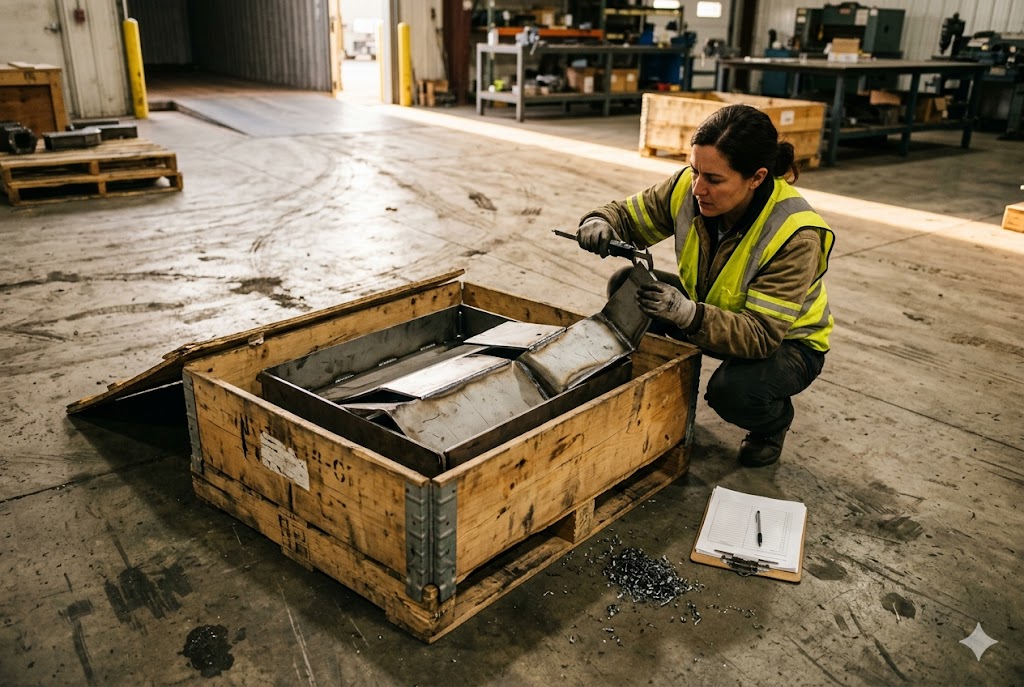
We see this problem every month. A client places an order, production looks smooth, and then the finished parts arrive with unexpected defects — or worse, they're two weeks late. After digging in, we find the work was quietly handed off to a smaller workshop with no proper equipment and zero QC process.
Stopping unauthorized subcontracting requires a combination of contract terms, audit rights, production verification, and payment structure. You need enforceable Chinese-language contracts, unannounced access rights, milestone-based payments, and a third-party inspection program that can physically verify where your parts are being made.
This guide breaks down exactly how to do that — from the contract clauses you need on day one to the inspection tactics that catch subcontracting before it damages your order.
Most quality failures we trace back to subcontracting start with the same root cause: the buyer signed an English-only purchase order and assumed it was enough. It is not.
Preventing unauthorized outsourcing starts with a Chinese-language manufacturing contract — not just a PO — that explicitly bans subcontracting without prior written approval, names any pre-approved sub-suppliers, and sets clear financial penalties for breach. Chinese courts treat the Chinese-language version as authoritative.

Why the Contract Language Matters More Than You Think
Chinese arbitration panels and courts work with the Chinese-language document. An English-only contract gives you almost no enforceable protection if a dispute reaches a formal proceeding. This is not a technicality — it is a foundational mistake that leaves you exposed no matter how tight your English wording looks.
According to bilingual contract guidance for China operations 1, Chinese courts generally prioritize the Chinese version of bilingual agreements, even where a governing language clause exists, making the quality of the Chinese-language text the most critical factor in securing a contract's legal standing.
Here is what a proper manufacturing contract should include to prevent unauthorized outsourcing:
| Contract Clause | What It Must Say |
|---|---|
| Subcontracting prohibition | No subcontracting of any process without prior written approval from the buyer |
| Approved sub-supplier list | Name any pre-approved sub-suppliers explicitly in the contract or an annex |
| Penalty for breach | Specific financial penalty (e.g., 10–20% of order value) triggered automatically upon confirmed subcontracting |
| Right of access | Unconditional right to conduct unannounced visits at any time during production |
| Governing language | Chinese-language version is authoritative in any dispute |
| Dispute resolution | Specify arbitration body (e.g., CIETAC) and jurisdiction |
The Penalty Clause Has to Be Specific
Vague language like "the buyer reserves the right to reject goods" does nothing. Specify a dollar amount or a percentage. Make the penalty automatic — not subject to negotiation after the fact. Factories respect clauses that create immediate, quantifiable financial risk.
Pre-Approved Sub-Suppliers Are a Practical Compromise
Some factories use a secondary vendor for one specific process, such as surface treatment or heat treatment, because they lack that equipment in-house. That is not always a problem. What matters is that you know about it, you have audited that sub-supplier, and it is written into the contract. If they later use anyone outside that approved list, the penalty clause applies.
When specifying dispute resolution, buyers working with Chinese manufacturers typically designate the China International Economic and Trade Arbitration Commission (CIETAC) 2 as the arbitration body. CIETAC is one of the world's major permanent arbitration institutions, with awards recognized and enforced in over 159 countries and regions.
One More Step Before Signing
Before signing, ask the factory to walk you through their production process step by step and identify which steps, if any, they currently outsource. Get that list in writing. Then decide which items you approve and add them to the contract annex. This conversation alone signals that you are paying attention — and it often changes factory behavior before the order even starts.
How Can I Detect Whether My Supplier Is Secretly Using Another Workshop?
The factories that subcontract without telling you are not careless — they are deliberate. They know how to manage communication so nothing looks wrong from the outside. Catching them requires specific, targeted verification methods.
You can detect hidden subcontracting by combining unannounced inspections, production plan reviews, machine and facility photo cross-referencing, customs shipping data, and raw material supplier monitoring. No single method is enough — use at least three in parallel.
Request a Detailed Production Plan Before You Release the Order
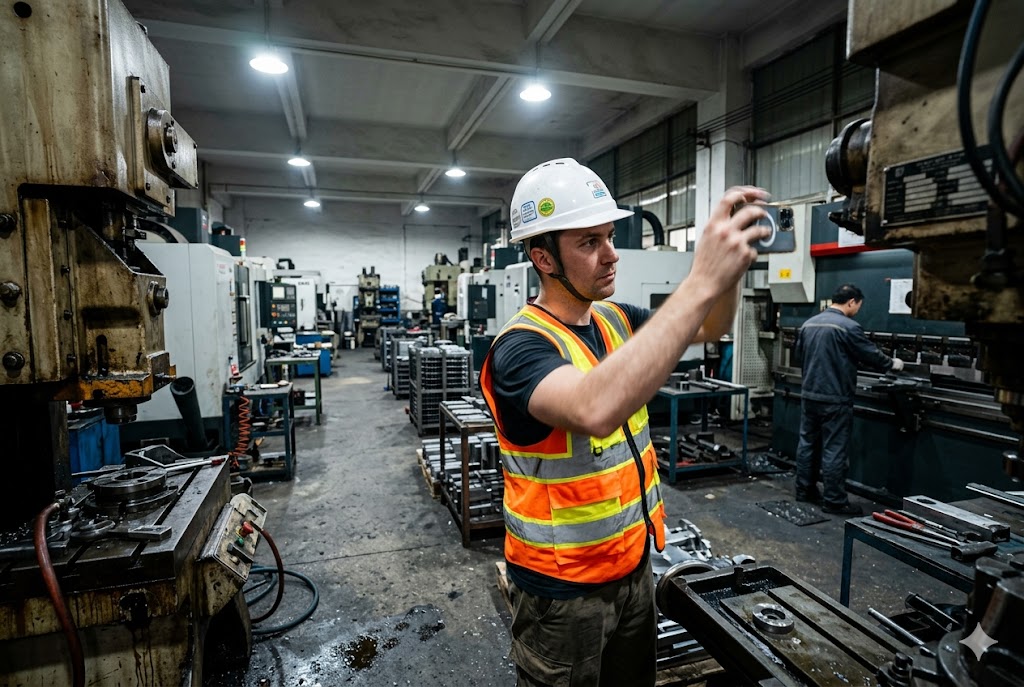
A genuine factory can produce this document easily. It should show how many workers and machines are assigned to your job, the daily output rate, which process steps happen on which dates, and the total production timeline. A factory that cannot or will not produce this plan is telling you something important: it does not have the internal capacity to fulfill your order in-house.
Use Third-Party Inspectors Strategically
Unannounced during-production inspections are your most reliable detection tool. When you book an inspection, instruct the inspector specifically to:
- Photograph machine serial numbers
- Photograph worker ID boards or name tags
- Photograph facility signage (company name, address)
- Note the factory layout and equipment arrangement
Then cross-reference these against photos from your original factory audit. A subcontracted facility will show different equipment, different layout, and different signage. These discrepancies are hard to fake. For guidance on structuring these assessments, supplier audit resources from established quality control firms 3 outline how on-site factory audits require setting clear objectives, preparing a detailed checklist, and assembling a team of experts — including third-party auditors — to verify the factory's actual operational realities.
Monitor Your Raw Material Suppliers
If you specify or approve the raw material vendors your factory uses, ask those vendors to notify you of delivery addresses. A sudden second delivery address — or a drop in order volume from your factory while your order is supposedly in production — is a reliable early warning signal.
Check Customs and Trade Data
Commercial trade data platforms show the actual exporting entity on each shipment. If a shipment of your parts appears under a different company name or factory address than your approved supplier, production was moved without disclosure. ImportGenius 4 is one such platform that provides access to import and export records and customs data analytics, enabling supplier verification through actual shipping histories and export volumes.
| Detection Method | What It Reveals | When to Use |
|---|---|---|
| Production plan review | Factory capacity and scheduling intent | Before releasing the order |
| Unannounced inspection | Actual production location and equipment | During production |
| Machine/facility photo cross-reference | Physical differences between approved and actual facility | During inspection |
| Raw material supplier monitoring | Whether materials are going to a second location | Throughout production |
| Customs trade data check | Exporting entity on the actual shipment | After shipment, or periodically |
A Backup Factory Changes the Dynamic
When your primary supplier knows you have a qualified alternative ready to receive orders at short notice, losing your business becomes a real consequence — not an empty threat. Factories that understand you can redirect volume have a much weaker incentive to subcontract, because the commercial risk of being caught outweighs the operational convenience.
Why Does Hidden Subcontracting Create Quality and Delivery Risk for My Order?
Buyers sometimes assume that subcontracting is just a process issue — the parts still get made, so what is the real problem? In practice, hidden subcontracting is the single most common source of both dimensional failures and delivery delays we encounter in our supply chain work.
Hidden subcontracting creates quality and delivery risk because the subcontracted workshop was never audited, does not have your approved process parameters, lacks your QC checkpoints, and has no direct contractual obligation to meet your drawing tolerances or delivery date.
The Quality Problem Is Structural
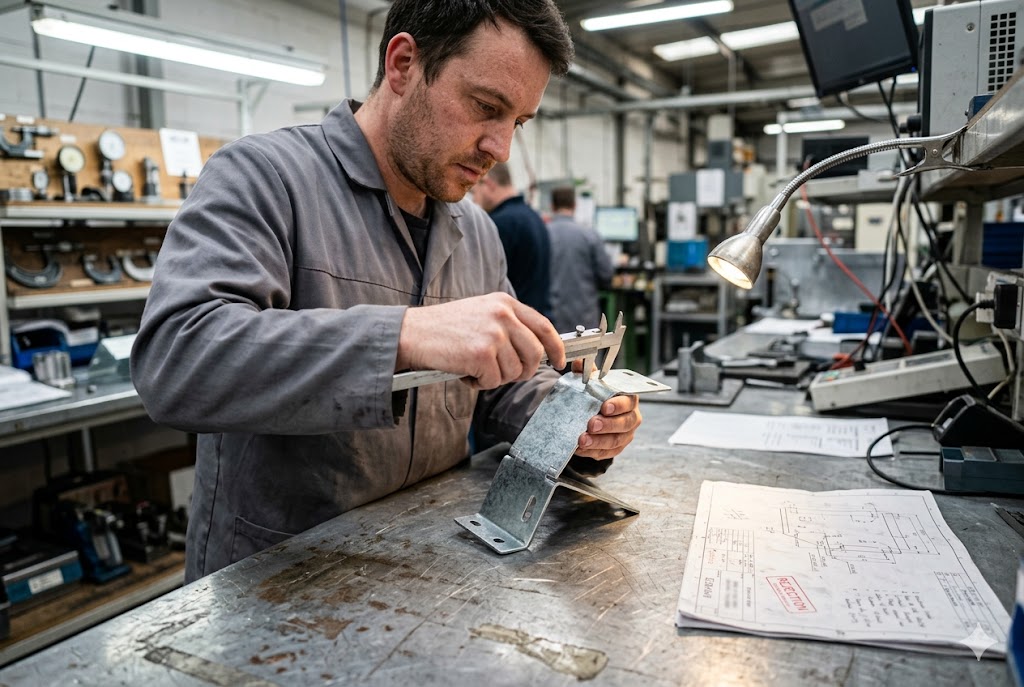
Your approved factory passed your audit. You verified their equipment calibration, their measuring tools, their QC personnel. The subcontracted workshop has none of that history. They received your drawings second-hand, possibly with informal verbal instructions, and they have no obligation to you directly.
Sheet metal parts often have tight tolerances on bend angles, hole positions, and surface finish. A workshop using an older press brake 5 without proper tooling will produce parts that are dimensionally out of spec — and they may not even measure them before shipping. As industry sources note, the variation in material thickness alone can cause noticeable angular differences and is one of the biggest drivers of tolerance failures in sheet metal fabrication.
Factories that have undergone proper vetting hold ISO 9001 6 certification or operate equivalent quality management systems — a globally recognized standard that requires calibrated equipment, documented inspection processes, and consistent delivery against customer specifications. Subcontracted workshops typically have none of this infrastructure in place.
The Delivery Problem Is Equally Serious
When a factory subcontracts because it is overloaded, it is handing your order to a workshop that is also likely handling other jobs. Your parts join a queue you have no visibility into. Lead times slip. The primary factory is then stuck managing a subcontractor they cannot fully control, and by the time the delay is clear, recovery is nearly impossible without premium freight costs.
| Risk Category | Root Cause | Typical Impact |
|---|---|---|
| Dimensional non-conformance | Subcontractor lacks calibrated equipment | Parts rejected at incoming inspection |
| Surface finish failure | Subcontractor uses different treatment process | Cosmetic rejection or corrosion risk |
| Late delivery | Subcontractor has competing priorities | Production stoppage at customer site |
| Traceability loss | No batch records from subcontractor | Cannot isolate or recall affected parts |
| Liability gap | Subcontractor has no contract with buyer | No direct recourse for losses |
Matching Order Size to Factory Capacity Is the Root Fix
Unauthorized subcontracting is most commonly triggered by unrealistic lead times or order volumes that genuinely exceed the factory's capacity. If you push a factory into a corner, subcontracting becomes their only option. Matching your order size and delivery deadlines to what the factory can actually produce in-house removes that pressure. Before finalizing any order, ask for a capacity confirmation in writing.
What Audit Steps Can Help Me Confirm Where My Parts Are Really Being Made?
An audit is not just a factory tour. A properly structured audit is a verification exercise with a defined checklist, documented evidence, and outputs that can be compared over time. Here is how to structure an audit specifically to confirm production location and detect subcontracting.
To confirm where your parts are actually being made, conduct unannounced audits that include machine serial number verification, worker headcount checks, production schedule review, raw material traceability, and facility signage documentation — then compare all findings against your original approved factory audit record.

Step 1 — Establish a Baseline at the Initial Factory Audit
Every audit you run later is only useful if you have something to compare it against. At your initial audit, document the following:
- Factory name, address, and business license number
- Photographs of all major equipment with serial numbers visible
- Photographs of facility entrance, production floor, and signage
- Headcount of production workers per shift
- List of process steps performed in-house versus outsourced
Keep this record in your supplier file. It becomes your reference document for every subsequent visit. Third-party quality control firms that specialize in factory audits in China 7 use standardized checklists covering quality management systems, production capacity, employee conditions, and compliance — the same areas your baseline record should document.
Step 2 — Conduct Unannounced During-Production Visits
Schedule your third-party QC firm to arrive without prior notice. Instruct them to complete the following checklist:
| Audit Item | What to Document | Red Flag |
|---|---|---|
| Facility signage | Photograph company name and address at entrance | Different name or address than approved factory |
| Equipment serial numbers | Photograph and record serial numbers on key machines | Different serials than baseline record |
| Worker ID verification | Note worker count and department ID boards | Significantly fewer workers than production plan states |
| Production records | Request batch records for your job | No records, or records showing a different facility |
| Raw material labels | Check material certs and supplier labels | Different material source than agreed |
| Packaging and marking | Verify your part-marking system is in use | Missing or incorrect traceability markings |
Step 3 — Use Part Marking as a Physical Verification Layer
Establish a unique marking system for your parts — laser-etched batch codes 8, proprietary labels, or tamper-evident packaging seals applied only at your approved factory. Laser marking creates permanent, high-contrast identifiers directly on parts, providing end-to-end supply chain visibility. Any parts arriving without these markings, or with markings that do not match your coding system, were not produced at the approved facility.
Part marking also supports traceability at a deeper level: batch codes and data matrix codes on metal components 9 enable manufacturers to perform targeted recalls, detect counterfeiting, and verify that all materials are quality-assured — capabilities that disappear entirely when production moves to an unapproved subcontractor.
Step 4 — Structure Payment to Reinforce Audit Results
Tie mid-production payment milestones to passed on-site inspections rather than releasing funds on calendar dates. When the factory knows that a payment installment requires a third-party inspector to physically verify production at their facility, the financial incentive to keep work on-site becomes very concrete. A subcontracted workshop that cannot pass your inspection criteria will not release the payment — and the primary factory knows this.
Step 5 — Review Trade Data Periodically
After shipment, check the exporting entity in customs records. Services like Panjiva 10 show the company name and address on each export filing, drawing on over two billion shipment records across 21 countries. If a shipment of your parts shows a different entity than your approved supplier, you have documented evidence of unauthorized subcontracting — useful both for contract enforcement and for qualifying a replacement supplier.
Conclusion
Unauthorized subcontracting is preventable. Use a Chinese-language contract with penalties, build unannounced audit rights into every order, verify production with physical evidence, and structure payments to reward transparency. These steps together remove both the opportunity and the incentive.
Footnotes
1. Explains why Chinese courts default to the Chinese text in bilingual contracts and why governing language clauses matter. ↩︎
2. Official site of CIETAC, the primary arbitration body for resolving international commercial disputes in China. ↩︎
3. Practical guide to on-site supplier verification and factory audit planning for China-based manufacturers. ↩︎
4. ImportGenius provides customs shipment records to verify the actual exporting entity on any shipment. ↩︎
5. Industry resource on press brake bending tolerances and how material variation causes dimensional failures. ↩︎
6. ISO 9001:2015 is the international standard for quality management systems, widely used in manufacturing. ↩︎
7. AQI Service outlines the components of a standardized factory audit checklist for suppliers in China. ↩︎
8. Explains how laser marking creates permanent batch codes for end-to-end supply chain traceability. ↩︎
9. Covers how part marking methods including batch codes enable recalls, counterfeit detection, and quality assurance. ↩︎
10. Panjiva (S&P Global) provides shipment-level customs data to identify the actual exporting entity on any order. ↩︎