Skip to main content Skip to footer
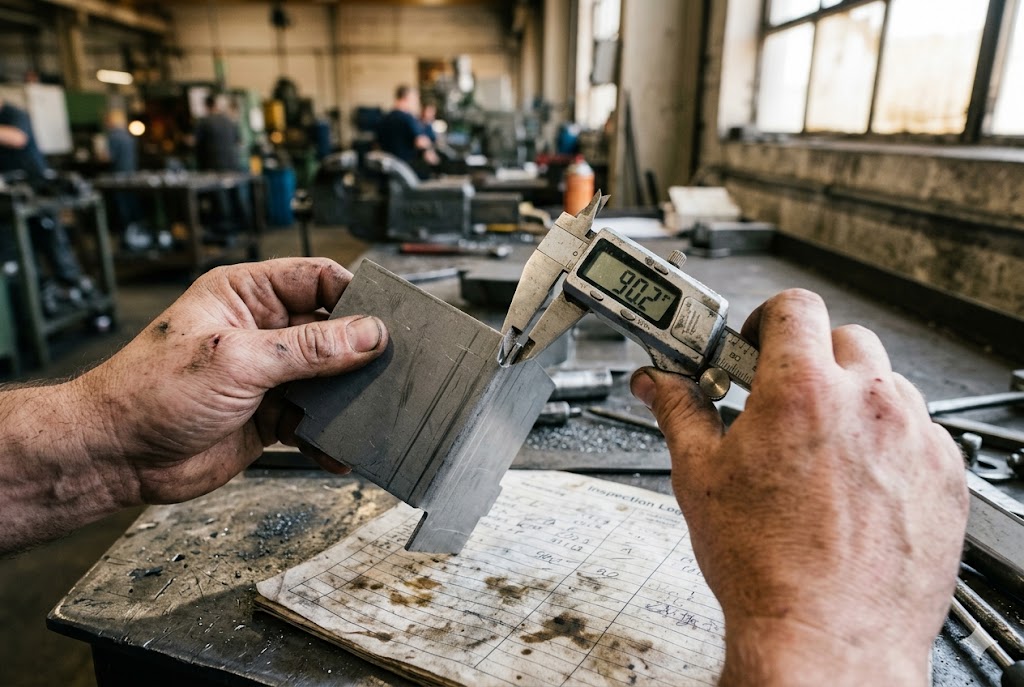
We have sourced sheet metal parts from dozens of factories across China and Vietnam. Time and again, clients come to us after a bad experience — wrong bend angles, inconsistent hole spacing, or parts that looked fine in sample but drifted in mass production.
A specialized sheet metal factory consistently outperforms a general metalworking shop on quality consistency because it runs purpose-built equipment, employs operators with deep material-specific knowledge, and maintains documented process controls at every production checkpoint. These three factors together keep dimensional tolerances stable across batches, something a general shop rarely achieves.
If you are deciding where to place your sheet metal orders, this question matters more than price. Let us break it down.
Why Might a Focused Sheet Metal Supplier Give Me More Stable Quality?
When we audit factories on behalf of clients, one of the first things our engineers look at is process focus. A factory that does one thing tends to do it well.
A focused sheet metal supplier delivers more stable quality because its equipment, tooling, operators, and inspection systems are all calibrated for a single process family. There is no context-switching, no shared tooling with incompatible jobs, and no reconfiguration between dissimilar parts — all of which are common sources of quality drift in mixed-process facilities.
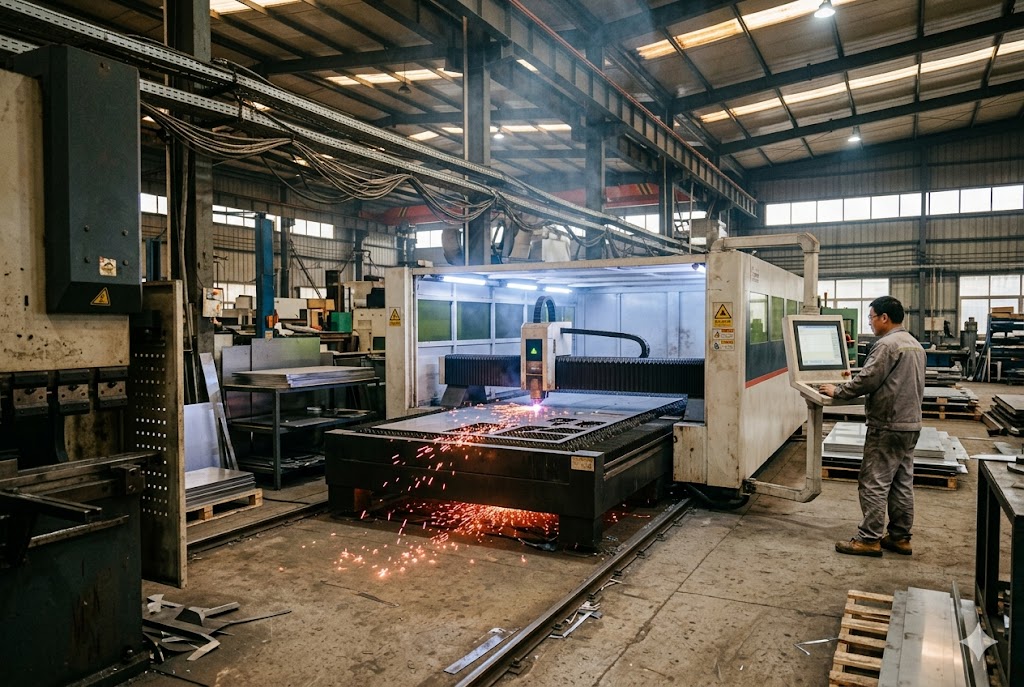
Equipment Built for One Job
A specialized sheet metal factory invests in fiber laser cutters 1, CNC press brakes with automatic angle-compensation sensors, and tooling libraries built specifically for flat-stock forming. These machines are not shared with heavy milling or turning jobs. They are maintained, calibrated, and optimized for sheet metal geometry only.
General metalworking shops use general-purpose tooling. A press brake in a mixed shop may be used for structural steel one day and thin-gauge stainless the next. Each material behaves differently. Springback rates change. K-factor values shift. Without dedicated setup for each material family, tolerances widen.
Deep Material Knowledge
Specialized factories accumulate what we call "material memory." Their process engineers know the exact K-factor 2 for every alloy and gauge they run. They know how springback 3 changes between a cold-rolled 1.5 mm and a 2.0 mm hot-rolled blank. They have tested these variables hundreds of times across real production runs.
| Factor | Specialized Factory | General Metalworking Shop |
|---|---|---|
| K-factor calibration | Documented per alloy and gauge | Estimated per job |
| Springback compensation | Programmed into CNC press brake | Adjusted manually by operator |
| Heat-affected zone management | Defined laser parameter per material | Varies by operator experience |
| Incoming material control | Mill certificates required from approved suppliers | Procured opportunistically |
This level of calibration is rare in a general shop. When a general shop takes a sheet metal job, they often set parameters based on experience rather than documented data. That introduces variation — not every operator has the same experience, and not every batch gets the same setup.
The Financial Incentive for Consistency
Here is something most buyers do not consider. A specialized sheet metal factory has a very narrow acceptable process window. Any drift in the laser parameters, any worn punch, any material thickness variation — these trigger an immediate rise in scrap rate. The factory feels the financial pain fast.
That pain creates a self-correcting incentive. The factory cannot afford to let borderline parts slide. A general shop, running a wider range of jobs, often has a broader tolerance range that allows marginal parts to ship. The problem only surfaces later, as a field failure at the buyer's end.
How Can I Compare Process Control Between a Specialist Factory and a Mixed-Process Factory?
Our team conducts factory audits before we place any orders for clients. Process control is one of the hardest things to evaluate from a spec sheet or a showroom tour. You have to look at the actual workflow.
The clearest way to compare process control is to look at three things: inspection equipment, documented checkpoints, and certification status. A specialized sheet metal factory uses CMM machines 4, optical comparators, and laser measurement systems at defined workflow stages, while a general shop typically relies on manual spot checks with handheld gauges.
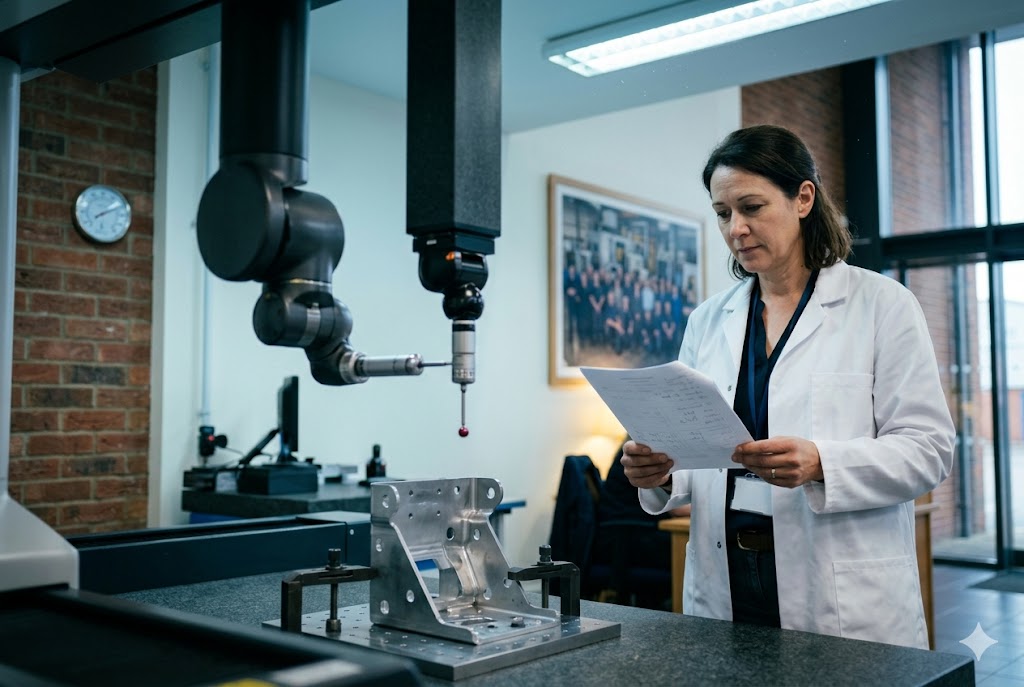
What to Look for During a Factory Audit
When you visit a factory — or when we visit on your behalf — ask to see the inspection log for the last three production runs of a similar part. Look for the following:
Checkpoint frequency. How many times is the part measured during production? A specialized factory sets inspection gates at laser cutting, after forming, after any secondary operation, and before shipment. A general shop may only check at final inspection.
Equipment calibration records. Ask to see the last calibration date for each measuring instrument. Calibration should follow a defined schedule, not happen on request.
Non-conformance reports. Ask how many non-conforming parts were found in the last quarter, and what the corrective actions were. A factory that cannot answer this question does not have a functioning quality system.
Certification as a Proxy for System Quality
| Certification | What It Requires | Who Usually Holds It |
|---|---|---|
| ISO 9001 5 | Documented quality management system, internal audits, corrective action procedures | Specialized factories, well-organized general shops |
| AS9100 6 | All of ISO 9001 plus aerospace-specific process traceability and risk management | Specialized aerospace-grade facilities |
| IATF 16949 7 | All of ISO 9001 plus automotive-specific FMEA and control plans | Automotive-focused factories |
| No certification | No external audit requirement | Many small general metalworking shops |
A general metalworking shop may hold ISO 9001 on paper. But ask when their last internal audit was conducted, and whether their press brake calibration records are up to date. Certifications are audited systems. They require ongoing compliance, not just a one-time award.
The Reconfiguration Problem
General shops reconfigure their floor between jobs. A CNC press brake 8 that ran structural steel on Monday may run 0.8 mm aluminum on Tuesday. Each reconfiguration is a setup event. Each setup event introduces variation — the die gap changes, the back-gauge is repositioned, the clamp force is reset. Each of these variables affects the final bend angle.
A specialized factory runs the same process sequence, day after day. Setup variation is minimized because the process does not change. The operators develop muscle memory and procedural intuition that carries over from one batch to the next. This repeatability is hard to quantify in a quote, but it shows up clearly in dimensional consistency across repeat orders.
Does a Specialized Sheet Metal Plant Usually Handle Drawings Faster and Better?
This is a question we hear often from purchasing managers who have dealt with slow or inaccurate DFM feedback from their current suppliers. Slow drawing review is not just an inconvenience — it delays tooling, pushes back first article inspection, and compresses your production timeline.
A specialized sheet metal factory processes customer drawings faster and more accurately because its engineers review the same geometry types repeatedly. They recognize immediately whether a bend radius is producible, whether a hole-to-edge distance is safe, and whether a flat-blank will nest efficiently — feedback that general shops often provide late, if at all.
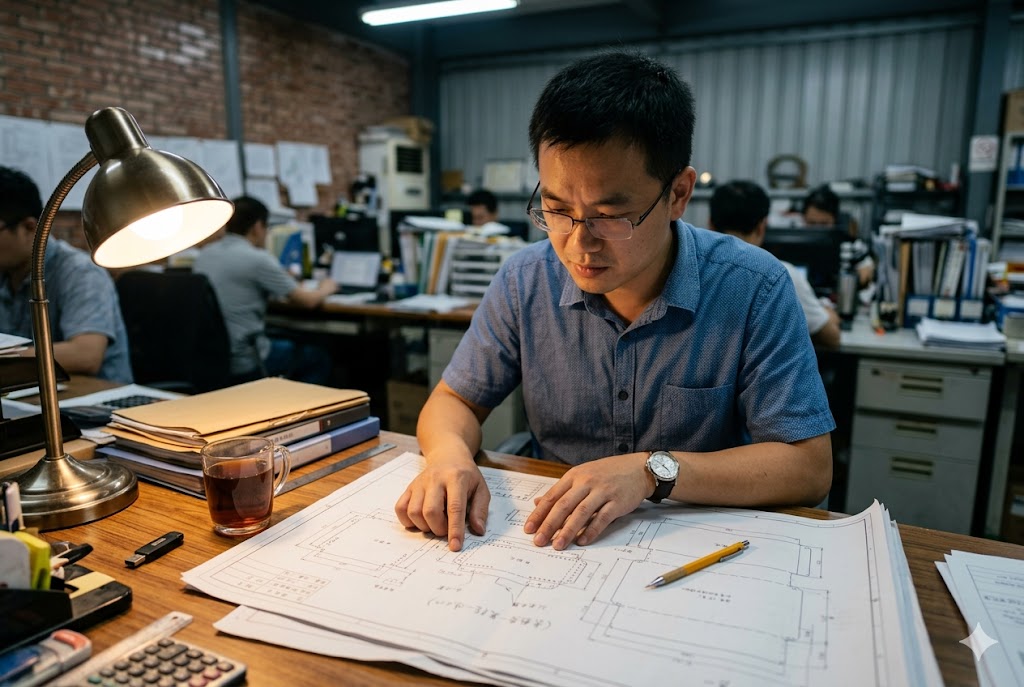
Why Drawing Review Speed Matters
When our engineers review a drawing set for a new client, we look for features that will cause problems in production. Bend radii that are too tight for the material thickness. Holes punched too close to a bend line. Tolerances that are geometrically impossible to achieve with standard tooling.
A specialized sheet metal factory's engineers have seen thousands of similar features. Pattern recognition is fast. Feedback is specific and actionable, delivered in a single round of review. Applying established DFM guidelines for sheet metal 9, specialists can flag tight bend radii, unsafe hole-to-edge distances, or poorly nested flat blanks immediately — before material is cut or press brake time is consumed.
A general shop engineer may not flag these issues at all. They set up the job, run the part, and then discover the problem during production. That discovery comes after material has been cut, press brake time has been used, and your delivery window has started.
Tooling Libraries and First-Article Speed
| Activity | Specialized Factory | General Metalworking Shop |
|---|---|---|
| DFM review turnaround | 24–48 hours with specific feedback | 3–7 days, often incomplete |
| Standard tooling availability | Extensive library for common bend profiles | Limited, shared with other job types |
| Custom tooling lead time | Shorter — designs build on existing profiles | Longer — starts from a broader baseline |
| First article inspection report | Standardized format, CMM-generated data | Format varies, often manual measurements |
The Cost of a Late Engineering Flag
If a general shop flags a drawing problem after tooling has been made, you pay for new tooling. If they flag it after first articles are run, you pay for first article materials and may also lose schedule time renegotiating the delivery date with your downstream customer.
A specialized factory's up-front drawing accuracy reduces these downstream costs. The investment in good DFM review at the start of a project is small compared to the cost of a tooling change mid-project.
Which Type of Factory Is Better for My Repeat Orders and Engineering Changes?
Repeat orders and engineering changes are where supplier relationships either hold together or fall apart. We have seen clients lose months of production stability because a supplier could not reproduce a part accurately in the second or third run.
A specialized sheet metal factory is significantly better for repeat orders and engineering changes because it maintains dedicated tooling libraries, stores per-part process parameters, and tracks tooling wear against a predictable replacement schedule — all of which ensure the tenth batch matches the first batch as closely as the fifth batch did.
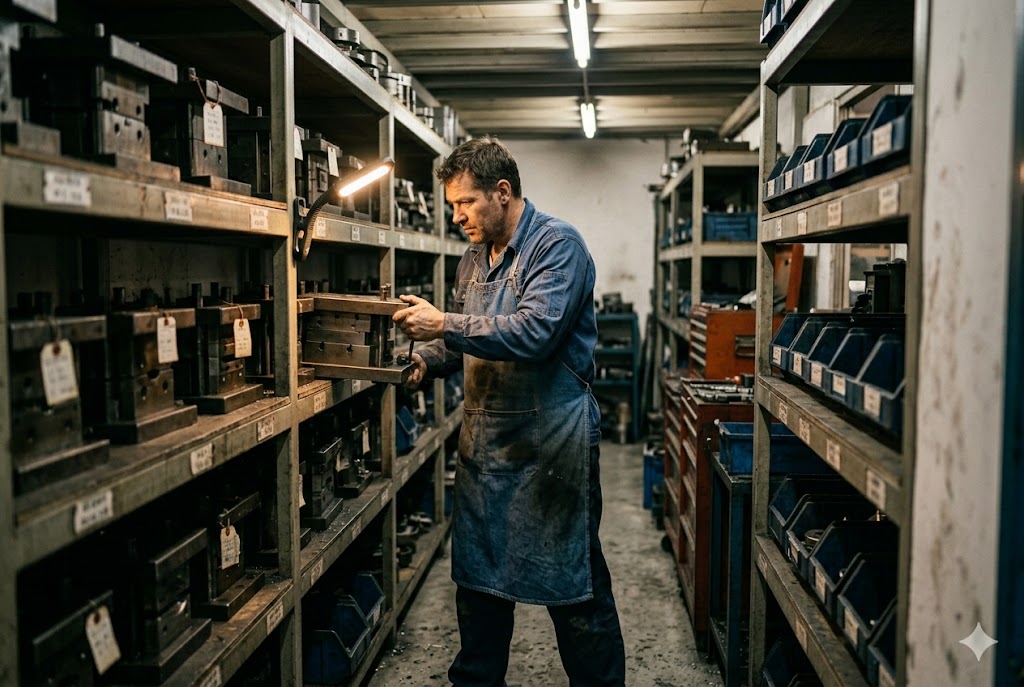
How Tooling Management Affects Repeat Order Quality
In a specialized factory, every punch, die, and bending insert in the tooling library is catalogued. Wear is tracked per profile. Replacement is scheduled before the tool degrades enough to affect dimensional output. This means the tooling condition is known at the start of every production run.
In a general metalworking shop, tooling is shared across incompatible job families. A punch used for structural steel is a different load profile than one used for thin-gauge aluminum. Wear on shared tooling is harder to track because the same tool sees very different load cycles. Wear-related tolerance drift shows up as a surprise, often in a finished batch rather than at a checkpoint.
Handling Engineering Changes Without Disrupting Production
Engineering changes are a normal part of product development. A hole moves 2 mm. A flange height increases. A tolerance tightens. In a specialized factory, these changes are absorbed into the existing process parameter set. The engineer updates the nesting file, adjusts the press brake program, and updates the first article inspection criteria. The change is traceable and documented.
In a general shop, an engineering change requires re-communicating the change to multiple departments that may not share the same drawing management system. The risk of running an old revision is higher when drawings are managed manually or informally.
Material Sourcing Consistency
Specialized sheet metal factories source the same sheet grades and coil thicknesses from approved suppliers repeatedly. This means they can require mill certificates 10 and control incoming material hardness and thickness at the receiving stage. Consistent incoming material means forming parameters calibrated to that material remain valid across batches.
General shops procure sheet metal alongside bar stock, tube, and castings — often opportunistically based on price and availability. If the sheet metal grade is consistent in name but not in actual hardness or surface condition, the forming parameters from the last run will produce different results on the new batch. This is one of the most common hidden causes of inter-batch variation.
| Repeat Order Risk Factor | Specialized Factory | General Metalworking Shop |
|---|---|---|
| Tooling wear tracking | Per-profile, scheduled replacement | Shared tooling, wear often untracked |
| Process parameter storage | Stored per part number, retrieved per run | Often recreated from memory or notes |
| Engineering change traceability | Document-controlled revision management | Variable — depends on individual practice |
| Incoming material consistency | Mill-certified, approved supplier list | Opportunistic procurement |
| Inter-batch dimensional variation | Low — same parameters, same tooling | Higher — setup variation between runs |
Conclusion
Specialized sheet metal factories outperform general shops on quality consistency, process control, drawing accuracy, and repeat order reliability. If stable dimensions and on-time delivery matter to your business, factory type is not a minor detail — it is the decision.
Footnotes
1. Overview of fiber laser cutting technology, working principles, and material suitability in sheet metal processing. ↩︎
2. Practical guide to K-factor, bend deduction, bend allowance, and flat pattern development for press brake work. ↩︎
3. Explains springback in sheet metal bending, how to predict it, and how CNC press brakes compensate with real-time angle control. ↩︎
4. Explains what coordinate measuring machines (CMMs) are and how they improve dimensional inspection speed and accuracy. ↩︎
5. ISO 9001 certification overview: requirements, benefits, and how a documented QMS drives consistent product quality. ↩︎
6. AS9100 certification guide covering aerospace-specific process traceability and risk management requirements. ↩︎
7. Explains FMEA and its role within the IATF 16949 automotive quality management system standard. ↩︎
8. Detailed explanation of CNC press brake forming: how punches, dies, and angle-compensation systems work. ↩︎
9. Comprehensive DFM guidelines for sheet metal: bend radii, hole placement, nesting strategies, and tolerance rules. ↩︎
10. Guide to mill test reports in metal manufacturing: what they certify, how to read them, and their role in supply chain quality control. ↩︎