Skip to main content Skip to footer

Every week, we talk to purchasing managers who have been burned — delayed shipments, out-of-tolerance parts, a supplier who went quiet mid-order. We see it from the other side of the supply chain, and it is painful every time.
Building a stable long-term supply chain for custom CNC machining parts from China requires selecting suppliers through rigorous factory audits, segmenting them by strategic value, implementing dual-sourcing for critical parts, sharing demand forecasts, owning your tooling, and running annual supplier scorecards to maintain competitive discipline.
This article walks through exactly how to do that, step by step. Each section covers one piece of the system you need to build.
What Supplier Capabilities Matter Most for Long-Term Stability?
We visit dozens of factories every year. The ones that last as long-term partners share a common set of traits — and they are not always the ones with the best sales pitch.
The supplier capabilities that matter most for long-term stability are: verified in-house machining equipment matched to your part complexity, a stable and experienced workforce, documented quality systems, financial solvency, and transparent communication at the engineering level — not just the sales level.

Why a Factory Audit Is Non-Negotiable
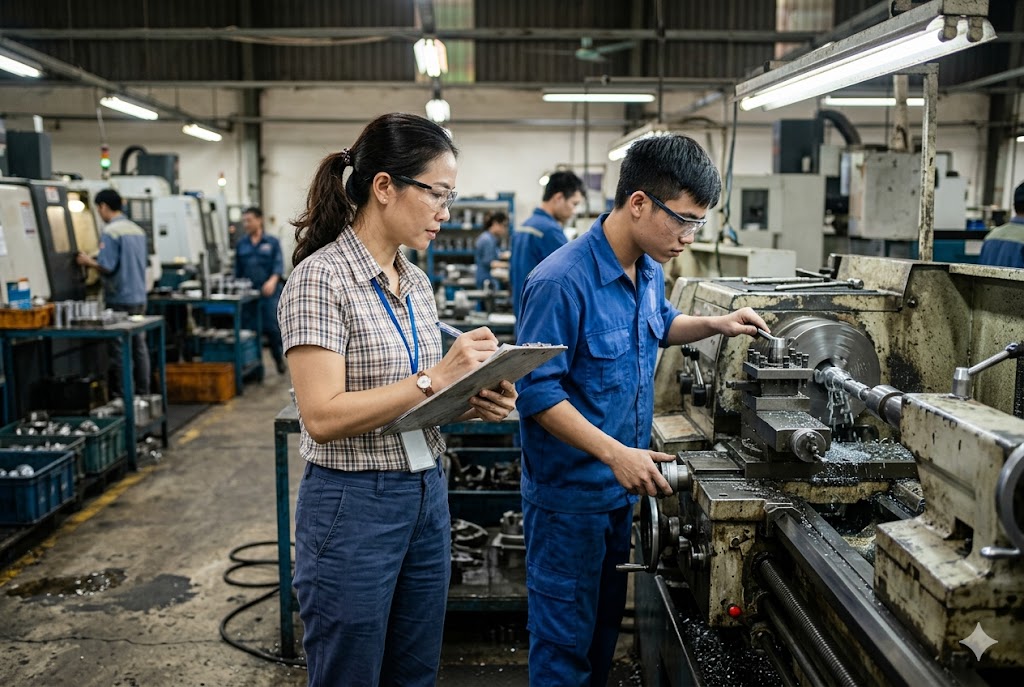
A supplier that looks strong on Alibaba or Made-in-China can be a trading company placing your orders with unvetted subcontractors. We have seen it repeatedly. The only way to know what you are actually buying is to walk the floor.
When our team visits a factory on behalf of a client, we look at specific things — not general impressions. Chinese contract manufacturers 1 range from large full-capability operations to small assembly-only shops that present online as full manufacturers.
What to Verify During a Factory Audit
| Audit Area | What to Check | Red Flags |
|---|---|---|
| Equipment capability | CNC machine age, axis count, tolerances they routinely hold | Machines older than 15 years with no calibration records |
| Workforce stability | Average tenure of machinists and QC staff | High turnover, heavy reliance on seasonal labor |
| Quality system | ISO certification, in-process inspection records, CMM availability | No documented inspection procedures, visual-only QC |
| Financial health | Order book visibility, payment terms with their own suppliers | Requests for 100% advance payment, reluctance to share basic financials |
| Subcontracting | Which processes are done in-house vs. outsourced | Critical processes outsourced without disclosure |
Segment Your Suppliers by Strategic Value
Not every supplier deserves the same level of attention. Applying the same management intensity to a commodity fastener supplier as to your tight-tolerance structural component supplier wastes resources and dilutes focus.
Use a tiered structure:
| Tier | Supplier Type | Management Approach |
|---|---|---|
| Strategic | Complex, tight-tolerance, high-volume critical parts | Quarterly business reviews, joint development, executive relationship |
| Key | Important parts with moderate complexity | Monthly check-ins, annual audits, formal scorecards |
| Backup | Qualified alternates for critical part numbers | Periodic small orders to maintain qualification |
| Cost-focused | Commodity or simple parts | Transactional, price-competitive bidding |
Your top-tier supplier for precision CNC parts should know your roadmap. They should meet your engineering team, not just your purchasing team. That depth of relationship is what creates genuine stability.
Engineering-Level Communication Is the Real Differentiator
Suppliers who only interact with you through sales representatives will consistently under-deliver. The sales rep does not know what tolerances your downstream customer actually requires. They do not know which features are critical and which are cosmetic.
Insist on direct access to the supplier's engineering and quality teams. A supplier that holds a recognised ISO 9001 certification 2 has at minimum documented its quality management system — but certification alone does not guarantee consistent execution on the shop floor. If a supplier blocks engineering access, treat it as a risk signal.
How Can I Combine Quality Control, Forecasting, and Logistics Planning Effectively?
Our service team manages both sides of this: we sit between the buyer and the manufacturer. What we have learned is that quality, forecasting, and logistics are not separate functions — they break down together when one of them is neglected.
Combining quality control, forecasting, and logistics planning effectively means running third-party inspections on a fixed schedule, sharing rolling 12-month demand forecasts with your primary supplier quarterly, and maintaining a 6–12 week safety stock buffer for your highest-criticality parts to absorb lead time and transit variability.
Third-Party Quality Inspection: Why It Cannot Be Optional
Quality discipline in long-running supplier relationships reliably erodes when buyers stop independently verifying it. This is not speculation — it is a pattern we observe consistently. When a buyer has been working with the same supplier for two or three years without conducting independent inspections, the supplier's outgoing QC gradually relaxes.
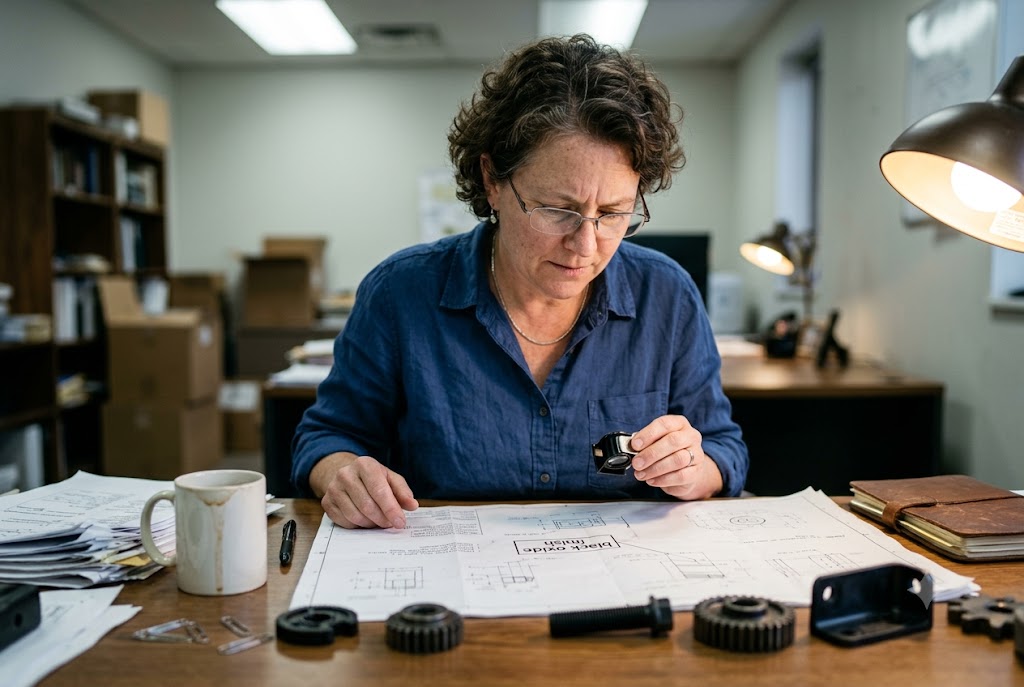
The fix is simple but must be enforced: conduct unannounced or short-notice third-party inspections 3 at least twice per year using inspection firms physically based in China.
Relying solely on the supplier's own inspection reports is a structural conflict of interest. The supplier has a financial incentive to pass the shipment. An independent inspector does not.
What a Third-Party Inspection Should Cover
| Inspection Stage | What Is Checked | Why It Matters |
|---|---|---|
| In-process inspection | Dimensions at critical machining stages | Catches errors before they propagate to finished parts |
| Pre-shipment inspection | Final dimensions vs. drawing tolerances, surface finish, appearance | Confirms the shipment matches your purchase order before it leaves the factory |
| Packaging and labeling | Part identification, protection for transit | Prevents damage and customs issues on arrival |
Share Forecasts — Suppliers Plan Around Whoever Gives Them Information
Most buyers place orders without advance notice. Suppliers who cannot plan their raw material procurement or machine scheduling around your volume will always prioritize customers who give them visibility.
Share a rolling 12-month demand forecast 4 with your primary supplier on a quarterly basis. It does not need to be a binding commitment — a directional forecast is enough to allow the supplier to manage their raw material lead times and capacity allocation in your favor.
Buyers who share forecasts consistently receive better lead times, more scheduling flexibility, and often better pricing than anonymous transactional buyers placing the same volume.
Safety Stock: A Financial Decision, Not a Logistics Decision
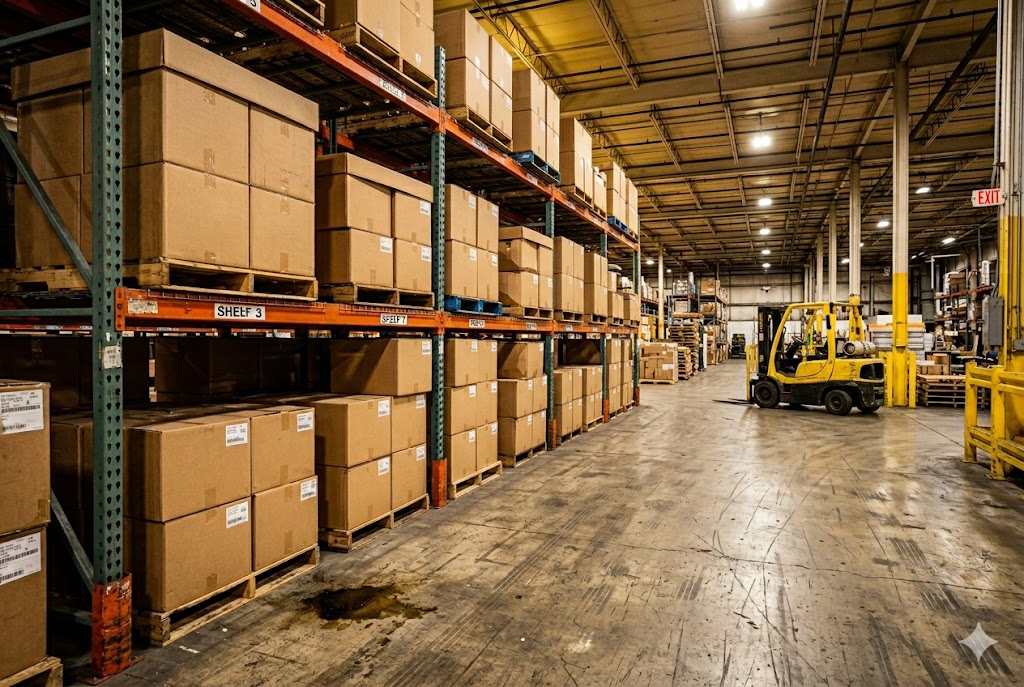
Holding 6–12 weeks of safety stock buffer 5 for high-criticality parts feels expensive until you calculate what a two-week production stoppage actually costs your downstream customer. For most manufacturers in the US, the cost of unplanned downtime far exceeds the carrying cost of strategic inventory.
Calibrate your safety stock buffer against three variables: the part's lead time from China, your own demand variability, and the political and logistical risk profile of the supplier's region.
Should I Build Supply Chain Resilience with China Plus Vietnam Sourcing?
Our branch office in Vietnam exists because our clients asked us to open it. The demand for non-China sourcing has grown significantly in the past three years, driven directly by tariff pressure from the US-China trade war 6.
A China-plus-Vietnam dual-sourcing strategy builds supply chain resilience by giving you tariff flexibility, geographic risk diversification, and a qualified backup production base — provided you invest in properly qualifying Vietnamese suppliers to the same engineering and quality standards you apply in China.
Why Dual-Sourcing Is a Structural Requirement, Not a Nice-to-Have
A single-source supply chain for any critical part number is a latent crisis. It is not a matter of whether disruption will occur — it is a matter of when. The disruption could be capacity-related, quality-related, financial, or geopolitical.
A dual-sourcing strategy 7 that spans geographies — not just two suppliers in the same country — is now widely considered essential for managing both tariff risk and regional supply disruptions. The cost of maintaining a qualified backup supplier is reliably lower than emergency sourcing under crisis conditions.
China vs. Vietnam: A Realistic Comparison for CNC Parts
| Factor | China | Vietnam |
|---|---|---|
| Machining capability range | Very broad — handles extreme complexity and tight tolerances | Growing rapidly; strong for mid-complexity parts |
| Unit pricing | Competitive, but rising | Often 10–20% lower for comparable complexity |
| US import tariff exposure | High — 25%+ on many mechanical parts | Significantly lower under current trade policy |
| Lead time to US | 25–35 days sea freight | 28–38 days sea freight |
| Supplier density | Very high — strong competition | Lower — fewer qualified suppliers to choose from |
| Language and communication | Established English-speaking sales infrastructure | More variable; often requires local representation |
How to Qualify a Vietnam Supplier Properly
Vietnamese manufacturing 8 has matured significantly, with continued strong economic growth and a dynamic industrial sector attracting major investment from US companies. However, the supplier evaluation process must be just as rigorous as China. Do not assume that because a factory is in Vietnam it automatically avoids subcontracting risks or quality gaps.
Conduct an in-person factory audit with the same checklist you apply in China. Verify in-house machining capability, quality systems, and workforce stability. Our Vietnam team does this as a standard service — remote qualification is not sufficient for precision CNC parts.
The Role of Tooling Ownership in a Dual-Source Strategy
If you own your own tooling, fixtures, and gauges, and have documented legal custody agreements in place, switching between suppliers or activating a backup becomes feasible. If your tooling sits at the primary supplier's facility without a clear ownership agreement, activating an alternative supplier means re-making tooling from scratch — adding months and cost to any transition.
Own your tooling. Store it at the supplier's facility under a written agreement that explicitly grants you the right to retrieve or transfer it. This single decision is the most important lever for supply chain flexibility.
What Systems Should I Put in Place Now to Reduce Future Sourcing Risk?
We have watched buyers build supply chains reactively — adding systems only after a crisis. It is always more expensive that way. The systems that reduce risk are straightforward, but they must be built deliberately before you need them.
The systems that most reduce long-term sourcing risk are: a signed long-term supply agreement covering pricing mechanisms, tooling ownership, and IP protection; a formal annual supplier scorecard with shared results; a relationship investment cadence with key supplier leadership; and a documented dual-source qualification for every critical part number.

The Long-Term Supply Agreement: What It Must Cover
Verbal agreements and email chains provide no enforceable foundation when a commercial dispute arises. A written agreement does not eliminate risk — but it defines the rules of engagement before emotions are elevated.
A long-term supply agreement for custom CNC parts should cover at minimum:
- Pricing adjustment mechanism — how price changes are proposed and agreed over time
- Minimum order commitments — what volume you commit to, and what flexibility you retain
- Tooling ownership — explicit statement of who owns each tool, fixture, and gauge
- Intellectual property protection — your drawings, designs, and specifications remain yours
- Quality standards — reference to applicable tolerances, inspection standards, and rejection criteria
- Lead time guarantees — committed lead times and what happens when they are missed
The Annual Supplier Scorecard
Suppliers who are scored and shown their scores consistently outperform suppliers who operate without visible benchmarking. The supplier scorecard 9 does not need to be complex — the key is that it measures what matters, is applied consistently, and is shared directly with the supplier.
Score each key supplier annually on four dimensions:
| Scorecard Dimension | What to Measure |
|---|---|
| Quality | Incoming acceptance rate, number of NCRs, severity of defects |
| On-time delivery | Percentage of shipments delivered within agreed lead time |
| Responsiveness | Speed and quality of response to engineering questions and issues |
| Cost competitiveness | Pricing vs. market benchmark for comparable parts |
Share the scorecard with your supplier directly. Tell them how they rank relative to alternatives. Suppliers who understand they are being benchmarked maintain performance standards far more reliably than those who assume the relationship is locked in.
Building Guanxi: The Relationship Investment That Pays
Chinese manufacturers demonstrably prioritize order scheduling, pricing, and flexibility for buyers they have a genuine personal relationship with. Understanding guanxi 10 — the system of personal connections and reciprocal relationships that governs Chinese business culture — is essential for any buyer who wants to secure preferential treatment in a constrained market.
Invest in relationship capital with your key supplier's ownership and engineering team. Visit the factory in person at least once per year. Acknowledge Chinese New Year. When problems arise, solve them face-to-face rather than through escalating email chains.
Buyers who have invested in these relationships consistently get better treatment when capacity is constrained, when raw material prices spike, and when production priorities need to be negotiated.
A Practical Risk Reduction Timeline
| Timeline | Action |
|---|---|
| Now | Conduct factory audits on all current strategic suppliers |
| 0–3 months | Sign long-term supply agreements with top-tier suppliers |
| 0–3 months | Document tooling ownership and sign custody agreements |
| 3–6 months | Qualify at least one backup supplier for each critical part number |
| 6 months | Share first rolling 12-month demand forecast with primary supplier |
| Ongoing quarterly | Update demand forecasts, conduct business reviews |
| Ongoing annually | Run supplier scorecards, conduct unannounced third-party inspections |
Conclusion
A stable long-term supply chain for custom CNC parts is built through deliberate systems — audits, dual-sourcing, tooling ownership, forecasts, scorecards, and relationships — not through luck or a single good supplier choice.
Footnotes
1. Overview of Chinese contract manufacturing types and the range from large full-capability factories to small assembly shops. ↩︎
2. ASQ's comprehensive guide to ISO 9001 certification requirements and what the standard does and does not guarantee. ↩︎
3. ISM's guide to supplier evaluation criteria, due diligence steps, and third-party verification best practices. ↩︎
4. ISM's overview of supply chain planning and control, including demand forecasting integration with supplier scheduling. ↩︎
5. ISM's step-by-step guide to calculating safety stock using statistical methods and linking buffers to reorder policies. ↩︎
6. U.S. Department of Commerce overview of China import tariff rates, current structure, and recent tariff developments. ↩︎
7. SCMR analysis of why geographic dual-sourcing has replaced single-region strategies as the baseline for supply chain resilience. ↩︎
8. U.S. Department of Commerce guide to Vietnam's market opportunities, industrial growth, and commercial environment for U.S. firms. ↩︎
9. SCMR's guide to building a structured supplier scorecard system, including categorical, weighted point, and cost-based approaches. ↩︎
10. HBR's analysis of guanxi and personal connections as a defining force in Chinese business negotiation and supplier relationships. ↩︎