Skip to main content Skip to footer
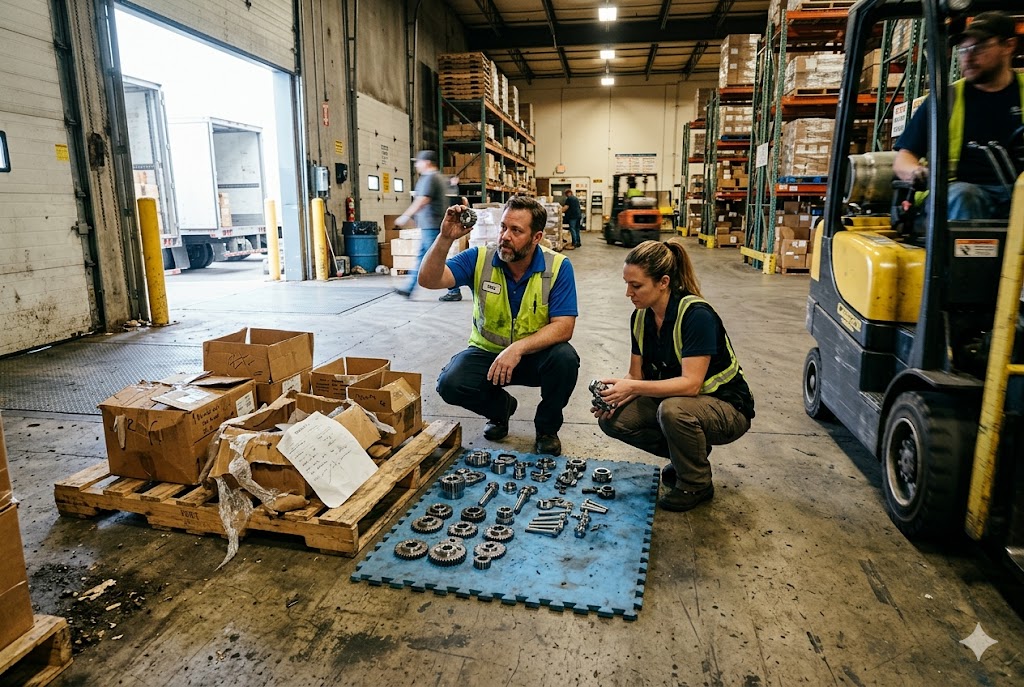
We have walked alongside hundreds of purchasing teams through the worst moment in their sourcing cycle — opening a pallet and finding the parts are wrong. It derails production. It puts customer relationships at risk. And the clock starts immediately.
When a serious quality incident occurs with CNC machining parts from China, you must act across four parallel tracks at once: contain the defective inventory, gather documented evidence, engage the supplier formally in writing, and protect your downstream customer commitments. Speed and documentation discipline determine whether you recover in days or weeks.
The steps you take in the first 48 hours carry more weight than anything you do afterward. Here is exactly how to move.
What Containment Steps Should You Take Immediately After You Find a Major Defect?
Our team handles supplier incidents almost every month across our client accounts. The first thing we tell every client is simple: do not touch anything until you have a plan.
Immediately quarantine all suspect parts by physically separating them from conforming stock. Label each container with the lot number, shipment date, and defect description. Pull the incoming inspection records and purchase order documentation. Do not consume, rework, or return any units until you know the full scope of the defect.
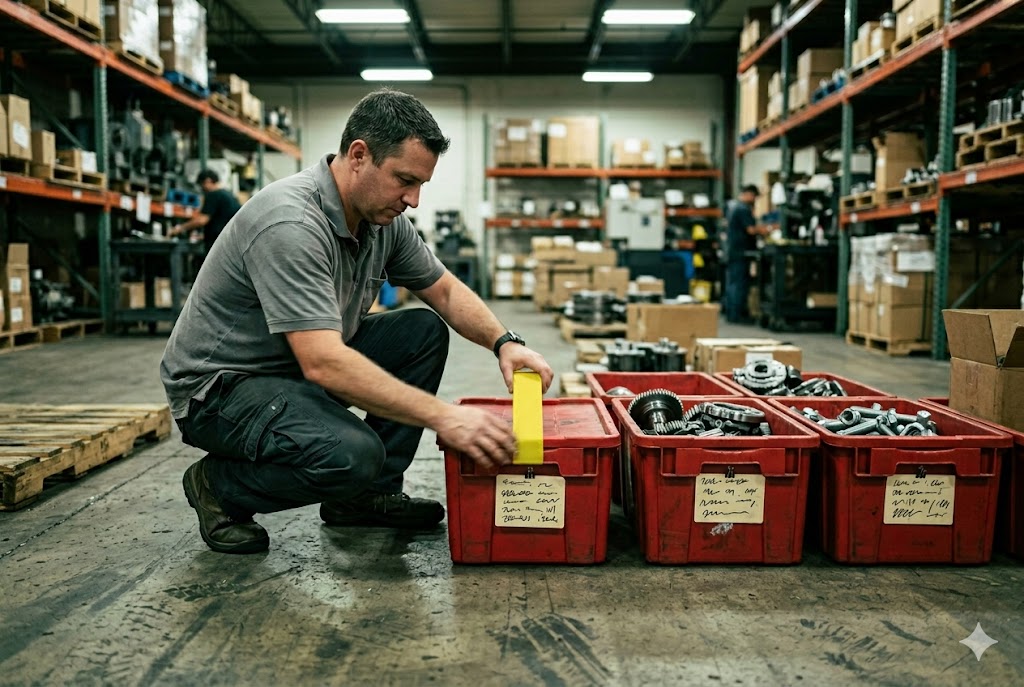
Step One: Stop the Flow
The moment you identify a defect, freeze all movement of that lot. This means:
- Stop any parts from entering your production line.
- Pull units from any work-in-progress that used parts from the same shipment.
- Check whether any finished goods were built using suspect parts and flag those too.
Missing this step is costly. One delivery reaching your customer before you have clarity on scope turns a supplier problem into your liability.
Step Two: Build Your Evidence Package
Before anything is moved, photograph everything. This is non-negotiable.
| Evidence Type | What to Capture | Why It Matters |
|---|---|---|
| Defect photos | Close-up images against the engineering drawing | Establishes nonconformance visually |
| Dimensional records | CMM reports 1 or caliper readings with timestamps | Provides measurable proof of deviation |
| Lot documentation | Packing list, PO number, lot numbers, quantity | Links the defect to a specific shipment |
| Incoming inspection records | Any inspection data from receiving | Shows what was checked and what was missed |
Timestamp every photo. Export your CMM data with the date embedded. This evidence package is the foundation of any financial claim or formal dispute. Suppliers who know you have solid documentation are far more likely to respond constructively and quickly.
Step Three: Segregate by Risk Level
Not all parts in a suspect lot fail equally. Some may be out of tolerance on a critical dimension. Others may have a cosmetic issue. Sorting by risk level allows you to make faster decisions about what can be used, what needs rework, and what must be scrapped.
| Part Condition | Recommended Action |
|---|---|
| Critical dimension out of tolerance | Full quarantine, no use |
| Non-critical cosmetic defect | Engineering review before decision |
| Passed inspection on all checks | Release under documented hold with monitoring |
Document every decision in writing. Your internal quality records must show that each disposition was deliberate and traceable.
Step Four: Notify Internal Stakeholders
Inform your production manager, quality manager, and procurement leadership within hours of confirming the defect. Do not wait for a full root cause before escalating internally. The earlier your team knows, the earlier they can start protecting customer commitments (covered in a later section).
How Can I Work With the Supplier on Root Cause and Corrective Action?
When our sourcing team submits a quality complaint to a manufacturer, the response we get back within 48 hours tells us almost everything we need to know about that supplier's quality culture. Vague replies and promises without data are red flags.
To drive a real corrective action, issue a formal Supplier Corrective Action Request 2 in writing within 24 to 48 hours of confirming the defect. Reference the drawing revision, the specific tolerance, the quantity affected, and the nonconformance description. Require an 8D report in response. Do not accept verbal commitments.

What Is an 8D Report and Why Does It Matter?
An 8D (Eight Disciplines) report 3 is a structured problem-solving document. It forces the supplier to address eight specific areas:
| Discipline | What the Supplier Must Answer |
|---|---|
| D1 – Team | Who owns this problem internally at the supplier? |
| D2 – Problem Description | What exactly is the defect, with data? |
| D3 – Containment | What did they do to stop more defects from shipping? |
| D4 – Root Cause | Why did the defect occur? Why did it pass inspection? |
| D5 – Corrective Actions | What permanent fix addresses the root cause? |
| D6 – Implementation | How and when was the corrective action applied? |
| D7 – Prevention | How will this be prevented system-wide? |
| D8 – Closure | What evidence proves the corrective action is effective? |
The two most important disciplines are D4 and D5. Many suppliers submit D4 responses that say "operator error" or "machine calibration." These are symptoms, not root causes. Push back on any response that fails to identify a systemic process gap. Effective root cause investigation often relies on structured tools such as Ishikawa diagrams and the 5 Whys 4 to trace a defect back to its systemic origin.
How to Write a SCAR That Gets a Real Response
A strong Supplier Corrective Action Request includes:
- The PO number and shipment date
- The drawing number and revision
- The specific dimension or feature that failed, with the tolerance and the measured value
- The quantity confirmed nonconforming and the total suspect quantity
- A clear deadline for the 8D response (typically 5–10 business days)
- The consequence of non-response (hold on future orders, cost deduction, etc.)
Vague complaints are easy to deflect. A SCAR that cites drawing revision C, tolerance ±0.02mm, measured value 0.07mm deviation, on lot number 24-0831, quantity 480 of 500 parts rejected — that is hard to dispute and impossible to misunderstand.
Verifying Corrective Actions Before the Next Shipment
Do not release the next purchase order until the corrective action has been independently verified. Options include:
- Require the supplier to submit first-article inspection (FAI) 5 results on the corrected production run.
- Engage a third-party inspection firm based in China — QIMA, Bureau Veritas, and SGS all offer emergency audit services — to inspect the supplier's stock and production line before the next shipment leaves.
- Conduct a remote process audit via video call if a physical audit is not possible within the timeline.
The third-party inspection option is particularly effective. An independent inspector on the factory floor closes the loop between what the supplier claims they fixed and what is actually happening on the production line.
When Should I Stop Shipments or Production After a Quality Incident?
This is the question that purchasing managers find hardest to answer, because stopping a shipment has real cost. But our experience coordinating production between China suppliers and US buyers shows one consistent pattern: delayed stop decisions cost more than early ones.
Stop all inbound shipments from the affected supplier as soon as the defect is confirmed and the full scope is unknown. Resume only after the supplier provides verified corrective action evidence and an independent inspection clears the next production run. Internal production using suspect parts should stop immediately.
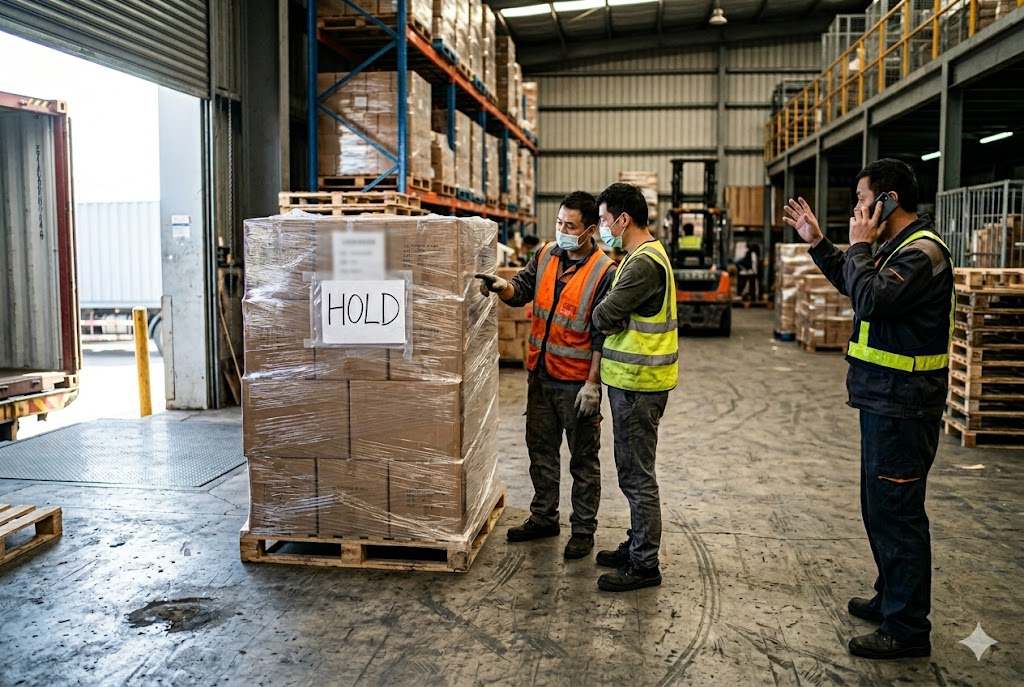
When to Issue a Formal Shipment Hold
A shipment hold is warranted when any of these conditions are true:
- The defect affects a safety-critical or functionally critical dimension.
- The defect rate in the received lot exceeds your acceptable quality level (AQL) 6.
- The root cause has not yet been identified.
- The supplier has not confirmed that in-process stock or future production is free of the same defect.
Holding a shipment is a formal act. Send written notification to your supplier stating that all outbound shipments are suspended pending corrective action verification. Copy your supplier account manager, quality contact, and — if relevant — your contract terms cite it.
When to Suspend Internal Production
Stop your internal production line from consuming parts from the suspect lot when:
- Any part of the defect scope remains unclear.
- Downstream processing would make the defective condition irreversible (e.g., machined parts that are then plated or welded).
- You cannot guarantee 100% sorting accuracy on the defective characteristic.
The cost of stopping your production line for one day is real. The cost of shipping defective finished goods to your customer — and then managing a recall, rework, and customer penalty — is larger by an order of magnitude.
How to Formally Trigger a Supplier Scorecard Event
Treat this incident as a formal supplier performance event 7 in your internal system. This does three things:
- Creates the internal paper trail needed to negotiate compensation, priority remake scheduling, and expedited freight at the supplier's expense.
- Provides leverage in any financial negotiation or dispute.
- Generates the documented history needed to justify a supplier disqualification if the relationship does not improve.
A supplier who knows they are on a formal performance watch — with documented consequences — responds differently than a supplier who receives an informal complaint.
How Can I Protect My Customer While I Resolve the Supplier Problem?
The supplier problem is yours to solve. Your customer does not care how it happened. They care whether their delivery arrives on time and whether the parts work. Our sourcing team has seen buyers absorb a supplier failure cleanly — and we have seen buyers lose a customer account over the same size incident. The difference is almost always how fast they activated a backup plan.
To protect your customer during a supplier quality incident, notify them early with a clear status update, activate a parallel source or bridge quantity immediately, and commit only to delivery dates you can control. Absorbing a short-term cost on a bridge order is cheaper than losing a customer relationship or paying a missed-delivery penalty.

Communicate Early and Directly
Tell your customer about the issue before they ask. A proactive notification — even one that says "we have identified a quality issue with a recent shipment and we are managing it" — lands better than silence followed by a missed delivery.
Keep the update short and factual:
- What the issue is (brief, non-technical)
- What you are doing about it
- When you will provide a confirmed revised delivery date
Do not over-explain the supplier situation. Your customer is not interested in the factory's corrective action report. They want to know when they will have good parts.
Activate a Bridge Supply Immediately
Parallel-source a bridge quantity from a backup supplier or domestic source as soon as the incident scope is clear. Options include:
| Bridge Option | Typical Lead Time | Cost Premium |
|---|---|---|
| Domestic US machining shop | 3–10 days | High (30–80% over China price) |
| Backup China supplier (if pre-qualified) | 2–4 weeks | Low to moderate |
| Vietnam or Taiwan supplier | 2–5 weeks | Moderate |
| Sort and rework locally from reject lot | 1–5 days | Variable, depends on defect type |
The cost of a bridge order is real. But absorbing that cost is almost always less than the cost of a missed delivery penalty or a lost customer account. In our experience, buyers who move fast on a bridge order recover their customer relationship. Buyers who wait for the original supplier to fix the problem usually do not.
Review Your Contracts for Supplier Liability
Before you absorb the full cost of a bridge order or customer penalty, review your purchase contract and quality agreement with the supplier. Key terms to look for:
- Warranty period and defect liability clause
- Re-production obligation (must the supplier remake at no charge?)
- Expedited shipping responsibility (who pays for air freight on a remake?)
- Consequential damages limitation
Chinese courts and international arbitration panels both weight written contractual terms heavily. If your quality agreement specifies that the supplier bears re-production cost and outbound freight for confirmed nonconforming shipments, that agreement is your recovery path. If you have no written quality agreement, your leverage depends entirely on the supplier's goodwill and the size of your ongoing business relationship.
Institutionalize What You Learn
After the incident is resolved, do one more thing. Take every failure mode you discovered — the specific dimension that failed, the process step that caused it, the inspection step that missed it — and add it to your incoming inspection checklist for that supplier. Make it a mandatory first-article check on all future orders.
Quality incidents are the most precise source of supplier-specific inspection criteria available. Most buyers do not institutionalize what they learn. The ones who do are the ones who stop having the same problem twice. Engaging third-party inspection companies in China 8 on future shipments is one of the most reliable ways to close the loop between what a supplier claims and what is actually shipped. A formal SCAR lifecycle management process 9 ensures that corrective actions are documented, tracked, and verified — and that the same defect does not return under a different lot number. Building these institutionalized checks around a structured corrective action workflow 10 turns a painful quality incident into a durable process improvement.
Conclusion
A quality incident is not just a supplier problem. It is a test of your sourcing process, your contracts, and your customer relationships. Move fast on containment, document everything, engage the supplier formally, and activate a backup plan in parallel. Those four steps, done simultaneously, are what separates buyers who recover quickly from those who do not.
Footnotes
1. Comprehensive guide to CMM inspection and dimensional measurement in CNC manufacturing. ↩︎
2. Definition and process overview of the Supplier Corrective Action Request in quality management. ↩︎
3. ASQ resource explaining the Eight Disciplines (8D) problem-solving methodology. ↩︎
4. How Ishikawa diagrams and the 5 Whys integrate to identify manufacturing root causes. ↩︎
5. SafetyCulture guide to First Article Inspection (FAI) process, roles, and best practices. ↩︎
6. QIMA explanation of Acceptable Quality Limit (AQL) used in product sampling inspections. ↩︎
7. How supplier scorecards track vendor performance KPIs and support procurement decisions. ↩︎
8. Overview of leading third-party quality inspection companies operating in China. ↩︎
9. MasterControl overview of the SCAR process for lifecycle tracking and corrective action verification. ↩︎
10. ComplianceQuest guide to structuring supplier corrective action workflows for sustained quality. ↩︎