Skip to main content Skip to footer

Every week, we coordinate sample orders between our clients and factories across Guangdong, Jiangsu, and Shanghai. We see the same question come up before almost every new project: how long will this actually take?
The total sampling timeline for custom CNC machining parts from China typically runs 7–20 business days. That includes 3–10 days for in-factory production and inspection, plus 3–5 days for express air shipping via DHL, FedEx, or UPS. Sea freight extends this to 14–45 days total.
Here is what drives that range — and what you can do to land on the shorter end of it.
What Factors Affect Sample Lead Time for Custom CNC Parts?
When we review a new client's drawings before sending them to a factory, we already have a rough lead time estimate in mind before the factory even responds. That's because the main drivers are visible in the drawings themselves.
Sample lead time for custom CNC parts depends on part complexity, material type, tolerance requirements, post-machining surface treatments, and how complete the drawings are. Complex geometries, tight tolerances below ±0.01mm, and multi-step finishing processes each add days to the factory's production cycle.
Part Complexity and Machining Setup
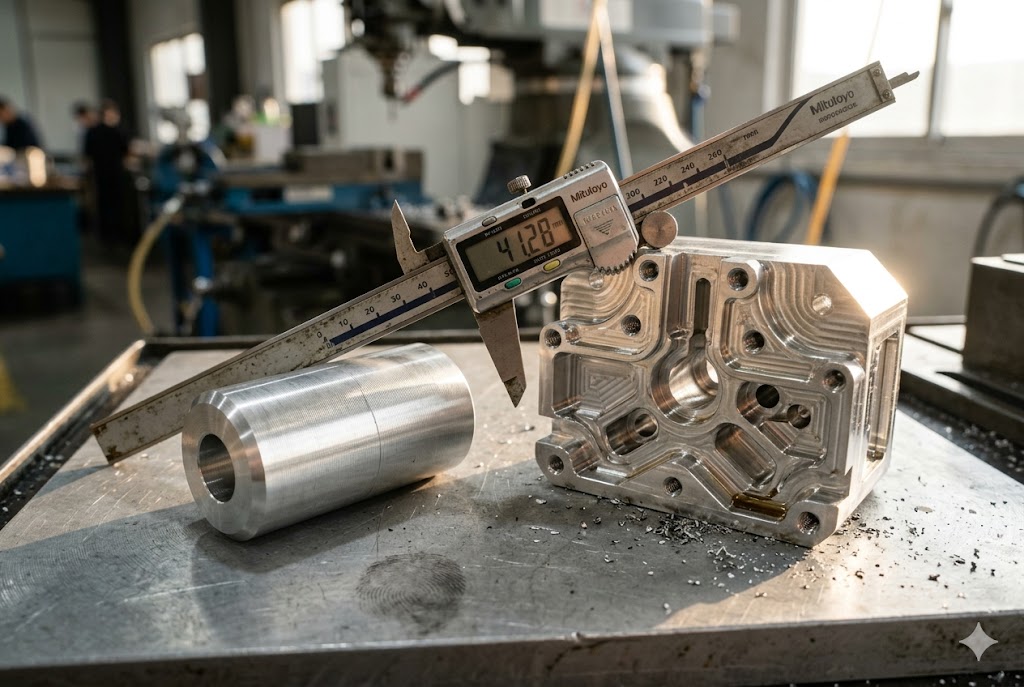
Simple parts — think turned aluminum components with basic tolerances — can be machined in 1–3 working days. A 5-axis milled part 1 with internal channels, thread inserts, and tight positional tolerances may take 5–10 working days on the shop floor alone. The more setups required, the longer the cycle.
| Part Type | Typical In-Factory Time | Notes |
|---|---|---|
| Simple turned part (2–3 axis) | 1–3 working days | Standard material, basic tolerances |
| Milled block with moderate features | 3–5 working days | Multiple setups may be needed |
| 5-axis complex geometry | 5–10 working days | Slower cutting speeds, more in-process checks |
| Parts with tight tolerances ≤±0.01mm | Add 2–3 days | More frequent measurement stops |
Material Availability
Standard materials — 6061 aluminum 2, 304 stainless, mild steel — are usually in stock. Exotic alloys like Inconel 3 or medical-grade plastics may need to be sourced first, adding 2–5 days before machining even starts.
Post-Machining Steps Are Frequently Underestimated
This is one of the most common sources of surprise delays. When a supplier quotes "machining time," they typically mean time at the CNC machine. They do not always include:
- Anodizing, plating, or powder coating 4 (2–4 days at a subcontractor) 5
- Polishing or bead blasting (1–2 days)
- Dimensional inspection and report preparation (1–2 days)
- Cleaning, packaging, and export documentation
These steps can add 2–5 days to the total cycle. Always ask the supplier for a breakdown by stage, not just a single total number.
Drawing Quality and Completeness
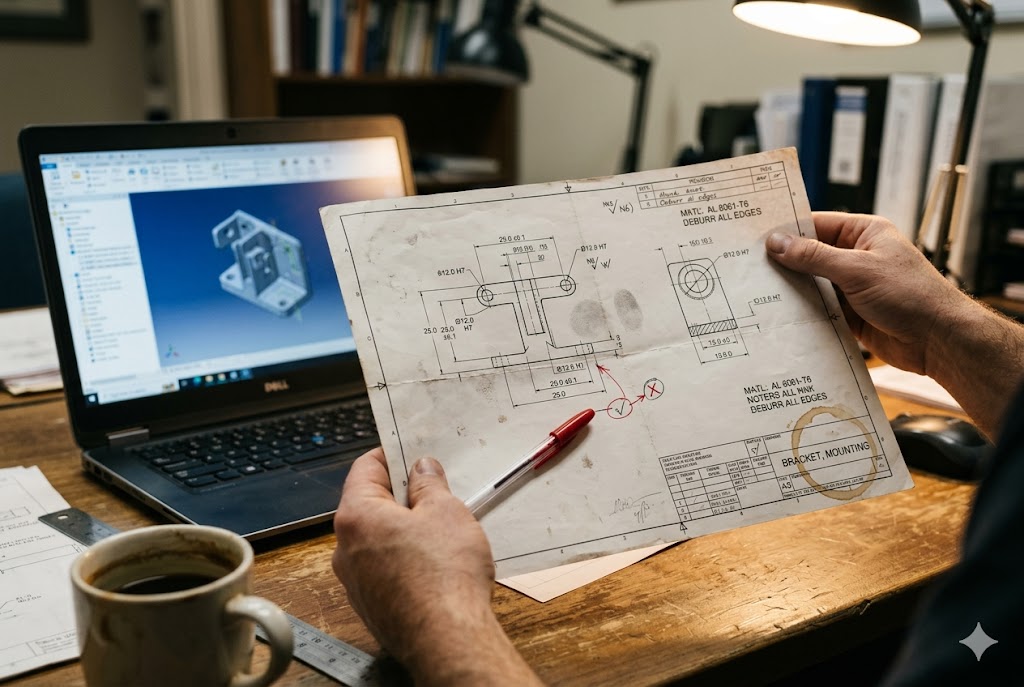
Incomplete or ambiguous drawings are the single largest cause of delays before machining even starts. Missing tolerances, unclear surface finish callouts, or conflicting dimensions in 2D vs 3D files trigger back-and-forth communication that quietly adds 3–7 days. Providing both a fully toleranced 2D drawing and a 3D model in STEP format 6 simultaneously — rather than 3D only — eliminates most of these delays.
Factory Location Within China
Not all Chinese factories are equal in terms of logistics. Suppliers in Guangdong, Jiangsu, and Shanghai consistently deliver shorter end-to-end cycles. They sit close to major export ports and have dense local networks of surface finishing and inspection subcontractors. A factory in a less developed inland province may produce the same part at a lower cost but add 2–3 days just for inland transport to a port.
How Can I Shorten My Sample Timeline Without Increasing Risk?
We get asked this constantly, especially when a client has a tight product launch window. The good news is that most of the timeline padding comes from avoidable delays, not from actual machining time.
You can shorten your sample timeline by providing complete 2D and 3D drawings upfront, choosing a factory that runs double or triple shifts, confirming finishing and inspection steps before production starts, and pre-negotiating a second-sample revision protocol so both parties act in parallel rather than sequentially.
Provide Complete Drawings From Day One
This is the highest-leverage action you can take. A fully dimensioned 2D drawing with tolerances, surface finish callouts, material specification, and thread details eliminates the most common source of pre-production delay. Pair it with a clean 3D model in STEP format. Do not send one without the other.
Ask About Shift Structure
A factory running double or triple shifts can effectively halve elapsed production time compared to a single-shift operation with identical machines. This is not a standard detail suppliers volunteer. Ask directly: "Do you run double shifts for sample orders? What is your current production queue?"
| Factory Shift Model | Relative Sample Speed | Risk Consideration |
|---|---|---|
| Single shift (8 hrs/day) | Baseline | Standard — plan accordingly |
| Double shift (16 hrs/day) | ~50% faster elapsed time | Confirm quality checks still apply at shift changeover |
| Triple shift (24 hrs/day) | ~65% faster elapsed time | Ask about fatigue and inspection frequency |
Use Express Air Freight — Not Sea
For samples, sea freight is almost never the right choice unless you are pre-shipping in bulk for a pilot run. DHL Express international shipping 7 moves packages from major Chinese cities to US destinations in 3–5 business days. Sea freight takes 14–30 days for the ocean leg alone, plus customs clearance. The cost difference on a small sample shipment is rarely more than $100–200. Use air.
Pre-Agree on a Parallel Revision Protocol
Most buyers wait for the first sample to arrive, review it, identify issues, send feedback, and then wait for a second sample. That sequential process can take 4–6 weeks for a two-round cycle. A better approach: before the first sample ships, agree with the supplier on a structured revision process. Define how feedback will be submitted, what turnaround time is expected for revision samples, and who approves changes. This parallel-track approach compresses the full validate-revise-approve cycle by 40–60%.
Avoid Holiday Windows
Chinese New Year 8 (mid-January to mid-February) and Golden Week (early October) cause factory shutdowns of 1–3 weeks. Samples ordered in the two weeks before these periods routinely face 2–4 weeks of additional delay. Most suppliers will not proactively flag this risk. Mark these dates on your sourcing calendar and plan orders accordingly.
Should I Expect Different Lead Times for Simple and Complex Parts?
Yes — significantly different. When we prepare cost and timeline estimates for new projects, part complexity is the first variable we assess. A purchasing manager who applies the same 10-day assumption to every CNC sample order will be caught off-guard regularly.
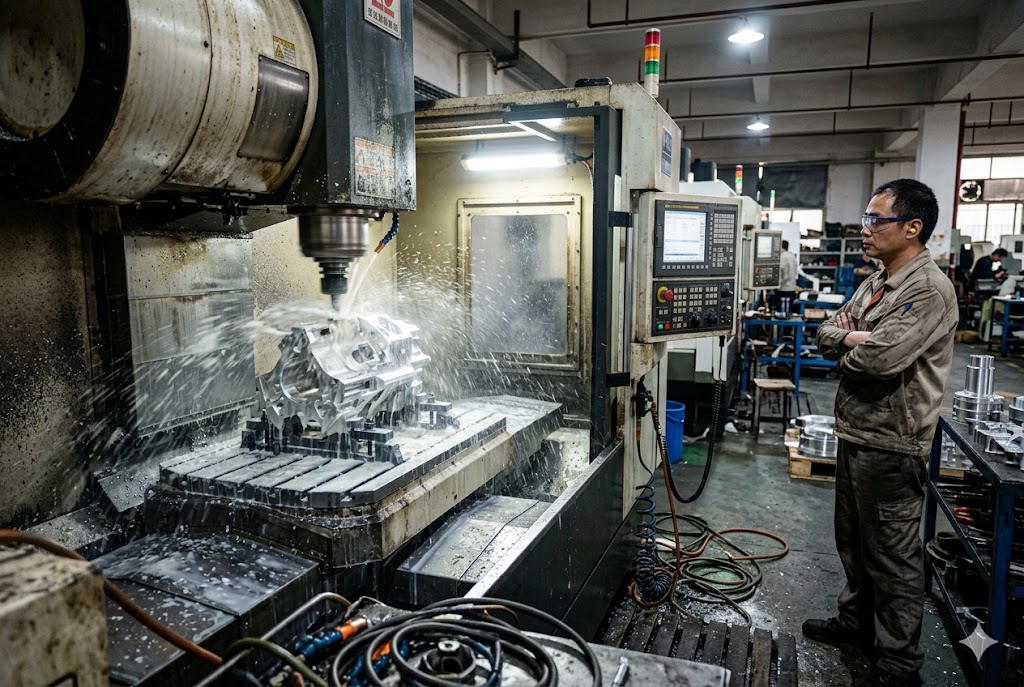
Simple CNC parts — such as turned aluminum components with standard tolerances — can be ready for shipment in as few as 1–3 factory working days. Complex 5-axis parts, tight-tolerance assemblies, or parts requiring non-standard materials typically need 5–10 factory working days before shipping begins.
Defining Simple vs Complex
The boundary between simple and complex is not always obvious. Here is a practical breakdown:
| Complexity Level | Characteristics | Typical In-Factory Days |
|---|---|---|
| Low | 2–3 axis, standard material, tolerance ≥±0.05mm, no surface treatment | 1–3 days |
| Medium | 4-axis or multi-setup, ±0.02–0.05mm, basic surface finish (anodize, bead blast) | 3–6 days |
| High | 5-axis, ±0.01mm or tighter, exotic material, multi-step finishing | 6–10 days |
| Very High | Assembly of multiple parts, GD&T callouts, CMM report required | 8–15+ days |
Why Tight Tolerances Add More Time Than You Expect
When tolerances fall below ±0.01mm, the machining process changes. Cutting speeds must be reduced. Coolant management becomes more critical. The operator must pause more frequently to measure in-process dimensions rather than relying on final inspection alone. A part that takes 90 minutes to machine at ±0.05mm might take 4–5 hours at ±0.005mm — and that is before any rework if the first pass is out of spec.
Multi-Setup Parts and Fixturing Time
A complex part that requires four different setups on the CNC machine does not just take four times as long as a single-setup part. There is non-trivial time in between each setup for fixturing, re-referencing, and in-process inspection. For tight-tolerance parts, each setup handoff is also a risk point where accumulated error can build up and cause the part to fail final inspection.
When to Request a CMM Report
For parts going into safety-critical or high-precision assemblies, a Coordinate Measuring Machine (CMM) 9 inspection report adds 1–2 days but provides documented proof of compliance. We routinely recommend this for first samples, even when the client does not initially ask for it. The documentation protects both sides if a dispute arises later.
What Should I Confirm Before the Supplier Starts Sample Production?
Rushing a supplier into production before key details are confirmed is one of the most expensive mistakes in a sampling cycle. We have seen clients lose 2–3 weeks because a misunderstanding about surface finish or material grade was not caught until the sample arrived.
Before a supplier starts CNC sample production, confirm the final drawing revision, material grade and source, tolerance requirements, surface finish specification, packaging and labeling requirements, sample quantity, inspection method, and whether a dimensional report or PPAP document is needed.

Use a Pre-Production Checklist
A short written checklist, shared with the supplier before production authorization, takes 30 minutes to prepare and can save weeks. Here is what ours includes:
| Item | What to Confirm | Why It Matters |
|---|---|---|
| Drawing revision | Latest revision number and date | Prevents production from an outdated file |
| Material grade | Full grade and standard (e.g., Al 6061-T6 per ASTM B209) | Avoids material substitution |
| Key tolerances | Callout any tolerance tighter than ±0.02mm explicitly | Ensures the factory flags it before quoting |
| Surface finish | Process, spec, and color/texture sample if applicable | Finish subcontractors need lead time too |
| Sample quantity | Exact piece count | Avoids "we only made one" surprises |
| Inspection document | FAI, CMM report, or certificate of conformance | Sets expectations before machining starts |
| Packaging | Individual wrapping, box type, labeling requirements | Prevents damage in transit |
| Sample fee terms | Amount and credit-back conditions against mass production | Protects cash flow and sets expectations |
Negotiate Sample Fee Credit Terms Upfront
Sample fees in China are quoted per unit and are almost always higher than production unit pricing. That is normal. What matters is whether the fee is refundable or creditable against your first mass production order. Most reputable suppliers will agree to credit the sample fee against an initial production order. Confirm this in writing before you approve production — not after the sample ships.
Confirm the Supplier's Current Queue
A supplier who can normally produce a simple part in 3 days may currently have a 7-day queue. Ask directly. If lead time is critical, ask whether there is a rush fee option to move your job ahead. Some factories offer this; many do not advertise it.
Lock Down the Communication Protocol
Specify who is the single point of contact on each side, what format questions should come in (email only, no WeChat voice messages), and what the expected response time is. In our experience coordinating between US clients and Chinese factories, unclear communication protocols are the second-largest source of delay after drawing issues. Referencing a structured framework like PPAP documentation requirements 10 can help both parties align on quality expectations before production begins.
Conclusion
Plan for 7–20 business days total. Provide complete drawings, confirm every detail before production starts, and use air freight for samples. These three steps alone eliminate most preventable delays.
Footnotes
1. Overview of 5-axis CNC machining: capabilities, setup types, and applications. ↩︎
2. Properties and uses of 6061 aluminum alloy in precision machined components. ↩︎
3. Inconel superalloy characteristics: high-temperature resistance and machinability challenges. ↩︎
4. Anodizing process explained: electrochemical oxide layer formation on aluminum parts. ↩︎
5. Powder coating process: application method, curing, and finish durability. ↩︎
6. ISO 10303-21 (STEP) file format: the standard for CAD model exchange between systems. ↩︎
7. DHL Express international shipping options and transit time estimates from China. ↩︎
8. Chinese New Year dates, factory shutdown periods, and impact on supply chains. ↩︎
9. Coordinate Measuring Machine (CMM): how it measures part geometry against design specs. ↩︎
10. PPAP (Production Part Approval Process): documentation standards for supplier quality approval. ↩︎