Skip to main content Skip to footer
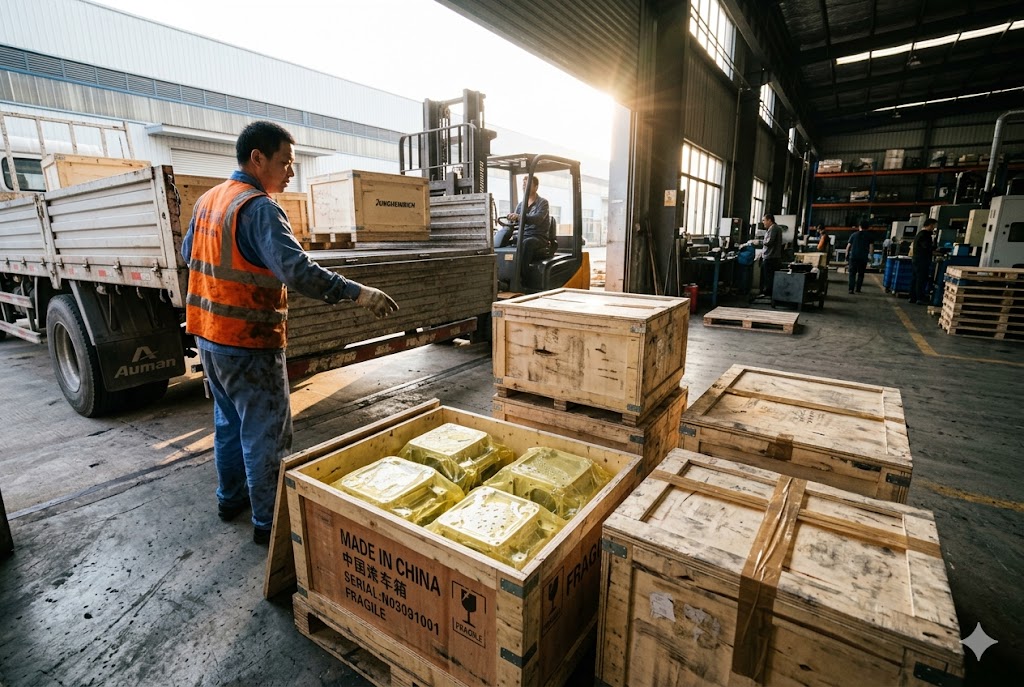
We have shipped precision machined parts to buyers in North America for years. One thing we see again and again: buyers spend months selecting the right supplier, then hand the shipment to any forwarder willing to offer the lowest rate. That single decision wipes out the cost savings they worked so hard to secure.
Choosing the right freight forwarder for CNC machining parts from China means verifying their FMC and CBP licenses, testing their HTS classification skills, demanding fully itemized quotes, and confirming they have industrial B2B experience — not just e-commerce volume. Price is the last thing to compare, not the first.
There is a lot to unpack here. Let's go through each key question one by one so you can make a confident decision before your next shipment.
What Experience Should My Forwarder Have with Industrial Parts Imports?
Most forwarder sales teams are good at quoting. Fewer are good at handling CNC metal parts specifically. We have seen first-hand what happens when a forwarder trained on consumer e-commerce applies those same documentation standards to a shipment of machined aluminum housings.
Your forwarder must have documented experience with industrial B2B manufacturing shipments. This means they understand precise commercial invoice descriptions, UFLPA metal origin documentation, ISF filings with accurate 10-digit HTS codes, and proper anti-corrosion packaging requirements for CNC metal parts — none of which applies to consumer goods forwarding.
Why Consumer Goods Experience Is Not Enough
A forwarder whose main volume is FBA shipments or retail consumer goods handles documentation very differently. They write vague invoice descriptions like "metal parts" or "hardware components." CBP does not like that. It triggers holds, delays, and sometimes penalty notices. Your machined part needs a technically precise description: material, geometry, function, and end use.
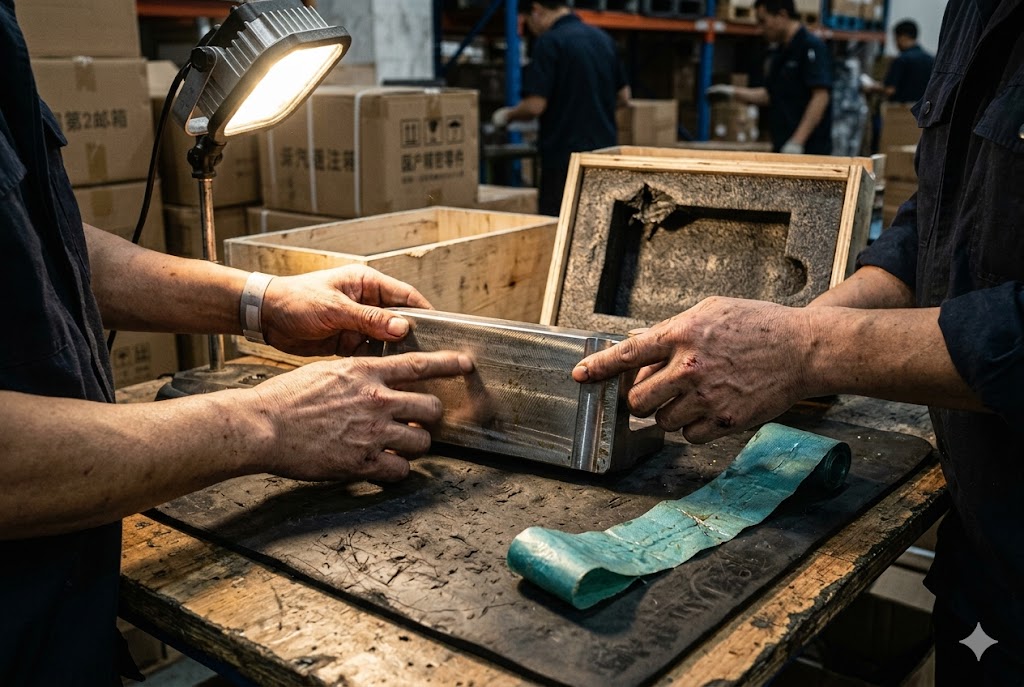
CNC metal parts also require specific physical handling. Bare machined surfaces rust. Tight-tolerance bores get dinged. If the forwarder does not specify anti-rust packaging and foam-lined crating in their packing instructions, you will receive parts that fail incoming inspection.
HTS Classification Is the Real Test
Before you commit to any forwarder, give them a classification test. Pick a real part from your product range. Give them the material, geometry, and function. Ask them to return a 10-digit HTS code.
The United States requires a 10-digit Harmonized Tariff Schedule code 1 for all imports, expanding beyond the internationally standard 6-digit HS code. Evaluate three things:
| Test Criterion | What a Good Forwarder Does | What a Bad Forwarder Does |
|---|---|---|
| 10-digit HTS code | Returns the correct code with chapter note reference | Returns a 6-digit or vague heading |
| Section 301 check | Flags which list (1–4B) applies and the current rate | Ignores additional duty exposure |
| Section 232 applicability | Identifies steel/aluminum content and April 2026 rule impact | Does not mention it at all |
A forwarder who cannot classify a basic machined bracket correctly will cost you more in misapplied duties, CBP penalties, and examination holds than they save in freight rates.
UFLPA Documentation for Metal Parts
The Uyghur Forced Labor Prevention Act (UFLPA) 2 applies to goods with inputs from Xinjiang. Many steel and aluminum inputs used in Chinese manufacturing touch that supply chain. Your forwarder must know how to gather mill certificates, smelter origin documentation, and chain-of-custody records before the cargo ships — not after CBP asks for them at the port.
A forwarder without a documented UFLPA process for metal parts is a risk. Ask them directly: "What documents do you collect from the China side to support UFLPA compliance for machined metal parts?" If they look blank, move on.
What to Ask During the Evaluation
Use these questions to screen forwarder candidates early:
| Question | Why It Matters |
|---|---|
| How many B2B industrial manufacturing clients do you serve regularly? | Filters out e-commerce-focused operators |
| Can you walk me through your ISF filing process for machined parts? | Tests procedural knowledge |
| What packaging instructions do you issue for bare-surface metal parts? | Reveals handling experience |
| What UFLPA documentation do you collect before loading? | Confirms compliance awareness |
Do not accept vague answers. A knowledgeable forwarder answers these questions with specifics.
How Can I Compare Freight Forwarders Beyond Just Price?
Price is the easiest number to compare. It is also the most misleading. Our operations team has pulled quotes from multiple forwarders on the same shipment and found that the lowest headline rate became the most expensive total cost after all fees were added.
To compare freight forwarders beyond price, evaluate their license status, HTS classification competence, all-in itemized quotes, communication response standards, House Bill of Lading structure, CBP hold management process, and willingness to commit to written SLAs. These factors determine real cost and supply chain reliability far more than the headline freight rate.
Start with Licenses, Not Rates
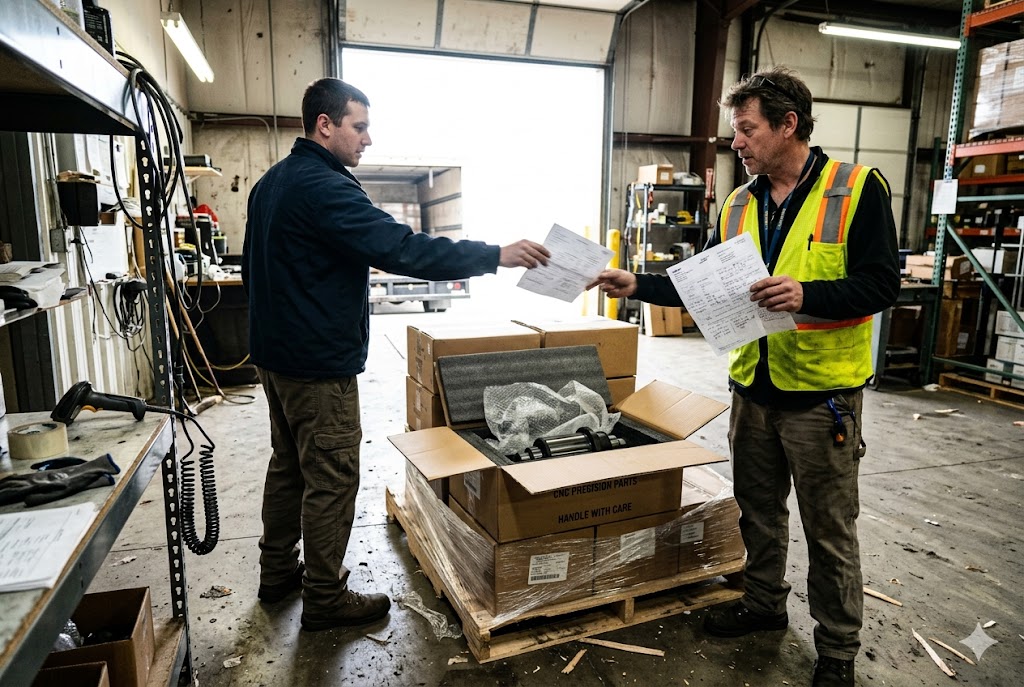
Before anything else, verify licenses. For ocean freight from China to the US, your forwarder needs:
- FMC OTI License — either as an Ocean Freight Forwarder (OFF) or Non-Vessel Operating Common Carrier (NVOCC). You can verify active FMC Ocean Transportation Intermediary licenses 3 directly through the Federal Maritime Commission's official licensing portal at www2.fmc.gov/oti.
- CBP Customs Broker License — for US customs clearance. Verify through the permitted customs brokers listing 4 maintained by US Customs and Border Protection.
A forwarder arranging ocean freight without FMC licensing is operating illegally. That exposes your cargo to enforcement action and potential seizure. This is not a fine-print risk — it is a shipment-stopping event.
Demand Fully Itemized Quotes
A quote that shows only the ocean freight rate hides a large portion of your real cost. Require a full line-item breakdown before comparing any two forwarders.
| Cost Category | Typical Line Items |
|---|---|
| Origin charges | Factory pickup, export customs declaration, origin terminal handling (OHC) |
| Ocean freight | Base rate, fuel adjustment factor (FAF), peak season surcharge (PSS), congestion surcharge |
| Destination charges | Destination terminal handling (DTHC), port drayage, ISF filing, customs entry fee |
| Compliance costs | HTS classification review, UFLPA documentation support |
On a typical LCL shipment, destination charges and surcharges add 40–80% to the headline ocean rate. The forwarder quoting $600 for ocean freight may deliver a final invoice of $1,100. The forwarder quoting $750 all-in may actually cost less.
House Bill of Lading Structure
Ask whether the forwarder issues their own House Bill of Lading as an NVOCC or acts purely as an agent on the carrier's Master Bill.
This distinction matters when things go wrong. An NVOCC issuing their own HBL takes legal carrier responsibility for your cargo. You have a direct contractual claim against them. A pure agent passes through the shipping line's terms, which are far less favorable to cargo owners.
For high-value CNC parts shipped under FOB terms, working with a licensed NVOCC that issues its own HBL gives you meaningfully stronger legal protection.
Test Communication Before You Commit
Send a realistic RFQ for a representative shipment. Evaluate the response on four criteria:
- Speed — Did they respond within one business day?
- Completeness — Did they address all your questions?
- Technical depth — Did the contact person demonstrate product knowledge?
- Proactive compliance — Did they raise UFLPA, Section 301, or ISF requirements you did not ask about?
A forwarder that responds slowly or vaguely to a simple quote will respond the same way when your cargo is held at a US port.
Validate with a Trial Shipment
Before committing production volume, run a mid-size trial shipment — an LCL sea freight or air freight order large enough to be representative. Evaluate:
- Did the all-in cost match the quote?
- Was ISF filed on time and without errors?
- Did customs clear without a hold caused by documentation errors?
- Was tracking visible from cargo-ready to delivery?
- Were problems communicated proactively?
This single trial tells you more about operational competence than any pre-sales conversation.
Should I Choose a Forwarder in China, in the U.S., or Both?
This is a question we get from buyers regularly. The honest answer is: it depends on where your biggest operational risk is — and for most CNC part importers, it is on both sides of the ocean.
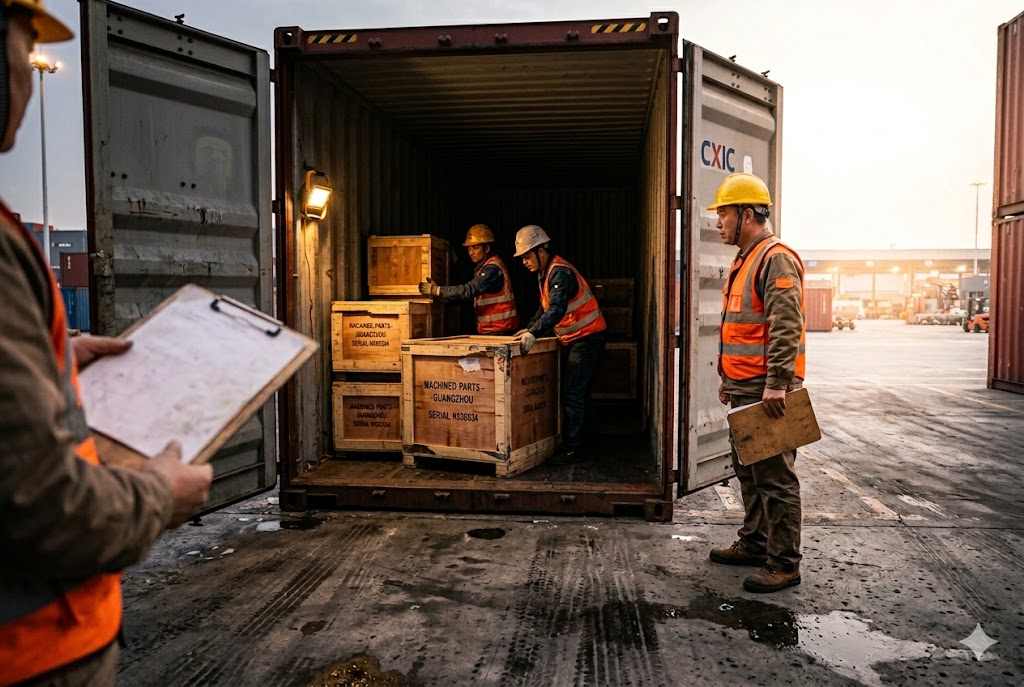
For most importers of custom CNC machined parts, the optimal structure is a forwarder that holds both FMC and CBP licenses, operates a physical office or owned agent network in both China and your US destination port, and provides a single point of contact across the full shipment lifecycle. This avoids the coordination gaps that occur when two separate companies manage each end.
What China-Based Forwarders Do Well
China-based forwarders buy cargo space directly from carriers and typically offer 20–30% lower freight rates as a result. They have staff on the ground who can manage factory pickup, coordinate export customs, arrange cargo inspections before loading, and respond to China-side issues in real time.
For buyers who already have a strong US-side customs broker relationship, a China-based NVOCC can be an efficient and cost-effective choice — provided they hold a valid FMC OTI license 5, which allows them to legally sell ocean freight services to US importers.
What US-Based Forwarders Do Well
US-based forwarders offer easier communication, full accountability under US law, and stronger domestic customs expertise. If your biggest concern is CBP compliance, duty classification, and customs hold management, a US-based licensed customs broker with a China agent network provides more direct accountability.
For questions about how the CBP customs broker licensing process 6 works, the CBP publishes a detailed FAQ covering qualifications, application steps, and ongoing compliance obligations.
The Case for a Single Dual-Licensed Operator
The coordination gap between a China-side forwarder and a US-side customs broker is where most shipment problems occur. When the cargo arrives at Long Beach and CBP flags a documentation issue, the US broker calls the China forwarder, who is in a different time zone, and no one owns the problem clearly.
A single operator holding both FMC and CBP licenses, with physical offices in China and the US, eliminates that gap. One point of contact. One chain of accountability.
Evaluating the Office Network
Ask any forwarder you are evaluating: do you have your own staff in China, or do you work through a third-party agent? There is a meaningful difference between a forwarder with owned offices in Shenzhen or Shanghai and one that relies on loosely affiliated agents. Owned offices mean direct control over origin-side documentation, cargo inspection, and loading.
For machined parts specifically, origin-side supervision matters. Someone needs to confirm the cargo is packaged correctly, that anti-rust treatment was applied, and that the packing list matches the purchase order before the container is sealed.
What Service Issues Can Disrupt My Supply Chain If I Choose the Wrong Forwarder?
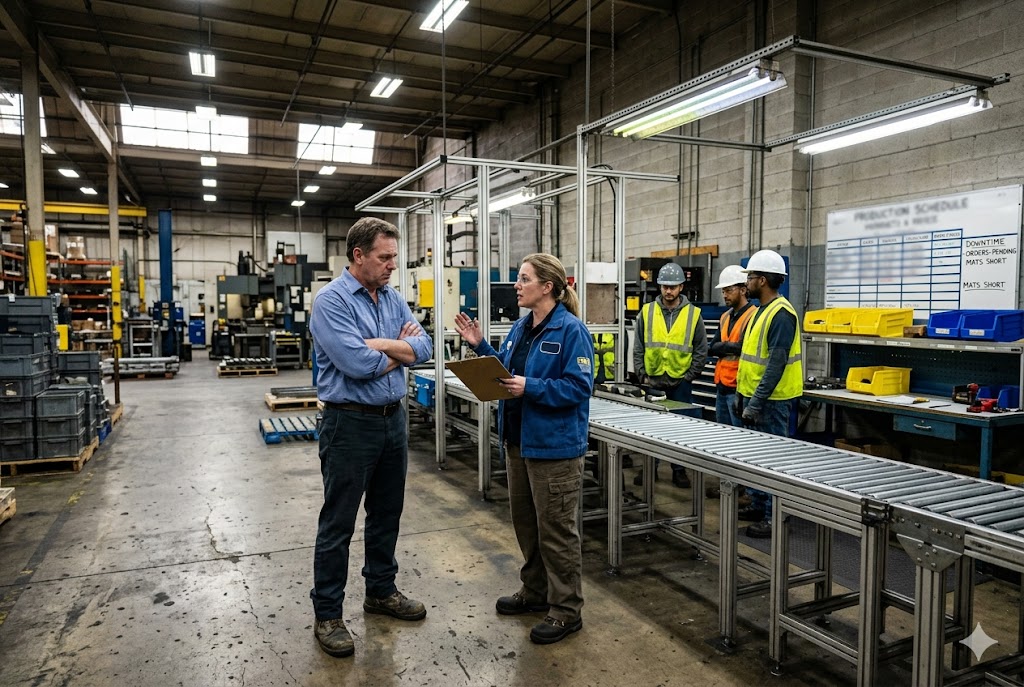
Our team tracks the root causes of shipment delays across the orders we manage. Poor forwarder selection is responsible for a significant share of the problems that end up disrupting buyer production schedules downstream.
The most common supply chain disruptions caused by the wrong freight forwarder are CBP examination holds from documentation errors, ISF filing delays that trigger penalties, HTS misclassification leading to duty underpayment and penalties, cargo damage from improper packaging instructions, and UFLPA detention from missing metal origin documentation.
CBP Examination Holds
CBP randomly examines 3–5% of all incoming shipments. What is not random is how well your forwarder handles the hold when it happens. There are three examination types:
| Examination Type | What It Involves | Typical Duration |
|---|---|---|
| X-ray exam | Non-intrusive scan at the terminal | 1–3 business days |
| Tailgate exam | Physical inspection of outer packaging and container | 2–5 business days |
| Intensive exam | Full unloading and inspection at a CFS facility | 5–15 business days or more |
Ask your forwarder directly: "What is your documented process when one of my shipments gets flagged for examination?" The answers that matter:
- How quickly do they contact you and your customs broker?
- Do they pass through exam fees at cost or mark them up?
- What is their average hold-to-release time for China-US industrial shipments?
- Have they managed all three examination types for machined metal parts?
A forwarder without a clear, documented hold-management process will leave your cargo sitting at an examination facility while you make phone calls and lose production days.
ISF Filing Errors and Penalties
The Importer Security Filing (ISF) 7 must be submitted to CBP at least 24 hours before vessel departure. ISF filings for machined parts must include accurate 10-digit HTS codes, correct country of origin, and precise manufacturer and supplier information.
ISF errors or late filings trigger liquidated damages penalties 8 of up to $5,000 per violation, and up to $10,000 per shipment — and they cannot be avoided retroactively. A forwarder who does not understand ISF requirements for industrial parts, or who treats ISF as an administrative afterthought, is a direct financial liability.
HTS Misclassification
Duty misclassification creates two types of risk. If duties are overpaid, you absorb unnecessary cost. If duties are underpaid, CBP can issue a penalty notice, demand back payment with interest, and flag your import account for enhanced scrutiny on future shipments.
For CNC machined parts, Section 301 additional duties 9 and Section 232 tariffs on steel and aluminum content are frequently misapplied. As of 2026, these tariffs can stack above 95% of declared customs value for metal-heavy parts, meaning a misclassification error carries serious financial exposure. A forwarder who cannot correctly classify your parts will create either overpayment or penalty exposure — sometimes both.
Negotiating a Written SLA
Once you have validated a forwarder through trial shipments and are moving to regular production volume, negotiate a written Service Level Agreement. It should include:
- Maximum time from cargo-ready notification to vessel booking confirmation
- ISF filing lead time commitment
- Post-arrival customs clearance target under normal conditions
- Escalation contacts and response time for holds or CBP queries
- Fee stability terms for a defined contract period
Forwarders who refuse to commit to written SLAs are operationally signaling that they cannot reliably meet the service standards they described verbally. That is exactly the information you need before, not after, they are embedded in your production supply chain.
It is also worth monitoring UFLPA enforcement updates from DHS 10, which regularly adds new high-priority sectors — including steel, copper, and aluminum — that directly affect the documentation requirements for machined metal part shipments.
Conclusion
Choosing a freight forwarder for CNC parts is not a procurement decision to delegate to price alone. Verify licenses first, test classification competence, demand itemized quotes, run a trial shipment, and get commitments in writing. The right forwarder protects your supply chain; the wrong one quietly drains it. Ready to start sourcing? Visit our Services page for a full overview of our CNC machining, die casting, sheet metal, and other manufacturing capabilities.
Footnotes
1. US government guide explaining why all imports require a 10-digit HTS code beyond the 6-digit international standard. ↩︎
2. Official CBP page on UFLPA enforcement, entity lists, and importer compliance requirements for goods from Xinjiang. ↩︎
3. Federal Maritime Commission's official licensing and certification portal for verifying OTI and NVOCC status. ↩︎
4. CBP's official directory listing all currently permitted and licensed customs brokers in the United States. ↩︎
5. FMC regulatory overview defining Ocean Transportation Intermediary types, licensing requirements, and legal obligations. ↩︎
6. CBP's FAQ on customs broker licensing, covering qualifications, application procedures, and compliance obligations. ↩︎
7. Comprehensive guide to ISF 10+2 filing requirements, deadlines, data elements, and importer responsibilities for ocean cargo. ↩︎
8. Customs law firm analysis of ISF penalty exposure, mitigation strategies, and CBP enforcement patterns for late or inaccurate filings. ↩︎
9. Detailed breakdown of current tariff stacking for CNC machined parts from China, including Section 301, Section 232, and IEEPA layers. ↩︎
10. DHS announcement adding steel, copper, and aluminum as high-priority UFLPA enforcement sectors affecting metal parts importers. ↩︎