Skip to main content Skip to footer

We run sourcing operations across both China and Vietnam, and we hear this question every week. Buyers watch tariff bills climb and wonder if a geography switch fixes the problem. It might — but only for the right parts, with the right supplier, and with realistic expectations.
Vietnam is a viable alternative for mid-volume, moderate-complexity CNC parts in standard alloys. It is not a full replacement for China. For simple-to-moderate components, the tariff savings are real and significant. For tight-tolerance or exotic-material parts, China still leads in depth, tooling, and process engineering.
Read on. We will walk you through capability, cost, risk, and how to build a decision framework that holds up in practice.
When Does Vietnam Make More Sense Than China for My Project?
Buyers often ask us this after their freight forwarder sends them a new landed-cost breakdown. The numbers shock people. And the instinct to move sourcing is reasonable — but "move everything" is almost never the right answer.
Vietnam makes the most sense for standard-alloy parts — aluminum, mild steel, common engineering grades — at mid-volumes, with tolerances above ±0.01mm, where the 25–35 percentage point tariff gap between Vietnamese and Chinese origin creates a landed cost advantage that outweighs Vietnam's somewhat higher unit prices.
Once you understand where Vietnam fits, the decision gets much clearer. Here is how to think through it.
The Tariff Gap Is the Starting Point
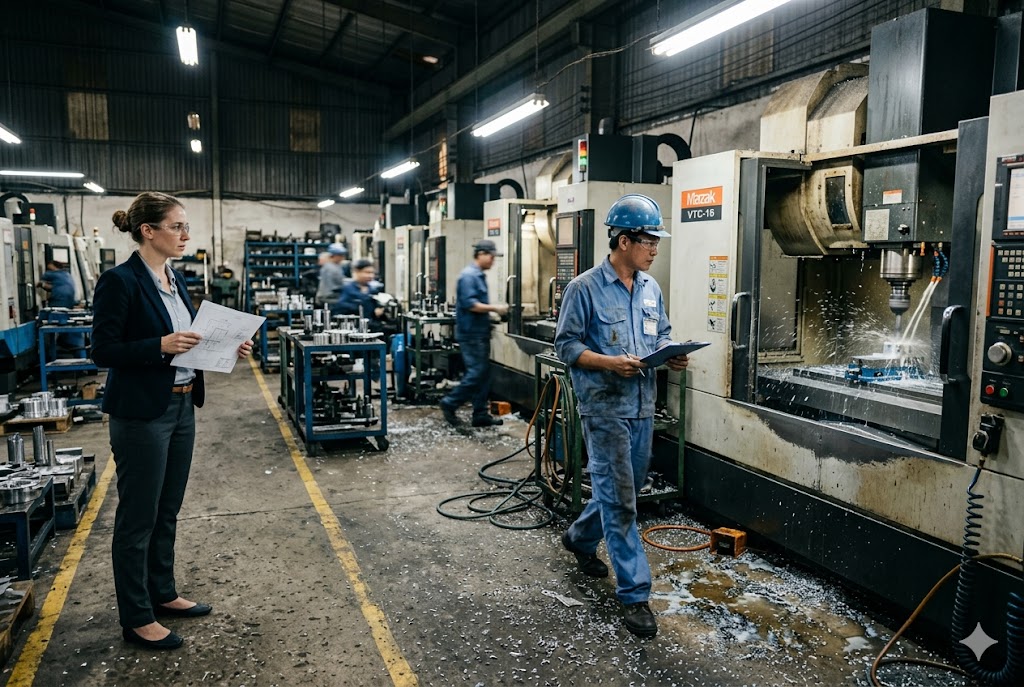
Vietnamese-origin CNC parts entering the US currently face a 10% baseline tariff. Chinese-origin equivalents carry an additional 25% Section 301 duty 1 plus a 10% IEEPA surcharge. That is a 25 to 35 percentage point difference in landed cost.
For many standard part families, that gap is larger than Vietnam's unit price premium. The math works. But only if the origin is genuine.
Part Complexity Determines Fit
Not every part belongs in Vietnam. Here is a simple breakdown:
| Part Type | Vietnam Fit | China Fit | Notes |
|---|---|---|---|
| Standard aluminum bracket, mid-volume | Strong | Strong | Vietnam wins on total cost |
| Multi-axis aerospace geometry | Weak | Strong | China has deeper process engineers |
| Steel structural parts, ±0.05mm tolerance | Strong | Strong | Vietnam competitive |
| Exotic alloy (Inconel, titanium) | Weak | Strong | Vietnamese supply chain thinner |
| Electronics-adjacent precision components | Strong | Strong | Hanoi cluster well equipped |
| High-volume, tight-tolerance hydraulic parts | Weak | Strong | China's depth unmatched here |
Volume and Lead Time Matter
Vietnam works best for mid-volume runs. Very high-volume programs can strain smaller shops. And Vietnam's upstream material supply — specialty alloys, cutting tools, surface treatment chemistry — still comes heavily from China. Non-standard specs mean longer, less predictable lead times.
If your part uses a common alloy and runs at moderate volumes, Vietnam can deliver. If your part is exotic or your program is very large, qualify a Vietnamese shop as a secondary source rather than your only source.
Regional Hub Selection
Vietnam is not one homogeneous manufacturing zone. The northern cluster around Hanoi and Bac Ninh 2 is strongest in electronics-adjacent precision work, driven by Samsung and related FDI supply chains. The southern provinces around Ho Chi Minh City handle more industrial and automotive parts. Matching your part to the right regional hub matters as much as choosing the right country.
How Do China and Vietnam Compare in Capability, Cost, and Supply Depth?
When our team visits Vietnamese suppliers, we bring the same evaluation checklist we use in China. The honest finding: the best Vietnamese shops are genuinely good. But the distribution of capability is narrower, and the tail is shorter.
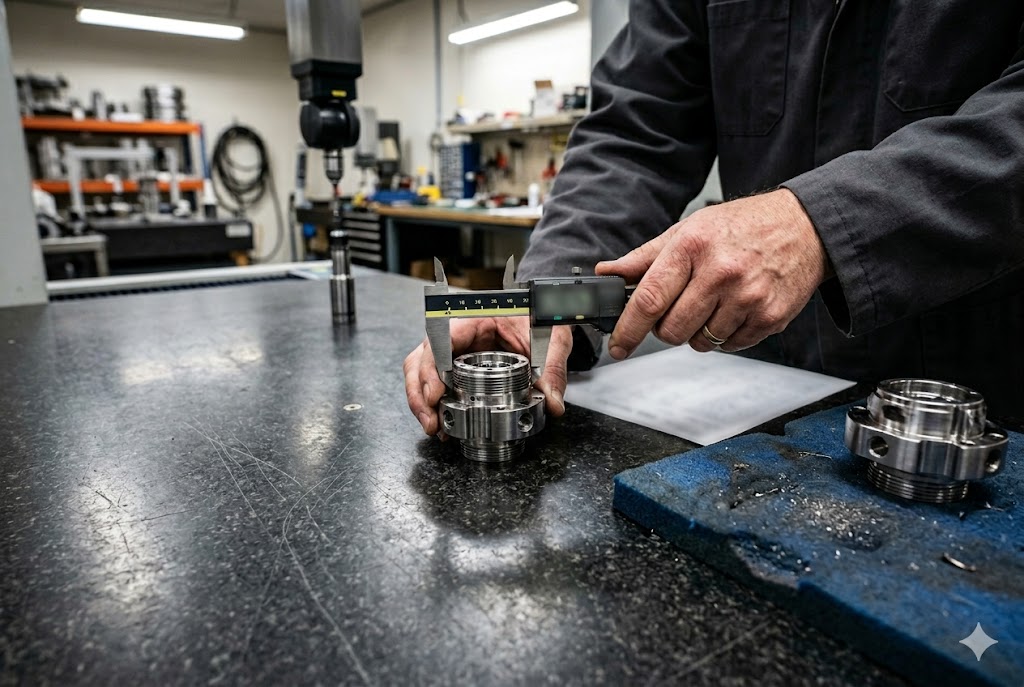
China leads in precision depth, tooling specialization, and upstream supply chain breadth built over 30 years. Vietnam leads in tariff efficiency, FTA access, and supply chain diversification value. For standard parts at moderate complexity, the capability gap is small enough that tariff savings tip the decision toward Vietnam.
Capability Comparison
| Dimension | China | Vietnam | Gap |
|---|---|---|---|
| Multi-axis CNC programming depth | Very deep | Moderate | Significant for complex geometry |
| Tolerances achievable | To ±0.002mm | To ±0.01mm typical | Relevant for high-precision parts |
| Exotic alloy experience | Broad | Limited | Material-specific risk |
| ISO 9001 / IATF 16949 certified shops | Thousands | Growing, leading shops certified | Vietnam catching up |
| 5-axis machining availability | Widespread | Available at top shops | Narrower pool in Vietnam |
| Upstream alloy supply | Domestic and deep | Partially China-dependent | Lead time risk for non-standard specs |
Cost Structure
Vietnam's unit prices for standard parts are often 5 to 15% higher than equivalent Chinese quotes before tariffs. Once you apply the tariff differential, the total landed cost in the US frequently favors Vietnam by 15 to 25% on affected HTS codes. That is a meaningful number on a large bill of materials.
However, tooling and mold costs in Vietnam can be higher, and qualification timelines are longer — typically 3 to 6 months for standard parts, 6 to 12 months for regulated-industry components. Factor that into your total cost of ownership calculation.
FTA Network Advantage
Vietnam's trade agreement coverage is broader than China's for developed-market destinations. The CPTPP 3 eliminates roughly 95% of tariffs for exports to Japan, Canada, Australia, and Mexico. The EU-Vietnam Free Trade Agreement 4 provides preferential European market access. For buyers supplying global production programs, Vietnam's FTA footprint compounds the advantage beyond the US Section 301 situation.
The Skills Gap Is Narrowing
Vietnam's vocational and engineering institutions have expanded CNC programming and multi-axis machining curricula significantly since 2018. Leading suppliers now hold ISO 9001 5, AS9100 6, and IATF 16949 7 certifications and handle 5-axis work 8 with regulated-industry documentation. The depth of engineers capable of programming complex aerospace geometries or managing exotic alloy behavior remains shallower than Shenzhen or Dongguan — but that gap is closing year by year.
What Risks Should I Evaluate Before Shifting Production to Vietnam?
This is where buyers sometimes underestimate the work involved. Moving production is not just a procurement decision. It carries compliance risk, supply chain risk, and geopolitical risk — all of which need to be managed in parallel.
The three biggest risks before shifting CNC production to Vietnam are: country-of-origin compliance failure, upstream supply chain dependency on China, and the possibility that USTR Section 301 investigations extend tariff actions to Vietnamese-origin goods within 12 to 18 months.

Country of Origin Compliance Is Non-Negotiable
This is the highest-stakes risk. Vietnamese-origin status requires genuine substantial transformation 9 in Vietnam — not assembly from Chinese-origin inputs, not transshipment through Vietnamese ports.
CBP conducts factory-level investigations. They review production records and analyze HS code patterns to detect circumvention. Importers of record bear full legal liability for origin misrepresentation. Penalties include retroactive Section 301 duties, seizure, and potential fraud referral to the DOJ.
Before you place an order, audit your supplier's actual local value addition. Supplier due diligence on origin compliance is as important as any quality audit.
Upstream Supply Chain Dependency
Vietnam's CNC shops still source specialty alloys, high-performance cutting tool grades, precision measuring instruments, and advanced surface treatment chemistry predominantly from Chinese suppliers. That means:
- Non-standard material specs face longer, less predictable lead times in Vietnam
- Any escalation of China-Vietnam trade friction or export restrictions on materials could expose your "diversified" supply chain to the same single-country risk you were trying to avoid
The USTR Section 301 Investigation
USTR launched a Section 301 excess-capacity investigation in March 2026 10 that includes Vietnam among 16+ economies under review. If this produces tariff action on a 12 to 18 month timeline, the current 25 percentage point tariff advantage of Vietnam over China could narrow significantly.
Buyers who restructure supply chains entirely around that differential — without qualifying backup capacity in other jurisdictions — will face the same disruption cycle they were trying to escape.
| Risk Category | Likelihood | Impact | Mitigation |
|---|---|---|---|
| Origin compliance failure | Medium (if supplier not audited) | Very High | Factory audit, production records review |
| Material lead time disruption | Medium | Medium | Buffer stock, multi-supplier specs |
| USTR Section 301 extension to Vietnam | Medium (12–18 month horizon) | High | Qualify backup in Philippines or Malaysia |
| Quality gap on complex parts | Low (if supplier well-qualified) | High | Rigorous qualification protocol, IPC |
| Capacity constraints at top shops | Medium | Medium | Early capacity reservation |
How Can I Decide Whether a China-Plus-One Strategy Fits My Business?
Most multinational OEMs are not replacing China with Vietnam. They are running both. That is the practical model — and it is the one that generates the most durable supply chain value.
A China-plus-Vietnam strategy works best when you retain China for high-complexity and tight-tolerance parts, shift standard moderate-complexity components to Vietnam for tariff efficiency, and use the bilateral presence as genuine supply chain diversification and active pricing leverage against both supplier bases.

Start With Your Bill of Materials
Pull your top 20 CNC part numbers by annual spend. For each one, note:
- HTS code and current tariff rate
- Tolerance requirements
- Material specification
- Annual volume
- Criticality to production
Parts with high Section 301 exposure, standard alloys, and moderate tolerances are your first candidates for Vietnam qualification. Start there. Do not start with your most complex or most critical parts.
The Qualification Timeline Is Real
A new Vietnamese supplier takes 3 to 6 months to qualify for standard parts, 6 to 12 months for regulated-industry components. During that time, your China supplier remains your production source. This is a mid-term strategic investment, not a quick tariff fix.
Buyers who begin qualification now on the highest-tariff, lowest-complexity parts in their bill of materials are building optionality for the November 2026 Section 301 exclusion expiration window. Buyers who wait until a tariff event forces the decision will face a qualification timeline that outlasts the policy window they are trying to respond to.
What a Dual-Source Structure Gives You
Running both China and Vietnam gives you something single-country sourcing cannot: active pricing leverage. Your Chinese suppliers know you have a qualified Vietnamese alternative. Your Vietnamese suppliers know you have a qualified Chinese backup. Both supplier bases compete harder on price and service when they know you can move volume.
Beyond leverage, the dual structure is genuine risk diversification — against geopolitical disruption, against single-country concentration, and against future tariff changes in either direction.
When Vietnam Is Not the Right Answer
Some part profiles should stay in China:
- Sub-±0.005mm tolerances
- Exotic alloys with complex machining behavior
- Very high-volume programs where Vietnam's capacity pool is insufficient
- Parts requiring deep DFM collaboration with experienced process engineers
- Regulated-industry components needing fast qualification and deep process documentation
For these, a qualified Chinese supplier remains the better operational choice regardless of the tariff differential.
Conclusion
Vietnam is a real option for the right parts. China is still essential for the hardest work. The buyers who move thoughtfully — qualifying Vietnam on standard parts now, retaining China for complexity — will build supply chains that are both cost-efficient and durable.
Footnotes
1. USTR fact sheet on Section 301 excess-capacity investigations covering Vietnam and 15 other economies. ↩︎
2. Overview of Samsung's factory locations in northern Vietnam and the Bac Ninh FDI supply chain ecosystem. ↩︎
3. Canada's official explainer on CPTPP membership, tariff elimination scope, and Vietnam's inclusion. ↩︎
4. Analysis of the EU-Vietnam Free Trade Agreement (EVFTA) provisions and FDI implications. ↩︎
5. ISO's official page for the ISO 9001:2015 quality management systems standard. ↩︎
6. SAE International's AS9100D standard page for aviation, space, and defense quality management. ↩︎
7. IATF's official about page explaining the IATF 16949 automotive quality management standard. ↩︎
8. Technical guide to 5-axis CNC machining capabilities, tolerances, and supplier evaluation criteria. ↩︎
9. CBP's informed compliance publication on country-of-origin marking and substantial transformation rules. ↩︎
10. USTR press release announcing March 2026 Section 301 investigations into Vietnam and other economies. ↩︎