Skip to main content Skip to footer
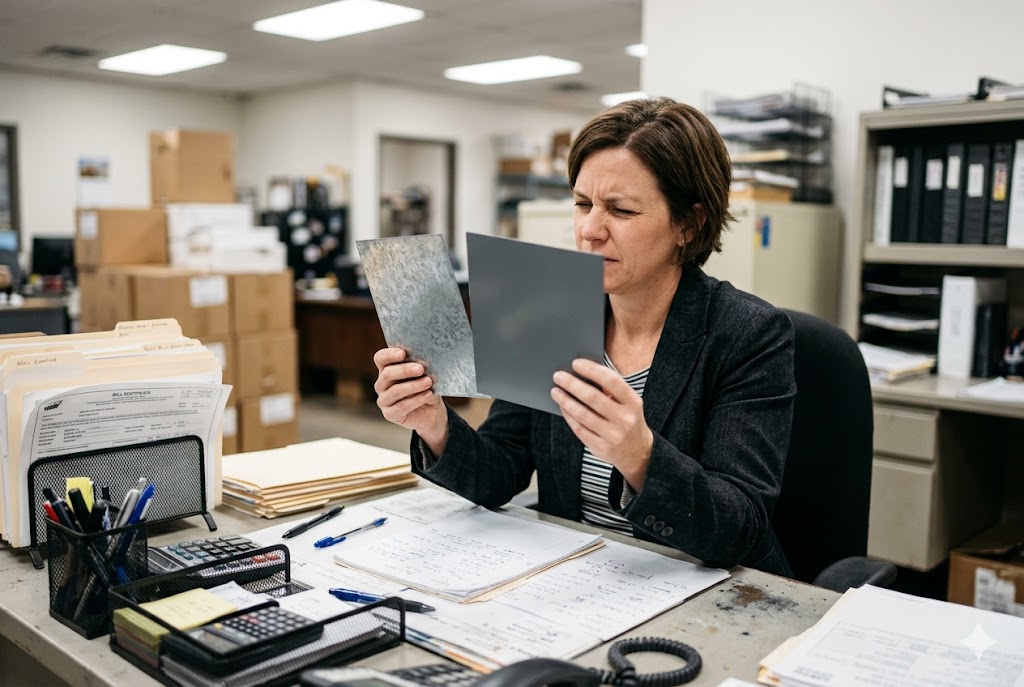
We handle sourcing requests like this every week. A buyer sends drawings, asks us to quote in galvanized steel, and then wonders whether the zinc surface alone is enough — or whether they still need a paint or powder coat on top. It is a fair question, and the answer depends on one variable almost everyone overlooks: coating weight.
SECC and SGCC can replace post-fabrication paint or powder coat only in limited, well-defined conditions. SGCC suits outdoor or high-humidity parts when used as a duplex system. SECC works well indoors but is a paint-ready substrate, not a finished surface. For most structural or exposed applications, neither grade eliminates the need for a topcoat.
The sections below break this down by use case, process constraint, and supplier verification — so you can make a clear decision before the order goes out.
When Is Pre-Galvanized Sheet Metal a Better Choice Than Painting After Fabrication?
Our team prices out hundreds of sheet metal jobs each year. We see buyers default to post-fabrication powder coat without asking whether the galvanized base material might already solve the problem — and we also see the opposite mistake, where buyers assume SECC or SGCC is fully corrosion-proof and skip the topcoat entirely.
Pre-galvanized sheet metal beats post-fabrication painting when the part is simple in geometry, does not require welding, has low cosmetic requirements, and will operate indoors or in a low-humidity environment. For these parts, the mill-applied zinc coating adds corrosion resistance at no extra processing step.
What "Pre-Galvanized" Actually Means
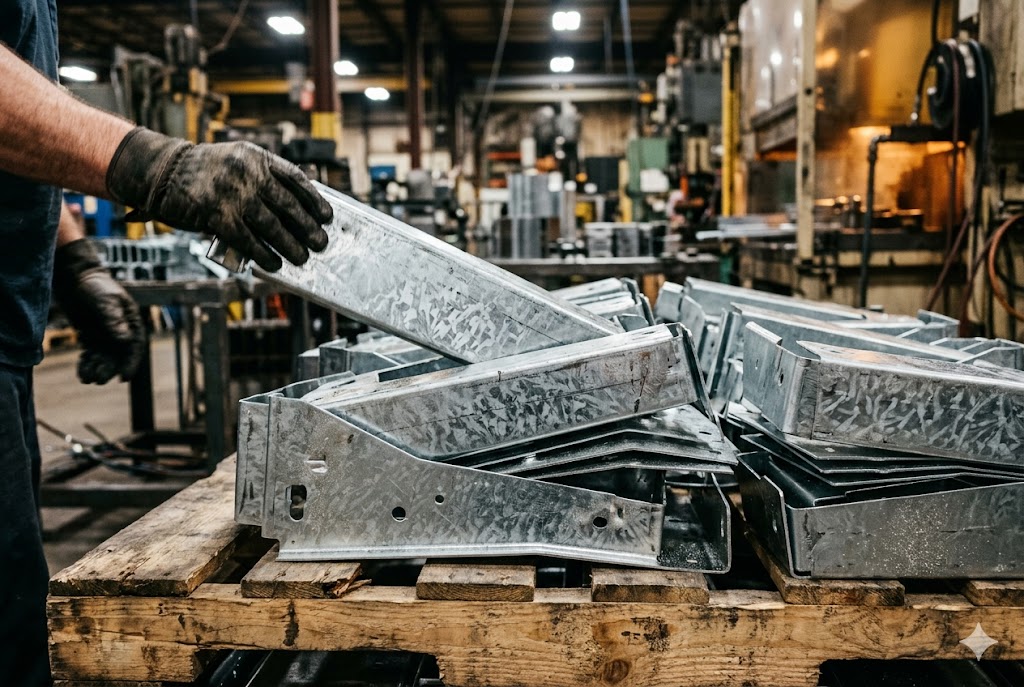
Pre-galvanized means the zinc is applied at the steel mill, before the sheet is cut, punched, or formed. SGCC uses hot-dip galvanizing 1. The sheet passes through a bath of molten zinc, producing a thick coating of 30–275 g/m². SECC uses electroplating. The zinc is deposited in a controlled electric bath, producing a thinner coating of 10–30 g/m². Both of these coating weight ranges are defined in the applicable JIS G3313 and JIS G3302 standards 2.
Both sheets arrive at your fabricator already coated. No painting line is needed. No cure time. No masking.
Where Pre-Galvanized Has a Clear Advantage
| Scenario | Pre-Galvanized Advantage | Notes |
|---|---|---|
| Simple stamped or bent parts, no welds | Corrosion protection already present | No post-process required |
| Indoor electrical enclosures | SECC provides mild barrier + good conductivity | Common in control panels, chassis |
| High-volume, cost-sensitive parts | Eliminates painting labor and material cost | Works when cosmetics are not critical |
| Parts stored long-term before assembly | Mill zinc survives transit and storage well | Avoids paint damage during handling |
Where Post-Fabrication Paint Still Wins
Pre-galvanized has real limits. If the part is welded, the weld heat burns off the zinc locally. That leaves bare steel at every weld zone. Powder coat 3 or paint applied after welding covers those areas automatically.
If the part needs a controlled color or a smooth appearance finish, SGCC's spangle pattern — the crystalline branch-like texture that forms on the hot-dip zinc surface — will show through thin topcoats and may be cosmetically unacceptable. Powder coat applied after fabrication delivers a uniform, repeatable surface.
| Condition | Pre-Galvanized Result | Post-Fabrication Paint Result |
|---|---|---|
| Welded joints | Zinc burns off, bare steel at welds | Full coverage after all metalwork is done |
| Cut edges and punched holes | Bare steel exposed, limited galvanic reach | Paint seals all edges and holes |
| Color match required | Difficult to control | Full color selection, repeatable finish |
| Outdoor or high-humidity exposure | SECC insufficient; SGCC needs topcoat | Powder coat provides primary barrier |
The honest answer: pre-galvanized is a material choice, not a surface finishing choice. It makes sense when the zinc layer alone is enough for the service environment, and when the fabrication process does not destroy that layer.
What Are the Limitations of Using Galvanized Steel for Welded Sheet Metal Assemblies?
When our engineers review welded assembly drawings from clients, one of the first things we flag is the base material. If the drawing calls out SECC or SGCC and the part has welds, we ask a question before quoting: does the client know what happens to the zinc at the weld zone?
Welding galvanized steel burns off the zinc coating locally at every weld, leaving bare unprotected steel at joints. This creates zinc fume hazards for fabricators, requires post-weld treatment to restore corrosion protection, and means the pre-applied zinc coating does not provide continuous coverage on any welded assembly.
The Weld Zone Problem
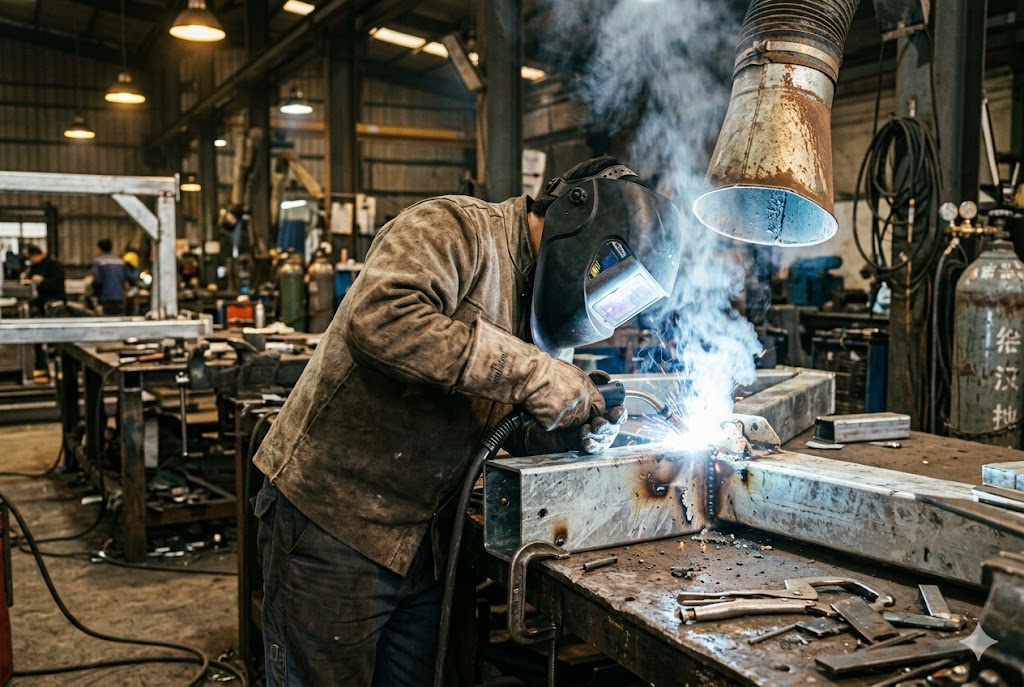
Zinc vaporizes at 907°C. MIG and TIG welding temperatures exceed 1500°C. Every weld pass on a galvanized sheet burns the zinc off a zone around the weld. The width of that bare zone depends on heat input, material thickness, and weld speed, but even a fast tack weld leaves a visible burn area.
That bare zone is unprotected steel. It will rust.
Zinc Fume Hazard
Zinc oxide fume produced during welding is a documented occupational health hazard. Inhaling it causes metal fume fever 4 — flu-like symptoms that can last 24–48 hours. Per OSHA guidance on welding hazards 5, fabricating shops that weld galvanized material regularly need dedicated ventilation, fume extraction, and sometimes respiratory PPE. This adds cost and process complexity. When your fabricator in China is quoting a welded galvanized assembly, confirm they have the ventilation setup to do this safely. We check this during factory audits.
What Post-Weld Treatment Is Needed
| Post-Weld Treatment Option | How It Works | Limitation |
|---|---|---|
| Cold galvanizing compound (zinc-rich paint) | Brush or spray applied to weld zone | Lower zinc density than mill coating; requires access to all weld areas |
| Powder coat over full assembly | Applied after all welding is complete | Best coverage; requires clean surface prep first |
| Hot-dip galvanizing after fabrication | Full immersion in zinc bath post-weld | Very effective but distortion risk on thin sheet; not available at all fabricators |
The Better Process for Welded Parts
For welded sheet metal assemblies that need corrosion protection, post-fabrication powder coat on SPCC (plain cold-rolled steel) is usually the cleaner engineering approach. All metalwork is done first. No zinc fume hazard during welding. Then the full part — welds, edges, holes, all surfaces — gets uniform powder coat coverage in one pass.
Pre-galvanized base material makes the most sense for assemblies that use mechanical fastening rather than welding, where the zinc layer stays intact through the entire fabrication process.
How Does Galvanized Surface Quality Affect My Downstream Coating or Bonding Process?
We have seen this cause problems at the inspection stage. A client approves SGCC on the drawing. The parts arrive. The powder coat is peeling at the edges, or the adhesive bond on a gasket is failing. The root cause is almost always surface prep — or the lack of it.
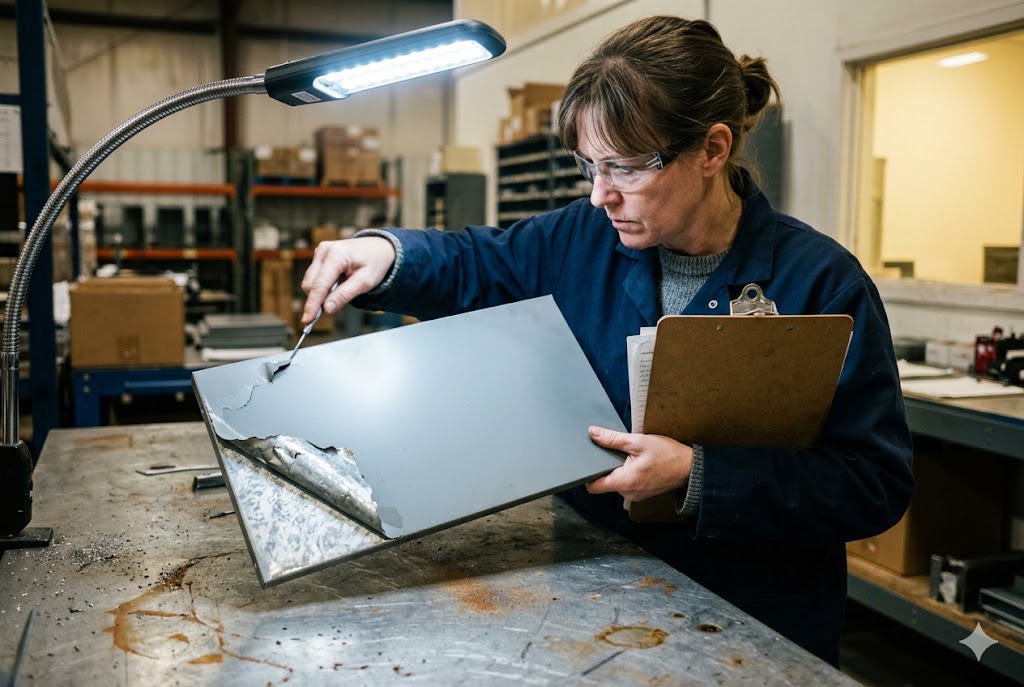
Galvanized steel surfaces, especially SGCC, require a chemical conversion coating step before paint or powder coat will bond reliably. Without phosphating or chromating, the zinc oxide layer that forms naturally on the surface acts as a weak boundary layer and causes adhesion failure. SECC's smoother surface bonds more easily but still benefits from conversion treatment.
Why the Zinc Surface Resists Paint
Fresh zinc is reactive. It oxidizes quickly in air. The resulting zinc oxide and zinc carbonate layer is loosely adherent. Paint or powder coat applied directly over this layer bonds to the oxide, not the metal — and when the oxide layer flakes, the coating comes with it.
SGCC has an additional cosmetic variable: spangle. The hot-dip process produces a crystalline surface pattern. Fine spangle or zero-spangle SGCC is available, but standard SGCC from Chinese mills often has visible spangle. Thin powder coat layers may not fully mask this texture.
Conversion Coating: The Required Step
Zinc phosphating 6 is the most common pretreatment used before applying a topcoat to galvanized steel. It creates a dense crystalline conversion layer that promotes strong adhesion and corrosion resistance.
| Conversion Process | Suitable For | What It Does |
|---|---|---|
| Iron phosphating | SECC, light-duty powder coat | Creates a thin conversion layer; low cost |
| Zinc phosphating | SGCC, outdoor powder coat | Heavier conversion layer; better adhesion and corrosion resistance |
| Chromating (trivalent) | SECC in electronics applications | Very thin; excellent adhesion; corrosion barrier |
| Silane-based treatment | SECC, adhesive bonding applications | Good for structural bonding; RoHS compliant |
SECC in EMI/RFI Shielding Applications
SECC has one genuine functional advantage over painted SPCC: electrical conductivity. The zinc layer is metallic and conductive. Where two SECC panels mate at a flange, ground continuity passes across the joint. A powder-coated or painted SPCC part breaks that continuity — the non-conductive coating insulates the joint.
For electronics enclosures that require EMI or RFI shielding 7, SECC with a bare or lightly passivated surface is the correct material choice. This is not a use case where paint substitutes for zinc — it is a case where zinc substitutes for paint.
Adhesive Bonding on Galvanized Surfaces
Structural adhesive bonding on galvanized steel requires careful surface preparation. The zinc surface must be degreased and lightly abraded or chemically etched to remove the oxide layer and create mechanical anchor points. Untreated galvanized surfaces bond poorly with most epoxy and acrylic structural adhesives. If your part design includes bonded gaskets, brackets, or foam seals applied directly to galvanized sheet, specify the surface treatment in your drawing — do not assume the fabricator will add this step without instruction.
What Should I Check When I Compare Galvanized Steel Options From My China Supplier?
When we evaluate galvanized steel suppliers in China on behalf of clients, we look at more than price per kilogram. The grade designation printed on a quotation does not guarantee a specific zinc deposit thickness. That distinction matters most when you are relying on the zinc layer as a corrosion protection system.
When comparing SECC or SGCC from China suppliers, verify the actual coating weight in g/m² on the mill certificate, confirm the applicable standard (JIS G3313 for SECC, JIS G3302 for SGCC, or equivalent GB/T grades), check the spangle designation for SGCC, and confirm surface treatment capability if a topcoat will be applied downstream.
Standard and Coating Weight: What to Ask For
Chinese steel mills produce SECC and SGCC equivalents to both JIS and GB/T standards. The grade name on the quotation — "SECC" or "SGCC" — tells you the general material category, not the coating weight. Coating weight is the variable that determines corrosion performance.
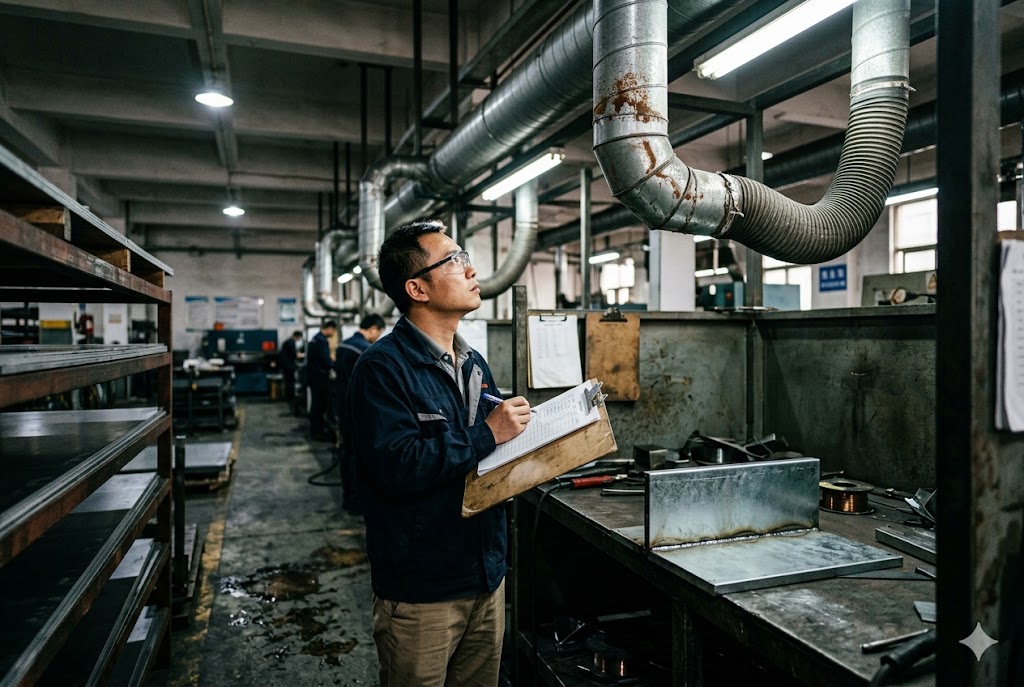
Ask your supplier to provide the mill certificate 8 (质保书) for each coil and confirm the coating weight designation matches your drawing callout.
| Grade Designation | Standard | Coating Weight Range | Typical Application |
|---|---|---|---|
| SECC E10/E10 | JIS G3313 | 10 g/m² per side | Indoor electronics, light appliance casings |
| SECC E20/E20 | JIS G3313 | 20 g/m² per side | Indoor enclosures, HVAC indoor units |
| SGCC Z100 | JIS G3302 | 100 g/m² total | Light outdoor, pre-paint substrate |
| SGCC Z275 | JIS G3302 | 275 g/m² total | Structural outdoor, roofing, automotive |
Spangle and Surface Finish for SGCC
For SGCC, ask specifically about the spangle designation. Standard spangle (regular spangle) has a visible crystalline pattern. Minimized spangle or zero-spangle SGCC is available from larger mills and provides a smoother surface more suitable for topcoat application or appearance-critical parts.
If your drawings do not specify spangle, your supplier will default to whatever coil is available. This is worth calling out explicitly in your purchase specification.
Duplex System: The Right Spec for Outdoor Parts
If your parts will be used outdoors, in high humidity, or in industrial environments, neither SECC alone nor SGCC alone is the correct answer. The right specification is a duplex system 9: SGCC base material with a powder coat topcoat applied after fabrication.
The zinc provides cathodic (sacrificial) protection 10 if the powder coat is scratched through. The powder coat dramatically slows the rate at which the zinc is consumed by the environment. Together, they outperform either finish applied independently. This is the standard specification for outdoor electrical enclosures, HVAC equipment, and light structural brackets — and it is what we recommend when clients ask us to source parts for outdoor applications from our supplier network in China and Vietnam.
Factory Audit Points for Galvanized Steel Processing
When our team audits a factory that will process galvanized sheet, we check three things beyond the material certificate:
First, ventilation. If welding is involved, the shop must have fume extraction at the weld stations. Second, pre-treatment line capability. If powder coat is being applied on-site, we confirm the phosphating or conversion coating tank is in use and that the process is monitored. Third, edge treatment. We check whether the factory has a standard procedure for edge deburring and whether any edge sealing step is applied before coating.
These are process details that do not appear on a quotation. They determine whether the finished part performs the way the drawing intends.
Conclusion
SECC and SGCC are not universal paint replacements. Each has a defined role: SECC for indoor, appearance-ready, or EMI-sensitive parts; SGCC for structural and outdoor applications, ideally in a duplex system. Specify coating weight, check the mill certificate, and match the material to the service environment.
Footnotes
1. Overview of the hot-dip galvanizing process steps, inspection, and coating standards from the American Galvanizers Association. ↩︎
2. Detailed comparison of JIS G3313 (SECC) and JIS G3302 (SGCC) grades, coating weights, and typical applications. ↩︎
3. Comprehensive guide to powder coating — process steps, durability benefits, and industry applications. ↩︎
4. Peer-reviewed case study on chemical pneumonitis caused by zinc oxide fumes from welding galvanized steel. ↩︎
5. OSHA guidance on zinc oxide fume exposure during welding, including permissible exposure limits and ventilation requirements. ↩︎
6. Henkel technical overview of zinc phosphate pretreatment for galvanized steel surfaces prior to painting or powder coating. ↩︎
7. Guide to EMI/RFI shielding materials and methods for electrical enclosures, including the role of conductive metal surfaces. ↩︎
8. Explanation of mill test certificates for steel products, including how to verify coating weight and authenticate supplier documentation. ↩︎
9. American Galvanizers Association technical article on duplex systems combining hot-dip galvanizing with paint or powder coat for extended corrosion protection. ↩︎
10. American Galvanizers Association explanation of how zinc provides cathodic (sacrificial) protection to underlying steel. ↩︎