Skip to main content Skip to footer
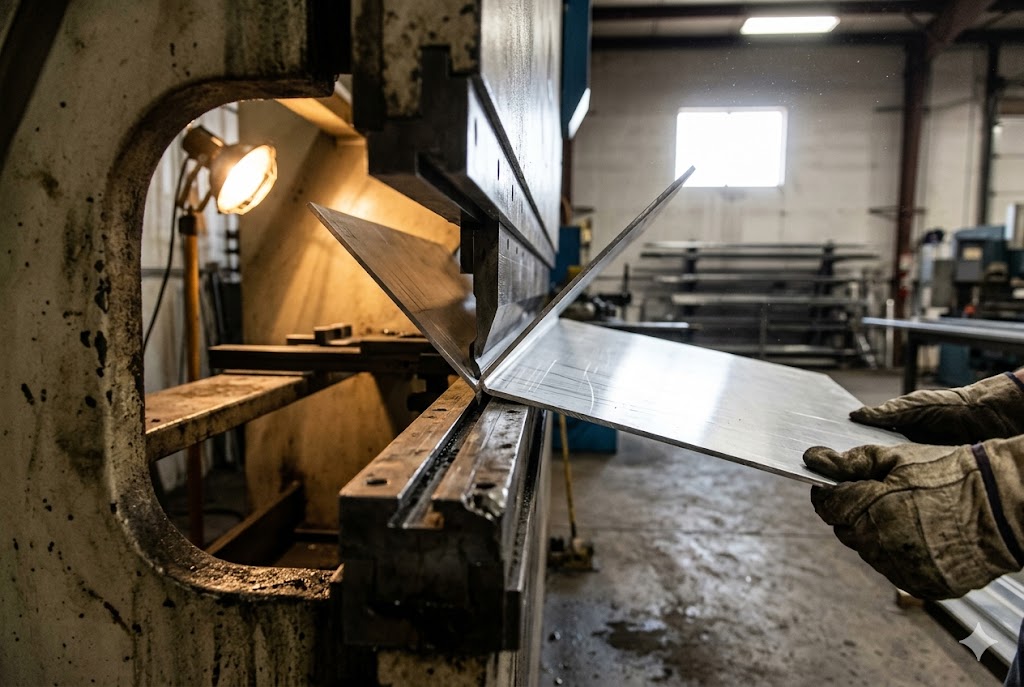
We see it happen regularly on the shop floor: a purchasing manager specifies 6061-T6 because it looks strong on paper, then the bent parts arrive cracked, delayed, or over budget. Alloy selection for sheet metal bending is one of the most consequential decisions in a custom parts project, and the wrong call creates real costs downstream.
5052-H32 and 6061-T6 aluminum behave very differently in bending. 5052 offers around 18–20% elongation and tolerates tight bend radii with low scrap risk. 6061-T6 delivers higher strength but only 10–12% elongation, making it prone to cracking at tight radii and demanding more careful process control throughout fabrication.
Understanding why they behave differently — and when to use each — will help you order the right material the first time and avoid rework costs that eat into your margins.
Which Aluminum Alloy Should I Choose If My Part Requires Tight Bend Radii?
Tight bend radii are where alloy choice really matters. Our engineers have reviewed hundreds of customer drawings where the specified alloy simply could not meet the geometry on the print without cracking.
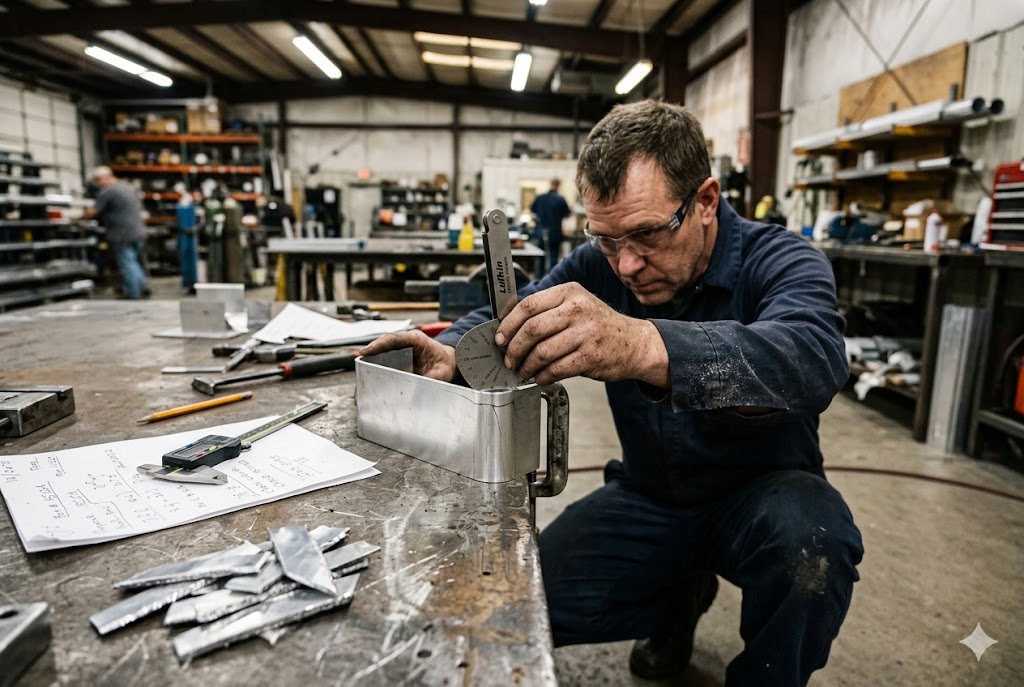
For parts requiring tight bend radii, 5052-H32 is the correct choice in most cases. Its elongation of 18–20% allows inside bend radii as small as 0.5–1x material thickness. 6061-T6, with only 10–12% elongation, requires a minimum inside radius of 2–3x material thickness to avoid cracking at the outer bend fiber.
What Elongation Actually Means for Your Parts
Elongation is the percentage a material can stretch before it breaks. In bending, the outer surface of the bend is in tension. The metal must stretch across that curve without tearing. Higher elongation 1 means more stretch is available before failure.
5052-H32 gives you roughly 18–20% elongation. 6061-T6 gives you 10–12%. That gap is large. It is the primary reason 5052 bends cleanly and 6061 does not at the same radii.
Minimum Inside Bend Radius by Alloy and Thickness
| Material | Temper | Min. Inside Bend Radius | Notes |
|---|---|---|---|
| 5052 | H32 | 0.5–1x thickness | Forgiving across most gauges |
| 6061 | T6 | 2–3x thickness | Risk increases below 2x |
| 6061 | O (annealed) | ~1x thickness | Softer, but loses strength |
| 5052 | O | ~0.5x thickness | Rarely needed in practice |
This table assumes 90° bends on a standard press brake 2 with a V-die matched to the material. Tighter tooling or sharper punch angles will increase cracking risk, especially for 6061-T6.
Why Grain Direction Matters More with 6061
When you bend sheet metal, the direction of the bend line relative to the rolling grain affects the result. Bending with the grain (bend line parallel to rolling direction) creates more stress at the outer fiber. Bending across the grain (perpendicular to rolling direction) distributes that stress more evenly.
With 5052, this distinction is minor. Its ductility absorbs the difference. With 6061-T6, it is significant. Bending perpendicular to the rolling direction 3 consistently produces cleaner bends and lower cracking rates. If your supplier's operators are not paying attention to grain orientation, you will see inconsistent results with 6061.
| Bend Orientation | 5052-H32 Result | 6061-T6 Result |
|---|---|---|
| Perpendicular to grain | Excellent | Good |
| Parallel to grain | Good | Higher cracking risk |
Always confirm with your supplier that grain direction is being managed, particularly when 6061 is specified for tight or complex bends.
Why Does 6061 Crack More Easily Than 5052 During Bending, and How Can I Avoid It?
When we calibrate press brake parameters for different alloys in production, 6061 consistently requires more caution than any other common aluminum grade. The cracking is not random — it has a clear metallurgical cause.
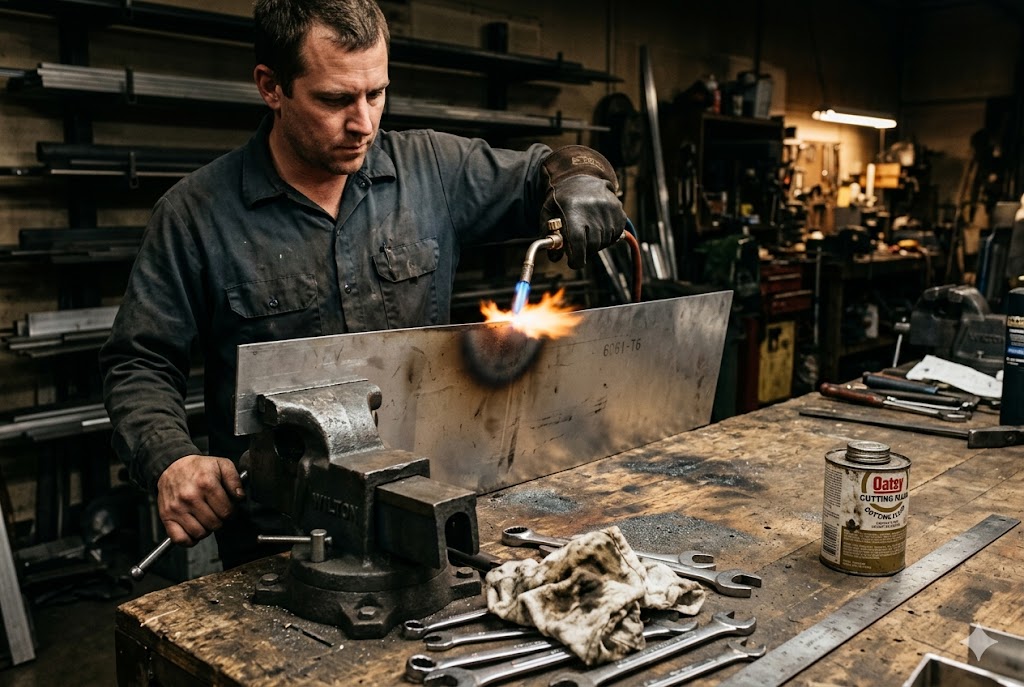
6061 cracks during bending because its T6 temper locks in high strength at the direct cost of ductility. The heat treatment process — solution heat treatment followed by artificial aging — produces a microstructure that resists deformation. When the outer bend fiber reaches its tensile limit, it fractures instead of stretching.
The Metallurgy Behind the Problem
6061 is an Al-Mg-Si alloy 4. In its T6 temper, it has been solution heat treated and artificially aged. This process creates fine precipitates within the aluminum matrix that obstruct dislocation movement. That is what gives 6061-T6 its strength — a tensile strength of roughly 310 MPa versus 228 MPa for 5052-H32.
But the same precipitate structure that strengthens the alloy also limits how much plastic deformation the metal can absorb before fracturing. The outer fiber of a bend must elongate. When that elongation exceeds what the material allows, you get a crack.
5052 is a non-heat-treatable Al-Mg alloy. Its H32 temper is achieved through strain hardening 5 and partial annealing. The microstructure is more uniform and allows greater plastic flow before failure.
How to Reduce Cracking Risk When 6061 Is Required
Sometimes 6061 cannot be substituted. The part may require its higher strength or machinability. In those cases, there are steps that reduce — but do not eliminate — cracking risk.
Increase the inside bend radius. Do not attempt to hold 6061-T6 to a bend radius tighter than 2x material thickness. For thick gauges or complex bends, 3x is safer.
Control grain direction. Orient the bend line perpendicular to the rolling direction. This is a process parameter that must be specified in your fabrication instructions, not assumed.
Use local annealing with caution. Heating the bend zone to roughly 650–750°F and allowing it to air cool can restore ductility enough to complete the bend. However, this softens the T6 temper. The annealed zone will not recover its original strength without a full re-solution heat treat, which is impractical for most fabricated sheet parts. Use this only where strength at the bend zone is not a design requirement.
Manage springback properly. 6061-T6 requires overbending to approximately 97° to land a finished 90° bend. 5052-H32 requires overbending to only about 94°. These springback compensation 6 parameters must be dialed into press brake programs separately for each alloy. Using the wrong springback compensation produces out-of-tolerance angles.
Springback Comparison
| Alloy | Temper | Target Angle | Required Overbend |
|---|---|---|---|
| 5052 | H32 | 90° | ~94° |
| 6061 | T6 | 90° | ~97° |
These values are typical starting points. Exact compensation depends on material thickness, tooling geometry, and die width. Always confirm with production test bends before running a full order.
How Do Alloy and Temper Affect My Cost and Lead Time for Aluminum Sheet Metal Parts?
In our experience exporting sheet metal parts to the US and Canada, alloy and temper selection consistently affects both unit cost and production schedule in ways that buyers do not always anticipate at the quoting stage.
5052-H32 is generally lower cost and easier to schedule than 6061-T6 for bent sheet parts. 6061-T6 demands higher press brake tonnage, produces more scrap at tight radii, and may require stress-relief steps before downstream machining or anodizing — all of which add cost and time to the production run.
Where Cost Differences Accumulate
Material price per kilogram is only one part of the equation. For bent sheet parts, fabrication yield has an outsized effect on cost per good part.
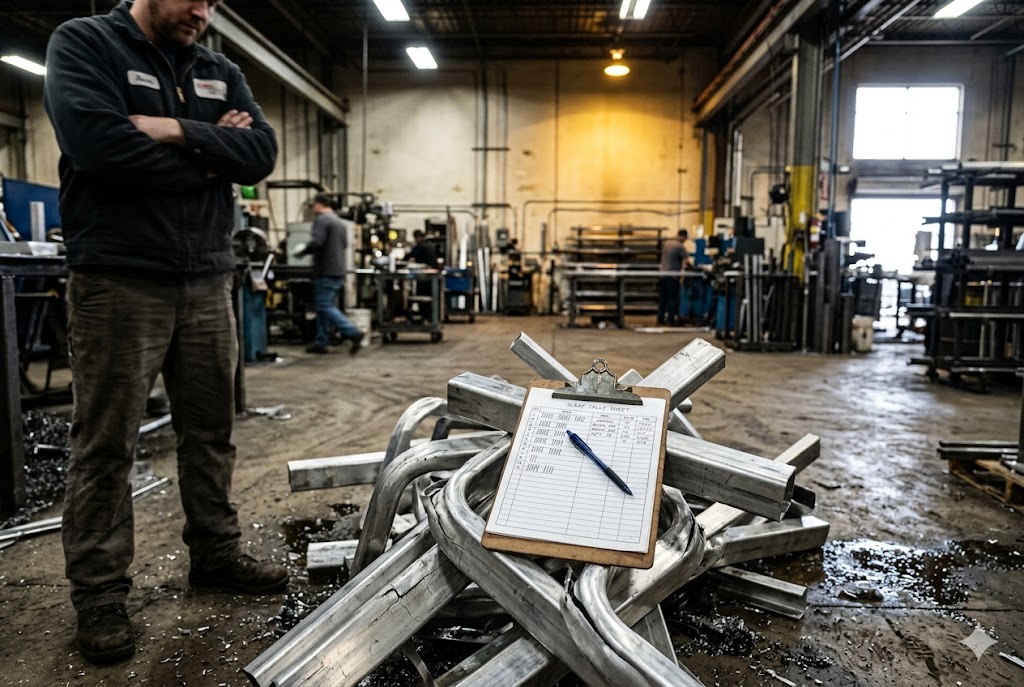
When scrap rates are high, more raw material is consumed per shipped part, operator time increases, and scheduling becomes less predictable. Projects where buyers switched from 6061-T6 to 5052-H32 for bent enclosures and housings have seen scrap rates drop from around 12% to under 2%. That improvement flows directly into cost per good part.
6061-T6 also demands more tonnage at the press brake due to its higher yield strength. Greater tonnage accelerates tool wear over long production runs and increases the risk of die marking on visible surfaces. Die marks on cosmetic faces require rework or polishing — adding labor cost and cycle time.
Cost and Lead Time Impact by Alloy
| Factor | 5052-H32 | 6061-T6 |
|---|---|---|
| Material cost | Moderate | Slightly higher |
| Bend scrap rate | ~1–2% | Up to 12% at tight radii |
| Press brake tonnage | Lower | Higher (accelerates tool wear) |
| Stress relief before machining | Rarely needed | Often required |
| Lead time risk | Low | Moderate to high |
| Rework for die marking | Rare | More common on visible faces |
Downstream Effects on Lead Time
6061-T6 bent parts 7 carry higher residual stress at the bend zone than 5052-H32 parts. This locked-in stress can cause distortion during subsequent machining or anodizing thermal cycles. If a machined feature is positioned near a bend, distortion can push dimensions out of tolerance after the machining operation is complete.
To avoid this, stress-relief steps are sometimes required between bending and machining for 6061-T6 parts. These steps add one to three days to the production schedule depending on capacity. 5052-H32 bent parts typically do not need this step.
For buyers managing tight delivery schedules, this is a meaningful difference. Specify 5052 where geometry allows and you reduce scheduling risk alongside cost.
What Surface Treatment Options Work Best with Each Aluminum Alloy?
Surface treatment is often decided late in the project, but it should be considered alongside alloy selection from the start. Our team has seen anodizing and coating specs added to drawings after alloy choice is locked in — and the combination does not always work as intended.
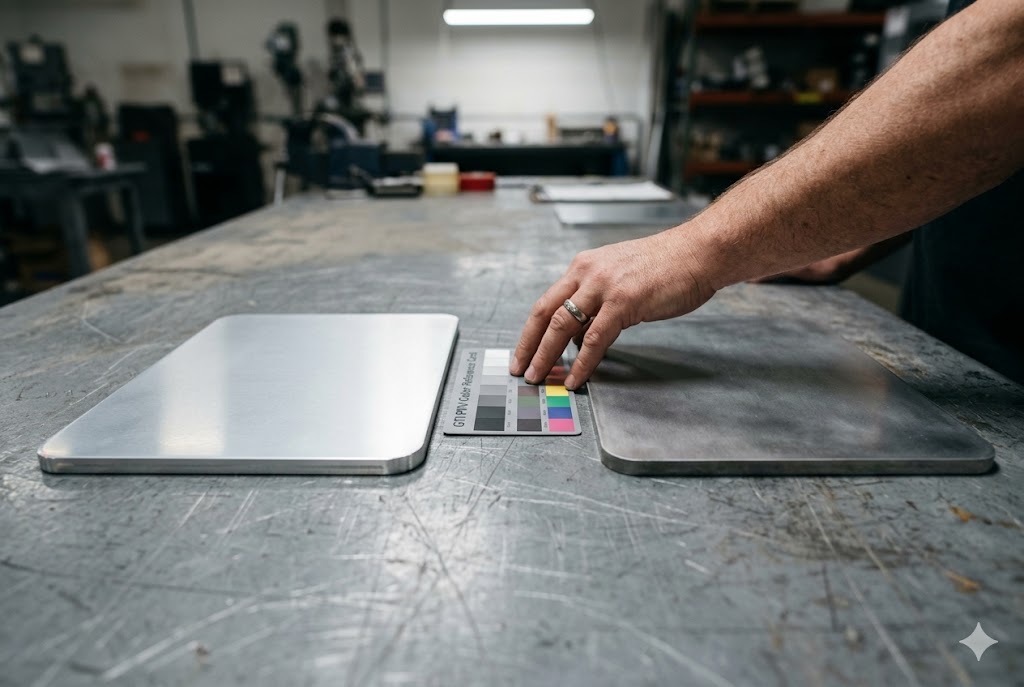
Anodizing works well with both 5052 and 6061, but produces different visual results. 6061-T6 anodizes to a cleaner, more consistent finish due to its lower magnesium content. 5052, with higher magnesium, can produce a slightly grayer or less uniform anodized appearance. For painted or powder-coated 8 parts, both alloys perform comparably after proper surface preparation.
Anodizing: Where the Alloys Diverge
Anodizing builds an oxide layer on the aluminum surface. The alloy composition affects how that layer grows and what it looks like.
6061-T6 contains silicon and magnesium as its primary alloying elements, with lower total alloy content than 5052. This composition produces a thinner, harder anodized layer that takes dye evenly and produces bright, consistent color results — particularly for clear and black anodize.
5052 contains around 2.5% magnesium. Magnesium-rich alloys tend to produce a slightly darker or less uniform anodized appearance 9, especially on clear anodize. For decorative applications where color consistency across an assembly matters, 6061 is often the better choice if the part geometry permits it.
However, there is a thermal consideration for 6061-T6. The anodizing bath and subsequent sealing process involve elevated temperatures. For parts that carry high residual stress at bent zones — which is common with 6061-T6 — these thermal cycles can cause distortion. Stress relief prior to anodizing is sometimes necessary.
Surface Treatment Compatibility by Alloy
| Surface Treatment | 5052-H32 | 6061-T6 |
|---|---|---|
| Clear anodize | Good (slightly gray tone) | Excellent (bright, consistent) |
| Hard anodize | Good | Excellent |
| Dyed anodize | Acceptable | Better color consistency |
| Powder coat | Excellent | Excellent |
| Liquid paint | Excellent | Excellent |
| Chemical film (Alodine) | Good | Good |
| Stress relief before anodize | Rarely needed | Sometimes required |
Hybrid Design Approach for Mixed-Feature Parts
When an assembly includes both bent features and flat machined sections, a hybrid design approach is viable. Use 5052-H32 for any components that require bending. Use 6061-T6 for flat-profile structural members or sections that will be machined from plate. This avoids forcing one alloy across the entire assembly when different features have different forming requirements.
This approach works particularly well for CNC press brake operations 10 that feed into downstream CNC machining. It does require clear callouts on the drawing and careful communication with the fabricator to ensure each component is sourced from the correct alloy. We manage this routinely as part of our supplier coordination process.
For surface treatment, specify the finish at the assembly level and confirm with your supplier that the chosen treatment is compatible with both alloys if a hybrid approach is used. Most treatments apply comparably. The main exception is anodize color consistency — if color matching across 5052 and 6061 components in the same assembly is required, testing is recommended before committing to a production run.
Conclusion
Choose 5052-H32 when parts require tight bends, high yield, and predictable lead times. Reserve 6061-T6 for strength-critical or heavily machined sections. Getting this decision right early saves rework, scrap, and schedule delays on every production run.
Footnotes
1. MatWeb datasheet for 5052-H32 aluminum, including elongation and mechanical property data. ↩︎
2. Guide to press brake setup for aluminum bending, covering springback, tooling, and cracking prevention. ↩︎
3. The Fabricator explains how bending perpendicular vs. parallel to grain affects cracking in sheet metal. ↩︎
4. The Fabricator details the T6 heat treatment steps — solution heat treatment and artificial aging — for 6061. ↩︎
5. Aalco datasheet for 5052-H32 confirms its strain-hardened temper, cold formability, and mechanical properties. ↩︎
6. Explains springback compensation: why metals spring back after bending and how overbending corrects final angles. ↩︎
7. Wikipedia entry for 6061 aluminium alloy covering temper designations, mechanical properties, and residual stress effects. ↩︎
8. Wevolver guide to powder coating aluminum: surface preparation, adhesion, and compatibility with different alloys. ↩︎
9. Explains how different aluminum alloys, including high-magnesium grades, produce varying anodized colors and finishes. ↩︎
10. The Fabricator article on springback fundamentals in press brake forming — essential reading for CNC bending programs. ↩︎