Skip to main content Skip to footer
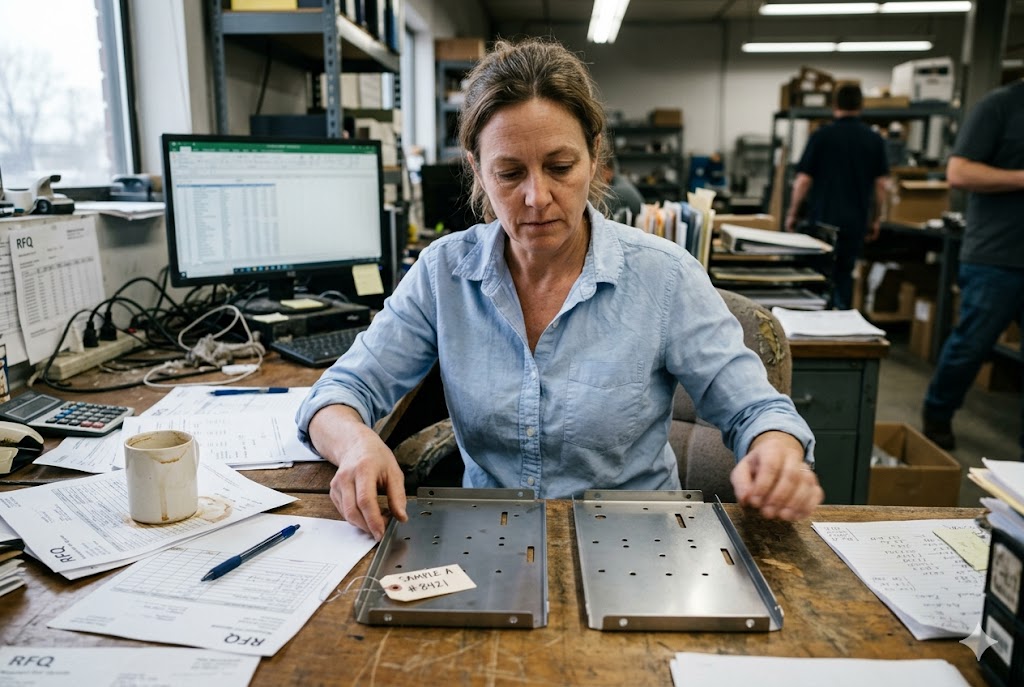
Every year, we source and manage production of thousands of custom sheet metal parts for clients in North America. One question keeps coming up at the quoting stage: 304 or 316? The wrong call costs money — either upfront in material cost, or later in premature part failure.
The right choice between 304 and 316 stainless steel depends on your operating environment. For most indoor and general-purpose applications, 304 delivers adequate corrosion resistance at lower cost. For marine, chemical-processing, or high-chloride environments, 316 is the safer specification — its molybdenum content provides chloride attack resistance that 304 simply cannot match.
This guide breaks down the key differences so you can make a confident decision before you send your RFQ.
When Is 316 Stainless Steel Worth the Extra Cost for My Application?
When clients ask us to source 316 sheet metal parts, the first thing our team checks is whether the environment actually demands it. Many parts are over-specified; some are dangerously under-specified. Getting this right at the design stage saves real money.
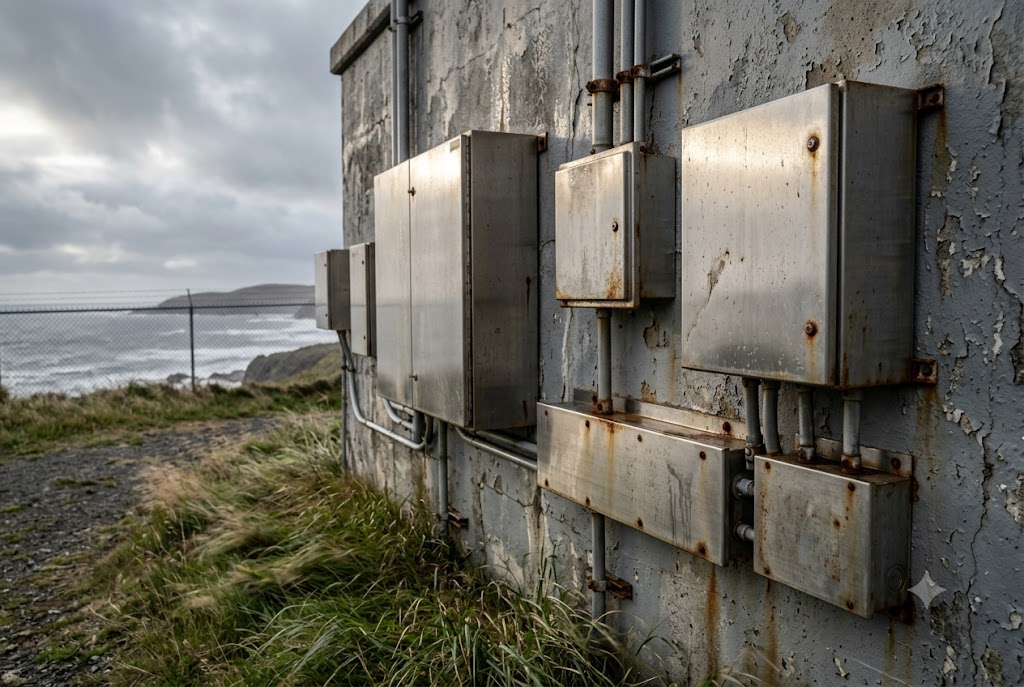
316 stainless steel is worth the premium when your parts face chloride exposure, saltwater proximity, chemical media, or aggressive cleaning agents. In those conditions, 316's 2–3% molybdenum content prevents the pitting and crevice corrosion that 304 cannot resist. For dry, indoor, or low-chemical environments, 304 is typically sufficient and more economical.
What Makes 316 Chemically Different?
The core difference is molybdenum. 316 contains 2–3% molybdenum. 304 does not. Molybdenum stabilises the passive chromium oxide film on the steel surface, specifically against chloride ions. Chlorides are the enemy — they break down the passive film, allowing pitting corrosion 1 to start and crevice corrosion 2 to spread. 304's standard 18% chromium, 8% nickel formula handles atmospheric and mild chemical exposure well. But introduce chlorides — seawater, de-icing salts, acidic cleaning chemicals — and 304's protection degrades quickly.
The Real Cost of Choosing the Wrong Grade
A 2024 case from a Chinese chemical facility illustrates the risk clearly. The plant chose 304 over 316 to save approximately $12,000 on sheet metal enclosure materials. Within 18 months, chloride pitting had spread across the panels. The complete shutdown, part replacement, hazardous waste handling, and lost production time cost the equivalent of those original material savings — with nothing to show for it.
The cost-of-failure calculation can invert quickly. When you factor in replacement labour, production downtime, and liability, the 316 premium often pays for itself in the first maintenance cycle.
304 vs 316: Quick Environment Reference
| Environment Type | Recommended Grade | Reason |
|---|---|---|
| Indoor / dry / low humidity | 304 | No chloride exposure; 304 passive film holds |
| Outdoor / general construction | 304 or 316L | Depends on proximity to coast or salt sources |
| Coastal (within 5–10 miles of sea) | 316 | Airborne chlorides degrade 304 significantly faster |
| Marine / submerged seawater | 316 | Continuous chloride load; 304 pits rapidly |
| Chemical processing / acids | 316 | Molybdenum resists acid-assisted corrosion |
| Food processing / cleaning cycles | 316 | Frequent chloride-based sanitisers attack 304 |
| Medical / pharmaceutical equipment | 316L | Stringent surface integrity; welded joints common |
Coastal Infrastructure: A Frequently Missed Trigger
Many buyers don't think of their parts as "marine" unless the application is literally a boat or offshore platform. But parts installed in buildings, HVAC systems, or outdoor enclosures within 5–10 miles of a coastline are exposed to airborne salt particles year-round. Our experience supplying to projects on the US East and Gulf coasts shows that specifying marine-grade stainless steel 3 in those locations extends service life by two to three times compared to 304. Over a 10- or 20-year asset lifecycle, that fundamentally changes which grade is the better economic choice.
How Do the Machining and Welding Properties of 304 and 316 Differ in Production?
When we place production orders with our partner factories in China and Vietnam, grade selection affects more than just the material line item. It affects cycle times, tooling consumption, and welding procedures — costs that rarely appear on a raw material quote.
In production, 316 is slightly harder and more work-hardening than 304, which increases tooling wear and extends machining time. For welding, both grades require L-grade variants — 304L or 316L — to prevent sensitisation at weld joints. 316L welded parts show better corrosion resistance at heat-affected zones than 304L in chloride-exposed conditions.
Machining: The Hidden Cost Difference
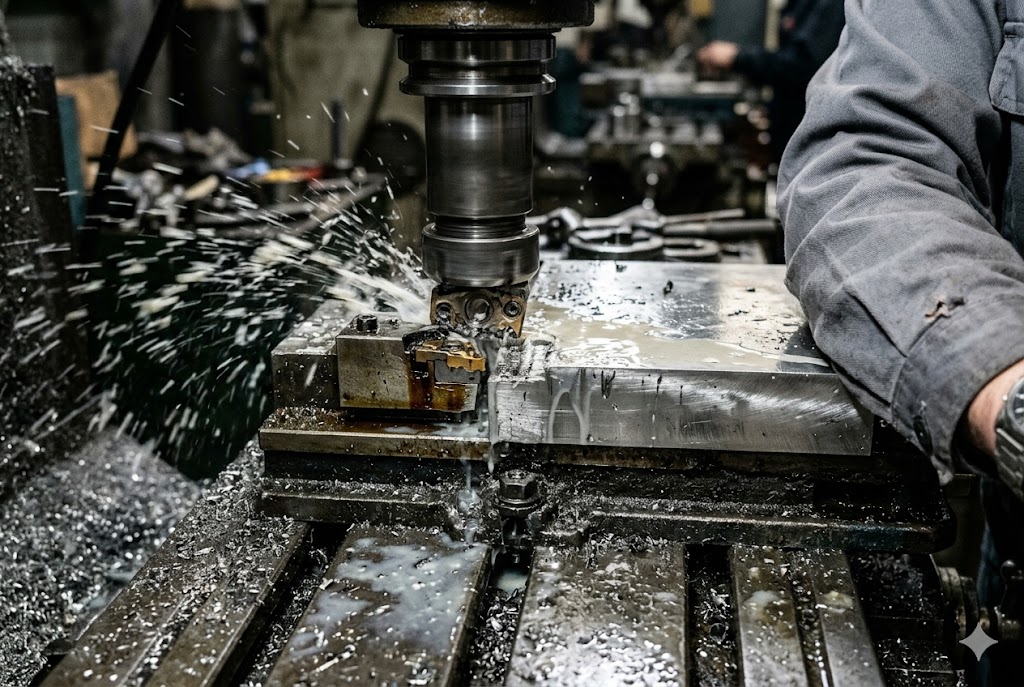
316 contains molybdenum, which increases its hardness and work-hardening rate 4 compared to 304. In practice, this means cutting tools wear out faster on 316 runs, feed rates and speeds may need to be reduced, and surface finish requires more attention to avoid built-up edge on cutting inserts.
For a small batch of sheet metal brackets, this difference is negligible. For a high-volume programme with thousands of parts per month, the tooling cost difference adds up. Our project managers factor this into cost estimates whenever a client is comparing quotes between 304 and 316 parts with significant machined features.
Welding: Why L-Grades Matter
Both 304 and 316 can suffer from sensitisation during welding. Sensitisation is the precipitation of chromium carbides at grain boundaries in the heat-affected zone 5. When this happens, the grain boundaries become chromium-depleted and corrosion-prone — even if the base metal is corrosion-resistant.
The fix is simple: specify the L-grade. 304L and 316L have reduced carbon content (≤0.03% vs ≤0.08% for standard grades). Lower carbon means fewer carbides form during the thermal cycle of welding. Grain boundaries stay chromium-rich. Corrosion resistance is preserved at the weld joint.
This matters most for SAE 316L stainless steel 6 parts in aggressive environments. A part correctly specified as 316 but manufactured without the L-grade variant may develop corrosion at every weld line — defeating the purpose of choosing 316 in the first place.
Production Property Comparison
| Property | 304 / 304L | 316 / 316L | Production Impact |
|---|---|---|---|
| Hardness (typical HRB) | ~80 | ~85 | Slightly faster tooling wear with 316 |
| Work hardening rate | Moderate | Slightly higher | May require adjusted feeds/speeds |
| Weldability | Good (use 304L) | Good (use 316L) | L-grade mandatory for welded parts |
| Sensitisation risk | Yes (mitigated by 304L) | Yes (mitigated by 316L) | Always specify L-grade for welded assemblies |
| Post-weld passivation need | Yes | Yes | Citric or nitric acid passivation restores film |
| Availability of L-grade | Wide | Moderate | 304L easier to source in most markets |
Post-Weld Passivation
After welding, the heat-affected zone and any weld spatter areas should be passivated. Passivation — typically using citric acid or nitric acid solutions — removes iron contamination and restores the chromium-rich passive film. This step applies to both 304L and 316L. Skipping passivation, especially on 316L parts destined for corrosive environments, partially negates the grade upgrade. Our quality control checklist for welded sheet metal parts includes passivation verification as a required sign-off before pre-shipment inspection.
What Environments Require 316 Instead of 304 to Meet My Durability Requirements?
Our sourcing team often gets asked to confirm a client's grade specification before production begins. Changing the grade after tooling and material procurement is expensive. Getting the environment analysis right at the RFQ stage is the cleanest path.
316 stainless steel is required over 304 in environments with direct or indirect chloride exposure — including marine, coastal, chemical processing, food production, and pharmaceutical settings. In freshwater, dry indoor, or atmospheric conditions without salt or chemical contact, 304 meets durability requirements at lower cost. The threshold question is always: will this part contact chlorides?
The Chloride Threshold Question
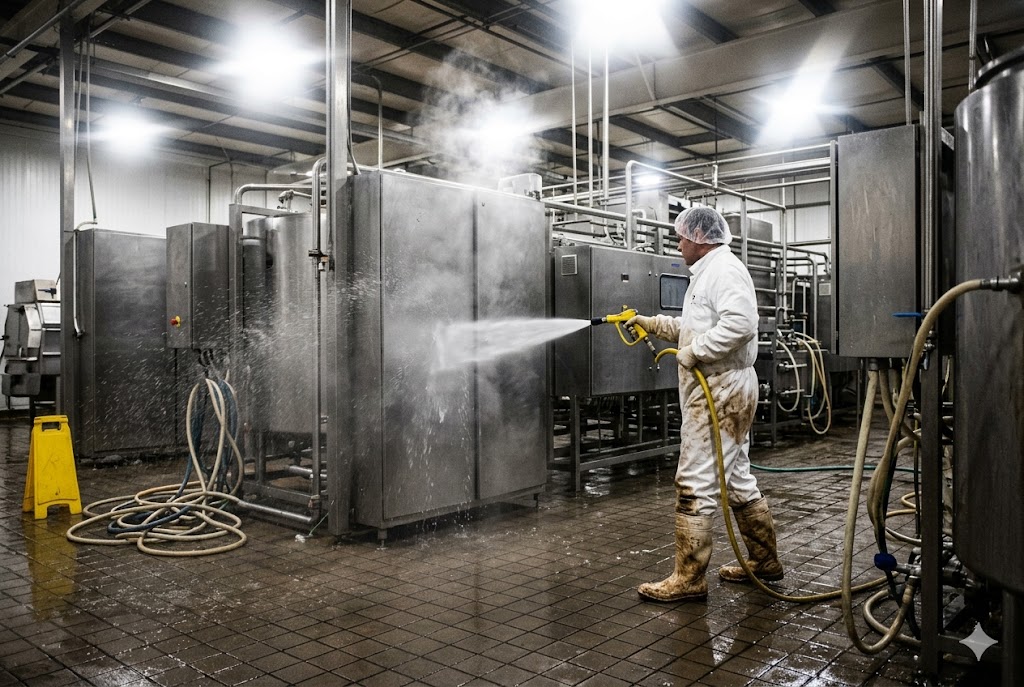
Most environment decisions reduce to one question: will this part contact chlorides, directly or indirectly? Chloride sources include seawater and sea air, de-icing road salts, swimming pool water and chemicals, industrial cleaning agents (bleach-based or acid-based sanitisers), chemical process streams, and body fluids for implantable or surgical-contact parts.
If the answer is yes to any of these, 316 is the defensible specification. If the answer is no, 304 is typically sufficient.
Environment-to-Grade Decision Matrix
| Application Sector | Typical Exposure | Recommended Grade | Notes |
|---|---|---|---|
| Indoor mechanical assemblies | Dry, no chemicals | 304 | Standard choice; no chloride risk |
| Outdoor structural (inland) | Atmospheric, rain | 304 | Monitor for industrial pollution |
| Outdoor structural (coastal) | Airborne sea salt | 316 | Within 5–10 miles of coast |
| Marine hardware | Direct seawater | 316 | 304 pits rapidly in seawater |
| Food processing equipment | Chloride sanitisers | 316L | FDA environments; welded construction common |
| Chemical plant enclosures | Acid fumes, HCl | 316 | Molybdenum resists acid-assisted attack |
| Pharmaceutical / biotech | Sterile cleaning | 316L | Surface integrity and weld quality critical |
| Swimming pool components | High chlorine | 316 | 304 fails within months in pool water |
| HVAC in coastal buildings | Salt-laden air | 316 | Often under-specified; causes early failure |
A Hybrid Design Strategy
Not every part in an assembly faces the same exposure. Our engineering team recommends a hybrid strategy on appropriate projects: specify 316 for exposed exterior faces, fastener holes, and weld zones where crevice geometry concentrates corrosive media. Use 304 for interior structural members that remain shielded. This approach captures most of 316's corrosion benefit at a blended material cost closer to 304 pricing. The condition is that your fabricator can manage two-alloy kitting without cross-contamination on the shop floor. We verify this capability during factory audits for clients whose programmes use this approach. The general properties of stainless steel 7 — particularly the role of chromium in maintaining the passive oxide film — underpin both grades' performance in this hybrid configuration.
How Can I Verify That My Supplier Is Not Substituting 304 for 316 in My Order?
This is a question we take seriously. 304 and 316 are visually identical. They look the same, feel the same, and produce similar results in basic spark tests. Material substitution — intentional or accidental — is a real risk when sourcing sheet metal parts from overseas factories, including in China.
The only reliable method to verify that your supplier has not substituted 304 for 316 is XRF (X-ray fluorescence) testing, also called PMI — Positive Material Identification. XRF detects elemental composition including molybdenum content, which is the defining difference between the two grades. Visual inspection, spark testing, and mill certificates alone are insufficient without independent verification.
Why Visual and Document Checks Are Not Enough
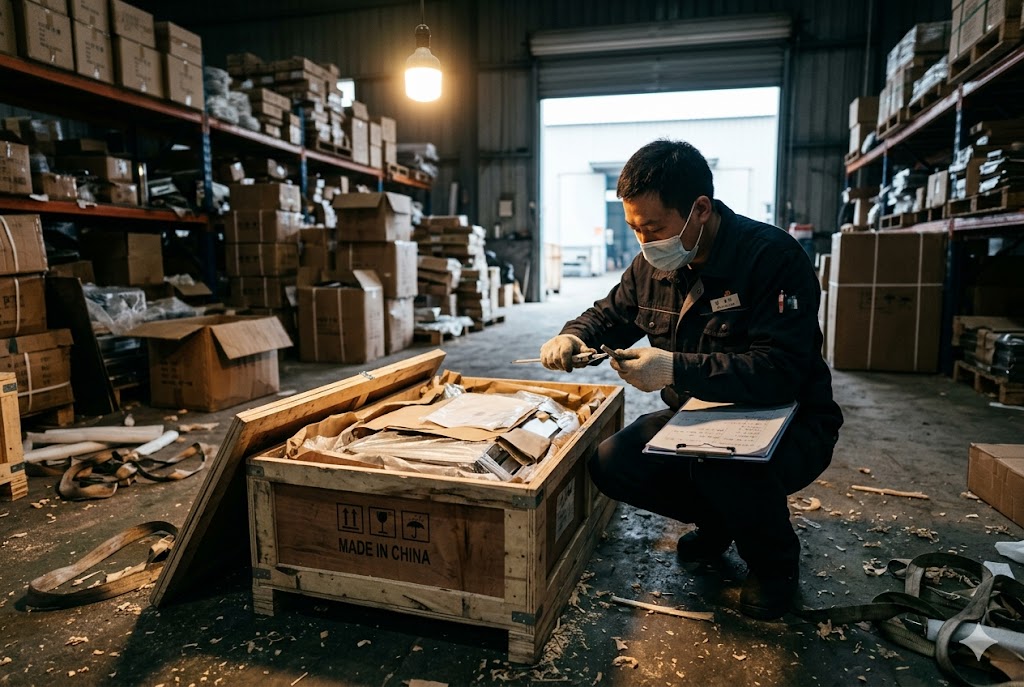
Mill certificates (MTRs) 8 list the chemical composition of the steel heat. They are a necessary document. But they are not sufficient on their own. Mill certificates can be falsified or misapplied to incorrect material, and the certificate covers the heat — not necessarily the specific coil or sheet cut for your order. Spark testing cannot reliably distinguish 304 from 316. The molybdenum content difference is too small to produce a visible signature difference. Visual inspection cannot distinguish the two grades under any lighting condition.
XRF / PMI Testing: The Only Reliable Method
X-ray fluorescence (XRF) 9 testing uses a handheld analyser to measure the elemental composition of the steel surface in seconds. It reports percentages of chromium, nickel, molybdenum, manganese, and other elements. A 316 result shows approximately 2–3% molybdenum. A 304 result shows near-zero molybdenum.
XRF testing can be performed at the factory during in-production quality control visits, during pre-shipment inspection before the container is sealed, or at goods receipt in your warehouse.
We offer XRF verification as part of our pre-shipment inspection service for clients ordering 316-specified parts. The test adds minimal time and cost to the inspection process. For high-value or safety-critical parts, it is non-negotiable.
Verification Method Comparison
| Verification Method | Can Detect Mo Content? | Reliable for 304 vs 316? | Notes |
|---|---|---|---|
| Visual inspection | No | No | Grades are visually identical |
| Spark test | No | No | Too imprecise for alloy-level differences |
| Mill certificate (MTR) review | Indirect | Partial | Necessary but falsifiable; heat-level only |
| Chemical wet analysis | Yes | Yes | Lab-based; slow; used for dispute resolution |
| XRF / PMI handheld testing | Yes | Yes | Fast, accurate, non-destructive; recommended |
| OES (optical emission spectrometry) | Yes | Yes | Higher precision; typically lab or fixed equipment |
Contractual and Inspection Safeguards
Beyond testing, our contracts with factories specify the grade, the L-variant requirement where applicable, and the mill certificate requirements. We require that material certificates accompany each production batch and are matched to the specific coil or sheet used. For clients with zero tolerance for grade substitution, we arrange in-process material verification at the factory — not just at final inspection. An understanding of intergranular corrosion 10 reinforces why this verification is so critical: a part manufactured from the wrong grade may pass visual inspection yet fail in service as grain-boundary attack progresses invisibly over time. This is particularly relevant for projects with regulatory, safety, or warranty implications.
Conclusion
Choose 304 for dry, indoor, and low-chemical environments. Choose 316 wherever chlorides are present. Always specify L-grades for welded parts. And verify grade compliance with XRF — never rely on visual checks alone.
Footnotes
1. Explains how chloride ions initiate localised pitting holes in passive metal surfaces. ↩︎
2. Details how confined gaps concentrate corrosives and cause localised stainless steel failure. ↩︎
3. Covers why molybdenum-alloyed 316 is the preferred grade for seawater and coastal exposure. ↩︎
4. Explains how plastic deformation increases metal hardness, raising tooling wear in machining. ↩︎
5. Describes the zone of microstructural change adjacent to a weld that drives sensitisation risk. ↩︎
6. Covers the low-carbon 316L variant preferred for welded assemblies in corrosive environments. ↩︎
7. Overview of stainless steel composition, passive film chemistry, and grade families. ↩︎
8. Defines mill test reports, their scope, and limitations as a material traceability document. ↩︎
9. Explains how XRF measures elemental composition non-destructively for alloy identification. ↩︎
10. Covers grain-boundary chromium depletion and the corrosion failure mode it causes in stainless steels. ↩︎