Skip to main content Skip to footer
We send and receive RFQs (Requests for Quotation) 1 every week. One thing we notice is that buyers who ask structured, multi-option questions get faster, more accurate quotes — and fewer surprises after production starts. If you have been sending a single-spec RFQ and waiting to negotiate later, you are leaving useful data on the table.
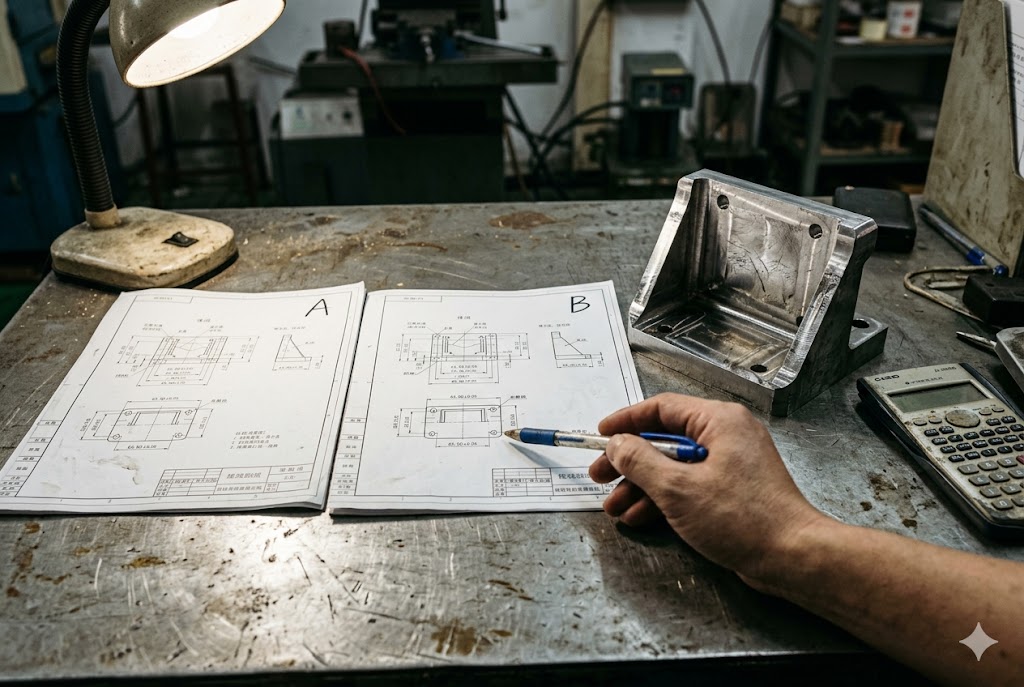
Yes, you can and should request multiple quotation options in a single RFQ when importing custom CNC machining parts from China. Professional Chinese CNC suppliers routinely handle multi-option requests. A well-structured RFQ with clearly labelled alternatives — such as Option A and Option B — is easier for a supplier to price accurately than an ambiguous single-spec submission that forces them to guess your intent.
This article breaks down exactly which options to request, how to structure them, and how to compare results without slowing your sourcing process.
Should I Request Quotes Based on Different Volumes or Materials?
When we prepare a supplier quote package for a client, the first two variables we always ask suppliers to price separately are quantity tiers and material alternatives. Both variables have a large impact on unit cost and both are easy for a supplier to quote without extra back-and-forth.
Yes, you should request quotes at multiple quantity tiers and, where engineering allows, at alternative material grades. Quantity price breaks reveal where setup costs flatten out. Material alternatives can reduce per-part cost by 40 to 60 percent. Both comparisons give you real data to make sourcing decisions rather than relying on assumptions.
Why Quantity Tiers Matter
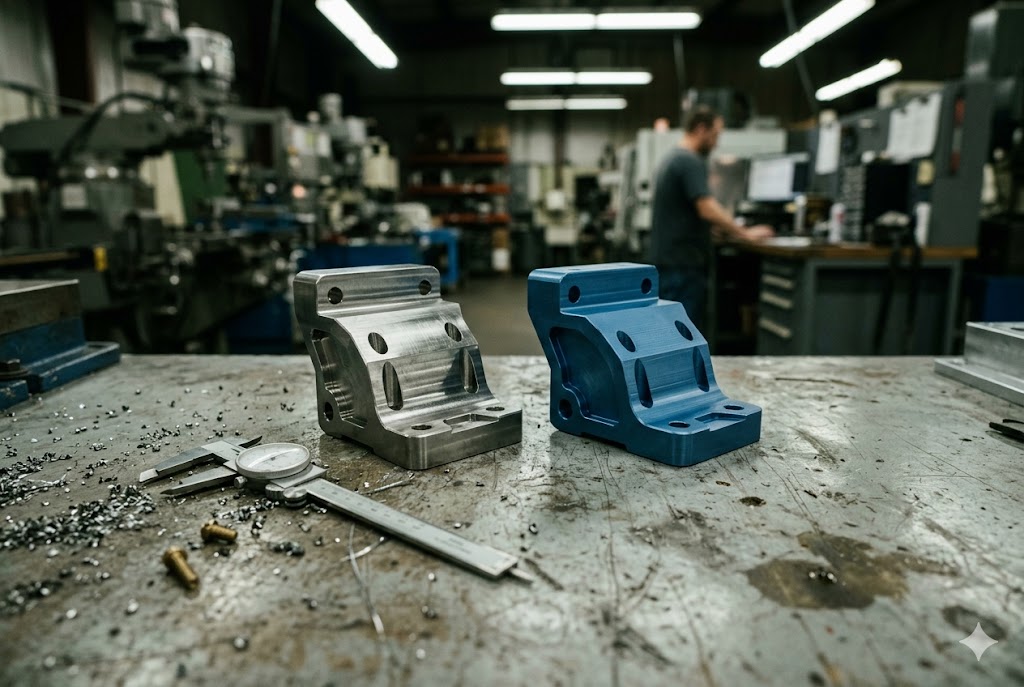
Every CNC job has a fixed setup cost: programming, fixturing, and first-piece inspection. That cost is spread across however many parts you order. At low volumes, setup dominates the unit price. At higher volumes, it becomes a small fraction.
Requesting unit prices at two or three quantity levels — for example, 25, 100, and 300 pieces — in a single submission costs you nothing extra. The supplier fills in three rows instead of one. What you get back is a price curve. You can see immediately whether doubling your order quantity cuts the unit price meaningfully or only marginally.
How to Structure a Volume Quote Request
Use a simple table in your RFQ. Label it clearly and keep all other parameters identical across tiers.
| Option | Quantity | Unit Price Requested |
|---|---|---|
| A | 25 pcs | Supplier to fill |
| B | 100 pcs | Supplier to fill |
| C | 300 pcs | Supplier to fill |
Hold material, tolerance, finish, and lead time constant across all three rows. That way you are comparing a single variable.
Why Material Alternatives Are Worth Asking
Some parts are specified in a material that was chosen conservatively — or because it was the engineer's default. If the functional requirement allows flexibility, asking the supplier to quote a lower-cost alternative can produce significant savings.
A common example: a structural bracket specified in 304 stainless steel. If corrosion resistance is not critical in the final application, aluminium 6061-T6 2 can reduce part cost by 40 to 60 percent — and it machines faster, which compounds the saving.
The key is to state your functional requirement alongside the original specification. Tell the supplier what the part must do, not just what you drew. Then invite them to quote both your original material and a suggested alternative.
| Material Option | Typical Cost Impact | Notes |
|---|---|---|
| 304 Stainless Steel | Baseline | Original spec |
| Aluminium 6061-T6 | 40–60% lower | Suitable if no high-temp or corrosion exposure |
| Carbon Steel 1045 | 20–35% lower | Good mechanical strength, requires coating |
What Suppliers Prefer
A well-structured multi-option RFQ signals that you understand manufacturing economics. Suppliers consistently report that buyers who ask clear, structured questions during quoting generate fewer mid-production surprises. They are easier to work with, and they become better long-term accounts.
How Can Alternative Process Options Help Me Lower Cost?
Our sourcing team has found that process alternatives often produce larger savings than material changes — yet buyers rarely ask for them. Machining strategy, surface finish, and tolerance requirements are all variables that can be structured as quote options without any ambiguity.
Alternative process options lower cost by reducing machining time, eliminating unnecessary finishing steps, and targeting tolerance only where it is functionally required. Asking a supplier to quote your as-drawn specification alongside a DFM-optimised 3 version typically surfaces savings of 10 to 30 percent, sometimes more on complex parts.
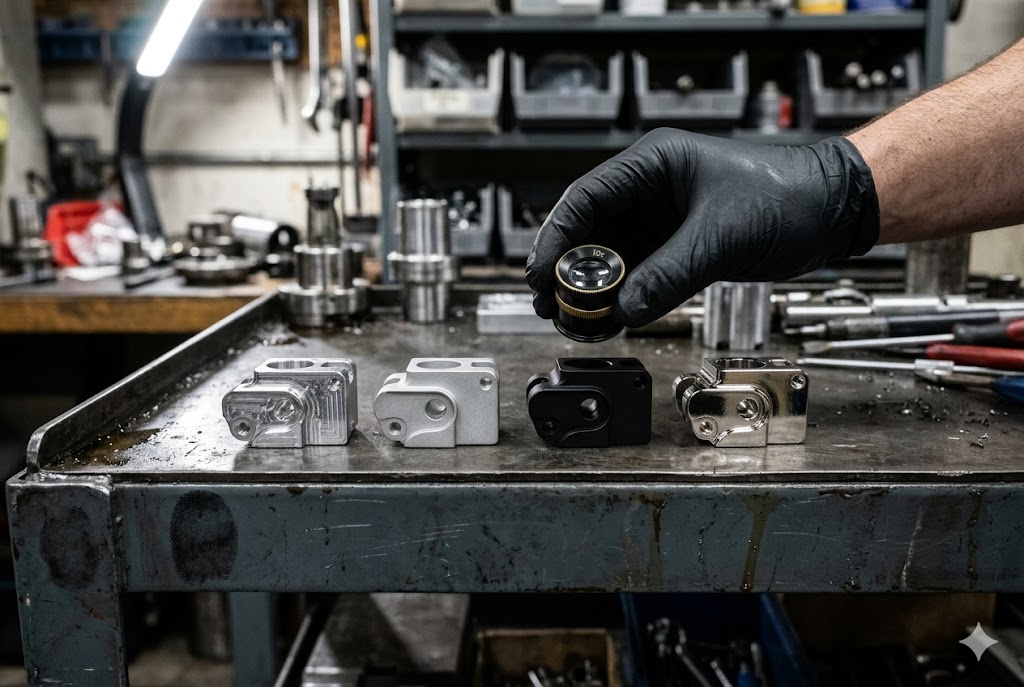
Surface Finish Tiers: A High-Value Comparison
Finishing charges vary widely. An anodised part 4 costs significantly more than an as-machined part. But many buyers accept a supplier's default finishing assumption without reviewing it.
Asking for a clear cost ladder across finish levels gives you control over one of the highest-variable line items on a CNC invoice.
| Finish Option | Typical Cost Premium Over As-Machined |
|---|---|
| As-machined only | Baseline |
| As-machined + bead blast | +5–15% |
| Type II anodize | +20–40% |
| Type III hard anodize | +35–60% |
| Electroless nickel plating | +40–80% |
Request all three or four levels for the same part. Then match the finish to the actual use case. A structural internal bracket does not need the same surface treatment as a visible consumer-facing component.
Lead Time Options: Standard vs. Expedited
Every professional CNC shop can price a standard lead time and an expedited lead time. The premium for a 7-day production cycle versus a 15-day standard cycle typically runs 15 to 40 percent on fabrication cost. That range is wide because it depends on how loaded the shop is when your job lands.
Having both prices in hand lets you make a deliberate decision about urgency. You do not have to default to rush production every time a project milestone is approaching. Sometimes the standard price fits your schedule. Sometimes the premium is worth paying. You can only decide if you have the data.
Supplier DFM Alternatives: The Most Underused Option
This is the option most buyers never request: invite the supplier to quote your original drawing alongside any DFM modification they would recommend for cost reduction.
State it clearly in the RFQ: "Please quote Option A at our as-drawn specification. If you can identify any feature modification that would reduce machining cost without affecting function, please quote that as Option B and describe the change."
Many suppliers will not volunteer this information unless asked. When invited, they often flag features that are expensive to machine and straightforward to simplify — tight-tolerance bores that could be reamed rather than bored to submission tolerances, unnecessary undercuts, or surface finish requirements that apply to non-functional faces.
The savings from a well-executed DFM review routinely run 10 to 30 percent. On a high-volume reorder, that compounds into a significant number over time.
Inspection and Documentation Tiers
Inspection documentation has a cost. A full CMM report per batch, First Article Inspection 5 with material traceability certificates, and PPAP-level paperwork all require engineering time that is charged back into the part price.
For non-critical parts or established reorders, you may not need the most rigorous inspection package every time. Asking for pricing at three documentation levels lets you apply the right level of quality assurance to each order type.
| Inspection Option | Scope | Typical Cost Impact |
|---|---|---|
| Standard 2D dimensional check | Key dimensions only | Baseline |
| Full CMM report per batch | All drawing callouts measured | +5–15% |
| FAI + material traceability certs | First article + cert chain | +15–30% |
What Quote Scenarios Should I Ask Suppliers to Compare?
The structure of a multi-option RFQ matters as much as the content. We have reviewed hundreds of RFQs over the years, and the ones that generate the most useful supplier responses follow a consistent pattern: one complete base specification, then each alternative defined as a single named deviation from that base.
The most productive quote scenarios to compare are: quantity tiers, material alternatives, surface finish levels, standard vs. expedited lead time, DFM-optimised design alternatives, and Incoterms options. Each scenario should be presented as a clearly labelled option with all non-variable parameters held constant, so the supplier can price the difference cleanly.

The Base Specification Rule
Every option in your RFQ should anchor to one complete base specification. That base spec includes: part drawings with all tolerances and callouts, material grade and certification requirement, surface finish requirement, required quantity, required delivery date, and packaging requirements.
Once the base spec is complete, each alternative is a single named change. "Option B: Same as base spec, but material changed to aluminium 6061-T6 per ASTM B209." Not "Option B: cheaper material." The supplier needs a specific, quotable deviation — not an invitation to guess.
Incoterms as a Quote Option
This is one of the most overlooked multi-option requests. Asking for both an EXW or FOB price and a DDP price 6 on the same order gives you a direct comparison between managing your own freight and customs clearance versus having the supplier bundle it.
In 2026, with US import duties on metal parts potentially exceeding 95 percent in stacked tariff scenarios, the DDP option 7 forces the supplier to calculate full landed cost including duties. That number arriving in a structured quote is far more useful than discovering it as a surprise invoice from your customs broker after shipment.
A Complete Scenario Matrix
Use this structure when building your RFQ. Adjust the options to match your part and application.
| Option Label | Variable Changed | All Other Parameters |
|---|---|---|
| Base (A) | As-drawn spec, 100 pcs, standard lead time, FOB Shenzhen | Full spec as drawn |
| B | Quantity: 300 pcs | Same as A |
| C | Material: Al 6061-T6 instead of SS304 | Same as A |
| D | Finish: As-machined only (no anodize) | Same as A |
| E | Lead time: 7 days expedited | Same as A |
| F | Incoterms: DDP Los Angeles | Same as A |
You do not have to request all six options every time. Select the variables that are most relevant to your project. Two or three well-defined options produce more useful data than six loosely defined ones.
What Makes a Supplier Push Back
The suppliers most likely to decline a multi-option RFQ are trading companies or small job shops that lack engineering staff to price alternatives confidently. That reaction is itself useful information. A supplier who cannot respond to a structured multi-option quote likely cannot handle mid-project engineering questions either.
How Do I Evaluate Multiple Quote Options Without Slowing Down Sourcing?
A common concern we hear from purchasing managers is that more options mean more analysis time and a slower decision. In practice, the opposite is true — provided the RFQ is structured correctly from the start.
Evaluating multiple quote options does not slow sourcing when options are defined clearly and returned in a consistent format. A structured comparison table built from supplier responses lets you make a data-driven decision in one review session, rather than running multiple sequential RFQ rounds across weeks.

Build Your Comparison Table Before Quotes Arrive
Design the evaluation framework before you send the RFQ, not after quotes come back. If you know what you will compare, you can structure the RFQ to ensure every supplier returns data in the same format.
A simple evaluation table captures the variables that matter most to your decision.
| Evaluation Criterion | Option A (Base) | Option B (300 pcs) | Option C (Al 6061) |
|---|---|---|---|
| Unit price | |||
| Total cost at order quantity | |||
| Lead time (calendar days) | |||
| Material certification included | |||
| Inspection level | |||
| Incoterms | |||
| Notes / supplier comments |
When quotes arrive, paste the supplier's numbers into the corresponding cells. The comparison is immediate. You are not reading multiple supplier emails and trying to reconcile different formats.
Set a Response Deadline and Hold It
A multi-option RFQ requires slightly more work from the supplier. Give them a fair deadline — typically five to seven business days for standard parts. State the deadline in the RFQ and make clear that late responses will not be considered for this order cycle. Professional suppliers will meet the deadline. Shops that miss it are telling you something about their project management capability.
Qualify Suppliers Before Sending Multi-Option RFQs
Not every supplier on your list deserves a multi-option RFQ. Use a short pre-qualification step 8 — capability statement, past project examples, lead time track record — before investing time in a detailed submission. Send multi-option RFQs to two or three pre-qualified suppliers, not to an open list of ten.
When to Ask a Sourcing Partner to Manage the Process
If your team is managing multiple active projects simultaneously, the time cost of sending, chasing, and comparing multi-option RFQs adds up. Working with a sourcing partner 9 who already has established relationships with qualified CNC suppliers can compress the quoting cycle significantly. They can distribute the RFQ, conduct follow-up, and return a consolidated comparison to your team — saving you the coordination time without giving up visibility into the options.
Signs That a Quote Response Is Incomplete
When reviewing returned quotes, check for these common gaps:
- Quantity tiers missing: supplier only quoted one volume
- Material alternative not addressed: they priced only your base spec
- Lead time stated as a range, not a commitment: "10–20 days" is not a useful data point
- No unit price breakdown by option: just a single total figure
- DFM comments absent despite being requested: supplier did not engage with the engineering question
Any of these gaps should prompt a follow-up request before you move the supplier forward in the evaluation. A structured supplier comparison process 10 ensures that incomplete responses do not advance to the shortlist without remediation.
Conclusion
Requesting multiple quotation options in a single RFQ is not an unusual ask — it is professional sourcing practice. Structure each option as one named deviation from a complete base spec, define your evaluation table in advance, and send to pre-qualified suppliers only. The result is faster decisions and better data.
Footnotes
1. Complete guide to the RFQ process, components, and best practices for procurement. ↩︎
2. Technical properties and machinability data for Aluminium 6061-T6 alloy. ↩︎
3. How DFM decisions during concept phase reduce CNC machining costs and lead times. ↩︎
4. Overview of the anodizing process, Types I–III, and their cost and performance differences. ↩︎
5. AS9102 First Article Inspection requirements and documentation standards explained. ↩︎
6. Plain-English guide to Incoterms including EXW, FOB, and DDP for freight shipments. ↩︎
7. Detailed explanation of Delivered Duty Paid (DDP) Incoterm and seller obligations. ↩︎
8. How to use RFQs effectively for supplier selection and pre-qualification in procurement. ↩︎
9. Best practices for using RFQs with sourcing partners when importing manufactured parts. ↩︎
10. How structured RFQ processes prevent savings losses from unclear supplier requirements. ↩︎