Skip to main content Skip to footer
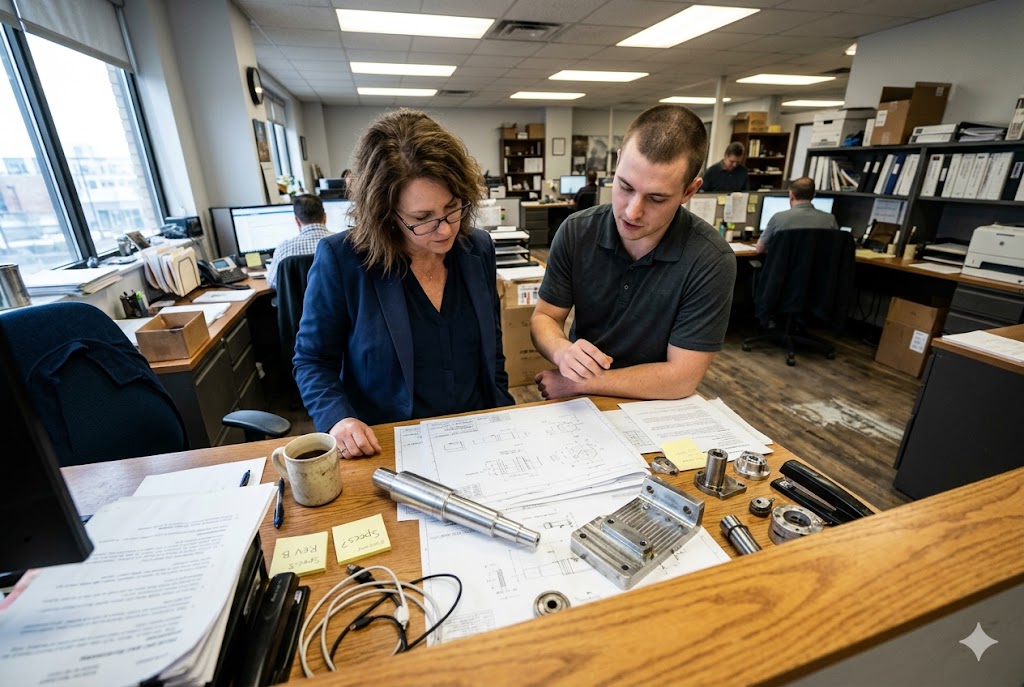
Every week we field questions from US buyers who receive a quote and see an unexpected line item labeled "tooling fee." It stops them cold. They wonder if the supplier is padding the bill — or if the charge is real.
For most standard CNC machined parts, you do not pay a separate tooling fee. Suppliers absorb standard cutting tool costs into their machine rate. A separate tooling charge only appears when your part requires custom cutters, specialty form tools, EDM electrodes, or bespoke fixtures that cannot be reused across other jobs.
Knowing when a tooling fee is legitimate — and when to push back — can save you thousands per project. Let us break it down.
When Is Tooling Really Required for My Custom CNC Project?
Our team reviews hundreds of RFQs each year, and we see this confusion play out constantly. A buyer submits a drawing, gets a quote with a tooling line item, and is not sure whether to accept it or challenge it.
Tooling is genuinely required when your part needs custom form cutters, specialty thread profiles, EDM electrodes, or custom workholding fixtures that cannot be replaced by standard off-the-shelf cutting tools. Standard milling, turning, and drilling operations never require a separate tooling charge.
What Counts as Standard Tooling?
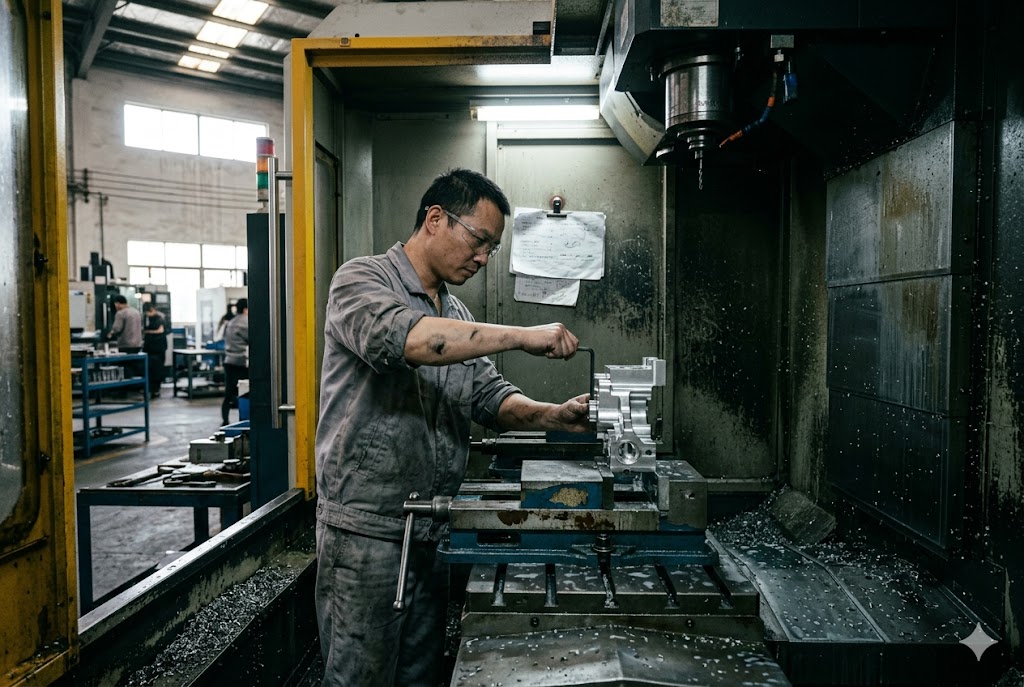
Standard tooling includes end mills, drills, taps, boring bars, and carbide inserts that every machine shop already stocks. These are consumables. Their cost is baked into the shop's hourly rate. You will never see them quoted as a line item on a standard CNC milling or turning job 1.
This is one of the key structural advantages CNC machining has over injection molding or die casting. With molding or casting, you must pay for hard tooling — molds or dies — before a single production part can be made. The upfront tooling costs for injection molding 2 alone can run from a few thousand to over $100,000 depending on mold complexity. With CNC machining, standard geometries can go straight into production with no upfront tooling cost.
When Does a Real Tooling Charge Appear?
A legitimate tooling charge shows up in three situations:
| Situation | Typical Cost Range | Notes |
|---|---|---|
| Custom form cutters / specialty profiles | $300 – $3,000+ | One-time NRE; cannot be reused across other jobs |
| EDM electrodes (graphite or copper) | $200 – $2,000+ | Consumed during machining; charged per electrode |
| Custom workholding fixtures | $100 – $5,000+ | Depends on complexity and number of clamping axes |
Custom Form Cutters
If your part has a non-standard thread form, a unique groove profile, or a bespoke internal contour that no off-the-shelf end mill can produce, the supplier must grind or procure a custom cutter. That cost is legitimate. It is a one-time non-recurring engineering (NRE) 3 charge — it does not repeat on reorders unless the cutter wears out or your design changes.
EDM Electrodes
Electrical discharge machining (EDM) 4 operations are used for sharp internal corners, blind keyways, thin deep slots, and hardened materials that resist conventional cutting. EDM requires graphite or copper electrodes machined specifically to match your geometry. These electrodes are consumed during the process. If your quote includes EDM work, the electrode charge is real and expected. However, if your design can tolerate small internal radii instead of sharp corners, you can often eliminate the EDM step — and the electrode cost — entirely.
Custom Fixtures
Fixtures are the jigs and clamps that hold your part during machining. Standard vises and three-jaw chucks cover most simple geometries. When your part has unusual shapes, thin walls, or features that must be machined from multiple angles on a 3-axis machine, the supplier may need to build a custom fixture. Simple in-house fixtures cost $100–$500. Complex multi-axis fixtures can reach several thousand dollars.
Here is a quick guide to when you can expect fixture charges:
| Part Geometry | Fixturing Approach | Fixture Charge? |
|---|---|---|
| Simple prismatic block | Standard vise | No |
| Round or cylindrical | 3-jaw chuck | No |
| Complex multi-feature part, 3-axis | Custom jig required | Yes |
| Complex multi-feature part, 5-axis | Standard workholding often sufficient | Usually No |
| Thin-wall or delicate part | Soft jaws or dedicated fixture | Sometimes |
A practical note from our sourcing experience: when a supplier quotes a fixture charge on a geometrically complex part, it is worth asking whether the job can be re-quoted on a 5-axis CNC machine 5. Five-axis machines can approach a workpiece from multiple angles in a single setup using standard workholding, which sometimes eliminates the fixture cost entirely — even if the hourly machine rate is higher.
How Can I Tell Whether a Tooling Fee Is Reasonable?
When we audit supplier quotes for our clients, the tooling line item is one of the first things we examine. A vague "tooling fee: $800" with no explanation is a red flag. A detailed breakdown with photos or drawings of the proposed fixture is a green flag.
A reasonable tooling fee is one where the supplier can explain exactly what physical item they are making or procuring, why standard tooling cannot replace it, and what the one-time cost covers. If a supplier cannot itemize the charge in plain terms, you should ask for clarification before paying.

Ask for an Itemized Breakdown
The single most effective thing you can do is request a written itemization. A professional supplier will provide a breakdown that distinguishes between:
- Setup and programming (NRE): CAM programming 6, machine configuration, first-article inspection. This is labor. It is a one-time charge and should not repeat on reorders of unchanged parts.
- Tooling: Physical items — custom cutters, electrodes, fixtures. This is hardware.
Some suppliers bundle setup and tooling into a single NRE figure. That is acceptable if they can explain what is included. What is not acceptable is a supplier who cannot tell you which cost driver you are paying.
Compare Against Market Benchmarks
Here is a practical reference table for common tooling charges in China:
| Tooling Item | Low End | High End | Notes |
|---|---|---|---|
| Simple custom fixture (in-house) | $100 | $500 | Basic steel or aluminum jig |
| Complex multi-axis fixture | $1,000 | $5,000+ | Tight repeatability, precision ground |
| Custom form cutter (ground) | $300 | $2,000 | Specialty profile or thread form |
| EDM electrode (graphite) | $200 | $800 per electrode | Consumed during machining |
| EDM electrode (copper) | $400 | $1,500 per electrode | Longer life, higher upfront cost |
If a quoted amount falls well outside these ranges without a clear explanation, ask for the supplier's cost breakdown or get a competing quote. Applying best practices when sourcing from China 7 — including requesting detailed written quotes and comparing multiple suppliers — can help you detect inflated or unexplained charges early.
Watch for Setup Fees Labeled as Tooling
One common issue we encounter is suppliers who label programming and setup labor as "tooling." This is not technically wrong — setup is a real cost — but it inflates the apparent tooling figure and can mislead buyers into thinking they are paying for physical hardware they own. Clarify with the supplier: is this fee for a physical object, or is it for labor?
Red Flags and Green Flags
| Signal | What It Means |
|---|---|
| Tooling fee with no description | Ask for a breakdown before paying |
| Tooling fee with photo or drawing of proposed fixture | Legitimate and professional |
| Same tooling fee quoted on a reorder of unchanged parts | Requires written explanation |
| Tooling fee on a simple prismatic part | Likely a setup/programming charge mislabeled |
| Tooling fee eliminated when switching to 5-axis quote | Original charge was fixture-driven, not tool-driven |
Can I Amortize Tooling Cost Into Future Production Orders?
This is one of the most practical questions purchasing managers ask us, and the answer is: yes, it is possible — but you need to understand the trade-offs before you agree to it.
Amortizing tooling into per-part pricing means the supplier absorbs the upfront tooling cost and spreads it across a minimum committed volume. The total you pay is typically the same or higher than paying tooling upfront, but your initial cash outlay is lower and the risk of volume shortfall shifts in your direction.
How Amortization Works in Practice
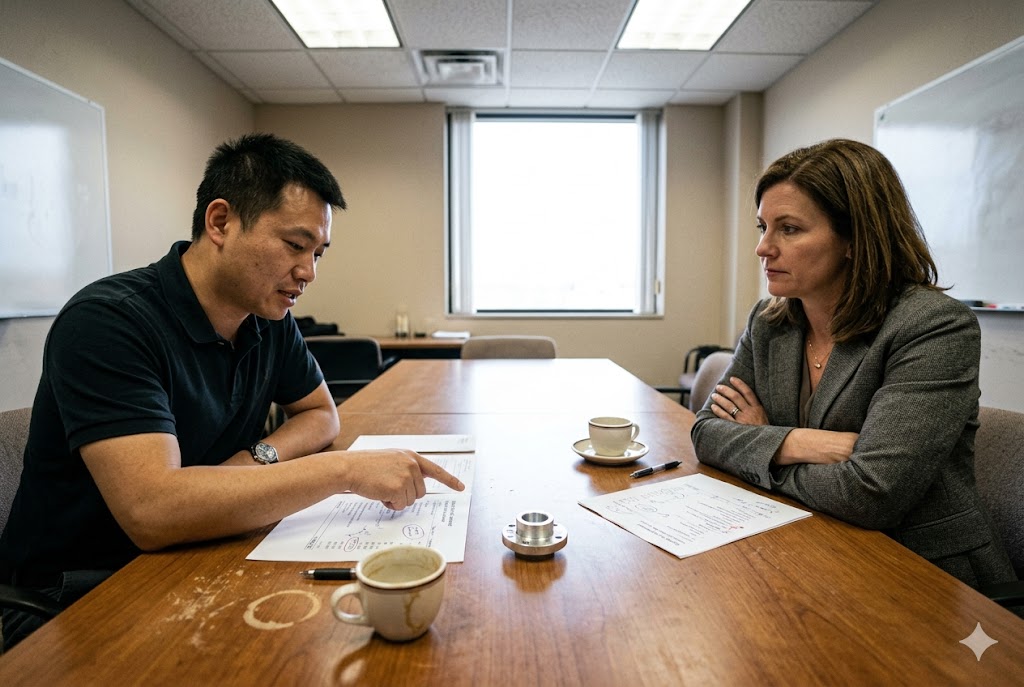
When a supplier offers to "waive the tooling fee" in exchange for a minimum order quantity (MOQ) 8, they are not actually waiving anything. They are embedding the tooling cost into the per-part price and distributing it across the committed volume.
Here is a simple example:
| Scenario | Tooling Fee | Per-Part Price | MOQ | Total Cost (at MOQ) |
|---|---|---|---|---|
| Pay tooling upfront | $1,000 | $12.00 | 100 pcs | $2,200 |
| Amortize into unit price | $0 | $22.00 | 100 pcs | $2,200 |
| Amortize into unit price | $0 | $17.00 | 200 pcs | $3,400 |
The math is identical at the MOQ. The difference is cash flow timing and risk allocation.
When Amortization Makes Sense
Amortization is a reasonable choice when your cash flow is constrained and you are confident you will meet the volume commitment. It is a poor choice when your volumes are uncertain, because if you do not reach the MOQ, the supplier may invoice you for the unrecovered tooling balance.
When Paying Upfront Makes Sense
Paying tooling upfront gives you a lower per-part price on every subsequent order. For programs with predictable long-term volume, the upfront payment almost always has a lower total cost over the life of the program. It also gives you a cleaner contractual basis for asserting ownership of the tooling — which leads directly to the next question buyers always ask.
Programming and Setup vs. Tooling: Do Not Confuse Them
Even in an amortization conversation, keep these categories separate. Understanding the distinction between NRE costs and physical tooling costs 9 is essential: setup and CAM programming fees are one-time NRE charges that do not produce a physical asset, while tooling fees produce a physical fixture or cutter that has ongoing value. Only tooling produces something you might want to own, transfer, or audit.
Who Owns the Tooling After I Pay for It?
This is the question that trips up even experienced purchasing managers. The answer depends entirely on what your contract says — and the default practice in China is not in your favor.
In China, the commercial default is that the supplier retains physical custody of all tooling — even tooling you paid for. Without a written clause in your purchase agreement explicitly stating that tooling paid by the buyer becomes buyer property and is transferable on request, you may find you cannot move production to a new supplier without rebuilding all tooling from scratch at your own expense.
The Default Commercial Practice
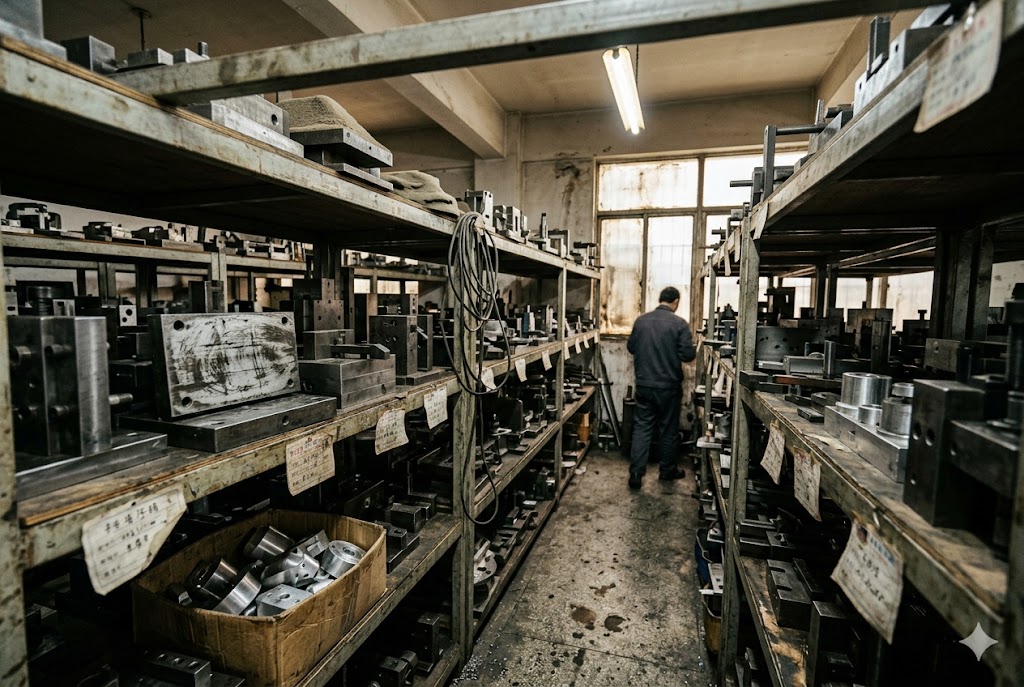
When a buyer pays a tooling fee to a Chinese supplier, the supplier builds or procures the fixture or cutter, uses it to produce your parts, and then stores it in their facility. There is typically no automatic transfer of title. The supplier considers themselves the custodian — and in many cases, the owner — of that tooling unless your contract states otherwise.
This matters most when you decide to change suppliers. If your tooling is worth $10,000 and it sits in Supplier A's facility with no contractual ownership clause, you have two options: pay Supplier A to transfer the tools (which they may refuse or price punitively), or pay again to rebuild identical tooling at Supplier B. Neither is a good outcome. As international manufacturing lawyers at Harris Sliwoski note, protecting your molds and tooling when manufacturing overseas 10 requires explicit written agreements before production begins — not after problems arise.
What to Include in Your Purchase Agreement
Any purchase agreement for an order that includes tooling costs should address the following:
| Contract Clause | What It Should Say |
|---|---|
| Tooling ownership | Tooling paid by buyer becomes buyer property upon full payment |
| Storage obligations | Supplier stores tooling at no charge for active programs |
| Transfer rights | Buyer may request physical transfer of tooling with reasonable notice |
| Maintenance | Supplier is responsible for maintaining tooling in usable condition |
| Disposal | Supplier may not dispose of buyer-paid tooling without written consent |
What Happens on Reorders?
For repeat orders on unchanged parts, you should never be charged a tooling fee again — unless the supplier can provide a written explanation for why the original tooling is no longer usable. Legitimate reasons include tooling worn out from previous production cycles, a long gap between orders that led to disposal, or documented damage during production.
If a supplier quotes a tooling charge on a reorder without explanation, that is a contract compliance issue, not a new cost you are required to accept. Ask for documentation of what happened to the original tooling.
Design Changes and Tooling Costs
Not all design changes restart the tooling cost clock. Here is a practical framework:
- Changes that only affect the CAM program (tolerances, surface finish specs, minor geometry adjustments that stay within the same fixturing approach): these trigger a setup/programming NRE charge, not a new tooling charge.
- Changes that alter clamping geometry (new features that require a different fixture orientation, or geometry that requires a new form cutter): these do trigger genuine new tooling costs.
Planning design iterations with this framework in mind lets you front-load the expensive changes early — before tooling is committed — and make inexpensive programming-only changes later in the development cycle.
Our Recommendation
We advise all our clients to include an explicit tooling ownership clause in every purchase agreement where tooling fees are charged. This is not adversarial — it is standard commercial practice. Professional suppliers expect it. Suppliers who resist this clause are worth scrutinizing before you commit.
Conclusion
Tooling fees are legitimate for custom tools, EDM electrodes, and bespoke fixtures — but never for standard CNC operations. Always get an itemized quote, understand your amortization options, and protect your ownership rights in writing before you pay.
Footnotes
1. Practical tips on CNC milling cost drivers and how standard tooling is priced into shop rates. ↩︎
2. Comprehensive breakdown of injection mold tooling costs, from prototype molds to high-volume steel molds. ↩︎
3. Explains what NRE (non-recurring engineering) costs cover and how they differ from recurring production costs. ↩︎
4. Detailed guide to the EDM process, electrode types, and when EDM is used in precision manufacturing. ↩︎
5. Comparison of 3-axis vs. 5-axis CNC machining, including how 5-axis reduces fixture requirements. ↩︎
6. Beginner's guide to CAM software and how it converts part designs into CNC machine instructions. ↩︎
7. Expert guide to vetting Chinese suppliers, negotiating contracts, and managing sourcing risks. ↩︎
8. Clear explanation of minimum order quantity, how suppliers set MOQs, and trade-offs for buyers. ↩︎
9. Deep dive into NRE costs, physical tooling costs, and minimum buy requirements in contract manufacturing. ↩︎
10. International manufacturing lawyers explain how to protect mold and tooling ownership when producing in China. ↩︎