Skip to main content Skip to footer

When we put together quotes for clients sourcing custom CNC parts, the number one frustration we hear is this: prices come back higher than expected, and no one explains why. Most buyers assume the supplier is padding the margin. Sometimes that is true. But more often, the real cost driver is sitting right inside the drawing itself.
You can reduce unit cost on imported CNC parts by combining four levers: design optimisation, tolerance rationalisation, order volume strategy, and direct factory relationships. Together, these changes commonly cut unit price by 30–60% without any compromise to part function or quality.
The good news is that most of these changes cost nothing to implement. You just need to know where to look. Here is a practical breakdown of each lever — structured around the principles of design for manufacturability 1 — with specific numbers.
How Can I Optimise My Design to Lower Machining Cost?
Our engineers review drawings every day, and the same avoidable cost drivers show up repeatedly. A few small geometry changes on your drawing can cut machine time significantly — sometimes in half.
The fastest design changes to reduce CNC machining cost are: enlarging internal corner radii to match standard tooling, reducing the number of setups by grouping features on fewer faces, and standardising hole diameters and thread sizes to values the supplier already stocks. Together these changes can cut unit price by 20–40%.

Internal Corner Radii
Sharp internal corners are expensive. To machine them, a supplier must either use electrical discharge machining 2 or run a very small end mill at slow feed rates through multiple passes. Both options add time and cost.
The fix is simple: use a corner radius that matches a standard end mill the shop already stocks. Common standard sizes are 1, 1.5, 2, 3, and 4 mm. If your assembly can tolerate a 3 mm fillet instead of a 0.5 mm one, the feature can be cut in a single pass at full feed rate with no special tooling charge.
Number of Setups
Every time a part is unclamped, repositioned, and re-fixtured, the clock resets on setup cost. A part that requires five face orientations costs far more to machine than one requiring two, even if the geometry looks similar on paper.
Redesigning so that all features are accessible from two or fewer sides eliminates one to three setup cycles. On a batch of 100 parts, that saving compounds across every single piece.
Standardised Holes and Threads
Non-standard hole sizes require the supplier to order a specific drill. That means a tooling charge, a lead time delay, and an administrative overhead — all of which appear in your unit price.
Standard metric hole diameters (3, 4, 5, 6, 8, 10, 12 mm) and standard M-series or UNC thread sizes can be cut with tools the shop already owns. If your design specifies a 5.3 mm hole, ask whether the function can be served by a 5 mm or 5.5 mm hole. In most cases, it can.
| Design Feature | Cost-Driving Version | Cost-Optimised Version | Typical Saving |
|---|---|---|---|
| Internal corner radius | 0.5 mm (requires EDM or micro end mill) | 3 mm (standard end mill, single pass) | 10–25% on that feature |
| Number of setups | 4–5 face orientations | 1–2 face orientations | $15–$50 per part |
| Hole diameter | 5.3 mm (custom drill required) | 5.0 mm or 5.5 mm (standard stock) | $20–$80 tooling charge removed |
| Thread size | Non-standard pitch | Standard M-series or UNC | Lead time + cost eliminated |
Consolidating Part Numbers in One Session
If you are ordering five different bracket designs in the same material, shipping them as one production session lets the supplier share setup, programming, raw material procurement, and inspection. Each part number benefits from the fixed costs being spread across the whole job. This is structurally unavailable when each part is ordered separately on different days.
Should I Adjust Tolerances or Surface Finish to Reduce Price?
When our team reviews a drawing flagged for high cost, a blanket tight tolerance applied across the whole title block is one of the first things we look for. It is one of the most common and most expensive mistakes buyers make.
You can reduce CNC part cost by 15–30% by replacing blanket tight tolerances with ISO 2768-m 3 as the default and applying tight tolerances only to functional mating surfaces such as bearing bores, dowel holes, and seal grooves. Removing unnecessary surface finishing from non-critical areas adds further savings of $1–$10 per part.
How Tolerances Drive Cost
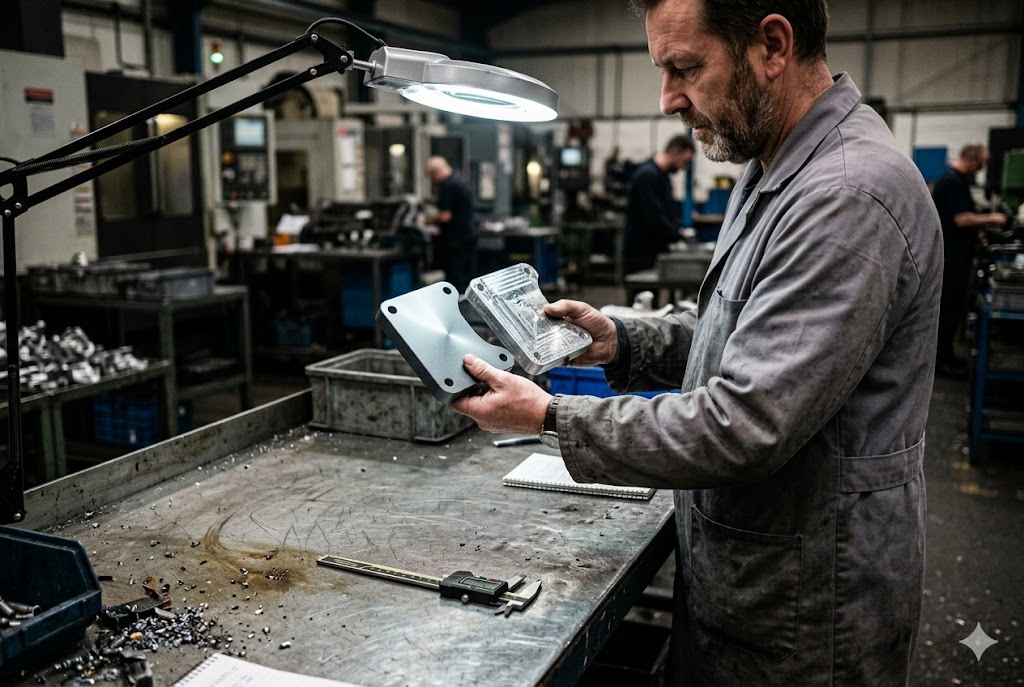
A tight tolerance such as ±0.01 mm on a title block forces the supplier to apply slow finishing passes, increased inspection time, and a higher scrap contingency to every single dimension on the drawing — including non-critical chamfers and decorative surfaces.
Most of those dimensions do not need that precision. They just need to be in the right general shape. Applying a tight tolerance to them costs money on every part in every batch, for no functional gain.
The better approach is to set ISO 2768-m as the title-block default. This is a widely understood medium-tolerance standard. Then apply tight tolerances only to the features that actually require them: bearing bores, dowel pin holes, seal grooves, and mating faces.
How Surface Finish Drives Cost
Anodising 4, bead blasting, polishing, and coating add $1–$10 per part depending on part size and process. These finishes serve a purpose on visible, functional, or corrosion-critical surfaces. But applying them to internal cavities, hidden brackets, or structural plates that will never be seen adds pure cost.
Specifying "as-machined" on non-critical surfaces removes those finishing charges entirely. The part functions identically. The invoice shrinks.
| Surface Specification | Typical Cost Add (per part) | When to Use |
|---|---|---|
| As-machined (Ra 3.2 µm) | $0 | Internal surfaces, hidden brackets, structural plates |
| Bead blast | $1–$3 | External visible surfaces needing uniform appearance |
| Anodise (clear) | $2–$5 | Aluminium parts needing corrosion resistance |
| Hard anodise | $4–$8 | High-wear surfaces on aluminium |
| Electropolish / polish | $5–$10 | Fluid-contact or high-cosmetic surfaces |
Material Selection Is Also Part of This Conversation
Switching to a more machinable material that still meets the functional requirement is one of the fastest paths to a meaningful cost reduction. Aluminium 6061-T6 5 machines roughly three to four times faster than 304 stainless steel 6 and causes far less tool wear.
When a part is specified in stainless for corrosion resistance rather than for strength, anodised aluminium or zinc-plated mild steel often satisfies the requirement at a fraction of the machining cost.
| Material | Relative Machinability | Common Use Case | Cost vs 304 SS |
|---|---|---|---|
| Aluminium 6061-T6 | 3–4× faster | Structural brackets, enclosures | 40–60% lower |
| Mild steel (1018) | ~1.5× faster | General structural parts | 20–35% lower |
| 304 Stainless Steel | Baseline | Corrosion-critical, food contact | Baseline |
| 316 Stainless Steel | Slightly slower | Marine, chemical environments | 10–20% higher |
How Does Order Volume Affect My Unit Cost?
One thing we tell every new client: always ask for a price curve, not just a price. The relationship between quantity and unit cost for CNC parts is not linear, and knowing where the break points fall can completely change your sourcing decision.
Unit cost for CNC machined parts typically drops 40–70% moving from a single prototype to a batch of 100–200 pieces, with the steepest reduction occurring in the 10–50 unit range as setup costs amortise across more parts. Ordering at a volume just above a supplier's price-break threshold — rather than just below — often reduces total spend even when you buy more pieces.
Understanding Price Breaks
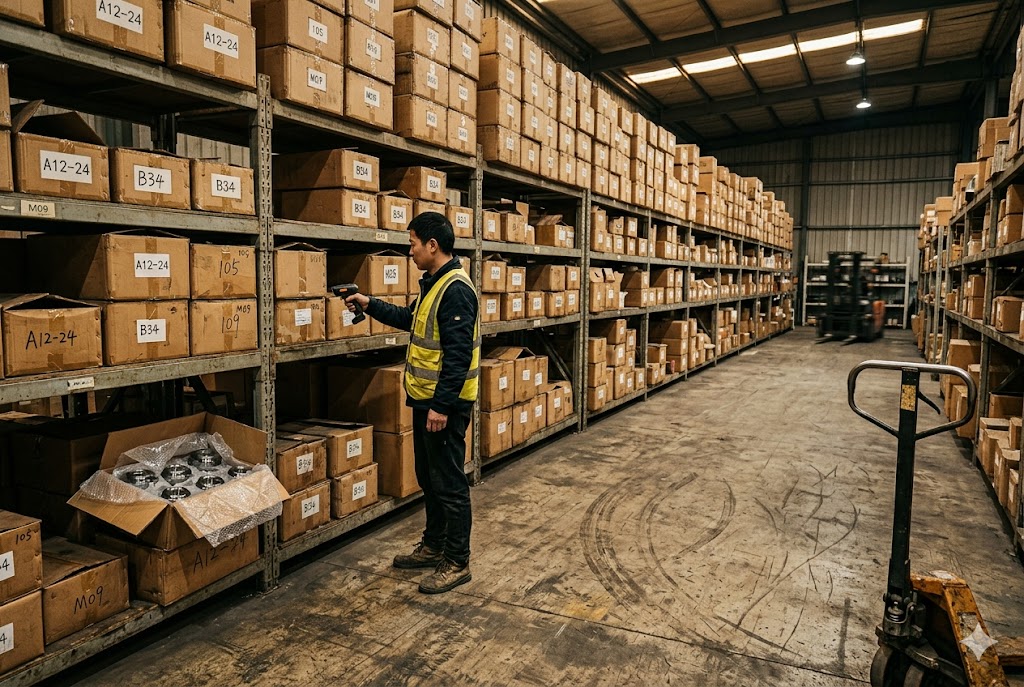
Every CNC quote includes a fixed component (programming, setup, tooling, fixtures) and a variable component (machine time per part, material per part, inspection per part). At low volumes, the fixed cost dominates. As quantity rises, that fixed cost spreads across more parts and the unit price falls sharply.
The steepest drop happens in the 10–50 unit range. After 200–500 units, the curve flattens significantly and price reductions become more incremental.
Asking suppliers for a price curve at 10, 25, 50, 100, and 200 units reveals exactly where the break points are for your specific part and supplier. Sometimes ordering 30% more parts actually reduces your total spend — and you carry more safety stock.
Blanket Purchase Orders
Placing a blanket purchase order 7 covering your projected annual volume, released in scheduled monthly or quarterly shipments 8, gives the supplier forward visibility to buy raw material in bulk, pre-schedule machine time, and reduce per-order administrative overhead.
This structure typically delivers unit price reductions of 5–15% relative to placing spot orders for the same quantity, with no change to the design or specification. The supplier carries less scheduling risk. In return, you get a better price.
Consolidating Orders Across Part Numbers
If you source multiple different part numbers from the same supplier in the same material, consolidating them into a single production session lowers cost for every part number in the group. The supplier shares setup time, programming, raw material procurement, and quality inspection across the whole job.
This is one of the most underused levers available. Many buyers order each part number separately on different days, paying full setup cost each time.
What Cost Reductions Are Safe Without Creating Quality Risk?
This is the right question to ask. Not every cost reduction is equal. Some save money and keep quality intact. Others create hidden risk that surfaces three months later as a warranty claim or a production stoppage.
Safe cost reductions for CNC parts include: rationalising tolerances on non-functional features, removing unnecessary surface finishes, switching to more machinable materials where functional requirements allow, and using blanket purchase orders. These changes lower price without touching the features that determine whether the part works.
What Is Safe to Change
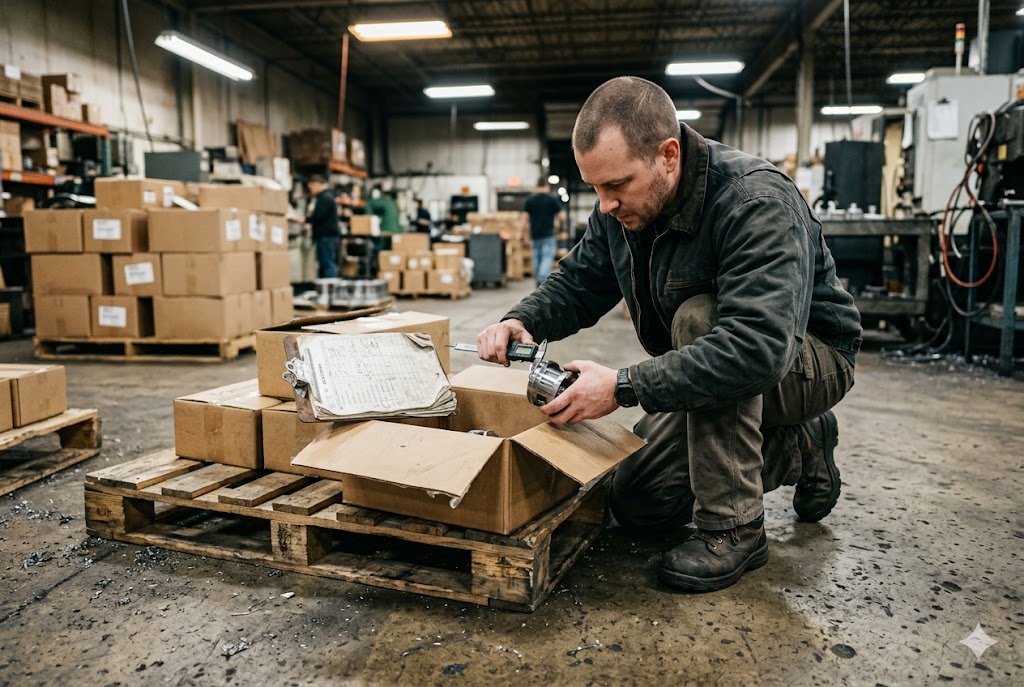
The core principle is straightforward: cost reductions that target non-functional features are safe. Cost reductions that weaken the specification on functional features carry risk.
Here is a practical breakdown:
| Cost Reduction | Safe? | Condition |
|---|---|---|
| Loosen tolerance on non-mating surfaces | Yes | Confirm surface is non-functional |
| Remove surface finish on hidden surfaces | Yes | No corrosion or wear requirement |
| Switch from SS 304 to anodised 6061 aluminium | Yes, if function allows | Must verify corrosion and strength requirements |
| Reduce setup count by redesigning part geometry | Yes | Must verify all features remain accessible |
| Reduce order quantity to save capital | Risky | Unit cost rises; may fall below break-even |
| Loosen tolerance on bearing bore or seal groove | No | Functional failure risk |
| Remove inspection on critical dimensions | No | Quality risk, no cost saving worth taking |
The Role of Supplier Relationship
One area where buyers consistently leave money on the table is the supplier relationship itself. Re-quoting every order on open platforms like Alibaba adds 15–25% intermediary margin on top of factory pricing. It also resets the relationship each time, meaning you never accumulate the trust that leads to preferred pricing.
Chinese CNC factories cite three factors most often when explaining why they offer better pricing to long-term accounts: volume commitments, design feedback, and payment term reliability. Building a direct factory relationship — not a platform relationship — is the safest and most durable cost reduction available, because it does not require changing the design or the spec at all.
In-Process Quality Control Protects Every Saving You Make
It is worth stating clearly: cost reductions only deliver value if the parts arrive correct. Dimensional errors, tolerance failures, or cosmetic defects that slip through without in-process quality control can cost far more than any unit price saving.
In-production inspection at key milestones — first-article inspection 9, in-process dimensional checks, pre-shipment inspection 10 — protects the savings you have worked to achieve and gives you leverage with the supplier if issues arise.
Conclusion
Reducing unit cost on imported CNC parts is a systematic process, not a negotiation. Fix the design, rationalise the tolerances, time your volumes, and build a direct supplier relationship. These four levers — applied together — deliver durable, repeatable savings without touching the functional integrity of your parts.
Footnotes
1. Comprehensive engineering guide covering DFM strategies that reduce CNC machining cost without sacrificing function. ↩︎
2. Explains the EDM process, including why it is slower and costlier than standard milling for internal features. ↩︎
3. Fictiv's guide to ISO 2768, the international standard for general machining tolerances used as a cost-efficient drawing default. ↩︎
4. Full overview of the aluminium anodising process, its benefits, cost implications, and finish types. ↩︎
5. Comparison of common aluminium alloys for CNC machining, including machinability and cost trade-offs. ↩︎
6. Xometry's material guide detailing 6061 aluminium properties versus stainless steel for CNC applications. ↩︎
7. ThomasNet guide explaining blanket purchase orders and how they reduce unit cost through volume commitment. ↩︎
8. Overview of purchase order structures and scheduled release terms in manufacturing supply chains. ↩︎
9. Fictiv's guide to first-article inspection (FAI): what it covers, why it matters, and when to require it. ↩︎
10. Guide to the four types of quality inspections used when sourcing from China and Asia, including pre-shipment. ↩︎