Skip to main content Skip to footer
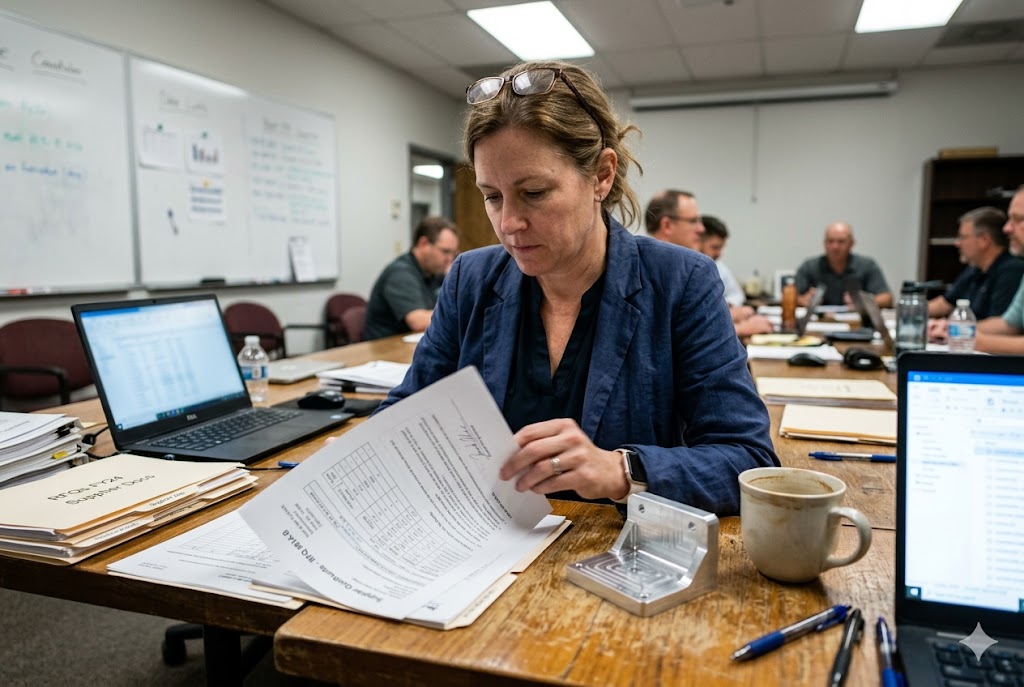
We see this question every week. A buyer finds a great CNC supplier in China, loves the sample, then freezes when the sales rep quotes a 500-unit MOQ on a part they only need 30 of.
Yes, you can negotiate MOQ when importing custom CNC machining parts from China. Because CNC machining needs no hard tooling, the MOQ is almost always a pricing policy, not a physical limit. Most Chinese CNC factories accept 10 units or fewer once you address their setup cost directly in negotiation.
Understanding why the MOQ exists — and what the supplier actually fears — is the fastest way to bring it down. The sections below give you the exact tools to do that.
How Can I Ask for a Lower MOQ Without Losing Supplier Interest?
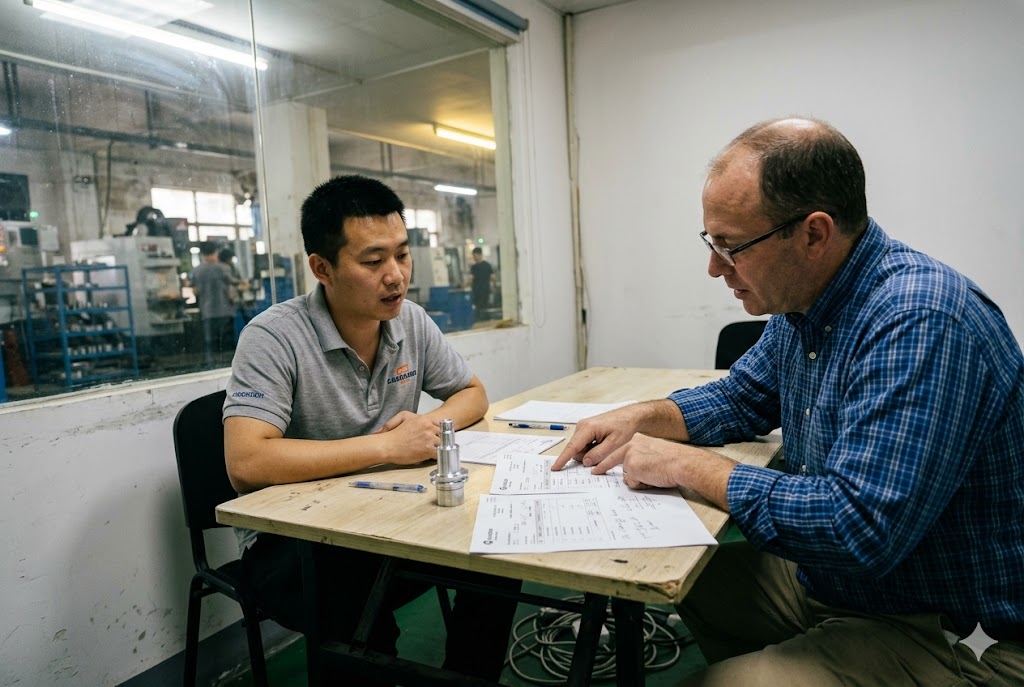
Buyers often phrase MOQ requests as a demand. That puts the supplier on the defensive immediately. In our experience coordinating between US buyers and Chinese factories, the way you frame the request matters as much as the offer itself.
To ask for a lower MOQ without losing supplier interest, frame your request around their economics, not your budget. Acknowledge their setup cost, offer a higher unit price to compensate, and show them a realistic picture of your future volume. Suppliers respond to buyers who understand the business.
Why Suppliers Set High MOQs in the First Place
CNC machining does not require molds. The same machine, the same program, and the same operator can run 5 parts or 500 parts. The physical minimum is essentially 1 unit.
So why do suppliers quote 100, 200, or 500 units? It comes down to one thing: setup cost recovery.
Before any part runs, the supplier's team must:
- Write or adapt the CAM program 1
- Set up and calibrate fixtures
- Run a first-article inspection 2
- Verify dimensions against your drawing
This setup work typically costs between $80 and $2,000 depending on part complexity. It is a fixed cost. It does not change whether you order 5 parts or 500 parts.
A supplier's MOQ is the quantity at which that setup cost spreads thin enough to produce a unit price they can sell. Nothing more.
| Setup Activity | Typical Time | Typical Cost |
|---|---|---|
| CAM programming (simple part) | 1–2 hrs | $50–$150 |
| CAM programming (complex part) | 4–8 hrs | $200–$600 |
| Fixture setup and calibration | 1–3 hrs | $80–$300 |
| First-article inspection | 1–2 hrs | $80–$200 |
| Total (typical range) | $200–$1,200 |
How to Address the Root Economics
Once you understand this, the negotiation becomes straightforward. You are not arguing about a number. You are solving a cost-recovery problem.
The most direct approach: offer to pay a higher unit price on a smaller quantity. Tell the supplier explicitly that you understand their setup cost 3 does not change with quantity, and that you are willing to compensate for that in the per-part price.
A second approach: offer a written forecast. Commit in writing to a follow-on order of a larger quantity — say 200 units — within 90 days, contingent on quality approval of the first small run. This gives the supplier internal justification to accept a low opening order.
A third approach: offer to pay the setup charge as a separate line item. Some suppliers will run 20 parts at a standard unit price if you add a flat $300 setup fee on top. This is clean, transparent, and fair to both sides.
| Negotiation Lever | What It Signals to the Supplier | Effectiveness |
|---|---|---|
| Higher unit price on small run | You understand their economics | High |
| Written volume forecast | You are a long-term buyer | High |
| Separate setup fee payment | You are transparent and professional | Medium–High |
| Urgent delivery timeline | Fills capacity fast | Medium |
| Threatening to go elsewhere | Defensive posture, no trust | Low |
One Mistake to Avoid
Do not open by asking for the lowest price AND the lowest MOQ at the same time. That tells the supplier you are squeezing them on every variable. Pick your priority. If low MOQ is the goal, be ready to give on unit price.
What MOQ Terms Are Usually Flexible for Custom CNC Parts?
Not every MOQ is the same. Some are hard floors set by material procurement rules. Others are soft pricing conventions the supplier will drop immediately when you ask the right way. Knowing which is which saves you time.
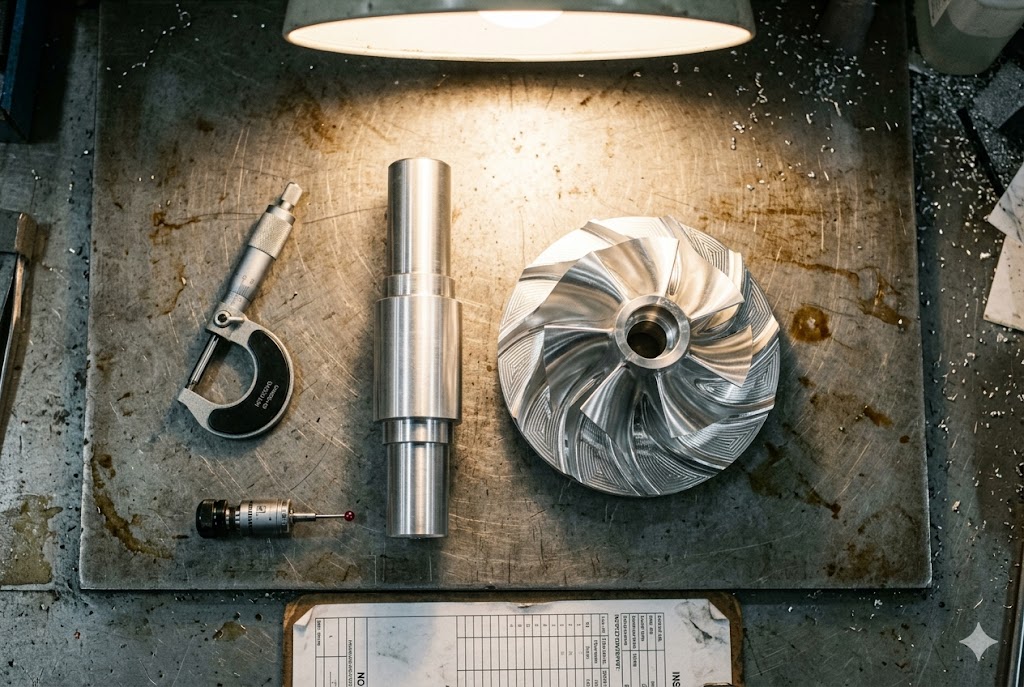
For custom CNC machined parts, the most flexible MOQ terms are those tied to machining setup cost, not material minimums. Part complexity, material type, surface finish, and tolerance requirements all affect where the real floor sits. Most standard aluminum or steel parts have no genuine physical MOQ below 1 unit.
Material MOQ vs. Machining MOQ
These are two separate things and buyers often confuse them.
Machining MOQ is the quantity the factory sets based on setup cost recovery. As established above, this is almost always negotiable.
Material MOQ is different. If your part requires an exotic alloy — titanium, Inconel, or a specialty aluminum grade — the raw material supplier may require the factory to buy a minimum weight, often 20–50 kg. If your part only uses 0.5 kg of material per unit, the factory needs to order at least 40–100 parts worth of raw stock just to buy the bar.
This is a genuine constraint. But it is still solvable.
How to Break a Material MOQ Barrier
The most direct solution: supply your own raw material. If you source the bar stock yourself and ship it to the factory cut to billet size, the factory's material procurement problem disappears. They machine what you send them. This approach works especially well for exotic or expensive alloys.
| Material Type | Typical Supplier MOQ (by weight) | Approx. Units Affected | Buyer Workaround |
|---|---|---|---|
| Standard aluminum (6061, 7075) | Low or none | Minimal | Negotiate directly |
| Standard steel (1045, 4140) | Low or none | Minimal | Negotiate directly |
| Titanium (Grade 5) 4 | 20–50 kg minimum | 50–200 units | Supply own material |
| Inconel / Hastelloy | 10–30 kg minimum | 30–100 units | Supply own material |
| Specialty plastics (PEEK, Ultem) | 5–20 kg minimum | Variable | Supply own material |
Part Complexity and MOQ Flexibility
Simpler parts have more flexibility. A turned shaft with basic tolerances takes 30 minutes to program. A 5-axis impeller with tight tolerances and multiple setups may take 10–15 hours to program and fixture. The higher the programming cost, the more the supplier needs volume to recover it.
If you have a complex part with a high setup cost, consider breaking the design into simpler sub-components where possible. Sometimes two simple parts are cheaper and more MOQ-flexible than one complex part.
Surface Finish and Post-Processing
Anodizing, 5 plating, powder coating, and heat treatment are typically batch processes run by subcontractors. Each subcontractor has their own minimum batch value, often $200–$500 per run regardless of quantity. If your order is 10 parts and the plating house charges a $400 minimum, that $400 adds $40 per part.
Be aware of this when targeting very small quantities. The post-processing minimum can become the binding constraint even after you have solved the machining MOQ.
For specialty plastics such as PEEK and Ultem, 6 raw material costs are significantly higher than standard engineering plastics, which also raises the effective MOQ floor imposed by material suppliers.
Will a Lower MOQ Increase My Unit Cost Too Much?
This is the question every purchasing manager asks before committing to a small-batch negotiation. The honest answer: yes, unit cost will go up. The better question is whether the total cash position improves.
A lower MOQ will raise your unit cost, typically by 30–60% when moving from 100 units to 20 units on a standard CNC part. However, your total order value drops significantly, which reduces inventory risk, cash tied up in stock, and the cost of scrapping bad parts from an unproven supplier.
The Math Behind the Price Increase
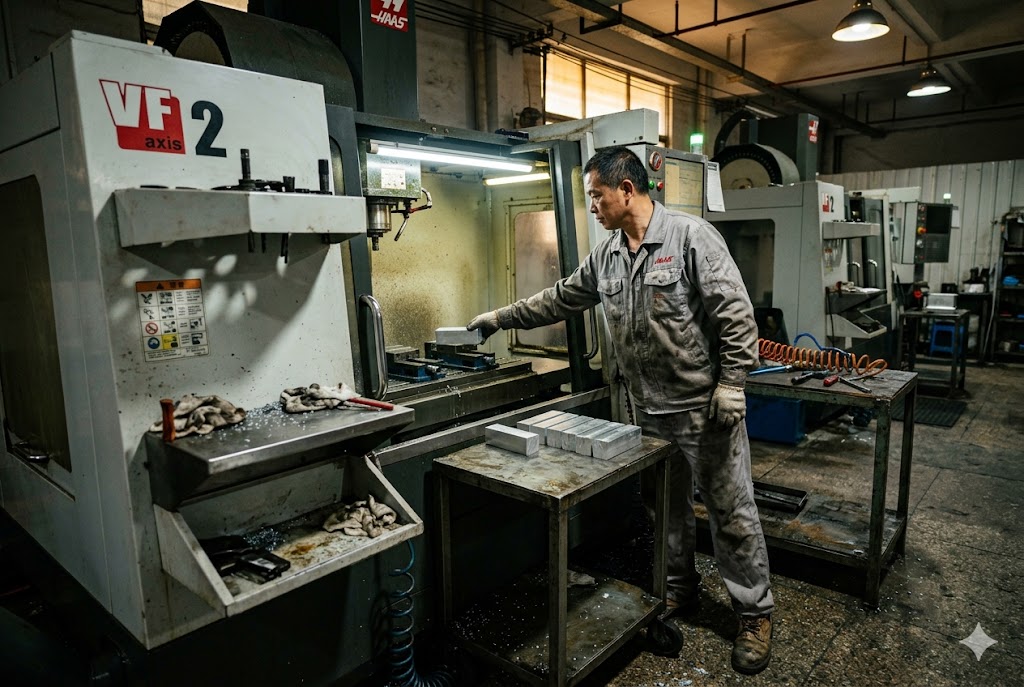
Setup cost is fixed. When you halve the quantity, that fixed cost spreads across half as many parts. This is why unit price rises when quantity falls. The relationship is not linear, but it is predictable.
Here is a simple illustration using a $400 setup cost on a hypothetical part with a $5 variable cost per unit:
| Order Quantity | Setup Cost per Unit | Variable Cost | Unit Price (est.) | Total Order Value |
|---|---|---|---|---|
| 200 units | $2.00 | $5.00 | $7.00 | $1,400 |
| 100 units | $4.00 | $5.00 | $9.00 | $900 |
| 50 units | $8.00 | $5.00 | $13.00 | $650 |
| 20 units | $20.00 | $5.00 | $25.00 | $500 |
| 10 units | $40.00 | $5.00 | $45.00 | $450 |
The unit price at 20 units is more than triple the price at 200 units. But the total cash outlay at 20 units is $500, versus $1,400 at 200 units. For a first order with a new supplier, $500 is a much smaller validation bet. Reviewing CNC machining cost factors 7 in detail will help you model these tradeoffs for your specific part geometry and tolerances.
When Higher Unit Cost Is Worth It
A small trial order at a higher unit cost makes sense in several situations:
- You are qualifying a new supplier for the first time
- Your customer's demand is not yet confirmed
- The part design may change before full production
- You cannot afford the working capital for a large order
- You have had quality problems with this part before and need a controlled test run
In these situations, paying a 50% unit cost premium to limit exposure to 20 units instead of 200 is often the right financial decision. The concept of working capital 8 management is directly relevant here: cash tied up in inventory that hasn't yet proven its quality is capital unavailable for other business needs.
When to Push for Full Volume Instead
If your demand is confirmed, your design is locked, and you have already qualified the supplier through a sample or previous order, pushing for full volume at lower unit cost makes sense. The negotiation goal shifts from MOQ to payment terms and delivery schedule.
How to Frame the Unit Cost Discussion With Your Supplier
Be direct. Tell the supplier you understand the unit price will be higher at lower quantity. Ask them to quote both the small-batch price and the full-volume price on the same RFQ. This shows you are a serious buyer planning for scale, not just a one-time small order customer. Platforms offering small batch CNC machining 9 can serve as a useful benchmark for pricing discussions with dedicated Chinese factories.
How Can I Balance MOQ, Tooling Cost, and Future Volume in Negotiation?
The most skilled purchasing managers do not negotiate a single order. They negotiate a relationship. The way you structure the first conversation about MOQ sets the tone for every order that follows.
To balance MOQ, tooling cost, and future volume in negotiation, use a phased commitment structure: agree on a small first order at a higher unit price, provide a written forecast for follow-on volume, and align on tooling ownership and amortization terms upfront. This converts a one-off transaction into a supplier relationship.

The Phased Commitment Model
This is the most effective structure for a new supplier negotiation. It works because it addresses the supplier's two main concerns at once: cash flow risk on a small order, and long-term capacity planning.
Here is how to structure it:
- Phase 1: Place a small order (20–50 units) at a higher unit price. This is your qualification run.
- Phase 2: Commit in writing to a follow-on order (150–500 units) within 60–90 days, contingent on Phase 1 quality approval.
- Phase 3: Define the ongoing annual volume forecast so the supplier can plan machine time.
Many suppliers in China will accept a Phase 1 MOQ well below their stated minimum when a Phase 2 commitment is in writing. The written commitment is key. A verbal promise means nothing. Research on long-term supplier agreements 10 consistently shows that phased, relationship-based negotiation outperforms one-off transactional bargaining in both price and reliability outcomes.
Tooling Cost and Who Owns It
For machined parts, tooling usually refers to custom fixtures, not injection mold tooling. Fixture costs are typically $100–$800 per part setup. Unlike mold tooling, fixture costs are low enough that they are often bundled into the per-part price rather than charged separately.
However, for complex multi-surface parts requiring custom workholding, a dedicated fixture may cost $500–$2,000. In that case, negotiate who owns the tooling.
If you pay for the fixture, you own it. This gives you leverage to move production to a different supplier if needed. If the supplier absorbs the fixture cost into their unit price, they own it — and switching suppliers means paying for a new fixture elsewhere.
| Tooling Scenario | Who Pays | Who Owns | Buyer Risk |
|---|---|---|---|
| Low-cost standard fixture | Bundled into unit price | Supplier | Low — easily replicated |
| Custom dedicated fixture, supplier-funded | Bundled into unit price | Supplier | Medium — switching costs |
| Custom dedicated fixture, buyer-funded | Separate line item | Buyer | Low — portable |
| Injection mold (if applicable) | Buyer, usually | Buyer | Low — buyer controls |
Consolidating Parts to Improve MOQ Leverage
One of the most underused tactics: batch multiple part numbers into one RFQ and one purchase order. If you need six different machined components and you need 20 of each, treat it as a single order of 120 units across a shared setup session.
Suppliers evaluate order value, not just unit count. A combined order worth $8,000 across six part numbers is far more attractive than six separate $1,300 orders. The combined order may also share setup time if parts use similar materials, operations, or fixtures.
Repeat Orders and the Program-Already-Exists Argument
Once a supplier has run your part, the CAM program, the fixture, and the first-article report all exist. Setup cost for a repeat order is a fraction of the original. If a supplier quotes you the same high MOQ on a repeat order for the same part, push back.
Say it plainly: "Your program and tooling are already qualified from our last order. Setup cost is minimal. We would like to reorder 25 units at a price that reflects that." This is a legitimate and often successful argument. It moves the conversation from MOQ policy to margin — where most suppliers have more flexibility than they initially show.
Conclusion
CNC machining MOQs are almost always negotiable. The stated number is a pricing policy, not a factory constraint. Address the supplier's setup cost, offer a credible volume commitment, and structure a phased deal — you will find most Chinese factories more flexible than their first quote suggests.
Footnotes
1. Explains how CAM software converts 3D designs into machining instructions for CNC production. ↩︎
2. Describes the first-article inspection process and why it is required before full production begins. ↩︎
3. Covers how CAM programming and fixture setup contribute to non-recurring engineering costs. ↩︎
4. Outlines Titanium Grade 5 properties, forms, and supplier minimum order considerations. ↩︎
5. Details how anodizing batch minimums affect per-part cost at low production quantities. ↩︎
6. Compares PEEK, PEKK, and Ultem thermoplastics and their use in high-performance industrial applications. ↩︎
7. Breaks down part complexity, setup time, and quantity as the primary drivers of CNC machining cost. ↩︎
8. Explains how purchasing strategy and working capital considerations affect supplier selection decisions. ↩︎
9. Describes small-batch CNC machining services and their cost and lead-time implications. ↩︎
10. Analyzes how phased, relationship-based negotiation outperforms one-off transactional bargaining with suppliers. ↩︎