Skip to main content Skip to footer
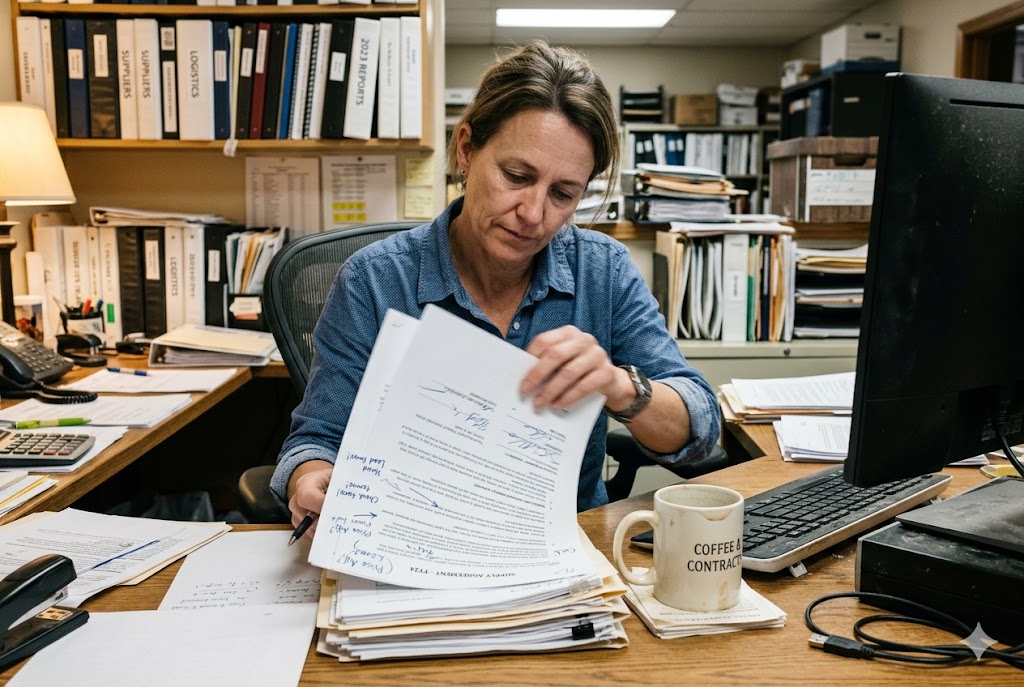
Every week, our team fields inquiries from buyers who assume the 30/70 T/T structure is locked in stone. It is not. The terms you accept on your first order are a starting point — not the finish line.
Yes, payment terms are fully negotiable when importing custom CNC machining parts from China. Your leverage depends on order value, order frequency, relationship length, and whether the parts are highly custom or easily resold. Suppliers who say "30% deposit, 70% before shipment" are giving you their opening position, not their limit.
The good news is that a clear, methodical approach gets you to better terms faster than most buyers expect. Here is how it works.
When Are Suppliers More Willing to Offer Credit Terms?
In our experience managing sourcing projects across dozens of Chinese CNC factories, timing matters as much as what you ask for. Ask at the wrong moment and you poison the relationship before it has started.
Suppliers become more willing to offer credit terms when you represent consistent, high-value, repeatable business. The key triggers are order value above $20,000 per order, order frequency of at least once per quarter, a payment history of six or more months with zero late payments, and parts that are standard enough that the supplier could resell them if you cancel.
What Actually Determines Supplier Flexibility
A supplier's willingness to extend credit is a business decision, not a favor. They are weighing their cash flow risk against the value of keeping your account. The following factors shift that calculation in your favor.
Order Value Relative to the Supplier's Size
A $5,000 order from a factory with $5 million in annual revenue is noise. The same $5,000 order from a small shop doing $300,000 per year is a meaningful relationship. If your monthly orders represent 10–20% of a supplier's revenue, you will get better terms. This is why consolidating your sourcing to fewer suppliers — rather than spreading small orders across many factories — is the most direct path to real leverage. Vendor consolidation 1 into a smaller number of strategic partners concentrates your spend and strengthens your negotiating position considerably.
Consistency and Predictability
Sporadic, large orders are harder to plan around than steady, predictable ones. A supplier who knows you will send one order per month, every month, for the next 12 months can plan their production capacity and cash flow accordingly. Consistent buyers get better terms because they reduce planning risk for the factory.
Part Customizability
Parts machined to your proprietary drawings, tolerances, and specifications cannot be resold if you cancel the order. The supplier absorbs the full loss. This is why suppliers are stricter on deposit terms for highly custom parts. If your parts are closer to standard catalog items — common materials, simple geometries, widely used tolerances — the supplier's risk on cancellation is lower and they will negotiate more freely.
Relationship Duration and Payment Track Record
Nothing accelerates credit term discussions faster than a clean payment history. Pay every invoice on time, every time, for six months. Then ask. A supplier who has received ten payments from you without a single dispute or delay has concrete evidence that you are a low-risk customer. Understanding the distinction between T/T payment mechanics and their associated risks 2 helps buyers structure each transfer correctly, which itself contributes to a clean track record.
| Relationship Stage | Typical Deposit | Balance Trigger | Notes |
|---|---|---|---|
| First 1–3 orders | 30% | 70% before shipment | Industry standard starting point |
| 3–6 months, clean history | 30% | 70% after inspection approval | Inspection gate added |
| 6–12 months, consistent orders | 20% | 50% after inspection, 30% after delivery | Three-installment structure |
| 12–24 months, high volume | 20% or less | Net 30 on balance | Open account terms becoming possible |
How Can I Ask for Better Terms Without Hurting the Relationship?
Many buyers avoid the conversation entirely because they fear damaging the supplier relationship. Our sourcing team has had this conversation hundreds of times, and the framing you use determines the outcome more than the actual ask.
To negotiate better payment terms without hurting the relationship, frame the conversation as a commercial trade-off rather than a demand. Offer something in return — a longer forecast commitment, a volume increase, or a small price premium — and make the ask after you have established a payment track record, not before.
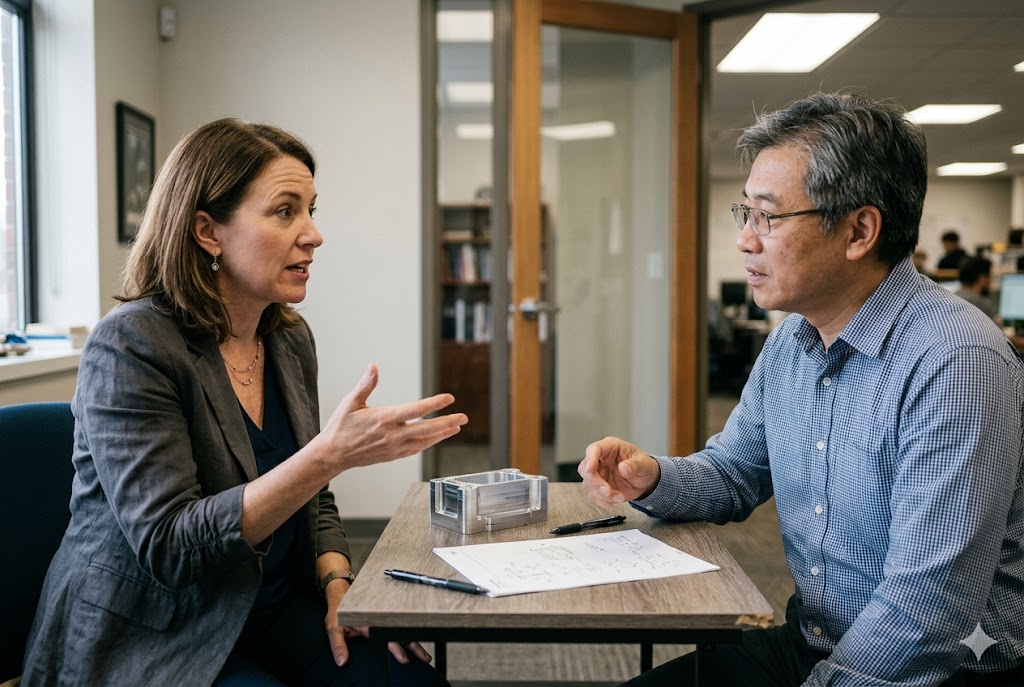
Frame It as a Business Problem, Not a Power Move
The worst way to open a payment term conversation is with a unilateral demand. "We need net 30 from now on" creates resistance because it gives the supplier nothing in return and signals that you see terms as a right rather than a negotiated position.
The most effective opening is a mutual problem statement: "We want to grow our orders with you over the next year, but our finance team needs a payment structure that matches our cash flow cycle. Can we talk about what works for both sides?"
This signals long-term intent, acknowledges the supplier's position, and opens a dialogue rather than a standoff.
Trade Deposit Reduction for Something Concrete
Suppliers will reduce deposits when they receive something of equal or greater value in return. The most common and effective trades are:
- Volume commitment in writing. A 6- or 12-month purchase forecast — even without a legal purchase obligation — tells the supplier you are planning for a long relationship. This reduces their risk on extending credit far more than any formal contract.
- Price premium for extended terms. If you want to hold a 30% balance until after delivery, offer the supplier a 2–3% unit price premium to compensate for their cash flow cost. Making this explicit turns a zero-sum negotiation into a commercial problem both sides can solve.
- Early payment discount. Offer 1–2% off for payment within 10 days of the invoice. This builds goodwill, creates a track record of paying fast, and can be traded back later when negotiating the deposit percentage.
The Highest-Value Change Is Not the Deposit
Most buyers focus on reducing the deposit percentage. This is not the most valuable negotiation point. The highest-impact change is shifting the balance payment trigger from "before shipment" to "after third-party inspection approval."
Standard terms: you pay 70% before you have seen the parts. Modified terms: you pay 70% only after an inspection report confirms the parts meet your specifications. The inspection costs $200–$400 and is conducted at the factory by a pre-shipment inspection service 3 operating independently of both parties. Parts are held until you approve the report. This converts your balance payment into a quality gate and gives you practical leverage at precisely the moment when corrections are still possible — before the goods leave China.
What to Avoid
| Mistake | Why It Backfires |
|---|---|
| Demanding open account on a first order | Signals high risk; reputable factories will decline |
| Pushing deposit below 20% on early orders | Does not cover supplier's raw material cost; damages trust |
| Negotiating terms in isolation from quality specs | Leaves the balance payment trigger undefined and unenforceable |
| Skipping written documentation of agreed terms | Verbal agreements on terms are not binding in disputes |
What Order History Helps Me Negotiate Net Terms?
When we sit down with a factory to negotiate net terms for a client, the first thing the factory asks for — formally or informally — is a track record. They want to know you pay, you pay on time, and you come back.
The order history that most reliably unlocks net payment terms includes at least 6–12 months of consistent orders, a minimum of four to six completed purchase cycles with zero late payments, and increasing order values that signal a growing relationship. Volume concentration — placing more orders with fewer suppliers — strengthens leverage faster than spreading small orders widely.

Building the Right Track Record
Pay Every Installment Exactly on Time
This sounds obvious. In practice, many buyers treat a two-day late payment as insignificant. Suppliers do not. In Chinese business culture, payment reliability is a direct signal of how serious and financially stable a buyer is. A single late payment resets the trust clock, and it can take three or four on-time cycles to recover the goodwill you lost.
Set up automated payment reminders tied to your purchase order milestones. Pay early when you can. If a payment will be late for any reason, communicate proactively — do not wait for the supplier to chase you.
Increase Order Value Over Time
A buyer whose orders grow from $10,000 to $25,000 to $50,000 over 12 months is demonstrating exactly the growth trajectory that makes a supplier want to invest in the relationship. Suppliers extend better terms to buyers they expect to become a larger share of their revenue.
If you cannot increase order value per order, increase order frequency. Monthly orders at $15,000 each are more compelling than quarterly orders at $45,000 each, because monthly cadence proves consistent cash flow for the supplier and makes your account easier to plan around. Effective supplier consolidation strategies 4 help procurement teams concentrate volume without introducing undue supply chain risk.
Document the Relationship Formally
When you are ready to ask for net terms, prepare a simple summary of your order history to share with the supplier's management. Include total value placed, number of completed orders, average days to payment, and any quality issues resolved. This gives the supplier's internal decision-makers something concrete to present when justifying extended credit to their ownership or finance team. Familiarity with standard payment terms for international trade 5 as practised by Chinese manufacturers helps buyers set realistic expectations at each stage.
The Realistic Progression Timeline
| Milestone | What It Unlocks |
|---|---|
| Orders 1–3, 0–3 months | 30/70 T/T, balance before shipment |
| 4–6 completed orders, 3–6 months | 30/70 with third-party inspection gate |
| 6–12 months, consistent payments | 20/50/30 three-installment structure |
| 12–18 months, growing volume | Net 30 on balance; deposit reduction to 20% |
| 18–24 months, high frequency | Open account or Documentary Collection (D/P) |
The buyers who reach open account terms in 12–18 months are the ones who treat every payment as a trust-building action. The buyers who stall at 30/70 for years are often the ones who pay late, raise disputes after delivery rather than before shipment, or spread their volume too thin across too many suppliers.
How Do Payment Terms Affect Pricing and Supplier Commitment?
This is the question most buyers forget to ask. Payment terms are not just a cash flow arrangement — they directly affect the unit price you pay and how committed the supplier is to your production schedule.
Payment terms and pricing are directly linked in CNC machining sourcing. A higher upfront deposit reduces the supplier's working capital risk and is often traded for a lower unit price. Conversely, extended payment terms or a large balance held until after delivery require the supplier to finance production for longer — and they will price that cost into your quote, explicitly or not.
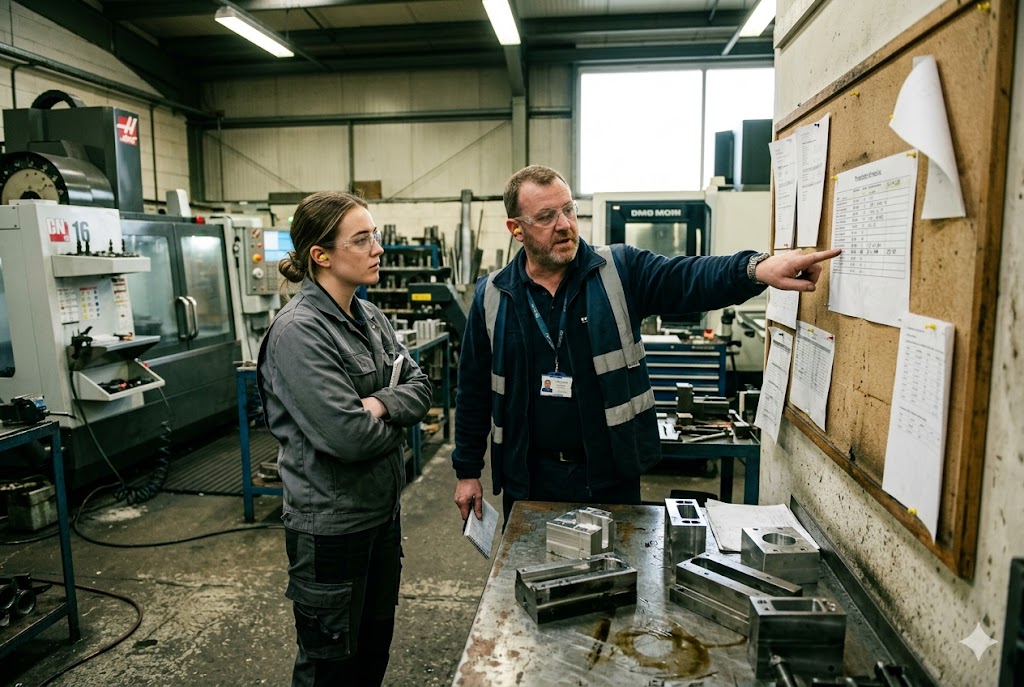
The Pricing Trade-Off Is Real
When our team negotiates on behalf of clients, we use payment terms and pricing as a single variable, not two separate conversations. The logic is simple: a higher deposit is free financing for the supplier. They can use your deposit to purchase raw materials, pay their machinists, and fund production without drawing on their credit line. That has real financial value, and suppliers will share it with buyers who offer it.
A practical example: a supplier quotes $48.00 per unit on 30/70 terms. If you offer 50% deposit upfront, you may negotiate the unit price to $46.00–$46.50. The deposit increase costs you working capital, but the unit price saving may outweigh the financing cost depending on your order size and your own cost of capital. Understanding how working capital 6 dynamics affect both sides of a supplier relationship clarifies why this trade-off works.
Supplier Commitment Follows the Money
A supplier who has received a 50% deposit is materially more committed to your production schedule than one holding a 20% deposit. They have more skin in the game. This is not just theory — it is a practical reality our production coordinators observe on every project.
When production delays happen, factories prioritize the customers with the highest deposits first, because those customers represent the highest financial exposure and the strongest relationship signals. A buyer holding a minimal deposit is more likely to be bumped when the factory's capacity gets tight.
Documentary Collection as a Middle Ground
For orders above $20,000–$50,000, Documentary Collection (D/P — Documents against Payment) 7 is a structure that many established Chinese CNC suppliers will accept. It works like this:
- The supplier ships the goods and presents the shipping documents to their bank.
- The bank holds the documents until you pay.
- You cannot claim the goods from the shipping carrier without the documents.
- The supplier cannot receive payment until the goods have shipped.
This removes the pre-shipment payment risk while also giving the supplier certainty that payment will come before you take possession. It is less expensive and complex than a Letter of Credit 8, and it is a practical stepping stone between standard T/T and full open account terms.
Always Tie Payment Terms to Quality Terms in Writing
This is the point most buyers miss. A payment term that triggers on inspection approval is only as strong as the inspection criteria written into the purchase order. Without clearly documented acceptance criteria — dimensional tolerances, surface finish specifications, defect classifications, AQL sampling levels 9, and test requirements — an inspection report cannot be used as a contractual basis for withholding payment.
Write the payment clause and the quality clause as a single interlocking statement: "70% balance payable within 5 business days of buyer's written acceptance of inspection report confirming compliance with Exhibit A quality specifications." This is the only way to ensure the payment term functions as the quality gate you intend it to be. Importing custom parts from China involves navigating customs, shipping, and compliance requirements 10 alongside payment structures, all of which should be addressed in the purchase agreement.
Conclusion
Payment terms with Chinese CNC suppliers are negotiable, and the path to better terms is methodical: build a track record, consolidate volume, frame asks as trade-offs, and always tie payment triggers to documented quality criteria.
Footnotes
1. How vendor consolidation increases negotiating leverage by concentrating spend with fewer suppliers. ↩︎
2. Explains T/T wire transfer mechanics, risks, and how errors are handled in international trade. ↩︎
3. Guide to pre-shipment inspections in China using AQL sampling before final payment is released. ↩︎
4. Seven strategies for consolidating suppliers while protecting supply chain continuity and resilience. ↩︎
5. Overview of payment term structures used by Chinese manufacturers for custom parts orders. ↩︎
6. Definition of working capital and why it drives supplier cash flow decisions and pricing. ↩︎
7. Explains Documentary Collection D/P and D/A: how banks intermediate payment against shipping documents. ↩︎
8. Advantages and disadvantages of Letters of Credit versus simpler payment methods in trade. ↩︎
9. How AQL-based sampling plans are applied during pre-shipment inspection at Chinese factories. ↩︎
10. Guide to shipping, customs clearance, and compliance when importing CNC parts from China. ↩︎