Skip to main content Skip to footer
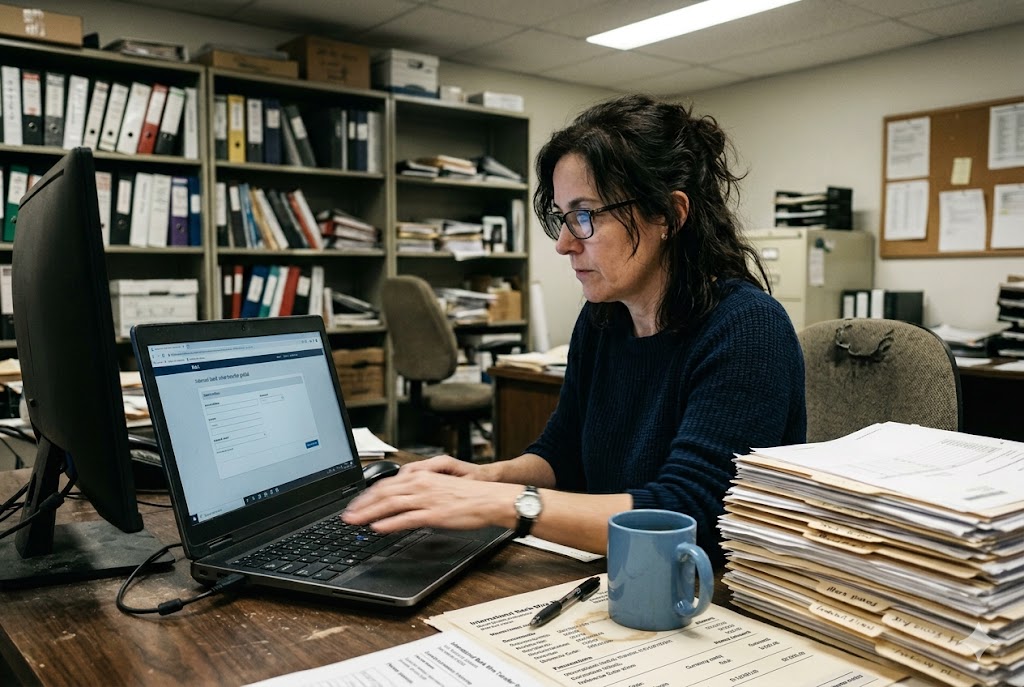
Every month, we process orders for dozens of US clients buying custom CNC parts from our supplier network in China and Vietnam. One question comes up almost every time a new buyer joins us: how should I pay? Get it wrong and you either lose money to fraud, or you tie up cash you didn't need to.
The most common payment method for importing custom CNC machining parts from China is Telegraphic Transfer (T/T wire transfer), used in roughly 90% of US–China manufacturing transactions. New buyers typically pay 30% upfront and 70% before shipment. Letters of Credit (LC) suit high-value orders above $20,000–$50,000. Alibaba Trade Assurance works well for platform-sourced sample orders.
There is no single right answer. The best method depends on your order size, your supplier relationship, and how much risk you are willing to carry. Let's break it down.
Which Payment Terms Are Most Common for New CNC Suppliers?
When we onboard a new client sourcing parts for the first time, the payment conversation is always the same. Suppliers want a deposit before they spend money on materials. Buyers want proof before they send the balance. The standard T/T structure exists precisely to solve this tension.
For new CNC supplier relationships, a 30% T/T deposit upon purchase order confirmation and 70% balance against a copy of the bill of lading is the most widely used structure. Some suppliers will ask for 50% or even 100% upfront from a new buyer with no track record. Terms improve as the relationship matures.
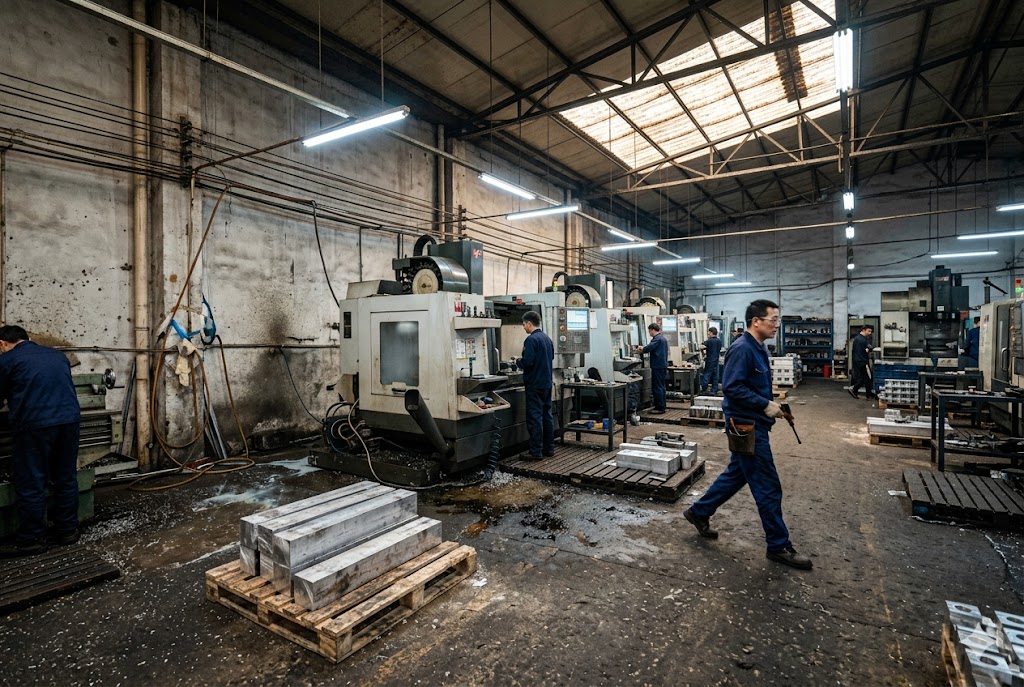
Why T/T Dominates First Orders
Telegraphic Transfer 1 (T/T) is a direct bank wire from your account to the supplier's corporate account. It is fast, cheap relative to alternatives, and every Chinese supplier accepts it. For a first order, the 30/70 split works like this:
- 30% deposit: Paid when you confirm the purchase order. This covers the supplier's raw material cost and tooling setup. Without it, most factories will not begin production.
- 70% balance: Paid when the supplier sends you a copy of the bill of lading 2 (B/L). The B/L is the shipping document that proves the goods physically left the factory and are in transit. You pay before the goods arrive, but after they have shipped.
This split is a compromise. The supplier gets security that you will pay. You get confirmation that goods actually exist and are moving before you release the largest portion of your money.
Common T/T Structures by Relationship Stage
| Relationship Stage | Typical Deposit | Balance Due |
|---|---|---|
| First 1–2 orders (new buyer) | 50% | 50% against copy of B/L |
| Orders 3–5 (some history) | 30% | 70% against copy of B/L |
| Established (6–12 months) | 30% | 70% against copy of B/L |
| Long-term (12+ months, strong track record) | 30% | 70% net 30 days after shipment |
What Suppliers Mean by "Copy of B/L"
A copy of the B/L is not the original shipping document. It is a scanned or emailed image that proves shipment happened. The supplier sends it to you; you review it; you confirm the vessel, port, and cargo details look correct; then you wire the balance. The original B/L travels with the shipment and is needed at your port to claim the goods.
The Negotiation Path
The 30/70 split is not a rule — it is a starting point. Suppliers set deposit requirements based on their assessment of buyer risk. If you are new, unknown, and ordering a small first batch, expect 50% upfront. If you have six months of on-time payments behind you, you can push toward lower deposits and eventually toward open account terms on the balance. More on that in the final section.
How Do T/T, L/C, and Other Methods Affect My Risk?
Our operations team deals with payment disputes and supplier issues every quarter. The payment method you choose does not just determine how money moves — it determines what leverage you have if something goes wrong. Each method has a different risk profile for the buyer.
T/T offers speed and low cost but gives you little recourse after payment. A Letter of Credit 3 (LC) gives you strong pre-payment leverage through your bank, but costs $500–$2,000 to establish and suits orders above $20,000–$50,000. Documentary Collection and Alibaba Trade Assurance sit in between, each with specific use cases.
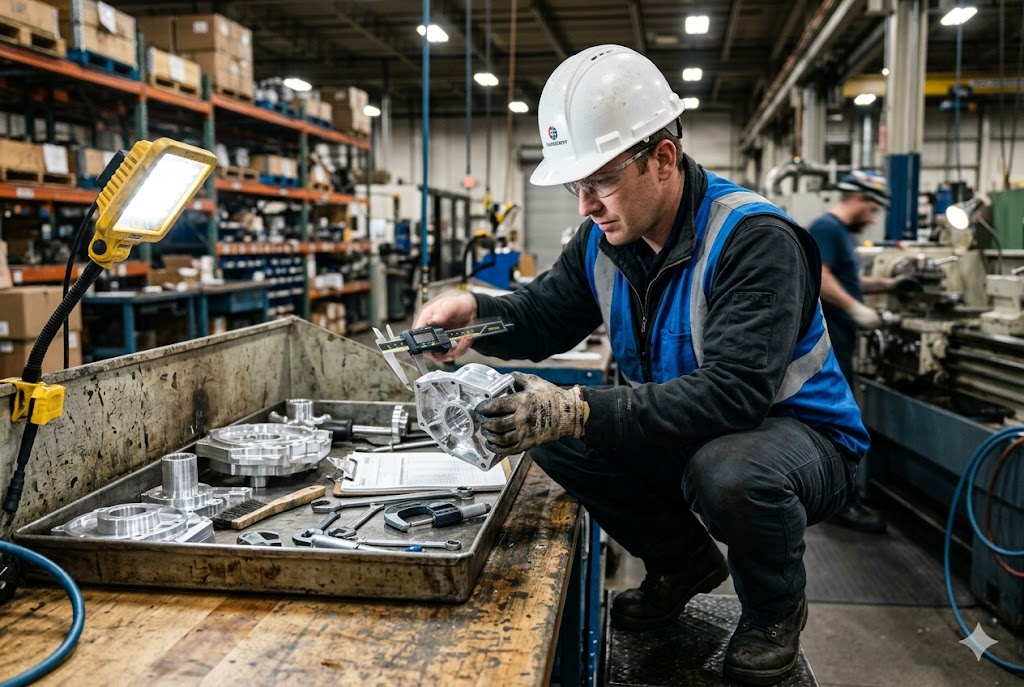
T/T: Fast, Common, and Buyer-Beware
T/T is the most efficient method. Bank fees are typically $15–$50 per wire. Transfers clear in 1–3 business days. The supplier gets paid quickly and can confirm production without waiting on bank paperwork.
The problem: once you wire the 70% balance, your money is gone. If the parts arrive defective or non-conforming, you are relying on the supplier's goodwill, your purchase contract, or a legal process in a Chinese court to get resolution. None of these are fast or cheap.
The most important risk control under T/T is commissioning a pre-shipment inspection 4 before releasing the balance payment. A third-party quality firm visits the factory, inspects the finished parts against your drawings and specifications, and issues a written report. You pay the 70% balance only after the inspection passes. If it fails, you hold the payment and negotiate a resolution before the goods leave China. This converts your balance payment into a quality gate.
Letter of Credit: Maximum Protection, Maximum Complexity
An LC is a bank-issued payment guarantee. Your bank promises to pay the supplier's bank — but only when the supplier presents a precisely defined set of shipping and compliance documents. These typically include:
- Bill of lading
- Commercial invoice
- Packing list
- Certificate of origin
- Third-party inspection certificate (if specified in the LC)
If any document is incorrect, late, or missing, your bank can decline payment. This gives you contractual leverage before a single dollar leaves your account.
| Payment Method | Buyer Protection | Cost | Practical Threshold |
|---|---|---|---|
| T/T (wire transfer) | Low — post-payment recourse only | $15–$50 per wire | Any order size |
| Documentary Collection (D/P) | Medium — documents released against payment | $100–$300 | Mid-value orders |
| Letter of Credit (LC) | High — bank-level pre-payment control | $500–$2,000 | $20,000–$50,000+ |
| Alibaba Trade Assurance | Medium — platform escrow | Usually free | Alibaba suppliers only |
The trade-off is administrative burden. LCs require precise document specifications written into the credit terms. Any discrepancy — a wrong date, a missing word on the invoice, a late shipment by one day — can create a documentation dispute that delays payment and frustrates your supplier. Use an LC when the order value justifies the cost and complexity.
Documentary Collection: The Middle Ground
Documentary Collection 5 (D/C) uses the banking system to control document release without full LC complexity. The supplier ships, presents documents to their bank, which forwards them to your bank. Under Documents against Payment (D/P), you pay your bank before receiving the shipping documents. Without those documents, you cannot claim the goods at the port — so you do not pay until you are ready to receive. It is cheaper than an LC and provides more control than a straight T/T.
Alibaba Trade Assurance: Good for Samples, Limited for Production
Alibaba Trade Assurance 6 holds your payment in escrow until you confirm receipt. It supports credit card payments for smaller amounts and covers non-shipment and significant quality deviations. The limits: it only applies to suppliers on Alibaba, disputes go through Alibaba's internal process rather than any legal channel, and high-value production orders often exceed practical coverage thresholds.
BEC Fraud: The T/T Risk Nobody Talks About Enough
Business Email Compromise (BEC) fraud 7 is the most underreported risk in T/T payments. Scammers intercept supplier emails and substitute their own bank account details in payment instructions. The buyer wires money to the wrong account and the funds are nearly impossible to recover.
Before every T/T payment — including to suppliers you have paid before — call the supplier on a number you obtained independently (not from the payment instruction email) and verbally confirm the account number and SWIFT code. Never initiate a wire based solely on banking details received by email.
When Can I Ask for Better Payment Terms from Suppliers?
Buyers ask us this question once they have a few orders under their belt and realize they are carrying more risk and more upfront cash than they need to. The answer is straightforward: you can ask at any time, but you will get results only when the supplier has evidence that you are worth the risk.
You can negotiate better payment terms — lower deposits, longer balance windows, or net-30 open account terms 8 — after 6 to 12 months of consistent, on-time payments with the same supplier. The supplier needs a track record before extending credit. Order size, frequency, and relationship quality all influence how quickly terms improve.

What Suppliers Look for Before Extending Better Terms
A Chinese CNC supplier is essentially extending you trade credit when they agree to a lower deposit or a net-30 balance. They want to see:
- Payment history: Have you paid on time, every time, for at least 6–12 months?
- Order volume: Are your orders large enough and frequent enough to justify the credit risk?
- Communication: Do you respond quickly and professionally when issues arise?
- Stability: Do you place orders consistently, or do you disappear for months at a time?
The Typical Terms Improvement Path
| Timeline | Realistic Terms Target |
|---|---|
| First 1–3 orders | 50% deposit / 50% against B/L |
| Orders 4–6 (6 months) | 30% deposit / 70% against B/L |
| 6–12 months, consistent orders | 30% deposit / 70% net 15 after shipment |
| 12+ months, high volume, strong relationship | 30% deposit / 70% net 30 after shipment |
How to Frame the Conversation
Do not ask for better terms by citing what other suppliers offer. Ask by demonstrating your reliability. A simple email works: "We have placed X orders with you over the past 12 months, always paying on time. We are planning to increase order frequency to Y per quarter. We would like to discuss adjusting payment terms to [30% deposit / 70% net 30] as we grow this partnership."
This frames the request as a business relationship investment rather than a demand. Most suppliers will respond positively to a buyer who has earned the ask.
Open Account Terms: The Working Capital Benefit
Net-30 open account terms on the balance of a $50,000 order means you defer $35,000 (the 70% balance) for 30 days after shipment. If you are placing monthly orders, that is effectively $35,000 of interest-free trade credit per cycle — capital that stays in your business rather than sitting with the supplier. For buyers running tight cash cycles, this is a meaningful operational benefit and worth pursuing systematically.
How Should I Choose a Payment Method Based on Order Size and Trust Level?
We advise every new client through the same decision framework. Payment method selection is not about finding the cheapest option — it is about matching your exposure to your confidence in the supplier and the value of the goods at risk.
Match your payment method to your order size and relationship stage: use Alibaba Trade Assurance for first samples on platform-sourced suppliers; use T/T 50/50 for first production orders; use T/T 30/70 with pre-shipment inspection for established mid-value orders; use an LC for high-value or critical-tolerance orders above $50,000 with any supplier.
The Decision Framework
Three variables drive the decision: order value, relationship maturity, and part criticality.
Order value sets the floor on what protection is worth buying. An LC costs up to $2,000 to set up. For a $5,000 sample order, that fee is 40% of the order value — it makes no sense. For a $100,000 production run, the same fee is 2% of the order value and buys significant protection.
Relationship maturity determines how much baseline trust exists. A supplier you have worked with for two years and paid on time across 20 orders carries a fundamentally different risk profile than a factory you found last week on Alibaba.
Part criticality reflects the downstream consequences if parts arrive defective. If your customer will shut down a production line waiting for replacement parts, the cost of a defect is far higher than the part price. Critical-tolerance parts justify stronger payment protection and mandatory pre-shipment inspection regardless of relationship age.
Payment Method Selection by Scenario
| Scenario | Recommended Method | Key Action |
|---|---|---|
| First sample, Alibaba supplier | Alibaba Trade Assurance | Enable dispute resolution before paying |
| First production order, new supplier | T/T 50% / 50% | Verify bank account by phone call |
| Repeat order, 6+ months relationship | T/T 30% / 70% against B/L | Commission pre-shipment inspection |
| High-value order ($50,000+), any supplier | Letter of Credit | Include inspection certificate in LC terms |
| Mid-value order, established but not fully trusted | Documentary Collection (D/P) | Require full document set before releasing payment |
A Note on Third-Party Transfer Services
Services like Wise 9 and OFX offer lower foreign exchange rates and transfer fees than traditional bank wires for USD payments to Chinese suppliers. For smaller and more frequent payments — samples, prototypes, and small production runs — the savings are real. These services do not add buyer protection beyond a standard wire, so all the same verification steps apply. Think of them as a cost-efficient wire channel, not a risk management tool.
Never Pay to a Personal Account
One rule applies regardless of method, order size, or relationship age: never wire money to a personal bank account or to a third-party entity not named on your purchase order. Legitimate Chinese CNC manufacturers receive payments into a corporate account registered in the company's legal name. That name should match exactly across your purchase order, commercial invoice, and bank account details. Any deviation is a red flag. Stop, verify independently by phone, and only proceed when the discrepancy is fully explained. For a comprehensive overview of all major international payment methods and their risk profiles, the U.S. International Trade Administration's methods of payment guide 10 is an authoritative reference.
Conclusion
Payment method selection is a risk management decision, not an administrative one. Start with T/T and the right deposit split, protect your balance payment with pre-shipment inspection, verify every bank account before every wire, and build toward better terms as your supplier relationships mature. Looking for a CNC machining or die casting supplier you can trust? Visit our Services page to see our full manufacturing capabilities, certifications, and how we work with US and Canadian buyers.
Footnotes
1. Explains the difference between telegraphic transfer and wire transfer for international payments. ↩︎
2. U.S. government guide to common export documents including bills of lading. ↩︎
3. ITA guide to letters of credit and documentary collection in international trade. ↩︎
4. QIMA's pre-shipment inspection service for China-sourced manufacturing orders. ↩︎
5. ITA Trade Finance Guide chapter on documentary collections and D/P terms. ↩︎
6. How Alibaba Trade Assurance protects buyers on platform-sourced orders. ↩︎
7. FBI IC3 public service announcement on BEC wire fraud targeting businesses. ↩︎
8. ITA Trade Finance Guide chapter explaining open account terms in international trade. ↩︎
9. Wise business international payments platform for low-cost cross-border transfers. ↩︎
10. U.S. ITA overview of all major international payment methods and risk levels. ↩︎