Skip to main content Skip to footer

At our workshop in Ningbo, we hear this question every week from US buyers worried about quality gaps. Certification confusion costs you real money when shipments fail inspection.
Yes, you can require ISO 9001 or IATF 16949 certification from a Chinese Swiss CNC supplier. This is a legally enforceable condition in your purchase order and supplier agreement. Non-certified factories can be disqualified at onboarding, and certification lapses can trigger probation or shipment holds.
Below, I break down exactly when each certification matters, how to verify it, and what it really controls.
Is ISO 9001 Certification Sufficient, or Should I Require IATF 16949 for Automotive Swiss CNC Parts?
When we quote automotive parts for clients, this certification question always comes up first. Picking the wrong standard creates real risk down the line.
ISO 9001 1 is sufficient for general industrial Swiss-turned parts, but automotive or safety-critical components require IATF 16949 2. IATF 16949 includes everything in ISO 9001 plus PPAP 3, control plans, CPK monitoring, and customer-specific requirements that protect you from process drift in high-volume production.
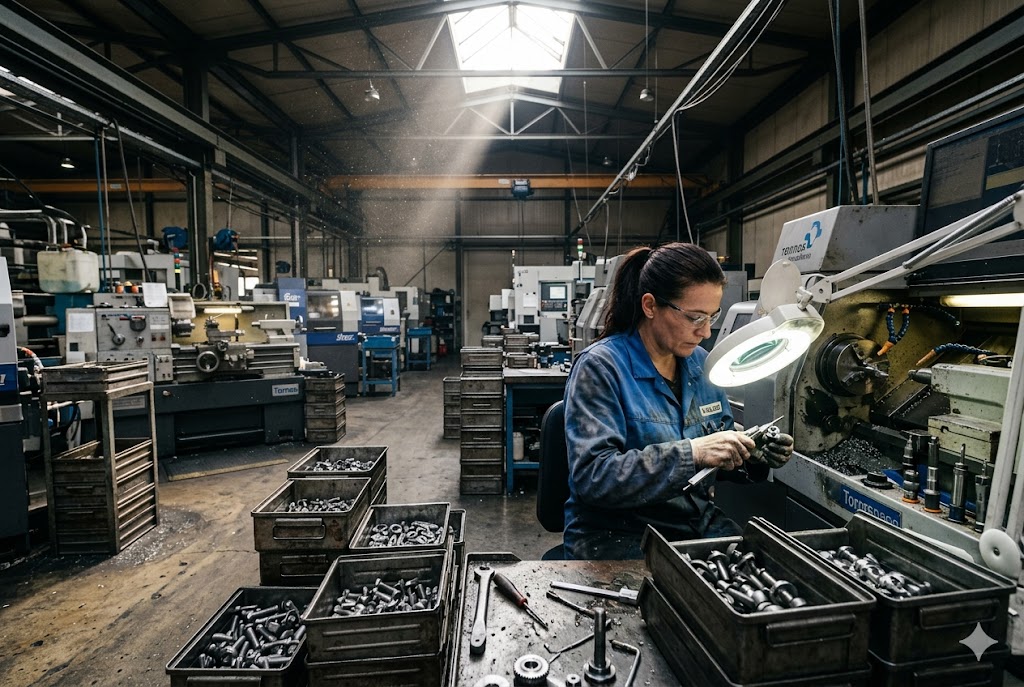
ISO 9001 is a good baseline. It tells you a factory has a documented quality system, management reviews, and basic corrective action processes. For most custom mechanical parts, that is enough. But automotive parts are different. A single bad part can stop an assembly line or cause a recall. That risk level needs a stronger standard.
ISO 9001 vs IATF 16949: What Changes
IATF 16949 was built on top of ISO 9001. It does not replace it; it adds layers specific to automotive supply chains. The biggest additions are PPAP (Production Part Approval Process), formal control plans, CPK statistical monitoring, and customer-specific requirements (CSRs) that vary by your end client.
| Requirement | ISO 9001 | IATF 16949 |
|---|---|---|
| Documented QMS | Yes | Yes |
| Management review | Yes | Yes |
| PPAP submission | No | Yes |
| Control plans per part | No | Yes |
| CPK / statistical monitoring | Optional | Mandatory |
| Customer-specific requirements | No | Yes |
If your end customer is an automotive OEM or Tier 1, ask for IATF 16949. If your parts go into general industrial equipment, ISO 9001 is normally enough. I always tell clients to match the certification to the actual end use, not to the supplier's marketing claims.
How Do I Verify That a Supplier's ISO Certificate Is Current and Not Expired or Fraudulent?
Our team checks every supplier certificate before we approve a factory for a client. We have seen fake stamps more than once.
Verify a Chinese ISO certificate through the CNCA 4 and CNAS 5 online databases, both available in English. For IATF 16949, check the IATF's own global oversight body directly, since CNAS does not accredit certification bodies for that standard.

Fake certificates are more common than most buyers expect. We have seen adjusted dates, copied logos, and certificates issued by bodies that do not actually exist. Some certification bodies in China are simply not accredited by anyone. A printed certificate, on its own, proves very little.
Where to Check Certificates
There are two main databases for checking Chinese certificates, plus a separate global system for IATF 16949.
| Certification | Verification Source | Language |
|---|---|---|
| ISO 9001 | CNCA database | English available |
| ISO 9001 (accreditation) | CNAS database | English available |
| IATF 16949 | IATF global oversight body | English |
CNAS is China's only member of the International Accreditation Forum. It accredits bodies that issue ISO 9001 certificates. CNAS does not currently accredit bodies for IATF 16949 or ISO 13485. This means a real IATF 16949 certificate from a Chinese factory must come from a body recognized internationally, such as UKAS, ANAB, or DAkkS 6, not from a CNAS-only certification body.
We also check the certificate scope statement, not just the certificate number. A certificate that covers general machining is not the same as one that names precision Swiss turning. If the scope does not match the process you need, the certificate tells you very little about your actual parts.
What Does an ISO 9001-Certified Quality System Actually Mean for My Day-to-Day Order Quality?
Our engineers see this misunderstanding often. Buyers assume certification guarantees perfect parts every time. It does not work that way.
ISO 9001 certification confirms a factory has a documented quality management system, not that it has specific process capability for your part. A certified Swiss CNC supplier can still lack proper bar feeder control, guide bushing clearance checks, or sub-spindle runout monitoring for your exact components.
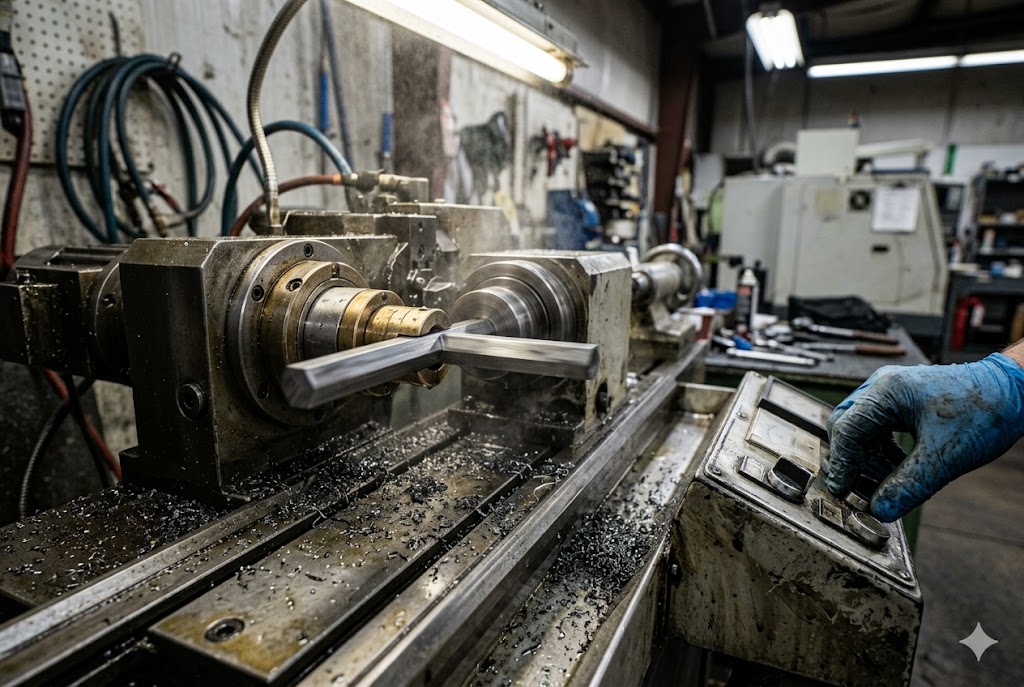
This is one of the most important points we explain to new clients. ISO 9001 looks at structure: do procedures exist, are records kept, does management review problems? It does not test whether a specific machine, for a specific part, holds a specific tolerance every single cycle.
Certification Scope vs Process Control
Think of certification as the framework around the factory. Your drawing, your tolerances, and your First Article Inspection (FAI) 7 requirements are what actually control the part.
| Quality Element | Covered by ISO 9001 | Needs Your Own Spec |
|---|---|---|
| Documented procedures | Yes | No |
| Management review process | Yes | No |
| Bar feeder vibration control | No | Yes |
| Guide bushing clearance | No | Yes |
| Sub-spindle runout limits | No | Yes |
| Part-specific FAI report | No | Yes |
A Swiss CNC supplier can pass every ISO 9001 audit and still produce parts that are out of tolerance, because tolerance control is not what the audit checks. This is why we always pair certification requirements with strict drawing callouts, FAI reports, and in-process inspection plans. Certification tells you the factory has a system. Your own technical requirements tell the factory exactly what "good" looks like for your part. Skipping either step leaves a gap that shows up later, usually in a shipment you have already paid for.
Can a Non-Certified Factory Still Deliver Consistent Quality If I Implement My Own Audit Program?
We have placed orders with smaller, non-certified shops before, under tight control. It can work, but only with real oversight.
A non-certified factory can deliver consistent quality only if you run a strong, independent audit program with active control plans, FMEA 8 review, and unannounced inspections. Without that level of oversight, skipping certification usually means accepting a much higher quality risk.
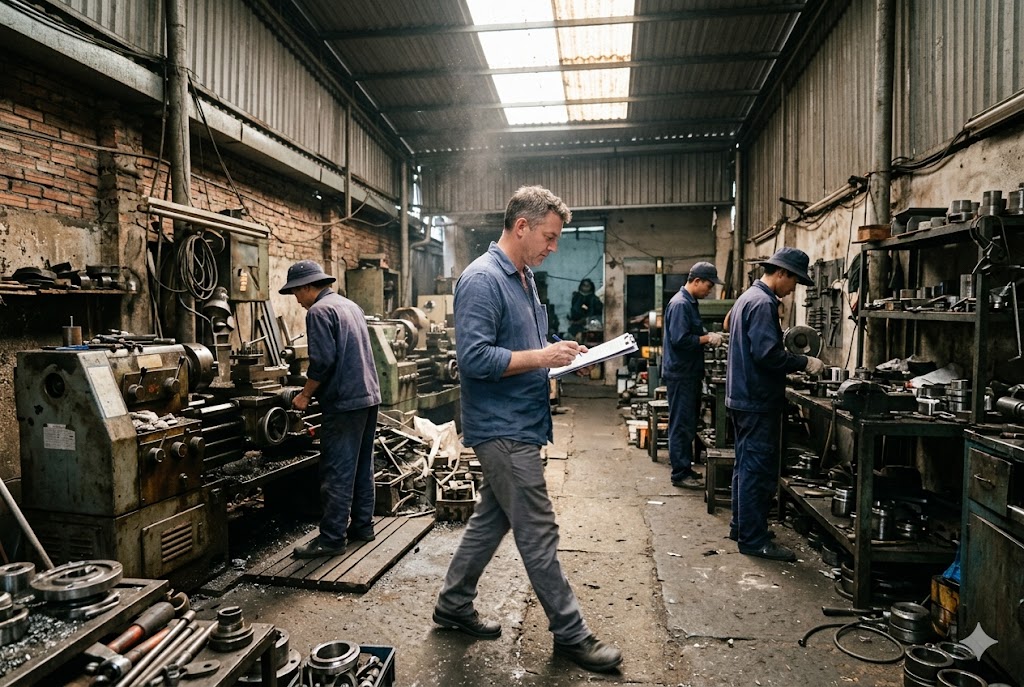
Certification is not magic, and the lack of it is not automatically disqualifying. Some excellent small factories are not certified simply because the paperwork cost outweighs their order volume. But if you go this route, the burden of quality control shifts almost entirely onto you.
When Risk Peaks in the Audit Cycle
Even certified factories have weak points in their audit cycle. IATF surveillance audits happen yearly, and recertification happens roughly every three years. The highest risk window for process drift and part substitution is usually 12 to 18 months after a successful recertification, when attention naturally relaxes.
| Time Since Audit | Typical Risk Level | Recommended Action |
|---|---|---|
| 0–3 months | Low | Standard monitoring |
| 4–11 months | Moderate | Spot checks |
| 12–18 months | High | Unannounced audit |
| 19–36 months | Moderate | Prepare for recertification review |
For suppliers claiming IATF 16949, we always ask for an active control plan 9 and FMEA tied to our specific part family before placing a PO, not a generic document written years ago. We also build certification currency into the shipment release terms, not just the onboarding terms. The supplier must send proof of any surveillance audit within 30 days, and any lapsed or suspended certificate triggers an automatic shipment hold. This turns certification from a one-time checkbox into an ongoing contractual safeguard that works even when your own audit calendar is busy elsewhere, especially when paired with process capability (CPK) tracking 10 on the parts that matter most.
Conclusion
Certification helps, but verification and your own controls protect your orders far more than any single document ever can.
Footnotes
1. The official ISO standard page explaining what ISO 9001 requires and how certification works. ↩︎
2. AIAG's official IATF 16949 resource hub for manuals, training, and certification guidance. ↩︎
3. Background on PPAP submission levels and when a Production Part Approval Process is required. ↩︎
4. China's official certification administration site for checking accredited Chinese certificate issuers. ↩︎
5. CNAS's English-language database of accredited Chinese certification and testing bodies. ↩︎
6. Explains how UKAS, ANAB, and DAkkS operate as internationally recognized accreditation bodies. ↩︎
7. Detailed explanation of First Article Inspection requirements and when an FAI must be performed. ↩︎
8. Overview of the AIAG & VDA FMEA methodology used to identify and mitigate process risk. ↩︎
9. AIAG's official Control Plan manual describing how control plans link to APQP and PPAP. ↩︎
10. Explains how Cp and Cpk values are calculated and used to judge process capability. ↩︎