Skip to main content Skip to footer
Every year, we quote hundreds of prototype runs for buyers who hesitate before paying the sample fee — not because the amount is large, but because they are not sure they will ever see it back.
Yes, your sampling cost can be refunded when you import custom CNC machining parts from China. In the industry, sample fees are almost always credited against your first production order once you approve the sample. The key is to confirm this commitment in writing before you pay — because it is a commercial term, not an automatic right.
Most buyers do not ask for this in writing. That is where the friction starts. Let me break down exactly how this works and what you need to do at each stage.
When Do Suppliers Usually Agree To Refund Sample Charges?
We run sample programs every week, and the question we hear most from new clients is: does the supplier actually refund this, or is it just something they say?
Suppliers in China's CNC machining industry almost universally agree to credit the sample fee against the first production order, provided you proceed with a qualifying order. This is standard practice, not a favour. The refund is conditional on your order meeting a minimum value threshold the supplier sets before sampling begins.

What "Refund" Actually Means in CNC Machining
The word refund can mislead buyers. Suppliers do not usually send money back to your bank account. Instead, they deduct the sample fee from your first production invoice. So if your sample cost $300 and your first production order is $5,000, you pay $4,700.
This structure makes sense for both sides. The supplier keeps cash flow clean. You recover the cost inside a transaction you were already making.
Why CNC Machining Is Different From Tooling-Based Processes
CNC machining does not require hard tooling like injection molding 1 or die casting 2 does. There is no steel mold that costs $5,000–$30,000 to cut before a single part can be made.
Instead, the real cost of a CNC prototype is:
| Cost Element | Typical Share of Sample Fee |
|---|---|
| CAM programming 3 | 30–45% |
| Machine setup time | 20–30% |
| Operator time | 15–20% |
| Raw material | 10–20% |
Once the sample is approved, the CAM file and fixturing are reused for production. The supplier has already done the hard work. Crediting the sample fee and winning the production order is a better economic outcome for them than keeping a small one-time charge and losing your business.
The Minimum Order Threshold
Every supplier sets a minimum production order value that triggers the refund. This number is rarely published. You have to ask.
Common thresholds we see in practice:
| Supplier Type | Typical Minimum Order for Refund |
|---|---|
| Small workshop (under 20 machines) | $800–$1,500 |
| Mid-size factory (20–100 machines) | $2,000–$5,000 |
| Large contract manufacturer | $5,000–$15,000 |
If your first production order falls below that threshold, the supplier may argue the sample fee stays. Knowing the number upfront prevents this dispute entirely.
Red Flags in Sample Fee Pricing
A sample fee that looks disproportionately high is worth examining. A reasonable sample fee for a custom CNC part is typically 1.5 to 3 times the projected production unit cost. If your part will cost $25 each in production, a sample fee of $40–$75 is normal. A sample fee of $800 for that same part is a warning sign — the supplier may be padding the NRE charge 4, or may not genuinely want the production business.
How Should I Negotiate Sample Reimbursement Before Production Starts?
Our sourcing team negotiates sample terms dozens of times a month. The suppliers who push back hardest on written commitments are often the ones worth being most cautious about.
Negotiate sample reimbursement before you pay the invoice, not after. Ask for the refund condition, the minimum order value, and the scope of what is covered — all in writing. Suppliers who are confident in their production capability agree to this without resistance.

The Right Time To Raise This
Raise sample reimbursement terms at the quotation stage — before the sample invoice is issued. Once you have paid, your negotiating position weakens significantly. The supplier knows you are already invested.
The conversation is simple. After reviewing the sample quote, reply:
"Please confirm: the sample fee will be credited against the first production order if we approve the sample and proceed. Please also confirm the minimum production order value for the credit to apply."
This is not an aggressive request. Any experienced supplier handles it in one reply.
What To Include in the Written Confirmation
A formal purchase order or email exchange that covers all of these points is sufficient:
| Term | What To Confirm |
|---|---|
| Sample fee amount | Exact figure in USD or RMB |
| Credit mechanism | Deducted from first production invoice |
| Minimum order threshold | Exact dollar value that triggers the credit |
| What is included | Part fabrication cost (material + machining) |
| What is excluded | International shipping, courier charges |
| Revision rounds covered | How many revision cycles are included |
Shipping Costs Are Almost Never Refunded
This is the most common surprise. International courier charges from China — DHL 5, FedEx, UPS — for a prototype shipment typically run $30–$150 depending on weight and package dimensions. Suppliers treat this as a third-party cost outside their control. Even when they fully credit the part fabrication cost, they almost never include the shipping fee.
Know this before you confirm the arrangement, not after the invoice arrives.
The Conditional PO Approach
One negotiating position most buyers never use: offer the supplier a purchase order for production 6 before the sample ships, contingent on sample approval, in exchange for a full sample fee waiver.
From the supplier's perspective, a conditional PO eliminates their biggest risk — that you take an approved sample to a competitor for production. That risk is worth more to them than the sample fee itself. We have used this approach successfully with suppliers who initially quoted a $400–$600 sample fee and agreed to wave it entirely in exchange for a committed conditional order.
This works best with suppliers who have had previous experience losing production orders after delivering qualified samples to new international buyers — which is a very common experience.
Design Revisions Change the Calculus
If your design is not final when sampling begins, clarify this upfront. Standard refund terms apply to the final approved sample, not to every intermediate revision round. Each design change that requires new CAM programming or new fixtures is typically billed as a separate NRE charge.
Before sampling starts, confirm:
- How many revision rounds are included under the original sample fee?
- What is the additional charge per subsequent revision?
Getting this in writing prevents a situation where a three-round design iteration results in three separate sample invoices, only the last of which is creditable against production.
Should I Ask for the Sample Fee To Be Credited to My First Mass Order?
When buyers ask us this, they are usually already thinking correctly. The real question is whether to ask for a credit or push for a full fee waiver.
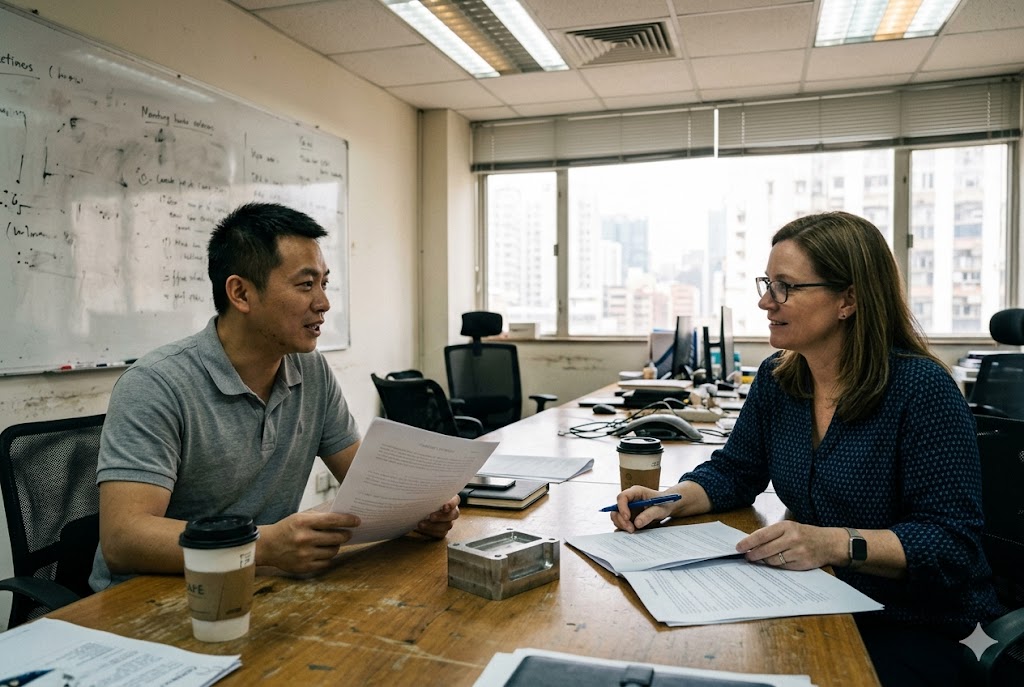
Yes, asking for the sample fee to be credited against your first mass production order is the right approach and the industry standard. For new supplier relationships with real production volume behind them, you can often negotiate a full waiver instead — by tying the concession to a firm conditional purchase order.
Credit vs. Waiver: Which Is Better?
Both protect your cash. But they work differently:
| Arrangement | How It Works | Best For |
|---|---|---|
| Sample fee credit | You pay upfront; fee deducted from first production invoice | Standard new relationships |
| Sample fee waiver | No upfront sample charge; production order placed before sample ships | High-confidence supplier with volume commitment |
| Partial credit | A percentage of the sample fee is credited | Unusual; often a compromise |
A credit is the norm. A waiver is achievable but requires a production commitment. A partial credit is worth rejecting — it signals the supplier is not fully confident in their production pricing.
When Platforms Handle This for You
If you source through a managed-service intermediary — Xometry 7, Haizol, RapidDirect 8, PCBWay — the sample fee refund terms are governed by the platform's purchase agreement, not by individual factory policy. You negotiate with the platform, not with the factory directly. The platform's standard terms usually include sample credits, but the minimum order threshold and scope of coverage vary by platform.
Always read the platform's purchase agreement before placing a sample order. Do not assume the same terms apply across all platforms.
The Quality Failure Clause
If the sample fails to meet your specification through the supplier's fault — dimensional non-conformance, wrong material, wrong surface finish — you are entitled to a remade sample at no charge. The original sample fee should remain fully creditable against production.
The mechanism that makes this enforceable is documentation. When you receive a sample, conduct a First Article Inspection 9 against your drawing and record all non-conformances formally. A documented FAI report converts a quality dispute from a subjective argument into an objective contractual remedy.
Suppliers who receive a detailed, drawing-referenced inspection report respond very differently from suppliers who receive a vague complaint email. The formality signals that you operate professionally and that you know your contractual position.
Our Recommendation
For any new supplier relationship:
- Confirm the sample credit in writing at the quotation stage.
- State the minimum production order value explicitly.
- Confirm that shipping costs are excluded from the credit scope.
- If your design is iterative, confirm the number of revision rounds covered.
- If you have strong production volume, offer a conditional PO and negotiate a full waiver instead.
This five-step checklist takes one email exchange. It prevents 90% of the disputes we see buyers encounter on sampling terms.
What Sample Terms Should I Confirm in Writing?
Our service team reviews supplier contracts and purchase confirmations daily. The buyers who avoid sampling disputes are not luckier — they just document more things before the sample ships.
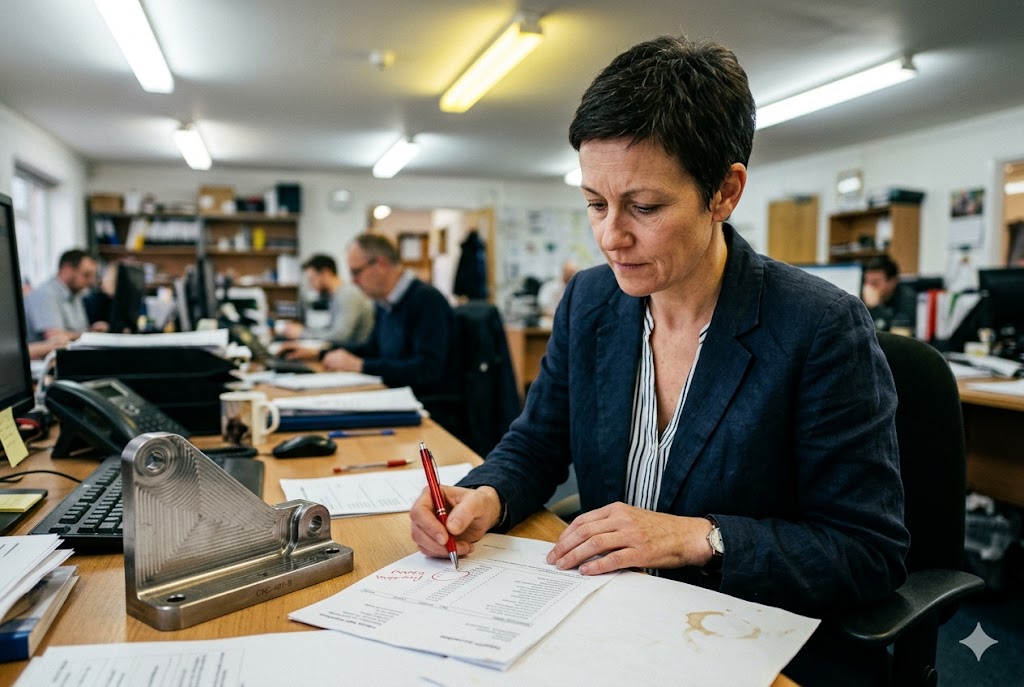
Before paying any sample fee, confirm five things in writing: the exact fee amount, the credit mechanism, the minimum production order value that triggers the credit, what is excluded from the credit scope, and how many revision rounds are covered under the original fee.
The Five Terms That Prevent Every Common Dispute
Most sampling disputes we see trace back to one or more of these five terms being left unconfirmed:
| Term | Why It Matters | Common Dispute It Prevents |
|---|---|---|
| Exact sample fee | Prevents invoice surprises | "The quote was $300, the invoice is $450" |
| Credit mechanism | Confirms how and when the deduction applies | "We applied it to your second order, not first" |
| Minimum order threshold | Sets the bar for the credit to activate | "Your order was too small to qualify" |
| Exclusions (shipping) | Defines what is not covered | "The $120 courier fee was not part of the credit" |
| Revision round coverage | Limits NRE exposure on iterative designs | "Each revision was a new sample charge" |
Email Is Enough — You Do Not Need a Formal Contract
A formal supply agreement is valuable for large, long-term relationships. For a first sample engagement, a documented email exchange 10 or written confirmation attached to the sample purchase order is sufficient and enforceable.
The standard we use with our own suppliers: the written confirmation must state the sample fee amount, the credit condition, and the minimum order value. If the supplier provides this in writing — even in an email — that is a binding commercial commitment in most jurisdictions.
How To Handle a Supplier Who Refuses To Confirm in Writing
A supplier who agrees verbally but refuses to confirm in writing is a risk signal. Experienced, professional factories confirm standard commercial terms without hesitation. Resistance to written confirmation usually means one of two things: the supplier was not genuinely committing to the refund, or they lack the administrative process to honour it reliably.
In either case, our recommendation is the same: do not proceed with sampling until you have written confirmation. The cost of switching to a different supplier at the quotation stage is zero. The cost of a sampling dispute midway through a product launch is significant.
What Happens When the Design Changes After Sampling
Design revisions after the first sample are common in product development. Each revision that requires a new CAM program or new fixturing is typically a new NRE charge. The standard sample credit terms apply only to the final approved sample, not to all intermediate rounds.
Before sampling begins on any design that is not fully finalised, confirm:
- How many revision rounds are included in the quoted sample fee?
- What is the additional charge for each subsequent round?
- Does the credit against production apply to all rounds combined, or only to the final round?
Getting clear answers to these three questions before sampling starts is the single most effective way to manage NRE costs on an iterative project.
Conclusion
Sample fee refunds in CNC machining are standard, not exceptional. The buyers who recover them every time are the ones who confirm the terms in writing before paying — not after.
Footnotes
1. Compare injection molding tooling costs vs. CNC machining to understand why CNC requires no hard mold investment. ↩︎
2. Die casting mold costs range from thousands to over $100,000 — a key contrast with CNC prototyping economics. ↩︎
3. Overview of CAM software and how it generates machining instructions from 3D design files. ↩︎
4. Wikipedia definition of Non-Recurring Engineering (NRE): the one-time upfront cost before production begins. ↩︎
5. DHL's guide to shipping rates and logistics options from China to international destinations. ↩︎
6. AccountingTools explains purchase commitments: binding agreements to buy goods at agreed terms. ↩︎
7. Xometry's on-demand CNC machining platform connects buyers with a global network of certified suppliers. ↩︎
8. RapidDirect offers instant online CNC machining quotes and production services shipped globally from China. ↩︎
9. Fictiv's comprehensive guide to First Article Inspection (FAI): process, documentation, and best practices. ↩︎
10. Legal analysis of when email exchanges constitute binding contracts under US and international law. ↩︎