Skip to main content Skip to footer
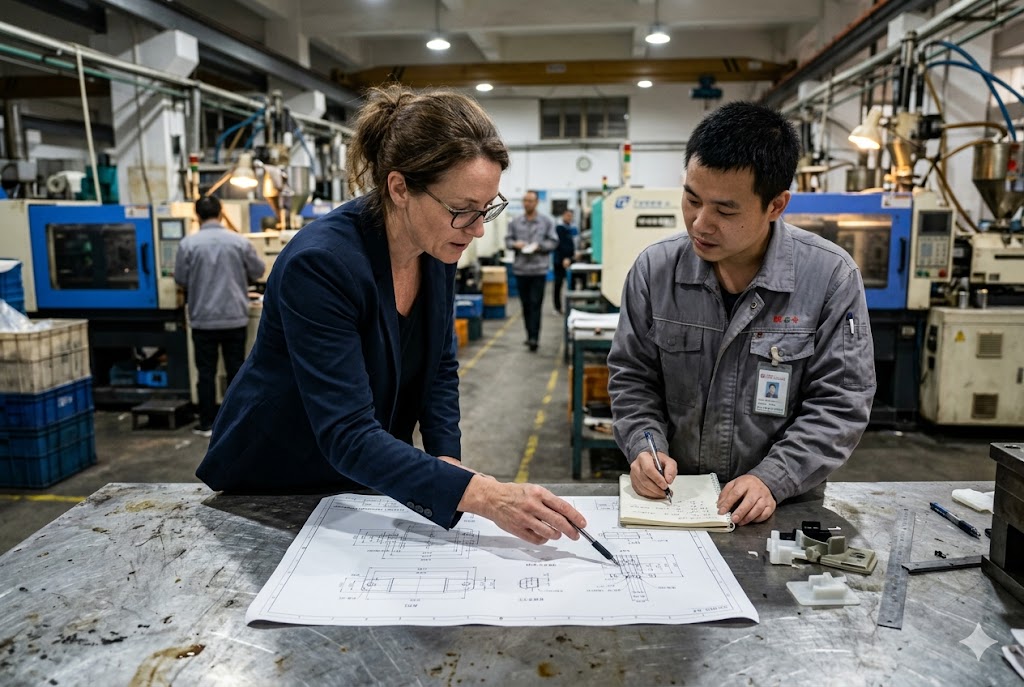
We field this question from purchasing managers almost every week. They have a part design, a tight timeline, and a supplier shortlist — and they need to know if secondary operations can travel with the molding order without breaking quality or budget.
Yes, secondary operations including ultrasonic welding, heat staking, pad printing, laser etching, painting, and sub-assembly can be bundled with injection molding at established Chinese suppliers. Many factories in Shenzhen, Dongguan, and the broader Guangdong region run dedicated post-molding assembly lines on the same floor as their presses, making single-supplier, end-to-end production a practical and common option for importers.
That said, "can be done" and "will be done correctly" are two different things. What follows breaks down exactly what to look for, what to ask, and what to put in writing before you place the order.
Which Secondary Assembly Operations Can Chinese Injection Molding Factories Perform In-House?
When we source suppliers for clients, the first thing we verify is whether post-molding operations happen under one roof or get handed off down the street.
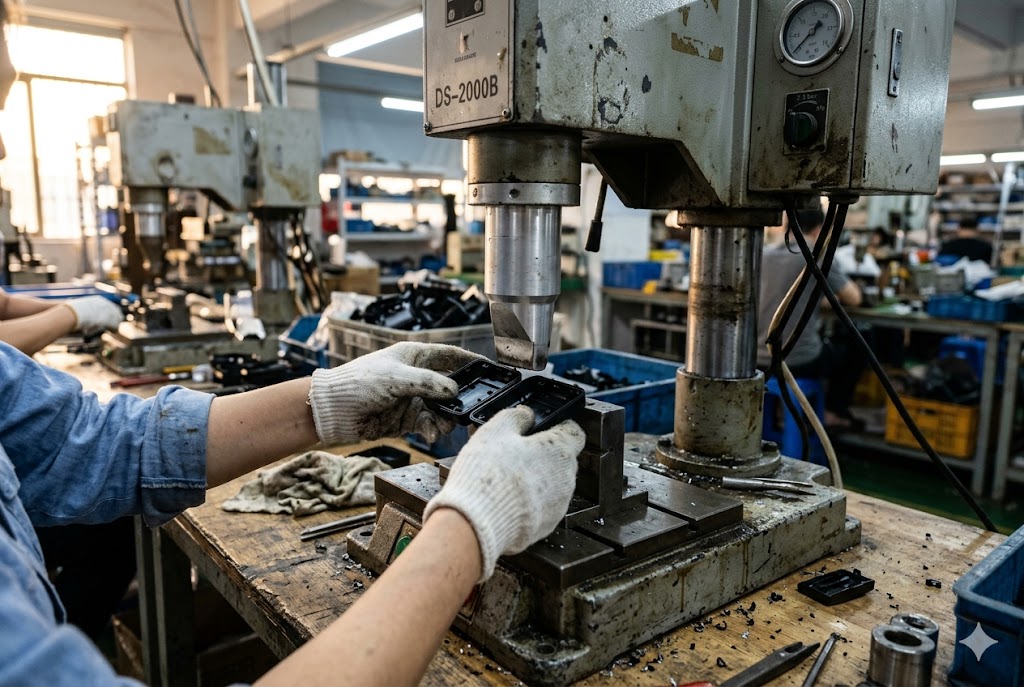
Established Chinese injection molding factories routinely offer ultrasonic welding, heat staking, insert molding, pad printing, laser etching, spray painting, and final sub-assembly as in-house value-added services. The key word is "established" — smaller job shops often outsource these steps, which splits quality accountability and adds lead time.
What "In-House" Actually Means
Many supplier profiles on Alibaba and Made-in-China list secondary operations in their capability overview. Not all of them are telling the whole truth. Some factories own one ultrasonic welder and use it occasionally. Others have a full post-molding assembly line with dedicated technicians and process parameter records.
Here is a simple checklist to separate the two:
| Audit Question | Strong Supplier | Weak Supplier |
|---|---|---|
| Do you own the welding/staking equipment? | Yes, on-site | We partner with nearby shops |
| Can you show process parameter records? | Yes, for each job | We set it up by feel |
| Is post-molding under the same QC system? | Same ISO cert covers all ops | Separate facility, separate QC |
| What is your typical cycle time for secondary ops? | Quoted with data | Rough estimate only |
Common Secondary Operations and Their Typical Use Cases
| Operation | Typical Application | Key Process Control Parameter |
|---|---|---|
| Ultrasonic welding | Joining two thermoplastic housings | Frequency (20 kHz or 40 kHz), amplitude, weld time |
| Heat staking | Pressing threaded brass inserts into plastic | Temperature setpoint, insertion force, dwell time |
| Pad printing | Brand logos, part numbers on curved surfaces | Ink viscosity, pad pressure, cure time |
| Laser etching | Permanent marking on dark plastics | Laser power, speed, focus depth |
| Spray painting | Cosmetic finish, color matching | Coat thickness, cure temperature, adhesion test |
| Sub-assembly | Combining molded parts with fasteners, gaskets | Assembly sequence, torque spec, fit check |
Why Geography Matters
Factories in Shenzhen, Dongguan, Huizhou, and the Pearl River Delta region 1 are the most likely to have secondary operations in-house. This cluster developed around consumer electronics manufacturing, where assembling complex plastic housings with inserts and labels is a baseline expectation. Factories in other regions — such as those focused on automotive or industrial parts — may mold to a high standard but send finishing work elsewhere.
When we visit a factory on behalf of a client, we walk the full production floor. We look for the welding stations, the staking presses, the spray booths. If they are not there, we ask where the work goes. The answer tells us a great deal about how much control the factory actually has over the finished part.
How Do I Confirm a Chinese Supplier's Ultrasonic Welding Capability Meets My Part's Structural Requirements?
Our engineers have found that ultrasonic welding failures almost always trace back to two root causes: wrong resin selection for the joint type, or an energy director that was never designed into the mold.
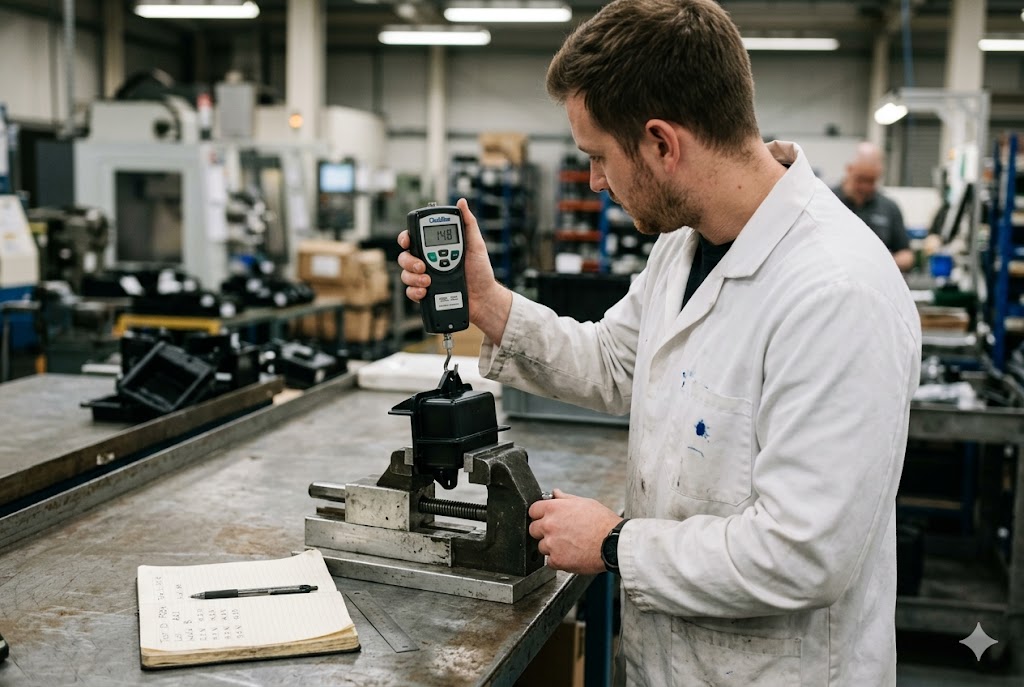
To confirm ultrasonic welding capability, check that the supplier understands your resin's weld behavior, can show energy director geometry in their DFM review, has welding parameter records from similar past jobs, and can perform pull-force or leak testing on assembled samples before mass production begins.
Resin Compatibility Is Non-Negotiable
Ultrasonic welding 2 does not work equally well on all plastics. This is one of the most common misunderstandings we see from importers who are new to plastic part sourcing.
Amorphous thermoplastics — ABS, PC, PS, PMMA — have a broad glass transition range. When ultrasonic energy hits the joint, the material becomes soft and flows into a bond gradually. This makes them ideal candidates for standard energy director joint designs.
Semi-crystalline resins — PP, PE, POM, PA — behave differently. They stay solid until they reach their melt point, then transition to liquid almost instantly. Standard energy director joints do not work reliably with these materials. They require a shear joint design, where the parts are driven together with an interference fit and the weld forms along a vertical shear surface, not a triangular ridge.
| Resin Type | Examples | Recommended Joint Design | Notes |
|---|---|---|---|
| Amorphous | ABS, PC, PS, PMMA | Energy director (butt joint) | Broad Tg allows gradual flow |
| Semi-crystalline | PP, PE, POM, PA | Shear joint | Abrupt solid-to-liquid transition |
| Both | ABS/PC blend | Energy director or shear | Depends on blend ratio |
A capable Chinese supplier will bring this up during DFM review 3 without being prompted. If they do not, ask directly: "What joint design do you recommend for our resin, and why?" The answer will tell you quickly whether their engineer knows the process or is guessing.
Energy Directors Must Be Designed In Before the Mold Is Cut
An energy director is a small triangular ridge molded onto one of the mating plastic surfaces. When the ultrasonic horn presses the two parts together and vibrates, the ridge concentrates the energy and melts first, flowing into the mating surface and forming the bond.
This feature must be designed into the mold. It cannot be added after the tool is cut without a mold modification, which costs money and time. Importers who arrive at a Chinese supplier with a finished part design and then request ultrasonic welding often discover this the hard way.
If your part design does not yet include energy directors, raise it before tooling approval. A good supplier will flag it. A supplier who is just trying to close the order will cut the mold and deal with the problem later — at your expense.
The Four Main Joint Types
Choosing the correct joint type is covered in authoritative detail by ultrasonic welding joint design guidelines 4 published by equipment manufacturers:
| Joint Type | Best For | Hermetic Seal? | Complexity |
|---|---|---|---|
| Butt (energy director) | General structural bonds | No | Low |
| Step | Alignment-critical assemblies | Partial | Medium |
| Shear | Semi-crystalline resins, high strength | No | Medium |
| Tongue-and-groove | Fluid containment, enclosures | Yes | High |
What to Request for Sample Validation
Before approving tooling or placing a production order, ask the supplier to produce assembled samples and provide:
- Pull-force test results (minimum in Newtons, per insert or per weld joint)
- Leak test results if your application requires a hermetic seal (vacuum decay or pressure decay)
- Welding parameter records showing frequency, amplitude, weld time, and hold time for your specific resin and geometry
If a supplier cannot provide this data at the sample stage, they will not be able to control the process in production.
What Are the Quality Risks of Outsourcing Secondary Operations to a Sub-Supplier at a Chinese Injection Molding Factory?
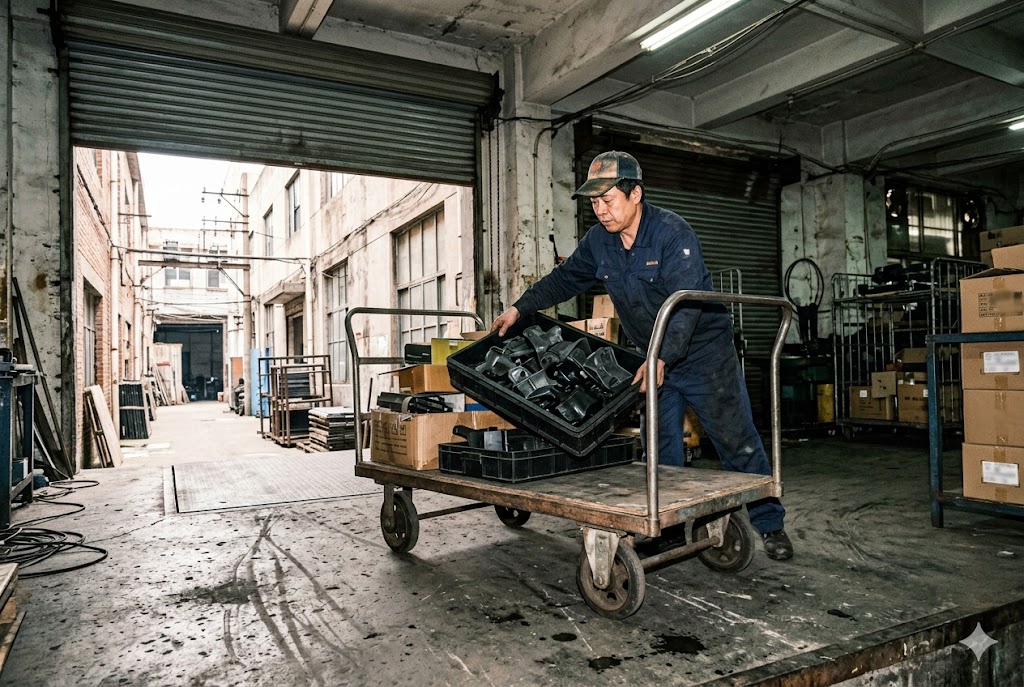
We have managed enough cross-border supply chains to know that every handoff point is a risk point. When a Chinese factory sends molded parts to a neighboring shop for welding or staking, that handoff is rarely documented, rarely audited, and rarely covered by the original factory's quality system.
The main quality risks of outsourcing secondary operations to a sub-supplier are fragmented accountability, transit handling damage between facilities, inconsistent process parameters at an unaudited shop, and the sub-supplier's work falling outside the ISO certification scope of your primary factory — leaving you with no contractual quality standard covering the assembly step.
Accountability Breaks at the Transfer Point
When your molding factory and your assembly shop are the same entity, a quality failure at the assembly stage is clearly the factory's problem. When they are two separate businesses, blame gets distributed. The molding factory says the parts left their facility in good condition. The assembly shop says the parts arrived with defects. You are left chasing the root cause across two companies with no unified quality record.
This is not a hypothetical. It is a situation our team has encountered on multiple client accounts. The resolution always costs more time and money than the original audit would have. Conducting factory audits for China suppliers 5 before production is the most reliable way to catch these gaps.
The ISO Coverage Gap
Many Chinese injection molding factories hold ISO 9001 certification 6. Importers often assume this covers everything the factory touches. It does not automatically cover work performed by a subcontractor.
When you audit a factory and receive their ISO certificate, ask one direct question: does this certification cover all post-molding operations, including any work performed off-site? If the answer is no — or if the answer is vague — you have a coverage gap. Any assembly work outside the ISO scope is uncontrolled from a formal quality system perspective.
Heat Staking Specific Risks
Heat staking 7 failures are often invisible at visual inspection. An insert that was staked with too little heat or too short a dwell time will look correct — flush with the surface, no displaced plastic, no cosmetic defect. The failure shows up when a torque wrench is applied and the insert spins, or when a mating screw strips the boss.
A sub-supplier performing heat staking without documented process parameters for your specific insert size, resin, and boss geometry is essentially running by feel. Here is what the parameter record for a single heat staking operation should include:
| Parameter | Why It Matters |
|---|---|
| Temperature setpoint (°C) | Too low = under-seated insert; too high = displaced plastic |
| Insertion force (N) | Controls how far and how straight the insert seats |
| Dwell time (seconds) | Allows the softened plastic to flow around the knurl |
| Insert geometry/part number | Confirms the parameters match the specific hardware |
| Resin type | Process differs significantly between ABS, PC, and PA |
The behavior of brass threaded inserts during heat staking 8 is particularly sensitive to temperature control, as brass begins to anneal at relatively low temperatures compared to the melting points of glass-filled plastics — a mismatch that makes precise parameter records non-negotiable.
What to Do Instead
The simplest risk mitigation is to require in-house secondary operations as a sourcing criterion. We filter for this when building supplier shortlists for clients. It is not always possible — some specialized operations require dedicated subcontractors — but when ultrasonic welding and heat staking are involved, in-house capability should be a hard requirement, not a preference.
If a client's preferred factory does use sub-suppliers for secondary ops, we require:
- Written sub-supplier disclosure in the contract
- A factory audit of the sub-supplier before production starts
- The same acceptance criteria applied to the assembled part as to the molded part
Should I Request a One-Stop-Shop Supplier That Handles Both Molding and Secondary Assembly in China?
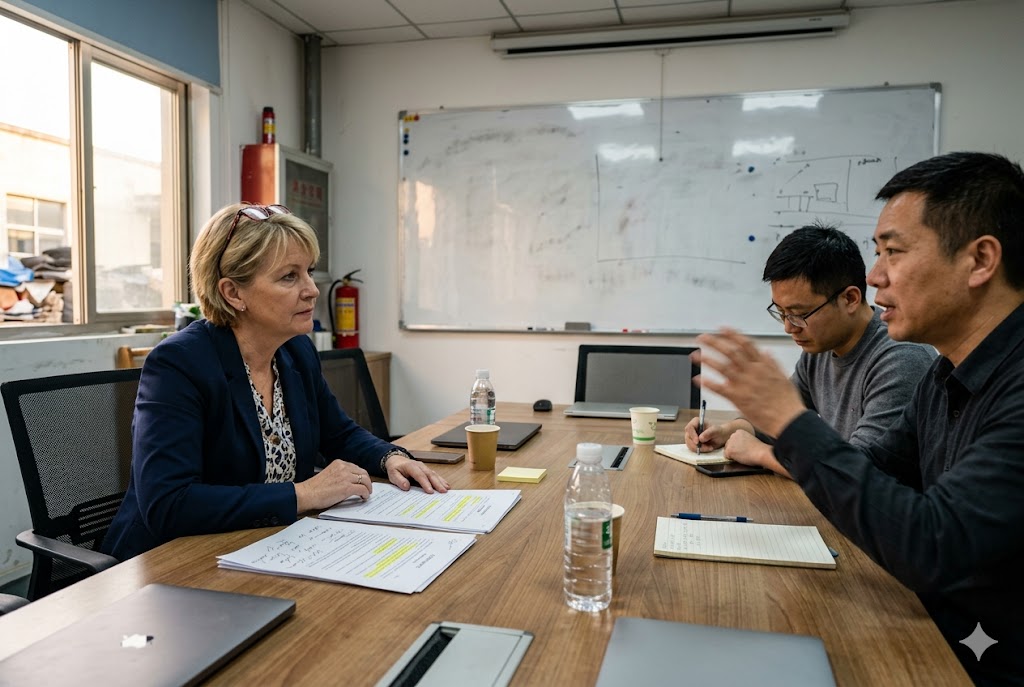
Every purchasing manager we work with eventually faces a version of this decision: spread the work across specialized suppliers, or consolidate under one roof. Our experience managing supply chains for US importers points strongly in one direction.
For most importers sourcing custom injection-molded parts with secondary operations, a one-stop-shop supplier that performs both molding and assembly in-house is the lower-risk choice. It reduces handoff points, concentrates quality accountability, simplifies logistics, and makes the contractual relationship between molding quality and assembly outcome enforceable under a single agreement.
The Molding Quality and Assembly Quality Connection
This is a point that is easy to overlook until a production run fails. The quality of the molded part directly determines whether secondary operations will succeed.
Parts with sink marks, warpage, flash at the joint interface, or dimensional variation in the mating features will produce inconsistent ultrasonic welds and improperly seated heat-staked inserts — regardless of how capable the assembly equipment is. The two operations are not independent of each other.
When molding and assembly happen at separate facilities, no one owns the combined outcome. The molder says the parts were within spec. The assembler says the welds are failing because the parts are warped. You are caught in the middle.
When they happen under one roof, the factory cannot deflect. They own the entire process. China's injection molding industry structure — particularly the concentration of factories in the Pearl River Delta 9 — means that finding a capable single-source supplier with integrated secondary operations is a realistic goal for most product categories.
What to Put in the Contract
The most underutilized protection for importers is specifying acceptance criteria for the assembled sub-assembly as a separate line item from the molded part. Most purchase agreements we review only reference dimensional tolerances for the molded part. The assembled state has no contractual acceptance criteria at all.
This means a factory can ship parts that pass visual inspection and basic dimensional checks but fail functionally — and technically be in compliance with the contract.
Here is what assembled sub-assembly acceptance criteria should include:
| Acceptance Criterion | Example Specification |
|---|---|
| Insert pull-out force minimum | ≥ 180 N per M3 brass insert in ABS |
| Weld strength minimum | ≥ 400 N tensile load per linear cm of energy director weld |
| Hermetic seal leak rate limit | ≤ 1 × 10⁻³ mbar·L/s (vacuum decay method) |
| Visual acceptance for staked inserts | Flush ± 0.1 mm, no displaced plastic in mating zone |
| Visual acceptance for welds | No visible voids, no flash beyond 0.3 mm, no delamination |
Surface Marking and Pad Printing Acceptance
Secondary decorating operations such as pad printing on plastic parts 10 introduce their own process variables — ink viscosity, substrate surface energy, cure conditions — that should be addressed with equally explicit acceptance criteria covering color accuracy, adhesion after cross-hatch tape test, and abrasion resistance.
Credit Terms and Supplier Selection
One factor our US clients frequently raise is payment terms. Consolidating with a single supplier who offers credit terms — net 30 or net 60 against a letter of credit — has cash flow advantages that working with multiple specialized suppliers does not. We help clients negotiate these terms when the order volume justifies it.
When a One-Stop-Shop Is Not the Right Answer
There are cases where splitting molding and secondary operations makes sense — typically when the secondary operation is highly specialized, such as Class VI medical-grade coating, or when your volume is too small to justify a large factory's minimum order. In these cases, the mitigation is to own the supplier relationship on both sides directly, rather than letting the molder manage the subcontractor relationship on your behalf.
Conclusion
Yes, you can include ultrasonic welding, heat staking, and other secondary operations in a Chinese injection molding order — but only when you verify capability, design the right joint geometry upfront, and put assembly acceptance criteria in the contract. That is how sourcing from China stays competitive without becoming a liability.
Footnotes
1. Overview of the Pearl River Delta's industrial clusters, cities, and plastic manufacturing output. ↩︎
2. Principles, design guidelines, and material considerations for ultrasonic welding of thermoplastics. ↩︎
3. Complete guide to DFM for injection molding, covering wall thickness, draft angles, and gate placement. ↩︎
4. Technical guidelines for energy director sizing and joint type selection by resin category. ↩︎
5. How to conduct ISO 9000-based factory audits when qualifying Chinese suppliers. ↩︎
6. How to define and verify the scope of an ISO 9001 quality management system. ↩︎
7. Process mechanics, geometry guidelines, and application examples for heat staking in product design. ↩︎
8. How induction heating controls brass insert temperature during heat staking to prevent thread annealing. ↩︎
9. Research report on China's injection molding industry geography, market segments, and production clusters. ↩︎
10. Detailed explanation of the pad printing process, ink viscosity, and substrate adhesion factors. ↩︎