Skip to main content Skip to footer
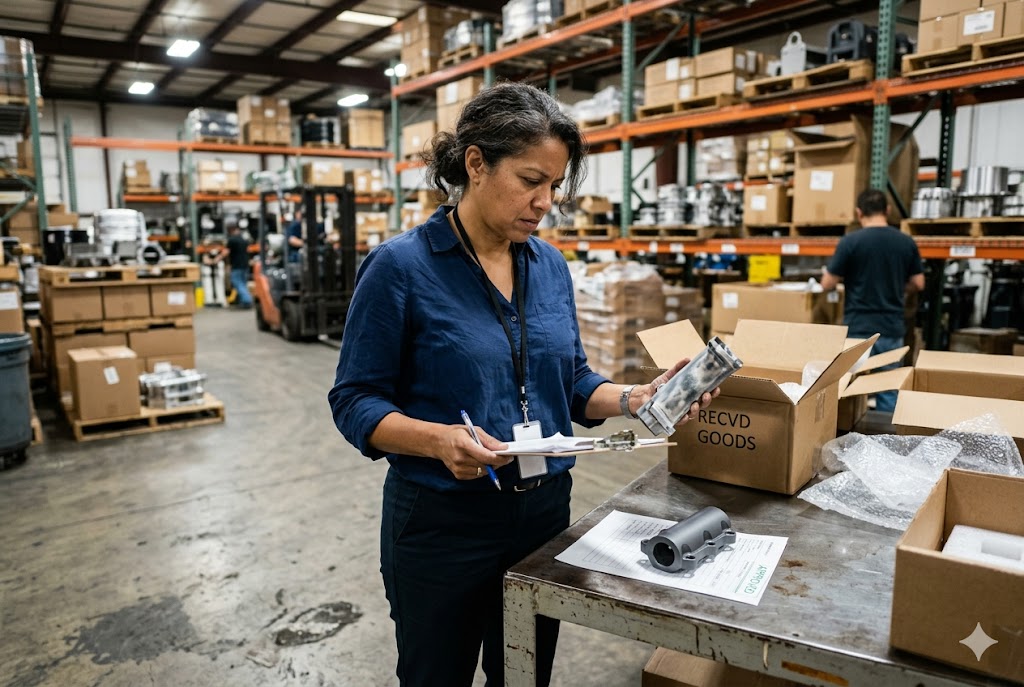
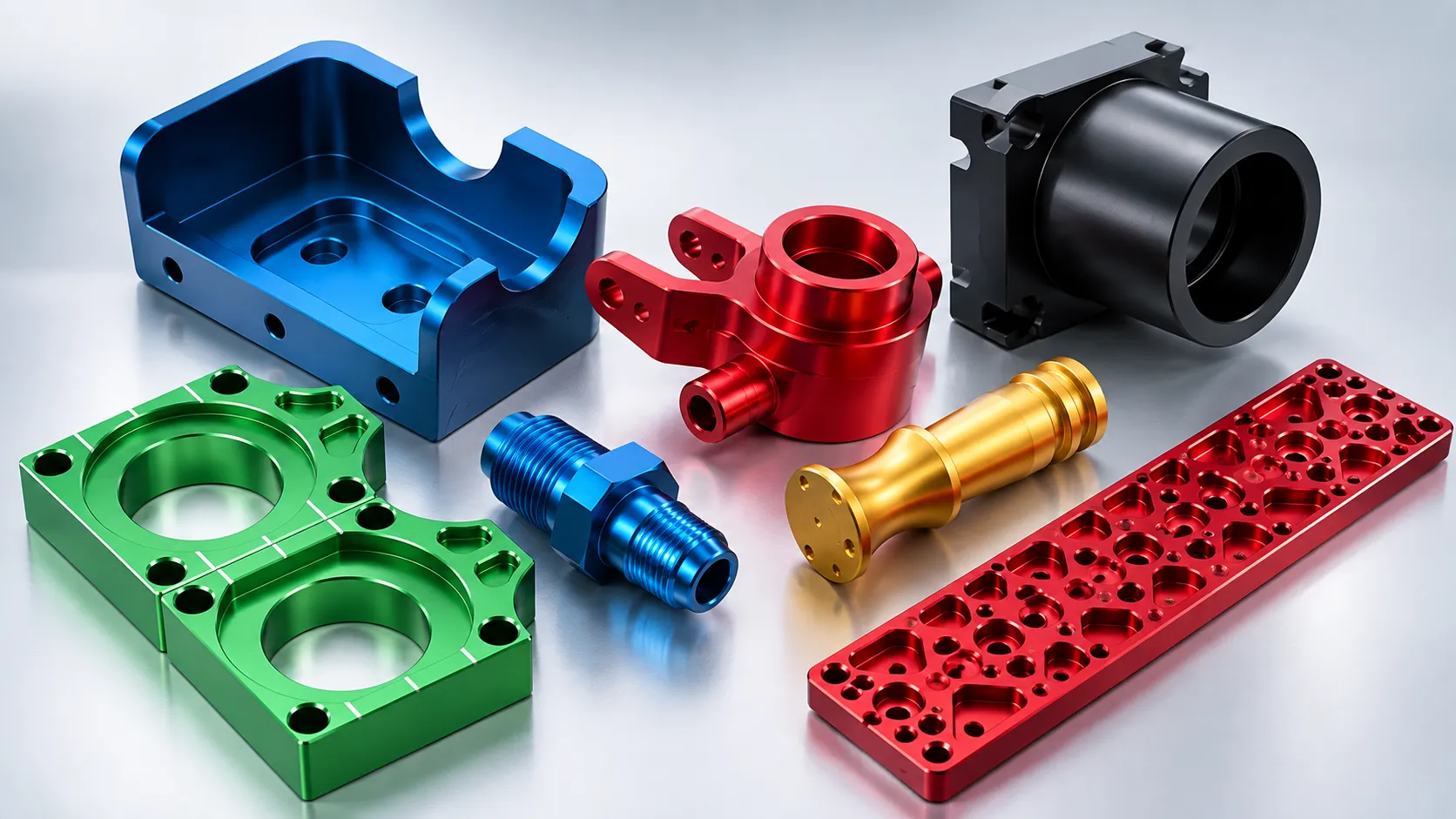
We have seen this problem repeat itself across hundreds of orders: a client approves a sample, places a bulk order, and the shipment arrives with parts that look nothing like what was agreed. The finish is blotchy, the color is off, or the coating is uneven. It costs time, money, and trust.
Yes, you can control surface finish consistency when importing custom CNC parts from China — but only if you define measurable specifications on your drawing, retain physical approval samples, require data-backed inspection reports, and control which finishing subcontractor is used for every batch.
Most finish problems are not manufacturing accidents. They are the result of vague specs and missing process controls. The sections below show you exactly what to put in place before production starts.
What Finish Specifications Should I Define Before Production?
Our engineers review dozens of drawings each month, and the most common problem we see is a finish requirement written as a single word — "anodized" or "polished" — with no measurable target. That gives the factory nothing to aim for and gives you no grounds to reject bad parts.
Before production, you must define the finish process and standard, a measurable surface roughness value in Ra micrometers per ISO 1302, coating thickness range, color reference, and the inspection method — all written directly on the engineering drawing, not in an email.

Why Vague Specs Always Fail
Words like "smooth," "matte," or "anodized black" are not specifications. They are descriptions. Two machinists reading the same word will produce two different surfaces. You need numbers.
Here is what a complete finish specification looks like on a drawing:
| Finish Element | Vague (Wrong) | Measurable (Correct) |
|---|---|---|
| Surface roughness | "Smooth" | Ra ≤ 0.8 µm per ISO 1302 |
| Anodize type | "Anodized" | Type II per MIL-A-8625 |
| Coating thickness | "Standard thickness" | 0.0002–0.0004 in per side |
| Color | "Black" | Black, ΔE ≤ 1.5 vs. approved sample |
| Inspection method | Not stated | Eddy current per ASTM B244 |
Ra Values You Should Know
Ra is the average surface roughness measured in micrometers. It is the most widely used finish measurement in CNC machining. The Ra surface roughness scale for CNC machined parts 1 ranges from coarse structural faces down to precision sealing surfaces. Here are common values and their applications:
| Ra Value (µm) | Typical Application |
|---|---|
| Ra ≤ 0.4 | Sealing surfaces, precision bores |
| Ra ≤ 0.8 | Mating surfaces, bearing fits |
| Ra ≤ 1.6 | General machined surfaces |
| Ra ≤ 3.2 | Non-critical machined faces |
| Ra ≤ 6.3 | Rough machined or structural surfaces |
The Pre-Finish Surface Condition Problem
Many buyers focus only on the final finish. They forget that the surface condition before finishing controls what the final finish looks like.
Aluminum anodized over a surface rougher than Ra 1.6 µm will show uneven oxide growth. The anodizing amplifies machining marks — it does not hide them. Parts with burrs or contamination that go into a plating bath will show pitting, poor adhesion, and uneven coverage.
Your drawing must specify the maximum Ra value before finishing, not only after. You should also require the supplier to document pre-treatment steps — degreasing, etching, rinsing — as a controlled process, not something left to operator judgment.
How Can I Approve Color, Texture, or Coating Thickness Consistently?
When we help clients set up their first approval process, most of them are surprised to learn that text specifications alone cannot fully define a surface finish. Color, gloss, and texture have a visual and tactile character that words cannot capture completely.
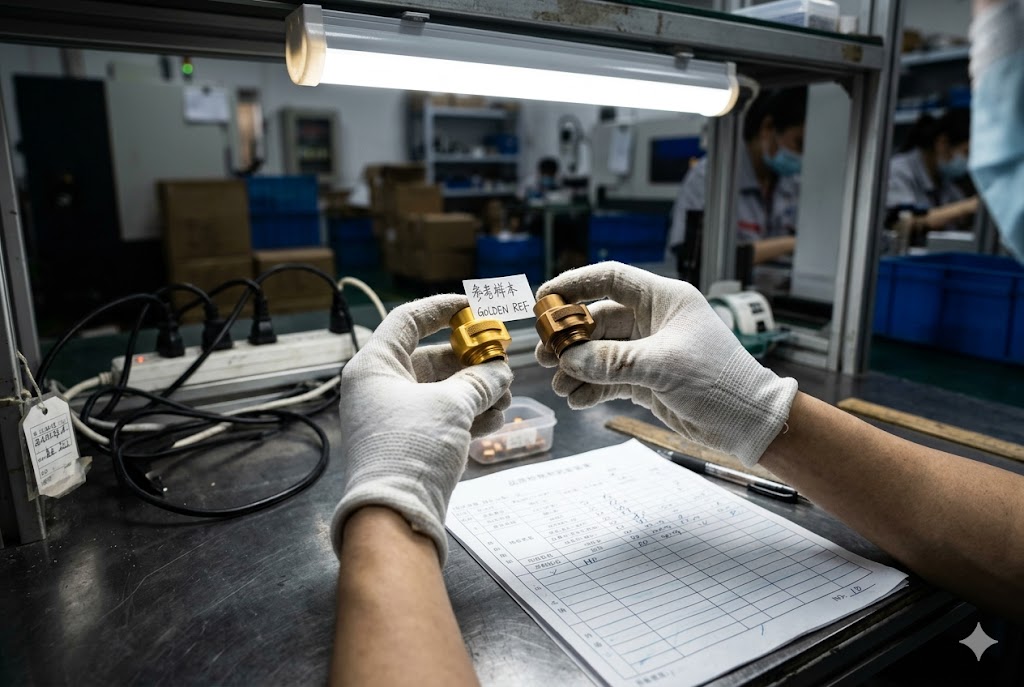
Consistent approval requires a physical "golden sample" retained by both you and your supplier before production begins. For color-critical anodized parts, require spectrophotometer ΔE measurement reports against that reference sample — ΔE ≤ 1.5 is the standard threshold for imperceptible color difference.
The Golden Sample System
A golden sample, also called a limit sample or approval sample, is a physical part with a finish you have inspected and approved. Both you and the supplier keep an identical copy. Every batch produced afterward is compared to that sample.
This system works because human color and texture perception is comparative, not absolute. An inspector looking at a part in isolation cannot reliably judge whether the gloss level matches. An inspector comparing that part side by side with the golden sample can.
The golden sample process has three steps:
- The supplier produces a pre-production sample using the exact same process, materials, and subcontractor they will use for bulk production.
- You inspect the sample against your drawing specifications and approve it in writing.
- You retain one copy. The supplier retains one copy. Both copies are labeled, dated, and stored away from light and handling.
Measuring Color With ΔE
For anodized aluminum parts where color consistency across batches matters — especially when multiple parts will be installed side by side — visual approval alone is not enough. You need data.
ΔE (Delta E) 2 is a numerical measure of color difference calculated by a spectrophotometer. A ΔE of 1.5 or less is generally imperceptible to the human eye. A ΔE above 3.0 is visible to most people without any reference.
| ΔE Value | Perceptibility |
|---|---|
| 0–1.0 | Not perceptible |
| 1.0–2.0 | Perceptible only to trained observers |
| 2.0–3.5 | Visible on close inspection |
| 3.5–5.0 | Clearly visible |
| Above 5.0 | Obvious color difference |
Require your supplier to submit a spectrophotometer report with each batch, measured against the retained golden sample. Suppliers who say they cannot provide this data are controlling color by eye. That is operator-dependent and will vary between batches.
Coating Thickness and Why It Affects More Than Appearance
Anodizing thickness is not just a surface finish issue — it is a dimensional issue.
Type II anodize per MIL-A-8625 3 adds approximately 0.0002–0.0004 inches per side. Hard anodize can add up to 0.002 inches. If your part has a mating feature or a seal contact surface, uncontrolled anodize thickness will cause interference or sealing failure. This has nothing to do with your machining tolerance. It is a finishing process control problem.
For electroplated parts — nickel, chrome, zinc — specify both minimum and maximum coating thickness using the applicable standard, such as ASTM B733 for electroless nickel 4. Require XRF (X-ray fluorescence) 5 or cross-section coating thickness reports. Visual inspection cannot detect a 5 µm thickness variation, but that difference can be the margin between passing and failing a salt spray test.
Should I Require Finish Samples or Control Samples First?
One of the most consistent mistakes we see new clients make is skipping pre-production samples to save time. They receive the golden sample after bulk production has already started. By that point, if the finish is wrong, half the order is already done.
Yes — always require a pre-production finish sample before bulk production is authorized. This sample must be produced using the exact same finishing subcontractor, process parameters, and material batch that will be used for the full order, not a sample from existing stock.

The Subcontractor Transparency Problem
Here is something most buyers do not know: in Chinese CNC supply chains, the machining shop almost never does surface finishing in-house. Anodizing, plating, and powder coating are almost always subcontracted to an outside facility.
The machining supplier may use a different anodizing house for each batch, depending on price, lead time, and capacity. Each anodizing facility has different bath chemistry, different process parameters, and different equipment. The result is finish variation between batches even when the machining is identical.
The fix is supplier transparency and contractual control:
- Require the supplier to name the specific finishing subcontractor in your quality agreement before production begins.
- State in the agreement that changing the finishing subcontractor requires your written approval.
- Require that the finishing facility uses documented, controlled process parameters — bath chemistry, temperature, current density, cycle time — not operator judgment.
- Confirm that the pre-production sample was produced at the same facility that will run the bulk order.
Same-Bath Requirements for Assembly Matching
If you are sourcing multiple anodized aluminum parts that will be installed side by side in an assembly, you need to go one step further.
Even when the same anodizing facility uses the same process parameters, parts anodized in different bath runs will show measurable ΔE variation. This is because bath chemistry changes over the service life of the electrolyte. Acid concentration, dissolved aluminum content, and temperature all drift over time.
For assembly-critical color matching, require that all parts in the same assembly are anodized in the same bath run. This must be written explicitly in the purchase order. It has lead time and cost implications — the supplier cannot spread your parts across multiple small runs — so state it before quoting, not after.
Process Reset Requirements for Long Runs
Surface finish consistency also degrades within a single production run. Tool wear on machined surfaces changes the pre-finish Ra over time. Bath chemistry drifts in anodizing and plating lines as the run progresses.
Require your supplier to define a maximum batch size or run duration after which the process must be reset — tooling replaced, bath refreshed, parts re-measured against the golden sample. Also require that the inspection report includes parts drawn from the beginning, middle, and end of the production run. This confirms that finish consistency was maintained throughout, not just verified on the first pieces.
What Checks Should Be Done Before Shipment to Confirm Finish Consistency?
Before any shipment leaves the factory, our quality team runs a structured pre-shipment inspection 6 against the drawing specifications and the approved golden sample. This is where problems are caught — not after the container arrives at your warehouse.
Before shipment, confirm finish consistency by comparing parts against the retained golden sample, verifying coating thickness with eddy current or XRF measurement, checking spectrophotometer ΔE color data, and applying a three-tier defect classification to every part in the inspection sample.

The Three-Tier Defect Classification
Without a defined defect classification, your inspector and the supplier's QC team will make different accept/reject decisions on the same part. One person calls a color streak a rejection. Another calls it acceptable. The result is inconsistency, disputes, and delayed shipments.
Define a three-tier finish defect classification specific to your part and include it in the inspection checklist before production begins. The AQL (Acceptance Quality Limit) sampling method 7 provides the statistical framework for deciding how many parts to inspect and how many major defects trigger a batch rejection.
| Defect Tier | Definition | Examples | Action |
|---|---|---|---|
| Critical | Causes functional failure | Bare metal in corrosion coating, delamination on seal surface | 100% rejection of batch |
| Major | Affects appearance or durability, no immediate functional failure | Color streaks, uneven gloss, pinholes | Reject if AQL threshold exceeded |
| Minor | Below cosmetic standard, functionally acceptable | Faint tooling marks in non-visible areas | Accept with documentation |
This classification must be agreed upon with the supplier in writing before production starts. It removes subjectivity from the inspection process.
Coating Thickness Verification
For anodized parts, eddy current measurement per ASTM B244 8 is the standard non-destructive method. Require the supplier to measure coating thickness at multiple points on each sampled part — not just one point per part — and report the data by part number and batch.
For electroplated parts, XRF measurement 9 is fast, non-destructive, and accurate. Require XRF reports for every batch. Cross-section measurement is more precise but destructive, so it is typically used for qualification or failure investigation rather than routine production.
What the Inspection Report Must Include
An inspection report that says "appearance OK" is not useful. Require a report that includes:
- Batch number and production date
- Finishing subcontractor name and location
- Coating thickness measurements (multiple points per part, multiple parts per batch)
- ΔE color measurements vs. golden sample
- Defect classification findings per the agreed checklist
- Parts inspected from beginning, middle, and end of the production run
- Inspector name, date, and signature
This report is your quality record. If a finish problem appears after delivery, this document tells you exactly where in the process it originated. Understanding how to apply AQL sampling thresholds to inspection results 10 gives you a defensible, statistically grounded basis for accepting or rejecting a batch — removing personal judgment from the decision entirely.
Conclusion
Surface finish consistency is a process control problem, not a luck problem. Define measurable specs, retain golden samples, control your finishing subcontractor, and require data-backed inspection reports before every shipment. These steps give you a repeatable system — not a hope.
Footnotes
1. Industry guide explaining Ra surface roughness levels and their application in CNC machining. ↩︎
2. Explains how Delta E quantifies color difference and what threshold values mean in practice. ↩︎
3. Full guide to MIL-A-8625F anodizing types, classes, coating thickness, and compliance requirements. ↩︎
4. Overview of ASTM B733 classification for electroless nickel coatings by phosphorus content and service thickness. ↩︎
5. How handheld XRF analyzers measure metal coating thickness non-destructively during quality control. ↩︎
6. Practical guide to pre-shipment inspections in China, covering timing, scope, and corrective action steps. ↩︎
7. Clear explanation of AQL sampling: how sample sizes are calculated and defect thresholds applied. ↩︎
8. DeFelsko guide to measuring anodize coating thickness on aluminum using eddy current per ASTM B244. ↩︎
9. How XRF coating measurement works and why it is preferred for plating thickness verification. ↩︎
10. Step-by-step breakdown of AQL sampling tables, sample sizes, and pass/fail decision logic for importers. ↩︎