Skip to main content Skip to footer
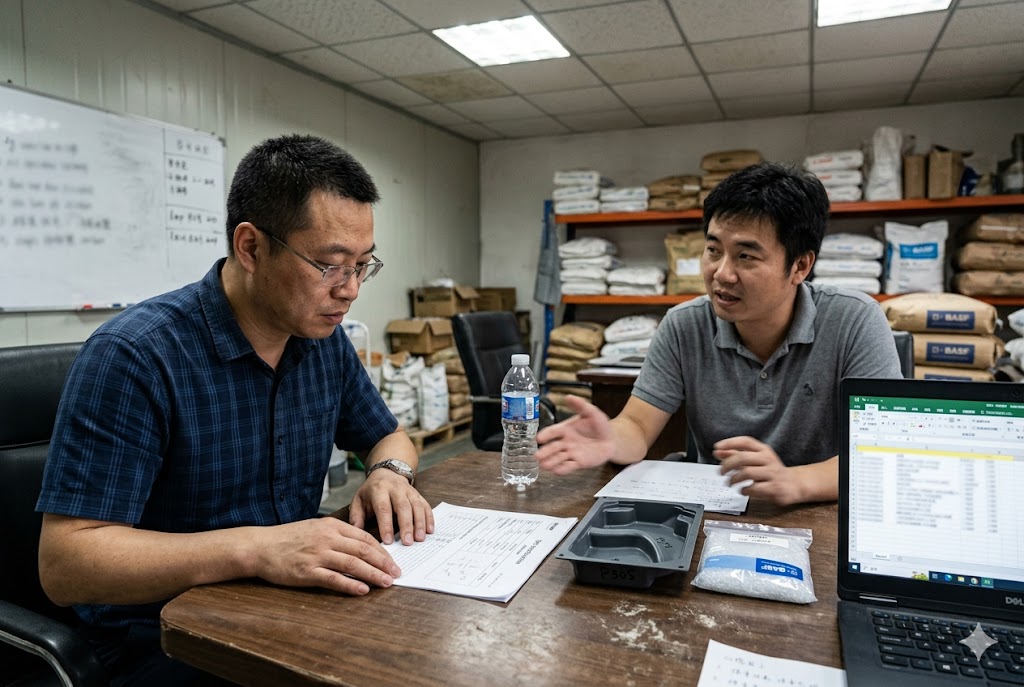
We handle injection molding programs across dozens of Chinese factories every year, and the question of branded resin always comes up. Buyers specify DuPont or BASF, suppliers quote a local equivalent — and somewhere between the PO and the first production run, the material quietly changes.
Yes, you can specify brand-name resins like BASF, DuPont, or SABIC in your purchase order and technical documentation. Chinese factories will often propose local substitutes, so you must lock the grade, require original Certificates of Analysis per lot, and confirm compliance through incoming inspection or third-party testing.
The details matter. Below, we walk through verification, cost, documentation, and proof of purchase — the four areas where most resin specification programs either hold or fall apart.
How Do I Ensure a Chinese Injection Molding Supplier Actually Uses the Branded Resin I Specified?
Supplier promises are cheap. Our sourcing team has walked factory floors where "approved resin" sat in labeled bags that didn't match any CoA on file. Without a system, substitution is easy to miss.
Ensuring a Chinese molder uses your specified resin requires contract controls, lot-by-lot CoA review, and periodic third-party verification. Prohibit regrind use in writing, require the resin manufacturer's original CoA — not a supplier-generated document — and audit process parameters at First Article and during production.
Why Suppliers Substitute Resins
The economics are straightforward. A branded engineering resin — say, DuPont Zytel PA66 GF30 — may cost 30–50% more than a domestic Chinese equivalent with similar nominal properties. On a high-volume program, that delta is real money. Unless your contract removes the substitution incentive, a supplier under cost pressure will make the swap.
The swap is rarely flagged. A domestically compounded PA66+GF30 looks identical in the barrel. Parts pass visual inspection. The difference shows up later — in fatigue life, UV stability, or dimensional drift under thermal cycling — not on the production floor.
Controls That Actually Work
Layering controls is the only reliable approach. No single measure closes the loop on its own.
Control Layer 1 — Contract language. The purchase order and quality agreement must name the exact commercial grade: not "BASF nylon" but "BASF Ultramid A3WG6." Vague brand references give suppliers latitude to substitute within a product family. Also prohibit regrind explicitly. Blending 10–20% ground-up sprues back into the melt is standard practice at many Chinese molders — it degrades mechanical properties and color consistency, which defeats the point of specifying a premium resin.
Control Layer 2 — Original CoA per lot. Require the resin manufacturer's Certificate of Analysis — issued by BASF, DuPont, or SABIC directly — with each incoming lot. The CoA must include lot number, production date, and test data traceable back to the resin plant. An in-house supplier quality document is not a substitute. If the supplier cannot produce an original CoA, that is a strong signal the resin did not come from an authorized distributor.
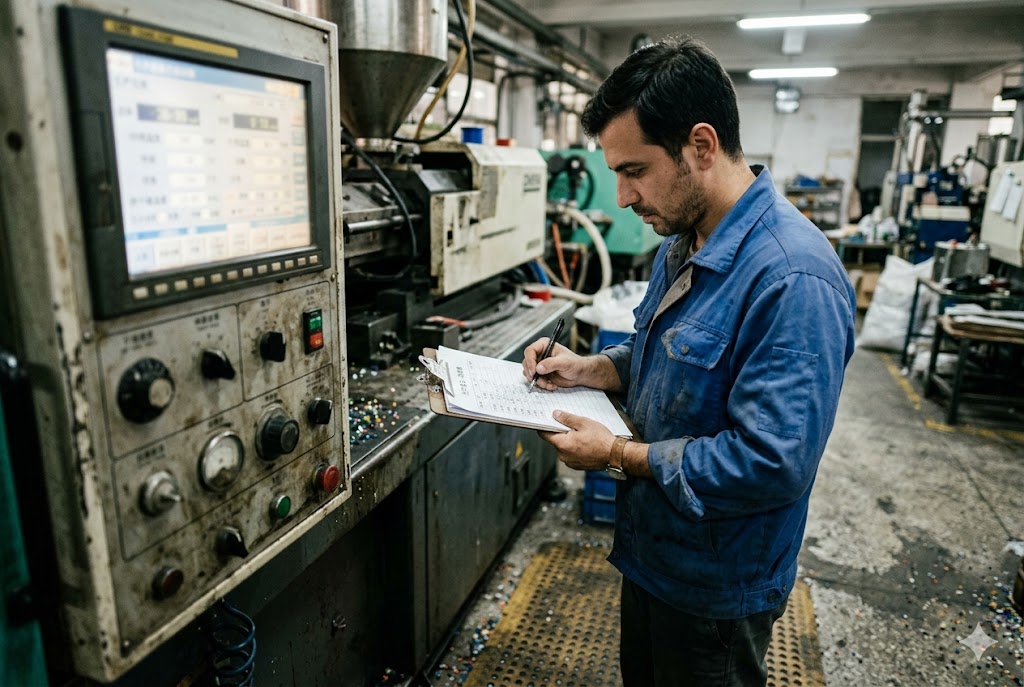
Control Layer 3 — Process parameter logging. BASF Ultramid polyamide grades 1 and their generic domestic equivalents process differently even when base chemistry looks the same. Melt temperature, injection speed, back pressure, and drying time are grade-specific. Lock approved parameters in the First Article Inspection (FAI) package. Require the supplier to log barrel temperature and drying conditions per production run. A deviation from FAI-established parameters is often the first indicator of an undisclosed resin substitution — a different resin needs different settings to fill the tool correctly.
Control Layer 4 — Third-party verification. For safety-critical or high-volume programs, send production samples to an independent lab for polymer identification testing using DSC and FTIR analysis 2. These tests confirm polymer identity and can detect blending with off-grade material. They are not cheap, but one substituted lot on a safety part costs far more.
Regrind: The Hidden Degradation Risk
| Regrind Level | Typical Effect on Tensile Strength | Typical Effect on Color Consistency | Common Use Case |
|---|---|---|---|
| 0% (virgin only) | Baseline | Baseline | Safety-critical / cosmetic parts |
| 10–15% | −3 to −5% | Slight variation | Standard mechanical parts |
| >20% | −8% or more | Significant batch-to-batch shift | Non-structural, non-cosmetic only |
If you specify a branded resin for its mechanical properties and then allow unrestricted regrind, you have partially negated the specification. Put a zero-regrind clause in your contract if the resin's rated properties are the reason you chose it.
Consignment: The Nuclear Option
For the highest-risk programs, consider consigning the resin directly. You purchase the branded resin from a BASF or DuPont authorized Chinese distributor and ship it to the molder — removing their purchasing decision entirely. This eliminates substitution at source. It adds logistics complexity and shifts inventory burden to you, but it is the only method that provides near-certainty on material identity.
What Cost Premium Should I Expect When Requiring Brand-Name Plastic Resins from Chinese Injection Molding Factories?
We get asked this in nearly every RFQ where the customer has a material spec. The answer is not a single number — it depends on the resin family, the local supply of domestic equivalents, and how specialized the grade is.
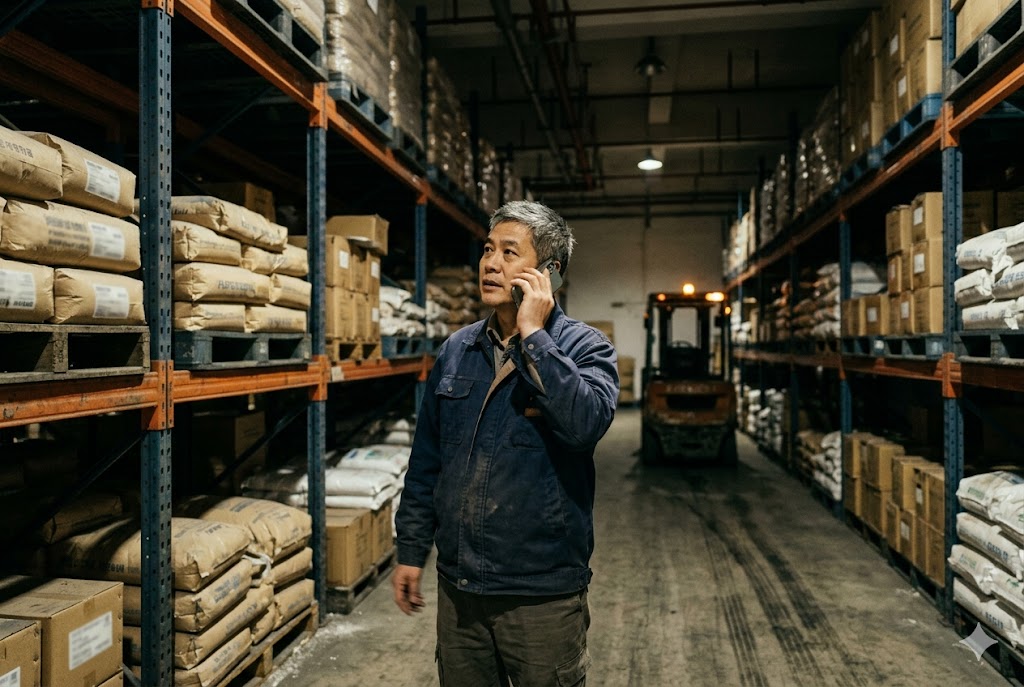
Brand-name resins from BASF, DuPont, or SABIC typically carry a 20–50% price premium over domestically compounded Chinese equivalents in the same polymer family. Premium specialty grades — such as high-flow PA66 GF or medical-grade PC — can run higher. Expect this cost to pass through in part price, especially on lower-volume programs.
Where the Premium Comes From
Branded resin prices reflect tighter lot-to-lot consistency, documented supply chain, authorized distributor margins, and in many cases global compliance certifications (RoHS, REACH, UL) that are pre-validated. Domestic Chinese compounders can produce resin with similar nominal datasheet values at lower cost, but they typically cannot offer the same compliance documentation or consistency guarantees.
For export programs where RoHS and REACH SVHC compliance 3 certificates are a customer or regulatory requirement, the branded resin's pre-validated compliance can actually reduce your total qualification cost — you avoid paying for independent compliance testing that a domestic resin would require.
Typical Premium by Resin Family
| Resin Family | Common Branded Grades | Domestic Equivalent Availability | Typical Price Premium |
|---|---|---|---|
| PA66 GF (Nylon 66 glass-filled) | DuPont Zytel, BASF Ultramid | High | 25–40% |
| PC (Polycarbonate) | SABIC Lexan 4, Covestro Makrolon | High | 20–35% |
| POM (Acetal) | DuPont Delrin, BASF Ultraform | Medium | 30–45% |
| PEEK | Victrex 5, Solvay KetaSpire | Low | 40–60% |
| PBT GF | BASF Ultradur, DuPont Crastin | Medium | 25–40% |
The premium is widest on specialty grades with low domestic competition — PEEK and high-performance PPS are examples. It is narrowest on commodity engineering resins like standard PA66 or PC where multiple Chinese compounders have invested heavily.
How to Manage the Cost Impact
A few practical approaches reduce the cost burden without abandoning the specification.
First, evaluate whether the full specification is necessary across every part in the program. If only certain components are safety-critical or dimensionally sensitive, apply the branded resin requirement only there. Standard enclosure or bracket parts that carry no structural load may be perfectly serviceable with a qualified domestic equivalent.
Second, approve a qualified domestic alternative for lower-risk parts rather than outright rejecting all substitutions. Ask the supplier to submit a full datasheet and sample parts from the proposed alternative. Compare mechanical, thermal, and chemical resistance properties against your design requirements with actual margin — not just nominal datasheet values. If the part operates well within the performance envelope of both resins, a documented approved alternative is a reasonable commercial decision.
Third, consolidate resin purchasing across programs if volume justifies it. Some larger Chinese molders with established BASF or DuPont distributor relationships can negotiate better pricing on named grades than you could sourcing independently. Ask whether the factory has a direct distribution agreement — better molders often do, and they can provide that documentation as part of supplier qualification.
How Do I Include Branded Material Requirements in My Purchase Order and Quality Agreement with a Chinese Supplier?
A verbal agreement means nothing. We have seen programs where the factory's sales team acknowledged a branded resin requirement in email, then the production team substituted on the first run because nothing in the formal contract matched what was discussed.
Branded material requirements must appear in both the purchase order line item and a separate quality agreement or product specification. State the exact commercial grade designation in the drawing title block or material specification sheet, prohibit regrind in writing, and make CoA submission a condition of lot acceptance — not a courtesy.

Where to Write the Requirement
The material specification needs to appear in at least two places to be enforceable: the engineering drawing and the commercial documents.
On the engineering drawing, state the material in the title block or notes section using the full commercial designation. "PA66-GF30" is not sufficient — a supplier can fill that with any conforming domestic grade. "DuPont Zytel 70G33HS1L BK031" leaves no room for interpretation. If you do not control the drawing, add a material specification sheet that references the drawing and becomes part of the contract package.
In the purchase order, reference the material specification sheet or drawing revision explicitly. Make CoA submission a delivery requirement — frame it as: "Each shipment must be accompanied by the resin manufacturer's original Certificate of Analysis. Lots received without a valid CoA will be placed on hold pending verification."
Quality Agreement Clauses That Matter
A quality agreement (sometimes called a supplier quality manual acknowledgment or manufacturing control plan) is where you set the operational rules. Key clauses for branded resin programs include:
| Clause | What It Should Say |
|---|---|
| Material specification | Exact grade designation; no substitution without written buyer approval |
| Regrind prohibition | Zero regrind unless explicitly approved in writing per part number |
| CoA submission | Original resin manufacturer CoA required per lot, including lot number and production date |
| Process parameter control | FAI-established barrel temp and drying parameters must be logged and maintained |
| Approved deviation process | Any proposed material change requires 30-day advance notice and written buyer approval |
| Audit right | Buyer reserves the right to conduct or commission unannounced incoming material audits |
Understanding First Article Inspection requirements under the AS9102 standard 6 can help buyers build FAI language that matches industry-recognized process documentation expectations — even for non-aerospace injection molding programs.
Contract Enforceability in China
One point that is often overlooked: contracts written in English and governed by Western law are frequently not enforceable in Chinese courts. A supplier can sign an English-language quality agreement knowing it creates no binding domestic obligation. For any program where material compliance is commercially significant, work with a legal advisor to prepare a Chinese-language addendum that is enforceable in a Chinese jurisdiction with authority over the supplier entity. This is not common practice among buyers, but it is the difference between a contract that creates real accountability and one that is a procedural formality.
What Documentation Should a Chinese Supplier Provide to Prove They Purchased the Branded Resin I Requested?
Asking for "proof of material" and receiving a supplier-generated quality report are two different things. Our quality team reviews documentation from dozens of Chinese factories each year, and the range of what suppliers call a "Certificate of Analysis" varies widely.
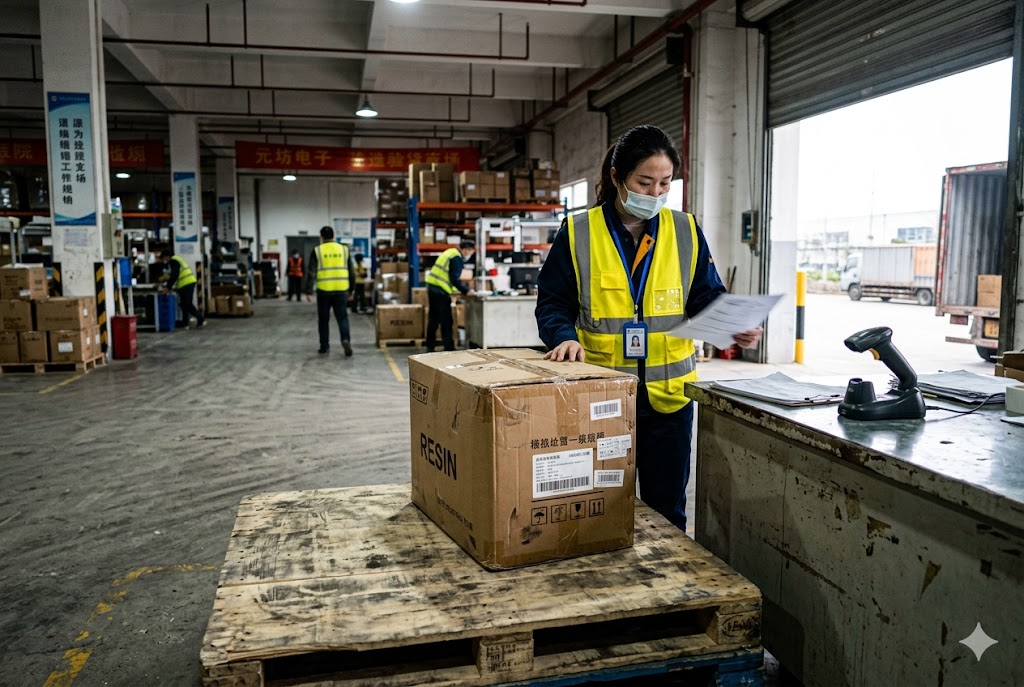
A Chinese injection molding supplier should provide the resin manufacturer's original Certificate of Analysis per production lot, the authorized distributor's purchase invoice or delivery note, and — for compliance-sensitive programs — a current RoHS or REACH declaration issued by the resin manufacturer. Supplier-generated documents do not substitute for any of these.
The Document Stack You Should Expect
A complete documentation package for a single production lot using a branded resin should include:
| Document | Issued By | What It Confirms |
|---|---|---|
| Resin manufacturer's CoA | BASF / DuPont / SABIC (or their lab) | Material identity, lot number, test data vs. specification |
| Distributor purchase invoice or delivery note | Authorized distributor | That the resin passed through an authorized supply chain |
| Incoming inspection record | Supplier's QC department | Moisture content check, visual inspection, lot matching |
| RoHS / REACH declaration | Resin manufacturer | Compliance for export markets |
| Process log (barrel temp, drying conditions) | Supplier's production team | That approved processing parameters were used |
Not every program needs all five. But for safety-critical, cosmetic, or export-compliance programs, asking for the full stack is reasonable and a well-qualified Chinese molder should be able to provide it.
How to Read a Resin CoA
The CoA issued by the resin manufacturer will list tested properties — melt flow rate, tensile strength, flexural modulus, moisture content — alongside specification limits and actual test results for that lot. Check three things:
First, confirm the lot number on the CoA matches the lot number on the packaging and delivery note. Second, verify that all tested values fall within the published specification limits — not just "pass," but where in the range they fall. A lot at the low end of tensile strength and a lot at the high end behave differently in a tight-tolerance tool. Third, check the production date. Resins have shelf lives and moisture uptake characteristics that change with age and storage conditions. A CoA from a lot produced 18 months ago should prompt a question about storage conditions and a moisture content recheck.
Red Flags in Supplier Documentation
Watch for these patterns — each is a signal that the documented resin and the resin in the barrel may not match:
- The CoA is issued on the supplier's letterhead rather than the resin manufacturer's. This is an in-house document, not a manufacturer's CoA.
- The lot number does not appear on the resin packaging or delivery note — traceability is broken.
- The supplier provides a "material test report" that lists properties but no lot number or production date.
- The declared grade on the CoA is a product family name rather than a specific commercial grade (e.g., "Ultramid A3" without a full grade suffix).
- The authorized distributor invoice is missing or the supplier is reluctant to share it.
Any of these warrants a hold on the lot and a direct inquiry to the resin manufacturer's regional office to verify the lot number against their production records. BASF, DuPont, and SABIC all have regional technical service teams in China and can confirm lot authenticity. For programs where this traceability gap is too large to self-manage, engaging SGS supplier verification services 7 or a comparable independent TIC firm can provide an objective audit layer between your specifications and what is actually entering the mold.
When POM grades like DuPont Delrin acetal homopolymer 8 are specified, the documentation review is especially important — the homopolymer's unique crystalline structure and superior mechanical properties over copolymer grades cannot be confirmed by visual inspection alone, and require CoA lot traceability back to the DuPont production facility. Similarly, programs specifying DuPont Delrin or generic POM acetal for injection molding 9 should flag any CoA listing a copolymer grade where a homopolymer was specified — the difference in fatigue resistance and centerline porosity behavior is not cosmetic.
For high-performance programs specifying engineering resins where branded and generic grades diverge most sharply — such as PEEK, POM, or glass-filled PA66 — consider building third-party polymer identification testing 10 into your incoming quality plan as a periodic audit rather than a one-time qualification step. Testing a sample from every fifth or tenth lot adds modest cost but creates a defensible audit trail if a compliance dispute arises downstream.
Conclusion
Specifying a branded resin is a reasonable and enforceable requirement when sourcing injection-molded parts from China — but only if the specification is precise, the contract is binding, and documentation is verified per lot. Half-measures produce half-results.
Footnotes
1. BASF Ultramid product page covering PA6 and PA66 grades, processing characteristics, and grade variants. ↩︎
2. Intertek polymer identification testing using DSC, FTIR, and other analytical techniques for material verification. ↩︎
3. EU REACH SVHC compliance guide covering candidate list obligations, Annex XVII restrictions, and testing triggers. ↩︎
4. SABIC LEXAN polycarbonate resin product overview covering grades, properties, and processing characteristics. ↩︎
5. Victrex PEEK polymer product page covering unfilled and filled grades for injection molding and extrusion. ↩︎
6. Lexco Cable guide explaining FAI, PPAP, and AS9102 first article inspection documentation requirements. ↩︎
7. SGS supplier verification program providing independent on-site supplier audits and material traceability checks. ↩︎
8. Protolabs Network overview of Delrin POM-H properties, applications, and differences from copolymer acetal. ↩︎
9. Fictiv guide to POM injection molding covering homopolymer vs. copolymer grades, processing, and design guidelines. ↩︎
10. Intertek polymer and plastic identification testing services using FTIR, DSC, and spectroscopic analysis. ↩︎