Skip to main content Skip to footer
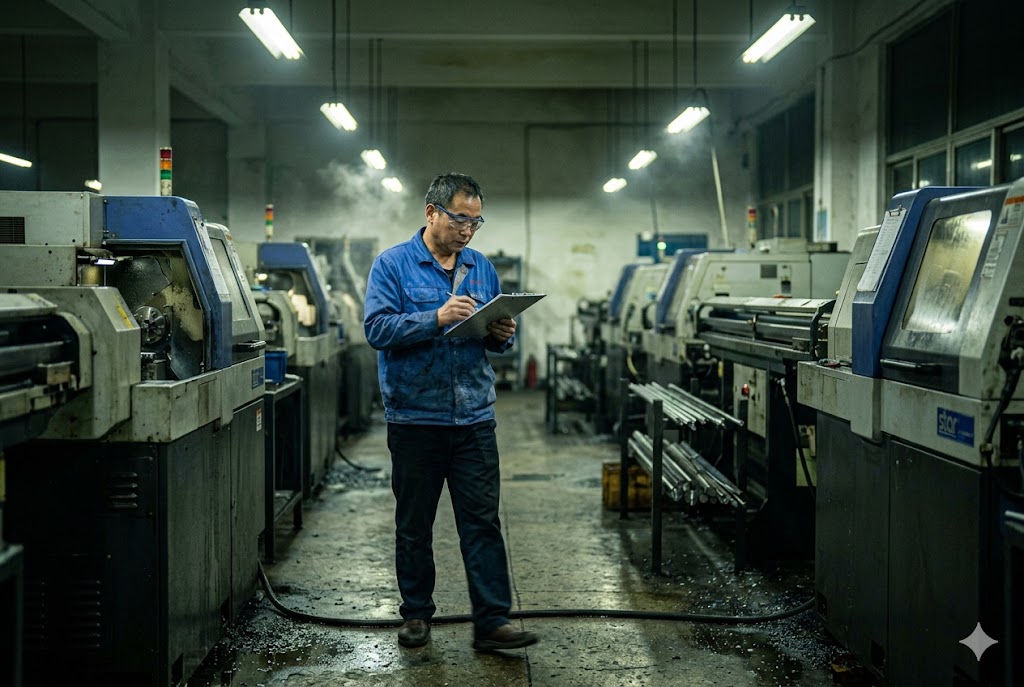
We place orders with Swiss lathe shops across China every week. One question we hear from US purchasing managers is whether these factories actually run unattended overnight — or whether "lights-out production" is just a sales pitch on a factory brochure.
Yes, Chinese Swiss CNC factories do use bar feeders, and bar feeders are not optional equipment — they are built into how Swiss-type lathes work. A factory running Swiss lathes without bar feeders cannot achieve unattended production. The bar feeder is what makes lights-out operation possible, and most commercial-volume Chinese Swiss shops run this way as standard practice.
If you are sourcing 10,000-plus precision parts and evaluating Chinese factories, understanding how bar feeders work — and how to ask the right questions — will help you choose a supplier that can actually deliver on time.
How Does an Automatic Bar Feeder Improve Throughput and Reduce Per-Part Cost for My Order?
Every time we walk a factory floor with a client, the bar feeder is one of the first things we point to. It looks simple. It is not.
An automatic bar feeder reduces per-part cost by eliminating manual loading between parts. A Swiss lathe with a 12-foot magazine feeder can run 8 or more hours without an operator touching the machine. When cycle times are under two minutes per part, this translates directly into thousands of parts produced overnight with zero added labor cost.
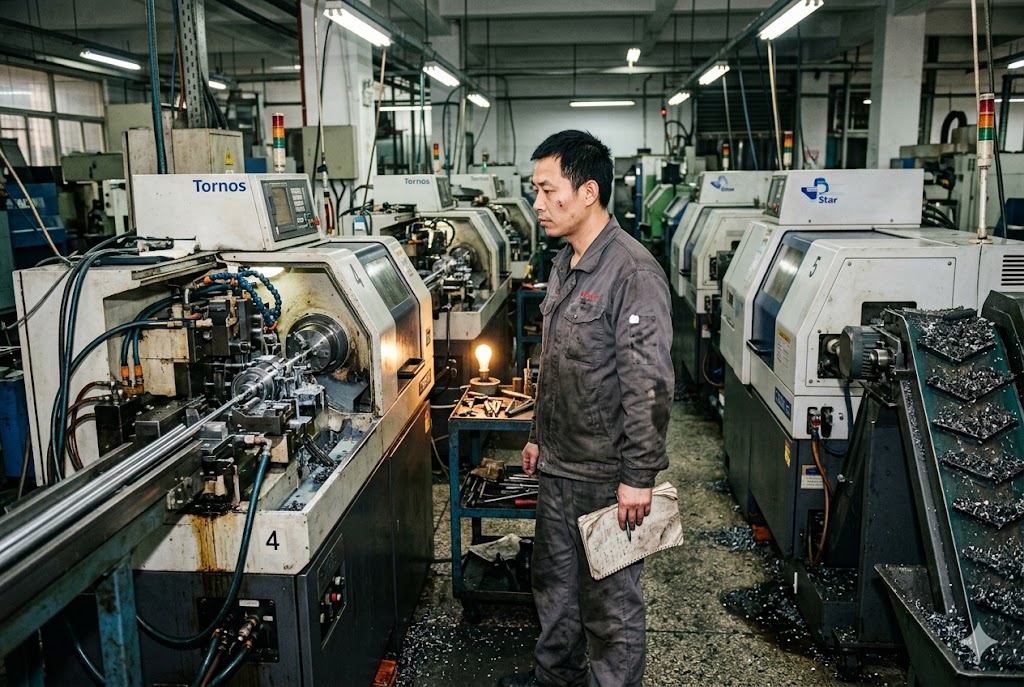
Why Manual Loading Destroys Swiss Lathe Economics
Swiss-type lathes have short cycle times. Many precision connector or medical components run in 60 to 90 seconds per part. Without a bar feeder, an operator must load each bar by hand. That means the machine stops between bars. The operator must be present. You cannot run overnight.
With a 12-foot magazine bar feeder 1, the machine holds multiple bars in reserve. The feeder pushes stock through the guide bushing continuously. When one bar is consumed, the feeder advances the next. The operator is not needed between reloads.
Here is how the math works in practice:
| Cycle Time | Bars Per Shift (No Feeder) | Bars Per Shift (With Feeder) | Unattended Hours |
|---|---|---|---|
| 60 sec/part | Limited by operator availability | 7–23 bars depending on diameter | 8–12 hours |
| 90 sec/part | Operator must reload every 15–20 min | Same reserve capacity | 8–12 hours |
| 120 sec/part | High labor cost per part | Operator manages 3–10 machines | 8–12 hours |
The One-to-Ten Operator Ratio
In well-run Chinese Swiss lathe cells, one operator manages 3 to 10 machines simultaneously. This ratio is only possible because the bar feeder handles material supply. The operator checks feeders at the start of each shift, reloads as needed, and monitors quality. The machines run themselves in between.
This directly lowers your per-part cost. A factory running 10 machines per operator is spreading that labor cost across far more parts than a factory where each machine needs dedicated attention.
What the Bar Feeder Does Not Do Alone
A bar feeder alone is not enough for true lights-out production 2. The machine also needs a chip conveyor to remove metal swarf continuously, a part catcher to collect finished parts without jamming, and a high-pressure coolant system to maintain tool life across long unattended runs. These three elements — feeder, chip management, coolant — work as a system. A factory with a bar feeder but no chip conveyor will stop overnight when the swarf pile jams the machine. When we evaluate factories for our clients, we check all three.
What Bar Feeder Brands Are Common in Chinese Swiss Machining Factories?
When we visit factories in Shenzhen, Dongguan, and Jiangsu, we see a clear split in bar feeder brands that tracks almost exactly with the factory's target market.
Chinese Swiss lathe shops use two main categories of bar feeders: European brands such as LNS and IEMCA at top-tier export-focused facilities, and domestic Chinese brands such as SmartLathe (Foshan Leader Machinery) and Anhui Yuzhou at mid-tier shops. The choice of feeder brand is a reliable signal of which customer segment the factory is targeting.
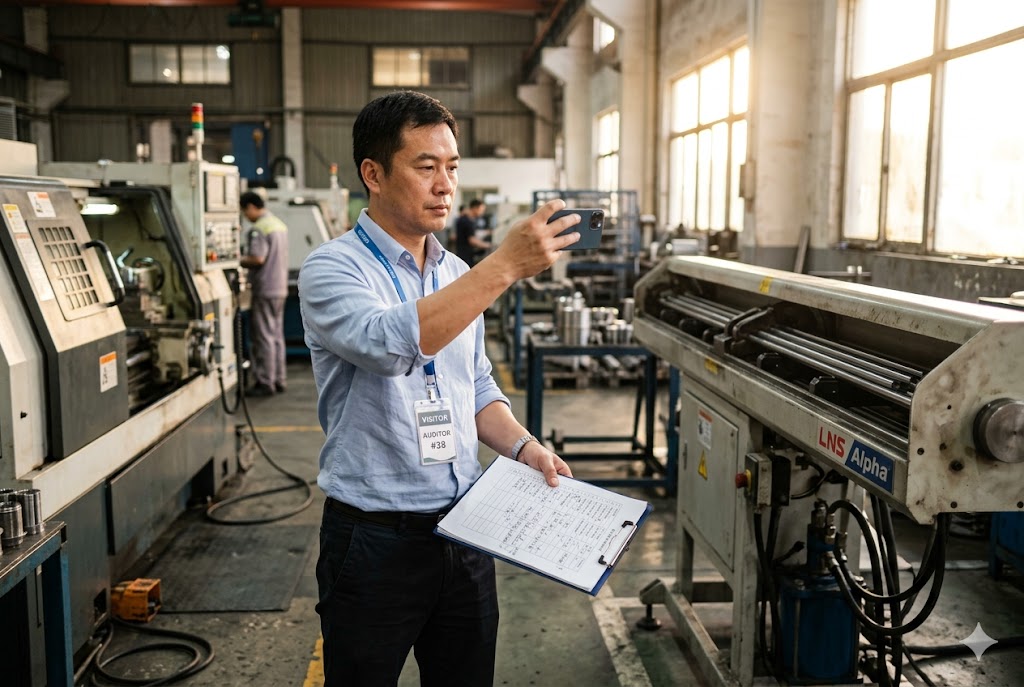
European Brands: LNS and IEMCA
LNS (Swiss-origin, now globally distributed) and IEMCA (Italian) are the two European names you will see most often. Both manufacture magazine-style feeders designed specifically for Swiss-type sliding headstock lathes. Key features include servo-driven pusher control, Swiss headstock synchronization electronics, and remnant ejection systems.
These feeders are expensive. A single LNS Alpha or IEMCA Master unit costs significantly more than domestic alternatives. Factories that specify these brands are typically running Citizen Machinery or Tsugami machines 3 for medical device, aerospace connector, or precision electronics customers with tight tolerance requirements.
Chinese Domestic Brands
Domestic Chinese manufacturers produce servo-driven magazine feeders at lower price points. SmartLathe (Foshan Leader Machinery) and Anhui Yuzhou are two names we encounter regularly. Their feeders handle bar stock from 3mm up to 42–46mm diameter. For mid-tier volume work — industrial connectors, standard fasteners, general precision components — these feeders perform reliably.
The tradeoff is the synchronization interface. Citizen and Tsugami machines have demanding headstock synchronization requirements. Running a domestic feeder on a high-end Swiss lathe is possible but requires careful setup. The best factories match the feeder to the machine OEM's specification.
Brand Comparison Overview
| Feeder Brand | Origin | Bar Diameter Range | Typical Machine Match | Price Tier |
|---|---|---|---|---|
| LNS Alpha / Sprint | Switzerland | 3–65mm | Citizen, Tsugami, Star | High |
| IEMCA Master | Italy | 3–65mm | Citizen, Tsugami, Tornos | High |
| SmartLathe (Foshan Leader) | China | 3–46mm | Domestic Chinese Swiss lathes | Mid |
| Anhui Yuzhou | China | 3–42mm | Domestic Chinese Swiss lathes | Mid |
What This Means When You Evaluate a Factory
When we conduct supplier audits for clients, we photograph the bar feeders and check the model. A factory running LNS feeders on Citizen machines signals serious investment in precision Swiss production infrastructure. A factory running unbranded feeders on older domestic machines may still produce acceptable parts for lower-precision work, but the risk profile is different. Ask for photos of the bar feeder units when you request a factory capability profile. Understanding how to select the right bar feeder for your machine 4 is one of the most practical skills a sourcing manager can develop.
Can a Factory Run 24-Hour Unattended Production With a Bar Feeder, and How Does This Affect Lead Time?
This is the question we get most often from US purchasing managers placing large orders. The short answer is yes — but with important conditions.
A Chinese Swiss lathe factory with magazine bar feeders, chip conveyors, and high-pressure coolant can run lights-out through a third overnight shift, effectively compressing a 3-day production schedule into 1 day. This directly shortens lead times for high-volume orders when the factory is properly set up for unattended operation.
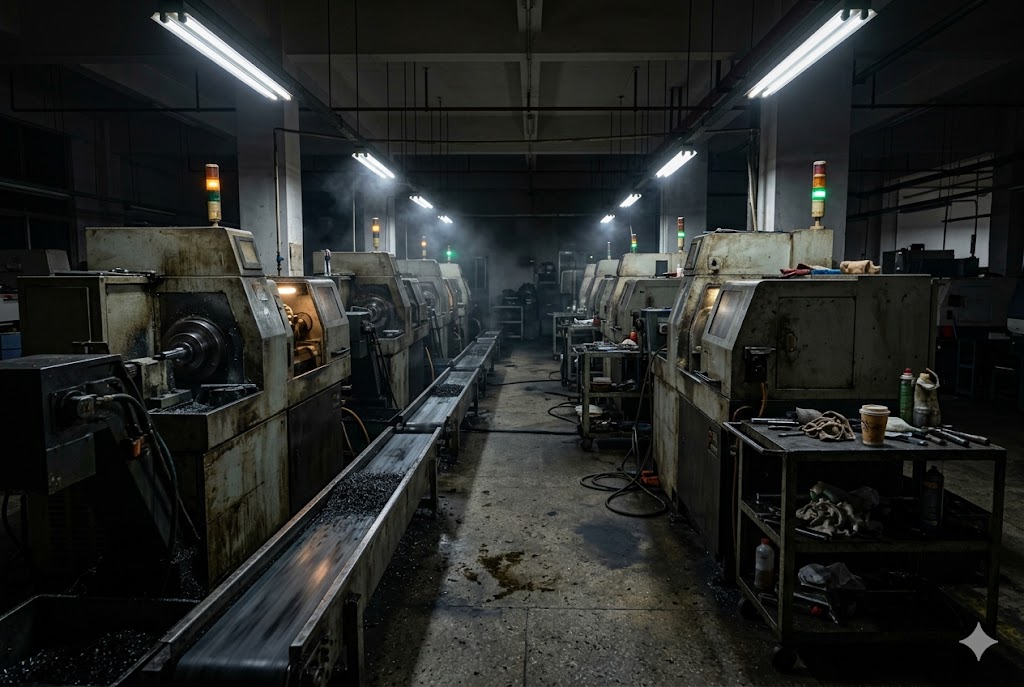
How Lights-Out Production Works in Practice
The typical lights-out model in a Chinese Swiss lathe facility looks like this. Day shift operators set up jobs, load bar feeders, verify first-piece dimensions, and confirm that chip conveyors and coolant systems are running. Evening shift operators reload feeders as needed and perform mid-run quality checks. The third shift — overnight — runs with minimal or no operator presence. The machines produce parts continuously.
A single operator managing 6 to 10 machines is the industry norm in well-equipped Chinese Swiss shops. Industry coverage of bar feed considerations for high-speed unattended machining 5 confirms that this is only possible because the bar feeder eliminates the need for per-part manual loading.
The Remnant Problem: A Real Overnight Risk
One specific failure point that experienced Chinese shops manage carefully is remnant ejection. When a bar of stock is nearly consumed, a 150–200mm tail piece remains. This remnant must be ejected cleanly before the feeder advances the next bar. If it jams in the guide bushing or part catcher, the machine stops. In an unattended overnight shift, this stoppage is not discovered until the morning operator arrives.
Good factories solve this with rear-ejection systems on the sub-spindle side, guide bushing clearance calibration, and remnant detection sensors. When we audit a factory for lights-out capability, we specifically ask how they manage remnant ejection and request records of overnight stoppage frequency.
Lead Time Impact: A Realistic Comparison
| Production Model | Effective Daily Output (10,000 parts) | Days to Complete |
|---|---|---|
| Day shift only, manual load | ~2,000–3,000 parts/day | 4–5 days |
| Two-shift, bar feeder | ~5,000–6,000 parts/day | 2 days |
| Three-shift lights-out, bar feeder | ~8,000–10,000+ parts/day | 1–2 days |
These numbers vary by cycle time and part complexity. But the direction is consistent: a factory running true lights-out production can significantly compress lead times compared to a factory relying on manual-load day shifts.
China's Infrastructure Advantage
Unlike Western shops that often retrofit automation onto existing manual setups, many Chinese Swiss lathe facilities were designed from the start with bar feeders, chip management, and automation as baseline equipment. A well-documented example of what adding modern bar feeders to Swiss lathes 6 can achieve shows shops dramatically improving utilization for sustained unattended production. This gives Chinese manufacturers a structural advantage in achieving sustained lights-out operation — the investment is built in, not added on.
Should I Ask About Bar Feeder Capacity When Evaluating a Factory for 10,000+ Piece Orders?
Yes. And most buyers do not ask. That is a mistake.
When placing orders above 10,000 pieces, ask every factory candidate directly: what bar feeder model do you run, what is the magazine capacity by bar diameter, and what is your documented overnight stoppage rate? These three questions will tell you more about a factory's real production capability than any ISO certificate on the wall.
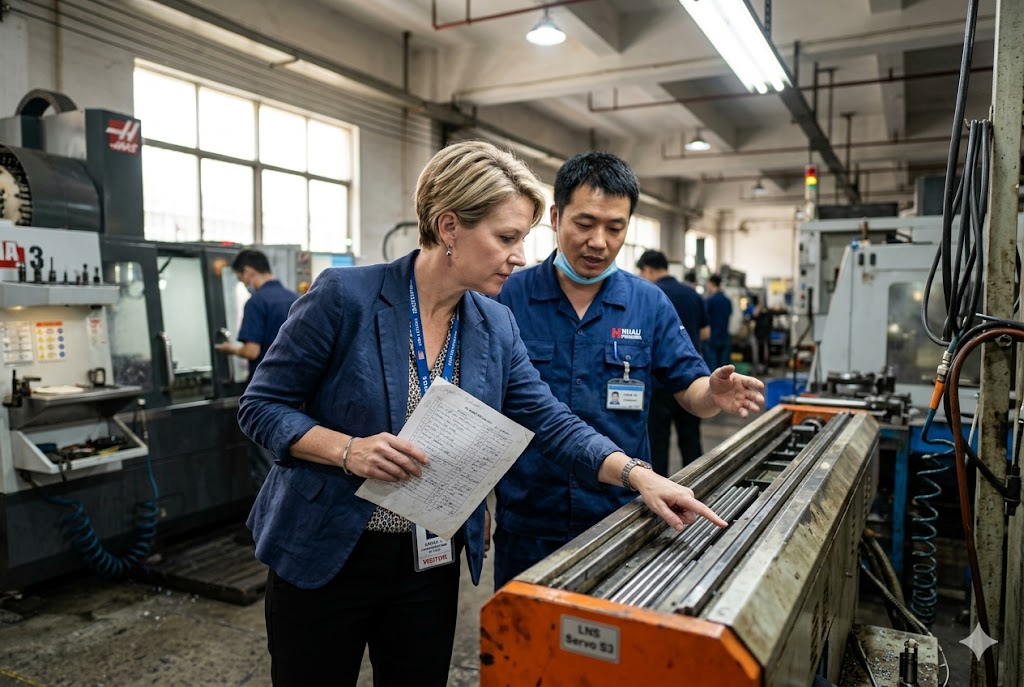
Why Bar Feeder Capacity Matches Your Order Size
A 12-foot magazine bar feeder holds 7 bars at 32mm diameter, or up to 23 bars at smaller diameters. At a 90-second cycle time, 7 bars of 32mm stock produce roughly 350–500 parts per load, depending on part length. To run 10,000 parts overnight, the factory needs either high-capacity magazine feeders, a reloading protocol, or — most reliably — both.
A factory with single-tube hydrodynamic feeders and no magazine capacity cannot sustain the long unattended runs that high-volume orders require. Hydrodynamic feeders are designed for shorter runs and tighter vibration control, not high-volume lights-out production.
Questions to Ask During Factory Evaluation
Here is the specific language we recommend our clients use when requesting factory capability information:
- What bar feeder models are installed on your Swiss lathe line?
- What is the magazine capacity (number of bars) at the diameter relevant to my part?
- Do you run three-shift production, and what is your overnight operator coverage?
- How do you manage remnant ejection? Do you have automated remnant detection?
- What chip conveyor system 7 do you run, and how often is it serviced?
A factory that answers these questions specifically and confidently has likely been asked by serious buyers before. A factory that responds vaguely — or tries to redirect to general capability claims — may not have the infrastructure you need.
Servo-Driven Feeders Matter for Precision Orders
For high-precision parts — connectors, medical components, aerospace fittings — servo-driven bar feeders with Swiss headstock synchronization 8 are the standard you should require. Servo control programs the pusher advance distance to within 0.1mm per part. Pneumatic or purely hydraulic systems introduce positional scatter that affects first-piece part length consistency. At tight dimensional tolerances, this scatter matters.
When we conduct pre-order factory audits for clients placing 50,000-piece or larger orders, we verify that the feeder is servo-driven and that the synchronization interface matches the machine OEM specification. This takes 10 minutes on the factory floor and eliminates a major risk.
Combining Bar Feeder Audit With Quality System Review
Bar feeder capacity tells you whether the factory can produce your volume. It does not tell you whether the parts will meet your drawing. An audit covering bar feeder infrastructure should always run alongside a review of the factory's in-process inspection protocol, first-article inspection records, and pre-shipment inspection process.
A factory's ISO 9001 certification 9 covers its quality management system documentation and process controls — but it does not certify the presence of production automation infrastructure. Our team handles both elements for every client engagement: production infrastructure review and quality system verification, combined into a single factory visit before order placement.
Conclusion
Bar feeders are not optional equipment in Chinese Swiss CNC production — they are the foundation of everything that makes high-volume, short-lead-time sourcing from China possible. The range of capabilities that Swiss-type CNC lathes deliver 10 — from done-in-one precision turning to overnight lights-out production — depends entirely on the bar feeder, chip management, and coolant systems working as an integrated unit. If you are placing large precision part orders and you have not asked your supplier about their bar feeder setup, you are missing one of the most important questions in your evaluation.
Footnotes
1. Explains magazine bar feeder capacity by bar diameter and its role in enabling overnight unattended production. ↩︎
2. Practical guide covering what shops must address before running CNC machines lights-out. ↩︎
3. Real-world case study of an LNS Tryton bar feeder enabling lights-out Swiss-type operation. ↩︎
4. Overview of bar feeder types and synchronization features for Swiss sliding headstock lathes. ↩︎
5. Covers Swiss lathe bar capacity and spindle speed demands on modern magazine feeders. ↩︎
6. How adding modern bar feeders to cam-actuated Swiss lathes enables lights-out machining. ↩︎
7. Explains how chip conveyor selection affects reliable lights-out production for Swiss-type lathes. ↩︎
8. Details servo-driven bar feeder design with Swiss-lathe synchronization for precision operation. ↩︎
9. Overview of ISO 9001 quality management standard and what it does and does not certify. ↩︎
10. Describes the breadth of Swiss-type CNC lathe capabilities across production and precision applications. ↩︎