Skip to main content Skip to footer
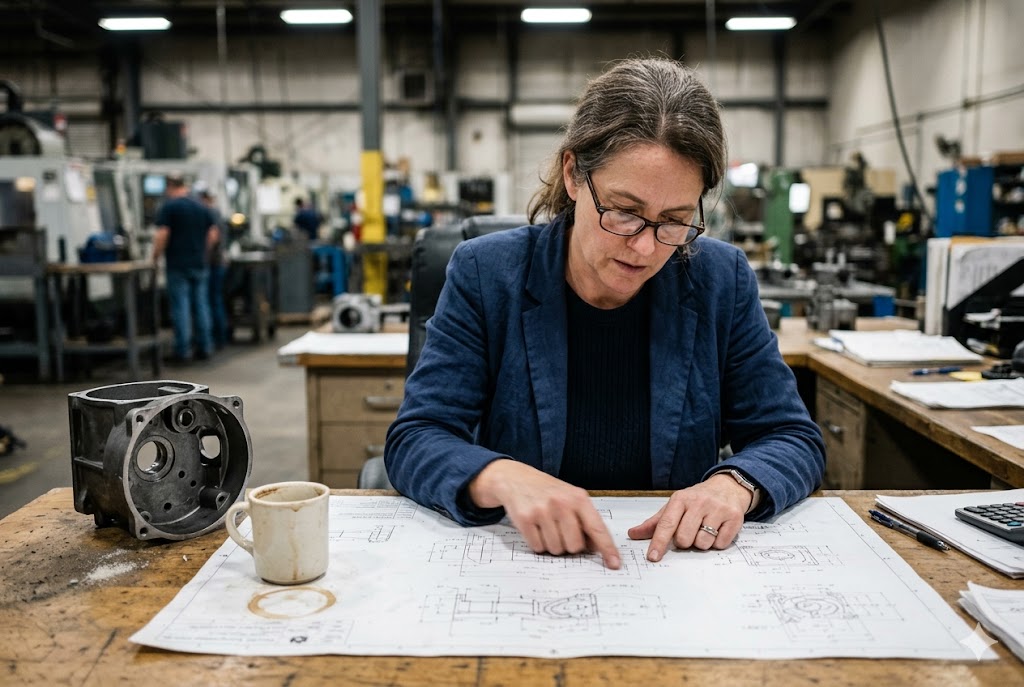
We see it every week on our end: a customer sends over a solid drawing, confident it is ready for tooling — and then our team finds three undercuts, two deep blind holes, and a set of internal threads that no standard Chinese die casting factory can produce as drawn without serious quality risk.
Yes, holes, threads, and undercuts directly affect your die casting project cost, tooling complexity, and defect rate when sourcing from China. Cored holes aligned with the die-opening direction are low-cost. Threads must almost always be machined post-cast. Every undercut requires a slider mechanism that adds tooling cost and cycle time.
These are not minor design details. Get them wrong before tooling is cut, and you are looking at expensive engineering changes, missed delivery windows, and parts that fail inspection on arrival. Read on to understand what each feature really costs you.
Should I Cast Holes Directly or Machine Them Later?
Our engineers review dozens of drawings every month, and hole specifications are one of the most common sources of tooling disputes and downstream quality failures we encounter on behalf of our clients.
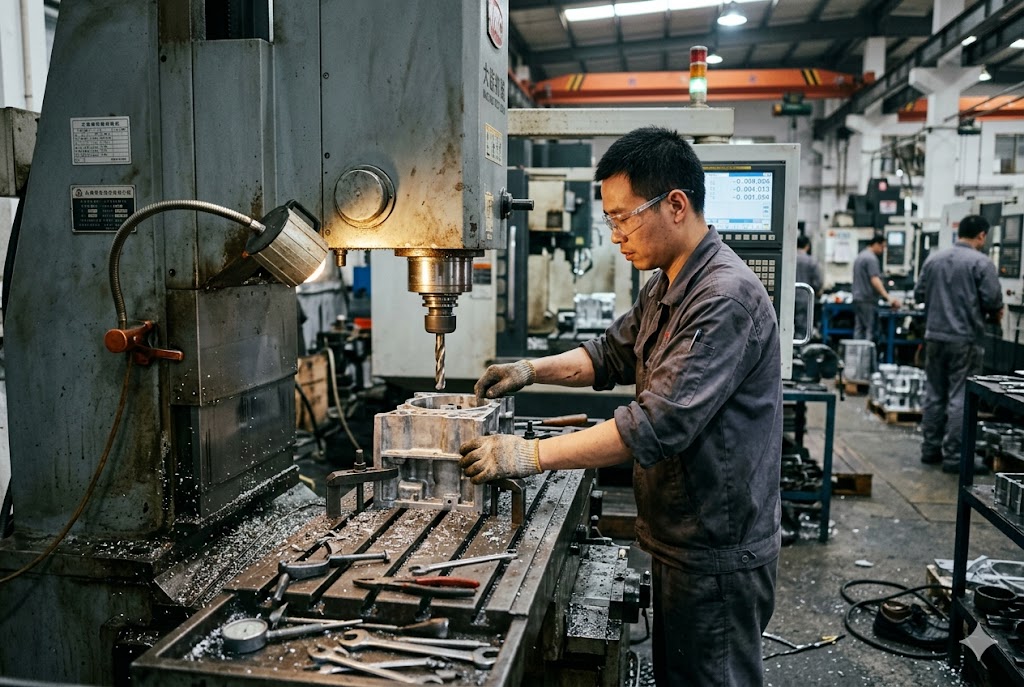
Whether to cast a hole directly or machine it later depends on hole orientation, diameter, and depth. Holes parallel to the die-opening direction can be cast with core pins at low cost. Holes perpendicular to it need a slider. Any hole deeper than six times its diameter should be drilled post-cast to avoid core pin deflection and dimensional failure.
Hole Orientation Is the First Decision
When a hole runs parallel to the direction the die opens, the core pin is machined directly into the die half. No moving parts. No extra mechanism. The hole is formed in every shot at essentially zero incremental tooling cost. This is the default you should aim for wherever your design allows it.
When a hole runs perpendicular to the die-opening direction, you need a side-action slider 1 to form it. The slider extends into the cavity before injection, then retracts before the die opens. This adds tooling cost, adds cycle time, and leaves a witness mark at the slider parting line on the edge of the hole. That witness mark cannot be removed from the as-cast surface.
Minimum Diameter and Depth-to-Diameter Ratio
For aluminum die casting 2, the practical minimum cored hole diameter is approximately 2 mm. Below that, the core pin is too slender to survive injection pressure reliably.
Depth is the harder limit. The table below shows safe depth-to-diameter ratios 3 for common hole diameters in aluminum alloy die casting:
| Hole Diameter | Max Cast Depth | Recommended Action if Deeper |
|---|---|---|
| 2–3 mm | 8–12 mm (4× D) | Machine post-cast |
| 4–6 mm | 20–30 mm (5× D) | Machine post-cast |
| 8–12 mm | 48–72 mm (6× D) | Machine post-cast |
| >12 mm | Up to 6× D | Evaluate case by case |
When a hole exceeds the safe cast depth, the core pin deflects under injection pressure. The result is a tapered, off-center, or oval hole that fails gauge inspection. Many Chinese factories will attempt to cast these holes as drawn rather than flag the problem during quoting — and then ship non-conforming parts. The fix is straightforward: specify "drill after casting" on the drawing, with machining stock explicitly called out.
Wall Thickness Around Holes
Every cored hole needs enough surrounding metal to survive the injection pressure without blowing out. The rule is simple: the wall between the hole and the nearest edge or adjacent feature must be at least 1.5 times the hole diameter — or the nominal wall thickness, whichever is greater.
Designers who are used to machined parts routinely violate this rule. In a machined part, you can drill close to an edge without structural risk. In die casting, the thin metal bridge between a hole and a nearby wall or another hole will crack, develop porosity 4, or flash. We see this failure mode repeatedly in new projects from buyers who have not sourced die castings before.
Hole Spacing in Clusters
When multiple holes are grouped close together, the steel ribs between adjacent core pins in the die become thin. Thin steel ribs crack under the thermal fatigue 5 of repeated production cycles. The minimum recommended edge-to-edge spacing between holes in aluminum die casting is one hole diameter. Any tighter, and the die life drops significantly — which means your per-piece cost rises as the tool requires earlier-than-expected repair.
How Can Threads Affect My Tooling Complexity and Cost?
When we help clients review tooling quotes from Chinese factories, threads are consistently the feature that generates the most confusion — and the most unpleasant surprises after the tool is cut.
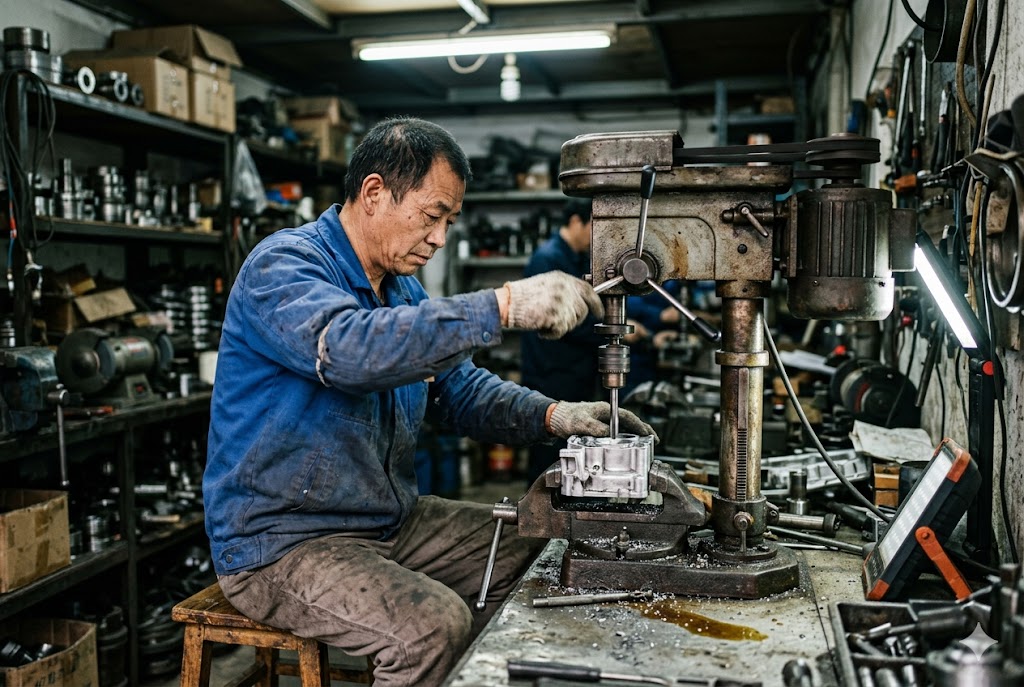
Internal threads cannot be cast directly in standard high-pressure die casting. They require a rotating core mechanism most Chinese factories cannot execute reliably. The correct approach is to cast a smooth cored hole with machining stock and cut the thread post-cast. External threads are almost always machined as well, because the parting line runs through the thread form and leaves unusable flash.
Internal Threads: Why Casting Them Directly Fails
To form an internal thread inside a die casting tool, you need a rotating core that unscrews from the part after solidification. This mechanism is mechanically complex, increases cycle time, and is a maintenance liability. Most Chinese die casting factories that operate at the price points typical of B2B import projects do not have reliable experience with rotating cores.
The universal industry solution is straightforward:
- Cast a smooth cored hole at the correct minor diameter, with machining stock on the diameter.
- Specify the thread class and inspection standard on the drawing — do not leave it to the factory's discretion.
- Have the threads cut post-cast, either at the Chinese factory on a tapping machine or CNC, or after import.
If you do not specify machining stock on the drawing, a lower-tier factory may attempt to cast the thread directly — and ship you a box of parts with flash-filled, non-conforming threads.
External Threads: The Parting Line Problem
External threads on die cast parts are technically castable when the thread feature is aligned with the parting line. But here is the practical problem: the parting line runs directly through the thread helix. The flash fin at the parting line disrupts the thread profile. The resulting thread is geometrically incorrect and will not pass a ring gauge.
In practice, external threads on die cast parts are machined post-cast on a CNC lathe or threading machine. Any drawing that shows an external thread marked "as-cast" will either be flagged by a competent DFM team or produced with defective geometry by one that skips DFM.
Thread Inserts: The Best Solution for High-Load Connections
When a threaded connection carries significant mechanical load, the parent aluminum alloy alone often cannot deliver adequate thread strength — especially in thin bosses. Thread inserts for aluminum 6 are the preferred solution.
| Insert Type | Installation Method | Typical Use Case |
|---|---|---|
| Brass knurled insert (cast-in) | Preheated, placed in die before shot | High-volume, high-load threaded bosses |
| Stainless steel press-in insert | Pressed into post-cast hole with heat | Field-serviceable assemblies |
| Helical wire insert 7 (Helicoil) | Installed in tapped hole post-cast | Repair of damaged threads |
Cast-in inserts must be designed with knurl patterns and undercut geometry that mechanically locks them to the surrounding metal. Critically, the insert must be preheated before placement to prevent thermal shock — cold metal against hot aluminum causes porosity at the insert-to-metal interface. This is a standard process step that disciplined suppliers execute every time. Lower-tier factories frequently skip it to save time.
Will Undercuts Increase the Defect Risk in My Part?
Our team has walked factory floors in Guangdong and Zhejiang specifically to evaluate how a given factory handles slider mechanisms. The variation in quality and consistency between factories is large — and it directly affects defect rates.
Yes, undercuts increase defect risk. Every undercut requires a slider, lifter, or collapsible core. Each adds $1,500–$8,000 or more to tooling cost at a Chinese supplier. Sliders also increase cycle time and introduce additional parting line witness marks that cannot be removed from the as-cast surface.
What Counts as an Undercut
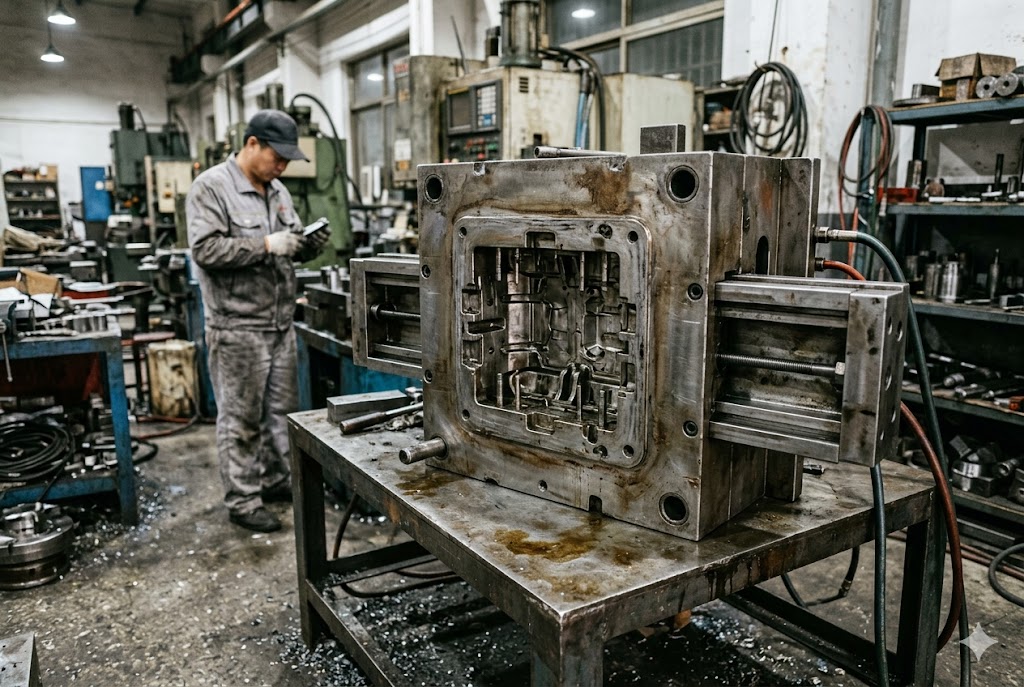
An undercut is any feature that prevents the part from being pulled straight out of the die in the main draw direction. This includes:
- Side holes perpendicular to the draw direction
- Grooves or recesses on the side walls of the part
- Bosses or lugs that face sideways
- Internal cavities that are not accessible from the die face
Engineers who design parts for CNC machining or high-pressure die casting 8 often include undercuts without realizing the cost penalty in die casting is higher. In CNC machining, an undercut just means a longer setup. In die casting, it means a permanent mechanical addition to the tool that runs with every shot.
The Cost of Each Slider
The table below gives a realistic range for slider mechanisms added to a die at a Chinese supplier:
| Slider Complexity | Typical Tooling Cost Addition | Impact on Cycle Time |
|---|---|---|
| Small simple slider | $1,500–$3,000 | +2–4 seconds per shot |
| Medium slider with angular cam | $3,000–$5,500 | +4–8 seconds per shot |
| Large or complex slider | $5,500–$8,000+ | +8–15 seconds per shot |
These numbers add up quickly on a die that already has two or three sliders. And each slider is a potential maintenance point — slider wear produces dimensional drift in the undercut feature over the tool life.
DFM Review: The Most Important Step Before Tool Release
The most effective way to manage undercut cost and defect risk is a mandatory, written Design for Manufacturability (DFM) 9 report from the supplier before any tool steel is purchased. This report should explicitly address every undercut mechanism in the design and identify which ones are functionally essential and which can be redesigned away.
Eliminating a single slider by reorienting a feature or moving it to a post-cast secondary operation can save more money than the DFM review costs. We require this report from every supplier we work with on behalf of our clients, and we review it with our engineering team before signing off on tooling.
Why Chinese Factories Often Stay Silent
This is the uncomfortable reality: many Chinese factories will not volunteer the information that an undercut in your drawing is going to cause production problems. They quote the part as drawn, build the tool, and manage the resulting defects through sorting, rework, or simply shipping and hoping you do not notice.
The contractual protection is a written DFM sign-off requirement, with the buyer's approval required before the tooling purchase order is released. Without this step, you are accepting risk that you have no visibility into until the first sample shipment arrives.
What Should I Ask My Supplier Before I Finalize These Structures?
After years of auditing Chinese and Vietnamese factories for our clients, we have a clear picture of which questions separate capable suppliers from ones that will cause you problems six months into production.
Before finalizing holes, threads, and undercuts with a Chinese die casting supplier, require a written DFM report that addresses every hole depth, thread specification, and undercut mechanism. Confirm slider count, post-cast machining scope, thread inspection standards, and insert preheating procedures in writing before releasing the tooling purchase order.

The Six Questions That Matter Most
Do not send a drawing and wait for a quote. Ask these questions directly and require written answers:
1. How many sliders does this die require, and what is the estimated tooling cost addition for each?
This forces the factory to enumerate every undercut and price it transparently. If a supplier cannot answer this question in detail, they have not done a proper DFM review.
2. Which holes will be cored and which will be drilled post-cast? What machining stock are you allowing on drilled holes?
The answer should align with the depth-to-diameter limits discussed above. If the factory plans to cast holes you know are too deep, this is a red flag.
3. How will internal threads be produced — post-cast tapping or rotating core? What thread gauge will be used for inspection?
You want to hear "post-cast tapping" for standard internal threads and a clear answer on thread class and gauge type. "We will try to cast the thread" is a failure answer.
4. Are any thread inserts required? If so, what is your preheating procedure for cast-in inserts?
A factory that cannot describe a preheating procedure for cast-in inserts has not done this correctly before.
5. Will you provide a written DFM report before tool steel is purchased? Can we review and sign off on it?
This is non-negotiable. If a factory refuses to provide a written DFM report, do not proceed with tooling.
6. What tool steel grade will you use for core pins and sliders, and what heat treatment do you apply?
H13 tool steel 10 is the standard for aluminum die casting tooling. Stress-relief heat treatment after machining is essential for die life. A factory that cannot answer this question specifically is cutting corners on tool quality.
What Good and Bad Answers Look Like
| Question | Good Answer | Warning Sign |
|---|---|---|
| Slider count and cost | Detailed list with per-slider cost breakdown | "We will handle it in the tool" |
| Hole depth plan | Clear cast vs. drill split with machining stock called out | "We can cast all holes as drawn" |
| Internal thread method | Post-cast tapping with thread class and gauge specified | "We have experience with cast threads" |
| Insert preheating | Specific temperature range and dwell time | "We follow standard practice" |
| DFM report | Committed delivery date before tooling PO | "We will note any issues after tooling" |
| Tool steel and heat treatment | H13, double-tempered after rough machining | No specific answer |
The Value of a Pre-Tooling Factory Audit
If the project is large — say, annual volume above 50,000 pieces or tooling investment above $20,000 — a pre-tooling factory audit is worth the cost. Our team in China and Vietnam conducts these audits specifically to evaluate a factory's tooling engineering capability, slider mechanism experience, post-cast machining setup, and quality inspection equipment. The audit report gives our clients the information they need to make a sourcing decision before money is committed to tooling.
Conclusion
Holes, threads, and undercuts are not minor details — they are the features most likely to drive tooling cost overruns, production delays, and inspection failures when sourcing die castings from China. Require a written DFM review. Ask the right questions before tooling starts. Get it in writing.
Footnotes
1. How slider and lifter mechanisms work in die casting and injection molding tooling. ↩︎
2. Aluminum die casting design guide covering holes, wall thickness, draft, and undercuts. ↩︎
3. Die casting design reference with depth-to-diameter ratios and key tolerances. ↩︎
4. Overview of A380 aluminum alloy, including porosity causes and prevention strategies. ↩︎
5. Research on H13 tool steel performance and thermal fatigue in die casting cycles. ↩︎
6. Guide to threaded insert types for aluminum, including helical and knurled inserts. ↩︎
7. Thread insert types including Helicoils and when to use each for soft metal assemblies. ↩︎
8. Complete overview of high-pressure die casting process, applications, and design considerations. ↩︎
9. What DFM is, why it matters, and how to run an effective supplier DFM review. ↩︎
10. H13 tool steel properties, heat treatment, and why it is the standard for die casting tooling. ↩︎