Skip to main content Skip to footer
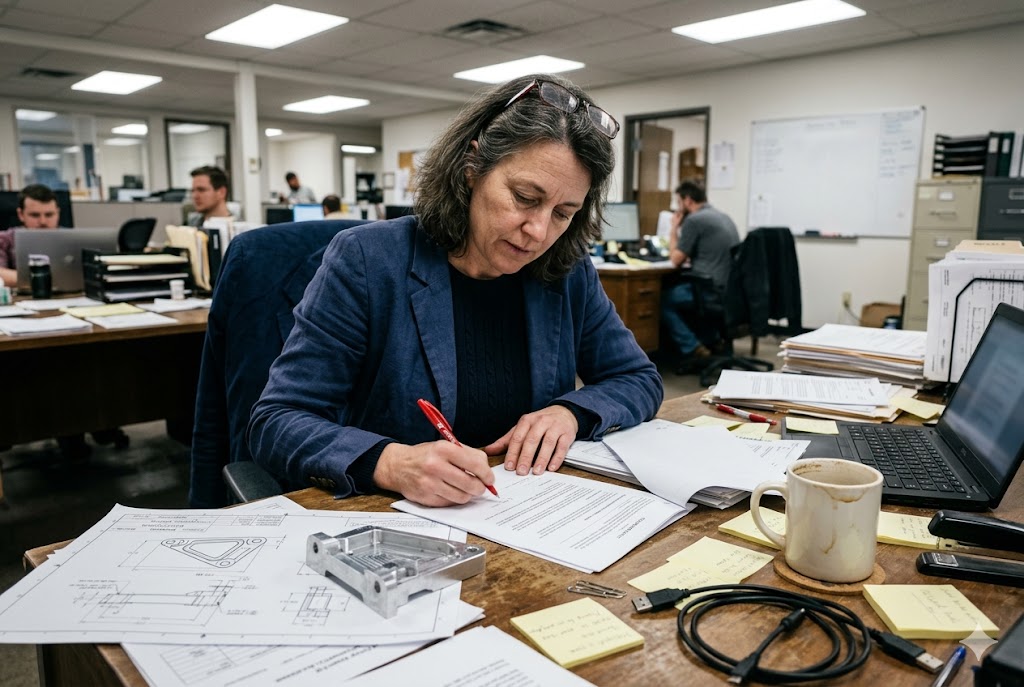
Every week, our sourcing team reviews cases where a buyer shared CAD files with a new supplier and received a sample — but no agreement was ever signed. By the time the parts appear on a competitor's shelf, it is too late to act. The problem is not the supplier. The problem is the missing contract.
Yes, you need a contract at the sample stage. The moment you share drawings or CAD files with a Chinese supplier, you expose your IP, your design, and your tooling investment. A China-specific NNN agreement — signed before any files are sent — is the only legally enforceable protection available to you in a Chinese court.
This article breaks down exactly what that contract must cover, why a standard NDA is not enough, and what happens when buyers skip this step entirely.
What Sample-Stage Terms Should I Confirm Before Paying?
When our team walks a new client through their first China sourcing project, the payment conversation is usually the first thing they want to discuss. But payment terms only make sense after you have answered a more important question: what exactly are you paying for, and what does the supplier owe you in return?
Before making any sample payment, confirm these terms in writing: the exact entity you are paying, the acceptance criteria for the sample, the number of revisions included, tooling ownership, the delivery timeline, and the consequences if the sample fails. These are the terms that determine your leverage and your legal options.

Identify the Exact Legal Entity You Are Contracting With
This step is ignored more often than any other. Buyers confirm a price with a sales rep, send a deposit via bank transfer, and later discover that the entity they paid is a Hong Kong trading company — not the Shenzhen factory that received their drawings.
This matters because the NNN obligation must bind the actual manufacturer who handles your files. If your contract names a different entity, the factory can claim the agreement does not apply to them.
Before signing anything, ask the supplier for their business license. Verify the registered name and registration number using China's National Enterprise Credit Information Publicity System 1. Your contract must name this entity exactly.
| What to Verify | Why It Matters | How to Check |
|---|---|---|
| Registered company name | The contract must name the correct legal entity | Request the business license |
| Unified Social Credit Code | Confirms the entity is legally registered in China | Cross-check on CNIPA or GSXT |
| Factory vs. trading company | Determines who actually holds your files | Ask for factory certification or visit in person |
| Signatory authority | The person signing must be authorized to bind the company | Request a power of attorney if the signatory is not the legal representative |
Establish Written Acceptance Criteria Before the Sample Is Made
A common mistake is describing the sample requirements by email or WeChat and assuming the supplier understands. They may not. And even if they do, informal messages do not create enforceable obligations.
Write down the specific dimensions, tolerances, surface finish requirements 2, and functional tests that a passing sample must meet. Both parties sign this document. If the sample fails, you have an objective standard to point to.
Structure Payment to Keep Leverage
Our team recommends a 50/50 split: 50% deposit to start, 50% on approved sample. Full upfront payment removes your ability to compel a re-sample. Do not pay in full before you have confirmed the sample meets your written acceptance criteria.
| Payment Structure | Buyer Leverage | Risk Level |
|---|---|---|
| 100% upfront | None | High |
| 50% deposit / 50% on approval | Strong — withheld payment compels compliance | Low |
| 30% deposit / 70% on approval | Stronger leverage, may face supplier resistance | Low to moderate |
Confirm Revision Terms
How many rounds of revision are included in the sample fee? What is the cost of additional revisions? Who bears the cost if the sample fails due to a supplier error versus a buyer design change?
These questions sound minor. In practice, they determine whether your sample process takes four weeks or four months.
Should I Include IP, Tooling, and Revision Terms in a Sample Agreement?
In our experience managing hundreds of sourcing projects, the disputes that are hardest to resolve are never about price. They are about who owns the tooling, who owns the design improvements, and what happens to your files after the relationship ends. These are IP and tooling questions — and they must be resolved in writing at the sample stage, not later.
Yes, your sample agreement must address IP ownership, tooling and fixture ownership, revision rights, and what happens to your files if the relationship ends. Leaving these terms to the production contract is too late — the supplier already holds your technical documentation and may have built custom fixtures at your expense.
Why a Standard NDA Is Not Enough in China
Most Western buyers arrive at the sourcing process with a standard NDA template. This document is familiar, easy to send by email, and feels legally solid. It is not.
A standard NDA is largely unenforceable against a Chinese supplier in a Chinese court. Chinese courts require agreements that are governed by Chinese law, written in Chinese, and stamped with an official company chop (seal). An English-language NDA governed by US or UK law gives you almost no practical recourse against a supplier operating in Shenzhen.
What you need is an NNN agreement 3: Non-Disclosure, Non-Use, Non-Circumvention. This document is specifically designed for China sourcing relationships and creates three separate enforceable obligations.
| Agreement Type | Jurisdiction | Enforceability in China | Covers IP Misuse | Covers Circumvention |
|---|---|---|---|---|
| Standard Western NDA | Home country law | Weak to none | Partially | No |
| China-specific NNN | Chinese law | Strong | Yes | Yes |
| Product Development Agreement (PDA) | Chinese law | Strong | Yes — assigns all IP to buyer | Yes |
The NNN Agreement Must Be Signed Before Files Are Shared
This point is non-negotiable. The NNN must be signed before you send any drawings, CAD files, specifications, or photographs of your product. Once a supplier has received your technical documentation without a binding confidentiality obligation, the legal window to prevent misuse has closed. A contract signed after the fact cannot retroactively protect what has already been disclosed.
Our team makes this a hard rule in every project. No files leave our server until we have a signed, sealed NNN agreement 4 in hand.
Tooling and Fixture Ownership
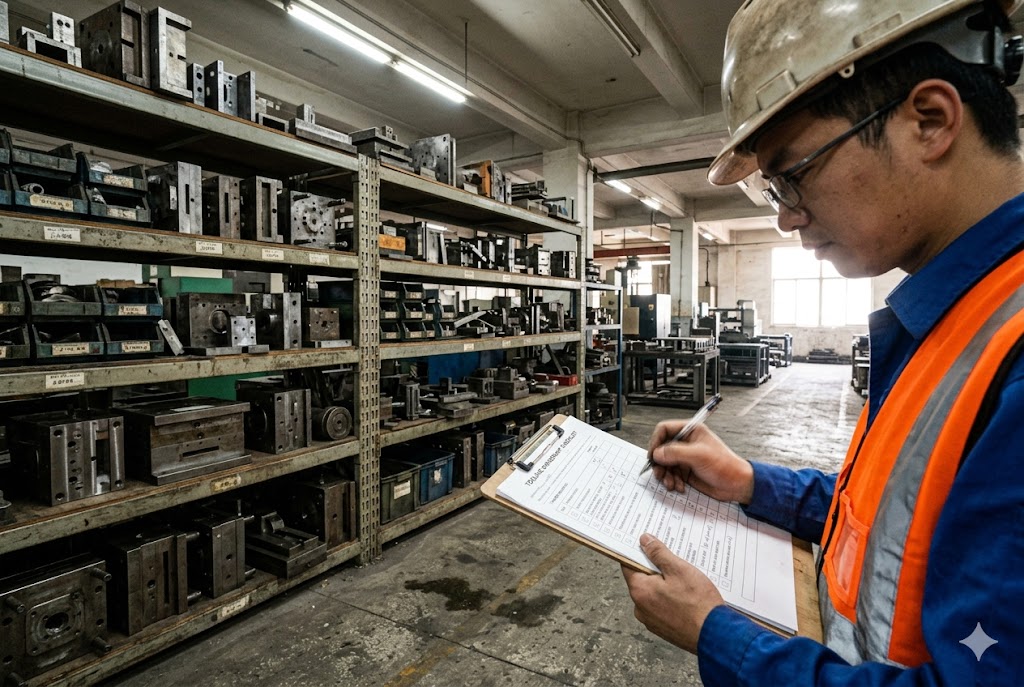
If you pay for custom fixtures, jigs, or molds used to produce your sample, you must document ownership explicitly. Many buyers assume that paying for tooling automatically makes them the owner. Under Chinese law, this is not the default outcome unless ownership is stated in writing.
If the contract is silent on tooling, the supplier can legally retain the fixtures and use them to produce your parts for a competitor after your relationship ends. This is not a hypothetical. Our team has encountered this situation multiple times. For a detailed breakdown of how mold and tooling ownership disputes 5 unfold, experienced sourcing professionals have documented the exact pressure tactics suppliers use.
Your sample agreement should state:
- Who paid for each piece of tooling
- Who owns the tooling
- Where the tooling will be stored
- What happens to the tooling if the relationship terminates
Product Development Agreements for Co-Developed Parts
If your sample process involves the supplier contributing engineering suggestions, design modifications, or material recommendations, you are in co-development territory. In this situation, a standard NNN is not sufficient.
A Product Development Agreement (PDA) explicitly assigns all IP, design improvements, and modifications arising from the development process to you. Without this document, a supplier who contributes to your design may have a legitimate claim to co-ownership of the resulting IP under Chinese law. Comprehensive guidance on IP protection when developing new products in China 6 covers the full range of agreements buyers need at each stage.
How Can a Sample Contract Reduce Later Disputes?
When a production dispute lands on our desk, the first question we ask is: what does the sample agreement say? In most dispute cases we see, the answer is: there is no sample agreement. The buyer and supplier are arguing over email threads and WeChat messages — documents that are nearly impossible to enforce in Chinese proceedings.
A signed sample contract reduces disputes by establishing objective, agreed standards for acceptance, defining each party's obligations before the relationship is tested, and giving both sides a clear reference point when disagreements arise. Disputes that reach arbitration almost always favor the party with a signed, sealed document.

Why WeChat and Email Are Not Substitutes for a Signed Contract
Our sourcing team communicates with suppliers across many platforms. WeChat is fast and convenient. Email is easy to search. But neither is a reliable legal instrument in China.
WeChat records can disappear when a phone is lost, replaced, or a WeChat account is deleted. Chinese courts have accepted WeChat records as evidence in some cases, but the bar for authentication is high and the records are easy to dispute. Emails face similar challenges — authenticating an email thread in a Chinese proceeding is difficult, and the contents can be contested.
A signed contract with a company chop creates a clear, objective legal obligation. This is the standard that Chinese courts and arbitration panels 7 apply.
What a Sample Contract Establishes
A well-drafted sample contract covers the following areas:
- Confidentiality: The NNN terms that prevent disclosure, misuse, and circumvention
- Acceptance criteria: The specific standards a passing sample must meet
- Revision scope: The number of revisions included and who pays for additional rounds
- Tooling ownership: Who owns the fixtures, jigs, and molds
- IP assignment: That all IP arising from the sample process belongs to the buyer
- Payment terms: Deposit and balance schedule tied to sample approval
- Dispute resolution: The forum, governing law, and process for resolving disagreements
- Termination terms: What happens to files, tooling, and payments if the relationship ends
How Clear Terms Prevent Disputes Before They Start
Most disputes do not begin with bad faith. They begin with ambiguity. A supplier who interprets your tolerance requirement differently than you do is not necessarily trying to defraud you — they may simply be working from a different assumption.
Written, agreed standards remove these assumptions. When both parties sign off on the same acceptance criteria document, there is far less room for good-faith disagreement to escalate into a costly dispute.
Our quality control team uses the sample acceptance criteria document as the reference point for every in-process inspection. If the criteria are written clearly at the sample stage, the inspection process is faster, cheaper, and more effective throughout production.
What Risks Do I Face If I Skip a Written Sample Agreement?
The buyers who skip a sample agreement are not naive. They are often experienced purchasing managers who have done business in China for years without a serious problem. The issue is that the absence of a problem is not the same as the absence of risk. The risk accumulates silently, and it surfaces at the worst possible moment.
Skipping a written sample agreement exposes you to IP theft with no legal recourse, tooling loss, unresolvable quality disputes, and an inability to enforce remedies in the jurisdiction where your supplier operates. The cost of a sample agreement is negligible compared to the cost of any one of these outcomes.
IP Theft With No Recourse
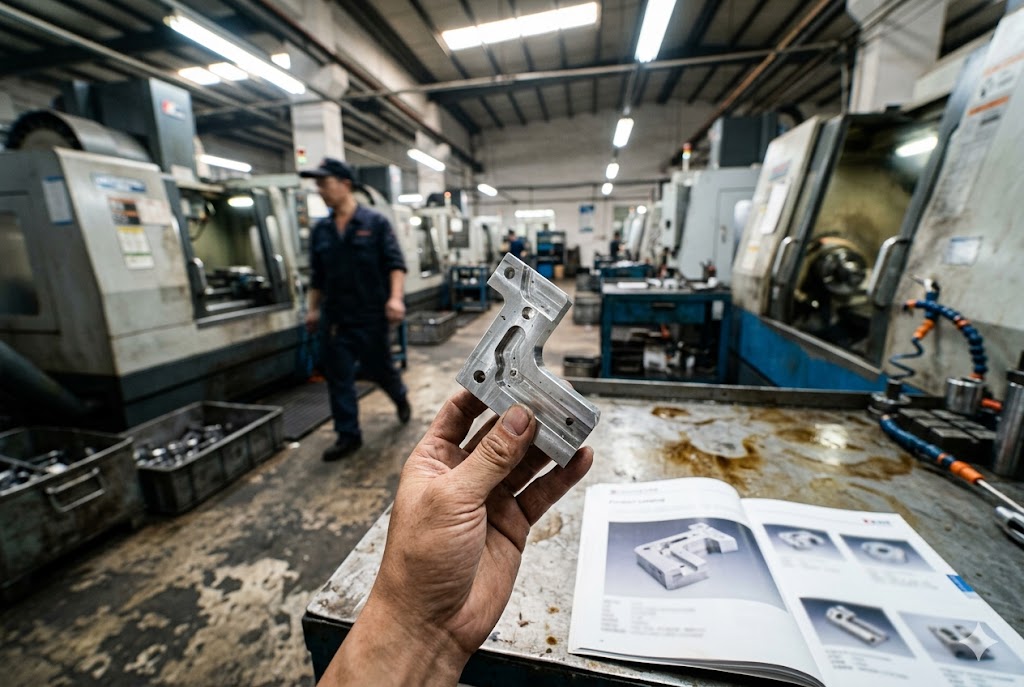
If you share CAD files or drawings without a signed NNN agreement, a supplier who copies your design and produces it for a competitor has not breached a contract — because there is no contract. Your only legal option at that point is to pursue a trade secret claim, which is difficult, slow, and expensive.
With a signed China-specific NNN 8 in place, you have a direct breach of contract claim. Chinese courts are far more responsive to clear contractual breaches than to complex IP tort claims.
Tooling Retained by the Supplier
You pay for custom fixtures. The relationship ends. The supplier keeps the tooling. Without a written ownership clause, this outcome is entirely legal under Chinese law. You have no mechanism to retrieve the tooling or the value you invested.
This risk compounds when tooling is expensive. Molds for injection-molded components, for example, can cost tens of thousands of dollars. Losing a mold to a supplier dispute is a serious financial loss that a two-paragraph ownership clause would have prevented. International manufacturing lawyers have detailed how protecting molds and tooling when manufacturing overseas 9 requires specific contract provisions that go well beyond standard commercial terms.
Quality Disputes Without a Resolution Path
Without agreed acceptance criteria, a quality dispute has no objective reference point. The buyer says the part is wrong. The supplier says it meets the requirements. Both sides are arguing from different assumptions, and there is no document either party signed that defines which standard applies.
In this situation, most buyers face a practical choice: accept the parts, re-source at significant cost and delay, or write off the payment. None of these outcomes is acceptable. All of them are avoidable with a properly drafted sample agreement.
The Purchase Order Is Not a Substitute
A purchase order covers price, quantity, and delivery date. It does not address quality standards, inspection rights, defect remedies, tooling ownership, unauthorized subcontracting, or IP misuse. These are the terms that determine the outcome of every serious dispute.
Buyers who treat a PO as their primary contractual document discover this gap at the worst possible moment — when a dispute is already underway and the PO provides no basis for the remedy they need. A proper China manufacturing contract 10 approach includes supplier due diligence and layered contractual protections that a PO cannot replicate.
| Document | What It Covers | What It Does Not Cover |
|---|---|---|
| Purchase Order (PO) | Price, quantity, delivery date | Quality standards, IP, tooling, remedies, inspection rights |
| NDA (Western, English) | Confidentiality only | Unenforceable in China; no non-use or non-circumvention |
| NNN Agreement (China-specific) | Confidentiality, non-use, non-circumvention | Does not assign IP from co-development |
| Sample Agreement (complete) | All of the above plus acceptance criteria, tooling, revisions, payment terms | Nothing — this is the document you need |
Conclusion
Sign the NNN before you share a single file. Confirm acceptance criteria before the sample is made. Document tooling ownership in writing. These three steps cost very little and prevent the disputes that cost the most.
Footnotes
1. Official guide to verifying a Chinese supplier's business license using GSXT and CNIPA databases. ↩︎
2. Comprehensive acceptance guide covering dimensions, tolerances, surface finish, and functional testing for CNC parts. ↩︎
3. Explains the three-layer protection of Non-Disclosure, Non-Use, and Non-Circumvention under Chinese law. ↩︎
4. Breaks down NNN agreement components and when to deploy them during China sourcing. ↩︎
5. Documents real-world supplier pressure tactics around tooling ownership and how to counter them contractually. ↩︎
6. Covers IP protection strategies, tooling control, and product development agreements for China manufacturing. ↩︎
7. Explains China-specific dispute resolution clauses, CIETAC arbitration, and governing law in manufacturing contracts. ↩︎
8. Explains how an NNN agreement must be drafted, sealed, and enforced under Chinese law to protect your IP. ↩︎
9. Details the specific contract language required to secure legal ownership and retrieval rights for overseas molds. ↩︎
10. Step-by-step Chinese company due diligence checklist using GSXT, SAMR, and official registration sources. ↩︎