Skip to main content Skip to footer
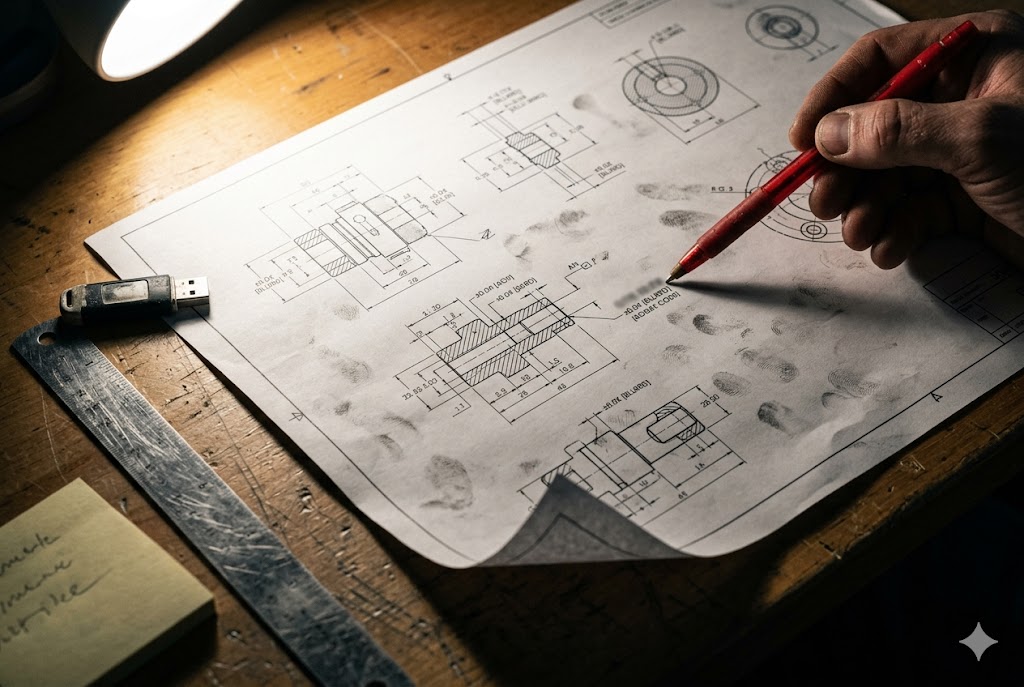
Every week, our team receives drawings from buyers who have already shared the same files with five other suppliers — without any signed agreement. That is a real problem, and most buyers only realize it too late.
Yes, you need a legal agreement before sharing sensitive CNC drawings with a Chinese supplier. But a standard Western NDA will not protect you. The right tool is an NNN Agreement — written in Chinese, governed by Chinese law, and built to be enforced in a Chinese court. Without those three elements, the agreement is legally decorative.
Here is what that means in practice, and what else you should do before sending a single file.
What Project Information Should I Protect Before Sending Drawings?
We see buyers share full assembly drawings, tolerance callouts, and material specs on the very first email — before any agreement is in place. That is the moment your risk is highest.
Before sending drawings to any CNC supplier in China, protect your proprietary geometry, unique tolerance specifications, novel mechanisms, and any features that would give a competitor a real advantage if copied. Standard commodity parts carry low risk. Custom precision parts designed in-house carry high risk and must be protected first.

What Makes a Drawing "Sensitive"?
Not every drawing needs the same level of protection. The question is simple: if a competitor had this file, could they hurt your business?
Here is a practical way to think about it:
| Drawing Type | Risk Level | Action Before Sharing |
|---|---|---|
| Standard commodity part (catalog geometry) | Low | Basic supplier NDA is fine |
| Custom part with proprietary geometry | High | NNN Agreement required |
| Part that reveals a novel mechanism | Very High | NNN Agreement + patent filing in China |
| Assembly drawing showing full product architecture | Very High | Redact and split before sharing |
If your parts fall in the high or very high category, an NNN Agreement 1 is not optional — it is the minimum standard.
Redaction and Drawing Splitting
You do not need to share everything. Share only what the supplier needs to machine the specific part they are making.
Redact dimensions, tolerances, and features unrelated to their operation. If you have a complex assembly, split it across multiple suppliers so no single factory sees the complete picture. Use part numbers instead of descriptive product names on your drawings.
These are operational controls. They work alongside legal agreements, not instead of them. A supplier who only sees part of your design has less to misuse — even if they wanted to.
What Information Beyond Drawings Needs Protection?
Think beyond the CAD file. Your customer list, your production volumes, your downstream buyers — these are all information a supplier could use to circumvent you. Non-circumvention protection, 2 which is one of the three elements in an NNN Agreement, specifically covers this risk. It prevents a supplier from contacting your customers directly and cutting you out of the relationship.
This scenario is more common than pure design theft. A supplier who knows who your customers are and what volumes you move has strong financial incentive to reach out directly. An NNN Agreement creates a contractual barrier against that.
When Should I Sign an NDA in the Sourcing Process?
Most buyers ask this question too late — after they have already shared files. The right answer is: before you share anything sensitive.
Sign an NNN Agreement — not a standard NDA — before sending any proprietary drawings, specifications, or customer information to a Chinese CNC supplier. The agreement must be in place and countersigned before the first file leaves your system. Timing is the single most controllable risk factor in the sourcing process.
Why Not a Standard NDA?
A conventional NDA 3 written in English, governed by US or UK law, and relying on US courts for enforcement is essentially unenforceable against a Chinese supplier. Chinese courts do not generally recognize or enforce foreign court judgments. A supplier operating in China, with assets in China, faces no practical legal consequence from violating a US-law NDA — because enforcement has to happen where the assets are.
This is not a gray area. It is the practical reality of cross-border contract enforcement.
What Is an NNN Agreement?
An NNN Agreement covers three distinct risks that a standard NDA ignores:
| Protection | What It Covers | Why It Matters for CNC Sourcing |
|---|---|---|
| Non-Disclosure | Supplier cannot share your designs with third parties | Prevents subcontractors and related factories from accessing your IP |
| Non-Use | Supplier cannot use your design to make competing products | Directly addresses the most common real-world risk in CNC manufacturing |
| Non-Circumvention | Supplier cannot contact your customers or cut you out | Protects your business relationships and commercial position |
All three risks are documented in CNC parts sourcing. The non-use and non-circumvention risks are actually more likely than pure information disclosure for most manufacturers.
What Makes an NNN Agreement Enforceable in China?
Three elements are non-negotiable:
Written in Chinese. Chinese must be the controlling language. The agreement can be bilingual for your reference, but the Chinese version governs.
Governed by Chinese law. Chinese courts apply Chinese law. An agreement governed by US law gives a Chinese court no framework to work with.
Jurisdiction in a Chinese court. Specifically, a court with jurisdiction over the supplier's registered location. This is where the supplier's assets are — which is where enforcement has to happen.
The Liquidated Damages Clause
The most important technical element that gives your NNN Agreement real deterrent power is a specific liquidated damages clause. 4 Chinese courts strongly favor predetermined penalty amounts because they eliminate the burden of proving actual damages.
A clause specifying, for example, RMB 500,000 (approximately $70,000) per breach gives the supplier a concrete, calculable financial risk. Vague references to "all damages" or clauses requiring injunctive relief — the standard US approach — are far less effective under Chinese law.
How Should I Qualify a Supplier's Response to the NNN Request?
A reputable Chinese CNC manufacturer that regularly works with Western buyers will sign an NNN Agreement without significant resistance. It is a routine expectation in that market segment.
A supplier that refuses, demands major modifications, or reacts with hostility is sending you a signal. Either they do not take contractual obligations seriously, or they have specific intentions around your information that they do not want constrained. Either way, that is a reason to find a different supplier.
Is an NDA Enough to Protect My Design and Customer Information?
Our sourcing team gets this question from buyers who have just drafted an NDA and feel covered. The short answer is: an agreement alone is never enough.
An NNN Agreement is necessary but not sufficient. True IP protection requires a layered strategy: the right legal agreement, patent or utility model registration in China, and operational controls that limit what any single supplier can see or use. Each layer covers risks the others do not.
Why Patent Registration in China Matters
China uses a first-to-file patent system. 5 That means a Chinese manufacturer who files a patent on your design in China before you do can legally prevent you from manufacturing or selling that product in China.
This is not a hypothetical. It has happened to Western buyers who relied on contracts alone. An NNN Agreement protects against breach of contract. It does not prevent a supplier from filing a patent on your design — because filing a patent is not a breach of a confidentiality agreement. It is a separate legal act.
Chinese utility model patents 6 can be obtained within 6 to 12 months for relatively modest cost. They provide meaningful defensive protection for mechanical parts. If your design has novel features, filing in China should happen before — or at the same time as — you begin sharing drawings with suppliers.
What Did China's 2026 Trade Secret Regulation Change?
China enacted a new Regulation on the Protection of Trade Secrets 7 effective June 1, 2026. It strengthens administrative enforcement mechanisms for trade secret misappropriation. That is a positive development for foreign buyers.
But it does not replace the need for an NNN Agreement. Trade secret law protects formally classified secrets. An NNN Agreement creates contractual obligations covering a broader range of risks — including unauthorized use, disclosure within the supplier's business network (subcontractors, related factories), and circumvention — scenarios that are common in CNC supply chains but may not meet the legal definition of trade secret misappropriation.
The two tools work together. They do not substitute for each other.
Has IP Enforcement in China Actually Improved?
Yes. The enforcement environment has improved materially over the past decade. In 2025, Chinese public security agencies investigated over 37,000 IP-related cases. Data from 2025 shows that over 60% of patent infringement cases in Chinese specialized IP courts 8 favored the IP rights holder.
That said, enforcement still requires:
| Requirement | Why It Matters |
|---|---|
| Agreement properly structured for Chinese law | Courts enforce what is in front of them |
| IP registered in China | You must have rights before you can enforce them |
| Fast action when a violation occurs | Chinese courts can grant asset preservation orders to freeze assets during litigation |
Speed matters. Chinese courts can act quickly when asked — but you have to ask quickly.
Operational Controls That Work Right Now
Legal agreements and registrations take time. Operational controls are available immediately.
Split complex assemblies across multiple suppliers. Use part numbers instead of product names. Redact dimensions not needed for the specific operation. Require samples before full production. These practices limit the value of the information any single supplier holds — which reduces the incentive and the ability to misuse it.
None of this replaces legal protection. But it is the layer that works from day one.
What Other Steps Should I Take to Reduce IP Risk?
Legal agreements and patents are your foundation. But there is a layer of practical due diligence that most buyers skip — and it matters more than most people realize.
To reduce IP risk beyond an NNN Agreement, conduct supplier factory audits before sharing sensitive information, split assemblies across multiple suppliers, register your IP in China early, and treat a supplier's reaction to your NNN request as a qualification test. These steps work together to limit both legal and operational risk.
Supplier Qualification as IP Risk Management
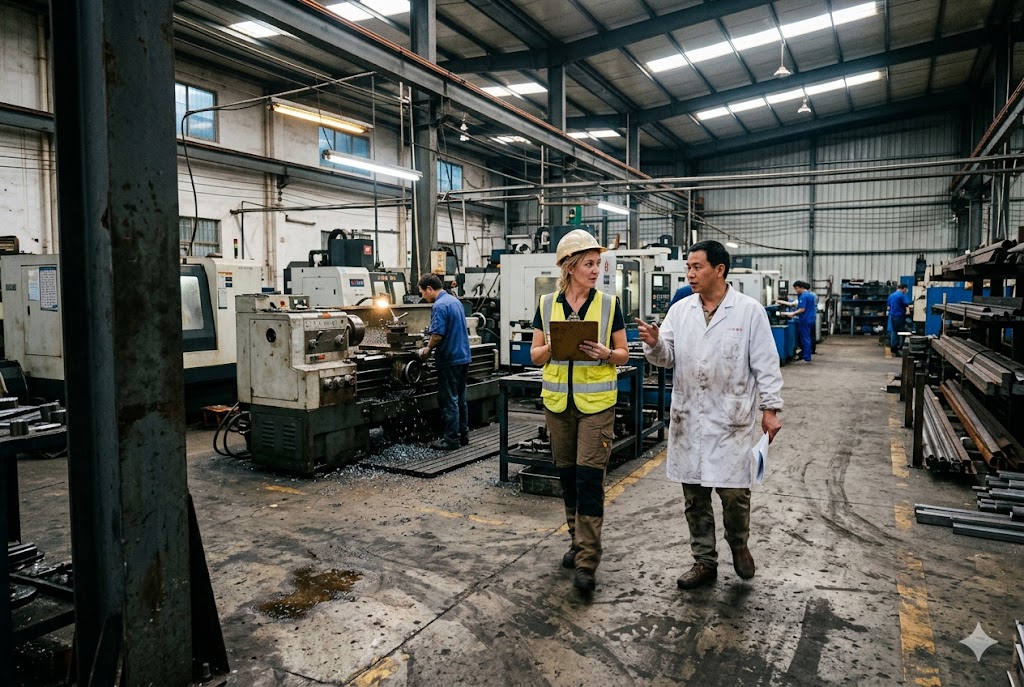
The best IP protection is choosing the right supplier in the first place. A factory that has worked with Western buyers for years, has export certifications, and accepts NNN Agreements without pushback is a lower-risk partner than a factory you found through a single search with no verified track record.
Before sharing any sensitive drawings, consider:
- Has the supplier worked with US or European buyers before?
- Do they have a documented quality management system (ISO 9001 9 or equivalent)?
- Are they willing to sign an NNN Agreement before receiving your files?
- Can they provide references from existing Western clients?
A factory audit 10 — either in person or through a third-party auditor — answers all of these questions and more. It also gives you visibility into their subcontracting practices. A supplier who uses subcontractors you do not know about is a supplier who may be sharing your drawings with parties you have not screened.
The Role of a Sourcing Partner in IP Protection
Working with a sourcing partner who conducts factory audits, manages supplier relationships, and handles contract negotiations reduces your IP exposure in several ways. The partner can vet suppliers before you ever share a file, negotiate and execute NNN Agreements in Chinese, and maintain oversight of production — including who is doing what work and at which facility.
Our team in China visits supplier factories before any client drawings are shared. We check subcontracting arrangements, review quality systems, and confirm that the supplier's legal entity matches the company we are contracting with. These are details that are difficult to verify remotely and that matter significantly when something goes wrong.
Watching for Red Flags During Production
IP risk does not stop once the NNN Agreement is signed and production begins. Watch for:
- Suppliers quoting unusually fast lead times that suggest they are running your design in parallel
- Requests for more technical information than needed for the specific part
- Unexplained subcontracting of work you specified should stay in-house
- Competing products appearing in the market that closely resemble your parts
Any of these warrants immediate follow-up. Chinese courts can grant asset preservation orders to freeze assets while litigation proceeds — but only if you act quickly. Delayed action makes enforcement harder.
Summary: Your IP Protection Checklist
| Step | Timing | Purpose |
|---|---|---|
| Draft and sign NNN Agreement (Chinese law) | Before sharing any drawings | Contractual protection against disclosure, use, and circumvention |
| File utility model or patent in China | Before or concurrent with supplier engagement | Prevent supplier from claiming ownership of your design |
| Redact drawings — share only what is needed | Every file, every time | Limit the value of information any one supplier holds |
| Conduct or commission factory audit | Before first order | Qualify supplier's practices and subcontracting arrangements |
| Monitor production and market | Ongoing | Detect and respond to violations quickly |
No single step covers all risks. The combination is what creates real protection.
Conclusion
Protecting your IP when sourcing custom CNC parts from China requires the right agreement, registered rights, and operational discipline. Start with an NNN Agreement in Chinese. File in China early. Share only what each supplier needs. These steps together give you real protection — not just paperwork.
Footnotes
1. How China-specific NNN Agreements provide real, enforceable IP protection for Western buyers. ↩︎
2. How non-circumvention provisions stop suppliers from bypassing you to reach your customers. ↩︎
3. Why standard English-language NDAs offer little to no protection against Chinese suppliers. ↩︎
4. Why a clear liquidated damages clause gives your NNN Agreement real deterrent power. ↩︎
5. How China's first-to-file patent system works and why early filing is critical. ↩︎
6. Overview of Chinese utility model patents and how they protect mechanical parts. ↩︎
7. China's 2026 trade secret regulation explained and why it does not replace NNN Agreements. ↩︎
8. How China's specialized IP courts handle patent infringement cases and enforcement procedures. ↩︎
9. What ISO 9001 certification means and why it signals supplier quality management maturity. ↩︎
10. Four essential strategies for protecting your IP from Chinese manufacturers and suppliers. ↩︎