Skip to main content Skip to footer

We see it every year. A buyer places a large order, pays upfront, and then waits. No parts arrive. No response from the supplier. The money is gone. When our team helps clients build sourcing strategies, stopping this exact scenario is always the first conversation.
To reduce payment risk when importing custom CNC machining parts from China, verify the supplier's legal identity before any transfer, use milestone-based payment terms such as 30/40/30, require a third-party pre-shipment inspection before releasing the balance, and escalate to a Letter of Credit for orders above $20,000. These four steps cover the most common loss scenarios.
Most buyers know payment risk exists. Few know exactly which steps eliminate it. This guide gives you a clear, actionable framework — from supplier verification to wire recall procedures.
What Payment Structure Best Protects Me on New Supplier Orders?
Our experience processing hundreds of CNC orders across China and Vietnam has taught us one consistent lesson: the payment structure you agree to at the start of an order is your most important risk control. Everything else is secondary.
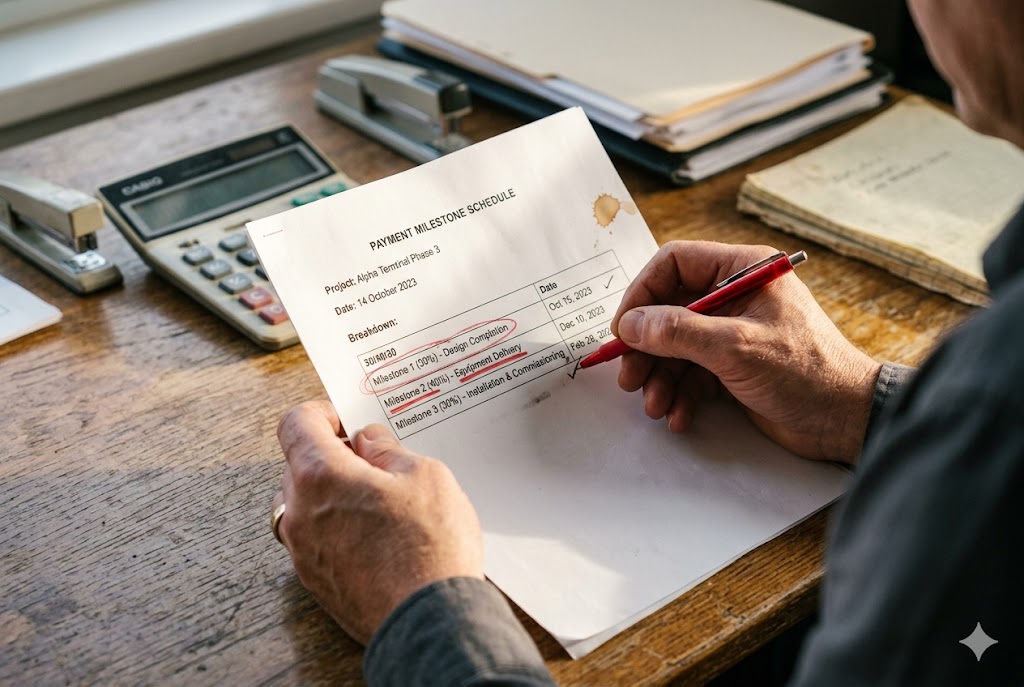
The payment structure that best protects buyers on new supplier orders is a three-milestone T/T split: 30% on purchase order confirmation, 40% after pre-shipment inspection passes, and 30% after delivery and acceptance. This structure keeps financial leverage in the buyer's hands at every stage.
Why the Split Matters More Than the Percentage
A common mistake is focusing on the deposit amount. Buyers try to negotiate the deposit from 30% down to 20%. That saves a little money upfront. But it misses the point. The real protection comes from the 30% tail balance — money you hold until after delivery and acceptance.
A supplier who has not yet received full payment has a direct financial incentive to fix problems fast. A supplier who has already been paid in full has far less motivation to respond to your quality complaints.
Here is how the three milestones break down in practice:
| Payment Stage | Amount | Trigger | What It Covers |
|---|---|---|---|
| Milestone 1 – Deposit | 30% | Purchase order confirmed | Raw material procurement |
| Milestone 2 – Mid-payment | 40% | Pre-shipment inspection passed | Production labor and overhead |
| Milestone 3 – Balance | 30% | Delivery and acceptance confirmed | Your quality assurance leverage |
First Orders Require Extra Caution
For a first order with a supplier you have not worked with before, the 30/40/30 structure is the minimum protection. Some buyers go further and request a small trial order — often 10–20% of the full quantity — at a slightly higher unit price to verify quality before committing to volume.
This is a reasonable approach for high-precision CNC parts where dimensional tolerances are tight. The cost of a trial order is almost always lower than the cost of receiving a full batch of out-of-spec parts.
What Suppliers Will Accept
Most established Chinese CNC suppliers will accept 30/40/30 terms for new buyers. Some may push for 50/50 — 50% deposit and 50% before shipment. This is less favorable because it removes your delivery-stage leverage entirely.
If a supplier insists on 100% prepayment for a first order with no prior relationship, treat this as a serious warning sign. Legitimate manufacturers with stable operations do not require full prepayment. They have their own working capital or factory financing to cover production costs.
| Supplier Payment Request | Risk Level | Recommended Action |
|---|---|---|
| 30/40/30 T/T | Low | Acceptable for verified suppliers |
| 50/50 T/T | Medium | Negotiate 30/40/30 or add inspection gate |
| 100% prepayment | High | Refuse unless via Trade Assurance |
| Personal account | Critical | Reject immediately |
| Cryptocurrency | Critical | Reject immediately |
Platform-Based Orders Add a Safety Layer
If you source through Alibaba, use Alibaba Trade Assurance 1 for first orders. Alibaba Trade Assurance holds your payment in escrow and releases it to the supplier only after you confirm receipt and acceptance. It also provides a dispute resolution mechanism backed by Alibaba. It is not perfect — it requires the dispute to be filed within a specific window — but it adds a meaningful safety layer for first-time supplier relationships.
How Can I Link Payments to Milestones or Inspection Results?
When our team structures supply agreements for clients, we always build quality gates directly into the payment schedule. Payment and inspection are not separate processes. They are the same process.
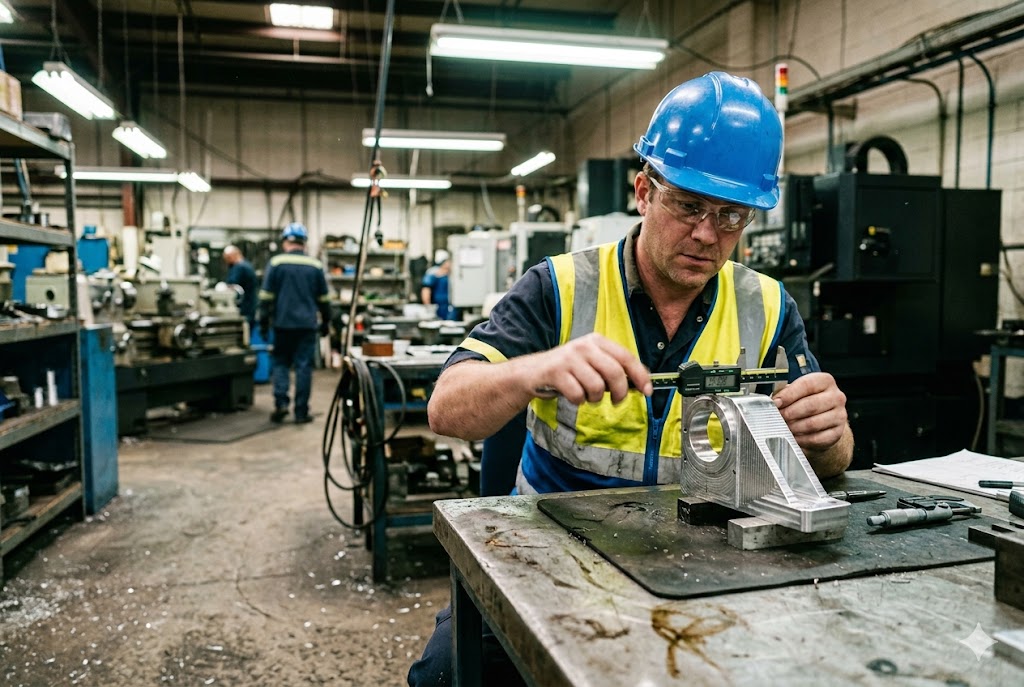
To link payments to milestones and inspection results, write the payment release conditions into the purchase order: Milestone 2 releases only after a third-party inspection report is accepted in writing, and Milestone 3 releases only after delivery is confirmed at the buyer's facility. This makes inspection a legal precondition for payment, not a courtesy check.
Write the Conditions Into the Purchase Order
Most buyers treat quality inspection as something they arrange separately from payment. The supplier ships, the buyer inspects, and then the buyer pays or complains. This sequence is backwards. By the time goods are shipped, your leverage has largely evaporated — especially for international shipments where reclaiming goods is expensive and slow.
The correct approach is to make payment contractually conditional on inspection results — before shipment.
Your purchase order should include language along these lines:
"Milestone 2 payment of [X]% will be released within [N] business days of buyer's written acceptance of a pre-shipment inspection report issued by a third-party inspection firm approved by buyer. Buyer reserves the right to reject the inspection report and withhold payment if the report documents dimensional non-conformances, surface defects, or missing documentation."
This is plain, enforceable language. It gives you a documented basis to withhold payment. It also signals to the supplier that you are an experienced buyer — which reduces the likelihood that they will attempt to ship substandard goods.
Which Inspection Firms to Use
For CNC machined parts, use inspection firms with experience in mechanical components and dimensional measurement. The following firms all operate in China and can deploy to most industrial regions within 24–48 hours:
| Firm | Coverage | CNC Capability | Typical Cost |
|---|---|---|---|
| QIMA 2 | Pan-China | Yes | $200–$350/day |
| SGS 3 | Pan-China | Yes | $250–$400/day |
| Bureau Veritas 4 | Pan-China | Yes | $250–$400/day |
| Intertek 5 | Pan-China | Yes | $230–$380/day |
What the Inspection Should Cover
A pre-shipment inspection for CNC machined parts should include at minimum:
- Dimensional verification against your drawing tolerances using calibrated measurement tools
- Surface finish check (Ra value, no burrs, no tool marks outside specification)
- Visual inspection for cracks, porosity, and material defects
- Quantity count and carton-level packaging check
- Material certification or hardness test if specified
For tight-tolerance parts, request that the inspection report include photographs of measurement setups and gauge readings. This creates a documentary record you can use in any dispute.
Milestone 3: Delivery and Acceptance Confirmation
The final 30% balance should be released only after the goods have arrived and you have confirmed that the shipment matches the inspection report. This step matters because damage can occur during transit. A passing inspection at the factory does not guarantee the goods arrive in the same condition.
Build a 3–5 business day acceptance window into your purchase order. This gives your team time to open cartons, conduct a basic receiving inspection, and confirm the shipment before releasing final payment.
Should I Avoid Paying Too Much Before Sample or Production Approval?
Every buyer who has lost money on a Chinese supplier order shares one thing in common: they paid too much, too early, before they had proof the supplier could actually deliver. Our sourcing team has reviewed dozens of these cases.
Yes, you should avoid paying too much before sample or production approval. Limit your financial exposure before approval by capping the deposit at 30%, requiring a pre-production sample before full-run commitment, and never releasing the mid-payment milestone until the sample or first-article inspection is accepted in writing.

The Sample Stage Is a Financial Gate, Not Just a Quality Check
Many buyers treat the sample stage as a formality — they request a sample, receive it, approve it quickly, and move straight to production. This misses the strategic value of the sample stage.
The sample stage is the point in the order cycle where your financial exposure is lowest and your information about the supplier is highest. Use it that way.
Before approving a sample and releasing any production payment, confirm:
- Does the sample meet your dimensional tolerances exactly?
- Does the surface finish match your specification?
- Is the material certified and does it match what was quoted?
- Did the supplier deliver the sample on time?
If the answer to any of these is no, you have critical information about the supplier's capabilities — at a stage where your total financial exposure is still limited to the sample cost and deposit.
Limit Deposit Exposure on Unproven Suppliers
For a new supplier on a first order, your deposit should be the minimum required to initiate material procurement — typically 30%. Never pay more than 30% before production starts, regardless of how the request is framed.
Common justifications suppliers use to request higher upfront payments:
- "Material prices are rising and we need to lock in stock"
- "Our factory policy requires 50% deposit"
- "We have many orders and need to confirm your slot"
Each of these may be partially true. None of them justify exposing you to a 50%+ loss before you have any physical evidence of the supplier's quality.
First-Article Inspection for High-Precision Parts
For CNC parts with tight tolerances — typically below ±0.05mm — consider requiring a first-article inspection (FAI) 6 report before approving full production. An FAI documents every critical dimension on the first production piece against your drawing. It gives you an objective, documented baseline before the supplier runs the full batch.
Structure your payment to reflect this:
- 30% deposit → production starts
- FAI submitted and accepted → supplier proceeds with full run
- Pre-shipment inspection passed → 40% mid-payment released
- Delivery confirmed → 30% balance released
This four-stage structure adds one control point without significantly lengthening the order cycle.
Never Conflate Urgency with Trust
The most common pressure tactic buyers face is urgency. A supplier says production must start immediately or the delivery date cannot be met. This creates pressure to skip verification steps and release funds early.
Experienced purchasing managers know this tactic. If a supplier's delivery schedule cannot accommodate a standard sample approval or FAI, that is a capacity or planning problem on their side — not a reason for you to increase your financial risk.
What Warning Signs Suggest Payment Risk Is Too High?
After years of processing orders and conducting supplier audits across China and Vietnam, our team has built a short list of signals that consistently appear before payment losses occur. These are not hypothetical risks. They are patterns.
Payment risk is too high when a supplier requests 100% prepayment, asks you to pay a personal account, cannot produce a verifiable business license, provides bank details that do not match their registered legal name, or pressures you to skip inspection steps. Any single one of these is a reason to stop the transaction.

Supplier Identity Cannot Be Verified
Before transferring any money, verify the supplier's legal identity against Chinese government databases. Request their 18-digit Unified Social Credit Code (USCC) 7 and cross-check it on:
- gsxt.samr.gov.cn — China's National Enterprise Credit Information Publicity System
- creditchina.gov.cn — Credit China platform
These are free, official databases. They show whether the company is legally registered, active, and free of court judgments, tax violations, or blacklistings. This check takes 15 minutes. If the supplier refuses to provide their USCC or the code does not match the company name on their invoice, stop.
Bank Account Does Not Match Legal Entity
The company name on the receiving bank account must be identical to the registered Chinese legal name on the business license, purchase order, and commercial invoice. Not a romanized variant. Not a trade name. Not a related entity. Never a personal account.
A mismatch here is the clearest indicator of either fraud or a structural compliance problem. T/T wire transfers 8 credited to a mismatched account are extremely difficult to recover.
Business Email Compromise (BEC) Red Flags
Business email compromise 9 — where scammers compromise supplier email accounts and substitute fraudulent bank details — is prevalent in China-sourcing transactions. Losses run into tens of millions of dollars annually across the import community.
Implement a mandatory two-channel verification protocol before every wire transfer:
- Call the supplier on a phone number sourced independently of the payment instruction
- Confirm the account number and SWIFT code verbally
- Document the call with a date, time, and name
This single step eliminates the most common payment fraud vector entirely.
Payment Method Red Flags
| Payment Method | Risk Level | Action |
|---|---|---|
| T/T to verified company account | Low | Acceptable with milestone structure |
| Alibaba Trade Assurance | Low | Acceptable for first orders |
| Letter of Credit 10 | Low | Best for orders above $20,000 |
| 100% T/T prepayment | High | Refuse |
| Payment to personal account | Critical | Reject immediately |
| Cryptocurrency | Critical | Reject immediately |
| Western Union / MoneyGram | Critical | Reject immediately |
Pressure to Skip Inspection or Documentation
A legitimate supplier will not object to a third-party inspection. They know their own quality. If a supplier actively discourages inspection — by citing time pressure, extra cost, or factory rules — treat this as a serious warning sign. Inspection refusal is one of the most reliable predictors of delivery failure or quality fraud.
What to Do If a Fraudulent Payment Has Been Made
If you discover a fraudulent payment has been made, act within hours. Contact your bank immediately and request a wire recall — most banks can attempt a recall within 24 hours if funds have not yet been credited or forwarded. Simultaneously preserve all email correspondence, WeChat messages, payment instructions, and invoices.
Engage a China trade lawyer to investigate through Chinese legal channels. Chinese economic crime police (公安局经济犯罪侦查) have jurisdiction over cross-border wire fraud and have recovered funds in documented cases where action was taken within the first 48 hours.
Conclusion
Reducing payment risk on CNC imports from China comes down to four habits: verify the supplier's legal identity before any money moves, use a milestone payment structure that retains leverage until delivery, make inspection a written precondition for payment release, and recognize the warning signs before they become losses.
Footnotes
1. Alibaba Trade Assurance: escrow-based buyer protection for international supplier orders. ↩︎
2. QIMA: third-party inspection and supplier audit services operating across China. ↩︎
3. SGS: global testing, inspection, and certification firm with pan-China coverage. ↩︎
4. Bureau Veritas: international inspection and supply chain compliance services provider. ↩︎
5. Intertek: quality assurance and supply chain inspection services across Asia. ↩︎
6. First-article inspection (FAI): dimensional verification of the first production piece before full-run approval. ↩︎
7. Unified Social Credit Code: China's 18-digit business registration identifier used for official entity verification. ↩︎
8. Telegraphic transfer (T/T): electronic bank-to-bank wire transfer commonly used in international trade payments. ↩︎
9. Business email compromise (BEC): fraud scheme where attackers intercept supplier emails to redirect payments. ↩︎
10. Letter of Credit: bank-issued payment guarantee providing structured protection for high-value trade transactions. ↩︎