Skip to main content Skip to footer
We have helped purchasing managers source custom CNC machining parts 1 from China for years. The same crisis comes up again and again: a primary supplier fails, and the buyer has no qualified fallback. Production stops. Customers complain. Costs spiral.
Yes, you need a backup supplier for any CNC-machined part that is critical to your product or assembly line. A single-source dependency on any Chinese manufacturer — no matter how trusted — exposes you to factory closures, disasters, geopolitical shifts, and capacity failures. A qualified second source is not optional; it is a supply chain design requirement.
The question is not whether to have a backup. It is how to build one efficiently. Keep reading.
When Is One Approved Supplier Not Enough for My Supply Chain?
Every procurement cycle, our sourcing team reviews parts that suddenly cannot be delivered. The primary factory is overcommitted, flooded, or shut down with no warning. Buyers without a second source are left with nothing to activate.
One approved supplier is not enough when the part is critical to your product's function, safety, or production continuity. If a three-week delay from a single Chinese factory would stop your assembly line or breach your customer contracts, you already need a qualified second source. Part criticality — not order volume — is the trigger.
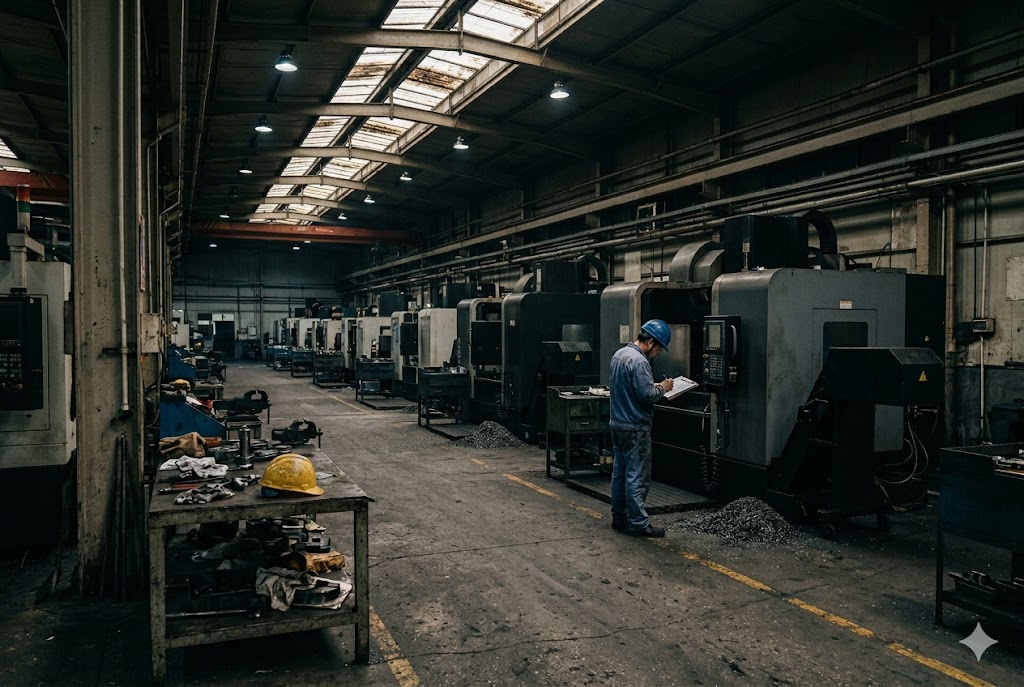
Why "Trusted" Is Not the Same as "Safe"
A good relationship with your primary factory is valuable. But it does not protect you from events outside the factory's control. Consider what cannot be negotiated away:
- Factory fire or flood
- Sudden financial failure
- Government-ordered closure
- Capacity overcommitment during peak seasons
- US tariff escalation or export restriction
None of these scenarios care how long you have worked with the supplier or how strong your contract is. The only real protection is having a second qualified facility ready to produce.
How to Classify Your Parts by Risk
Not every part needs dual sourcing. The right approach is to classify each CNC part by the consequence of supply failure. A supply chain risk management 2 framework helps buyers score each component by likelihood and impact before deciding where to invest in backup capacity.
| Consequence of Supply Failure | Example Part Type | Recommended Strategy |
|---|---|---|
| Stops assembly line within days | Structural housing, precision shaft | Full dual-source qualification |
| Delays shipment by 1–3 weeks | Secondary bracket, cover plate | Qualified backup + safety stock |
| Minor inconvenience, easy to replace | Standard fasteners, simple spacers | Single source acceptable |
Use this table as a starting framework. Walk through your bill of materials. Assign each CNC part to one of these three tiers. The parts in the first tier are your priority for backup supplier investment.
The Volume Trap
Many buyers assume dual sourcing only makes sense for high-volume parts. This is a common mistake. A low-volume precision component that would halt your line for three weeks justifies a qualified second source more urgently than a high-volume commodity part with a 90-day safety stock buffer. Volume is a cost variable. Criticality is a risk variable. Do not confuse the two.
Geopolitical Risk Is a Separate Layer
US tariff escalations 3 and export controls have made previously reliable supply chains economically or legally unviable with no transition period. Buyers with qualified capacity in Vietnam, India, or Mexico were able to absorb these shocks in weeks. Buyers who were single-sourced from China spent months qualifying from scratch under active disruption.
| Risk Category | Can Your Contract Prevent It? | Can a Backup Supplier Absorb It? |
|---|---|---|
| Factory fire or flood | No | Yes |
| Sudden tariff escalation | No | Yes (if outside China) |
| Export control restriction | No | Yes (if in compliant country) |
| Supplier financial failure | Partially | Yes |
| Capacity overcommitment | Partially | Yes |
This table should make the case clearly. A contract is not a supply chain. A qualified backup supplier is.
How Can I Maintain a Backup Supplier Without Doubling My Workload?
When clients ask us about dual sourcing, the first concern is almost always workload. Managing two suppliers sounds like twice the emails, twice the inspections, twice the problems. It does not have to work that way.
You can maintain a backup supplier without doubling your workload by assigning them a small but regular allocation — typically 10 to 20 percent of production — and using your existing quality documentation package. This keeps the supplier active and familiar with your part without requiring a separate management system.
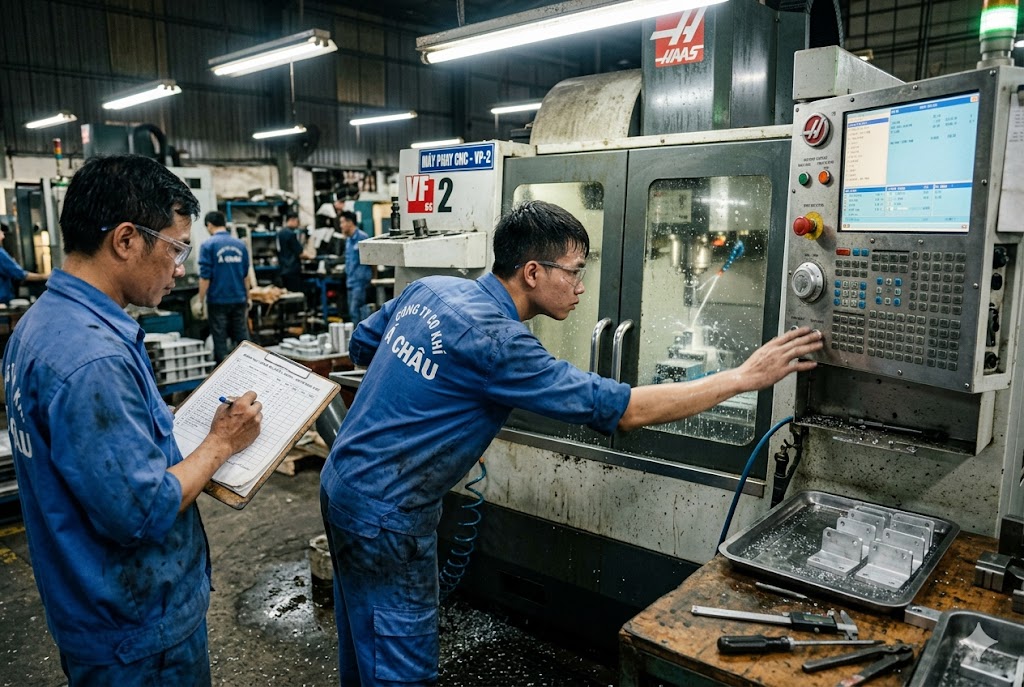
The Manufacturing Transfer Package Is Your Leverage
The single most important tool for low-workload backup supplier management is a complete manufacturing transfer package. This is a structured document set that contains everything a qualified supplier needs to produce your part independently.
A proper transfer package includes:
| Document | Purpose |
|---|---|
| Approved CAD files | Defines geometry and features |
| GD&T drawings with tolerances 4 | Defines acceptable dimensional ranges |
| Material specifications | Defines alloy, grade, and certifications required |
| Surface finish requirements | Defines Ra values, coatings, treatments |
| Inspection criteria and CMM program | Defines how to measure and verify conformance |
| Golden samples | Physical reference parts for comparison |
| Packaging and labeling requirements | Defines how parts are shipped and identified |
If this package exists and is current, a qualified second supplier can begin production without any knowledge transfer from your primary. Without it, every supplier switch requires hand-holding. Build the package once and maintain it. It reduces workload in every future scenario.
Use Token Volume to Keep the Supplier Sharp
A backup supplier who has never produced your part in twelve months is not a backup in any operational sense. When you activate them under crisis conditions, you will discover tooling gaps, fixturing problems, and process capability shortfalls at the worst possible moment.
Assign 10 to 20 percent of your production volume to your backup on a regular schedule. This small allocation:
- Keeps their tooling setup current
- Maintains their process knowledge
- Signals that they are a valued partner, not a contingency
- Generates inspection data that confirms ongoing capability
The extra coordination cost is small. The protection is significant.
Negotiate a Right-to-Qualify Clause
Some Chinese manufacturers include exclusivity terms or most-favored-customer pricing clauses that restrict dual sourcing. Before signing any supply agreement, negotiate an explicit right-to-qualify additional suppliers for the same parts. Without this clause, your primary supplier gains implicit leverage that undermines your entire risk posture. Make it a standard term in your procurement contracts.
Use Your Existing Quality Process
Your backup supplier does not need a separate inspection process. Run them through the same first-article inspection 5, CMM dimensional verification, material certification review, and golden sample approval as your primary. Use the same checklist, the same acceptance criteria, and the same inspection reports. One process, applied to two suppliers, is not double the work. It is the same work done twice — and only once per qualification cycle.
What Parts Should I Dual-Source First?
Clients often want a simple answer: which parts on my BOM should I protect first? Our sourcing team has worked through enough supply crises to give a practical framework. Start with consequence, then look at replaceability.
Dual-source the parts that would stop your production line fastest if delayed, and that are hardest to replace quickly. Tight-tolerance structural components, safety-critical assemblies, and any part requiring specialized tooling or rare machine configurations should be your first dual-source investments, regardless of order volume.
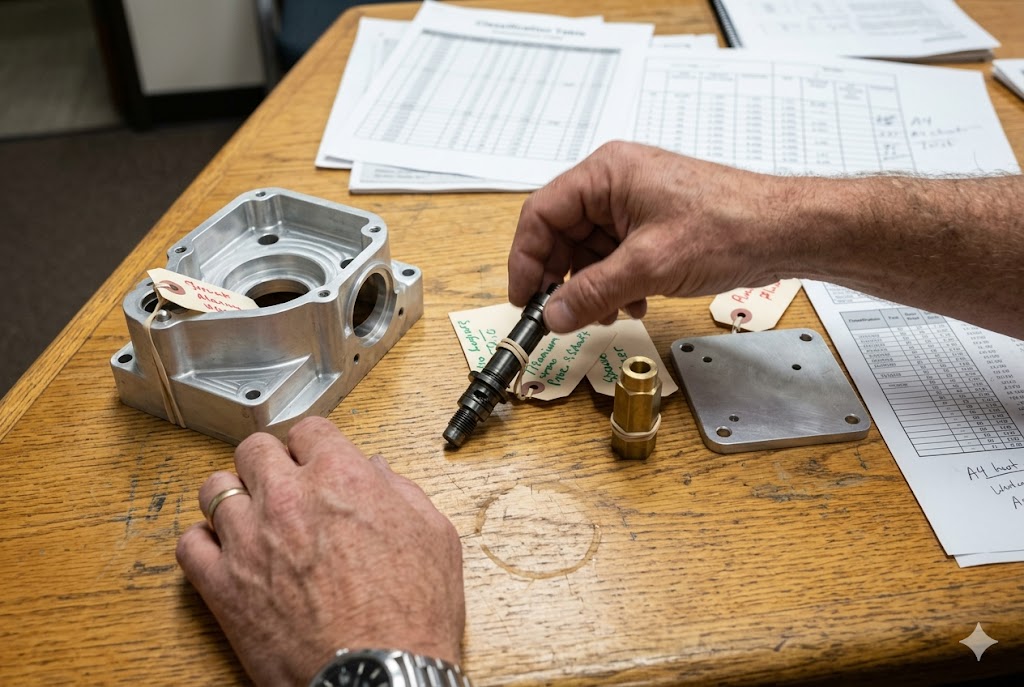
The Four-Question Test
For each CNC part on your sourcing list, answer these four questions:
- If this part is delayed by three weeks, does production stop?
- Is this part available from multiple qualified suppliers in the market?
- Does producing this part require specialized tooling, exotic materials, or rare machine configurations?
- Is the lead time for first-article qualification longer than four weeks?
If you answer yes to questions 1 and 3 or 4, this part needs a backup source. No exceptions.
Parts That Always Need a Backup
| Part Characteristic | Why It Needs Dual Sourcing |
|---|---|
| Tight-tolerance structural housing | Failure stops assembly; few shops can hold the tolerance |
| 5-axis complex geometry component | Limited qualified suppliers; long qualification lead time |
| Titanium or exotic alloy precision part | Material expertise is rare; tooling is specialized |
| Safety-critical mating part | Regulatory or liability risk from supply interruption |
| Long-lead custom forging or casting | Months to re-source; impossible to expedite |
Parts Where Single Source May Be Acceptable
Not every part carries the same risk. Standard brackets, spacers, and cover plates with wide tolerances and multiple potential suppliers may be acceptable as single-source items if you carry sufficient safety stock 6. The key test is: how long would it take to re-source this part from scratch? If the answer is less than your safety stock buffer, single source may be fine.
The Specialized Part Problem
For highly specialized CNC parts — tight-tolerance titanium aerospace components, complex 5-axis medical geometries — qualifying a true peer backup may take 6 to 18 months. Build that timeline into your product roadmap proactively. Do not begin the qualification process reactively after a supply event has started. The longer the qualification window, the earlier the investment needs to start.
Consider a Domestic Emergency Tier
The most under-exploited backup strategy is maintaining a qualified domestic or nearshore source for your most critical parts. This is not your cost-optimization tier. It is your emergency insurance tier. A domestic supplier who has passed first-article approval, holds your tooling package, and has produced a qualification batch can be activated for emergency volumes at a cost premium that is still far lower than a complete production halt.
Mapping your bill of materials 7 by tier is the recommended starting point — drilling down to identify which components carry the most concentrated supply exposure before investing in dual-source qualification.
How Do Backup Suppliers Reduce Risk During Disruptions?
When a supply disruption hits, buyers without a qualified backup face a specific sequence of pain: emergency air freight, production downtime, customer penalties, and months of reactive qualification. We have seen this cycle repeat across many clients. Buyers with a qualified backup absorb the same disruption in days, not months.
Backup suppliers reduce disruption risk by providing an immediately activatable production source. When your primary fails, a fully qualified backup with current tooling, approved drawings, and active production experience can begin shipping parts in days rather than months. The financial cost of one avoided supply crisis almost always exceeds the total cost of backup supplier qualification.

The Real Cost of a Single Supply Crisis
Most buyers underestimate the true cost of an unplanned supply interruption. The direct costs are visible. The indirect costs are often larger.
| Cost Category | Example |
|---|---|
| Emergency air freight premium 8 | 6–10x sea freight cost per shipment |
| Assembly line downtime | Daily production loss during shortage |
| Customer penalty clauses | Late delivery fees per contract terms |
| Emergency sourcing at spot prices | 20–40% above negotiated pricing |
| Management time consumed | Weeks of senior team focus diverted |
| Relationship damage with customers | Long-term revenue impact |
Add these up for a single two-week supply gap on a critical component. In most cases, the total exceeds the full cost of qualifying a backup supplier — often by a wide margin. The qualification investment pays back within one avoided incident.
Speed Is Everything During a Crisis
A backup supplier who is fully qualified and actively producing can respond in days. A supplier who has never run your part requires:
- Engineering review of drawings
- Tooling procurement or modification
- Fixturing design and fabrication
- Trial runs and first-article inspection
- Dimensional verification and golden sample approval
In a normal timeline, this takes four to twelve weeks. Under crisis conditions, it takes longer because the supplier's team is managing competing priorities and your urgency is not their urgency.
How Geopolitical Disruptions Play Out in Practice
Policy announcements on export control restrictions 9 come with short implementation windows, sometimes 30 to 90 days. Buyers who had already qualified capacity in Vietnam or other non-China countries redirected purchase orders within weeks. Buyers who were single-sourced from China faced a choice: pay the tariff at significantly higher landed cost, or begin a qualification process that would take months.
The buyers who absorbed the shock quickly were not smarter. They were prepared. Preparation means a qualified backup exists before the disruption event, not after.
Your Backup Supplier Is Only as Good as Your Documentation
Activation speed depends entirely on the quality of your manufacturing transfer package. If your documentation is current, complete, and structured for transfer, a qualified backup can begin production quickly. If your documentation is incomplete, outdated, or locked in your primary supplier's engineering system, switching takes months regardless of how capable the backup is.
Maintain your transfer package as a living document. Update it every time a drawing revision is approved. Confirm that your backup supplier holds the current version. This administrative discipline — combined with a robust supply chain resilience strategy 10 — is the difference between a one-week recovery and a three-month crisis.
Conclusion
Build your backup supplier program before you need it. Classify parts by criticality, qualify second sources fully, keep them active with small regular orders, and maintain a complete transfer package. One avoided crisis pays for the entire investment.
Footnotes
1. Wikipedia overview of CNC machining technology and how computer-controlled tools produce precision parts. ↩︎
2. Guide to supply chain risk management strategies for identifying and mitigating supplier vulnerabilities. ↩︎
3. USTR announcement of finalized Section 301 tariff actions affecting imports from China. ↩︎
4. Wikipedia explanation of GD&T, the standard system for defining manufacturing tolerances on engineering drawings. ↩︎
5. Wikipedia definition of first article inspection, the production validation process for verifying new supplier conformance. ↩︎
6. NetSuite guide to safety stock: how to calculate and maintain buffer inventory against supply uncertainty. ↩︎
7. NIST guide on using the bill of materials to map supply chain risk exposure across component tiers. ↩︎
8. Freightos comparison of air freight versus ocean freight cost, illustrating the premium of expedited shipping. ↩︎
9. USTR announcement extending Section 301 exclusions covering export control actions on China sourcing. ↩︎
10. Ivalua's comprehensive guide to supply chain resilience strategies, risk assessment, and mitigation best practices. ↩︎