Skip to main content Skip to footer

Every week, our team fields calls from purchasing managers who placed an order months ago and are now staring at an empty production line. We have seen it happen across hundreds of shipments.
Late delivery of custom CNC parts from China is preventable. The most effective steps are: adding a liquidated damages clause to your contract, splitting production into milestone checkpoints, withholding final payment until ready-to-ship is confirmed, and planning your calendar around China's predictable shutdown periods. These four actions alone eliminate the majority of avoidable delays.
Most delivery failures follow the same pattern. Small warning signs appear early and go unnoticed. By the time the problem is visible, it is too late to fix it without disrupting your downstream customers.
What Should You Check Before You Trust a Supplier's Lead-Time Promise?
When we evaluate a new factory for a client's order, the first thing we look at is not the sample quality. It is the factory's current workload.
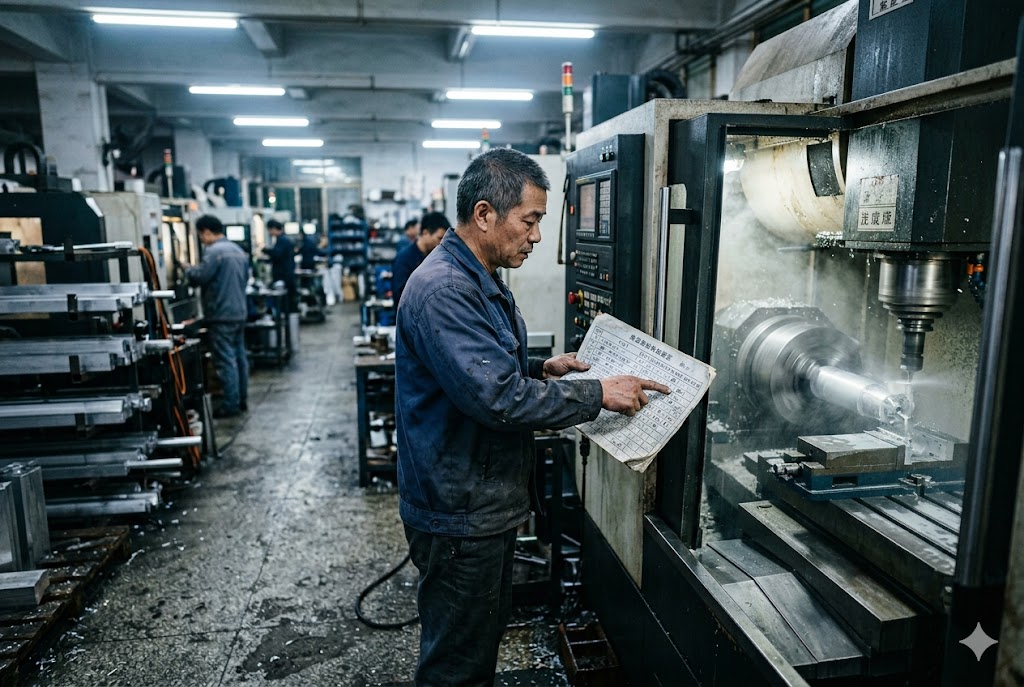
Before trusting any lead-time quote, check three things: the factory's current machine utilization rate, their confirmed order backlog in weeks, and whether the raw material your part requires is in stock or on back-order. A factory running above 85 percent capacity cannot absorb your job at the timeline they are quoting.
Why Utilization Rate Matters More Than Price
A supplier who is eager for your business is not always a supplier with capacity for your business. Factories routinely accept new orders to avoid losing a client, then sequence production based on margin or relationship priority, not the order in which commitments were made. If a higher-margin job comes in after your order is placed, yours gets pushed.
Ask directly: "What is your current machine utilization rate 1?" and "How many weeks of backlog do you have right now?" A trustworthy factory will answer. A factory that deflects or gives a vague answer is a warning sign.
Material Availability Is a Hidden Schedule Risk
One of the most common root causes we encounter is undisclosed material shortages. The supplier quotes a four-week lead time. Your order is placed. Two weeks later, the factory discovers the specified alloy, bar stock diameter, or surface treatment material is on a three-week domestic supplier lead time.
Request a written material procurement confirmation before production is scheduled. This document should name the domestic supplier, the material spec, and the expected delivery date to the factory. It takes less than 24 hours to produce. A factory that cannot or will not provide it has not actually checked availability.
Subcontracting: The Schedule Risk You Cannot See
Many CNC part orders involve outsourced processes — heat treatment, anodizing, electroplating, or precision grinding 2. When a primary factory subcontracts these steps without disclosure, your delivery date becomes dependent on a facility you have never visited, whose schedule you cannot monitor.
Prohibit unauthorized subcontracting in your purchase order terms. Require written approval for any outsourced process. This is not about distrust — it is about maintaining visibility over every node in the production timeline.
| Risk Factor | What to Ask | Red Flag Response |
|---|---|---|
| Machine utilization | "What is your current utilization rate?" | "We always have capacity" |
| Order backlog | "How many weeks of backlog right now?" | Vague or no direct answer |
| Material availability | "Can you send a material procurement confirmation?" | "We will check after order" |
| Subcontracting | "Will any process be outsourced?" | "It depends on our workload" |
Use a Supplier Scorecard Before You Commit
Before placing an order with any new factory, score them on at least these four areas: stated capacity versus current workload, material sourcing track record, subcontracting transparency, and past on-time delivery rate with reference clients. Using a structured supplier scorecard 3 before you commit gives you objective, comparable data rather than gut feel. Ask for two to three customer references and ask those references specifically about delivery. A factory that hits delivery targets consistently will have no trouble providing references who confirm it.
How Can You Track Production Progress Before Delays Become Serious?
Our service team places orders with dozens of factories at any given time. The ones where we catch delays early are the ones where we negotiated milestone reporting into the contract upfront.
The most effective way to track production before delays become serious is to contractually define production milestones — material receipt, first-article approval, mid-production inspection, and ready-to-ship — each with a specific date and a required written status update from the factory. This gives you two to four weeks of advance warning before a final delivery failure.

Define Milestones in the Contract, Not Just in Conversation
Verbal check-ins do not create accountability. When milestones are written into the purchase order or contract with specific dates and reporting obligations, the factory cannot claim a delay came out of nowhere. They knew the checkpoint was coming. A factory that misses a mid-production milestone date without prior notice is already telling you the final delivery date is at risk.
A practical milestone structure for a standard CNC machining order looks like this:
| Milestone | Typical Timing | Supplier Deliverable |
|---|---|---|
| Material procurement confirmed | Within 5 business days of order | Written confirmation with supplier name and receipt date |
| First-article approval | 30–40% through lead time | Dimensional report and photos of first part |
| Mid-production inspection | 60–70% through lead time | Inspection report or video walkthrough |
| QC pass and ready-to-ship | Per contract delivery date | Full QC report and packing list |
Mid-Production Inspections Change Supplier Behavior
An in-person or video mid-production inspection does two things. First, it gives you data: part count completed, in-process quality, surface treatment status, packaging readiness. Second, it signals to the factory that you are watching. Suppliers who know a client is monitoring production consistently perform better than suppliers who only hear from the client when something goes wrong.
We send our in-house QC engineers or partner inspectors to factories for mid-production checks on all orders above a defined value threshold. For smaller orders, we use video calls with a structured checklist. Either approach produces a written record that becomes part of the order file.
How to Respond When a Milestone Is Missed
Speed matters here. When a factory misses a milestone date, contact them within 24 hours, not at the end of the week. Ask for a revised timeline in writing and a root-cause explanation. Escalate to a senior contact if the response is slow or vague. Activate your backup supplier inquiry in parallel if the revised date still puts your downstream schedule at risk.
A missed milestone is not automatically a crisis. It is an early warning. Your ability to convert that warning into a manageable outcome depends entirely on how fast you act.
Withhold Final Payment to Maintain Leverage
This is a structural tool, not just a tactic. If the supplier has already received 100 percent of payment, they have no financial reason to prioritize your schedule over a new, higher-margin order that just landed on their floor. A 20 to 30 percent final payment installment, held until ready-to-ship is confirmed and passed pre-shipment inspection 4, gives you a consistent source of scheduling leverage throughout the production period.
A supplier who still has a meaningful payment outstanding is more likely to flag emerging problems proactively, authorize overtime to protect the deadline, and escalate subcontractor delays on your behalf.
Should You Build Buffer Time Into Your Purchasing Schedule?
In our experience coordinating shipments between Chinese factories and North American clients, the question is never whether to build buffer time. The question is how much, and where to put it.
Yes, you should always build buffer time into your purchasing schedule when importing custom CNC parts from China. Plan for a minimum of two to three weeks of buffer beyond the factory's quoted lead time, and extend that buffer to four to six weeks for any order that falls within or adjacent to Chinese New Year, Golden Week, or the Q3 peak shipping season from August to October.
Three Predictable Windows That Cause Delays Every Year
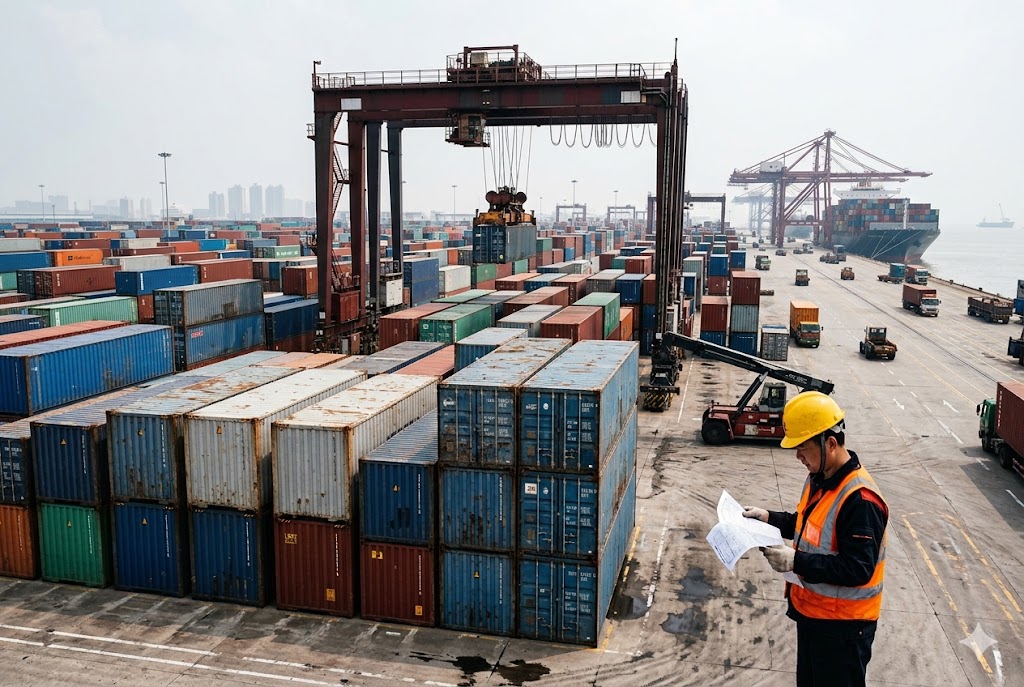
These are not surprises. They happen on the same schedule every year, and yet they catch buyers off guard repeatedly because the factory's quoted lead time does not account for them.
| Period | Approximate Dates | Effective Impact on Production |
|---|---|---|
| Chinese New Year | Late January – mid-February | 3–4 week effective shutdown; pre-holiday rush causes material shortages |
| Golden Week | First week of October | ~1 week shutdown; some factories extend to 10 days |
| Q3 Peak Shipping Season | August – October | Port congestion, vessel space shortage, freight rate spikes |
The Chinese New Year factory shutdown 5 is arguably the most disruptive annual event for global supply chains, with actual disruption often lasting six to eight weeks from late January through mid-March. Similarly, China's Golden Week 6 in early October closes factories, warehouses, and logistics providers simultaneously, creating port congestion that lingers for weeks after operations resume. The Q3 peak shipping season 7 compounds these risks with surging freight rates, container shortages, and blank sailings across major Asia-Pacific trade lanes.
For any order where your required-on-dock date falls in November or March, count backward. If that requires the factory to ship during Chinese New Year, you need to either place the order earlier or adjust your internal schedule.
Pre-Book Freight Before Parts Are Ready
One delivery failure mode that occurs entirely after the parts leave the factory is a missed vessel booking. Sea freight from China to the US runs on fixed weekly schedules. Missing a vessel by one day can add seven to fourteen days to transit time. During peak season, the next available booking may be two to three weeks out.
Pre-book freight capacity with your forwarder three to four weeks before the expected ready-to-ship date. Align the factory's milestone confirmation with your freight slot. If the factory is running two days late, you know immediately whether you will miss your booked vessel and can escalate accordingly.
Define "Delivery Date" Correctly in Your Contract
This is a structural issue that causes more disputes than almost anything else. Many buyers write delivery dates into contracts as estimated arrival dates in their country. That is a mistake. Arrival dates are outside the supplier's direct control. Transit times, customs clearance, and port congestion are not the factory's responsibility.
Define the contractual delivery date as the date goods are confirmed ready-to-ship and have passed pre-shipment inspection in China. This is the only date the supplier can control. Once you have that date locked in, you can manage the logistics timeline independently and plan your buffer accordingly.
What Supplier Behaviors Usually Predict Late Delivery?
After auditing hundreds of factories and managing thousands of orders, our team has developed a short list of behaviors that predict delivery problems before they happen.
Supplier behaviors that consistently predict late delivery include: resistance to a liquidated damages clause, vague answers about current machine capacity, inability to name a specific subcontractor for outsourced processes, a history of blaming force majeure for delays, and reluctance to provide mid-production status updates in writing. Any one of these behaviors warrants caution. Multiple behaviors together are a clear signal.

The Liquidated Damages Test
This is the single most reliable behavioral signal we use. When we include a liquidated damages clause 8 in a contract — typically 0.5 to 1 percent of order value per day of delay — a factory's response tells us almost everything we need to know about their confidence in the delivery date they are quoting.
A factory that readily agrees has already calculated that they can hit the date. A factory that proposes a lower percentage is negotiating, which is normal. A factory that refuses the clause entirely, or insists on a full-payment schedule before any production milestone is reached, is signaling that they do not expect to meet the deadline they just quoted. Chinese courts consistently recognize liquidated damages clauses at the 0.5 to 1 percent range as enforceable pre-estimates of loss, not punitive measures. Suppliers who understand this know it is a standard commercial term.
Behavioral Red Flags at the Quoting Stage
| Supplier Behavior | What It Usually Means |
|---|---|
| Refuses liquidated damages clause | Low confidence in quoted lead time |
| Cannot name current subcontractors | Undisclosed outsourcing risk |
| Gives utilization rate as "always ready" | Has not checked actual capacity |
| Requests 100% payment before production milestones | No leverage remaining for buyer |
| References "force majeure" on past delays | Pattern of externalizing schedule failures |
| Delays written milestone agreement | Does not intend to be held to dates |
Scorecard-Based Supplier Management
We recommend that every purchasing team track on-time delivery performance 9 as a formal metric across all active suppliers. Share the scorecard in periodic business reviews. Tie future order volume explicitly to delivery performance. Chinese factories compete actively for preferred customer status with their most reliable buyers. A supplier who understands that consistent late delivery will cost them order share adjusts their internal scheduling discipline accordingly.
Suppliers who only hear from you when something goes wrong never develop the operational awareness needed to protect your account when production pressure increases. Regular communication — even when everything is on track — signals that you are a serious client who pays attention.
When to Activate a Backup Supplier
No supplier relationship is a guarantee. Every serious purchasing program should identify at least one qualified backup supplier for any critical part family. The cost of a factory audit on a backup supplier is modest compared to the cost of a production stoppage caused by a single-source delivery failure. We recommend pre-qualifying backup suppliers before you need them, not after a crisis has already started. An anodizing 10 or heat treatment subcontractor that goes offline without notice is exactly the kind of single-point failure that a pre-qualified backup eliminates.
Conclusion
Late delivery is predictable and preventable. Use contracts with milestones, keep payment leverage, plan around China's calendar, and read supplier behavior early. Act on warning signs fast, and your supply chain holds.
Footnotes
1. Explains how machine utilization rate affects production scheduling and delivery risk. ↩︎
2. Details how subcontracting anodizing, machining, and finishing creates hidden CNC supply chain delays. ↩︎
3. Best practices for building a supplier scorecard with KPIs including on-time delivery. ↩︎
4. Overview of pre-shipment inspection services in China used to confirm goods before payment release. ↩︎
5. Guide to the Chinese New Year factory shutdown timeline and its six-to-eight-week supply chain impact. ↩︎
6. How China's Golden Week closes factories and ports, causing global logistics congestion every October. ↩︎
7. How Q3 peak shipping season drives freight rate spikes and space shortages on China trade lanes. ↩︎
8. Explains how liquidated damages clauses create automatic financial exposure for late delivery. ↩︎
9. Framework for tracking on-time delivery and other supplier performance metrics across procurement. ↩︎
10. Explains the anodizing process and why manufacturers often outsource it to specialist third parties. ↩︎