Skip to main content Skip to footer

We handle sourcing for custom mechanical parts every day, and one question comes up more than almost any other: "Can I trust a Chinese factory with my drawings?" The fear is real. One leaked design can cost you years of R&D and an entire market position.
Protecting your IP when importing custom CNC parts from China requires a China-specific NNN agreement, CNIPA patent and trademark registration before sharing any files, a compartmentalized design package, and controlled file formats. No single step is enough. All four layers working together give you real protection.
Most companies try one or two of these steps and assume they are covered. They are not. Read on to understand each layer and why it matters.
What Design Files Should You Limit Before You Trust the Supplier?
Every week our team reviews new supplier inquiries, and we consistently see buyers send complete native CAD packages to factories they have never worked with before. That single habit is the biggest source of IP leakage we see.
Before trusting any supplier, you should share only watermarked PDF drawings or STEP files stripped of parametric history. Never send editable native CAD files at the start. Limit material specs and critical tolerances to what the supplier strictly needs to quote accurately.

Why Native CAD Files Are Dangerous
A native CAD file 1 — SolidWorks, CATIA, Inventor — carries your full design history. Every dimension, every feature, every constraint is editable and copyable. When you email that file to a factory, you have no visibility into who opens it, copies it, or shares it internally or externally.
PDF drawings with viewer-only permissions remove editability. STEP files show geometry but no parametric timeline. Both formats let a factory quote and produce your part without handing over the keys to your full design.
What to Share at Each Stage
| Stage | What to Share | What to Withhold |
|---|---|---|
| Initial RFQ | 2D PDF drawing, no tolerances | Material grade, surface finish spec, critical dims |
| Supplier shortlist | STEP file, general tolerances | Assembly context, mating part drawings |
| Selected supplier only | Full 2D drawing with tolerances | Final assembly drawing, mold cavity details |
| Long-term partner | Controlled portal access, watermarked | Native CAD files, proprietary process docs |
Use Access-Controlled Portals, Not Email
Email is an open channel. Most factories forward inquiry emails between staff, and attachments get saved to shared drives with no access log. A supplier collaboration portal 2 — even a simple one — creates an audit trail. You can see who accessed which file and when.
Watermark every drawing with the supplier's company name and the date of sharing. This creates a traceable chain. If a drawing appears somewhere it should not, you know exactly which supplier received that version.
Tolerances Are the Real Secret
The geometry of a part is often visible just by looking at the physical product. What competitors cannot easily reverse-engineer is your tolerance stack and your material specification. A ±0.005mm tolerance on a mating surface is invisible to the eye but critical to function.
Do not include tight tolerances on drawings shared for quoting purposes. Share a simplified drawing with general tolerances for the RFQ stage. Only the selected and vetted supplier receives the full specification.
How Can You Separate Suppliers to Reduce IP Exposure?
Our sourcing team regularly manages projects where a single complete design cannot be placed with one factory. It requires planning upfront, but the risk reduction is significant.
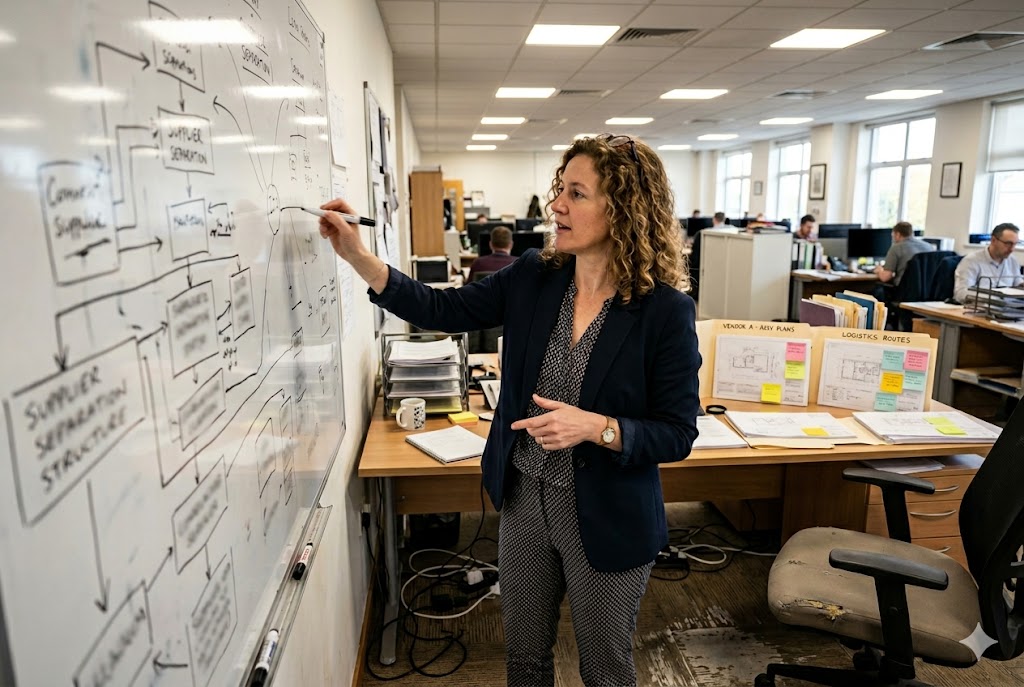
Compartmentalizing your design across multiple suppliers means no single factory can reproduce your complete product. Split critical subassemblies, withhold final assembly drawings, and keep core technical differentiators in-house or with a trusted tier-one partner only.
The Core Principle: No Single Point of Failure
If one factory has everything — drawings, tolerances, material specs, assembly context — then one breach exposes everything. If you split the design across multiple vendors 3, a breach at one supplier reveals only a fragment.
This is not theoretical. It is the same strategy semiconductor companies use when they split chip design, mask making, and wafer fabrication across different vendors in different countries.
How to Structure Supplier Separation
| Component | Supplier | What They Receive | What They Never See |
|---|---|---|---|
| Housing / enclosure | Supplier A | Housing drawing only | Internal subassembly |
| Drive shaft assembly | Supplier B | Shaft drawing only | Housing interface dims |
| Final assembly | Your facility or Tier-1 | Controlled assembly SOP | Individual supplier drawings |
| Custom tooling / fixtures | Trusted long-term partner | Fixture design | Production volumes |
Practical Limitations
Compartmentalization adds cost and coordination complexity. Each supplier relationship needs its own quality controls, logistics, and communication. For high-volume commodity parts with low IP sensitivity, the overhead may not be justified.
Use compartmentalization selectively — for parts or subassemblies that represent your core technical differentiation. A standard bracket does not need this treatment. A proprietary actuator assembly does.
Work-for-Hire and Engineering Contributions
A risk many buyers overlook: if a supplier contributes engineering input during your project — a design suggestion, a tolerance optimization, a toolpath improvement — that contribution may be registerable as their IP under Chinese law unless your agreement explicitly assigns all such contributions to you.
Include a work-for-hire clause 4 in every manufacturing agreement. State that all engineering contributions, process improvements, and design modifications made during the project are your property. This clause costs nothing to add and prevents significant disputes later.
Should You Control Tooling, Drawings, and Process Documents More Tightly?
Our team has managed disputes where a supplier used client-owned tooling to run unauthorized parts after a commercial disagreement. It is more common than most buyers expect, and it is almost always preventable.
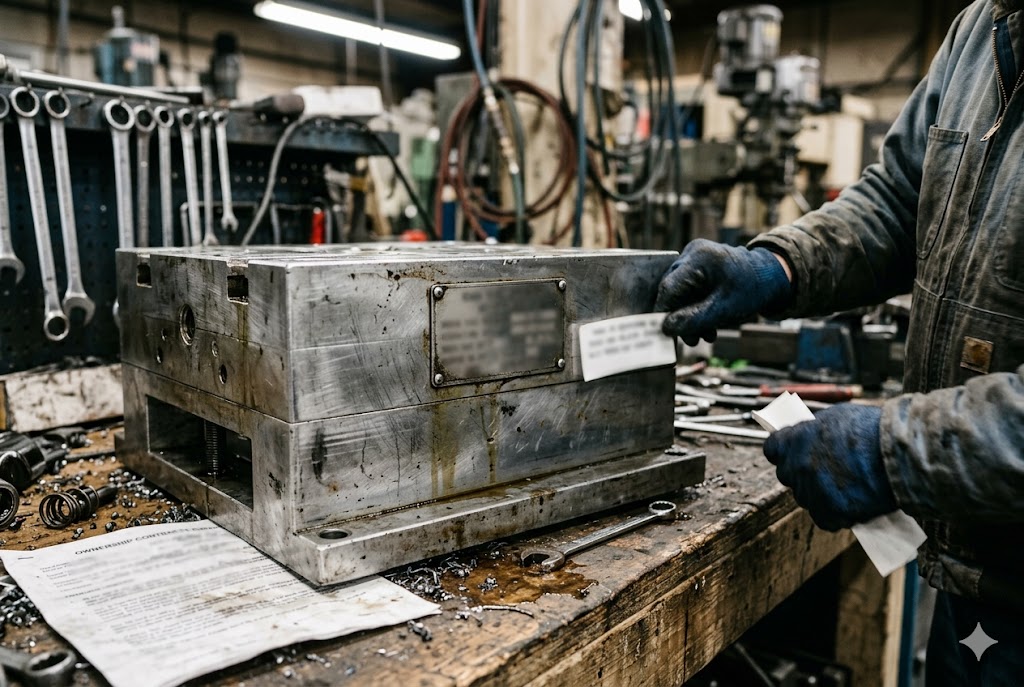
Yes. You should own all custom tooling, molds, and fixtures in writing, physically mark them with your ownership, conduct annual inventory audits, and retain the right to retrieve them on demand. Without these clauses, suppliers treat tooling as their own leverage.
Tooling Ownership Is a Business Control Issue
When a supplier holds tooling they do not formally own, they have real leverage. They can delay shipments, demand price increases, or produce unauthorized runs of your parts. Physical possession of a mold is a powerful negotiating chip — unless your contract removes that power before a dispute begins.
What Your Manufacturing Agreement Must Include
| Clause | Why It Matters |
|---|---|
| Explicit tooling ownership statement | Establishes legal title regardless of physical location |
| Physical marking requirement | "Property of [Your Company]" on all tooling and fixtures |
| Annual inventory audit right | Prevents unauthorized tooling use or replication |
| Return-on-demand clause | Forces return of tooling within defined notice period |
| Prohibition on using tooling for third parties | Blocks unauthorized production runs |
Process Documents and SOPs
Your process documentation — setup sheets, inspection checklists, special process parameters — often represents as much value as the drawing itself. A factory that holds your SOP can replicate your quality standard for a competing customer.
Store process documents on your own systems. Share only the minimum necessary for production. Mark every document with your company name, a confidentiality notice, and the date issued.
The Work-for-Hire Gap in Process Optimization
During production, a skilled factory engineer may suggest a better toolpath, a fixture modification, or a measurement method. These improvements add real value. They also represent original technical contributions. Without a work-for-hire clause covering process improvements, the factory engineer's employer may claim ownership of that improvement under Chinese law.
This clause should cover: design modifications, process optimizations, fixture innovations, and any written documentation produced during your project.
What Practical Steps Reduce IP Risk Beyond Signing an NDA?
Many buyers sign a standard NDA template and consider the IP question closed. Our experience across hundreds of supplier relationships tells a different story.
Beyond an NDA, you need a China-specific NNN agreement in Mandarin governed by Chinese law, CNIPA registration for patents and trademarks before any supplier contact, customs IP registration, trademark monitoring, and liquidated damages clauses calibrated to your real losses.
Why a Western NDA Is Not Enough
A US or EU NDA is frequently unenforceable in Chinese courts. It fails to address three specific leakage vectors common in Chinese manufacturing: unauthorized use of your design, disclosure to related third parties such as family-owned affiliated factories, and circumvention — where the supplier sells directly to your customers using your design.
A China-specific Non-Disclosure, Non-Use, and Non-Circumvention (NNN) agreement 5 addresses all three. It must be drafted in Mandarin, governed by Chinese law, and stamped with the supplier's official company chop. An agreement without the chop is essentially unsigned in Chinese legal practice.
CNIPA Registration: The First Step, Not an Afterthought
China operates on a strict first-to-file system. Whoever registers IP first owns it in China — regardless of who created it. Your home-country patent provides zero protection on Chinese soil until you independently register with CNIPA 6.
Register before any supplier contact. For products with novel visual appearance, file a Chinese design patent 7 before beginning supplier discussions. CNIPA requires absolute novelty — meaning the design cannot have been publicly disclosed anywhere in the world before filing. Once you share drawings with a factory, that window may be permanently closed.
Enforcement Tools That Actually Work
| Tool | What It Does | Cost Level |
|---|---|---|
| NNN Agreement (Mandarin, chopped) | Covers non-disclosure, non-use, non-circumvention | Low — legal drafting fee |
| CNIPA Patent / Trademark Registration | Establishes legal IP ownership in China | Medium — filing and attorney fees |
| Chinese Customs IP Registration (TRIPS) | Enables border seizure of infringing exports | Low — annual registration |
| CNIPA Trademark Watch | Monitors filings by third parties on your brand | Low to Medium |
| Liquidated Damages Clause | Pre-agreed loss amount removes burden of proof | Included in contract drafting |
Customs Registration: Underused and Highly Effective
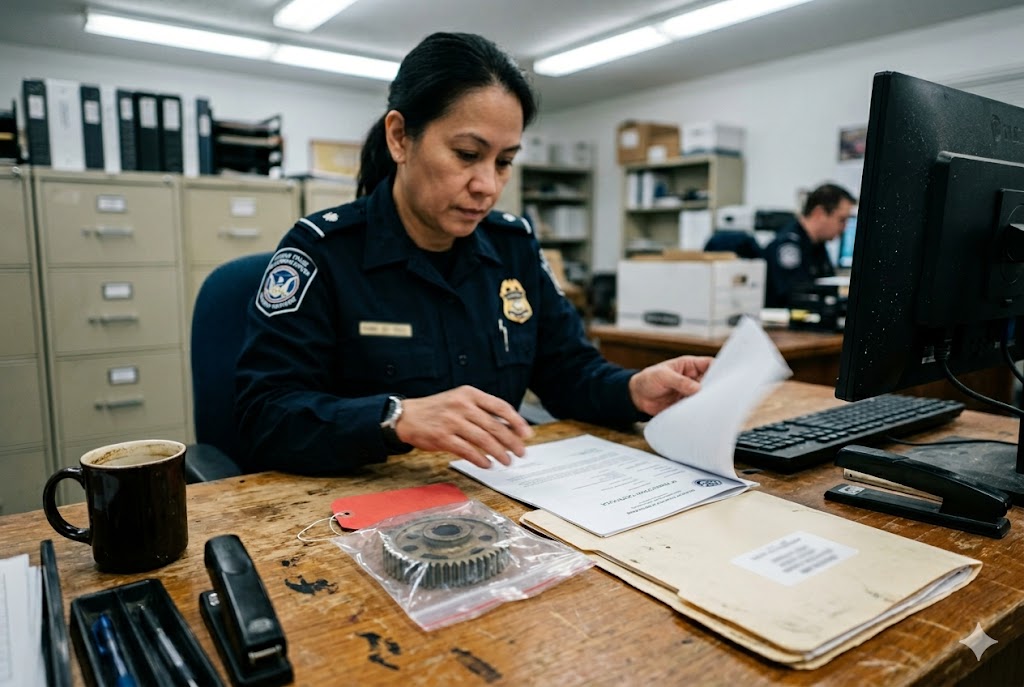
Registering your IP with Chinese customs 8 through the TRIPS system is one of the most cost-effective enforcement steps available. Customs officers can proactively detain and seize infringing shipments at the point of export without requiring you to initiate separate legal proceedings for each incident.
Many foreign companies skip this step because they are unaware of it. It is a one-time registration with annual renewal and it shifts enforcement burden to Chinese border officials rather than requiring you to chase every infringement through the courts.
Calibrate Liquidated Damages Correctly
Chinese courts enforce liquidated damages clauses 9 for IP violations when the amount is proportionate to provable harm. Set the figure too high — at punitive multiples beyond demonstrable loss — and courts will reduce it. Set it at a realistic figure that covers re-tooling costs, lost market exclusivity, and legal fees, and it becomes enforceable and persuasive.
A well-calibrated liquidated damages clause also removes the burden of proving loss quantum in litigation. Proving the breach is hard enough. Do not also burden yourself with proving exactly how much you lost.
Conclusion
IP protection when sourcing custom CNC parts from China is not one step — it is four layers working together: controlled file sharing, supplier compartmentalization, tooling ownership agreements, and Chinese legal registration. Start with CNIPA registration 10 before your first supplier call. Everything else builds on that foundation.
Footnotes
1. Explains why native CAD formats expose full parametric design history to suppliers. ↩︎
2. Practical guide to controlling design file access and IP ownership when working with Chinese manufacturers. ↩︎
3. Overview of split manufacturing strategy used to prevent any single supplier from accessing a complete design. ↩︎
4. How Chinese patent and copyright law treats engineering contributions made by employees or contractors. ↩︎
5. Detailed guide to China NNN agreements covering non-disclosure, non-use, and non-circumvention provisions. ↩︎
6. Official CNIPA FAQ on filing requirements and procedures for foreign patent applicants in China. ↩︎
7. Why China design patents require absolute novelty and must be filed before any public disclosure. ↩︎
8. Step-by-step guide to registering IP with China's General Administration of Customs for border enforcement. ↩︎
9. How to structure enforceable liquidated damages provisions in China NNN and manufacturing agreements. ↩︎
10. Official CNIPA portal for foreign companies filing patents and trademarks in China. ↩︎