Skip to main content Skip to footer
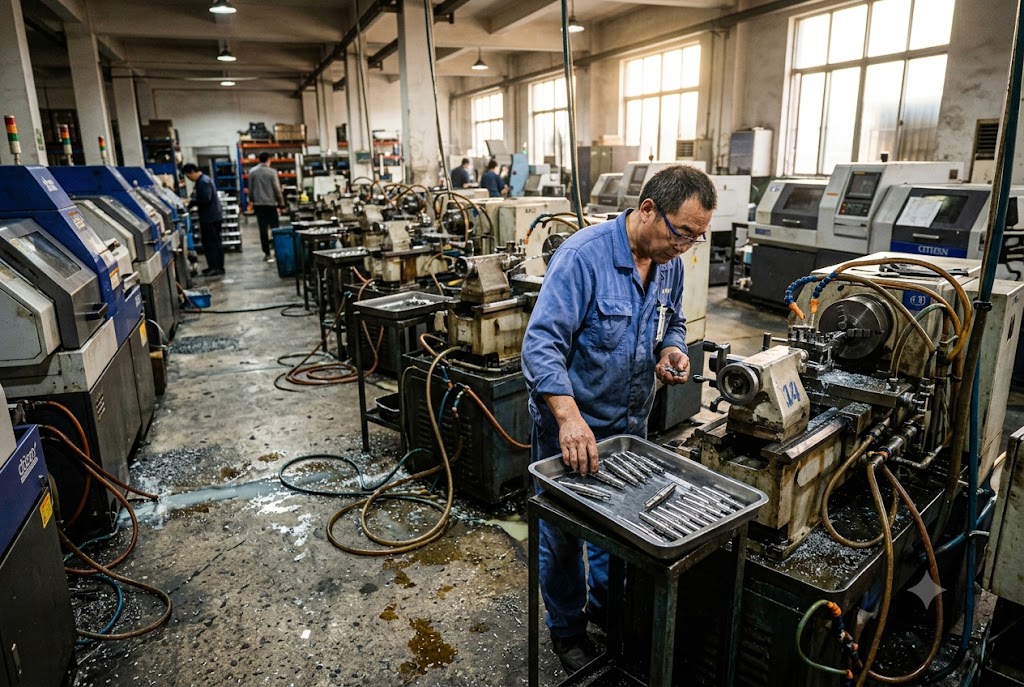
We see it every month: a client's Swiss-turned parts pass inspection, then rust in the field. Passivation is the fix most buyers overlook.
Passivation significantly improves corrosion resistance on Swiss-turned stainless steel parts by removing free iron and rebuilding the chromium oxide passive layer disrupted during machining. Properly executed passivation can raise salt-spray survival from hours to days, though results depend heavily on grade, bath chemistry, and pre-cleaning quality.
Let's look at how this process actually works, and where it can go wrong.
How Effectively Does Passivation Treatment Improve the Corrosion Resistance of Stainless Steel Swiss CNC Parts?
Our QC team sees the same pattern: a part looks perfect under a microscope, then fails salt-spray testing weeks later.
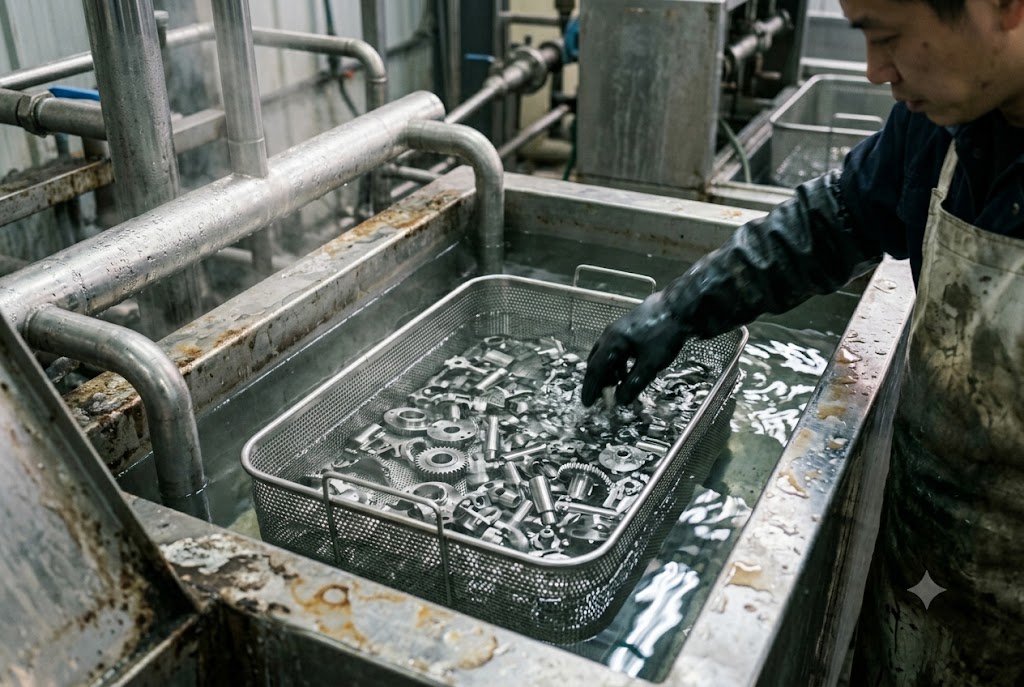
Passivation works by dissolving free iron particles left on the surface from Swiss CNC turning, then letting the chromium in the steel re-form a thin, stable oxide layer. This restored layer is what actually blocks rust, so passivation directly restores the corrosion resistance that machining removes.
Why Machining Damages the Passive Layer
Every time a Swiss CNC tool cuts into stainless steel, it generates heat and friction at the cutting edge. Tiny iron particles from the tool itself, or from chips dragging across the surface, embed into the metal. Coolant chemistry can also strip away the thin chromium oxide film 1 that protects stainless steel from rust. This is normal. It happens on almost every part that comes off a Swiss lathe.
The good news is that this damage is mostly surface-level. Passivation does not need to remove metal. It only needs to dissolve the embedded iron and let the chromium re-form a clean, even oxide layer. Citric or nitric acid baths do this job when set up correctly.
Surface Finish and Passivation Effectiveness
A smoother surface gives passivation less area to work against. Rough surfaces trap more debris and create more spots where corrosion can start, even after a good passivation cycle.
| Surface Finish (Ra) | Crevice Corrosion Risk 2 | Passivation Outcome |
|---|---|---|
| ≤0.4 µm | Low | Strong, even passive layer |
| 0.4–0.8 µm | Moderate | Generally acceptable |
| >0.8 µm | High | Passivation alone may not be enough |
We always tell clients: passivation and surface finish work as a team. A great passivation cycle on a rough part will still leave weak points. Specify both Ra and the passivation method together, not as separate, unrelated line items on the drawing.
What Passivation Standard (ASTM A967, AMS 2700) Should I Specify for Stainless Steel Swiss-Turned Parts?
Buyers often write "passivated" on a drawing and stop there. That single word leaves too much room for a supplier to cut corners.
For Swiss-turned stainless steel parts, specify ASTM A967 or AMS 2700, naming the exact method, such as citric acid Method 2, plus an acceptance test like copper sulfate or water immersion. The word "passivated" alone is not enforceable and gives no real quality guarantee.

ASTM A967 vs AMS 2700
Both standards cover similar chemistry, but they come from different worlds. ASTM A967 3 is the common commercial and industrial standard. AMS 2700 4 is the aerospace standard, with tighter controls and more detailed test requirements. Most B2B buyers outside aerospace can use ASTM A967 confidently.
| Standard | Typical Industry | Methods Covered | Test Rigor |
|---|---|---|---|
| ASTM A967 | Commercial, industrial | Nitric, citric, multiple test options | Moderate |
| AMS 2700 | Aerospace, defense | Nitric, citric, with stricter controls | High |
Why Citric Acid Beats Nitric Acid for Grade 303
Grade 303 5 is the most common Swiss CNC turning material because it machines fast and easy. But it contains manganese sulfide inclusions 6 that react badly in strong nitric acid baths. The result can be black spots, pitting, or hidden acid trapped in tiny voids.
Citric acid runs at a lower concentration and a gentler reaction. It still removes free iron and rebuilds the passive layer, but it does not attack the sulfide inclusions in 303 the way nitric acid can. For most Swiss-turned parts, we recommend citric acid as the default, unless the drawing specifically calls for nitric per an older aerospace spec. Always state the method by name on your PO, not just the standard number.
Can Chinese Factories Perform Passivation In-House, or Is It Subcontracted, and Does That Affect Quality?
We get this question on almost every sourcing call. Buyers want to know who actually touches their parts before they ship.
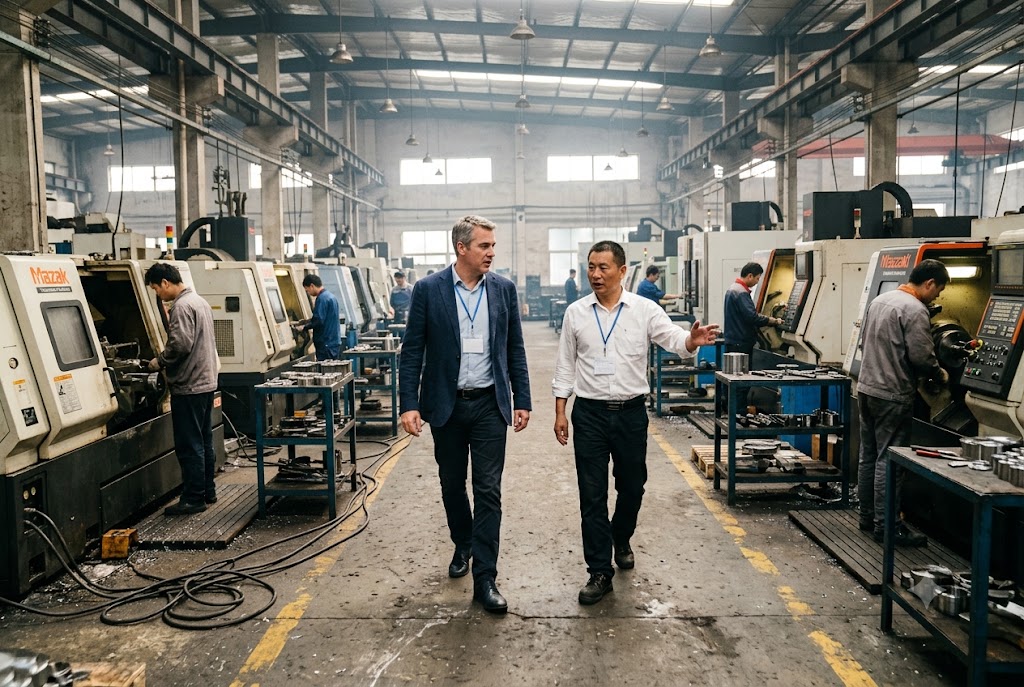
Most Chinese Swiss CNC shops subcontract passivation to specialized chemical treatment houses rather than running it in-house, since the acid baths require dedicated ventilation and waste handling. This is normal practice, but it does affect quality unless the contract requires grade-specific bath protocols.
Why Subcontracting Is Standard, Not a Red Flag
Passivation needs acid tanks, ventilation, and waste treatment systems that most small Swiss CNC shops do not have on-site. So it is normal for a machining factory to send parts out to a dedicated chemical treatment house. This is not a sign of a weak supplier. Large, well-run factories subcontract passivation too.
| Setup | Pros | Cons |
|---|---|---|
| In-house passivation | Faster turnaround, tighter process control | High setup cost, rare among small shops |
| Subcontracted passivation | Lower cost, specialized expertise | Less direct oversight, extra shipping step |
The Real Risk: Mixed-Grade Baths
The real quality risk is not subcontracting itself. It is what happens inside the subcontractor's tank. Many small Chinese chemical houses run grade 303 and grade 304 or 316 parts through the same nitric acid bath, using the same parameters for both. Since 303 reacts differently, this can damage 303 parts while leaving 304 parts fine in the very same batch.
We require our passivation partners to segregate baths by grade and to log which parts went into which batch. This is a simple contract clause, but most buyers never ask for it. If your supplier cannot tell you whether your parts were processed with other grades, that is the question to push on, not whether the work was done in-house.
How Do I Test Whether a Passivated Stainless Steel Part Meets My Corrosion Resistance Requirements?
A passivation certificate from a supplier tells you a process happened. It does not tell you the part actually passed.
To confirm passivation worked, request a copper sulfate test for quick free-iron detection, a 24-hour water immersion test for lot confirmation, and salt-spray testing per ASTM B117 for rigorous proof. A per-lot test report, not just a process certificate, is the real evidence buyers need.

Three Practical Tests You Can Require
A certificate that simply says "passivated per ASTM A967" tells you very little. What you want is proof tied to your actual lot of parts.
| Test Method | What It Checks | Speed | Cost |
|---|---|---|---|
| Copper sulfate test | Residual free iron on surface | Minutes | Low |
| Water immersion (24 hr) | Basic rust resistance | 1 day | Low |
| Salt spray (ASTM B117) | Real corrosion performance | Days | Moderate |
Copper sulfate 7 is the fastest screening test. If free iron is present, the surface turns a visible copper color within minutes. Water immersion is a simple, low-cost lot check: no rust after 24 hours in distilled water is a basic pass. Salt spray testing 8 is the most demanding, simulating weeks of harsh exposure in a short test window.
XPS Testing for High-Assurance Applications
For pharmaceutical, medical, or other high-assurance parts, visual tests are not always enough. X-ray photoelectron spectroscopy 9, or XPS, measures the actual ratio of chromium to iron on the surface. A Cr:Fe ratio at or above 1.3:1 is the common minimum benchmark, with 1.7:1 or higher used for the most demanding applications.
We recommend buyers ask for a per-lot test report, not just a one-time process certificate. A certificate proves a process exists. A test report proves your specific batch passed.
Does Passivation Change the Dimensional or Surface Appearance of My Swiss-Turned Stainless Steel Parts?
Engineers ask us this before every passivation order. Tight tolerances make any extra process feel like a risk.
Passivation removes only a microscopic layer of surface contamination, so it causes no measurable dimensional change, even on parts held to ±0.005 mm. Appearance can shift slightly, and grade 303 parts risk surface blackening in nitric acid baths if the wrong method is used.
Why Passivation Does Not Affect Dimensions
Passivation is a chemical cleaning step, not a metal removal step. The acid bath dissolves a microscopically thin layer of contamination and free iron, far too small to affect any dimension on a drawing. This makes it fully compatible with tight-tolerance Swiss-turned parts, even those held to ±0.005 mm or tighter.
| Process | Dimensional Change | Tolerance Pre-Compensation Needed |
|---|---|---|
| Passivation | None measurable | No |
| Electropolishing | Measurable material removal | Yes |
Electropolishing 10 is different. It actually removes a thin layer of metal to improve shine and smoothness, which means tolerances sometimes need pre-compensation on the drawing. Passivation does not carry this concern.
The Grade 303 Appearance Risk
Appearance is a separate issue from dimension. Grade 303, with its manganese sulfide inclusions, can develop surface blackening or light etching if processed in a standard nitric acid bath without the right controls. This does not change the part's size, but it can fail a visual inspection or worry an end customer.
The fix is process selection, not part redesign. Citric acid baths, or the Alkaline-Acid-Alkaline sequence used for difficult grades, avoid this blackening risk on 303 while still achieving full corrosion protection. If your parts are grade 303, tell your supplier explicitly and confirm which bath chemistry they plan to use.
Conclusion
Passivation is simple chemistry with real impact. Specify the right standard, test every lot, and your Swiss-turned parts will resist corrosion in the field, not just on paper.
Footnotes
1. How chromium forms the thin protective oxide layer that makes stainless steel resist corrosion. ↩︎
2. How crevice corrosion forms in surface gaps and why oxygen-starved spots corrode faster. ↩︎
3. Full breakdown of ASTM A967 passivation methods, acid chemistries, and acceptance tests. ↩︎
4. SAE's official standard page for AMS 2700, the aerospace passivation specification. ↩︎
5. Sandmeyer Steel's technical data sheet covering Grade 303 composition and corrosion limits. ↩︎
6. How sulfur additions create machinability-boosting inclusions that also weaken corrosion resistance. ↩︎
7. How the copper sulfate test detects leftover free iron after passivation. ↩︎
8. Background on ASTM B117 salt spray testing and what the results actually mean. ↩︎
9. Wikipedia's overview of XPS, the surface-analysis technique used to measure passive-layer chemistry. ↩︎
10. Comparison of electropolishing versus chemical passivation for stainless steel surface treatment. ↩︎