Skip to main content Skip to footer
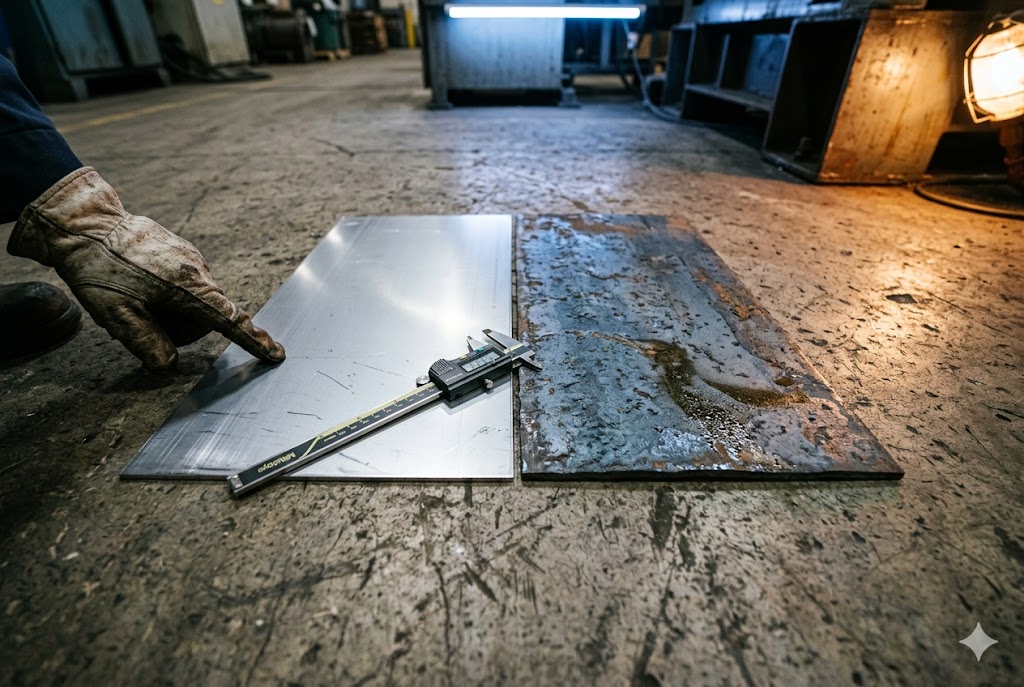
We see it on almost every new project: a buyer sends us a drawing that lists "steel sheet" with no grade specified. Our sourcing team then has to call back and ask. That one missing detail can delay your order by days — or worse, result in parts that fail coating adhesion tests after arrival.
SPCC is cold-rolled low-carbon steel with a smooth, paint-ready surface and tight dimensional tolerances. SPHC is hot-rolled low-carbon steel — cheaper and thicker-capable, but covered in mill scale that must be removed before painting. For most precision or painted parts, SPCC is the correct default. For structural, unpainted fabrications above 4mm, SPHC is the cost-preferred choice.
Both grades are defined under Japanese Industrial Standards 1 — JIS G3141 for SPCC and JIS G3131 for SPHC — and both are widely stocked in Chinese and Vietnamese sheet metal supply chains. Read on to understand exactly which one belongs on your drawing.
When Should I Choose Cold-Rolled Over Hot-Rolled Steel for My Application?
In our experience exporting to the US and Canada, the single most common sourcing mistake we see is buyers defaulting to SPHC because it costs less, then discovering the surface is incompatible with their coating line. That mismatch creates rework costs far exceeding the material savings.
Choose SPCC (cold-rolled) when your part will be painted, plated, or left as a visible surface, or when your assembly requires tight bend tolerances. Choose SPHC (hot-rolled) when the part is structural, will not be painted without descaling, and is thicker than 4mm — where cold-rolled availability drops and cost savings on SPHC are meaningful.
How the Two Grades Are Made
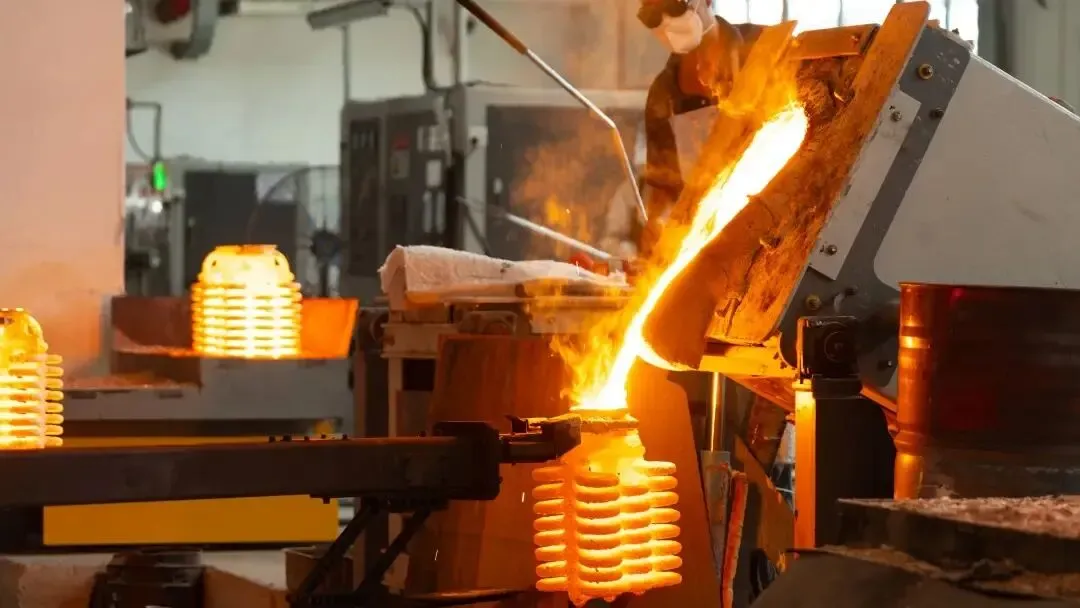
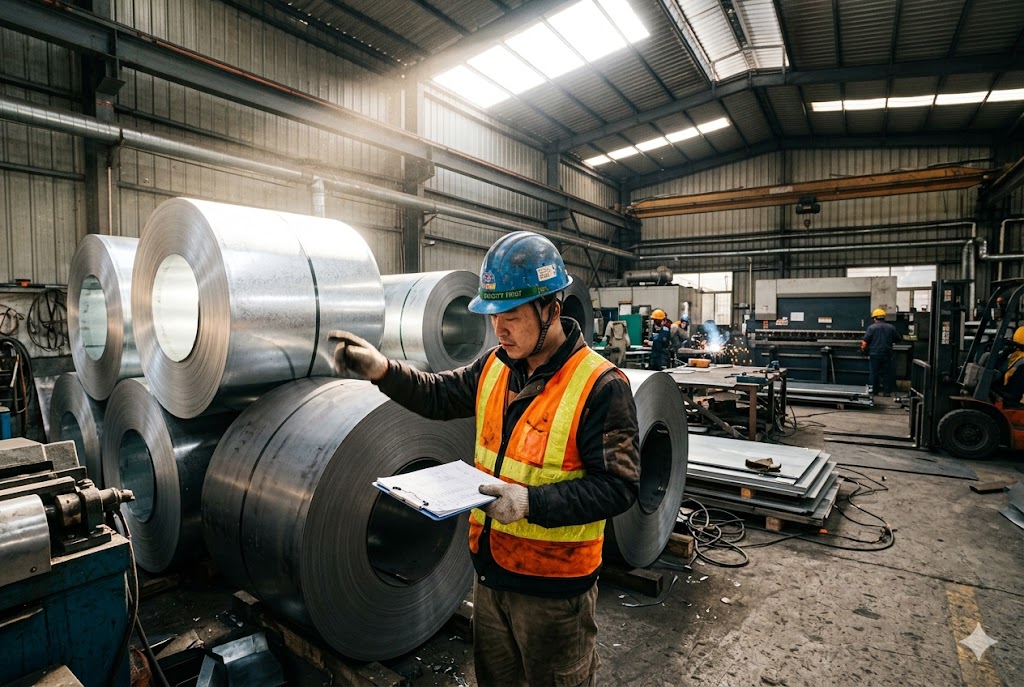
SPHC is rolled at temperatures above 900°C. At that heat, steel deforms easily without cracking. The result is a thicker, rougher material with a blue-grey oxide layer called mill scale on its surface.
SPCC starts as hot-rolled coil. The mill scale is removed by acid pickling. The steel is then cold-rolled at room temperature 2 to final thickness, which work-hardens it. It is then annealed to restore ductility. A final skin-pass rolling improves surface smoothness.
This process difference changes nearly every material property that matters for fabrication.
Mechanical Properties Side by Side
| Property | SPCC (Cold-Rolled) | SPHC (Hot-Rolled) |
|---|---|---|
| Yield Strength | 270–320 MPa | 205–245 MPa |
| Tensile Strength | 270–410 MPa | 270–340 MPa |
| Elongation | 28–38% | 27–33% |
| Thickness Tolerance | ±0.05–0.15 mm | ±0.3–0.5 mm |
| Surface Condition | Smooth, bright | Mill scale (oxide layer) |
For most commercial applications, the mechanical difference between the two grades is secondary. What drives the selection decision is surface condition and dimensional consistency — covered in the next two sections.
Springback Consideration
SPCC's higher yield strength produces more elastic recovery after bending. If your tooling and bend deductions were calculated 3 for SPHC, switching to SPCC at the same thickness will introduce springback error. Your CNC press brake operator needs to know the grade to program the correct bend deduction. Specify the grade on the drawing — not just in the PO notes.
When SPHC Makes Economic Sense
For large structural weldments — frames, brackets, machine bases — where the part will be painted only after shot blasting anyway, SPHC delivers 8–15% lower material cost. At thicknesses above 4–5mm, SPCC is harder to source in China and Vietnam. Most service centers stop stocking cold-rolled above that threshold. If you need 6mm steel, you are buying hot-rolled regardless of preference. Specify the correct surface preparation in that case.
How Does Surface Finish Differ Between SPCC and SPHC, and Why Does It Matter for Painting?
Our quality team has rejected incoming material for this exact reason. A supplier substituted SPHC for SPCC on a powder-coat run because SPHC was in stock. The parts looked fine until the coating adhesion cross-hatch test — then the coating peeled cleanly off the mill scale. The entire batch had to be stripped and reprocessed.
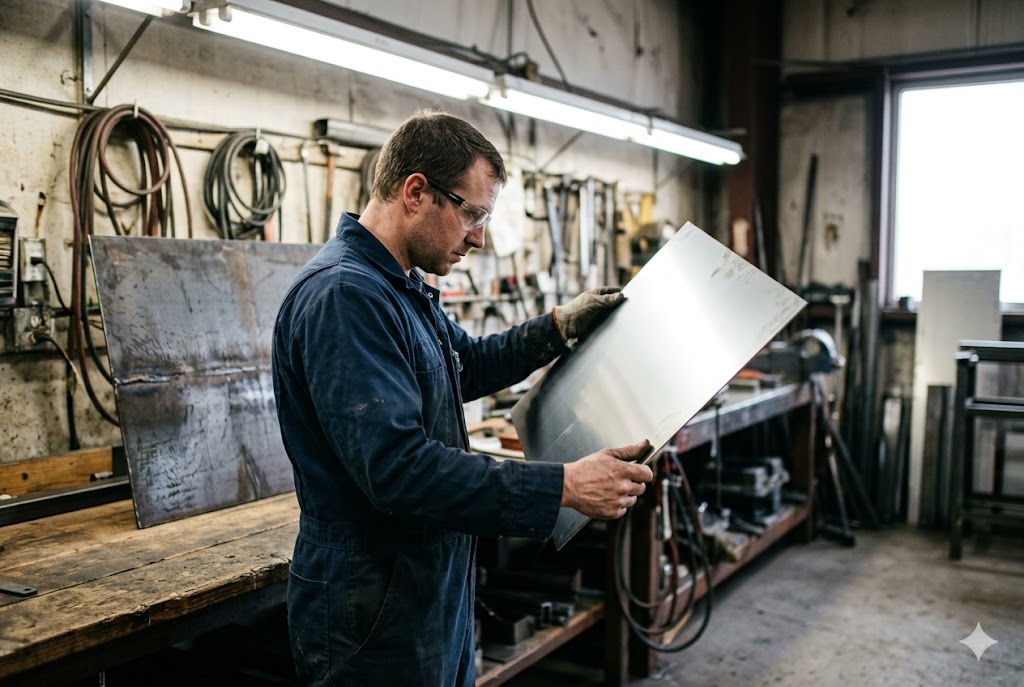
SPCC has a smooth, bright surface with a roughness of Ra 0.8–1.6μm that is directly compatible with phosphating, powder coating, and electroplating. SPHC has a mill scale oxide layer that is electrically resistive, abrasive to tooling, and incompatible with most coating systems without prior mechanical or chemical descaling.
What Mill Scale Actually Is
Mill scale 4 is iron oxide — specifically Fe₃O₄ — that forms on the steel surface during hot rolling. It is:
- Harder than the parent steel — it abrades punching dies and cutting edges faster than clean steel
- Electrically resistive — it degrades resistance spot weld nugget formation
- Non-adherent to coatings — powder coat and liquid paint bond to steel oxide, not to mill scale; adhesion fails at the scale-to-steel interface, not at the coating-to-scale interface
Mill scale looks like a coating but it is not one. It is a contamination layer for any downstream finishing process.
SPCC Surface for Painting
SPCC arrives from the mill with a light rust-preventive oil. After degreasing and phosphating, SPCC accepts powder coat, liquid paint, and electroplating with standard adhesion values. No descaling step is required.
The surface roughness of Ra 0.8–1.6μm provides mechanical anchor for coating adhesion without requiring additional surface preparation. For visible Class A surfaces — instrument panels, enclosures, consumer product housings — SPCC is the only appropriate choice between the two grades.
Surface Condition Comparison Table
| Surface Attribute | SPCC | SPHC |
|---|---|---|
| Appearance | Bright, smooth | Blue-grey, rough |
| Mill scale present | No | Yes |
| Direct paint adhesion | Yes | No — descaling required |
| Class A surface suitability | Yes | No |
| Incoming rust risk | High without oil | Low (scale protects) |
| Welding arc stability | Good | Degraded by scale |
| Tooling wear in stamping | Standard | Accelerated |
Descaling SPHC: What It Involves
Shot blasting and acid pickling 5 both remove mill scale effectively. But each adds cost and lead time. Shot blasting changes surface roughness — you may need to re-specify Ra after blasting. Acid pickling (phosphoric or hydrochloric acid) strips scale chemically but requires wastewater treatment and is not available at every Chinese sheet metal shop.
The practical problem: many tier-2 Chinese suppliers do not have in-house shot blast or pickle lines. They send parts out to a sub-supplier, adding 2–5 days and a handling step where dimensional damage can occur. If SPHC is specified for a painted part, your supplier audit should confirm their descaling process and capacity.
Storage and Rust Risk on SPCC
SPCC without surface oil rusts within 24–48 hours in humid coastal factory environments — which describes Guangdong and Zhejiang, where most Chinese sheet metal fabricators operate. Specify VCI (volatile corrosion inhibitor) packaging 6 for ocean freight. Inspect incoming SPCC shipments for rust before accepting. Surface rust before coating means coating adhesion failure — it is not a cosmetic issue that can be ignored.
Which Steel Type Gives Me Better Dimensional Consistency and Flatness in Production?
When we calibrate our press brake programs and laser cutting files, the first thing we confirm with the supplier is the material grade. SPCC and SPHC behave very differently on the cutting bed and in the brake — and if your downstream assembly has multiple bends or tight hole-to-feature tolerances, that difference shows up as scrap.
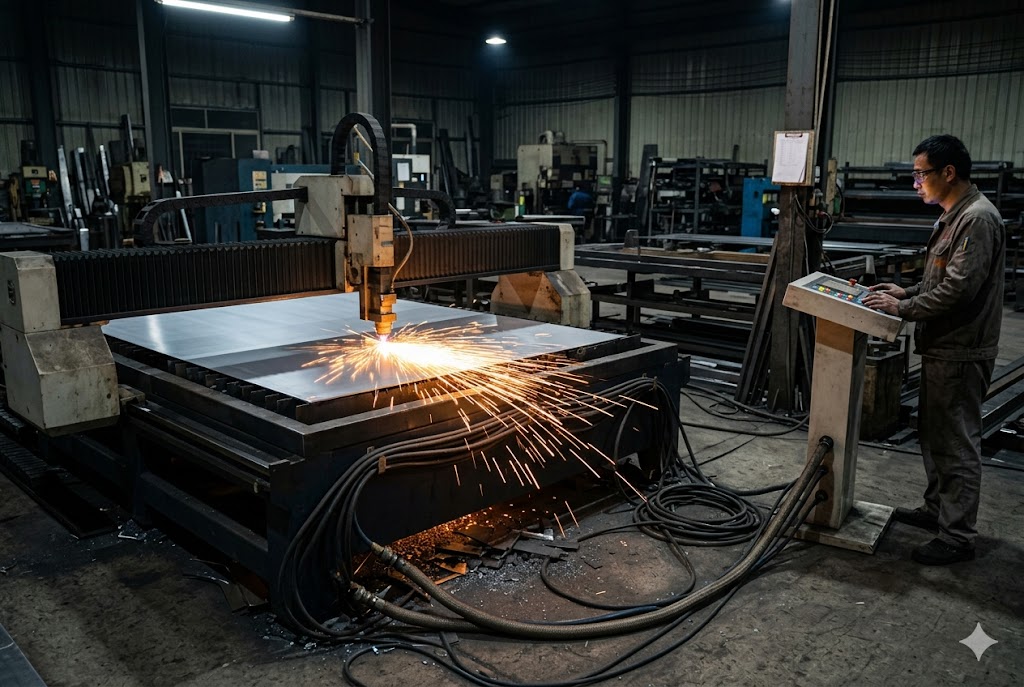
SPCC delivers significantly better dimensional consistency than SPHC. Cold-rolled thickness tolerance is ±0.05–0.15mm versus ±0.3–0.5mm for hot-rolled. SPCC also lies flatter off the coil, reducing focal length variation in laser cutting and improving dimensional repeatability in press brake bending.
Thickness Tolerance and Why It Compounds
Thickness tolerance on SPHC per JIS G3131 is ±0.3mm on 3mm nominal material — that is a 20% variation band. In a part with three sequential bends, thickness variation propagates through each bend deduction calculation. A stack-up that looked fine at nominal dimensions can blow its total tolerance by 0.5–0.8mm in practice when the actual material thickness varies at the upper or lower limit.
SPCC holds ±0.05–0.10mm at equivalent thickness. For precision enclosures, electronic chassis, and assemblies where parts must fit together or mate with purchased hardware, this difference is not marginal — it is the difference between consistent first-pass acceptance and chronic rework.
Flatness and Laser Cutting
Hot-rolled coil develops internal stress gradients during non-uniform cooling. These stresses manifest as coil set, edge wave, and crossbow in blanked parts. An SPHC blank placed on a flat-bed laser cutter bed may not lie flat — it lifts at the edges or bows in the center. This changes the focal distance between the laser head and the material surface, which affects kerf width, edge quality, and dimensional accuracy.
Suppliers who process SPHC correctly will run it through a tension leveler before laser cutting 7 or stamping. Specify "leveled and cut-to-length" on SPHC purchase orders when flatness matters. If your supplier does not have a leveling line, SPHC is not appropriate for precision laser-cut parts.
Dimensional Consistency Comparison
| Dimension Attribute | SPCC | SPHC |
|---|---|---|
| Thickness tolerance (3mm) | ±0.05–0.10mm | ±0.3–0.5mm |
| Flatness off coil | Good — skin-pass leveled | Requires additional leveling |
| Bend deduction consistency | High | Lower — thickness variation affects |
| Hole-to-edge distance repeatability | High | Moderate |
| Suitable for multi-bend stack-up | Yes | Only with tight incoming inspection |
Press Brake Behavior
SPCC's higher yield strength means more springback than SPHC at equivalent thickness and bend angle. This is predictable and can be programmed into the press brake controller. What is less manageable is SPHC's thickness variation: a press brake operator using a fixed bend deduction table assumes nominal thickness. When material comes in at the low end of tolerance, the part comes out over-bent. When it comes in at the high end, under-bent. On a long production run with SPHC, you will see a wider scatter in bend angle results than with SPCC — even with the same operator and the same machine.
For buyers who run their own manufacturing lines downstream, consistent incoming part geometry reduces your assembly labor. Specifying SPCC is a form of supply chain risk control, not just a material preference.
How Do I Specify the Correct Steel Grade on My Drawing to Avoid Substitution by the Factory?
Our sourcing team sees material substitution happen regularly — not always through bad faith, but because a supplier's stock ran out and no one called to ask. The part gets made from whatever was available. Without a mill certificate requirement 8 in your PO and a grade marking on your drawing, you may never know.
To prevent unauthorized substitution, specify the steel grade in your drawing title block using the full JIS designation — SPCC-SD or SPHC — along with thickness and surface condition. Add a mill certificate requirement to your purchase order and include material grade as a verified attribute in your incoming inspection checklist.

Where to Specify on the Drawing
The material specification belongs in the title block — not in a general note, not in the revision history, not in a separate document. Chinese fabricators read the title block first. If the material field says "STEEL SHEET 2.0mm," the production team will use whatever 2mm steel is in the rack. If it says "SPCC-SD 2.0mm per JIS G3141," there is an explicit basis for rejection if the wrong grade is used.
For parts with surface finish requirements, add a surface condition code:
- SPCC-SD: Standard grade, general purpose (most common)
- SPCC-SB: Better surface grade for visible surfaces
- SPCC-SC: Best surface grade for deep drawing or Class A appearance
For SPHC, specify:
- SPHC: Standard hot-rolled
- Surface preparation note: "Mill scale to be removed by shot blast before painting" — if applicable
Mill Certificate Requirements
A mill certificate (material test report or MTR) 9 documents the heat number, chemical composition, and mechanical test results for the coil from which your parts were cut. It is the only document that proves the material grade.
Require mill certificates on your PO. When you receive them, verify:
- Grade matches drawing specification (SPCC vs SPHC)
- Heat number matches the batch markings on the material
- Yield strength, tensile strength, and elongation fall within JIS specification limits
- Thickness measurement confirms nominal and tolerance
Many Chinese tier-2 suppliers will provide a certificate of conformance rather than a mill certificate. A COC is a self-declaration. A mill certificate is issued by the steel mill. For quality-critical applications, accept only mill certificates.
Incoming Inspection Checklist
| Inspection Item | SPCC | SPHC |
|---|---|---|
| Mill certificate review | Required | Required |
| Thickness spot check (caliper) | 5 points per bundle | 5 points per bundle |
| Surface condition visual | No rust, oil film present | Scale intact or descaled per spec |
| Flatness check | Lies flat on inspection table | Check for edge wave if not leveled |
| Grade marking on coil tag | Confirm SPCC-SD or equivalent | Confirm SPHC or equivalent |
Contractual Language
Add this to your purchase order general terms: "Material grade shall match drawing specification exactly. No substitution of steel grade, surface condition code, or origin is permitted without written approval from the buyer. Supplier shall provide original mill certificates for each coil used in production. Parts produced from non-conforming material will be rejected at supplier's expense."
This language is standard in tier-1 automotive and aerospace supply chains. For commercial mechanical parts sourced from China and Vietnam, many buyers omit it — and pay for that omission in rework and incoming rejection costs. Adding it to your standard PO template 10 costs nothing.
Conclusion
SPCC and SPHC are not interchangeable. Surface condition, dimensional tolerance, and coating compatibility differ significantly. Specify the correct grade on your drawing, require mill certificates, and include material grade in incoming inspection. Those three steps eliminate most material substitution risk.
Footnotes
1. Official JIS G3141 standard page for cold-rolled steel sheet specifications. ↩︎
2. Explains cold-rolling process effects on yield strength, springback, and press brake behavior. ↩︎
3. Guide to predicting inside bend radius and springback when forming cold-rolled steel. ↩︎
4. Overview of mill scale composition, its effects on coatings, and mechanical removal methods. ↩︎
5. Industry discussion comparing shot blasting and phosphating as SPHC pre-treatment options. ↩︎
6. Explains how VCI packaging prevents rust on bare steel during ocean freight transit. ↩︎
7. Bend allowance reference including SPCC-specific charts and leveling requirements. ↩︎
8. FAQ covering what mill test reports contain and why they matter for material verification. ↩︎
9. How to read a steel mill certificate, including heat number, chemistry, and mechanical data. ↩︎
10. Guide to material test certificates and their role in purchase order quality control. ↩︎