Skip to main content Skip to footer
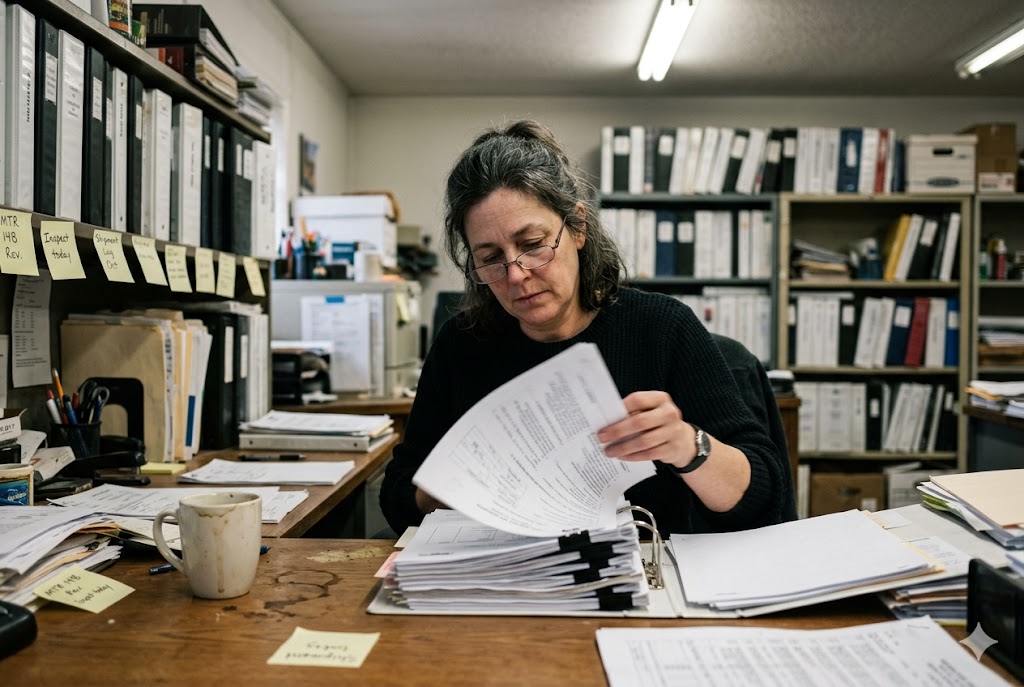
We have shipped thousands of CNC machined batches to US buyers, and the question we hear most after a field failure is always the same: "Which parts are affected?" Without a proper traceability system in place before production starts, that question takes days — or weeks — to answer.
Traceability for imported CNC parts is built on four linked records: the Material Test Report tied to a mill heat number, the dimensional inspection report, the process record, and a signed Certificate of Conformance. You need all four for every shipment. Missing even one creates a gap that prevents you from isolating a quality problem quickly or defending yourself in a liability event.
If you want to stop guessing and start knowing, keep reading. This guide breaks traceability down into practical steps you can apply to your next order.
What Traceability Records Should I Require for Each Batch?
Every batch we process moves through a defined document set before it ships. Without that structure, your supplier's paperwork is just paper — it doesn't connect the physical part to a verifiable history.
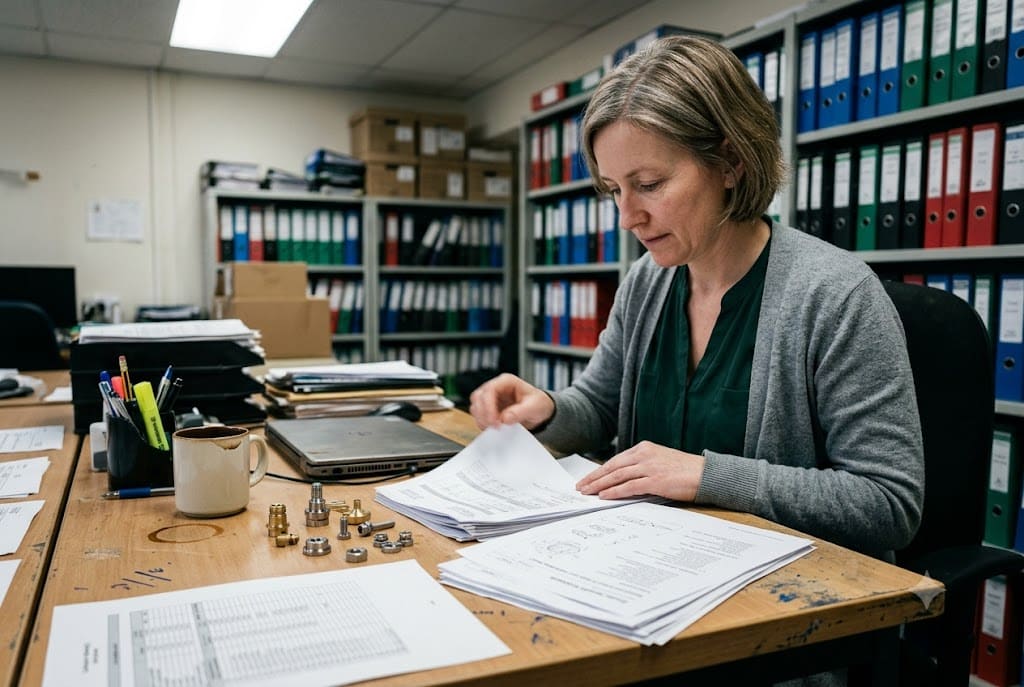
For each production batch of imported CNC parts, require four core documents: the Material Test Report with the mill heat number, the dimensional inspection report with actual measured values against your drawing, the process record showing machining parameters and post-process treatments, and a Certificate of Conformance signed by the quality manager. All four must carry a shared batch identifier.
The Four Core Documents Explained
Each document does a specific job. Together, they answer four questions: What material? What process? What was measured? Who confirms it?
Material Test Report (MTR)
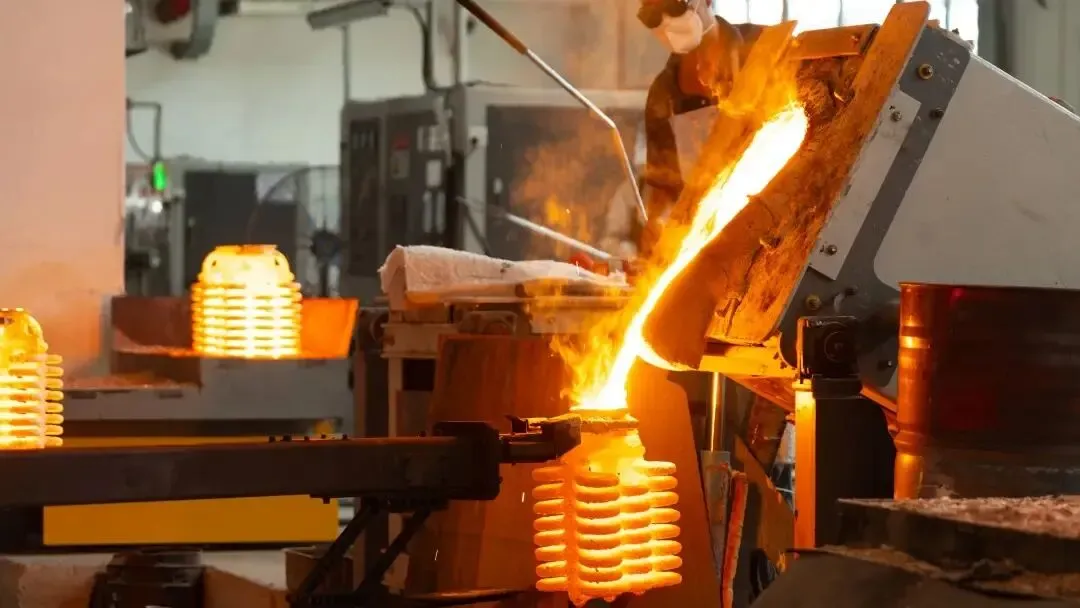
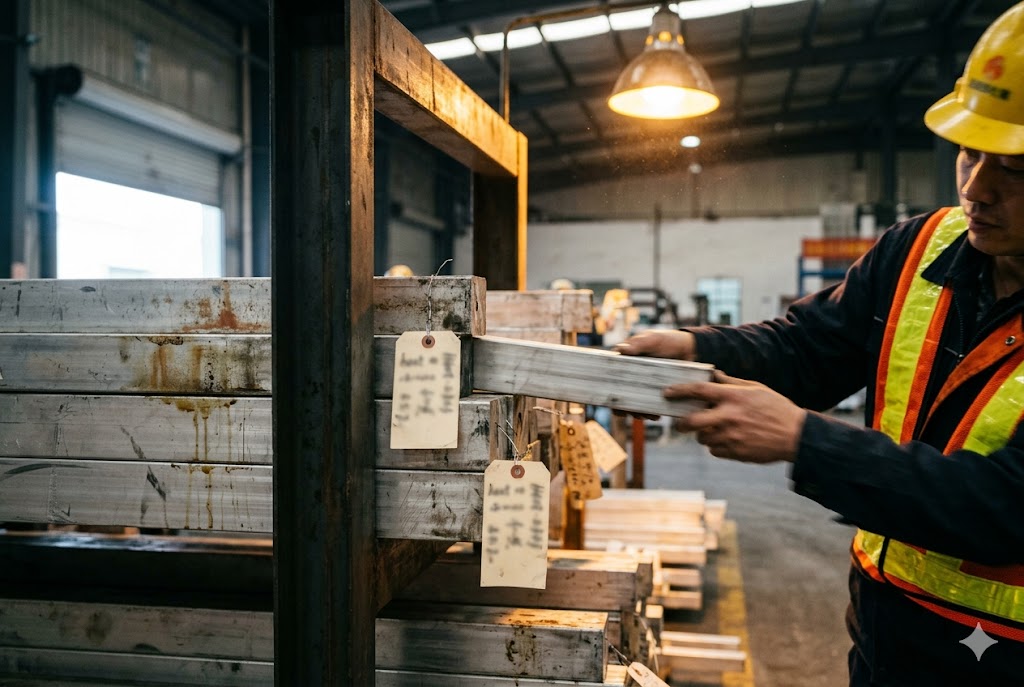
The Material Test Report 1 is issued by the raw material mill. It certifies the chemical composition and mechanical properties of a specific melt batch. The key field is the heat number 2 — a unique identifier assigned by the mill to that melt. Require the supplier to record the heat number on the MTR, on the production traveler, on the packaging label, and in the shipment documents. If a material non-conformance surfaces six months after delivery, the heat number tells you exactly which batches used that material. You don't have to recall everything — only the affected heat.
Dimensional Inspection Report
This report maps actual measured values to the features on your drawing. It should list the drawing number, drawing revision, the feature being measured, the nominal dimension, the tolerance, and the actual measured value. A report that only says "passed" is not a dimensional inspection report — it is a checkbox. Require actual numbers. For a practical overview of quality control options for CNC machined parts 3, including dimensional, surface, and material property inspection reports, MakerVerse provides a useful breakdown by report type.
Process Record
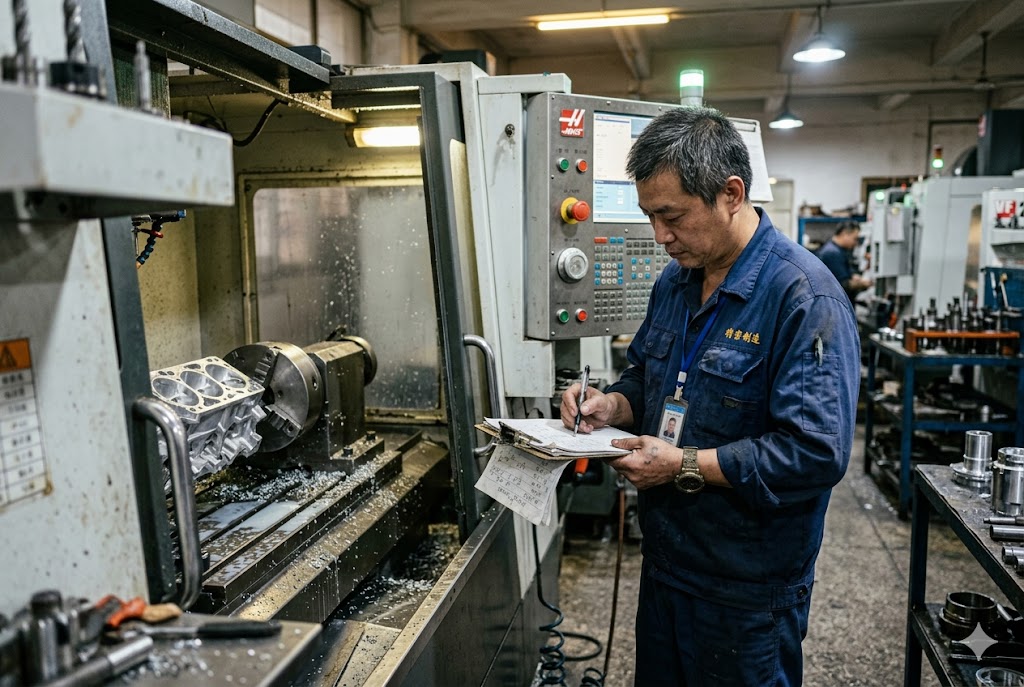
The process record documents how the part was made. At minimum it should include: the CNC program revision number used, the machine serial number, operator names and shifts, the cutting tool change log for the run, and any post-process operations such as heat treatment, anodizing, or passivation. If a subcontractor performed finishing, require their process records too — bath chemistry, temperature, cycle time, lot number. A chain with a missing link at the finishing stage is as useless as no chain at all.
Certificate of Conformance (CoC)
The Certificate of Conformance 4 is a signed declaration from the supplier's quality manager stating that the parts meet the requirements of your drawing and purchase order. It should reference the batch ID, the drawing number and revision, and the MTR heat number. It is the supplier's formal commitment — and your first document if a dispute arises.
Linking the Documents With a Batch Identifier
Before production begins, establish a three-element identifier: your internal purchase order number, the supplier's production batch number, and the drawing revision level. Require this identifier to appear on every document, on the packaging, and on the parts themselves where geometry allows. Any document in your file can then be cross-referenced to the physical parts and to every other document without ambiguity.
| Document | Key Field | What It Proves |
|---|---|---|
| Material Test Report (MTR) | Mill heat number | Material identity and certified properties |
| Dimensional Inspection Report | Actual measured values vs. drawing | Part conforms to specified dimensions |
| Process Record | CNC program rev, machine ID, operator | How and by whom the part was made |
| Certificate of Conformance (CoC) | QM signature, batch ID, drawing rev | Supplier's formal declaration of conformity |
Retention Periods by Industry
Require the supplier to retain all records for a minimum period stated explicitly in your purchase agreement. The right retention period depends on your industry.
| Industry Standard | Minimum Retention Period |
|---|---|
| General industrial (no specific standard) | 5 years recommended |
| Automotive (IATF 16949, safety-critical parts) 5 | 15 years |
| Aerospace (AS9100) 6 | 10 years minimum |
| Medical device (FDA 21 CFR 820) 7 | 2 years beyond product life |
Verify that the supplier's document control system actually archives records in a retrievable format. A traceability system that disappears when the quality manager leaves is not a traceability system.
Should I Ask Suppliers to Track Material Lots and Process History?
When our team visits a supplier factory for a pre-production audit, the first thing we check is how they handle incoming raw material. Suppliers who cannot show us a tagged and numbered material lot in their receiving area usually cannot show us reliable process history either.
Yes. Require suppliers to track both material lots and process history for every production batch. The mill heat number anchors material identity. The process record — covering CNC program revision, machine ID, operator, and post-process operations — anchors production identity. Together they let you isolate exactly what happened if a field failure occurs.
Why the Heat Number Is Your Traceability Anchor
The heat number is the unique identifier assigned by the mill to a specific melt batch. Every piece of bar stock, plate, or tube cut from that melt carries the same heat number. When the supplier receives raw material, they should record the heat number in their incoming material register, tag the physical stock, and transfer that number to the production traveler when the material is issued to the shop floor.
If a material non-conformance is discovered — wrong alloy, out-of-spec hardness, hydrogen embrittlement — the heat number immediately identifies which production batches used that material. You can isolate affected parts without recalling everything you imported from that supplier.
What Process History Should Cover
Process history answers: who made it, on what machine, with what program, and what happened after machining. Here is the minimum set of fields a process record should contain:
| Process History Field | Why It Matters |
|---|---|
| CNC program revision number | Confirms parts were made to the correct and current program |
| Machine serial number | Identifies if a specific machine has a recurring issue |
| Operator name and shift | Enables investigation if operator variability is suspected |
| Cutting tool change log | Links tool wear to dimensional drift in a batch |
| Post-process operation records | Confirms heat treatment, plating, or anodizing was performed to spec |
| Subcontractor process records | Extends traceability through outsourced finishing steps |
Serialization vs. Batch-Level Traceability
Not every part needs an individual serial number. The right level depends on the risk profile of the part.
Batch-level traceability is appropriate for most general industrial CNC orders. One batch ID covers a production run of identical parts made from the same material heat, on the same machine, in the same shift. This is practical and cost-effective for medium-volume orders.
Individual serialization is appropriate for safety-critical components, regulated industries such as aerospace and medical devices, or any part where a single unit failure could cause significant downstream harm. Specify laser-engraved or electrochemically etched serial numbers 8 directly on the part. Laser-engraved identifiers are permanent, survive harsh environments and cleaning processes, and cannot be separated from the part the way a label can.
Your Incoming Receiving Step Completes the Chain
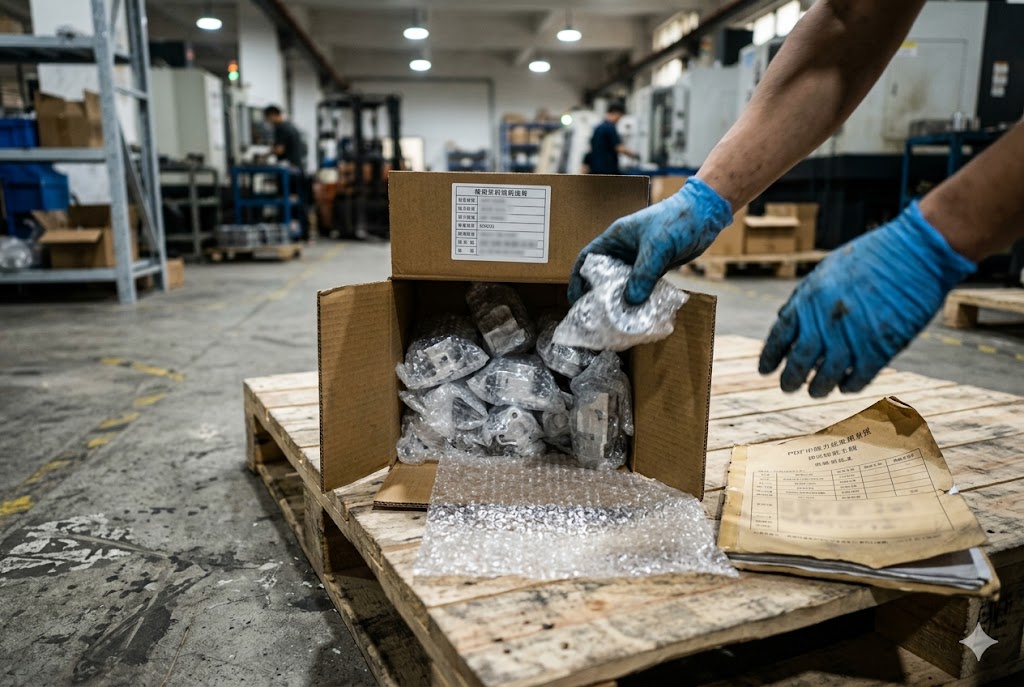
Traceability established at the supplier is severed at your dock if you do not continue it. When a shipment arrives, assign each received shipment an internal lot number, record the supplier's batch ID and MTR heat number against it in your inventory system, and physically label storage bins with this lot number before parts enter your production or storage flow. Without this step, parts from different batches get mixed, and the supplier's careful documentation becomes useless.
How Can Traceability Help Me Solve Field Quality Issues Faster?
We have managed dozens of field quality events for our US clients. The ones that resolved in days had complete traceability packages. The ones that dragged on for weeks — and sometimes ended in expensive full recalls — did not. The difference was not the severity of the problem. It was how fast the scope could be defined.
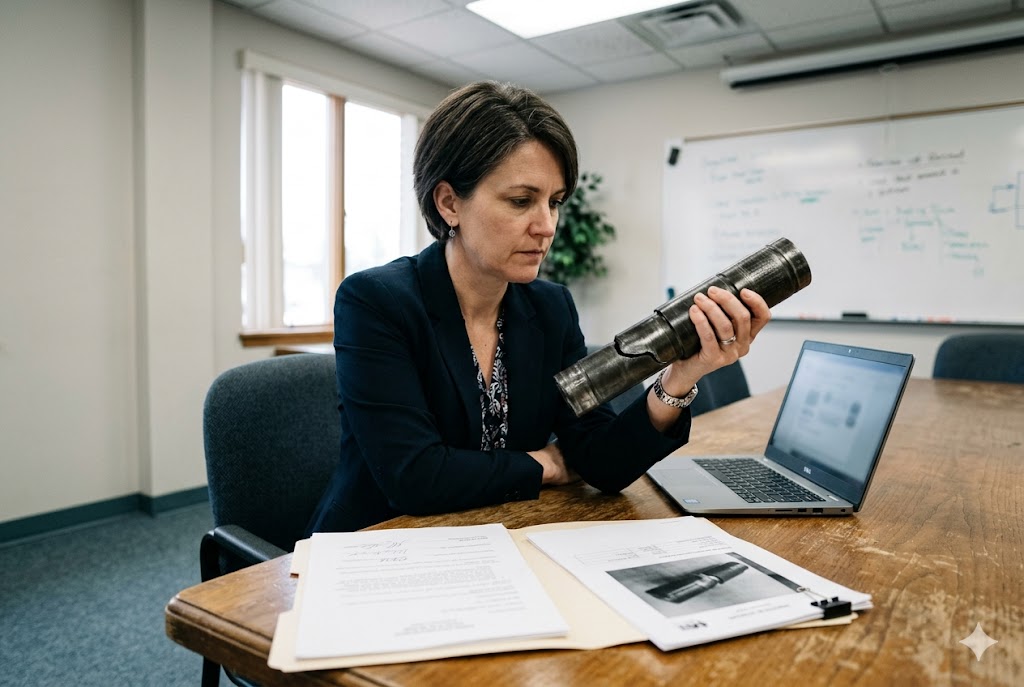
Traceability reduces field quality resolution time by letting you define the scope of a problem immediately. A complete batch record — MTR heat number, dimensional report, process record, and CoC — tells you which parts are affected, which are safe, and where in the production process the failure originated. Without it, you default to a full recall.
The Four Questions Traceability Answers in a Crisis
When a field failure happens, four questions must be answered as fast as possible:
- What material was used? — Answered by the MTR heat number.
- What process was followed? — Answered by the process record.
- Who performed the work? — Answered by operator and shift records in the process history.
- What was measured? — Answered by the dimensional inspection report with actual values.
If you can answer all four within hours of receiving the field complaint, you can define the scope of affected parts, communicate a credible response to your customer, and initiate a corrective action at the right point in the supply chain.
Narrowing the Scope With Linked Records
Consider a practical example. A US manufacturer reports that a CNC machined shaft is failing in service due to insufficient surface hardness. Without traceability, you must potentially recall every shaft from that supplier — all orders, all batches. Research published by SupplyChainBrain shows that the cost of a single product recall 9 ranges from $10 million to $49.99 million for 39% of manufacturers surveyed — a figure that makes even a modest investment in traceability infrastructure look inexpensive by comparison. With traceability:
- The MTR heat number identifies whether all affected shafts came from the same material heat.
- The process record identifies whether the heat treatment cycle deviated from the specified temperature or time.
- The subcontractor process record identifies whether the failure is in the machining stage or the post-process finishing stage.
- The dimensional report confirms whether the pre-treatment dimensions were correct.
In this scenario, traceability can reduce a potential full recall to a single batch from a single heat — a fraction of the cost and disruption.
Drawing Revision Control as a Traceability Element
Drawing revision control 10 is a frequently neglected traceability element that becomes critical in field failure investigations. Require every shipment documentation package to identify the specific drawing revision number and date against which the parts were inspected. Maintain a drawing revision log that records when each revision was issued and which production batches were made to each revision.
This allows you to immediately determine whether parts in the field were made to the current drawing or to a superseded revision. In our experience, drawing revision mismatches are a surprisingly common root cause of field dimensional failures — the supplier was still running the old program when the drawing was updated.
What Level of Traceability Is Realistic for My Order Size?
We work with buyers across a wide range of order sizes — from 50-piece prototype runs to annual programs of tens of thousands of parts. The traceability system that works for a large OEM with an MES-connected supply chain is not practical for a medium-sized importer placing occasional orders. The key is finding the minimum viable system that gives you real protection without burdening your supplier or your own team.
For most medium-sized importers, a standardized shipment documentation package — one PDF per shipment containing the PO number, drawing number and revision, batch ID, MTR with heat number, dimensional report with actual values, signed CoC, and photographs of the batch label — provides complete first-response traceability for the vast majority of quality events, at zero additional cost.
Matching Traceability Level to Order Risk
Not every order carries the same risk. Use a simple risk-based framework to decide how much traceability to require.
| Order Type | Risk Level | Recommended Traceability Level |
|---|---|---|
| Low-volume prototype, non-critical application | Low | Batch-level: MTR, CoC, basic dimensional check |
| Medium-volume production, general industrial use | Medium | Full four-document batch package with heat number and process record |
| Safety-critical or regulated component (any volume) | High | Full batch package plus individual serialization and subcontractor records |
| High-volume repeat program | Medium–High | Full batch package plus incoming receiving lot assignment and drawing revision log |
The Practical Low-Cost Traceability System
For buyers who cannot mandate a full Manufacturing Execution System from a Chinese supplier, the most practical approach is a standardized PDF documentation package. Define a fixed template. Require the supplier to complete it for every shipment. The template should contain:
- PO number and drawing number with revision level
- Batch ID linking all documents in the set
- MTR with the heat number clearly highlighted
- Dimensional inspection report with actual measured values (not just pass/fail)
- CoC signed by the quality manager
- Photographs of the batch label on the packaging and of the raw material marking
This template costs nothing to implement. It travels with the shipment. It can be stored digitally indefinitely. When a quality event occurs, it provides a complete first-response capability without any IT infrastructure.
What to Do at Your Receiving Dock
Your receiving step is the final link in the chain. Assign each incoming shipment an internal lot number. Record the supplier's batch ID and MTR heat number against it in your inventory or ERP system. Label storage bins or containers with the internal lot number before parts enter your facility's flow. This ensures that the traceability your supplier created is preserved and usable at your end — and that parts from different batches are never mixed in your stock without being identified. For a complete reference on the documentation that should accompany CNC parts at each inspection stage, the CNC Inspection & Quality Handbook 11 — covering CMM reports, FAI, material certifications, and CoCs — is a useful reference for buyers establishing incoming inspection checklists.
Conclusion
Traceability does not require complex systems. It requires consistent documents, linked identifiers, and a receiving process that continues the chain at your dock. Start with the four-document batch package and build from there based on your risk profile.
Footnotes
1. Overview of Mill Test Reports and their role in certifying metal material properties and compliance. ↩︎
2. Definition of heat numbers as unique identifiers linking steel products to their production batch. ↩︎
3. Guide to dimensional, surface, and material property inspection options for CNC machined parts. ↩︎
4. Explanation of what a Certificate of Conformance covers and when it is required by ISO standards. ↩︎
5. Full list of mandatory documented information required under the IATF 16949 automotive quality standard. ↩︎
6. Overview of AS9100 aerospace quality management standard requirements including supply chain traceability. ↩︎
7. Guide to FDA 21 CFR Part 820 Quality System Regulation records retention for medical device manufacturers. ↩︎
8. Technical overview of direct part marking methods including laser engraving for permanent traceability. ↩︎
9. Industry survey data on the financial impact of product recalls and the role of supplier quality failures. ↩︎
10. Best-practice guide to engineering drawing revision control for manufacturing accuracy and traceability. ↩︎
11. Comprehensive CNC inspection and quality handbook covering CMM, FAI, material certs, and CoC documentation. ↩︎