Skip to main content Skip to footer
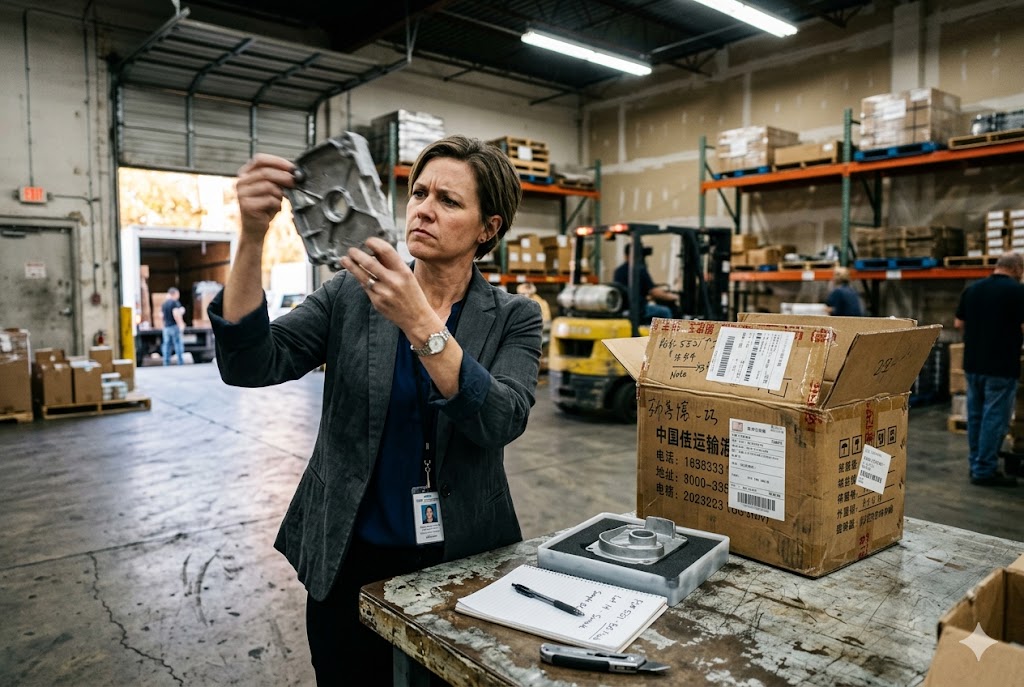
We have seen it happen too many times. A client approves a sample, signs off on the quality, and places a production order. Then the finished shipment arrives — and the parts are not what they approved. The dimensions are off. The surface finish looks different. The supplier insists nothing changed. This gap between approved sample and mass production is one of the most common and costly problems in custom die cast sourcing from China 1.
The most effective way to prevent production drift is to lock a physical golden sample as your contractual standard, require duplicate samples on the production floor, mandate a formal Engineering Change Notification process, and conduct in-process inspections at the 10–20% production milestone rather than waiting for final inspection only. These steps, combined in one documented quality plan, close the gap between approval and delivery.
If you handle each of these areas before your next production run, you will spend far less time disputing parts and far more time moving your business forward. Here is how to do it.
Should I Require a Golden Sample or Signed Reference Sample for My Project?
Every production batch we manage starts with the same question: what is the actual standard the supplier is measuring against? Without a physical, signed reference — not a drawing alone, not a verbal approval — that standard is whoever's memory happens to be most confident on any given day.
Yes, you should always require a golden sample — a physical, signed, uniquely identified reference part — for any custom die cast project. This sample becomes your contractual production standard and removes ambiguity about what "approved quality" actually means. Without it, your supplier is matching a memory, not a benchmark.
What Is a Golden Sample?
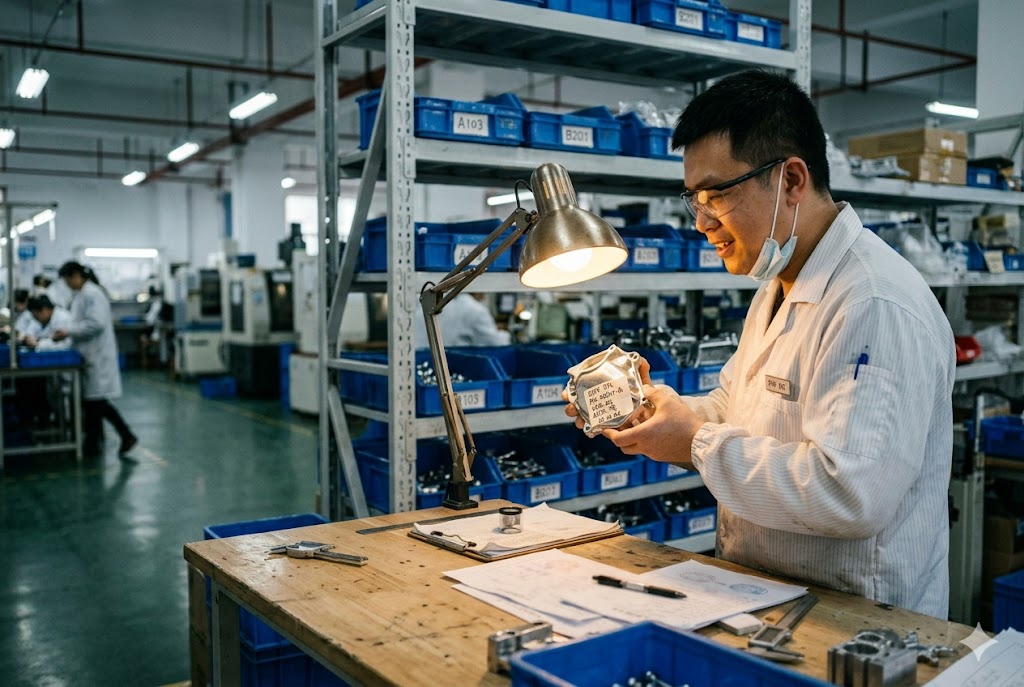
A golden sample is a physical unit of your part that has been inspected, approved, and signed off by both buyer and supplier. It carries a unique identifier — typically your part number, revision level, and the approval date. This sample is not just a prop. It is the legal reference against which every production unit should be measured.
In our experience coordinating production runs across dozens of factories in China and Vietnam, we have found that factories without a retained golden sample 2 default to whatever the line supervisor remembers from the last batch. That memory drifts. Each production run introduces small changes — a slightly different die temperature, a new operator, a minor alloy substitution — and without a physical reference, no one catches the cumulative drift until a client rejects a container.
Golden Sample vs. Signed Limit Samples
Some projects require more than one reference. A golden sample represents the ideal. Limit samples define the boundary of acceptable variation — the worst part you will still accept on each dimension of quality. Using both gives your supplier's QC team a complete picture.
| Reference Type | Purpose | Who Retains It |
|---|---|---|
| Golden Sample | Ideal approved standard | Buyer + Supplier (duplicate) |
| Upper Limit Sample | Maximum acceptable variation | Supplier QC station |
| Lower Limit Sample | Minimum acceptable variation | Supplier QC station |
| Rejected Sample | Clear fail reference | Supplier QC station |
Where Should the Supplier Keep the Golden Sample?
This is a detail most buyers miss. The golden sample should live at the inspection station on the production floor — not in a manager's office, not in a display cabinet, not in a storage room. Line operators and QC staff need to physically compare production parts against it during each shift. If the reference is locked away, it might as well not exist.
We always specify in our client contracts that one duplicate golden sample must be retained at the factory floor inspection point, and a second duplicate is held by us or the client. This means there is always an intact reference, even if one copy is accidentally damaged.
Unique Identification Matters
Label the golden sample clearly. Include the part number, revision level, approval date, and the name of the approver. If you update the design or approve a revised sample later, retire the old reference and issue a new one. Keeping outdated samples on the floor is a common cause of confusion — operators grab the wrong reference and produce to the wrong standard.
How Can I Lock My Approved Standard Before Mass Production Begins?
Approving a sample is only half the job. The other half is making that approval legally and operationally binding. We watch buyers lose this battle repeatedly — they approve a sample, but because nothing in the purchase order explicitly references it, the supplier treats it as guidance rather than a contract.
To lock your approved standard, reference the golden sample's unique identifier directly in your purchase order and supply agreement. Attach the dimensional inspection report, material certificate, and appearance approval as contractual documents. Add a formal Engineering Change Notification clause that requires written buyer approval before any change to material, tooling, finish, sub-supplier, or process parameter.

Reference the Sample in Your Purchase Order
Your purchase order is a contract. Use it accordingly. Most buyers write POs that say something like "as per approved sample" without specifying which sample, which revision, or which approval date. That vagueness is an open door for interpretation.
Instead, write: "Production shall conform to Golden Sample Part No. [XXX], Revision [X], approved on [date], as retained at [factory name] inspection station and [buyer office]." This sentence alone eliminates most disputes about what was agreed.
Attach the Documentation Package
Every approved sample should come with a documentation package. Attach this package to your PO and supply agreement as enforceable annexes.
| Document | What It Captures | Why It Matters |
|---|---|---|
| Dimensional Inspection Report | Key measurements at approval | Baseline for future comparison |
| Material Certificate 3 | Alloy grade, composition | Prevents silent material substitution |
| Appearance Approval Form | Surface finish, color, texture | Captures what drawings cannot show |
| Process Parameter Sheet | Die temp, shot speed, pressure | Baseline for process consistency |
The Engineering Change Notification Clause
This clause is non-negotiable in every contract we manage. Without it, suppliers in China will make what they consider "minor improvements" — rounding a sharp edge, switching to a cheaper plating vendor, substituting an out-of-stock alloy — without telling you. Each change alone may seem small. Together, they produce a part your customer no longer recognizes.
The Engineering Change Notification 4 clause must state: any change to material, alloy grade, tooling, surface finish, sub-supplier, or process parameter requires written buyer approval before implementation. The supplier must submit a new sample and dimensional report for sign-off. Until approved, the change cannot proceed.
Archive Everything on Your Side
Do not rely on the supplier to keep records. We maintain a version-controlled archive for every client that includes the golden sample documentation package, all ECN submissions and approvals, and each batch's inspection data. When drift appears — sometimes years later — we can identify exactly which parameter changed by comparing current data against the original baseline. Suppliers' internal records are often incomplete, misfiled, or quietly altered after a dispute begins.
What Process Controls Should My Supplier Use to Match My Approved Samples Consistently?
A strong contract sets expectations. Process controls are what actually deliver consistent parts. Many buyers focus entirely on final inspection — checking finished goods before shipment. That approach catches problems after they exist. The goal is to stop problems from forming in the first place.
Your supplier should implement incoming material verification, first-article inspection before each production run, in-process quality control checks at the 10–20% production mark, and a defined defect classification table with explicit accept/reject thresholds. These controls applied together catch drift at its source rather than after a full batch has been produced.

Incoming Material Verification
Die cast quality starts before the metal reaches the die. If the alloy composition is wrong, no amount of downstream inspection fixes it. Require your supplier to verify incoming material against the material certificate for every batch. A simple spectrometer check 5 takes minutes and catches substitutions before they enter production.
First-Article Inspection Before Each Run
After tooling is set up and before full production begins, the supplier should produce a small number of first-article inspection 6 parts and measure every critical-to-quality dimension. These measurements go into a report that is checked against the golden sample's baseline. Only after first-article approval does full production begin.
This step is often skipped under schedule pressure. Skipping it is expensive. A die that has shifted slightly from maintenance, a new operator who set a parameter differently, a plating line that was reconfigured — all of these show up in first-article and can be corrected in minutes. They show up at final inspection as a full batch of scrap.
In-Process Quality Control at 10–20% Completion
This is one of the highest-value controls we implement for our clients. At roughly the 10–20% production completion point, a QC check is conducted on a sample of parts already produced. This catches process drift — operators switching components, skipping steps, or interpreting tolerances more loosely as a run progresses.
Catching a problem at 15% production means you contain it at 15%. Catching the same problem at final inspection means you may be rejecting the entire batch.
Define Your Defect Classification Table
Attach a formal defect classification table to your purchase order. Every defect type should be classified as Critical, Major, or Minor, with explicit accept/reject thresholds for each.
| Defect Class | Definition | Typical Accept/Reject Threshold |
|---|---|---|
| Critical | Affects function, safety, or fit | Zero tolerance — 0 acceptable |
| Major | Visible defect affecting appearance or performance | AQL 1.0 7 or stricter |
| Minor | Slight cosmetic imperfection not affecting use | AQL 2.5 or agreed threshold |
Without this table, every inspector applies their own judgment. Judgment varies by person, by shift, and by the supplier's commercial interest. A written table removes that variability.
Tooling Maintenance Logs
Die wear is one of the most common silent causes of dimensional drift. A die that has run 80,000 shots without maintenance produces measurably different parts than one at 5,000 shots. Require your supplier to maintain a tooling maintenance 8 log recording shot counts, repair history, and any cavity modification. Request this log on a scheduled basis — quarterly is reasonable. If shot counts are approaching the maintenance threshold for your alloy and die material, schedule preventive maintenance before production begins, not after drift appears.
How Do I Reduce the Risk of Sample Approval Meaning Something Different to My Supplier?
This is a communication problem as much as a technical one. When we interview suppliers after a quality failure, the same explanation comes up: "We thought the customer meant X." The supplier's interpretation of "approved quality" is shaped by their experience, their internal standards, and the pressure they are under to meet price and schedule targets.
To reduce the risk of misaligned expectations, define every quality dimension in writing before production begins. Use a written appearance approval form with reference photos, a written defect classification table, and require the supplier to submit dimensional data rather than a pass/fail declaration. Conduct periodic independent third-party inspections so the supplier knows their interpretation of quality will be independently verified.

The Appearance Approval Form
Drawings capture geometry. They do not capture the look of a properly plated surface, the acceptable degree of parting line witness, or the correct texture of a powder-coated finish 9. An appearance approval form fills this gap.
This document uses reference photos of the approved golden sample to define acceptable appearance. It notes specific areas to inspect — parting lines, gate marks, surface texture, color — and records what is acceptable and what is not. Both buyer and supplier sign it. Disagreements about appearance become much rarer when both sides are looking at the same photos.
Require Dimensional Data, Not Just a Declaration
A supplier that sends you a "QC passed" declaration is telling you nothing useful. Require actual measurement data for key critical-to-quality dimensions on every production batch. This serves two purposes. First, it verifies conformance for the current batch. Second, it lets you track trends over time — if a measurement that should be 25.00 mm ± 0.05 is reading 24.97 in batch one, 24.95 in batch two, and 24.93 in batch three, you know exactly where you are heading before any part falls out of spec.
Independent Third-Party Inspections
Even with a trusted long-term supplier, we schedule periodic independent third-party inspections 10 for our clients. Predictable accountability changes behavior. Suppliers who know their production can be independently verified at any time maintain standards more consistently than those who only face scrutiny when a customer complaint arrives.
For new suppliers, we recommend a third-party inspection for every production batch until a track record is established. For established suppliers with a clean history, a scheduled quarterly inspection — supplemented by in-process checks on new part numbers or new tooling — balances cost and risk.
Treat Every Change as a Change Control Event
Material substitutions, sub-supplier switches, and process parameter shifts should each be treated as formal change control events, not internal decisions the supplier makes quietly. Require the supplier to submit a change notification, a new sample, and a dimensional report for your sign-off before implementing any change — even one they consider minor.
We have seen a supplier switch to a cheaper plating chemical to protect margins on a tight-priced job. The switch passed their internal test. Six months later, the client's customer reported corrosion failure in the field. The chain of causation was clear, but the liability was contested because the change was never disclosed. A formal change control process would have surfaced it before any parts shipped.
Conclusion
Preventing production drift comes down to one principle: define the standard clearly, bind it contractually, and verify it independently. Lock your golden sample, attach the documentation package to your PO, mandate ECN approval for every change, inspect mid-run, and require real data — not declarations. Do these things consistently, and your approved sample will look like your production parts.
Footnotes
1. Overview of the die casting process, materials, and applications for custom metal parts. ↩︎
2. Comprehensive guide to first article inspection and its role as a golden sample reference. ↩︎
3. What a material test certificate verifies and why it prevents silent alloy substitution. ↩︎
4. How an Engineering Change Notification communicates and controls supplier design changes. ↩︎
5. How XRF and OES spectrometers rapidly verify alloy composition during incoming inspection. ↩︎
6. Detailed guide on first article inspection and its role in confirming production capability. ↩︎
7. Explanation of AQL levels, defect thresholds, and sampling standards for product inspection. ↩︎
8. How die casting mold design and maintenance affect shot life and part dimensional consistency. ↩︎
9. Overview of powder coating as a surface finish and the quality factors that affect its outcome. ↩︎
10. Independent third-party quality control and inspection services for manufacturing in China. ↩︎