Skip to main content Skip to footer
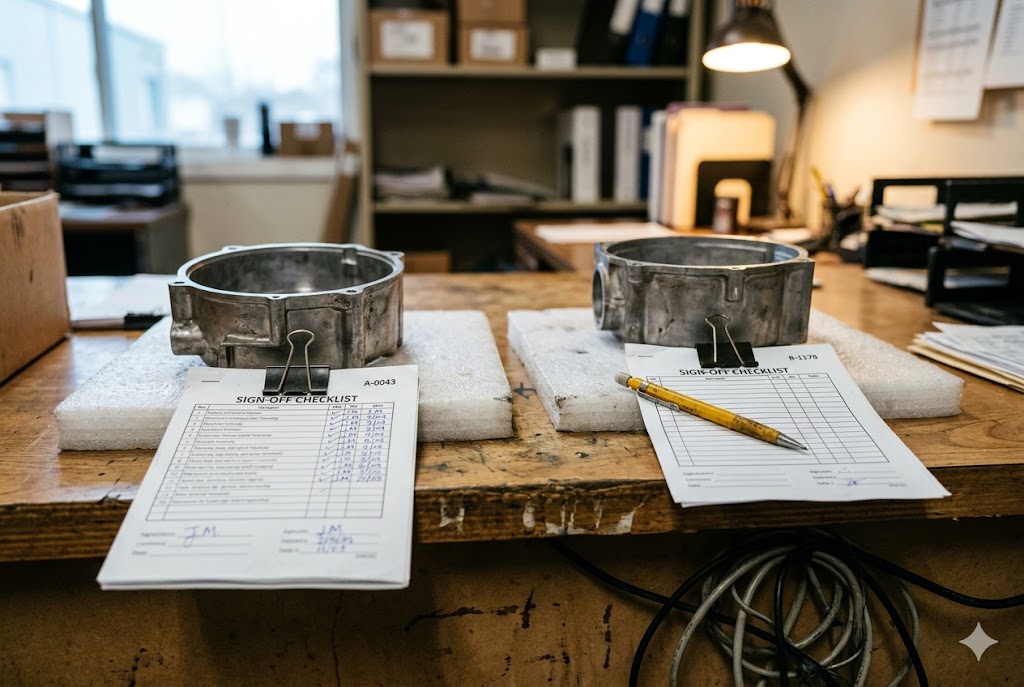
We have seen too many import projects stall because a buyer approved one sample and assumed the other was covered. On our production floor, functional and cosmetic failures are treated as completely separate problems — and they need separate solutions.
When you import custom die cast parts from China, you should run two formal approval gates: one for function and one for appearance. Each gate has its own written sign-off, its own acceptance criteria, and its own golden sample. Neither gate can substitute for the other.
If you skip this structure, you will spend money finishing and plating parts that still have the wrong wall thickness. Keep reading to learn exactly how to set up both gates and avoid the most common mistakes.
Should I Use Different Acceptance Criteria for Fit, Strength, and Appearance?
Our engineers work through dimensional reports every week, and we know one truth firsthand: a part can pass every measurement on the drawing and still look unacceptable to an end customer. Fit, strength, and appearance are three different conversations.
Yes, you must use different acceptance criteria for fit, strength, and appearance. Each category requires its own inspection method, its own pass/fail standard, and its own written document. Mixing them into one generic checklist creates gaps that lead to disputes and rework.
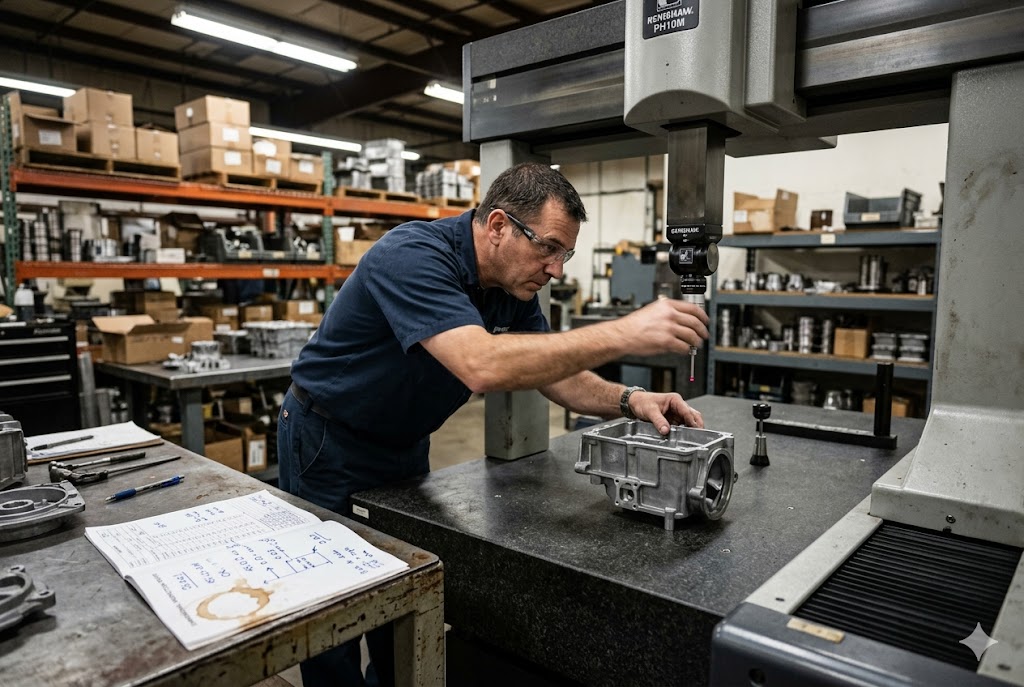
Why One Checklist Is Not Enough
A single checklist tempts inspectors to average out results. A part with perfect dimensions but visible cold shuts will pass if cosmetic criteria are buried in the same column as tolerance values. Keep them on separate documents.
Here is how the three categories break down in practice:
| Criteria Type | What It Covers | Inspection Method | Pass/Fail Standard |
|---|---|---|---|
| Fit | Mating dimensions, hole positions, clearances | CMM 1 or caliper against drawing tolerances | Per engineering drawing (e.g., ±0.05 mm) |
| Strength | Wall thickness, tensile strength, hardness | Ultrasonic testing 2, pull test, Rockwell hardness 3 | Per material spec or design requirement |
| Appearance | Surface finish, flash, porosity, sink marks | Visual under specified lighting, comparator | Written cosmetic standard with reference photos |
Functional Criteria: What to Specify
For functional approval, you need three things from your supplier before you sign off:
- A dimensional inspection report mapped to your drawing callouts
- Evidence that the part assembles correctly into its mating components
- Material certification 4 showing alloy composition and hardness
Do not let the supplier submit a general certificate of conformance. Demand actual measured values. If your drawing calls for a bore diameter of 25.00 mm ±0.03 mm, you want to see the measured value — not just a tick in a box.
Cosmetic Criteria: What to Specify
Cosmetic criteria are harder to write because they involve judgment. The way to remove judgment is to replace it with defined limits. Before your supplier makes the cosmetic sample, put the following in writing:
| Defect Type | Cosmetic-Critical Surface | Non-Critical Surface |
|---|---|---|
| Flash | Not permitted | ≤0.3 mm allowed |
| Porosity (pinhole) | Not permitted | ≤0.5 mm diameter, ≤2 per part |
| Sink marks | Not permitted | Acceptable if not visible at 1,000 lux |
| Parting-line offset | ≤0.1 mm | ≤0.3 mm |
| Scratches | Not permitted | Not permitted |
Attach reference photos. Mark which surfaces are cosmetic-critical on the drawing itself using a shaded zone or a note. This removes subjective disputes later when production parts arrive at your dock.
Why Viewing Conditions Matter
Die cast 5 surfaces are sensitive to light. A cold shut that is invisible under a fluorescent tube becomes obvious under a daylight-equivalent LED at 1,000 lux. Specify your viewing conditions in writing: lighting level, distance, and angle. If your supplier approves the cosmetic sample under dim lighting and you inspect production parts under bright daylight, you will never agree.
Can One Sample Be Good for Function but Still Fail My Cosmetic Standard?
When we coordinate quality control for our clients, this is actually the most common scenario we encounter. A supplier submits a sample that assembles perfectly and passes all load tests — and then the buyer's quality team rejects it because of surface defects. Both sides are frustrated because no one separated the two conversations upfront.
Yes, a sample can fully pass functional requirements and still fail cosmetic standards. This happens because casting geometry and surface appearance are controlled by different process variables. Approving function does not mean approving appearance, and you must treat them as two separate decisions.
Why This Happens in Die Casting
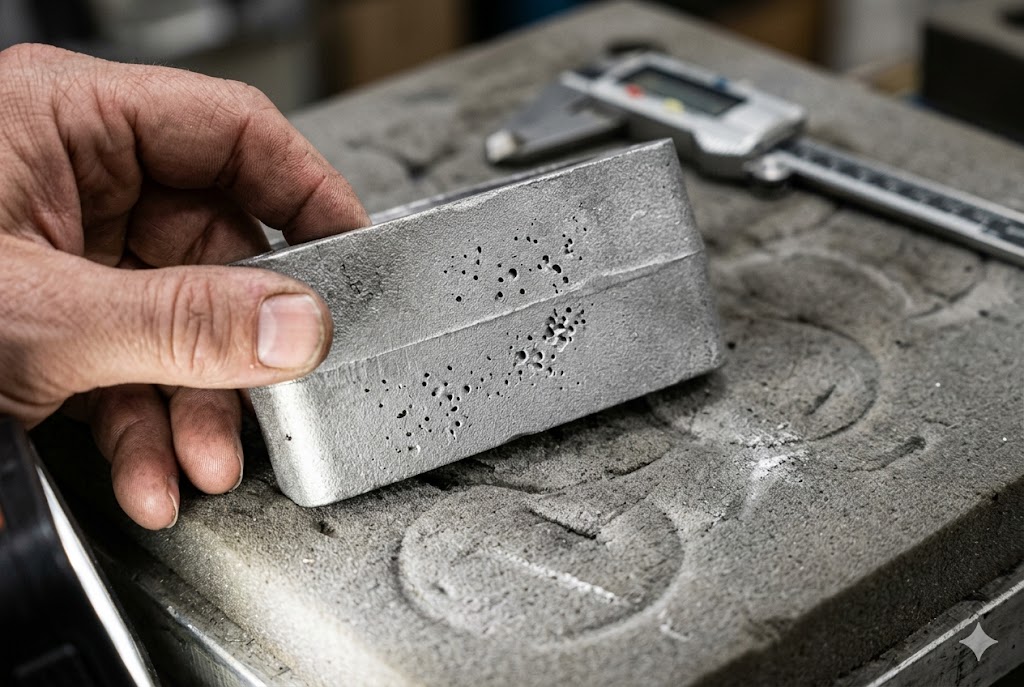
Die casting is a high-pressure process. The same shot pressure and die temperature that produce good dimensional accuracy can also produce surface defects like flow lines, cold shuts 6, or gas porosity 7. These defects do not affect structural performance. They are invisible to a CMM machine. But they are very visible to a customer.
Here is a breakdown of common die cast defects and which approval gate they belong to:
| Defect | Affects Function? | Affects Appearance? | Which Gate Catches It? |
|---|---|---|---|
| Incorrect bore diameter | Yes | No | Functional gate |
| Wall too thin | Yes | Sometimes | Functional gate |
| Cold shut | Rarely | Yes | Cosmetic gate |
| Gas porosity (subsurface) | Sometimes | No | Functional gate (pressure test) |
| Gas porosity (surface) | Rarely | Yes | Cosmetic gate |
| Flash at parting line | No | Yes | Cosmetic gate |
| Sink mark | No | Yes | Cosmetic gate |
| Wrong alloy | Yes | No | Functional gate (material cert) |
The Risk of Combining Both Reviews in One Sample
If you ask the supplier to submit one sample for both reviews at the same time, you create a false shortcut. The supplier will rush to get the cosmetic finish right, sometimes hiding a geometry problem under a thick coat of paint or plating. By the time you find the dimensional error, you have already approved the surface finish and the supplier will argue the part is good enough.
Keeping the reviews separate removes this incentive. The supplier knows you will check geometry first, and no amount of surface polish will get them past that gate.
What to Do When a Functional Sample Has Cosmetic Defects
Do not reject the functional sample because of cosmetic issues. Instead, record the cosmetic defects as observations, not failures, at the functional gate. Write them down and carry them forward to the cosmetic gate. Issue written functional approval if all dimensional, assembly, and mechanical criteria are met. Then address cosmetics in the next round.
This keeps the project moving. It avoids confusing the supplier about which problem to fix first.
How Do I Prevent Confusion If My Project Has Both Structural and Visual Requirements?
Our project managers deal with this every week. When a part must be strong and look good — think of a housing component that is both load-bearing and customer-facing — the supplier often does not know which requirement to prioritize. Without clear written guidance from you, they will guess. And their guess will cost you time.
To prevent confusion when your project has both structural and visual requirements, you must issue two separate written approval documents with different sign-off authorities, different inspection checklists, and different reference samples. Never combine structural and visual criteria in one approval form.
Start With a Requirements Map
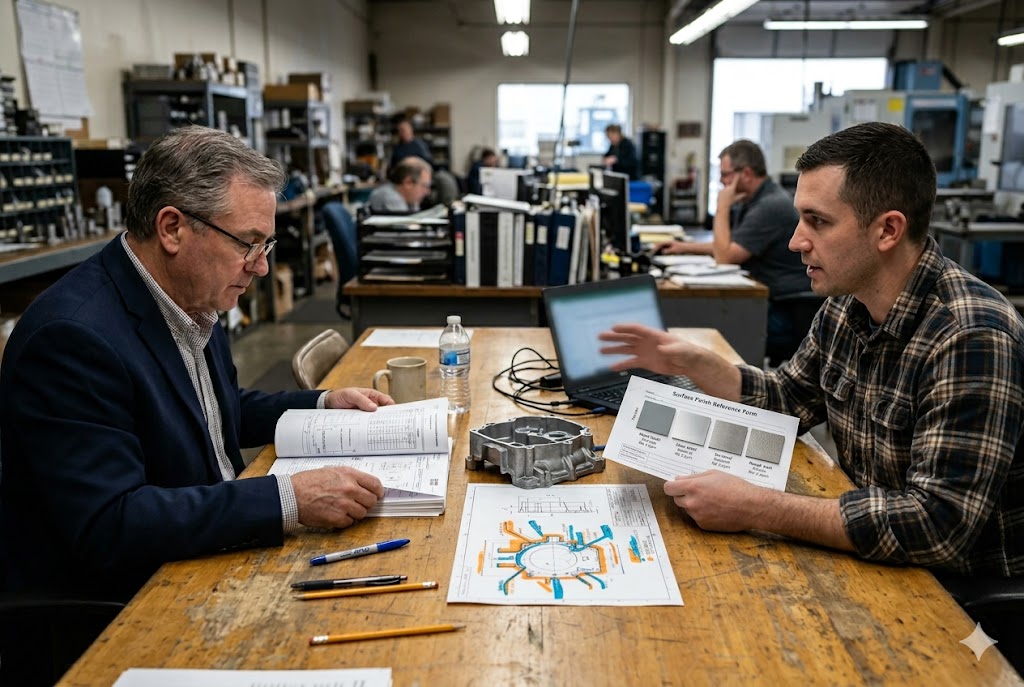
Before any sample is produced, create a one-page requirements map. This document tells the supplier — and your own team — exactly which requirements belong to which gate.
A requirements map should answer:
- Which surfaces are structurally critical?
- Which surfaces are cosmetically critical?
- Which surfaces are neither (hidden internal faces)?
- What is the sequence of approvals?
Mark this on a copy of your drawing. Use different colors or hatching to identify each zone. Send it to the supplier before tooling begins. Ask them to confirm they understand it in writing.
Assign Separate Sign-Off Authority
Structural approval should be signed off by your engineering or quality team. Cosmetic approval should be signed off by your product or marketing team — or whoever owns the brand standard. These are often different people with different expertise.
When one person signs off on both, cosmetic decisions get made using engineering judgment, and structural decisions get influenced by aesthetic preferences. Both outcomes are bad.
Use Separate Golden Samples
A golden sample 8 is a physically approved part that production batches will be compared against. You need one golden sample per gate, not one sample for both.
Label each golden sample with:
- Part number
- Revision level
- Approval gate (Functional or Cosmetic)
- Approval date
- Approver name
Keep one copy in your facility. Do not rely solely on the supplier's copy. If a dispute arises, your retained sample is the reference, not the supplier's.
Build a Clause for Engineering Changes
Any engineering change — die repair, alloy substitution, process parameter shift — automatically voids prior approvals. Write this into your purchase agreement. If the supplier repairs a die and the geometry shifts even slightly, both gates must restart. If the supplier switches alloy grades, functional approval must restart. This clause protects you from silent material substitutions after approval.
What Approval Process Should I Use When Function and Appearance Matter Differently?
Every project is different. Some parts are purely structural and nobody will ever see them. Others are on the front of a consumer product and appearance is everything. Most parts fall somewhere in between. The approval process needs to reflect that reality.
When function and appearance matter differently, sequence your approvals with function first and appearance second. Issue a First Article Inspection 9 report at the functional gate and a separate cosmetic approval document at the cosmetic gate. Tie payment milestones to each gate, not to shipment date alone.
The Two-Gate Sequence
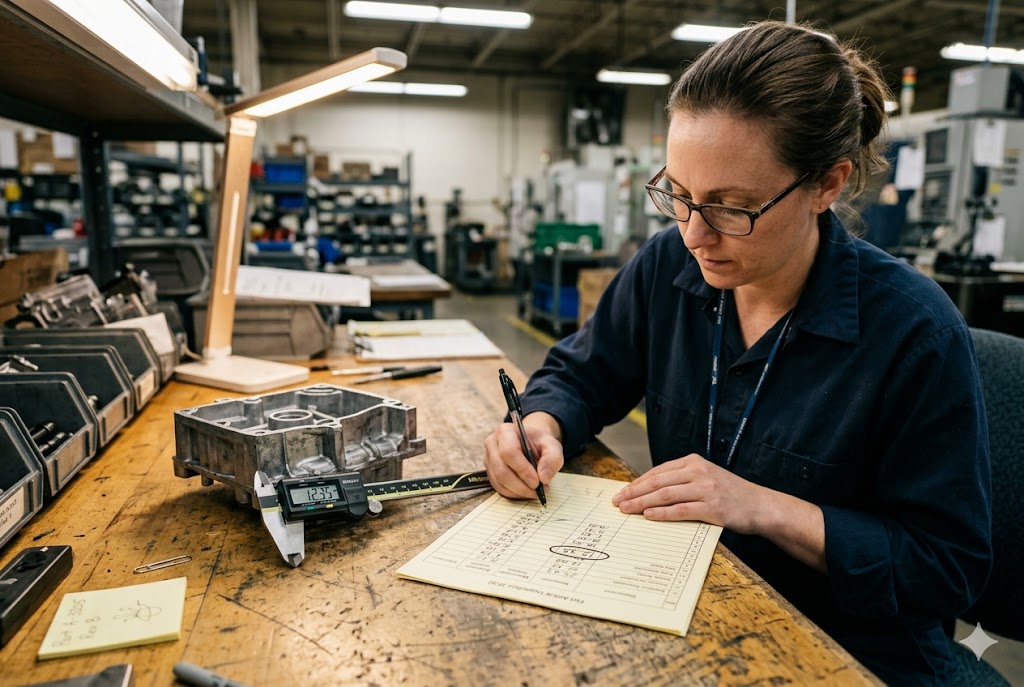
The correct sequence is always functional first, cosmetic second. Here is why: if the geometry is wrong, no amount of surface finishing will fix the part. You will waste money on plating, painting, and powder coating a part that will ultimately be scrapped.
The two-gate sequence works as follows:
Gate 1 — Functional Approval
- Supplier submits dimensional inspection report (CMM or caliper data against drawing tolerances)
- Supplier submits material certification (alloy composition, hardness)
- Supplier submits process parameter records (shot pressure, die temperature)
- Buyer conducts fit and assembly test into mating components
- Buyer conducts any required mechanical or load tests
- Buyer issues written functional approval
- Cosmetic condition of the sample is explicitly noted as out of scope at this stage
Gate 2 — Cosmetic Approval
- Supplier submits finished sample (with secondary finishing applied if applicable)
- Buyer inspects under specified lighting conditions (e.g., 1,000 lux daylight-equivalent)
- Buyer compares against written cosmetic criteria and reference photos
- For parts with secondary finishing (powder coat, anodize, chrome plate), a separate cosmetic check is done on the bare casting AND on the finished part
- Buyer issues written cosmetic approval
Tie Payment to Approvals, Not to Shipment
Most buyers release payment against shipment dates. This gives the supplier no financial incentive to resolve defects at the sample stage. A better structure ties payment milestones to each approval gate:
| Milestone | Payment Release | Condition |
|---|---|---|
| Tooling deposit | 30–50% of tooling fee | Upon purchase order confirmation |
| Functional approval | Remaining tooling fee | After written functional sign-off |
| Cosmetic approval | Sample fee or first production deposit | After written cosmetic sign-off |
| Final payment | Balance of production invoice | After pre-shipment inspection 10 passes |
This structure creates a financial incentive at each stage. The supplier must resolve functional defects to receive the tooling balance. They must resolve cosmetic defects to trigger production deposits. Late or defective samples directly affect their cash flow.
What a First Article Inspection Report Should Contain
A First Article Inspection (FAI) report is the formal deliverable at the functional gate. It should contain:
- Part number and revision
- Drawing revision used for inspection
- Measured values for every dimensioned feature on the drawing
- Pass/fail status for each feature
- Material certification reference number
- Inspector name and date
Do not accept a supplier-generated FAI without cross-checking at least the critical dimensions yourself or through a third-party inspection agency. Suppliers sometimes complete FAI forms with target values rather than actual measured values.
Secondary Finishing Requires Two Cosmetic Approvals
If your part will be powder coated, anodized, chrome plated, or e-coated, you need two cosmetic sign-offs: one for the bare casting and one for the finished part. Finishing processes can mask casting defects or introduce their own defects. A surface porosity that was within limits on the bare casting can become a visible blister after anodizing. A parting-line step that was acceptable on the raw casting can become obvious after chrome plating.
Approve the bare casting first. Then approve the finished part. Keep both golden samples.
Conclusion
Run two separate approval gates — functional first, cosmetic second. Write separate criteria, use separate golden samples, and tie payment to each gate. This one process change eliminates most supplier disputes on die cast import projects.
Footnotes
1. Overview of coordinate measuring machines and dimensional metrology tools used in precision manufacturing. ↩︎
2. Introduction to ultrasonic thickness gauging for non-destructive wall thickness measurement. ↩︎
3. How Rockwell hardness testing verifies metal material strength in quality control. ↩︎
4. Guide to material certifications including alloy composition, mechanical properties, and mill test reports. ↩︎
5. Comprehensive overview of the die casting process, materials, and production considerations. ↩︎
6. Detailed breakdown of 17 casting defect types including cold shuts, their causes, and prevention. ↩︎
7. Guide to die casting defects including gas porosity, sink marks, and recommended corrective actions. ↩︎
8. Definition and role of a golden sample as the physical reference standard for mass production quality. ↩︎
9. Complete guide to First Article Inspection: purpose, process, and how to interpret FAI results. ↩︎
10. Process guide to pre-shipment inspection in China covering quality verification before export. ↩︎