Skip to main content Skip to footer
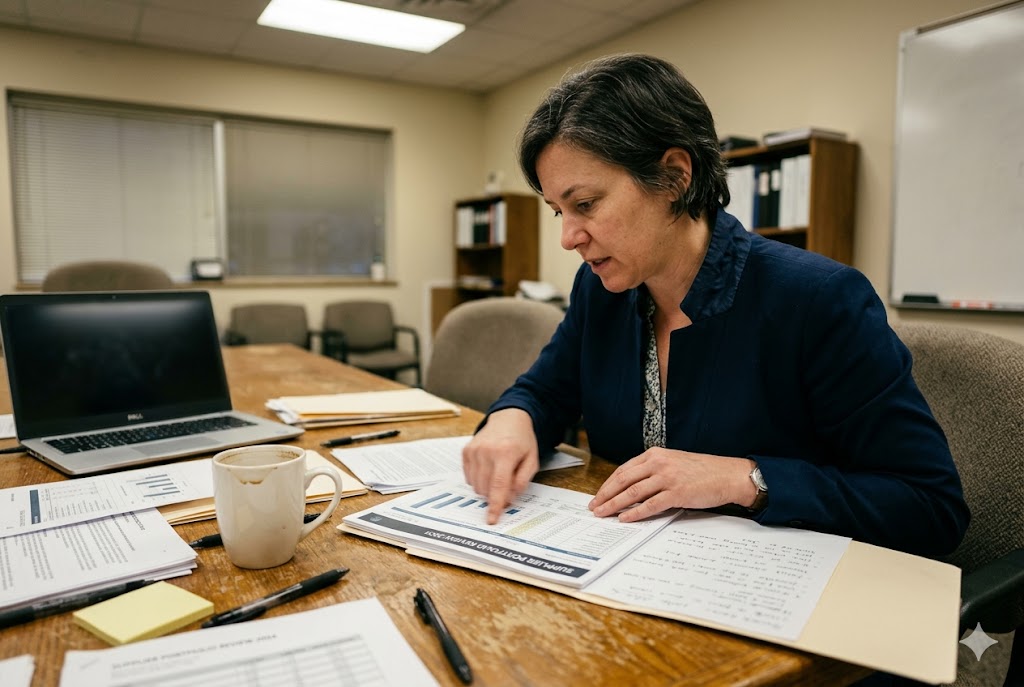
Every week, our team reviews supplier portfolios for clients who need custom sheet metal parts. We see the same problem repeatedly: factories that look strong on paper but fall apart on delivery.
You can judge a factory's real sheet metal capability by matching its documented case history to your part complexity, checking the industry sectors of its past customers, verifying references directly, and using trade data to confirm shipment records. Together, these steps reveal what a factory has actually proven — not just what it claims.
Here is a practical guide to doing this well before you commit to a trial order.
What Customer References Should I Ask for Before I Place a Trial Order?
When we help clients shortlist suppliers, the first thing we do is push past the brochure and ask for real names and real contacts.
Before placing a trial order, ask for three to five customer references in your industry and production volume range. For each reference, ask about defect rates, how the factory responded when quality fell short, and whether they placed a repeat order. The repeat-order question reveals more than any certificate.

Why Generic References Are Useless
Most factories will hand you a list of company logos. Some are real. Some are not. A logo is not a reference. What you need is a name, a title, and a direct phone number or email.
When you reach the contact, keep your questions short and focused. Ask three things only:
- What was the defect or nonconformance rate you experienced?
- How did the factory respond when quality fell short?
- Would you place a repeat order with them?
The third question is the most important. A buyer who says yes — and has actually done so — is telling you the factory delivered acceptable quality under real commercial conditions more than once. That is hard to fake. Following structured supplier reference check practices 1 helps you move beyond surface impressions and gather actionable evidence of performance.
How to Structure Your Reference Check
| Question | What a Strong Answer Looks Like | What a Weak Answer Looks Like |
|---|---|---|
| Defect or nonconformance rate | A specific number, e.g., "Under 1% on dimensional checks" | "Very low" or "We never had problems" |
| Factory response to quality issues | Described a root cause analysis and corrective action | "They replaced the parts" with no further detail |
| Would you repeat the order? | "Yes, we placed three follow-on orders" | "Probably, yes" with no actual follow-on order |
Volume and Application Match Matters
A reference from a buyer who ordered 50 simple flat-cut brackets is not useful if your parts are 200-piece batches of multi-bend welded assemblies with tight tolerances. Ask specifically whether the reference's order matched your application type and production volume. If it did not, the reference tells you little about whether the factory can handle your requirements.
What to Do When a Factory Refuses to Share References
Some factories will decline, citing confidentiality. This is sometimes legitimate. But a factory with strong long-term customers can usually get permission to provide at least two or three contacts. If a factory cannot produce a single verifiable reference after you ask twice, treat that as a signal. It does not prove incompetence, but it removes a key layer of verification from your process.
How Can Past Export Experience Help Me Predict a Supplier's Performance?
In our experience handling exports to North America, the factories that perform consistently are almost always the ones with years of documented export history — not just a claimed one.
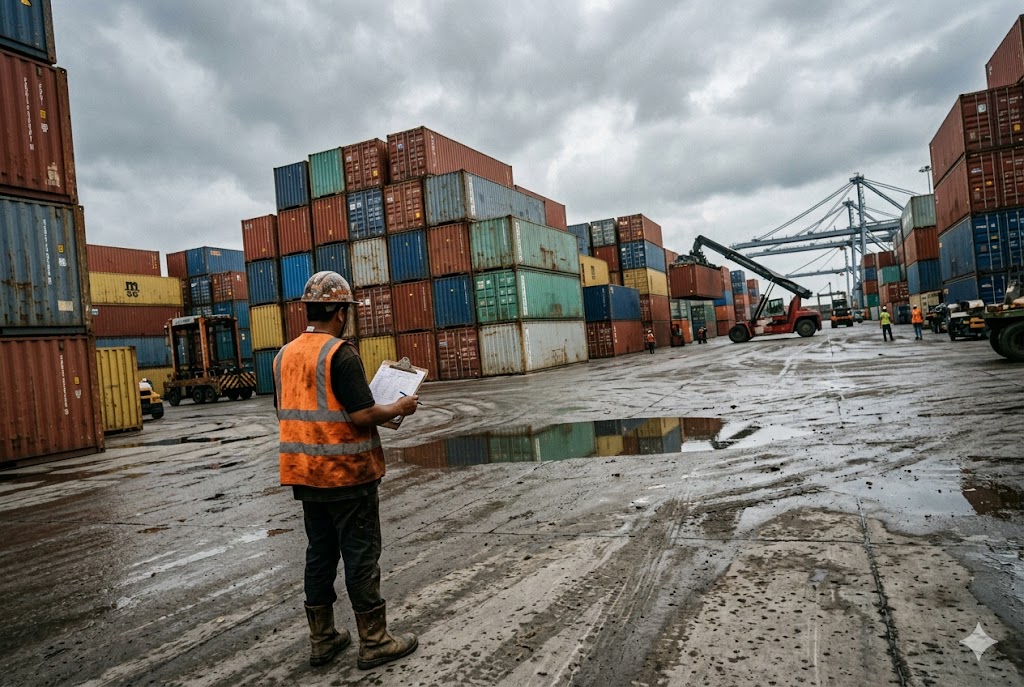
A supplier's past export experience predicts future performance through three signals: the duration of existing customer relationships, the industry sectors those customers operate in, and whether trade data confirms actual shipments to the claimed markets. Longer relationships and verified shipments outweigh any self-reported capability claim.
Duration of Relationships Is More Important Than Customer Names
A factory that has supplied the same buyer for five or more consecutive years has proved one thing: the buyer had options and chose to stay. That is real-world retention under commercial pressure.
A portfolio full of one-time or short-term engagements is a warning sign. It may mean quality issues pushed buyers away. It may also mean the factory is better at acquiring new customers than keeping them — which is a business model that works for the factory, not for you.
| Relationship Length | What It Suggests |
|---|---|
| 5+ consecutive years with same buyer | Repeat-order quality consistency under real conditions |
| 2–4 years | Some stability, worth verifying with direct reference |
| Single order or less than 1 year | Unproven retention; ask why the relationship did not continue |
Industry Sector as a Proxy for Process Discipline
The industry a factory has served tells you the quality regime it has been held to. A supplier with verified aerospace, medical device, or automotive customers has operated under AS9100 2, ISO 13485 3, or IATF 16949 4 audit requirements. These standards enforce dimensional traceability, corrective action processes, and documentation discipline that most general commercial work never demands.
A factory whose entire history is low-tolerance consumer goods has never been pressure-tested to that standard. That does not make it incapable, but it means you cannot assume it has the documentation habits or process controls those standards require.
Verifying Export History with Trade Intelligence Data
This is the step most buyers skip, and it is the one most likely to catch fabricated references. Trade intelligence platforms — Panjiva 5, ImportGenius 6, and others — publish customs records for exports and imports. You can search a factory's name and see actual shipment records: destination country, product category, buyer name, and approximate volume.
A factory that names major Western brands as customers but has no traceable shipments to those brands' countries is likely presenting fabricated references. This is common enough in Chinese supplier marketing that independent verification is not optional due diligence — it is a baseline step.
What Should I Learn from a Supplier's Previous U.S. Customer Projects?
Our team places orders with factories on behalf of U.S. clients regularly. What separates a good factory from a frustrating one almost always shows up in how they describe past U.S. projects.
From a supplier's previous U.S. customer projects, you should learn the complexity profile of parts they have produced, their familiarity with U.S. drawing and tolerance standards, their on-time delivery rate to that market, and whether they have resolved real quality issues on U.S.-bound shipments — not just avoided them.
Match Complexity to Your Own Parts
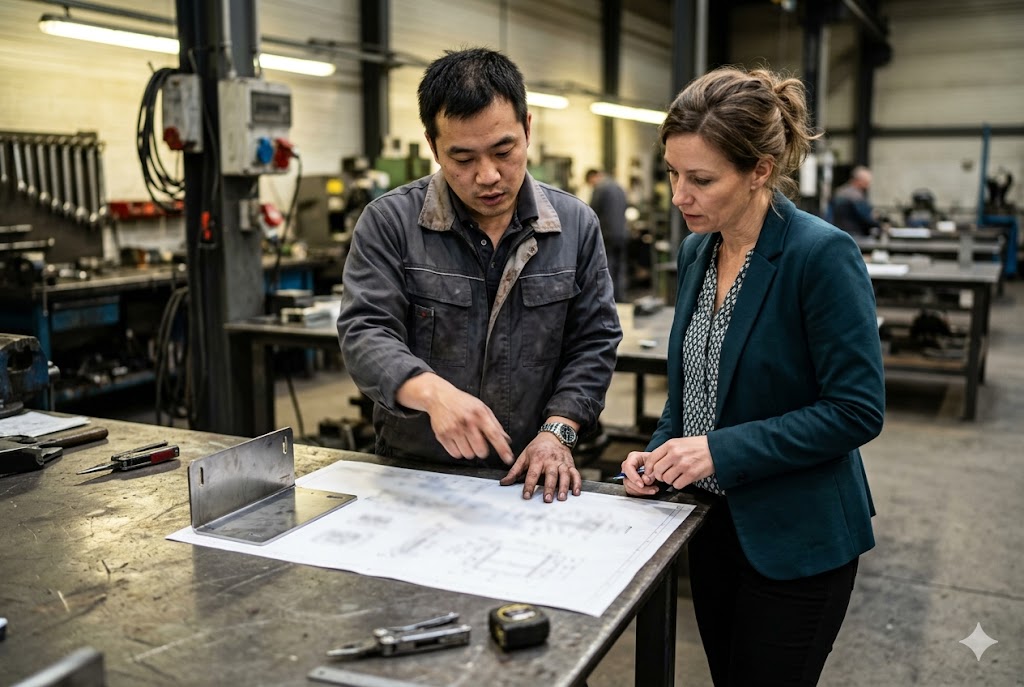
A factory whose case history shows only simple enclosures, flat-cut blanks, or single-bend brackets has never proven its process on multi-bend assemblies, tight-tolerance welded structures, or complex surface finishing. If your parts require those capabilities, the absence of comparable work is a direct process gap — not just a marketing shortcoming.
Ask the factory to show you a past project with similar characteristics to your parts:
- Same or comparable material
- Similar bend count and assembly complexity
- Similar tolerance requirements
- Similar surface finish specification
If they cannot produce a comparable example, the trial order becomes an expensive experiment — at your cost.
U.S. Drawing Standards Familiarity
U.S. buyers typically use ASME Y14.5 7 for GD&T on mechanical drawings. A factory with real U.S. customer history should be familiar with this standard. Ask them to walk you through how they interpret a GD&T callout on a sample drawing. A factory that can do this fluently has dealt with U.S. engineering teams before. A factory that stumbles or defaults to their own internal tolerance interpretation has not.
On-Time Delivery Rate to the U.S. Market
Ask specifically for the on-time delivery rate on U.S. orders, not overall orders. Domestic and regional shipments have shorter lead times and more flexible logistics. International shipments to the U.S. involve ocean freight scheduling, customs clearance, and longer total lead times — all of which create more failure points.
| Metric to Request | Acceptable Benchmark | Red Flag |
|---|---|---|
| On-time delivery rate (U.S. shipments) | 95% or above | Below 90%, or factory cannot provide the number |
| Return or rework rate | Under 1.5% on dimensional nonconformance | Above 3%, or factory offers no tracked data |
| Customer-reported defect rate | Factory can cite specific customer scorecard data | Factory gives only anecdotal responses |
How the Factory Handled Past Quality Problems
A factory that can describe a specific quality problem on a past U.S. project — and explain how they resolved it — is demonstrating genuine process ownership. Ask: "Can you describe a time a U.S. customer found a quality issue? What happened, and how did you respond?"
A factory that cannot recall a single quality issue on any project is either presenting a false picture or lacks the tracking systems to know when problems occurred. Both outcomes are bad. A factory that describes a real problem, a root cause analysis and corrective action 8 process is telling you it has a functioning quality loop.
How Do I Know If the Factory's Case Studies Are Real and Relevant to My Parts?
We have seen polished case study documents that described projects the factory could not have completed based on their equipment list. Verification is not cynical — it is professional.
You can verify a factory's case studies by checking whether they describe specific challenges and resolutions rather than just project types, cross-referencing claimed customers against trade data, confirming material-specific experience matches your parts, and contacting sub-suppliers who can independently corroborate order history.

Specificity Is the Clearest Signal of Authenticity
A real case study describes what went wrong and how the factory fixed it. A fabricated or inflated case study describes only what was made, in what volume, for which industry.
Ask the factory to explain one specific technical challenge from a past project. For example: "In this case study you mentioned a stainless steel enclosure with a tight flatness tolerance. How did you control warpage during welding?" A factory with genuine experience will answer with process detail — fixturing method, weld sequence, post-weld straightening, inspection method. A factory without genuine experience will give a vague answer or redirect.
Material Match Matters More Than You Think
A factory with documented success in mild steel does not automatically transfer that knowledge to aluminum. Aluminum springbacks differently 9, work-hardens at different rates, and requires different fixturing and bending parameters. If your parts are aluminum and their case history is predominantly mild steel or stainless, treat that as an unverified capability — regardless of their equipment list.
The same logic applies to surface finishing. A factory experienced in powder coating does not automatically have proven anodizing capability 10. Verify material-specific and process-specific experience separately.
Use Sub-Supplier Verification as a Bottom-Up Check
This is the most underused verification method available to buyers. Raw material distributors, fastener suppliers, and surface-treatment subcontractors who have worked with a factory across multiple orders can independently confirm order volumes, product types, and purchasing patterns.
These contacts have no incentive to protect the factory's marketing claims. If a factory claims to have produced 500 aluminum enclosures per month for two years, their aluminum distributor's order history will reflect that. If it does not, the claim is inflated.
Concentration vs. Diversification of Past Customers
Heavy concentration in one industry is a process risk for buyers from other industries. A factory calibrated entirely to automotive stamping has learned its tolerances, finish standards, and documentation requirements from that sector. A first-time order from a different industry will expose unknown process gaps.
Diversified customer history across industries with different quality demands suggests broader process adaptability and a more robust QC framework. It means the factory has been tested by different types of buyers with different requirements.
| Case Study Red Flag | What It Suggests |
|---|---|
| Describes project type and volume only — no challenges or resolutions | Marketing material, not engineering evidence |
| Claims customers in your sector but no comparable parts in history | Unverified capability for your specific requirements |
| All customers in one industry, none in yours | Process calibrated to different tolerance and documentation standards |
| Named customers but no traceable export data | Possible fabricated references |
| No material-specific examples matching your parts | Process transfer risk from different alloy or finishing method |
Conclusion
Judging a factory's real sheet metal capability means verifying what it has actually done — not what it claims. Check references directly, match complexity profiles, verify export data, and use sub-supplier contacts to confirm what case studies cannot prove on their own.
Footnotes
1. Practical framework for running supplier reference checks and asking the right questions. ↩︎
2. Overview of AS9100, the aerospace quality management standard and its audit requirements. ↩︎
3. ISO's official page for ISO 13485, the medical device quality management standard. ↩︎
4. NSF guide to IATF 16949, the automotive quality management system standard. ↩︎
5. Panjiva's trade intelligence platform for searching customs shipment records by company. ↩︎
6. ImportGenius database for verifying supplier export histories using customs records. ↩︎
7. Explanation of the ASME Y14.5 GD&T standard used in U.S. mechanical engineering drawings. ↩︎
8. How root cause analysis and corrective actions underpin quality improvement in manufacturing. ↩︎
9. Guide to springback behavior across aluminum, steel, and stainless steel in sheet metal bending. ↩︎
10. Key differences between powder coating and anodizing as separate surface finishing processes. ↩︎