Skip to main content Skip to footer
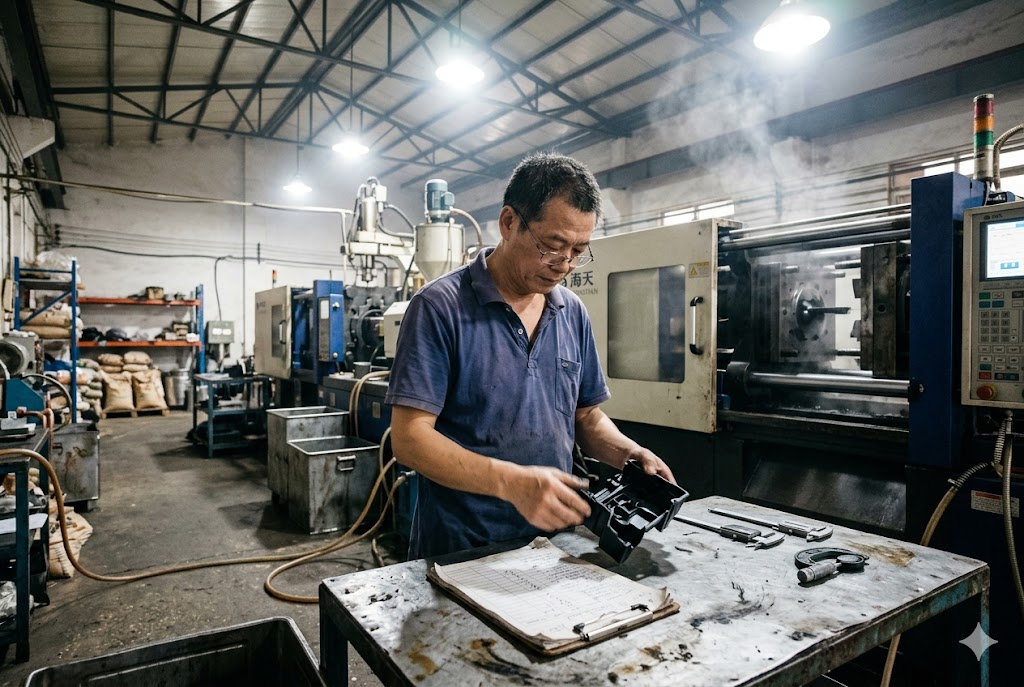
We have visited dozens of injection molding factories across China, and the pattern is always the same: the sales pitch is polished, the brochure lists impressive certifications, and then the real engineering team turns out to be two junior designers sharing one CAD seat.
The fastest way to confirm a Chinese injection molding supplier has a qualified engineering team is to request a detailed DFM report before any tooling quote. A competent team returns gate locations, draft angles, wall thickness flags, and specific design suggestions within 48 hours. A supplier who only sends a price has already failed the test. That single action filters out the majority of unqualified shops.
There are more layers to check beyond that first filter. This article walks through each one so you can qualify with confidence before a single dollar of tooling budget is committed.
What Engineering Qualifications Should I Look for in a Chinese Injection Molding Supplier's Technical Team?
Every qualified supplier we have worked with keeps engineering credentials on file and retrieves them without hesitation — certifications, software licenses, named engineers, and sample project documents. Suppliers who stall or produce vague answers are already telling you something important.
A qualified Chinese injection molding supplier's engineering team should hold active IATF 16949 or ISO 9001 certification, employ named mold designers with at least five years of experience, own licensed CAD and mold flow simulation software such as UG/NX or Moldflow, and be able to produce DFM reports and mold trial records from completed programs within a few days of your request.

Certifications That Actually Matter
Not all certifications carry equal weight. ISO 9001 1 tells you a factory has a documented quality system. That is the floor, not the ceiling.
IATF 16949 2 is meaningfully stronger. It requires documented Advanced Product Quality Planning (APQP) 3, Process Failure Mode and Effects Analysis (PFMEA) 4, Control Plans, and PPAP submission capability 5. A factory that has passed an IATF 16949 third-party audit has proven that its engineering team operates inside a structured development process — not just an inspection line at the end of production.
| Certification | What It Covers | Engineering Signal |
|---|---|---|
| ISO 9001 | General quality management | Basic process documentation exists |
| IATF 16949 | Automotive-grade engineering process | APQP, PFMEA, Control Plans in use |
| ISO 13485 | Medical device quality | Validation protocols, traceability |
| ISO/IEC 17025 | Lab testing competency | In-house measurement capability |
Ask to see the certificate and verify the expiry date. A lapsed certificate is worse than none — it means the factory passed once and then stopped maintaining the standard.
Software Licenses as a Proxy for Capability
Ask the supplier to show software license certificates for their mold design and simulation tools. The leading CAD platforms for mold design are UG/NX, Pro-E/Creo, and SolidWorks 6. For mold flow simulation, the industry standards are Autodesk Moldflow 7 and Moldex3D.
A supplier who cannot show licenses for at least one CAD platform and one simulation tool is not running an engineering-first operation. More importantly, ask for a sample simulation report from a recent project. A real engineering team produces these as standard deliverables. A supplier who outsources simulation on request — or treats it as optional — introduces avoidable tooling risk into your program.
Mold Design Headcount and Experience Depth
Overall engineering headcount is a misleading number. A factory with fifteen engineers but only one junior mold designer has a bottleneck that will slow your program whenever that single person is overloaded.
Ask specifically:
- How many dedicated mold designers does the factory employ?
- What is their average years of mold-specific experience?
- Which CAD software licenses does each designer hold?
Mold design is a specialized discipline. It is distinct from product design and distinct from process engineering. Treat it as its own staffing question.
How Do I Test a Chinese Supplier's Engineering Competency Before Placing a Custom Injection Molding Order?
The test that works is simple: ask a pointed technical question that has one correct answer and measure the response — not just for accuracy, but for speed, specificity, and who actually answers it.
To test a Chinese injection molding supplier's engineering competency before placing an order, send a specific technical question about shrinkage rate, gate location, or draft angle for your part geometry, then evaluate whether a named engineer responds within 24 hours with a resin-specific, data-backed answer. Vague or delayed responses filtered through a salesperson confirm that real engineering depth is absent.

The Technical Question Method
Here are two questions worth sending to every candidate supplier:
-
"For a PC/ABS part with a 2mm nominal wall and a 3° draft angle, what shrinkage rate would you apply to cavity sizing, and how does gate location affect that calculation?"
-
"Where would you locate the gate on this part to minimize weld line formation near the snap-fit feature shown in the attached file?"
A supplier with real in-house engineering returns a substantive, resin-specific answer within 24 hours. A supplier routing questions through a salesperson returns a vague answer days later — or worse, a reassurance that "our team has 20 years of experience and will handle it."
Reassurance is a sales response. Data is an engineering response. Your job is to tell the difference before tooling starts.
The Named Engineer Requirement
Require the supplier to introduce the specific project engineer who will own your program — by name, title, and direct contact — before you issue a purchase order.
If every communication in the pre-award phase flows through a sales contact who forwards questions to an anonymous back office, you have no defined ownership of technical decisions. That structure predicts slow issue resolution, inconsistent direction, and undocumented engineering choices once tooling is underway.
This is not an aggressive demand. It is a standard professional expectation.
The Document Retrieval Test
Ask the supplier to provide the following from a recent comparable program:
| Document | What It Confirms |
|---|---|
| DFM report | Engineering team reviews designs before quoting |
| T0/T1/T2 mold trial records | Systematic trial process with documented results |
| Closed corrective action report | Root cause analysis is practiced, not just claimed |
| Mold flow simulation report | Simulation runs before steel is cut |
A qualified engineering team produces these as standard deliverables and retrieves them within a few days. A supplier who takes more than a week, who provides template shells with no project-specific data, or who cannot find the documents at all is showing you exactly what your program documentation will look like.
Scientific Molding as a Differentiator
Scientific molding 8 is the ability to characterize a mold's process window through viscosity studies, gate freeze studies, and pressure-versus-fill studies. It replaces trial-and-error machine adjustments with documented process validation.
Ask any candidate supplier whether their process engineers are trained in scientific molding and whether they can deliver a process validation package — documented process window, set points, and SPC control limits 9 — rather than just a list of machine parameters.
Suppliers who cannot describe this concept are running processes that drift undetected between production runs. That drift shows up in your incoming inspection results.
Why Is an Experienced DFM Team Critical for Successfully Sourcing Custom Injection-Molded Parts from China?
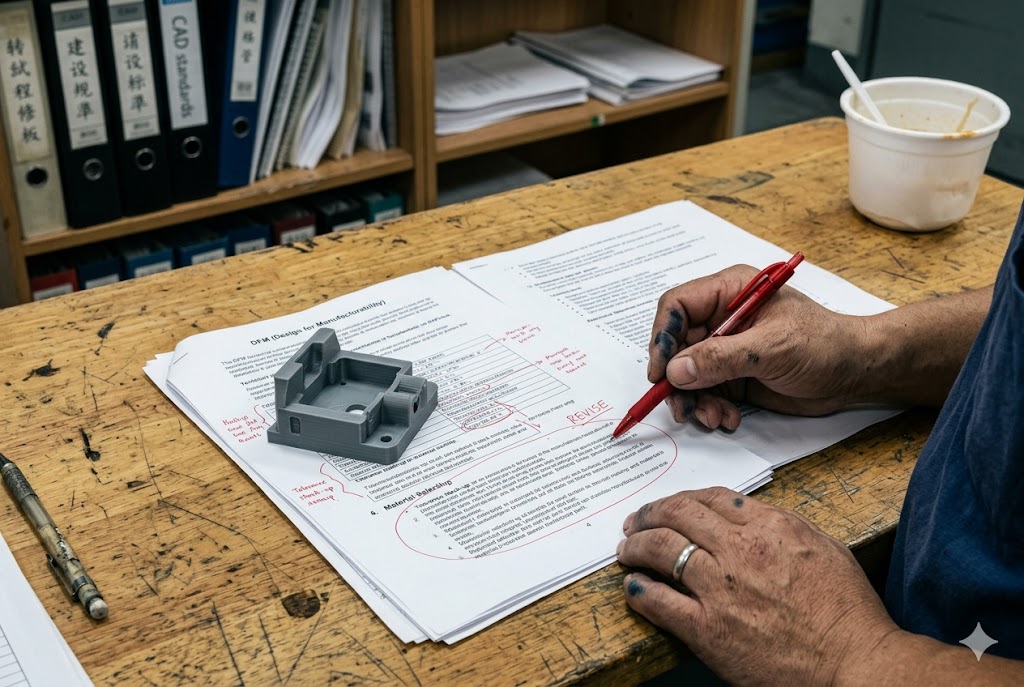
The DFM report 10 is where engineering competence becomes visible before it costs you anything. Skipping it is the most common and most expensive mistake we see importers make on their first China tooling program.
An experienced DFM team is critical because they identify design problems — gate placement, wall thickness variation, insufficient draft, weld line locations — before steel is cut. Fixing these issues in the design phase costs nothing. Fixing them after T1 samples costs thousands in tool modifications, delays shipment, and creates downstream production stoppages for your customers.
What a Real DFM Report Covers
A qualified engineering team's DFM report addresses every one of the following items. If a supplier's DFM report skips categories or provides only generic comments, that is incomplete analysis.
| DFM Element | Why It Matters |
|---|---|
| Gate type and location | Controls fill pattern, weld line position, and cosmetic surface quality |
| Parting line placement | Affects flash risk, ejection direction, and appearance |
| Draft angle review | Insufficient draft causes drag marks and ejection damage |
| Wall thickness uniformity | Non-uniform walls cause sink marks, warpage, and long cycle times |
| Ejector pin locations | Poor placement causes part deformation during ejection |
| Slider and lifter requirements | Undercuts need mechanical solutions that add tooling cost and complexity |
| Design optimization suggestions | Specific changes to reduce tooling cost or improve part performance |
The Cost of Skipping DFM
Here is how the cost of a design problem escalates through the program timeline:
- Design phase fix: $0 — a revision to a 3D file
- Pre-tool fix (after DFM, before machining): $0 to minimal — gate or runner adjustment on the design
- T1 fix (tool modification after first shots): $500 to $5,000+ depending on the change
- T2 fix (secondary modification): Additional cost, additional lead time, delayed shipment
- Post-production fix (field issue): Rework, returns, downstream production stoppage, customer compensation
Every qualified supplier we have assessed delivers a detailed DFM report before finalizing a tooling quote. A supplier who sends only a price from your 3D file has either not run the analysis or has chosen not to invest the effort. Both outcomes disqualify them for any program where dimensional or cosmetic performance matters.
DFM Quality as the Single Most Reliable Pre-Award Filter
We treat the DFM report as our primary qualification gate. Here is why.
A DFM report cannot be faked easily. It requires someone with real mold design experience to read your part geometry, identify specific problems, and propose specific solutions. A salesperson cannot produce it. A template cannot produce it. It requires an engineer.
If a supplier's DFM report returns generic comments — "please increase draft angle," "wall thickness looks okay" — without specifying which surfaces, which angles, and which walls, the engineering team either lacks depth or is not taking your program seriously. Both are disqualifying.
What Questions Should I Ask a Chinese Supplier's Engineering Team to Assess Their Technical Depth?
The right questions expose real engineering knowledge fast. They also expose the communication structure — whether answers come from an engineer or from a salesperson who relays questions to an anonymous back office.
To assess a Chinese injection molding supplier's technical depth, ask five types of questions: resin-specific process questions, gate and weld line location questions, mold simulation capability questions, corrective action history questions, and industry reference questions. The quality and speed of responses reveal whether real engineering competence exists or only sales messaging.

Five Question Categories That Work
Category 1 — Resin Process Knowledge
Ask: "For a glass-filled nylon 66 part with a 3mm wall, what melt temperature range and injection speed profile would you start with, and how does moisture content in the pellets affect your process?"
A competent process engineer answers with specific numbers and explains the moisture sensitivity of PA66. A salesperson returns a vague statement about "optimizing parameters based on experience."
Category 2 — Geometry-Specific DFM
Ask: "Looking at this part, where would you place the gate to minimize weld line formation near the functional clip feature, and what trade-offs does that gate location create for the runner system?"
This question has no single correct answer — it has a range of defensible answers. What you are testing is whether the supplier can engage with your specific geometry, not just recite general principles.
Category 3 — Simulation Capability
Ask: "Can you run a Moldflow or Moldex3D simulation on this part before we finalize the tool design, and can you show me a sample simulation report from a recent comparable project?"
The sample report is the key request. It shows whether simulation is a real engineering tool in their workflow or a capability they claim but do not practice.
Category 4 — Corrective Action History
Ask: "On your last three mold programs, what was the most significant engineering problem that arose, and how did your team document and resolve it?"
A supplier with real engineering process gives you a specific answer with a root cause, a corrective action, and a documented outcome. A supplier without engineering process discipline gives you reassurance that problems rarely happen.
Category 5 — Industry References
Ask: "Can you provide three customer references from programs in [your industry], and can we speak with the engineers or purchasing managers who ran those programs?"
Then call those references. Ask specific questions: How detailed was the DFM feedback? How did the team communicate during tooling trials? When an unexpected problem appeared, how was it resolved and documented?
Red Flags in the Responses
| Response Pattern | What It Signals |
|---|---|
| "We have 20 years of experience, no problem" | Sales language masking absent engineering data |
| Answer arrives 3+ days later through sales contact | No direct engineer access, undefined technical ownership |
| DFM report uses only generic comments | Engineer lacks depth or is not engaged with your part |
| Cannot produce past project documents within one week | Engineering process exists on paper, not in practice |
| Simulation report is a template with no project data | Simulation is claimed, not practiced |
Conclusion
Qualifying a Chinese injection molding supplier's engineering team comes down to four actions: request a detailed DFM report before any quote, require a named project engineer with direct contact, ask one pointed technical question and grade the response, and verify past project documents. Do all four before committing tooling budget and the most common sourcing failures become avoidable.
Footnotes
1. Overview of ISO 9001, the international standard for quality management systems. ↩︎
2. AIAG's authoritative resource for understanding and implementing IATF 16949:2016 automotive quality requirements. ↩︎
3. Guide explaining the five phases of Advanced Product Quality Planning used in automotive and manufacturing programs. ↩︎
4. Explanation of Process Failure Mode and Effects Analysis and how it identifies manufacturing risk before production begins. ↩︎
5. Comprehensive guide to the Production Part Approval Process and what suppliers must document before mass production. ↩︎
6. DFM guide covering key CAD software platforms used in professional injection mold design and engineering review. ↩︎
7. Official Autodesk Moldflow product page covering plastic injection molding simulation capabilities and tool features. ↩︎
8. Technical guide on injection mold validation, scientific molding process windows, and capability documentation requirements. ↩︎
9. Autodesk's guide to Statistical Process Control in manufacturing, explaining control limits and process monitoring methods. ↩︎
10. Complete DFM guide for injection molding covering gate location, draft angles, wall thickness, and pre-tool design review. ↩︎