Skip to main content Skip to footer
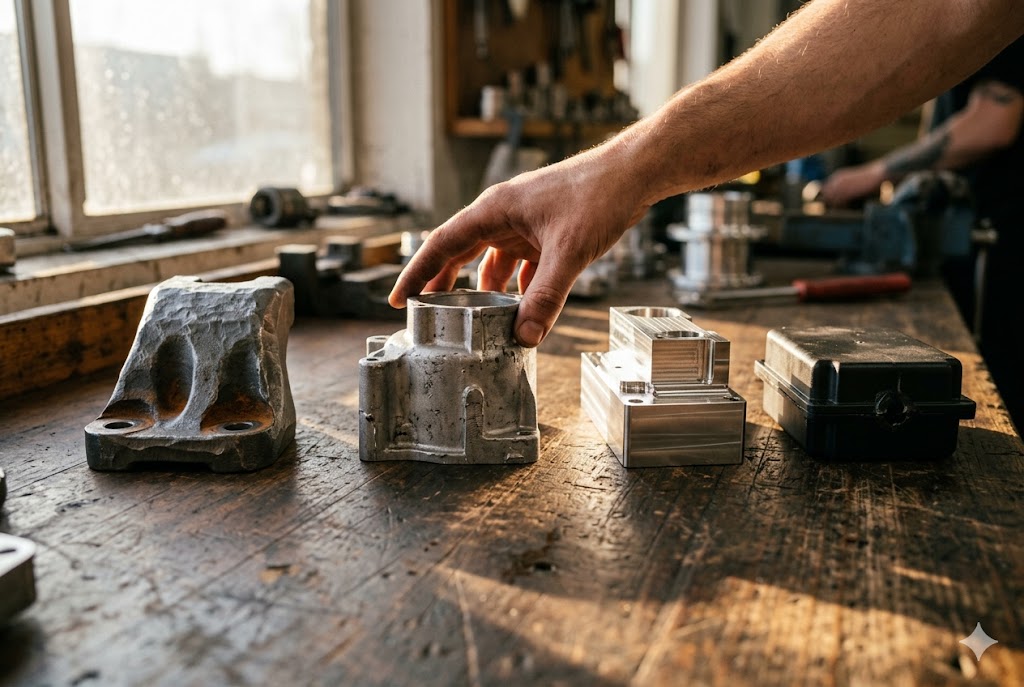
We see this question every week. A buyer sends us a drawing, names a process, and asks for a quote. Sometimes the process they picked is fine. Other times, it will cost them two or three times more than it should — or cause quality problems they never saw coming.
The right process depends on your volume, your material, your tolerance requirements, and how final your design is. CNC machining suits low volumes and evolving designs. Die casting and injection molding pay off at high volumes. Forging is the only choice when fatigue strength and impact resistance are non-negotiable.
If you get this decision wrong early, you will pay for it in tooling costs, lead time delays, or per-unit prices that kill your margin. This guide will help you choose correctly before you ask your first supplier for a quote.
Should I Compare Tooling Cost, Unit Price, and Lead Time Before I Choose a Process?
Many buyers focus only on unit price. Our team has learned — after sourcing millions of parts for clients across the US and Canada — that this is the most common and costly mistake in the early sourcing stage.
Yes, you must compare tooling cost, unit price, and lead time together, not separately. A low unit price means nothing if the tooling investment takes six months to recover. A fast lead time is worthless if your first article fails inspection and the die needs rework.
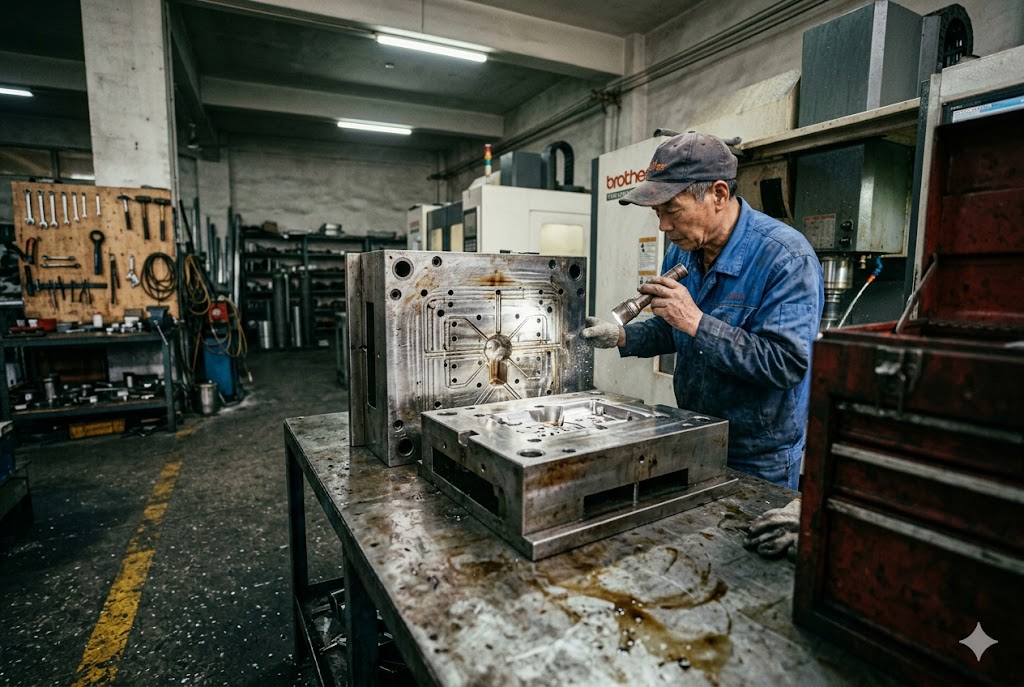
Why These Three Numbers Must Be Evaluated Together
Think of these three factors as a triangle. Moving one point moves the others.
CNC machining has zero tooling cost. You pay only for machine time, material, and finishing. But per-unit cost stays high regardless of volume because every part takes the same time to cut.
Die casting 1 and injection molding have significant upfront tooling costs — often $5,000 to $50,000 USD or more depending on complexity. But once the die or mold is made, per-unit cost drops sharply. The math only works at sufficient volume.
Forging dies sit in the middle. Tooling is cheaper than a precision die casting die but still meaningful. Plan for $3,000 to $20,000 depending on part geometry.
Process Comparison Table: Cost and Time
| Process | Tooling Cost (USD) | Per-Unit Cost at 100 pcs | Per-Unit Cost at 10,000 pcs | Lead Time to First Sample |
|---|---|---|---|---|
| CNC Machining | $0 | Low–Medium | Medium | Days |
| Die Casting | $5,000–$50,000+ | High | Very Low | 4–8 weeks |
| Injection Molding | $3,000–$40,000+ | High | Very Low | 3–6 weeks |
| Forging | $3,000–$20,000+ | Medium | Low | 8–12 weeks |
Lead Time Is Often Underestimated
This is where importers get caught. They choose die casting because it looks cheap at volume. Then they discover that die tooling takes 6 to 8 weeks. If the first sample has issues, add another 2 to 4 weeks for rework and re-sampling. A product launch planned for Q2 slips to Q4.
CNC machining, by contrast, can put sample parts in your hands within days of receiving a finalized drawing. If your design is still evolving — even slightly — CNC is the only sensible choice. Changing a CAD file and regenerating toolpaths costs nothing. Modifying a die after it is cut can cost thousands of dollars and weeks of delay.
When Does Tooling Investment Pay Off?
Use this rough break-even guide. Break-even analysis 2 compares fixed tooling costs against variable per-unit savings to identify the volume at which one process becomes more cost-effective than another:
| Process | Volume Where Tooling Pays Off |
|---|---|
| CNC Machining | Under ~500–1,000 units per year |
| Injection Molding | Above ~3,000–5,000 units per year |
| Die Casting | Above ~5,000–10,000 units per year |
| Forging | Varies; strength requirement often decides this, not just volume |
These are rough figures. Actual break-even depends on part size, material, and complexity. Ask your supplier to model both paths for your annual volume — any competent sourcing partner should be able to do this without being prompted.
How Does My Annual Volume Affect the Best Process for My Project?
When clients send us their drawings, the first question we ask is always the same: what is your annual volume? It is not a formality. Volume is the single most decisive factor in process selection.
Your annual volume determines which manufacturing process delivers the lowest total cost over your product's lifetime. Below roughly 1,000 units per year, CNC machining is almost always optimal. Above 5,000 to 10,000 units, die casting or injection molding typically wins on cost, assuming the material and design allow it.
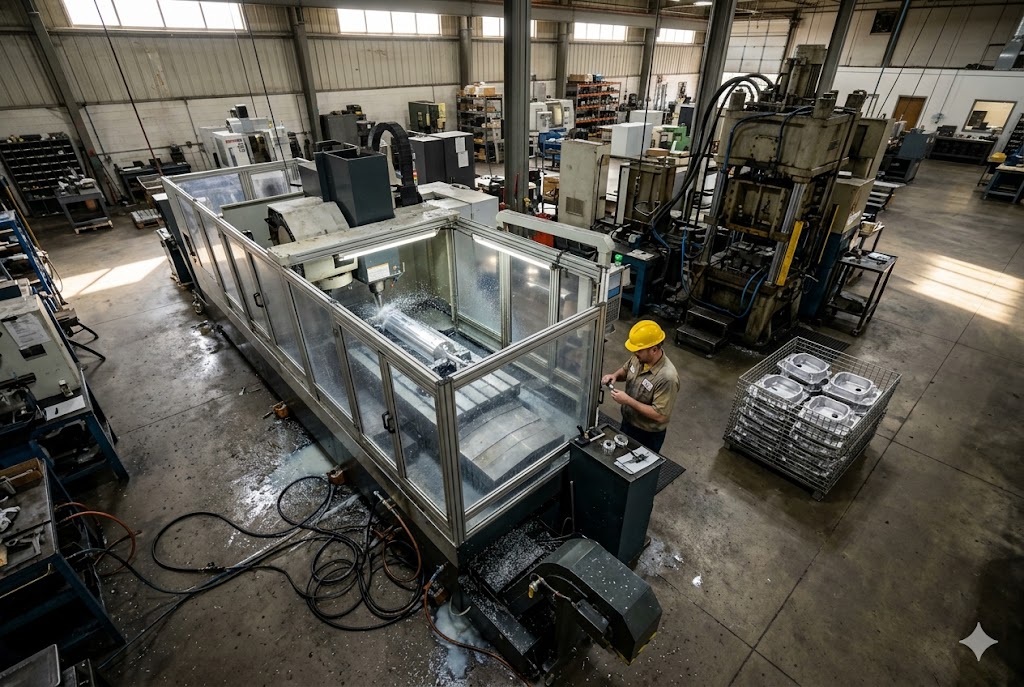
Low Volume: CNC Machining Dominates
At prototype and low-volume stages — under a few hundred to roughly 1,000 units per year — CNC machining is almost always the right answer. There is no tooling cost. You pay per part. If your design changes, you change the file and recut. No wasted tooling investment.
This matters especially during product development. Many importers lock themselves into a die casting tool based on a drawing that then changes. Now they have a useless die and a rework bill.
Mid and High Volume: Net-Shape Processes Take Over
At several thousand units per year, the economics shift. Die casting, injection molding 3, and forging all become near-net-shape processes — they produce a part close to final geometry in seconds or minutes per cycle. CNC machining still takes the same time per part as it did at unit one.
The hybrid approach is worth understanding here. Many of our clients' best-cost solutions combine die casting the overall form with CNC machining only the critical features — bore diameters, mating faces, threaded holes. This typically reduces total part cost by 40 to 60 percent compared to machining the entire part from billet at equivalent volumes.
Volume-to-Process Decision Table
| Annual Volume | Recommended Starting Point | Reason |
|---|---|---|
| 1–500 units | CNC Machining | No tooling cost; design flexibility |
| 500–3,000 units | CNC or Forging | Depends on strength needs |
| 3,000–10,000 units | Die Casting or Injection Molding | Tooling cost starts to recover |
| 10,000+ units | Die Casting, Injection Molding, or Forging | Lowest per-unit cost at scale |
One Warning for Importers
Do not project volume too optimistically. We have seen buyers commit to a $30,000 die casting tool based on a sales forecast that never materialized. If your volume forecast has uncertainty — and most do — start with CNC machining and keep the tooling decision until you have real order data.
What Process Will Give Me the Best Balance Between Cost and Performance?
This is the question that requires the most nuance. Cost and performance are not always in conflict — but they pull in different directions depending on your application.
The best balance between cost and performance depends on what "performance" means for your part. For structural strength under cyclic load, forging outperforms all other processes. For complex geometry at high volume, die casting wins on cost. For non-structural plastic parts, injection molding delivers the lowest per-unit cost with adequate performance for most applications.
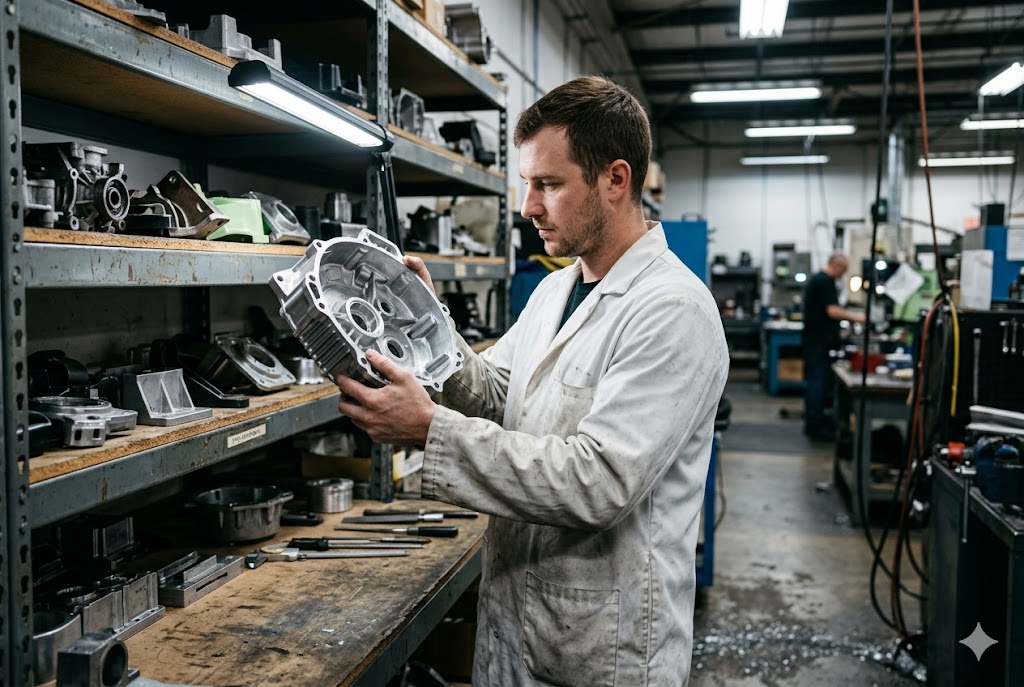
When Strength Is the Priority
If your part must withstand high cyclic stress, impact loads, or fatigue — think suspension components, load-bearing brackets, or safety-critical fasteners — forging is the correct process. Forging aligns the metal's grain structure 4 through plastic deformation, producing tensile and fatigue strength that die casting, CNC machining from billet, and injection molding cannot match at equivalent weight.
Die casting produces parts with a fine surface but an internal structure that can contain porosity. Under sustained stress or fatigue loading, these pores become crack initiation sites 5. This is not a supplier quality problem. It is a fundamental characteristic of the die casting process. If your application involves dynamic load, do not die cast it.
When Geometry Complexity Is the Priority
Die casting 6 handles complex 3D geometry far better than forging. Thin walls, internal channels, bosses, ribs, and undercuts can all be cast into the die. CNC machining complex geometry from billet generates enormous material waste — often 60 to 80 percent of the raw billet ends up as chips — and takes far more machine time.
For complex non-structural aluminum or zinc parts at volume, die casting consistently delivers the best cost-performance balance.
Material Decides Before Process Does
Your material choice often decides the process before you consider anything else. This is a filter, not a preference.
- Steel and titanium: Forging or CNC machining. These materials cannot be die cast.
- Aluminum, zinc, magnesium: Die casting is viable and often optimal at volume.
- High-performance thermoplastics or elastomers: Injection molding is the only practical choice.
If a supplier quotes you die casting in steel, that is a red flag. Verify their technical knowledge before proceeding.
Tolerance as a Process Filter
Tolerance requirements further narrow your options. This is not just a preference — it is a hard constraint. CNC machining achieves tolerances of ±0.025 mm or tighter 7, while die casting and other net-shape processes require secondary machining steps for critical dimensions.
| Process | Typical Achievable Tolerance |
|---|---|
| CNC Machining | ±0.025 mm or tighter |
| Precision Die Casting | ~±0.1 mm per 25 mm |
| Forging (as-forged) | ±0.5–1.0 mm; CNC finish required for critical dims |
| Injection Molding | ±0.1–0.2 mm depending on material |
If a feature requires tighter than die casting can deliver as-cast, plan for a mandatory secondary CNC machining step. Price this into your quote from the start. Suppliers in China will not always flag this proactively.
Can My Supplier Recommend a Better Process Than the One I First Considered?
Yes — and if your supplier never pushes back on your process selection, that is a problem. It usually means their sales team lacks engineering knowledge, or they only want to quote what they already do.
A technically capable supplier should be able to review your drawing and tell you whether your chosen process is optimal, or whether an alternative would lower your cost, improve your strength, or shorten your lead time. If your supplier only confirms your process choice without comment, treat that as a warning sign.

What Good Supplier Feedback Looks Like
When our team receives a drawing, we evaluate the process choice as part of our standard review. We look at geometry, material, annual volume, tolerance requirements, and application. Then we either confirm the process or explain why a different one would serve the client better.
For example: a client once sent us a drawing for a zinc bracket, specifying CNC machining, at a volume of 15,000 pieces per year. We recommended die casting instead. Tooling cost was $8,000. Per-unit cost dropped by 68 percent. Tooling paid back in under two months of production. The client would never have known without that conversation.
Why Chinese Suppliers Often Stay Silent
Most Chinese supplier sales representatives are not engineers. They are trained to take your specification and return a quote. They will machine what you ask them to machine, cast what you ask them to cast. They will not tell you that you are spending twice what you need to.
This is one reason we exist. Our team includes engineers who can read your drawing critically and challenge your process assumption before any tooling cost is committed. Implementing robust quality control practices in Chinese manufacturing 8 — including pre-production inspections and supplier audits — is essential for importers who want consistent results.
What to Ask Your Supplier
When you send a drawing, add these questions explicitly:
- Is the process I specified the most cost-effective for this volume?
- Are there features in this design that will cause quality issues with the specified process?
- Would a hybrid approach (e.g., die cast body with CNC finish) reduce total cost?
- Do you perform this process in-house, or do you subcontract it?
That last question matters more than most buyers realize. A die casting factory quoting CNC machining as a secondary service is not the same as a dedicated precision machining house. If one supplier is subcontracting a second process, you lose visibility into quality control at that step. When your part genuinely requires two processes, confirm whether the supplier has both in-house or is outsourcing one — and if outsourcing, who to, and what their inspection process looks like.
Specialization Is Real
Chinese suppliers almost universally specialize in one process category. A forging supplier offering die casting as a side service is a red flag. Their equipment, their operators, their quality systems, and their inspection knowledge are all built around one process. When they step outside it, quality risk rises significantly. Understanding how forging improves material strength 9 — through grain refinement, work hardening, and defect elimination — helps you identify when a supplier's process claims exceed their genuine capability.
If your part requires multiple processes, the safest approach is a sourcing partner who manages the supply chain across specialized factories — not a single factory trying to do everything. Effective sourcing from China 10 requires understanding not just price, but the precision capabilities and limits of each manufacturing process before you commit your specifications to a supplier.
Conclusion
Choose your manufacturing process based on volume, material, strength needs, and design stability — not just unit price. Get your supplier to confirm the process before tooling is committed. If they cannot, find one who can.
Footnotes
1. Comprehensive overview of die casting process, materials, types, costs, and applications. ↩︎
2. Academic guide explaining break-even analysis for comparing manufacturing process cost alternatives by volume. ↩︎
3. Xometry's guide to injection molding basics: process steps, machine components, and compatible materials. ↩︎
4. Explains how forging refines grain structure to deliver superior fatigue resistance versus casting. ↩︎
5. Peer-reviewed NIH study on porosity in high-pressure die cast aluminum and its role as a fatigue crack origin. ↩︎
6. Technical guide covering die casting principles, types, materials, and geometric capabilities for engineers. ↩︎
7. Complete guide to CNC machining tolerance standards, achievable precision ranges, and cost implications. ↩︎
8. Practical guide to quality control inspections, audits, and supplier management when sourcing from China. ↩︎
9. Explains key attributes of forging — grain structure, work hardening, defect elimination — that improve strength. ↩︎
10. Guide to machining tolerance standards and precision benchmarks relevant to evaluating supplier capability. ↩︎