Skip to main content Skip to footer
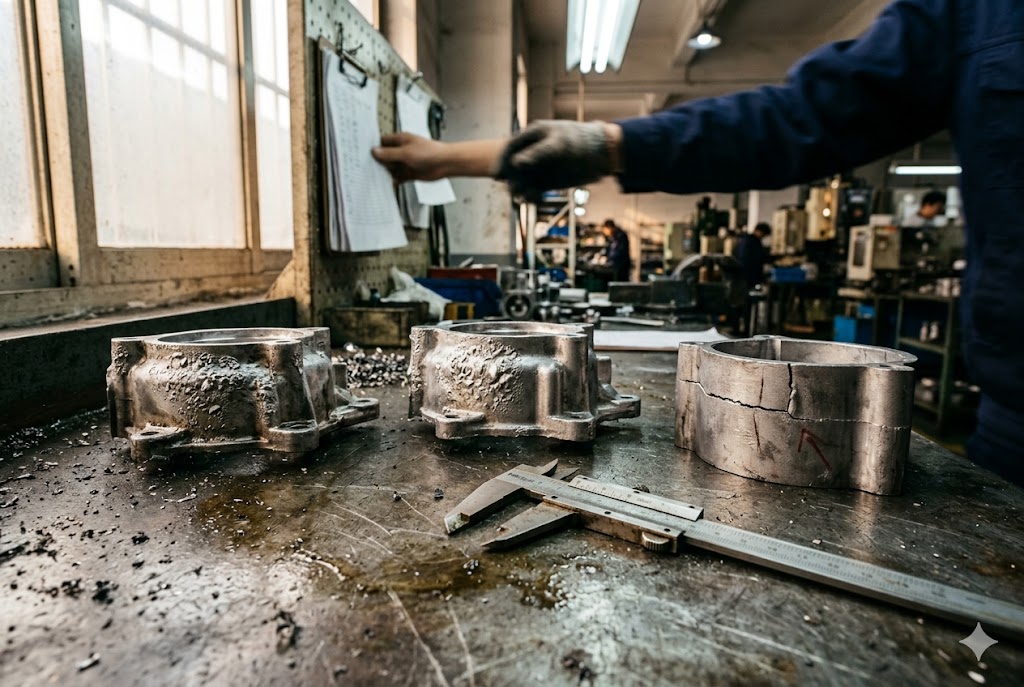
Every week, we review part drawings from clients who assume die casting is the default answer for any metal part made in China. We have seen expensive tooling built for parts that warped, blistered, or cracked — not because the factory was bad, but because the process was wrong from day one.
Die casting is not suitable for parts made from ferrous metals, parts under a few thousand units, components with wall sections above 6 mm, parts requiring full heat treatment, components designed for welding, or parts with deep internal undercuts. Choosing the wrong process adds cost and delays your supply chain.
Understanding these limits before you place a tooling deposit can save you tens of thousands of dollars. The sections below break down each risk area clearly.
Should I Avoid Die Casting for Very Low-Volume Projects?
When clients send us a request for 50 or 100 prototype parts, our sourcing team's first question is always: what is the target annual volume? The answer changes everything about which process we recommend.
Die casting is a poor choice for low-volume projects. Hardened steel tooling typically costs between $5,000 and $50,000 before a single part is produced. Below roughly 3,000 to 5,000 units per year, the tooling cost per part makes the economics unworkable compared to CNC machining or investment casting.
Why Tooling Cost Is the Real Problem
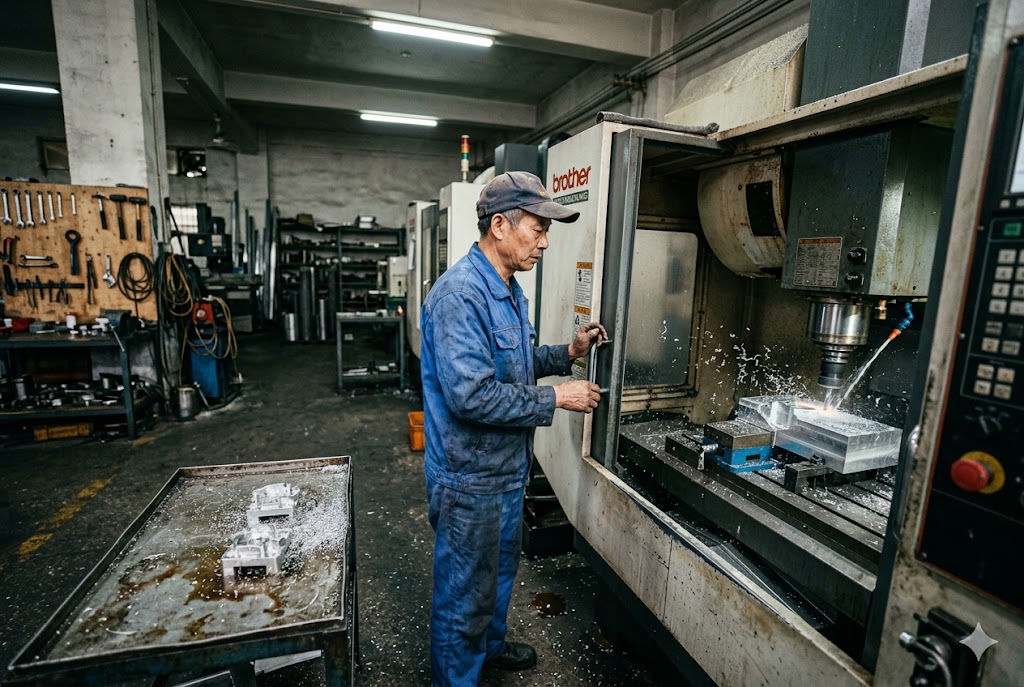
High-pressure die casting requires a precision steel die, usually made from H13 tool steel 1. That die is machined, heat-treated, and polished before production starts. The factory will not absorb that cost. It is charged to you upfront as a non-recurring engineering fee.
Here is how the math looks at different volumes:
| Annual Volume | Tooling Cost (Est.) | Tooling Cost Per Part | Process Verdict |
|---|---|---|---|
| 500 units | $15,000 | $30.00 | Unworkable |
| 2,000 units | $15,000 | $7.50 | Marginal |
| 10,000 units | $15,000 | $1.50 | Acceptable |
| 50,000 units | $15,000 | $0.30 | Excellent |
The die cost does not change based on how many parts you order. A low order quantity simply spreads that fixed cost across fewer parts, making each one more expensive.
What to Use Instead for Low Volumes
For quantities under 3,000 units, we typically guide clients toward one of these alternatives:
- CNC machining from billet: No tooling cost. Lead time is shorter. Tolerances are tighter. The per-part cost is higher, but the total project cost is often lower.
- Investment casting: Lower tooling cost than die casting. Better suited for complex geometry. Works well at 500–5,000 units.
- Urethane casting or 3D-printed metal: Suitable for true prototypes below 100 units.
When Low-Volume Die Casting Makes Sense Anyway
There are exceptions. If a client has a confirmed product launch with guaranteed scale within 12 months, building the die early can make sense. We help clients model both scenarios — pay now for tooling, or delay and pay higher per-part costs temporarily.
The key point: never commit to a die casting tool 2 without a clear volume forecast. Chinese suppliers are not always going to warn you about this mismatch. They want the tooling order.
Can Very Thick or Very Thin Part Designs Create Problems in Die Casting?
Wall thickness is one of the first things our engineers check when we receive a drawing for a die cast part. It is also one of the most common reasons a design gets flagged before we send it out for quotation.
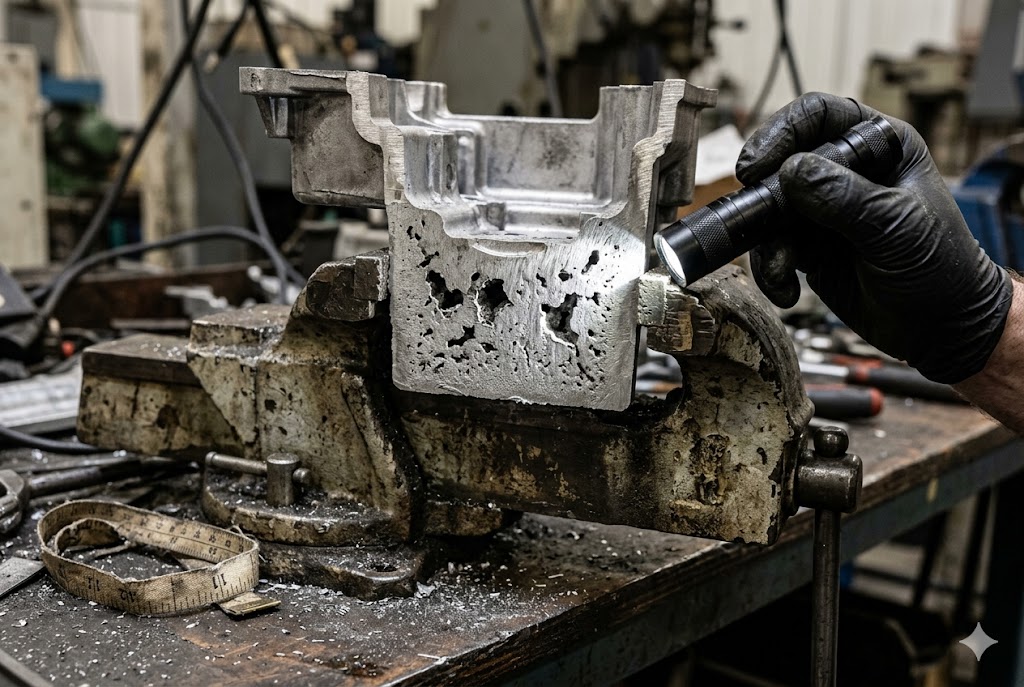
Very thick wall sections above 6 mm and very thin sections below 0.8 mm both create serious problems in die casting. Thick walls trap gas and shrinkage porosity. Thin walls risk incomplete fill, misruns, and fragile flash. Both conditions increase scrap rates and raise your total landed cost.
The Problem With Thick Walls
In high-pressure die casting, molten metal is injected at high speed and pressure into a steel cavity. It solidifies quickly. That fast solidification is the whole point — it is what gives die casting its speed advantage.
But thick sections cool slowly. While the outer surface solidifies, the center is still liquid. As it contracts, it creates voids — called shrinkage porosity 3. These voids are invisible from outside the part. You cannot see them in a visual inspection. They only show up in pressure testing, X-ray, or when the part breaks in the field.
| Wall Thickness | Risk Level | Likely Defect |
|---|---|---|
| Under 1.5 mm | High | Misrun, incomplete fill |
| 1.5 mm – 4 mm | Low | Acceptable range for most alloys |
| 4 mm – 6 mm | Medium | Minor porosity risk, manageable |
| Above 6 mm | High | Shrinkage porosity, gas trapping |
The Problem With Very Thin Walls
Thin walls create the opposite problem. Molten metal loses heat fast. In a very thin section, it can solidify before it reaches the far end of the cavity. This produces a misrun — a part that is physically incomplete.
Even if the part fills correctly, very thin sections are structurally fragile. Flash — the thin film of metal that escapes at parting lines — becomes harder to remove without distorting the part.
How We Handle Wall Thickness Issues Before Tooling
When our team reviews a drawing with uneven wall sections, we work with the client to suggest design changes before tooling is cut. Common solutions include:
- Coring out thick sections to bring wall thickness below 6 mm
- Adding ribs instead of solid mass to maintain strength
- Redesigning junction points where thick and thin walls meet, which is where porosity concentrates
The cost of a drawing revision is zero. The cost of scrapping a steel tool and rebuilding it is not. A comprehensive aluminum die casting design guide 4 covers all these considerations in detail.
What Design Features Make Another Process Better Than Die Casting for My Part?
We often receive drawings with features that are technically possible in die casting but are far more expensive than they need to be. In many of those cases, the client does not know there is a better option.
Design features that favor alternative processes include deep undercuts requiring side-actions, internal passages like oil galleries or coolant channels, ferrous material requirements, and precision bore tolerances across the parting line. When these features appear together, investment casting or CNC machining 5 from billet is almost always a better choice.
Undercuts and Internal Geometry
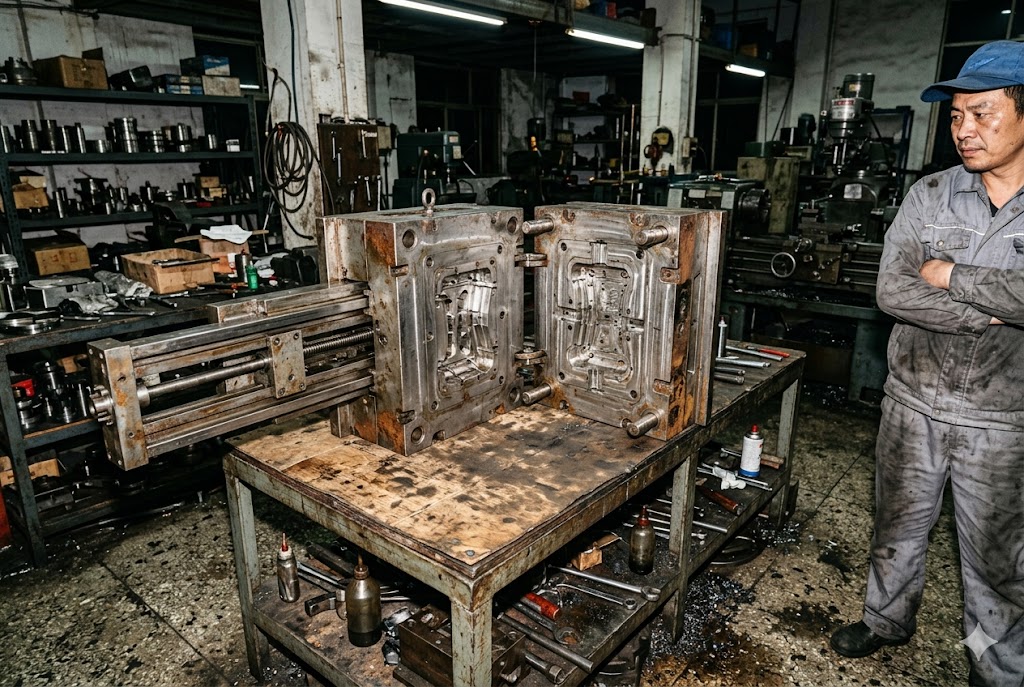
A standard die casting die opens in two directions — the two halves pull apart in a straight line. Any feature that prevents this straight draw is called an undercut. To form an undercut, the die needs a side-action, also called a slide or core pull. Side-actions add significant cost to the tool and complexity to the production process.
When a part has multiple deep undercuts in different directions, the tooling cost can exceed what investment casting 6 would cost — and investment casting handles complex geometry without the same constraints.
Internal passages are even more difficult. Oil galleries, coolant channels, and hollow cores cannot be formed by a two-piece die alone. Some factories use loose sand cores or soluble cores, but this is not standard HPDC practice and requires explicit process validation.
Ferrous Metal Requirements
This is a hard limit, not a design preference. Die casting is limited to non-ferrous metals:
| Metal | Die Casting Compatible? | Reason |
|---|---|---|
| Aluminum | Yes | Most common die cast alloy |
| Zinc | Yes | Excellent for small, detailed parts |
| Magnesium | Yes | Lightweight, good for thin walls |
| Copper alloys | Limited | High temp damages tooling faster |
| Steel | No | Melting point destroys H13 tooling |
| Iron | No | Same issue as steel |
| Titanium | No | Same issue, plus reactivity |
If your part must be steel or iron — for strength, heat resistance, or magnetic properties — die casting is simply off the table. Investment casting, sand casting, or forging followed by machining are the correct routes.
Precision Tolerances Across the Parting Line
The parting line is where the two halves of a die meet. Flash forms there. Dimensional variation concentrates there. Any feature that crosses the parting line — a bore diameter, a mating face, a thread form — will have worse dimensional consistency than features contained entirely within one half of the die.
If your drawing calls for a bore tolerance of ±0.02 mm that happens to cross the parting line, the as-cast dimension alone will not hold that tolerance reliably. A mandatory secondary CNC machining operation is required. That adds cost and lead time that buyers sourcing from China often do not account for in their initial budget.
How Do I Know When Die Casting Will Create More Risk Than Value for Me?
After years of sourcing custom parts from China and Vietnam, we have built a short list of warning signs that tell us a client is heading toward a die casting decision they will regret.
Die casting creates more risk than value when your part requires post-weld assembly, sustained high-temperature operation above 150°C, full heat treatment like T6 temper, outdoor or marine exposure without a verified coating system, or when your annual volume is not yet confirmed. Any one of these conditions warrants a process review before tooling is approved.
Heat Treatment Incompatibility
Standard high-pressure die casting produces parts with micro-porosity throughout the cross-section. This is normal and expected. For most applications, it does not matter.
But if your part needs T6 heat treatment 7 — solution annealing followed by artificial aging — that micro-porosity becomes a serious problem. The solution annealing step heats the part to around 480°C for aluminum. Gas trapped in the pores expands rapidly. The result is surface blistering that ruins the part's appearance and invalidates the mechanical properties the heat treatment was supposed to achieve.
Vacuum-assisted die casting 8 and squeeze casting can reduce porosity enough to allow some heat treatment, but these are premium processes. Most Chinese die casters do not offer them as standard. You must ask specifically, verify the equipment exists on the shop floor, and include the requirement in your contract and quality plan.
Welding Incompatibility
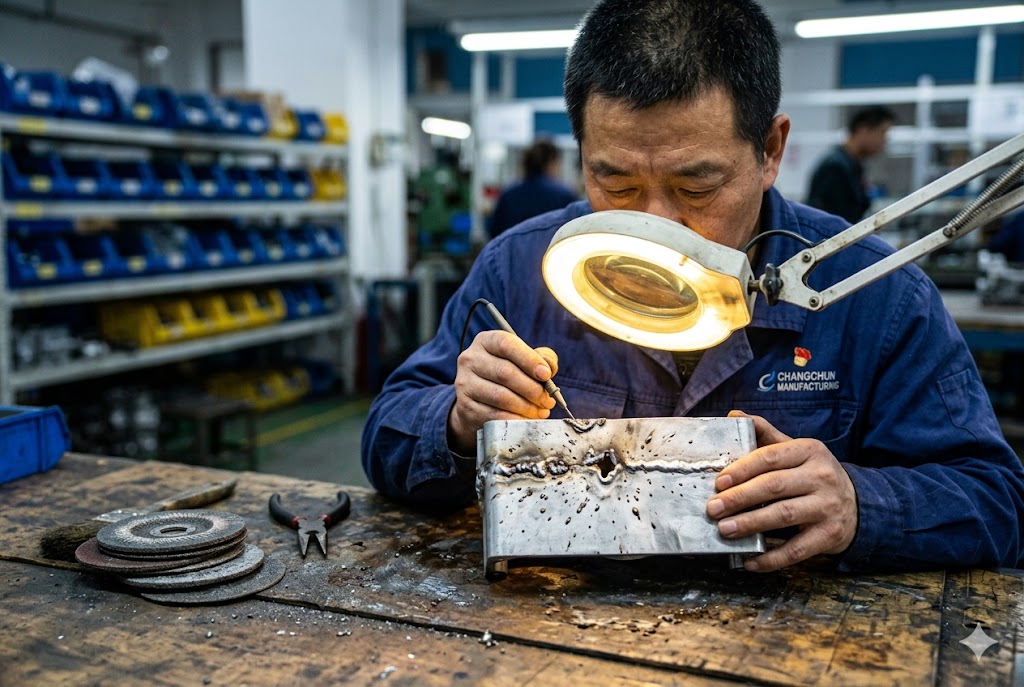
Standard HPDC parts are largely incompatible with welding. The same porosity that causes heat treatment blistering causes weld defects — spatter, blowouts, and weak joints. The heat of welding causes trapped gas to expand and disrupt the weld pool.
If your design requires welding die cast parts into an assembly, you have two options:
- Redesign the part so welding is not required
- Specify vacuum-assisted or squeeze casting and verify that the supplier actually has the equipment and uses it
Do not assume a Chinese supplier will flag this problem. Many will quote the part, build the tool, run production, and ship parts that fail in your assembly. The problem only surfaces when your downstream customer reports failures.
Corrosion Risk for Magnesium Parts
Magnesium is attractive for its weight advantage. It is the lightest structural metal used in die casting. But it corrodes aggressively in humid, salty, or outdoor environments. Its galvanic corrosion 9 rate is dramatically higher than aluminum or zinc.
Chinese suppliers routinely apply surface treatments to magnesium parts — anodizing, chromate conversion, powder coating. But the quality of those treatments varies widely. A cosmetic coating applied at low cost will not pass a 500-hour salt spray test 10.
If your parts go outdoors, into marine environments, or into assemblies with dissimilar metals, you need to:
- Specify the coating system by name and thickness
- Define salt spray test hours as an acceptance criterion
- Include coating test results in your pre-shipment inspection checklist
Without these contractual controls, you are accepting cosmetic treatment and calling it functional protection.
High-Temperature Operating Environments
Aluminum die casting alloys — A380 being the most common in China — lose significant strength above 150°C. At 200°C, the yield strength can drop by 30–40% compared to room temperature values. Dimensional stability also decreases.
If your part sits near an engine, a heat source, or operates in a high-temperature cycle, die casting may not hold its dimensions or strength in service. Steel forgings, investment-cast superalloys, or heat-resistant grades of aluminum processed through alternative routes are more appropriate.
Conclusion
Die casting is a powerful process, but it has real limits. Knowing those limits before you approve tooling is the difference between a successful import program and an expensive mistake. When in doubt, send us your drawing first.
Footnotes
1. Covers H13 tool steel costs, die material grades, and how mold material affects die casting economics. ↩︎
2. Breaks down the true upfront and long-term cost of die casting tooling across production volumes. ↩︎
3. Explains how uniform wall thickness prevents shrinkage porosity, misruns, and cold shuts in die casting. ↩︎
4. Comprehensive design tips covering machining allowance, porosity reduction, and rib placement for aluminum castings. ↩︎
5. Compares die casting and CNC machining across cost, tolerance, volume thresholds, and material flexibility. ↩︎
6. Side-by-side analysis of investment casting vs. die casting for tooling cost, geometry complexity, and volume fit. ↩︎
7. Explains why trapped gas in standard die castings causes surface blistering during T6 solution annealing. ↩︎
8. Details how vacuum-assisted HPDC reduces gas entrapment to enable T6 heat treatment and welding compatibility. ↩︎
9. Covers porosity reduction via vacuum die casting and its effect on weldability and corrosion resistance. ↩︎
10. Guide to salt spray testing standards, test durations, and corrosion acceptance criteria for die cast parts. ↩︎