Skip to main content Skip to footer

Every quarter, our team reviews shipping decisions with clients who overpaid for air freight they didn't need — or who saved on freight but lost far more in production downtime. We see this pattern constantly, and it costs real money.
The right freight mode for custom CNC parts from China depends on weight, urgency, and total landed cost — not rate cards alone. Air freight costs $4–8 per kg and takes 5–10 days. Sea freight costs $0.50–2 per kg and takes 20–50 days. The correct choice requires calculating inventory holding costs, downtime risk, and part sensitivity for each specific order.
Both modes have their place. The goal of this guide is to give you a clear, practical framework so you stop defaulting to one mode — and start choosing the right one every time.
When Does Air Freight Make More Sense for My CNC Order?
When a shipment misses a customer deadline, the financial exposure can dwarf the freight premium. Our team has seen this happen to clients who chose sea freight to save $800 — and then paid $15,000 in customer penalties.
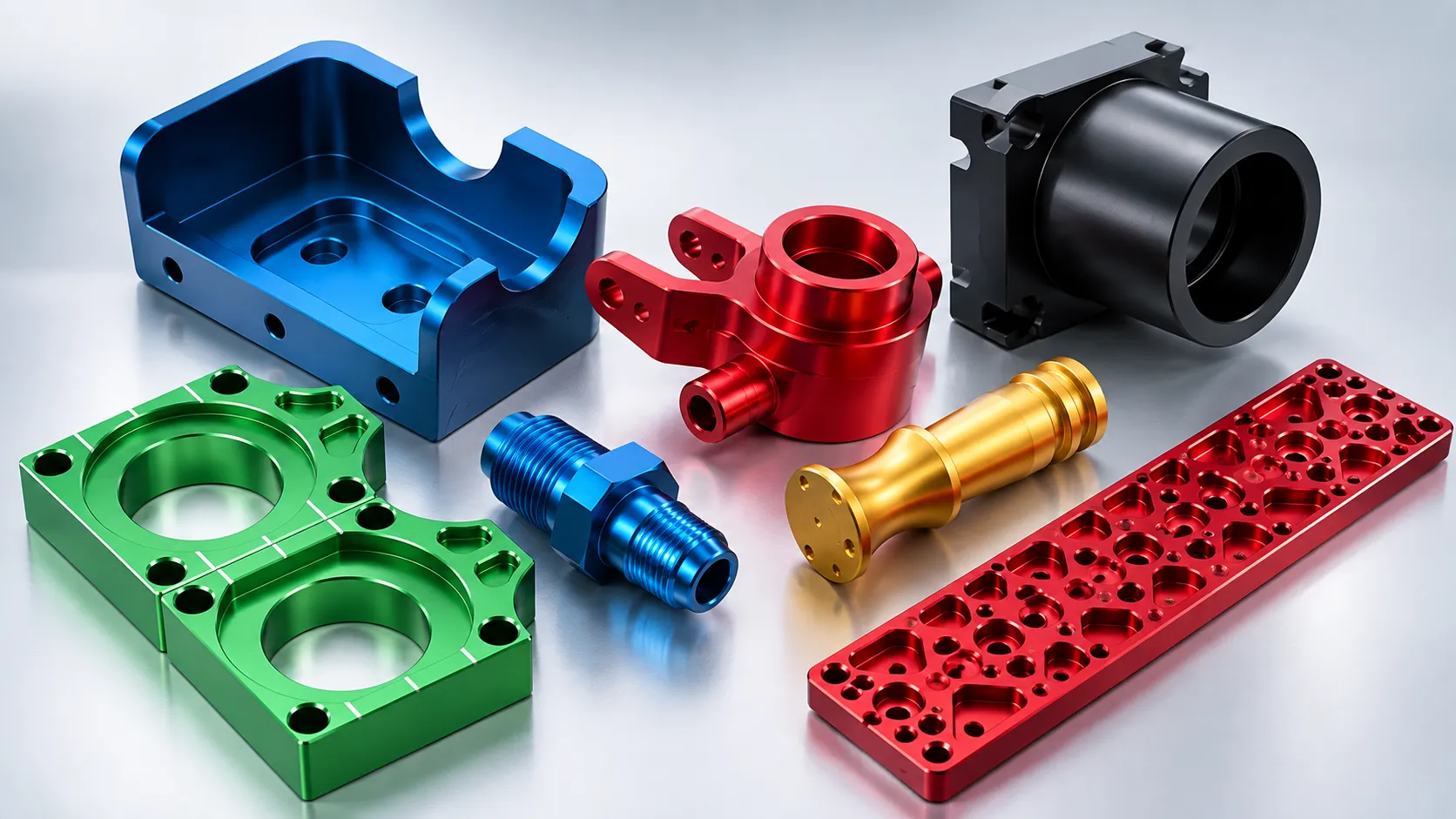
Air freight makes more sense for CNC orders when the cost of a stockout or production delay exceeds the freight premium, when the shipment weighs between 70–500 kg, when parts have precision finishes or tight tolerances, or when you are shipping first-article samples or pre-production validation lots that cannot wait 30–50 days for sea transit.
When Weight Makes Air Freight Cost-Competitive
Raw rate is not the full picture, but weight still sets the baseline. Air freight becomes harder to justify as shipment size grows. Below is a practical reference for when air can compete on cost:
| Shipment Weight | Air Freight Cost (est.) | Sea Freight Cost (est.) | Air Premium |
|---|---|---|---|
| 50 kg | $200–$400 | $100–$180 | 1.5–2.5x |
| 150 kg | $600–$1,200 | $150–$300 | 2–5x |
| 300 kg | $1,200–$2,400 | $200–$400 | 4–8x |
| 500 kg | $2,000–$4,000 | $300–$600 | 5–10x |
| 1,000 kg+ | $4,000–$8,000 | $400–$1,000 | 8–15x |
At 50–150 kg, the absolute dollar gap between modes is small enough that urgency, part sensitivity, or even minor delivery risk can tip the decision toward air. According to Freightos's air vs. ocean freight guide 1, air freight is best used when the shipping cost is less than 15–20% of the goods' total value. Beyond 300 kg, the gap grows fast and you need a strong business justification to choose air freight.
When Part Sensitivity Favors Air
CNC parts with tight dimensional tolerances and fine surface finishes 2, or corrosion-sensitive materials face real risk in ocean containers. Sea freight involves more handling touchpoints: trucking to the port, container loading, vessel transit across humid ocean air, port unloading, deconsolidation (for LCL), and final inland delivery.
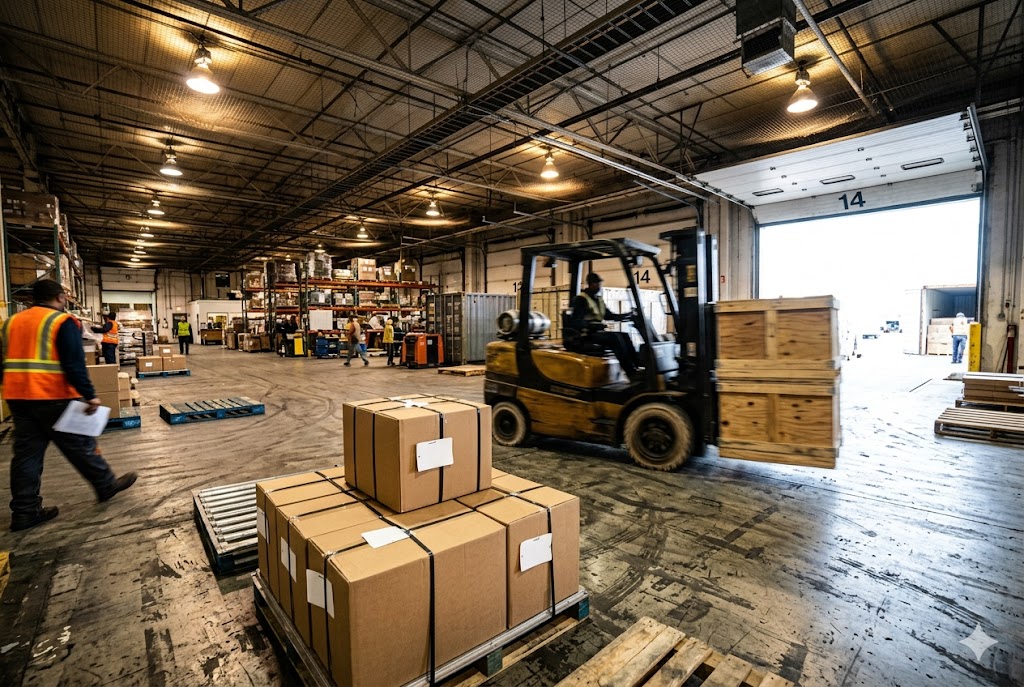
Air freight has fewer handoffs. Parts move from the factory to the air cargo terminal, onto the aircraft, and directly to the destination freight station. That shorter handling chain matters for:
- Parts with Ra 0.8 or finer surface finishes
- Aluminum or steel parts without protective coating
- Assemblies with pre-installed bearings, seals, or threaded inserts
- First-article samples where dimensional integrity on arrival is non-negotiable
When Order Timing Justifies Air
There are specific order stages where air freight is the correct default, regardless of cost. These include:
- First-article samples: You need to inspect, measure, and approve before mass production. Waiting 30–50 days for sea transit is not a logistics decision — it's a schedule risk.
- Pre-production validation lots: Small batches to confirm process stability before a large sea shipment is released.
- Emergency replenishment: A quality hold, shipping delay, or demand spike creates a gap in your inventory. The cost of that gap — production stoppages, customer penalties — is almost always higher than the air freight premium.
How Can I Calculate the Real Tradeoff Between Speed and Cost?
Most purchasing managers look at the freight invoice and stop there. That is the wrong calculation. The number that matters is total landed cost — which includes freight, inventory holding, insurance, packaging, and downtime risk.
To calculate the real tradeoff, compare total landed cost for each mode: add freight rate, insurance, packaging, port fees, and the inventory holding cost for the extra weeks sea freight requires. Then compare that total against the financial exposure from a potential stockout during those extra weeks.

Breaking Down Total Landed Cost
Here is a framework your team can apply to any CNC part shipment. Fill in the columns with real numbers from your last order:
| Cost Component | Air Freight | Sea Freight (LCL) | Sea Freight (FCL) |
|---|---|---|---|
| Freight rate | $4–8/kg | $0.80–2/kg | $0.50–1.2/kg |
| Transit time | 5–10 days | 28–45 days | 20–38 days |
| Insurance (est.) | 0.3–0.5% of value | 0.3–0.5% of value | 0.3–0.5% of value |
| Port/terminal fees | Lower | Moderate | Lower per kg |
| Packaging cost | Lighter box | Full ocean export crating | Full ocean export crating |
| Inventory holding (@ 20% annual) | Minimal | High (extra 3–6 weeks) | High (extra 3–6 weeks) |
| Downtime risk premium | Low | Moderate–High | Moderate |
How to Quantify Inventory Holding Cost
The formula is straightforward. Take the value of the goods, multiply by your annual carrying cost rate 3 (typically 20–30% for manufactured parts), and divide by 52 weeks. That gives you the weekly holding cost. Multiply by the number of extra weeks sea freight requires.
Example: $50,000 shipment, 25% annual carrying cost, 5 extra weeks of sea transit vs. air.
Weekly holding cost = $50,000 × 25% ÷ 52 = $240 per week
5 extra weeks = $1,200 in holding cost alone
That $1,200 gets added to the sea freight invoice before you compare modes. On a large shipment, it often reduces the apparent cost advantage of sea freight by 15–25%.
How to Quantify Downtime Risk
This step is where most calculations break down. Ask your operations team one direct question: If this shipment arrives 4 weeks late, what does that cost us?
Include:
- Customer penalty clauses (late delivery fees)
- Production line idle time (labor + overhead per hour)
- Expedited sourcing cost if you need to find an alternative
- Customer relationship damage (harder to quantify, very real)
If the answer is "we'd lose a $200,000 production run," then $3,000 in air freight premium is not a meaningful cost. It is a $197,000 savings.
What Order Size and Urgency Justify Sea Freight?
Sea freight is not just a cheaper version of air freight. It is a fundamentally different supply chain discipline. It requires longer planning cycles, larger order quantities, and a buffer stock strategy that many smaller importers have not built yet.
Sea freight is justified when your shipment exceeds 300 kg or fills a meaningful portion of an LCL container, when you have 6–8 weeks of safety stock on hand, when the parts are not precision-sensitive to humidity or handling, and when your order cycle is predictable enough to plan around 20–50 day transit times.
LCL vs. FCL: Understanding the Hidden Costs of LCL
Many medium-sized importers default to LCL (Less-than-Container Load) 4 because they don't have enough volume to fill a full container. LCL is cheaper per cubic meter than air freight, but it carries hidden costs that the rate card doesn't show.
LCL involves consolidation at origin: your cargo is grouped with other shippers' cargo, packed into a shared container, then deconsolidated at the destination. That process adds 3–7 days of transit and multiple additional handling events. For precision CNC parts, those extra touches create real risk.
| Shipping Mode | Typical China–US Transit | Handling Events | Risk Level for Precision Parts |
|---|---|---|---|
| Air freight | 5–10 days | 4–6 | Low |
| LCL sea freight | 28–45 days | 8–12 | Moderate–High |
| FCL sea freight | 20–38 days | 5–8 | Moderate |
When Sea Freight Becomes the Clear Choice
Sea freight earns its place in your supply chain when these conditions are met:
- Volume: Your shipment is 500 kg or more, or fills at least 3–5 CBM.
- Design is locked: You are past the sampling and validation phase. The part is proven, and you are replenishing known-good inventory.
- Inventory buffer exists: You have 8–10 weeks of safety stock available, covering transit time plus typical port congestion variance.
- Parts tolerate handling: The parts do not have ultra-fine surface finishes or extreme tolerance requirements that vibration and humidity could compromise.
- Carbon footprint matters: For buyers with ESG commitments or European end customers, sea freight produces roughly 40–50 times less CO₂ per tonne-km than air freight 5. That is a real business factor now, not just a talking point.
The 2025–2026 Sea Freight Reliability Picture
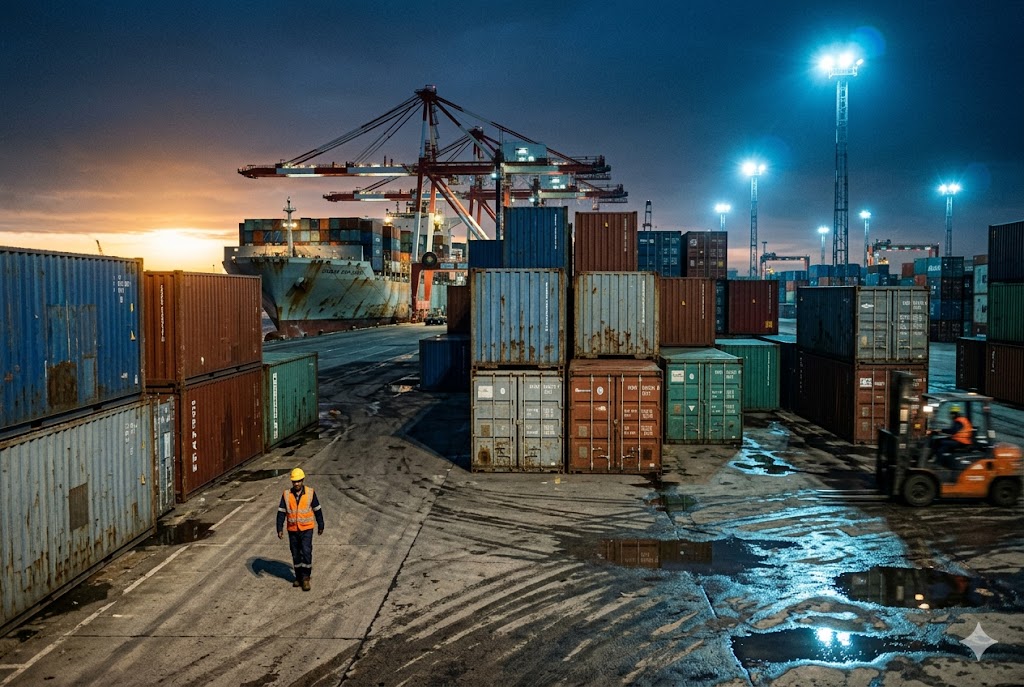
On-time performance for China–US ocean freight has remained under pressure in 2025–2026. According to Trans-Border Global Freight Systems 6, schedule reliability from Asia to the U.S. West Coast has ranged between 42% and 48% in recent months, as port congestion and large vessel sizes continue to strain terminals. That improvement is real — but it does not mean sea freight is predictable. Port congestion, vessel rollings, and Red Sea routing disruptions continue to add unpredictable variance of 1–3 weeks on affected lanes.
If your business cannot absorb a 3-week delay without a stockout or customer penalty, sea freight is not yet safe to use without a robust safety stock or dual-sourcing strategy.
How Do I Plan Inventory to Avoid Expensive Air Shipments?
The best way to reduce your air freight spend is to need it less often. That sounds obvious, but most unplanned air shipments trace back to the same root causes: too little safety stock, too-short order cycles, or no contingency plan when a supplier delays.
To avoid expensive air shipments, build 8–10 weeks of safety stock for sea-freight parts, set reorder points that account for full lead time including production and transit, use a split-mode strategy reserving air freight only for demand spikes and emergency replenishment, and audit your supplier's production reliability before committing to a sea-only freight plan.

Building a Safety Stock Formula for CNC Parts
Safety stock 7 for imported CNC parts must account for:
- Supplier production lead time variability (often ±1–2 weeks)
- Sea freight transit variability (often ±2–3 weeks)
- Demand variability on your end
A practical rule: set your safety stock at (maximum lead time − average lead time) × average daily demand. For most China–US sea freight scenarios, this means holding 6–8 weeks of stock before placing the next sea freight order.
The Split-Mode Strategy
The most cost-efficient long-term approach is not choosing one mode and sticking to it. It is a structured split:
- Sea freight (FCL or LCL): Base inventory replenishment on a fixed sailing schedule. Predictable, planned, cost-optimized.
- Air freight: Reserved strictly for three scenarios — demand spikes that outrun sea shipments, quality-hold recovery (when a sea shipment is rejected and you need replacement parts fast), and new-product launches where the design is not yet locked.
Our clients who use this split-mode structure consistently report 25–35% lower total annual freight spend compared to those who default to air freight for all order types.
Reorder Point Planning for Sea Freight
Set your reorder point 8 using this logic:
Reorder Point = (Average Daily Demand × Total Lead Time in Days) + Safety Stock
Where Total Lead Time = Supplier production time + Sea transit time + Customs clearance + Inland delivery.
For a typical China–US sea freight order, that total is often 50–65 days from purchase order to parts on your shelf. If you wait until you have 2 weeks of stock left to place an order, you will always be air freighting.
Supplier Reliability Is Part of the Equation
No inventory plan survives a supplier who delivers 3 weeks late. Before committing to a sea-freight-based supply chain for a specific part, audit your supplier's historical on-time delivery rate. According to Freightos's 2026 ocean freight outlook 9, trade war dynamics and frontloading behavior have continued to disrupt transpacific freight seasonality, making supplier lead time predictability even more critical for planning. We conduct factory audits and in-production quality checks for our clients specifically to surface this kind of risk before it disrupts a shipment schedule.
If a supplier's on-time rate is below 80%, a sea-freight-only plan is a liability. Either switch suppliers, dual-source, or add buffer stock accordingly. For a deeper understanding of the current ocean freight rate environment — which directly impacts how you budget for sea freight from China to the US 10 — staying updated on carrier rate trends helps avoid budget surprises when negotiating annual freight contracts.
Conclusion
Choose air freight when urgency, part sensitivity, or downtime risk justifies the premium. Choose sea freight when volume, inventory buffers, and planning cycles support it. The best supply chains use both — deliberately, not by default.
Footnotes
1. Freightos guide on when air freight is cost-justified versus ocean freight, with decision criteria. ↩︎
2. Geomiq's technical guide to CNC surface roughness Ra values and precision finish standards. ↩︎
3. Zoho Finance explains inventory carrying cost components and how to calculate the annual rate. ↩︎
4. TEU Inc. practical guide to LCL vs. FCL ocean freight, including hidden cost breakdowns. ↩︎
5. Ship4WD comparison of sea freight vs. air freight CO₂ emissions per tonne-kilometer. ↩︎
6. Trans-Border Global analysis of 2026 ocean schedule reliability challenges from Asia to the U.S. ↩︎
7. Linnworks guide to safety stock formulas for variable lead times and demand in supply chains. ↩︎
8. Netstock's reorder point formula guide with worked examples for inventory replenishment planning. ↩︎
9. Freightos 2025 year-in-review and 2026 ocean and air freight forecast for transpacific lanes. ↩︎
10. Freightos overview of ocean freight rates, LCL/FCL cost structures, and China–US transit benchmarks. ↩︎