Skip to main content Skip to footer
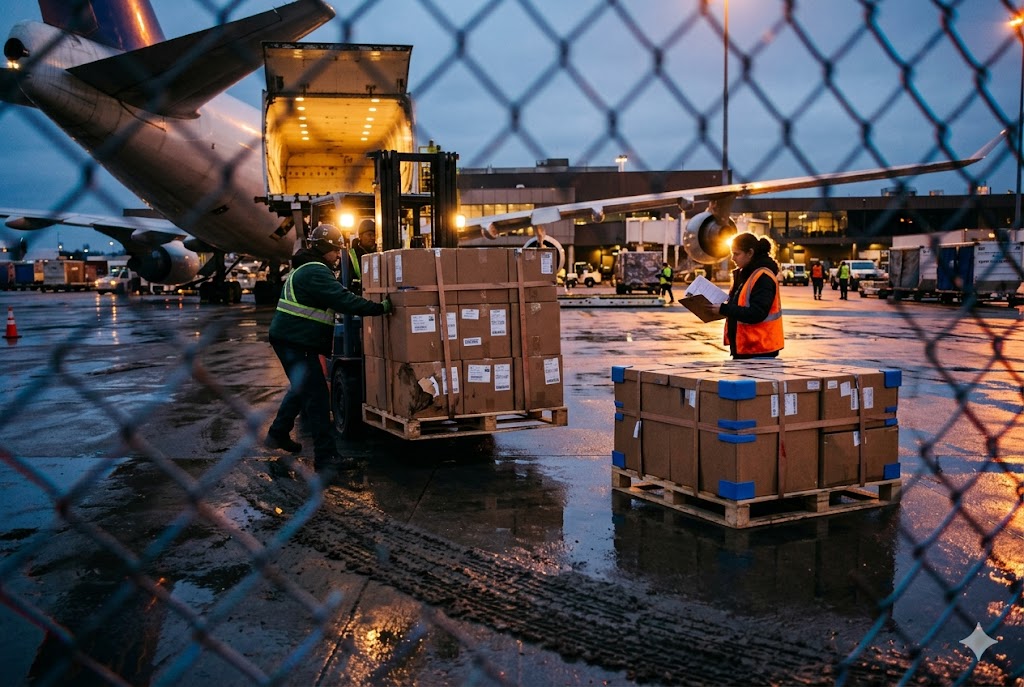
Every time we hand off a finished batch of CNC parts to a freight forwarder, we know the clock starts ticking for our clients. One wrong call on shipping mode — too slow, too expensive, or too risky for the cargo type — and the whole project suffers.
Importing custom CNC machining parts from China gives you four main shipping modes: express courier, air freight, sea freight (LCL or FCL), and rail freight. The right choice depends on your shipment weight, budget, urgency, and Incoterm. Most US importers use air freight for urgent mid-weight orders and FCL sea freight for high-volume production runs.
Each mode has a different cost structure, transit time, and risk profile. Understanding the tradeoffs lets you make smarter procurement decisions and avoid costly surprises.
How Do Air, Sea, Express, and Rail Options Compare for CNC Parts?
When clients ask us to arrange shipping, the first thing we look at is the cargo weight and how fast they need it. Those two numbers alone eliminate most of the options.
Air freight, sea freight, express courier, and rail each serve a different weight and urgency tier. Express suits parcels under 30 kg with 3–5 day delivery. Air freight handles 70–500 kg in 5–10 days. Sea LCL or FCL covers larger volumes at lower cost. Rail is a middle-ground option mainly used for European destinations.

Express Courier: Fast, Simple, Expensive
Express courier services — DHL, FedEx, UPS — are door-to-door. They handle export clearance in China and import clearance at your end. You get tracking at every step. Transit time to the US is typically 3–5 business days.
The catch is cost. Express becomes very expensive above roughly 30 kg. At that weight, the per-kg rate starts making air freight look attractive. Express is best for prototypes, approval samples, and urgent replacement parts where the shipment is small and speed is everything.
One important update: as of May 2025, the US eliminated the de minimis exemption 1 for Chinese-origin goods. Even a single low-value sample now requires a full 10-digit HTS code and complete customs entry. There is no shortcut for small test orders anymore. Budget time and cost for proper customs clearance regardless of shipment value.
Air Freight: The Standard for Urgent Production Orders
Air freight is the workhorse for time-sensitive production batches. It works best in the 70–500 kg range. Below 70 kg, express is often similar in price with less hassle. Above 500 kg, the cost advantage of sea freight becomes very hard to ignore.
Transit time from major Chinese airports — Shanghai Pudong, Guangzhou Baiyun, Shenzhen — to US gateway airports runs 5–10 days depending on routing and customs processing speed. Add 1–3 business days for port-to-door delivery after arrival.
Air freight is quoted in chargeable weight 2. Carriers use whichever is greater: actual weight or volumetric weight (length × width × height in cm ÷ 6000 for most carriers). Dense metal CNC parts usually charge on actual weight. Lightweight but bulky plastic parts may charge on volumetric weight.
Sea Freight LCL vs. FCL
Sea freight splits into two models.
LCL (Less than Container Load) means your cargo shares a container with other shippers. A consolidator combines multiple shipments, ships them together, and separates them at the destination port. LCL lowers your freight cost per kg compared to air, but adds handling steps. More handling means more risk of damage, especially for precision metal parts with tight dimensional requirements.
FCL (Full Container Load) means you rent the entire container. Your cargo goes in at the origin factory and comes out at the destination. No co-loading, no shared handling. FCL rates from major Chinese ports to the US West Coast run approximately 15–25 days port-to-port. East Coast routes take 25–35 days via the Suez Canal or the Panama Canal.
| Shipping Mode | Typical Weight Range | Transit Time (to US) | Relative Cost |
|---|---|---|---|
| Express Courier | Under 30 kg | 3–5 days | Highest per kg |
| Air Freight | 70–500 kg | 5–10 days | High |
| Sea LCL | 300 kg – 5 CBM | 25–40 days (door-to-door) | Medium |
| Sea FCL (20') | Full container | 15–35 days (port-to-port) | Lowest per unit |
| Rail (China–Europe) | 70–500 kg | 14–18 days | Between air and sea |
Rail Freight: Mostly for European Buyers
China–Europe rail freight runs on the Belt and Road railway network 3. Transit time is roughly 14–18 days — faster than sea, cheaper than air. It avoids ocean port congestion entirely. However, rail is not practical for US-bound shipments. If you are sourcing for a European end customer or have a European hub, it is worth asking your freight forwarder about rail options.
Which Shipping Method Is Best for Urgent but Heavy Orders?
This is the question we hear most from purchasing managers who are already running behind schedule. Heavy and urgent is a hard combination. No single mode solves it perfectly.
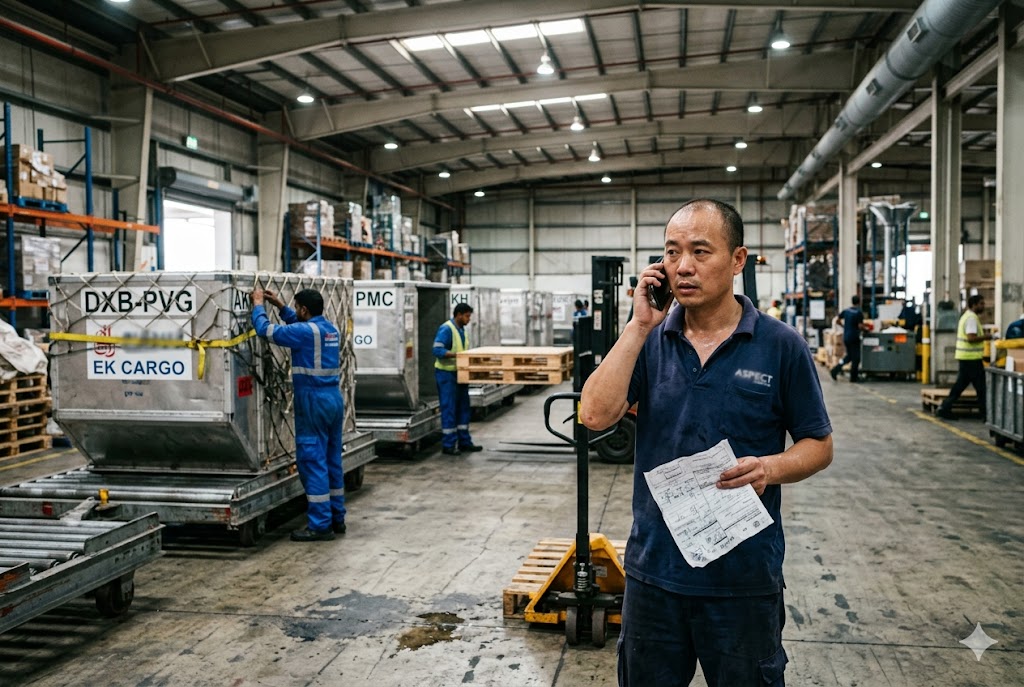
For urgent orders above 500 kg that are too heavy for standard air freight to be cost-effective, sea-air multimodal shipping is the most practical option. Cargo moves by sea from China to a mid-route hub like Dubai or Singapore, then by air to the US. This cuts transit time by 30–50% versus full ocean freight at roughly half the cost of pure air freight.
What Is Sea-Air Multimodal Shipping?
Sea-air multimodal shipping 4 combines two legs. The first leg moves your cargo by ocean vessel from a Chinese port to a hub port — commonly Dubai (UAE), Singapore, or Mumbai. The second leg moves it by air from that hub to the US. Total transit time is typically 12–18 days depending on hub choice and airline routing.
The math works like this: full air freight from China to the US for 500 kg might cost $8–12 per kg. Full sea freight LCL for the same shipment might cost $1–2 per kg but takes 30–40 days door-to-door. Sea-air typically lands at $4–6 per kg with 12–18 days transit. For medium-weight production batches with moderate urgency, that is a very useful middle ground.
Air Freight Upgrades: Priority and Charter
If sea-air is not fast enough and the order is genuinely urgent, there are two escalation options.
First, priority air freight. Most major airlines offer a guaranteed space product. You pay a premium — typically 20–40% above general cargo rates — but your shipment gets a confirmed flight booking and is not bumped due to payload limitations.
Second, air charter. For very large or very urgent shipments, a full or partial charter flight eliminates airline schedule constraints entirely. This is expensive and only makes sense when the cost of delay exceeds the charter premium.
Comparing Options for Urgent Heavy Orders
| Scenario | Best Option | Approx. Transit | Cost Level |
|---|---|---|---|
| 200–500 kg, urgent | Air freight (priority) | 5–10 days | High |
| 500–2,000 kg, moderate urgency | Sea-air multimodal | 12–18 days | Medium-High |
| 500–5,000 kg, very urgent | Air freight + split shipment | 5–10 days | Very High |
| 5,000+ kg, some flexibility | FCL sea with early booking | 15–35 days | Low |
Split Shipments: A Practical Tactic
When an order is large and partly urgent, split it. Send the most critical components by air or express first. Ship the remainder by sea. This is common for assembly-dependent parts — the components that hold up production go fast, the rest follow at lower cost. Our team manages split shipments regularly. It requires careful part-number tracking and clear packing lists, but it works.
Chinese Holiday Windows
One factor that worsens urgency problems is Chinese national holidays. Chinese New Year and Golden Week (October) cause factory shutdowns. After each holiday, port congestion spikes as the export backlog clears. Without pre-booked freight capacity and pre-staged packaging, an order due just after a holiday can slip 2–4 weeks. We advise clients to confirm supplier production cutoff dates 6–8 weeks before major holidays and lock in freight bookings at the same time.
How Should I Choose Shipping Based on Cost and Delivery Time?
Choosing a shipping mode without knowing your total landed cost is a mistake many importers make. Freight rate is just one line item.
To choose the right shipping method, calculate total landed cost: freight rate plus customs duties plus brokerage fees plus inland delivery. Then compare that against the cost of delay. For most CNC parts orders, sea FCL wins on cost for high-volume runs, air wins on cost-adjusted speed for production orders, and express wins only for sub-30 kg urgent shipments.

Total Landed Cost: What to Include
Freight invoices list ocean or air freight charges. But the full landed cost includes more:
- Origin charges: trucking from factory to port, export documentation, port handling
- Freight: the actual ocean or air rate
- Destination charges: port handling, customs entry fee, customs broker fee, ISF filing fee (for US sea imports), inland drayage or delivery
- Duties and tariffs: based on HTS code and country of origin
- Insurance: typically 0.3–0.5% of cargo value for standard marine coverage
For CNC metal parts from China entering the US, Section 301 tariffs 5 currently apply to most categories. Rates vary from 7.5% to 25%+ depending on HTS classification 6. This tariff alone can exceed your freight cost on high-value orders.
Cost-Time Matrix for Common Order Scenarios
| Order Size | Budget | Urgency | Recommended Mode |
|---|---|---|---|
| Under 30 kg | Any | High | Express courier |
| 30–70 kg | Medium | High | Air freight |
| 70–500 kg | Medium | High | Air freight |
| 70–500 kg | Low | Low | Sea LCL |
| 500 kg – 5 CBM | Low-Medium | Low | Sea LCL or FCL |
| Full container | Low | Low | Sea FCL |
| 200–2,000 kg | Medium | Medium | Sea-air multimodal |
Incoterms and Who Pays for What
Your Incoterm 7 defines who controls and pays for each leg of the shipment. This matters more than most buyers realize.
EXW (Ex Works): You pick up from the supplier's factory gate. You control everything — and pay for everything — from that point on. Maximum control, maximum responsibility.
FOB (Free on Board): The supplier delivers to the vessel at the named Chinese port. Once goods are on board, risk transfers to you. FOB is generally the most strategically recommended Incoterm for US importers of CNC parts. You select your own freight forwarder, your own customs broker, and your own insurance coverage. The supplier handles only Chinese export clearance.
CIF (Cost, Insurance, Freight): The supplier books the ocean freight and basic insurance to your named destination port. You take over at the destination port. You lose control over freight forwarder selection, which means you cannot negotiate rates or choose service quality.
DDP (Delivered Duty Paid): The supplier delivers fully cleared and duty-paid to your door. Simple on the surface, but you lose complete visibility and control over customs classification, duty payment, and logistics choices. DDP is convenient for small orders but risky for high-value or high-volume shipments.
For most of our US clients, we recommend FOB. It keeps you in control of the most important decisions while placing export compliance responsibility squarely on the Chinese supplier, where it belongs.
What Shipping Risks Should I Consider for Precision Parts?
CNC machined parts are not ordinary cargo. Tight dimensional tolerances, finished surfaces, and sometimes sharp edges make packaging and handling critical. Shipping risks go beyond just delay.
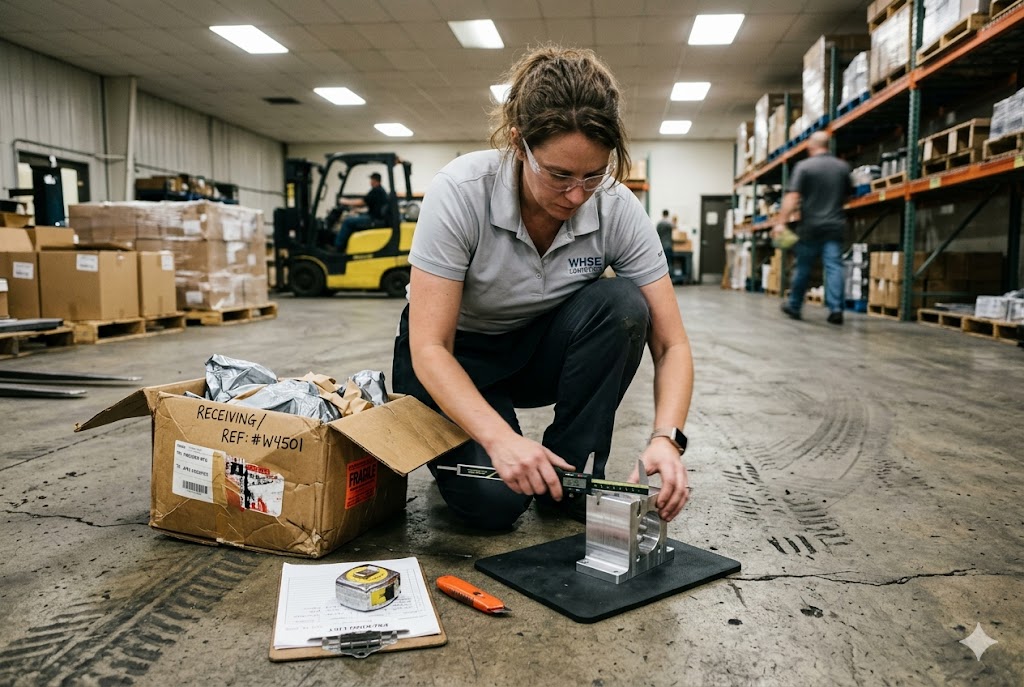
Precision CNC parts face four main shipping risks: physical damage from poor packaging or rough handling, dimensional or cosmetic nonconformance discovered after arrival, customs delays caused by incomplete documentation, and schedule disruption from Chinese holiday capacity crunches. Addressing each risk before the shipment leaves the factory is far cheaper than managing it after arrival.
Risk 1: Physical Damage in Transit
Metal parts with tight tolerances can be damaged by vibration, compression, or moisture during transit. Machined surfaces scratch. Threaded features can be damaged by poor blocking. Our pre-shipment process includes reviewing the packing list and packaging method before goods leave the factory.
Standard risk mitigation for CNC parts:
- Wrap individual parts in VCI (Vapor Corrosion Inhibitor) film 8 to prevent surface rust on steel and iron parts
- Use foam inserts or custom-cut cardboard dividers to prevent part-to-part contact
- Double-box high-value or fragile assemblies
- Mark cartons with orientation arrows and fragile labels for LCL and express shipments
For FCL shipments, load sequence and container stuffing matter. Heavier cartons go on the bottom. Lighter boxes on top. Use airbags or dunnage bags to prevent shifting in transit.
Risk 2: Customs Documentation Errors
Incomplete or incorrect shipping documents cause customs holds at the US port. Common errors include wrong HTS codes, missing country of origin markings, and incorrect declared values. Each hold adds days and costs money in storage and brokerage fees.
Required documents for CNC parts entering the US by sea typically include:
- Commercial Invoice (with correct HTS code, unit price, and quantity)
- Packing List
- Bill of Lading (for sea) or Air Waybill (for air)
- ISF 10+2 filing 9 (sea only, must be filed 24 hours before vessel departure)
- Certificate of Origin (if claiming preferential tariff treatment)
- Any applicable material certifications (for regulated industries)
Since May 2025, all Chinese-origin goods require full customs entry regardless of value. There is no de minimis shortcut.
Risk 3: Quality Nonconformance Found After Arrival
This is the most expensive risk. A shipment of 500 machined housings arrives and dimensional inspection shows 15% are out of tolerance. Rework is not practical. Replacement parts take 6–8 weeks. Your customer's production line stops.
The answer is pre-shipment inspection 10 — a third-party or in-house quality check at the supplier's factory before goods are packed. We conduct pre-shipment inspections on every production order above a minimum quantity threshold. The inspection checks dimensions against drawing, surface finish, quantity count, and packaging condition. Problems found at the factory cost a fraction of what they cost after arrival.
Risk 4: Holiday and Peak Season Disruptions
Chinese New Year (January–February) and Golden Week (first week of October) are the two biggest risk windows. Factories shut down for 1–2 weeks. After reopening, workers return gradually, quality supervision is lighter, and port congestion spikes.
Risk management steps for holiday windows:
- Confirm supplier production cutoff date 6–8 weeks before the holiday
- Book freight capacity 4–6 weeks in advance during peak season
- Stage finished goods at the supplier or at a freight forwarder's warehouse before the holiday
- Build a seasonal shipping calendar into your annual procurement plan
Conclusion
Choosing the right shipping mode for CNC parts from China is a cost, speed, and risk decision. Match the mode to your weight, urgency, and Incoterm. Use FOB, inspect before shipment, and plan around Chinese holidays. Get this right and your supply chain runs smoothly.
Footnotes
1. Explains how the US eliminated duty-free treatment for Chinese-origin goods under $800 starting May 2025. ↩︎
2. Guide to how carriers calculate chargeable weight for air freight shipments from China to the US. ↩︎
3. Overview of China–Europe rail freight routes, transit times, and costs under the Belt and Road Initiative. ↩︎
4. Explains how sea-air multimodal freight combines ocean and air legs via Dubai for cost-efficient delivery. ↩︎
5. Covers Section 301 tariff rates, HTS codes affected, exclusion history, and 2026 deadlines for China imports. ↩︎
6. Details the correct HTS code classification process for CNC machined parts in the current tariff-stacking era. ↩︎
7. US government reference page explaining all Incoterms and when each applies in international trade. ↩︎
8. Explains how VCI packaging releases anti-corrosion molecules to protect metal parts during shipping and storage. ↩︎
9. Official CBP page on the ISF 10+2 requirement for all ocean cargo entering the United States. ↩︎
10. Resource covering ISF filing compliance requirements, useful context for importers managing ocean shipment documentation. ↩︎