Skip to main content Skip to footer
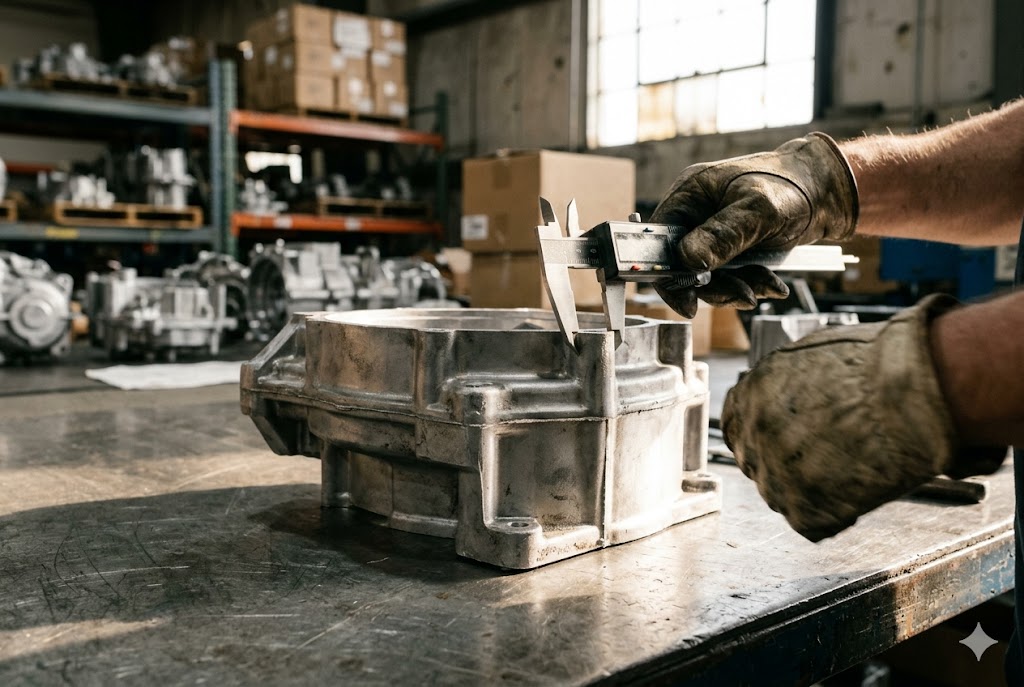
We see it happen on almost every new program: a buyer approves tooling, production starts, and six months later the parts begin drifting out of tolerance — with no clear answer on why or who pays.
To evaluate tooling life when importing custom die cast parts from China, you need a written shot-life commitment tied to the steel grade and alloy, clear maintenance schedules in the contract, and a shot counter tracking system. Without these three elements, you cannot hold any supplier accountable for early tool failure.
Most buyers skip these steps during the quoting phase. The result is a tooling dispute that costs more than the original mold. Here is what to ask before you approve anything.
What Tooling Life Should You Expect Based on Your Material and Yearly Volume?
Our engineers have reviewed hundreds of tooling programs across aluminum, zinc, and magnesium alloys, and the number one mistake buyers make is accepting a supplier's shot-life claim without knowing what a realistic number actually looks like.
Expected tooling life varies by alloy and part complexity. Well-maintained H13 aluminum dies typically achieve 100,000 to 500,000 shots. Zinc multi-slide tools can reach one million shots or more. Magnesium dies fall between these two ranges. Complex geometry and thin walls reduce these figures significantly.

Shot-Life Ranges by Alloy
The first thing to understand is that tool life is not a single number. It is a range. That range depends on the alloy, the part geometry, the steel grade, and the process discipline of the shop. A supplier quoting 800,000 shots on a complex aluminum housing with thin walls is either using exceptional steel and process controls — or quoting a number they cannot substantiate.
Here is a practical reference table to benchmark supplier claims against. Aluminum (380, A380) 1 is the most common die cast alloy and typically yields 100,000 to 500,000 shots per cavity under well-maintained conditions. Zinc (Zamak alloys) 2 outlast aluminum dies significantly due to lower casting temperatures, often reaching 500,000 to one million or more shots. Magnesium (AZ91D) 3 falls between these two ranges but introduces aggressive thermal cycling and oxidation risk:
| Alloy | Typical Shot Life (H13 Die, Good Maintenance) | Key Risk Factor |
|---|---|---|
| Aluminum (380, A380) | 100,000 – 500,000 shots | Thermal fatigue, soldering at gates |
| Zinc (Zamak alloys) | 500,000 – 1,000,000+ shots | Erosion at thin features |
| Magnesium (AZ91D) | 100,000 – 300,000 shots | Aggressive thermal cycling, oxidation risk |
If a supplier's quote falls significantly above the upper end of the range for your alloy and part type, ask them to justify it in writing. Ask for the steel grade, hardness specification, and cooling circuit design. If they cannot answer those questions, the number is not real.
How Yearly Volume Affects Your Tooling Economics
Yearly volume directly determines how fast you consume your tool's life budget. If your annual requirement is 50,000 parts and your tool has a warranted life of 200,000 shots, you have roughly four years before you need a replacement tool — assuming one part per shot, which is not always the case with multi-cavity tools.
| Annual Volume | Tool Life (shots) | Estimated Tool Life (years) | Notes |
|---|---|---|---|
| 20,000 | 200,000 | 10 years | Plan for stress-relief tempering milestones |
| 80,000 | 200,000 | 2.5 years | Budget for refurbishment around shot 150,000 |
| 150,000 | 500,000 | ~3 years | Multi-cavity tool may be cost-effective |
Understanding this timeline before tooling is built lets you amortize the tooling cost accurately per part. It also tells you when to budget for refurbishment or a replacement tool, so a sudden tool failure mid-program does not halt your customer's production line.
The Three Primary Failure Modes You Must Understand
There are three distinct ways a die cast tool reaches end of life. Each has a different cause and a different remedy. A supplier who cannot explain which failure mode limits their quoted tool life has not thought through the tool design carefully enough.
Heat checking 4 is the most common end-of-life indicator for aluminum dies. It appears as a network of fine raised lines on the casting surface — caused by repeated thermal expansion and contraction of the cavity steel. Soldering occurs when aluminum bonds to the cavity steel at hot spots, typically near gates. Erosion or washout is abrasion of the cavity steel by turbulent metal flow at runners and gates.
Knowing which failure mode is most likely for your part geometry lets you ask the right questions about the tool design before you spend money on it.
Should You Ask for Maintenance and Repair Terms Before You Approve Tooling?
When we place tooling orders with suppliers on behalf of our clients, we always include a maintenance schedule in the purchase agreement — not as a formality, but because it is the only way to enforce accountability when something goes wrong months later.
Yes, you must ask for maintenance and repair terms before approving tooling. Require a written stress-relief tempering schedule, shot counter reporting with each production order, and a clear definition of which party bears costs for early failure versus normal end-of-life wear.

Why Maintenance Terms Matter More Than Tool Price
A die built from premium H13 steel will fail prematurely if the supplier skips stress-relief tempering 5. Shops that skip this step can see tool life drop by 50 to 70 percent compared to those that follow a documented schedule. And here is the practical problem: this maintenance is invisible to buyers who do not contractually require it.
The industry benchmark for H13 aluminum dies is tempering at approximately 550°C every 50,000 shots. This restores ductility to the steel and arrests the propagation of thermal fatigue microcracks before they become structural failures. If your supplier cannot tell you their tempering interval, ask them directly. If they have no answer, that tells you everything about how they run their tooling department.
What to Request Before Signing Off on Tooling
Ask your supplier for the following in writing before you approve any tooling investment:
| Document | What to Look For | Red Flag |
|---|---|---|
| Steel pedigree certificate | Grade (H13, SKD61, DIEVAR, QRO-90), country of origin, hardness (HRC 46–52 for aluminum) | No certificate, or domestic Chinese mill with no traceability |
| Heat treatment record | Vacuum hardening + double tempering, hardness test result | Air-hardened tool, or hardness outside spec |
| Stress-relief schedule | Tempering interval per shots (e.g., every 50,000 shots) | No schedule provided, or "we will handle as needed" |
| Shot counter commitment | How shots will be reported to buyer with each order | No shot counter on the tool |
| Die history card (existing tools) | Shot counts, inspection records, weld repair history | Cannot produce records for existing comparable tools |
Steel Pedigree: The Detail Most Buyers Skip
Domestic Chinese tool steel from unknown mills can exhibit significant batch-to-batch variation in cleanliness and toughness. This translates directly into unpredictable early cracking under thermal fatigue. Require the supplier to specify the exact grade, the country of origin, and the hardness after heat treatment. Vacuum hardening with double tempering 6 is the benchmark heat treatment process. If the supplier uses air hardening instead, ask why.
A disciplined supplier will have die history cards on every active tool — documenting shot counts, stress-relief intervals, cooling channel descaling dates, and any weld repairs. A supplier who cannot produce these records for their existing tools will not generate them for yours.
How Can Tooling Life Affect Your Long-Term Part Cost?
In our experience helping clients calculate total landed cost, the tooling amortization line is consistently underestimated — and it becomes a serious problem when a tool fails 40 percent earlier than planned.
Tooling life directly affects your per-part cost because tooling investment is amortized across total shots produced. A tool that fails early forces an unplanned refurbishment or replacement, which raises your effective cost per part and can cause production gaps that affect your customers downstream.

How to Calculate Tooling Cost Per Part
The formula is straightforward. Divide the total tooling cost by the warranted shot life to get your tooling cost per part. Then add that figure to your unit price.
For example: a $15,000 single-cavity aluminum die with a 200,000-shot warranted life adds $0.075 per part in tooling amortization. That number matters when you are quoting your downstream customers on a long-term contract.
If the tool fails at 120,000 shots due to poor build quality or skipped maintenance, your effective tooling cost per part rises from $0.075 to $0.125. On a volume of 120,000 parts, that is an unplanned $6,000 cost increase — before you factor in production downtime and any penalties from your customers.
Using Part Quality Trends as an Early Warning System
The first signs of tool degradation almost always appear in the castings before they are visible on the tool itself. Build a statistical process control chart 7 on three or four critical dimensions and review it across production batches. These are the signals to watch for:
- Increasing flash at the parting line
- Dimensional drift at thin-walled features
- Surface texture that mimics heat check lines on the casting
- A rising percentage of ejector pin witness marks
Any of these trends means the cavity is wearing and a tooling inspection is overdue. Do not wait for the supplier to report a problem. By the time they do, you are usually already past the optimal refurbishment window.
Tracking Shots Independently
Require the supplier to report cumulative shot counts with each production order. This is non-negotiable. Many importers discover mid-program that their supplier has no shot counter on the tool and cannot tell them where they are in the tool's life cycle. Without this data, you cannot plan for refurbishment, cannot amortize cost accurately, and cannot detect when accelerating defect rates signal approaching end of life.
A well-designed cooling circuit also plays a direct role in tool longevity. Suppliers who can show you their cooling simulation output from the design phase are making a quantifiable engineering argument. Tight thermal uniformity — ideally within ±10°C across the cavity face — is the single biggest lever for extending tool life. Suppliers who cannot show this data are guessing.
What Tooling Life Details Should Be Written Into Your Purchase Agreement?
When we help clients structure tooling agreements with Chinese suppliers, we treat the purchase order as the only document that matters when a dispute arises — because verbal commitments disappear the moment quality problems appear.
Your purchase agreement must include: the warranted minimum shot life expressed as a number of cycles, the steel grade and hardness specification, the stress-relief tempering schedule, a shot-count reporting requirement, and a clear warranty clause defining supplier versus buyer liability for early failure versus end-of-life wear.

The Five Contract Clauses That Protect You
Without a written shot-life commitment, you have no basis for holding a supplier accountable when a tool fails prematurely. Chinese suppliers will almost universally attribute early failure to your design or process rather than their build quality. Your contract must force a clearer attribution standard before the tool is ever built.
Here are the five clauses every tooling purchase order should include:
Minimum guaranteed shot life. State the number explicitly. For example: "Supplier warrants cavity inserts for a minimum of 150,000 production shots under normal operating conditions as defined in this agreement." Tie this number to the alloy being cast, the steel grade specified, and the heat treatment documented in the appendix.
Steel and heat treatment specification. Name the exact grade (H13, SKD61, DIEVAR, or QRO-90), the required hardness range (e.g., HRC 46–52 for aluminum), and the heat treatment method. The NADCA die steel standard #207-2018 8 provides the industry benchmark for specifying and accepting high-quality die steel for extended die life. Require a material certificate from an accredited testing lab.
Stress-relief tempering schedule. Write the interval into the agreement. For H13 aluminum dies, the standard is tempering at approximately 550°C every 50,000 shots. Require the supplier to document each tempering event in the die history card and share records on request.
Shot-count reporting. Require cumulative shot counts to be reported with every production shipment. If the supplier does not have a shot counter on the tool, require them to install one before production begins.
Warranty and liability clause. This is the most critical clause. Define two distinct periods and two distinct liability standards. The die casting process 9 is inherently high-pressure and high-temperature, which means clear contractual attribution between premature failure and expected wear is essential for any import program:
| Period | Condition | Responsible Party |
|---|---|---|
| Initial warranty period (e.g., first 20,000 shots or 6 months) | Any failure, including early cracking or dimensional drift | Supplier bears full repair/replacement cost |
| Post-warranty period (up to warranted shot life) | Failure due to proven process mismanagement or build defects | Supplier bears repair cost |
| End of warranted life (shots exceeded) | Normal wear and expected degradation | Buyer bears replacement cost |
What Happens Without These Clauses
Without these terms in writing, every tooling dispute defaults to a negotiation where the supplier holds leverage — because they have the physical tool and you need parts. The most common outcome is a shared cost arrangement that the buyer did not budget for and the supplier was not contractually obligated to accept.
Getting these terms agreed before tooling is built costs nothing except negotiation time. Getting them agreed after a tool fails costs money, time, and goodwill with your downstream customers. Peer-reviewed research on H13 die steel failure mechanisms 10 consistently shows that erosion, cracking, and die soldering are the primary failure modes — and that all three can be mitigated by proper steel selection, heat treatment, and process discipline that your contract should require.
Conclusion
Tooling life is not a detail — it is a cost, quality, and supply continuity risk. Nail down the steel spec, the maintenance schedule, the shot-count reporting, and the warranty terms before you sign any tooling PO. That is how you protect your program from day one.
Footnotes
1. Material properties and composition data for A380.0 aluminum, the most widely used die cast alloy. ↩︎
2. Properties and characteristics of Zamak 3, the most common zinc die casting alloy family. ↩︎
3. Full material profile for AZ91D magnesium, the standard magnesium die casting alloy. ↩︎
4. Peer-reviewed study on heat checking and die soldering failure modes in HPDC aluminum dies. ↩︎
5. Research on thermal fatigue life prediction for die casting mold steel across cooling cycles. ↩︎
6. Bodycote technical glossary explaining vacuum heat treatment and its advantages for tool steel. ↩︎
7. ASQ overview of statistical process control tools, including control charts for manufacturing monitoring. ↩︎
8. NADCA standards page including #207-2018 acceptance criteria for die steel procurement and heat treatment. ↩︎
9. NADCA FAQ covering the die casting process, alloy selection, and industry terminology. ↩︎
10. Failure analysis of H13 steel dies showing erosion and cracking as primary HPDC failure mechanisms. ↩︎